THE COOKPATH KITCHENHeat control
Heat control: Watch the heat changes described in each cooking step. Examples include Dry-pot cauliflower, Lettuce in oyster sauce, Soy-braised winter melon. Open a full recipe for ingredients and the complete method.
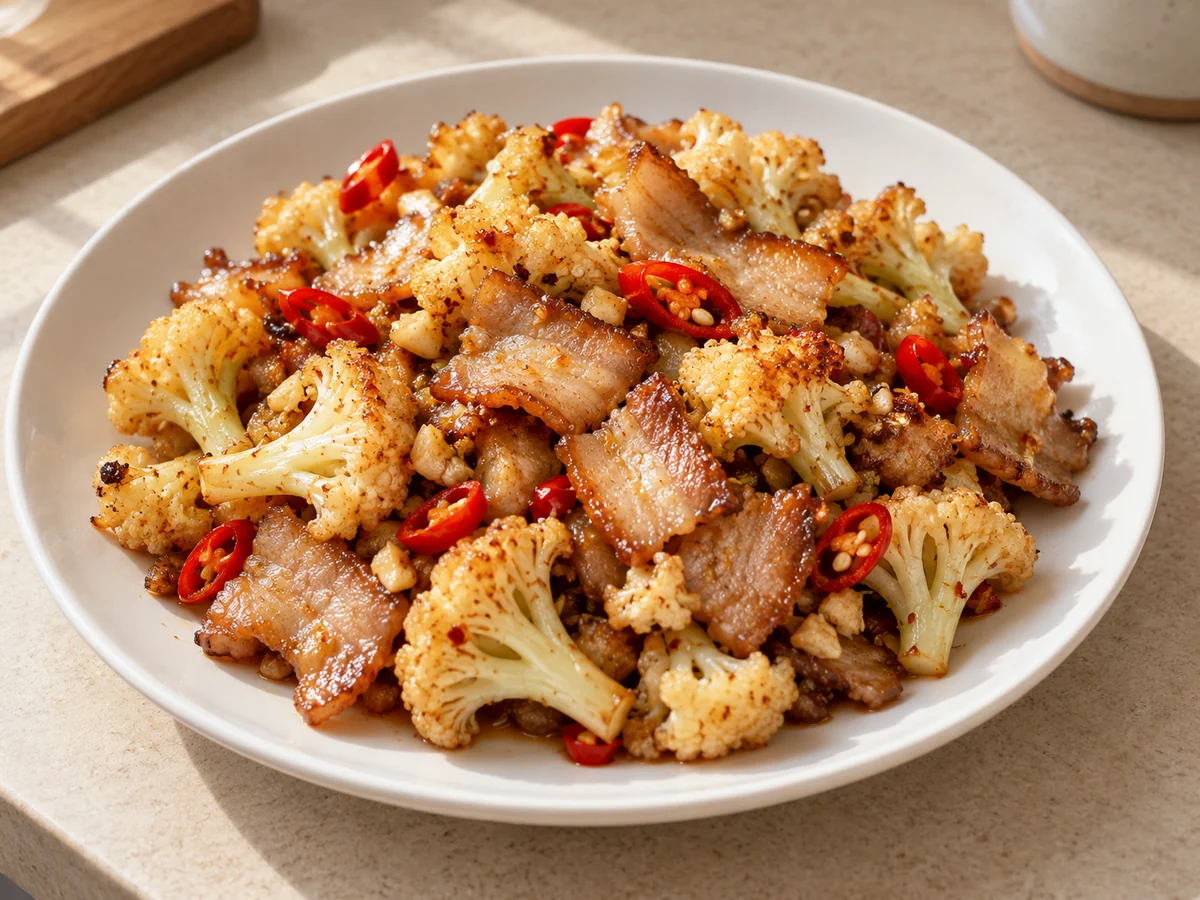
Dry-pot cauliflowerCheck the pork
Use a thermometer suitable for thin food to check the center of the thickest pork slice for at least 63°C. If a reliable center reading is not possible, follow trusted thin-pork cooking guidance; do not rely on color. Once verified, turn off the heat, plate and start a 3 min rest reminder; rest at least 3 minutes before eating.
Look forLightly browned cauliflower and curled pork slices with a thin coating and no excess water.
See the full recipe ↗ 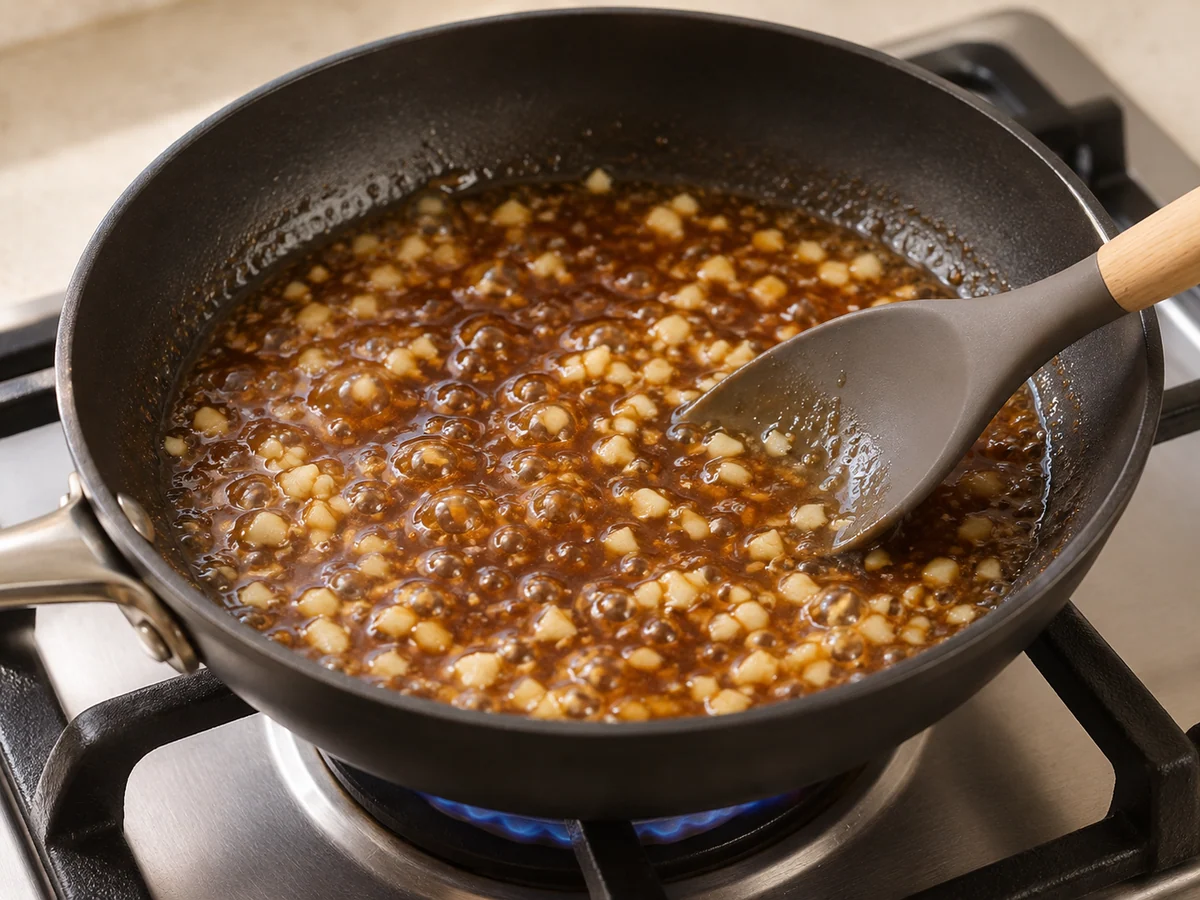
Lettuce in oyster sauceCook garlic and sauce
Warm the sauce oil in a small pan over medium-low heat and cook garlic until fragrant without browning. Add the sauce and stir until it bubbles, then turn off the heat.
Look forGarlic is fragrant and sauce bubbling without scorching.
See the full recipe ↗ 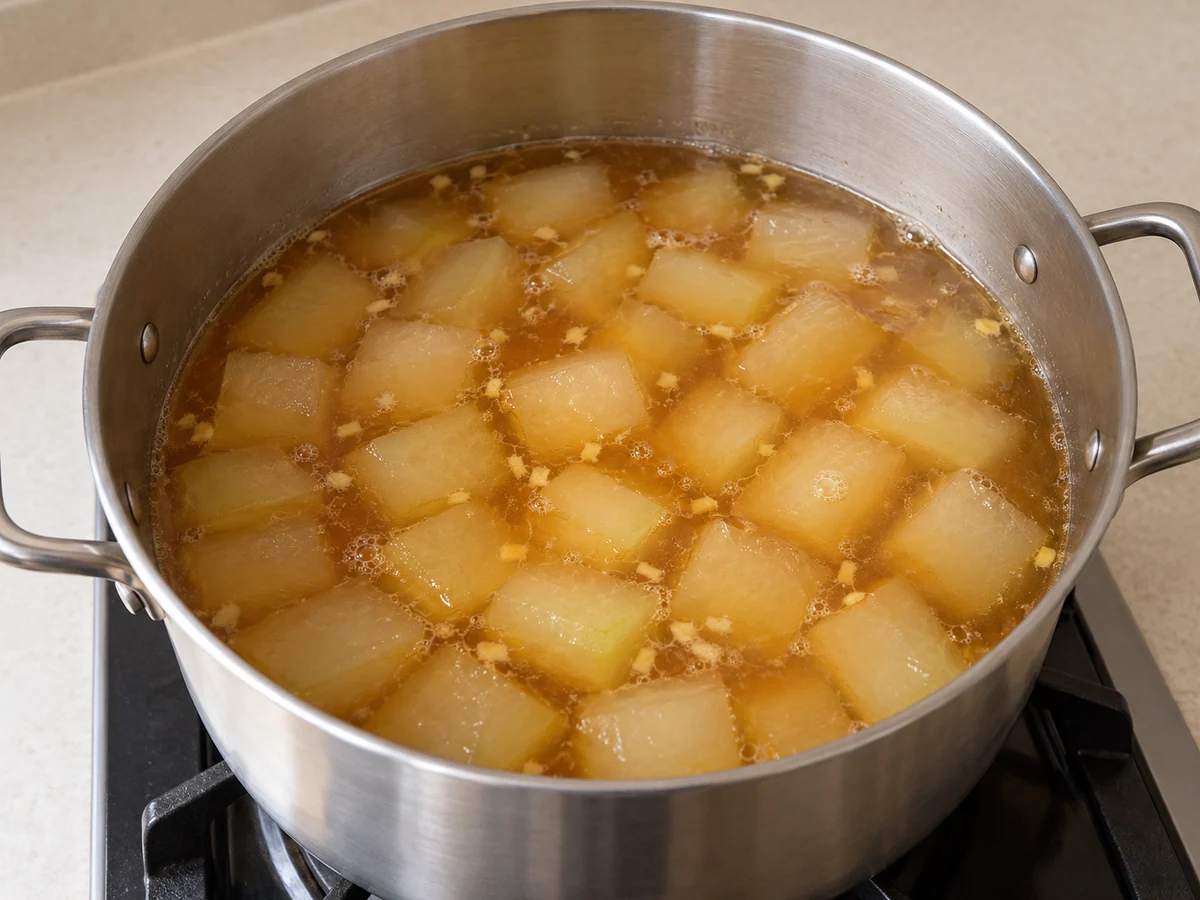
Soy-braised winter melonStart the braise
Briefly take the pan off heat to lower its temperature. Cook ginger in the remaining oil, then gently mix in light soy and oyster sauce. Return the melon and carefully add hot water around the edge to just cover the food; never pour water into a pan containing only hot oil.
Look forMelon sits in sauce with liquid just covering it.
See the full recipe ↗ 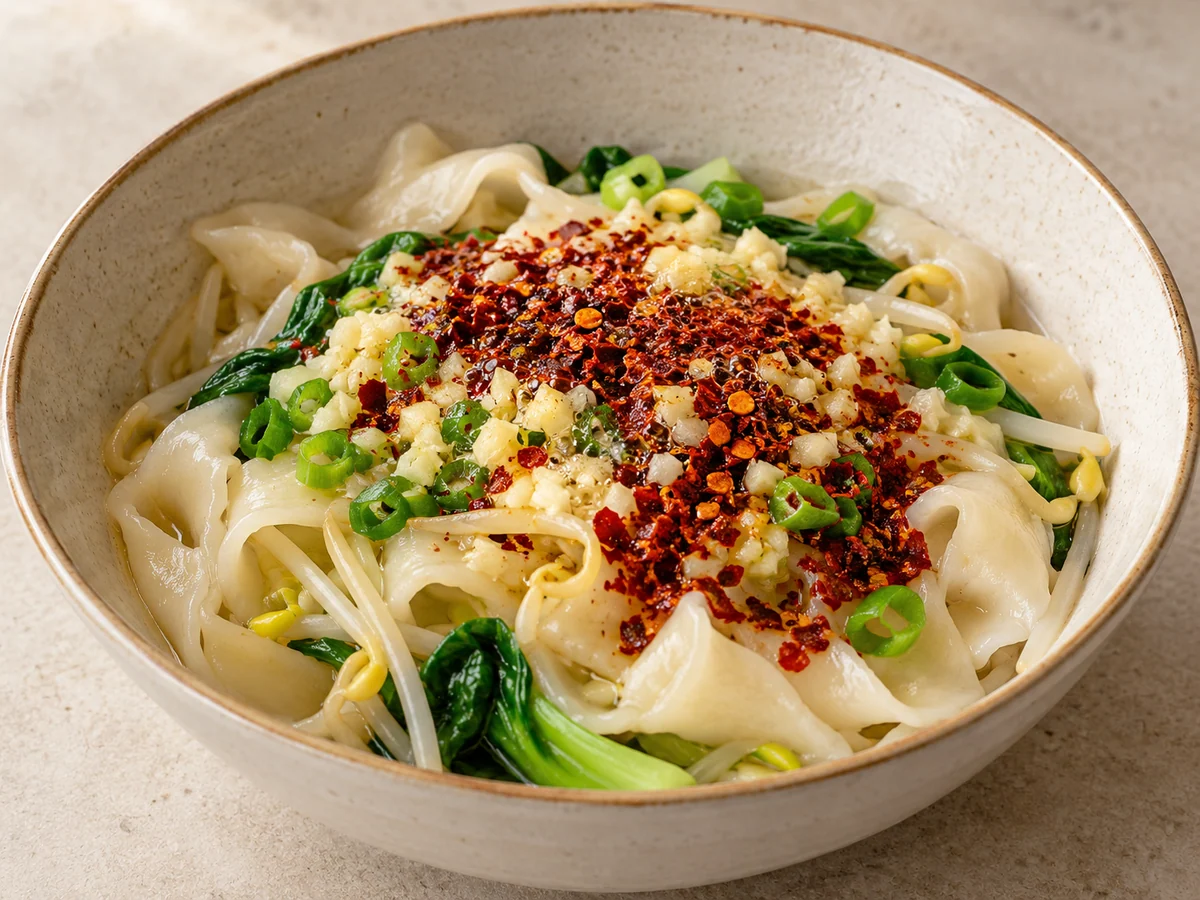
Shaanxi hot oil noodlesPour hot oil carefully in stages
Heat the oil in a small pan until clearly shimmering but not smoking. Turn off the heat and test a little on the chili: it should sizzle gently without instantly blackening. Slowly pour the rest once suitable, keeping hands and face clear; cool smoking oil off the heat first.
Look forThe aromatics smell fragrant and the chili stays red without burning.
See the full recipe ↗ 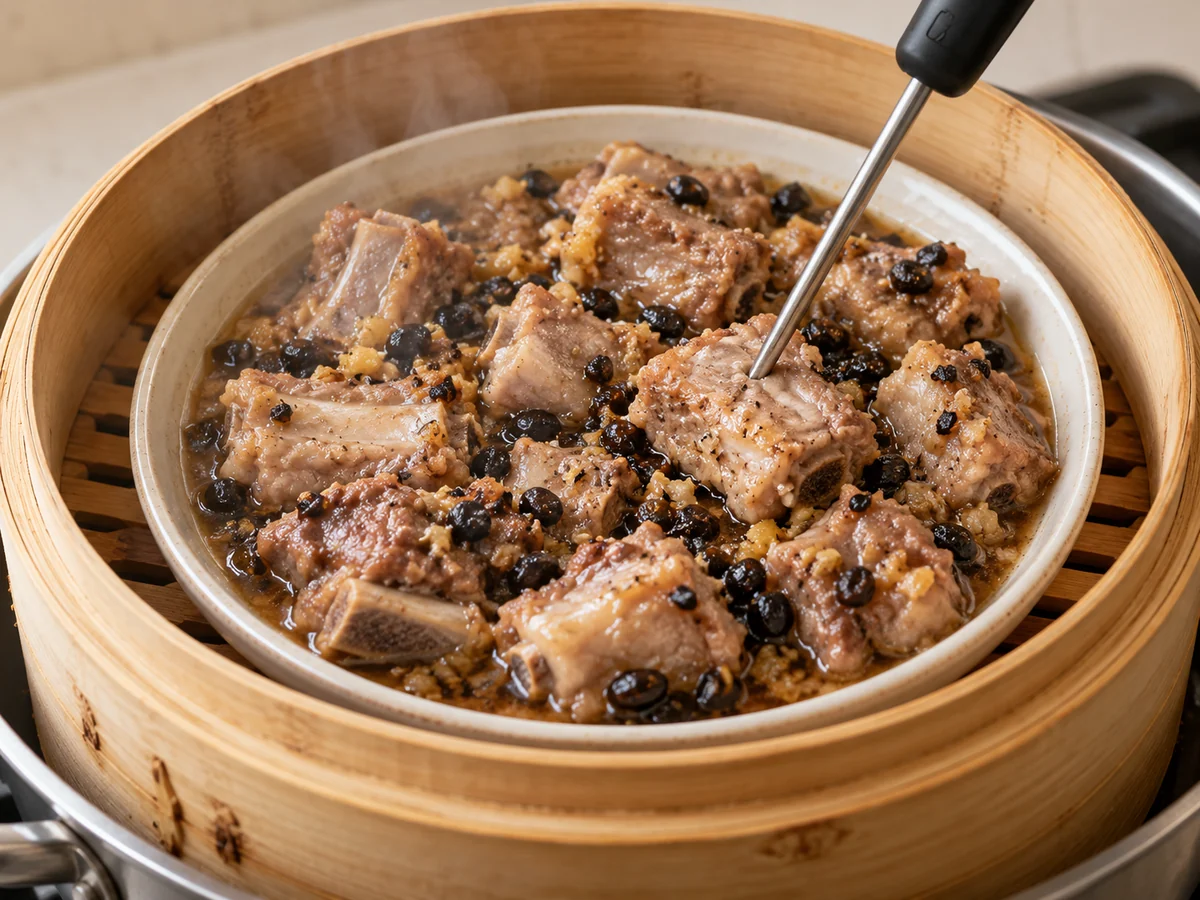
Steamed spare ribs with black beansCheck temperature and tenderness
Probe the thickest meat away from bone with a clean thermometer; it must reach at least 63°C and be tender. Continue steaming if needed rather than relying only on color or a chopstick touching cartilage.
Look forRibs have evenly cooked-looking surfaces and softened meat in black-bean juices.
See the full recipe ↗ 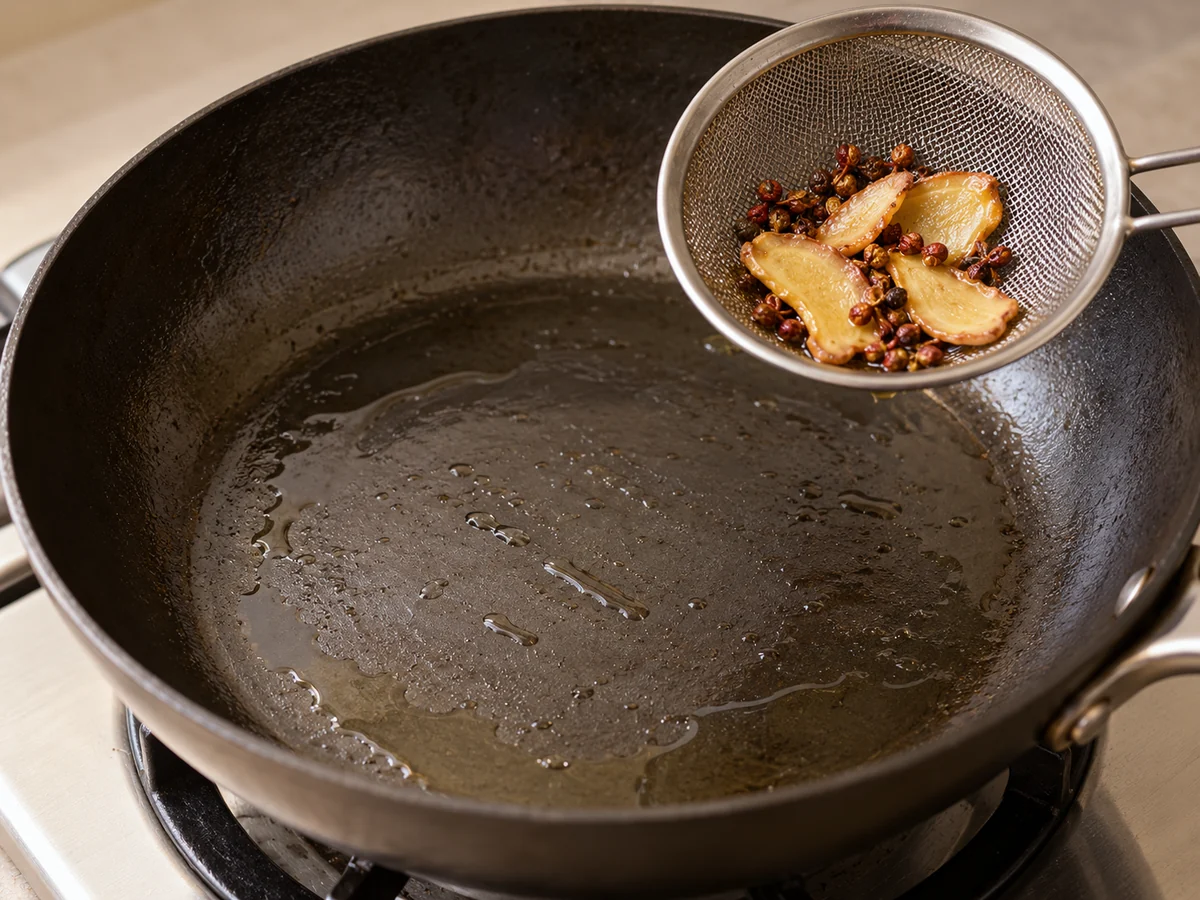
Scallion-braised chicken legsGently infuse optional aromatics
Add oil and, if using ginger and peppercorns, gently fry over low heat until ginger edges are pale golden and fragrant. Remove with a metal strainer. Without these aromatics, simply warm the oil without smoking.
Look forThe pan holds fragrant oil with any whole aromatics removed.
See the full recipe ↗ 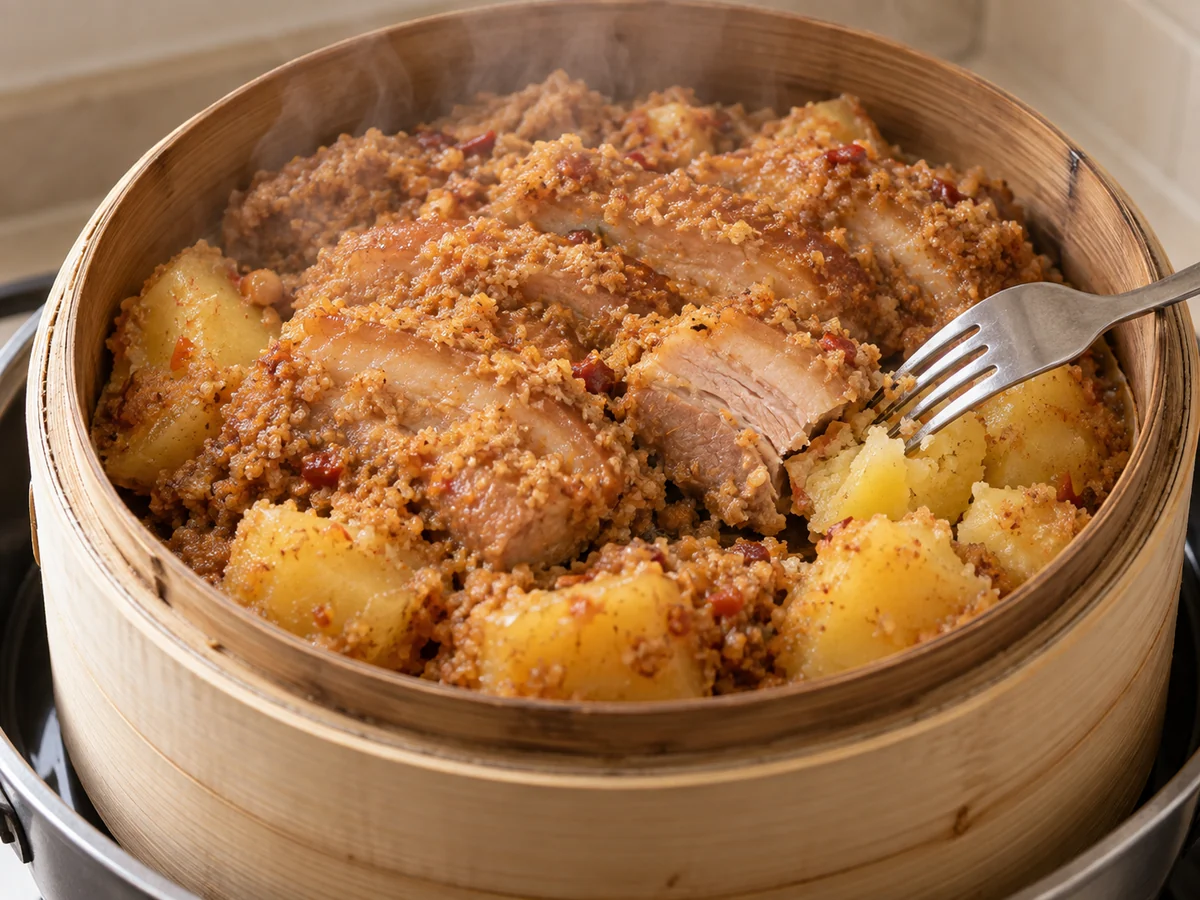
Rice powder steamed porkCheck coating, meat and potato
Probe the thickest pork slice sideways to at least 63°C. Rice coating should be moist with no hard grains, potato should yield easily to a fork and pork should be tender. Continue steaming if any condition is unmet.
Look forRice coating is moist and swollen, pork tender and potato easily broken with a fork.
See the full recipe ↗ 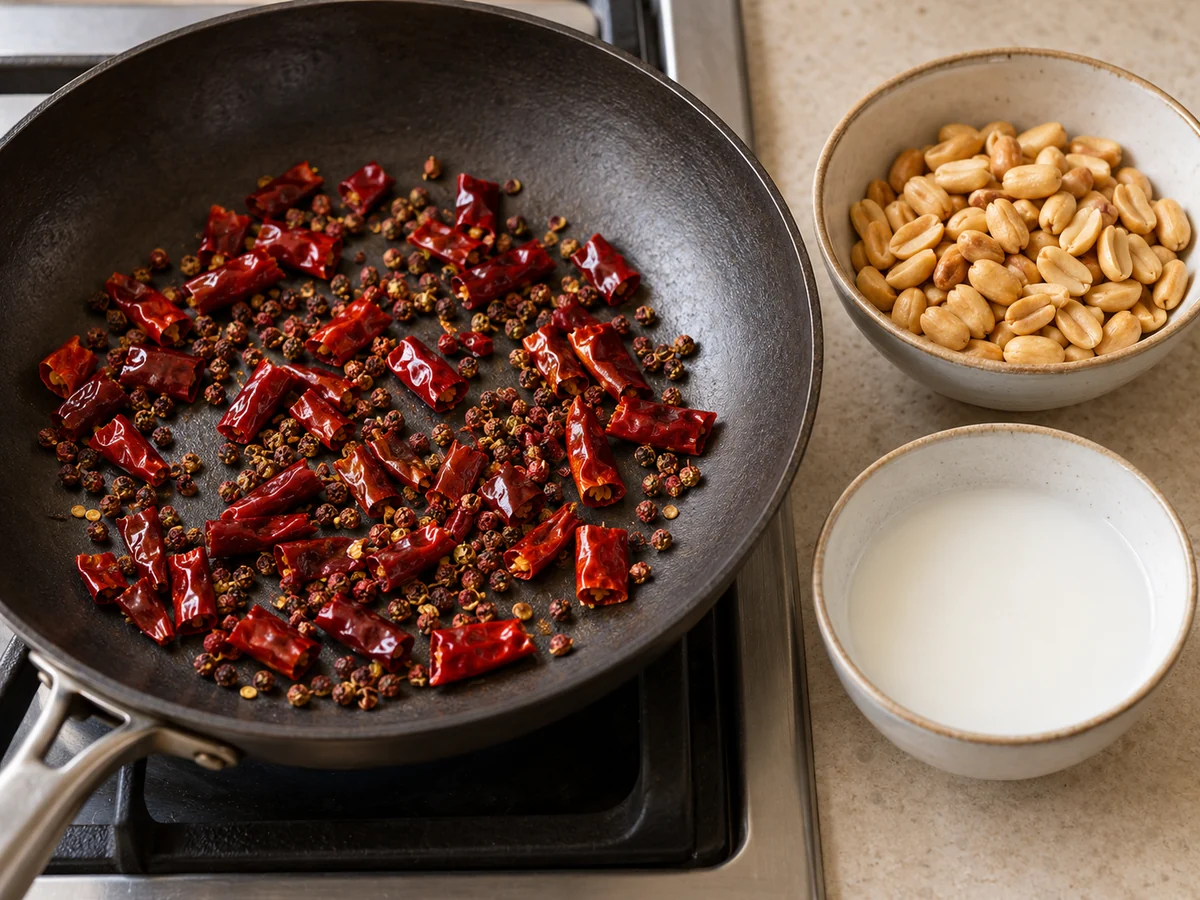
Kung pao chickenPrepare peanuts, spices and slurry
Set the toasted peanuts aside without prolonged microwaving. Cut dried chilies and gently toast with peppercorns in a dry pan over low heat until fragrant, then remove before blackening. Mix slurry starch and its measured water.
Look forChilies and peppercorns are fragrant but unblackened, peanuts dry and slurry mixed.
See the full recipe ↗ 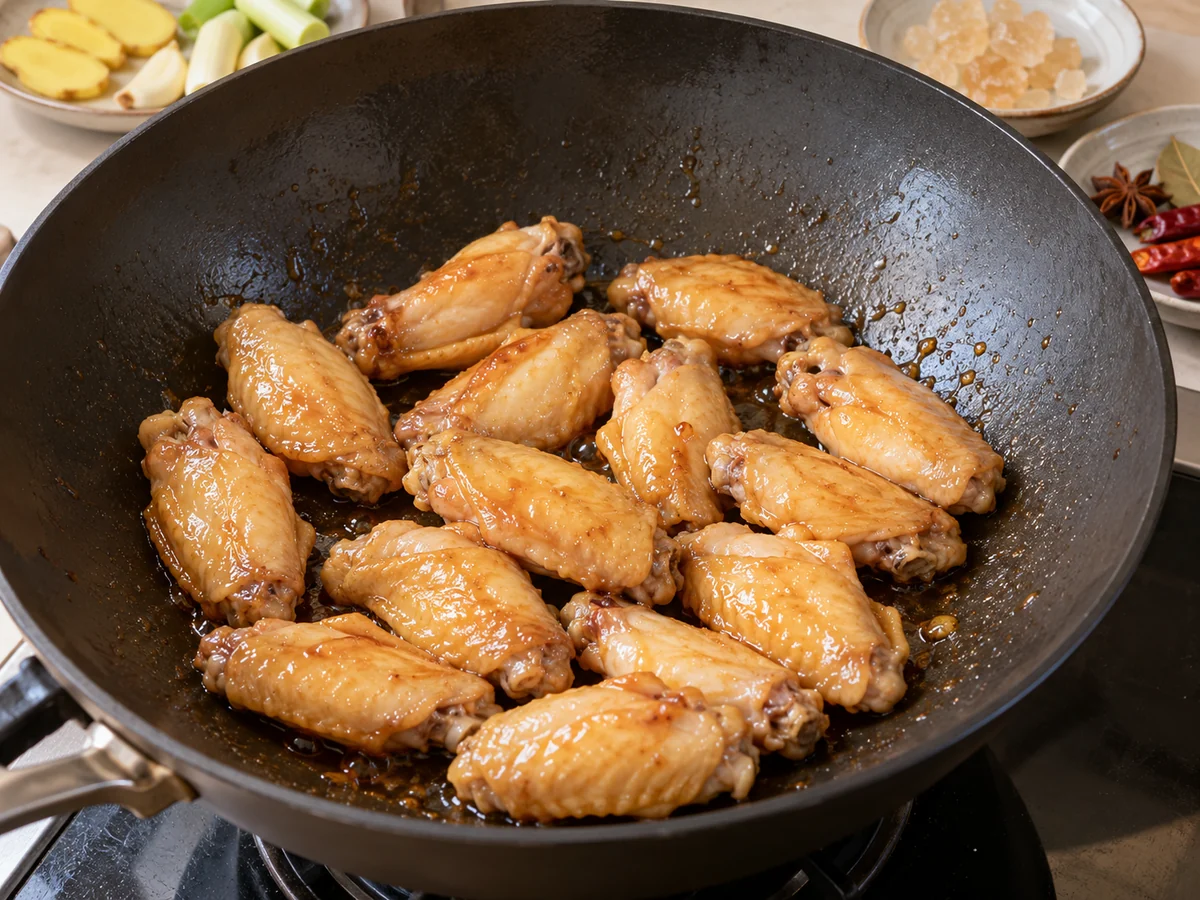
Soy-braised chicken wingsMake a gentle caramel
In a clean pan, gently heat oil and rock sugar over low heat, stirring until pale amber. Carefully add dry wings and turn to coat. Do not burn sugar until smoking or black, and guard against hot caramel splashes.
Look forWings have a thin amber coating without blackened sugar.
See the full recipe ↗ 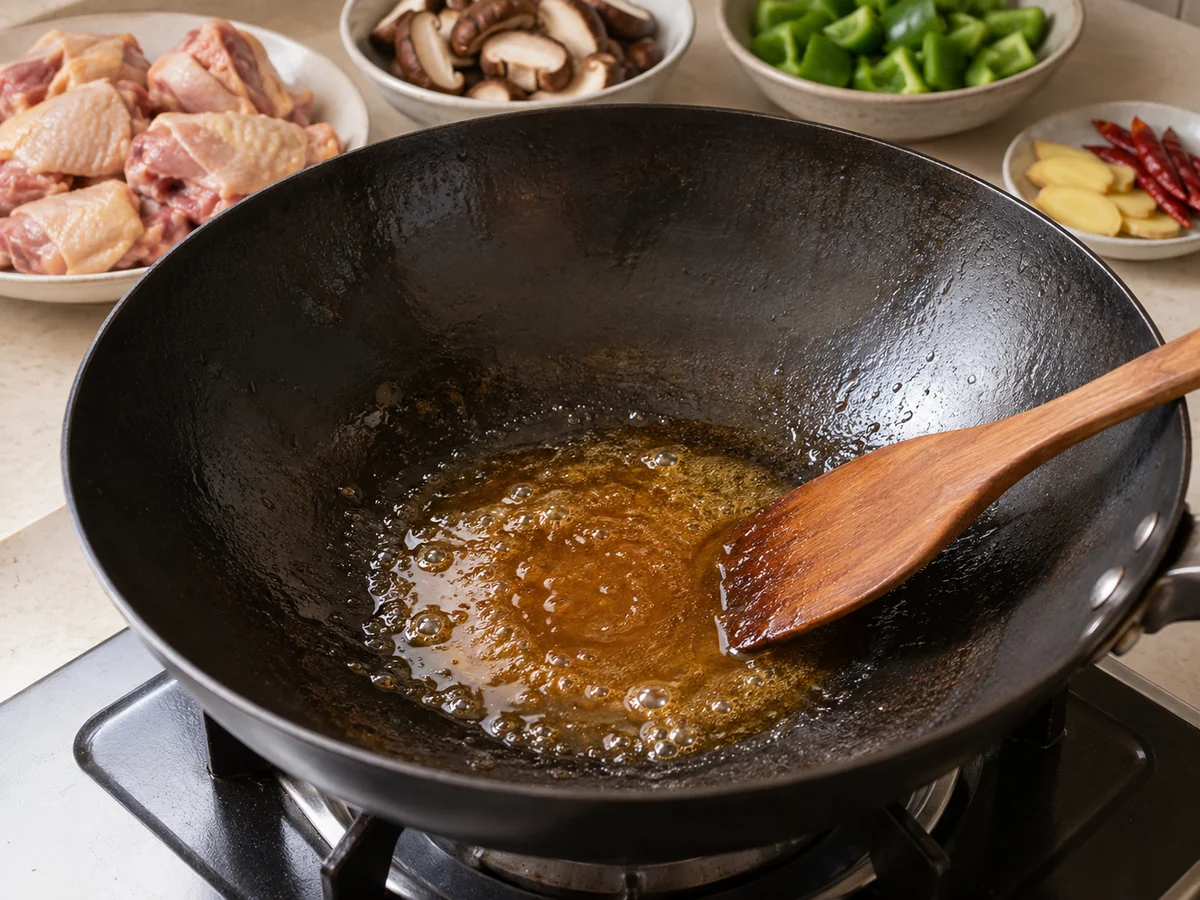
Braised chicken with mushroomsMelt the sugar gently
Lightly oil the pan and add sugar before heating. Stir over low heat until melted and pale amber rather than dark and smoking. Have dry chicken ready first and stay beside the pan.
Look forSugar is melted to pale amber without blackened particles.
See the full recipe ↗ 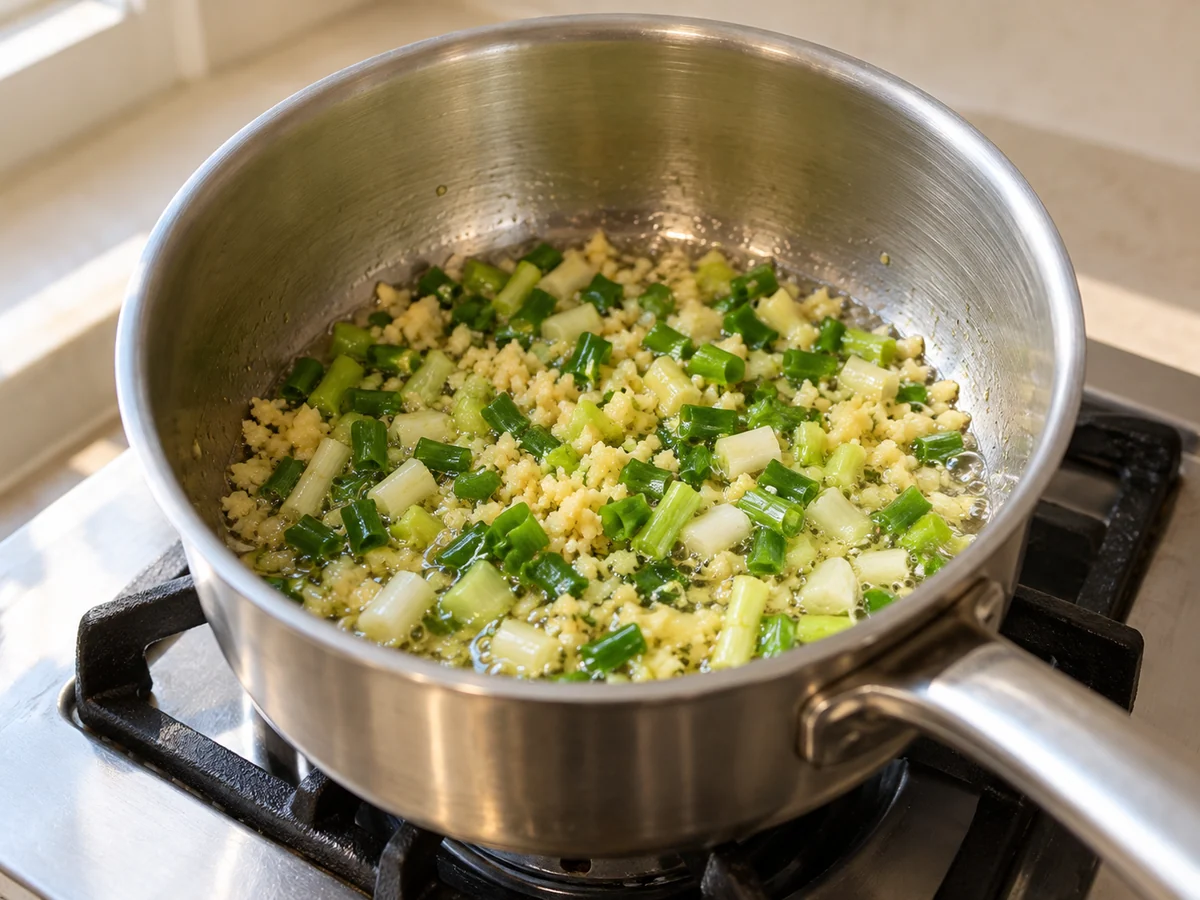
Ginger-scallion chickenCook the ginger-scallion dressing
Finely mince ginger and slice scallion. Warm dressing oil in a small pan over medium-low heat, gently cook ginger and scallion until fragrant, then turn off heat and mix in salt and sugar. This version cooks aromatics in the pan rather than pouring hot oil into a wet bowl.
Look forGinger and scallion are fragrant without burning.
See the full recipe ↗ 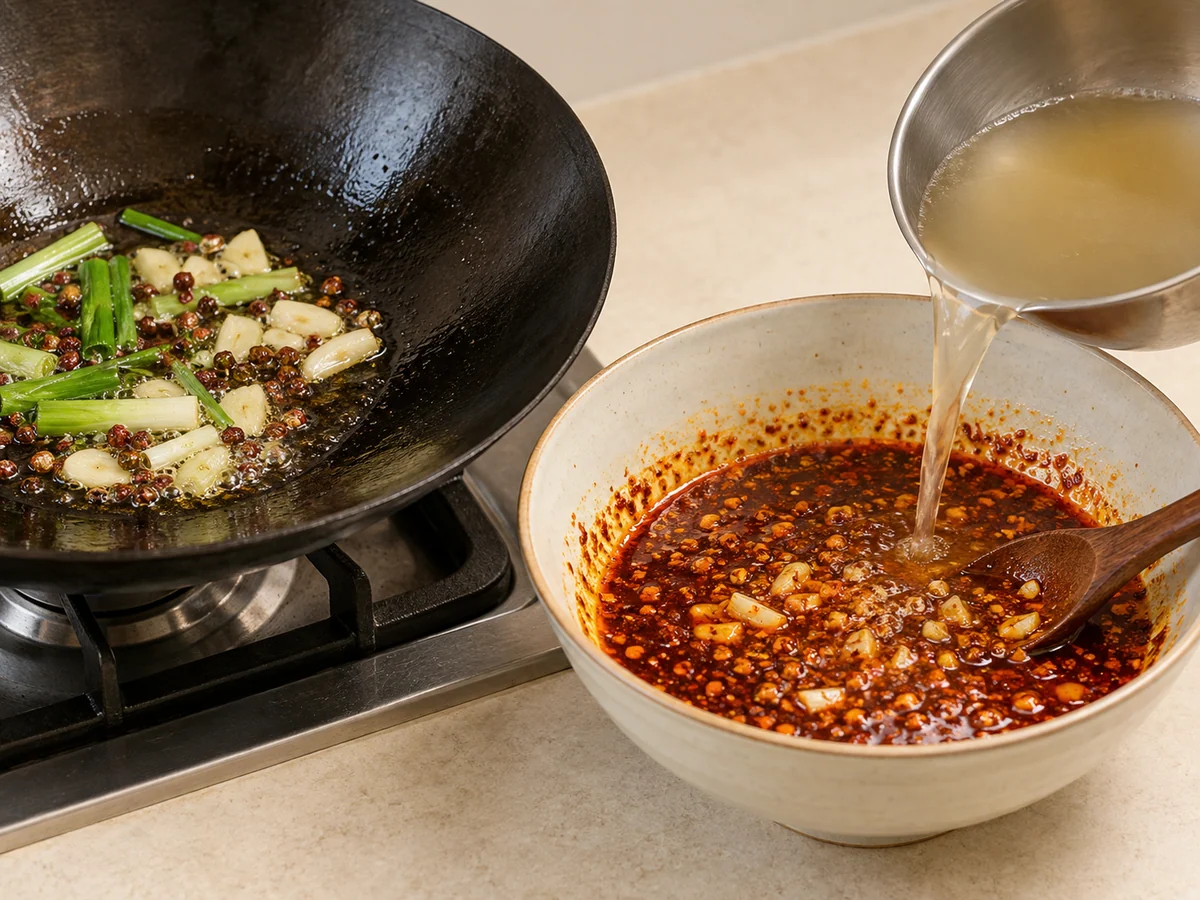
Sichuan mouthwatering chickenGently cook chili dressing
Warm oil over low heat with remaining scallions, peppercorns and half the garlic until fragrant. Turn off heat, remove scallions and peppercorns and cool slightly before stirring in chili powder; do not pour very hot oil into a bowl. Mix in soy, vinegar, sugar, MSG, ground pepper and remaining garlic. Bring broth from the fully cooked chicken back to a boil, then use a little to thin the dressing.
Look forChili dressing flows and smells fragrant without blackening.
See the full recipe ↗ 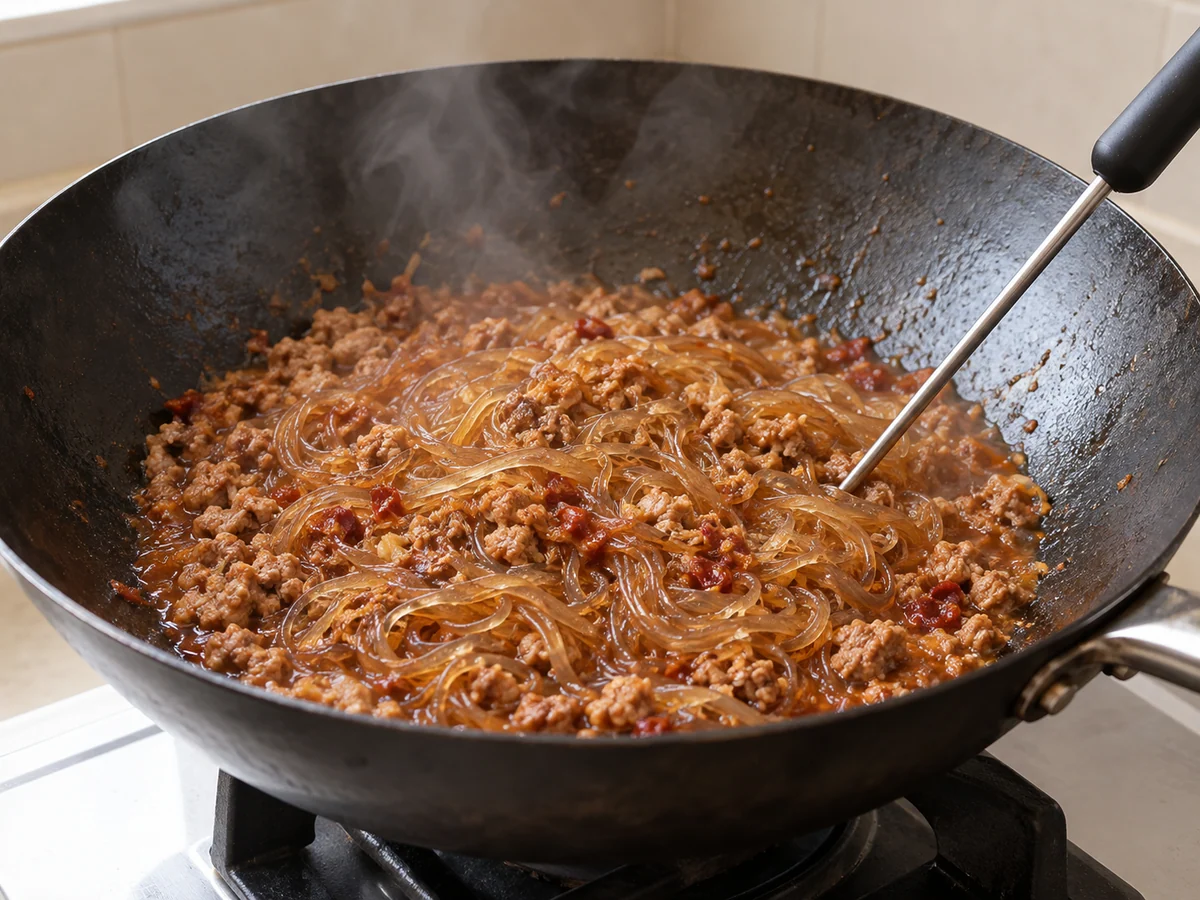
Minced pork and glass noodlesCheck texture and doneness
Continue until noodles have no hard center and the minced-meat dish reaches 71°C in the center. Stop when most sauce is absorbed but noodles remain moist, before the base scorches.
Look forNoodles are tender and moist, minced-meat dish reaches 71°C, and the base is unburnt.
See the full recipe ↗ 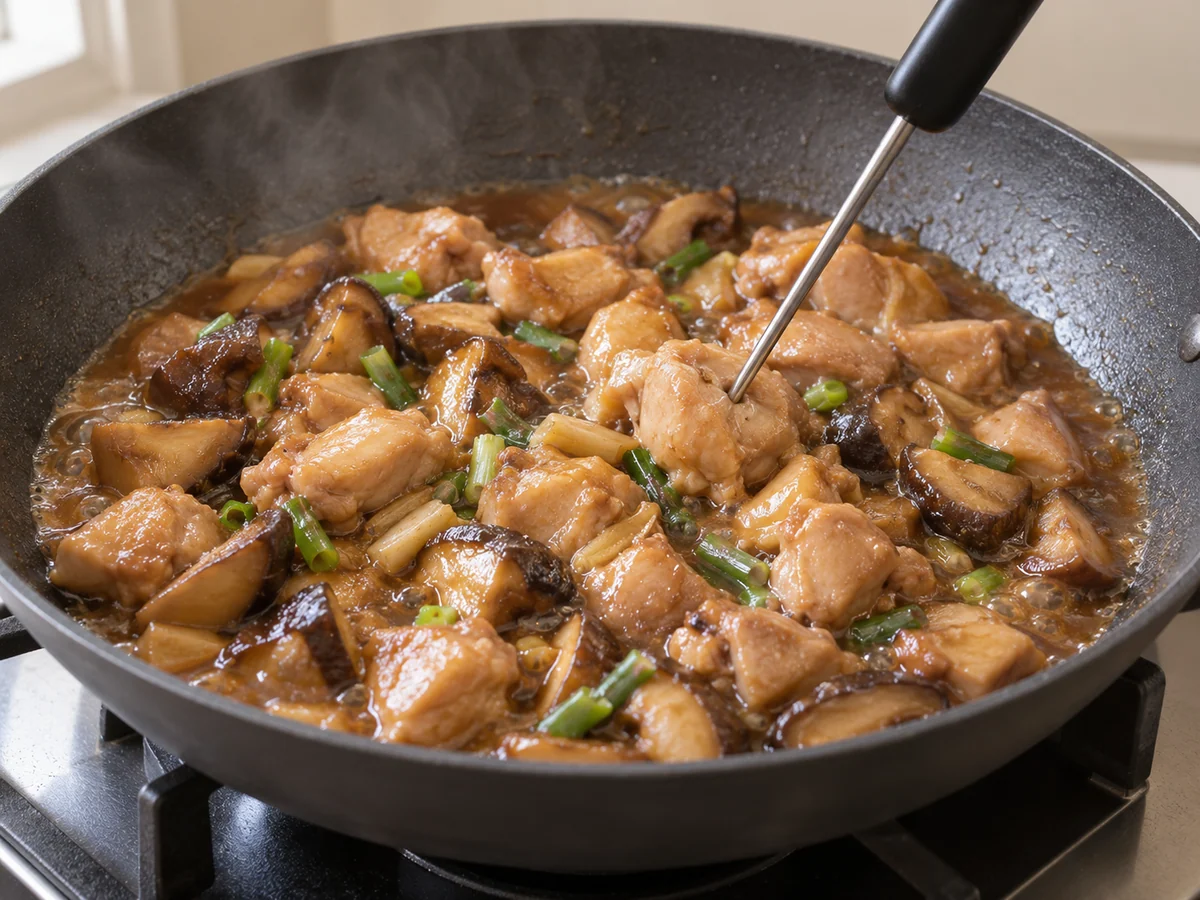
Chicken with shiitake mushroomsCheck doneness and reduce
Check the thickest chicken piece away from bone for at least 74°C; continue if needed rather than stopping at the two-minute reminder. Once verified, reduce until sauce coats, then add sesame oil and scallion greens.
Look forChicken centers reach at least 74°C, mushrooms are tender and sauce thick but flowing.
See the full recipe ↗ 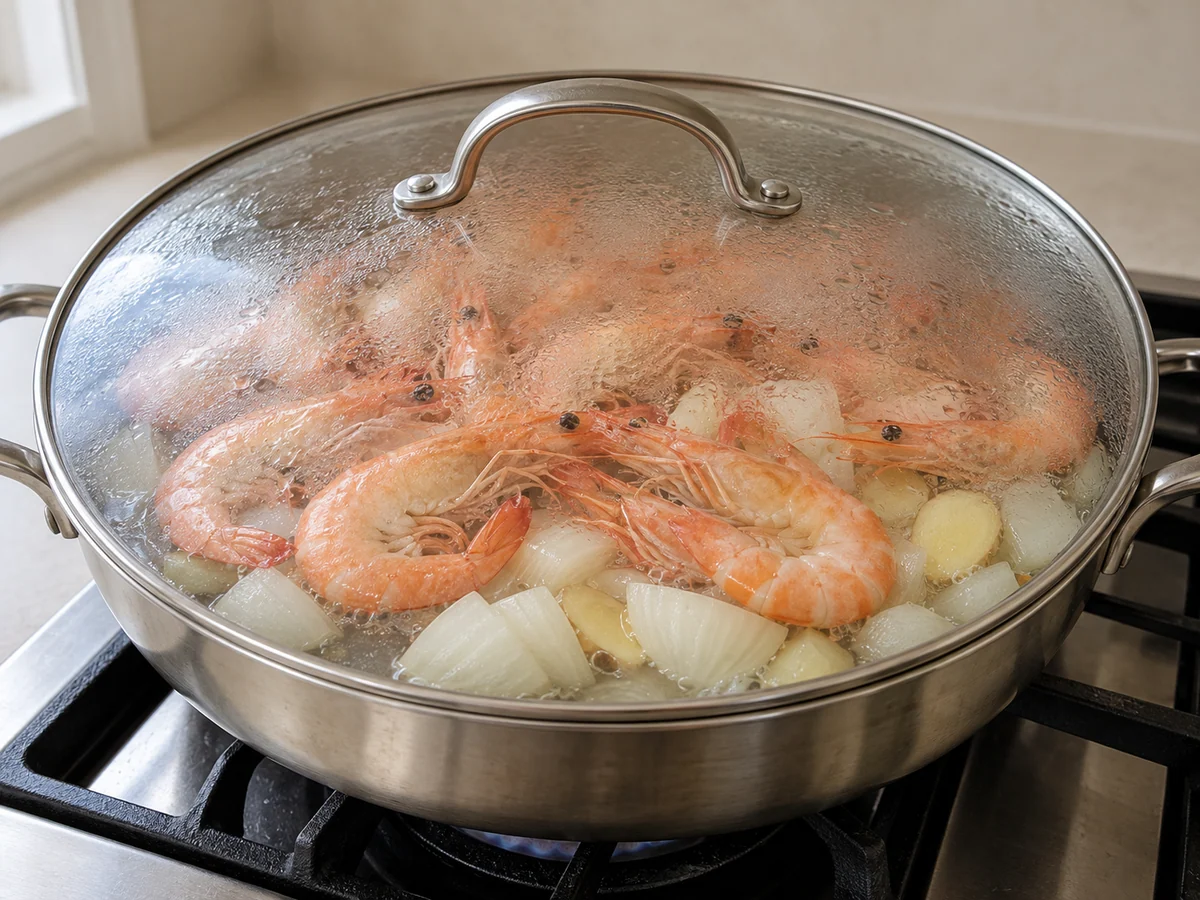
Covered-pan shrimp with ginger and onionBegin covered cooking
Cover, heat over medium and start a 1 min first check. Once steam forms, reduce to low. If the bottom dries early, add a little hot water to prevent the onion burning.
Look forSteam forms without scorching the bottom.
See the full recipe ↗ 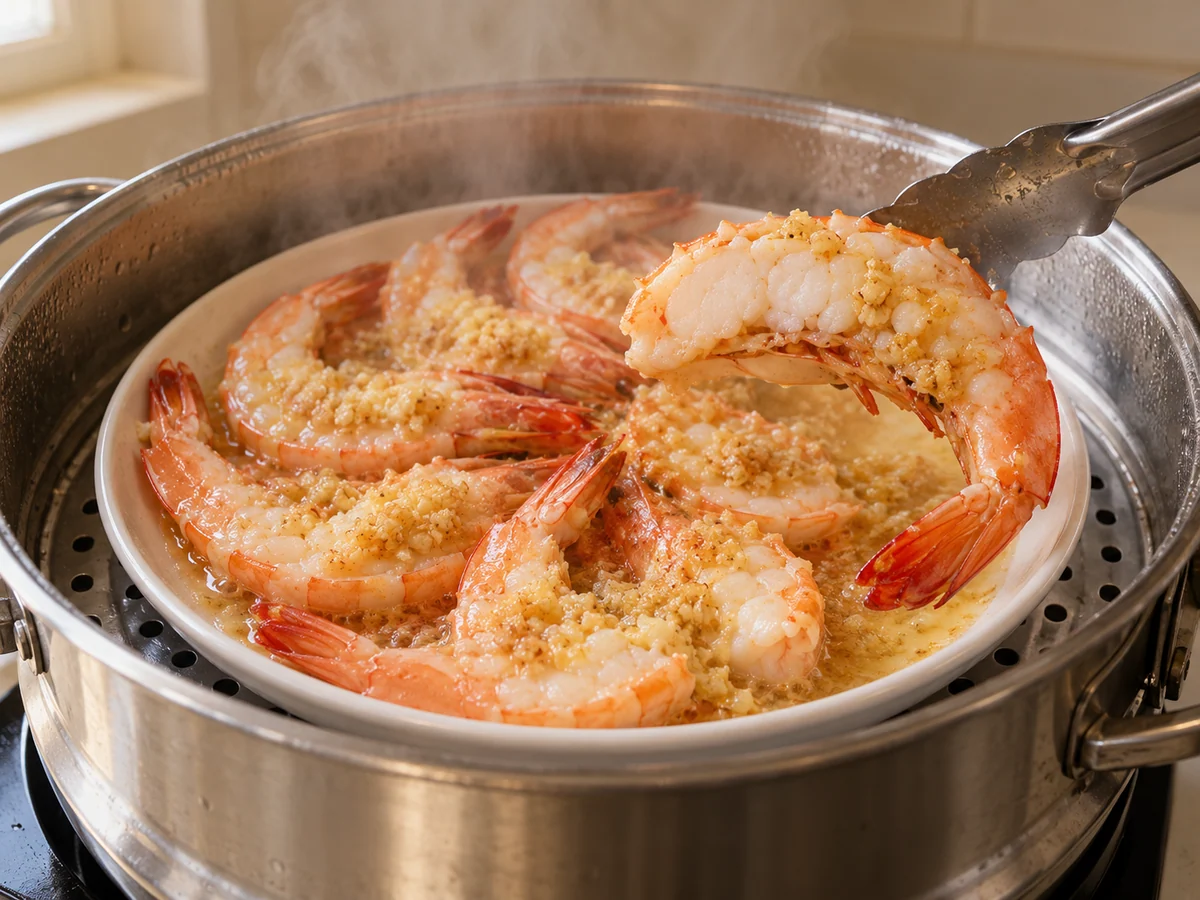
Garlic shrimpCheck the thickest shrimp
Check the largest shrimp with tongs and, if needed, cut open its thickest part. Flesh should be pearly white and opaque; steam longer if still translucent. Neither three minutes nor red shells proves doneness.
Look forThickest flesh is opaque and garlic sauce hot through.
See the full recipe ↗ 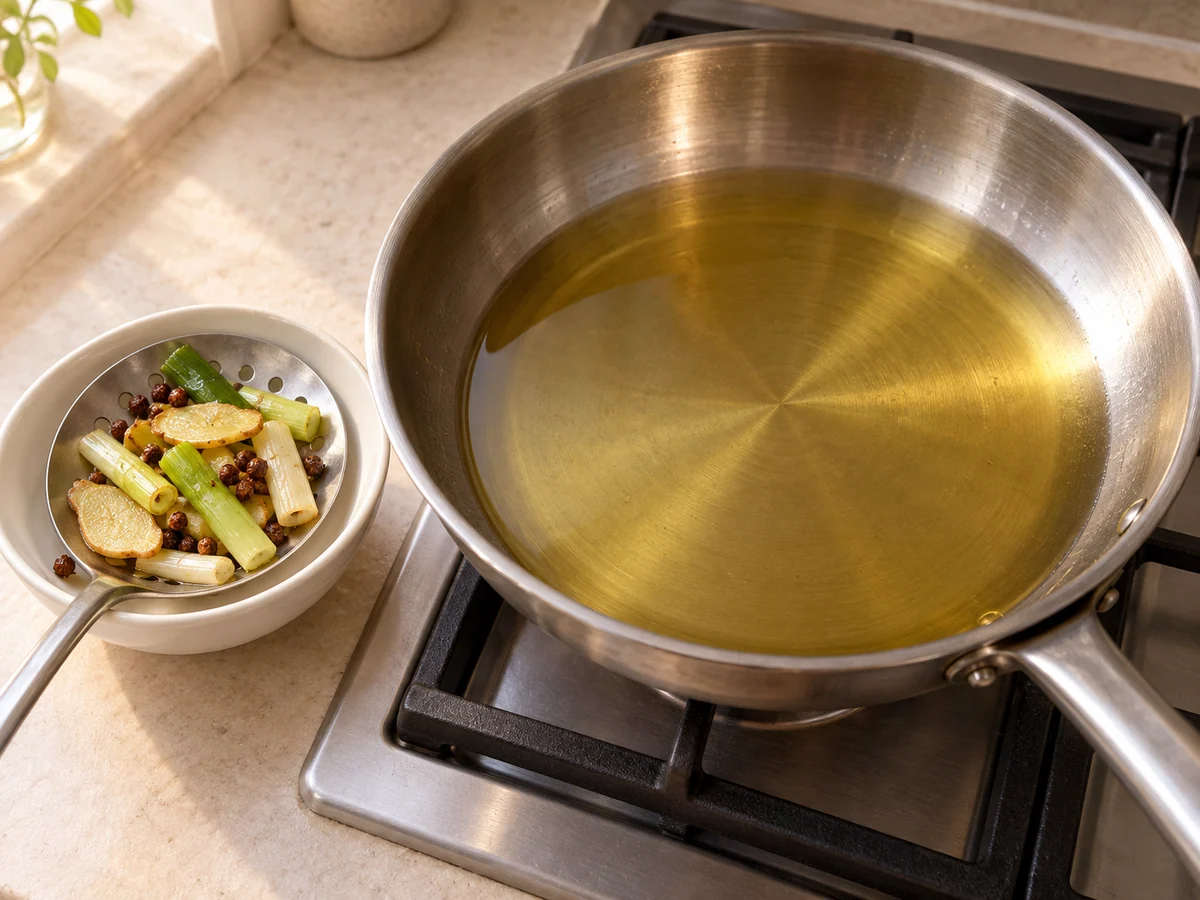
Oil-braised prawnsMake a small amount of aromatic oil
Lightly coat the pan with oil and gently cook peppercorns, scallions and ginger slices over low heat. When scallions are just pale golden, turn off heat and remove aromatics with a slotted spoon, leaving oil; do not let it smoke.
Look forOil is aromatic without blackened ingredients.
See the full recipe ↗ 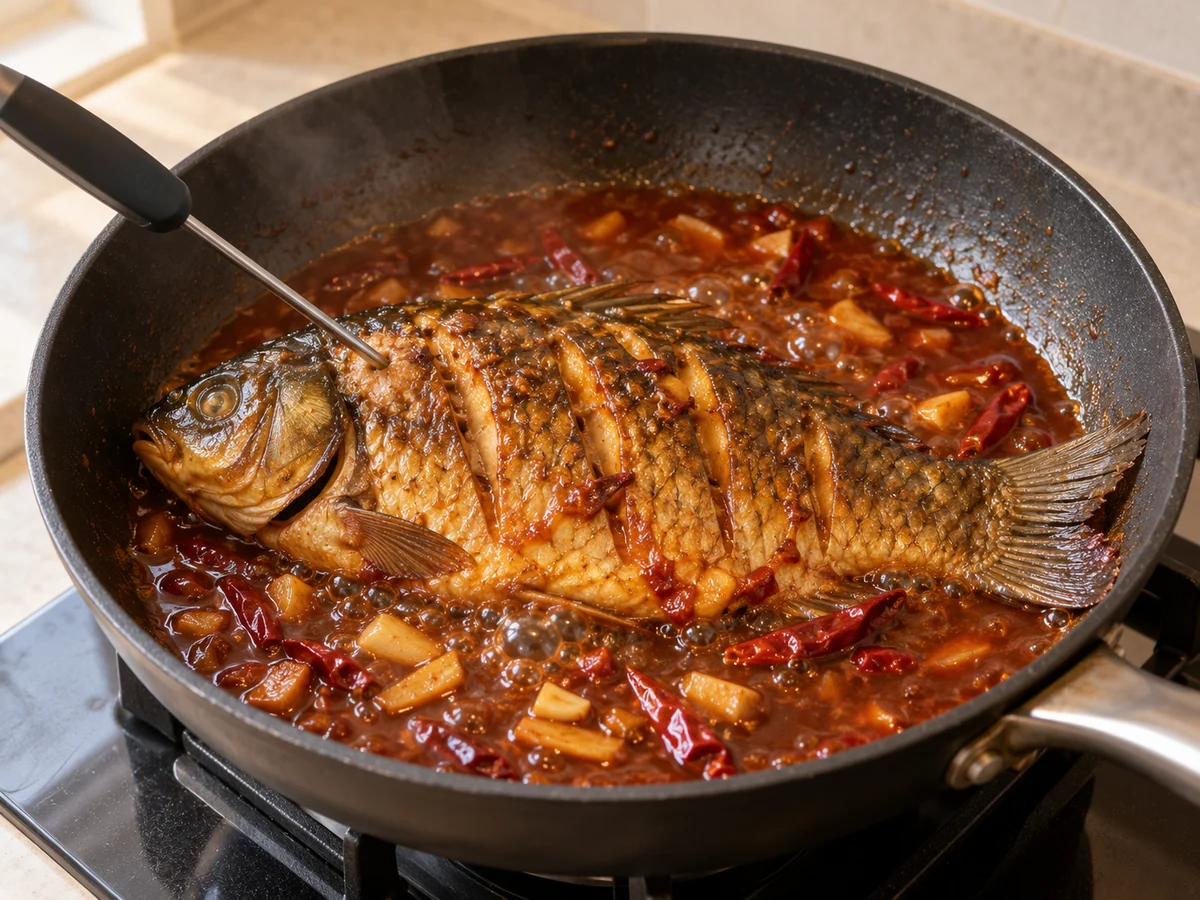
Red-braised fishSeason and check the center
After turning, continue with a 3 min check. Gradually add the listed salt and any optional fresh chili, oyster sauce or MSG; start sparingly and do not force in all seasoning. Probe thickest flesh away from bone for at least 63°C, continuing and topping up hot water if needed.
Look forThickest fish flesh reaches at least 63°C with sauce remaining.
See the full recipe ↗ 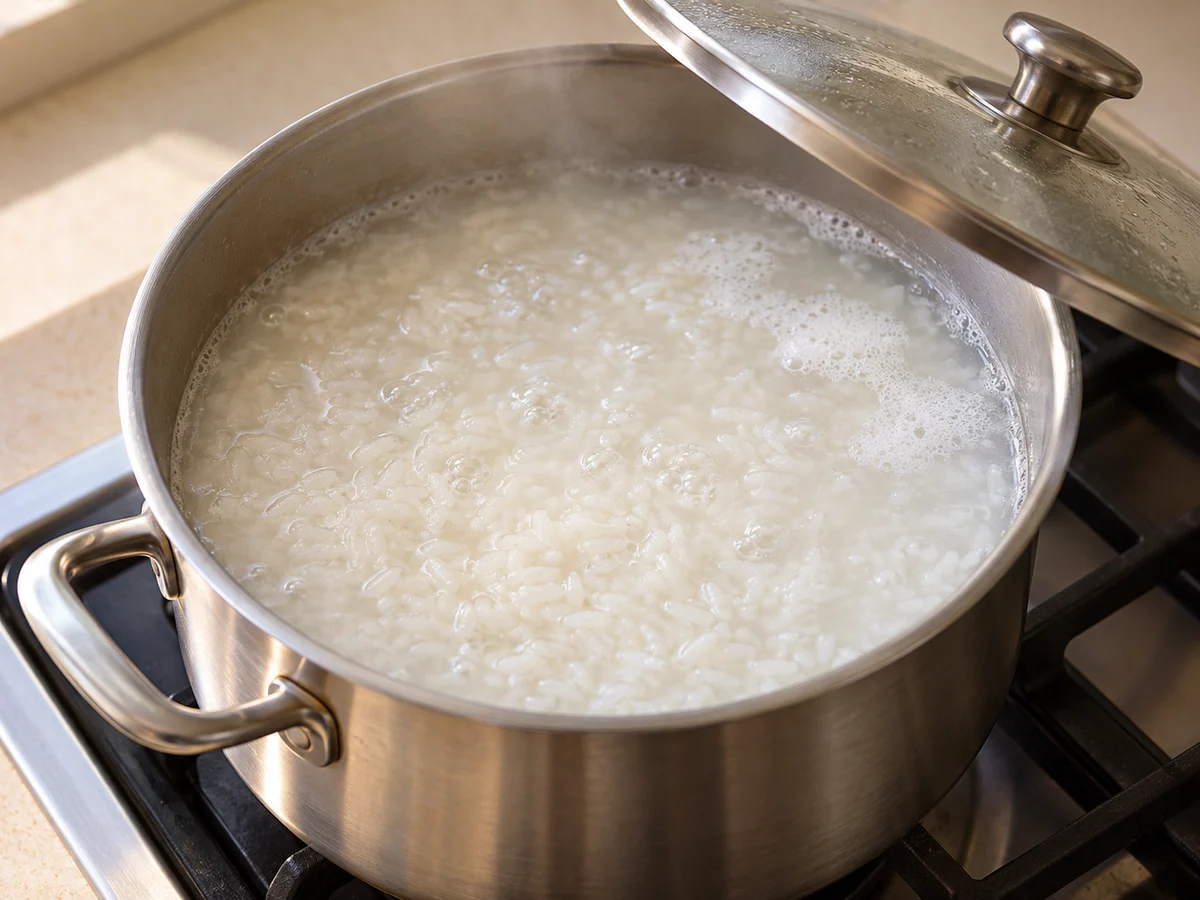
Plain rice congeeLower heat when boiling begins
Heat over medium-high while staying at the stove. Lower heat as soon as boiling and rising foam begin, rather than waiting for a fixed minute count. Leave the lid ajar if needed to prevent overflow.
Look forPorridge gently bubbles without overflowing.
See the full recipe ↗ 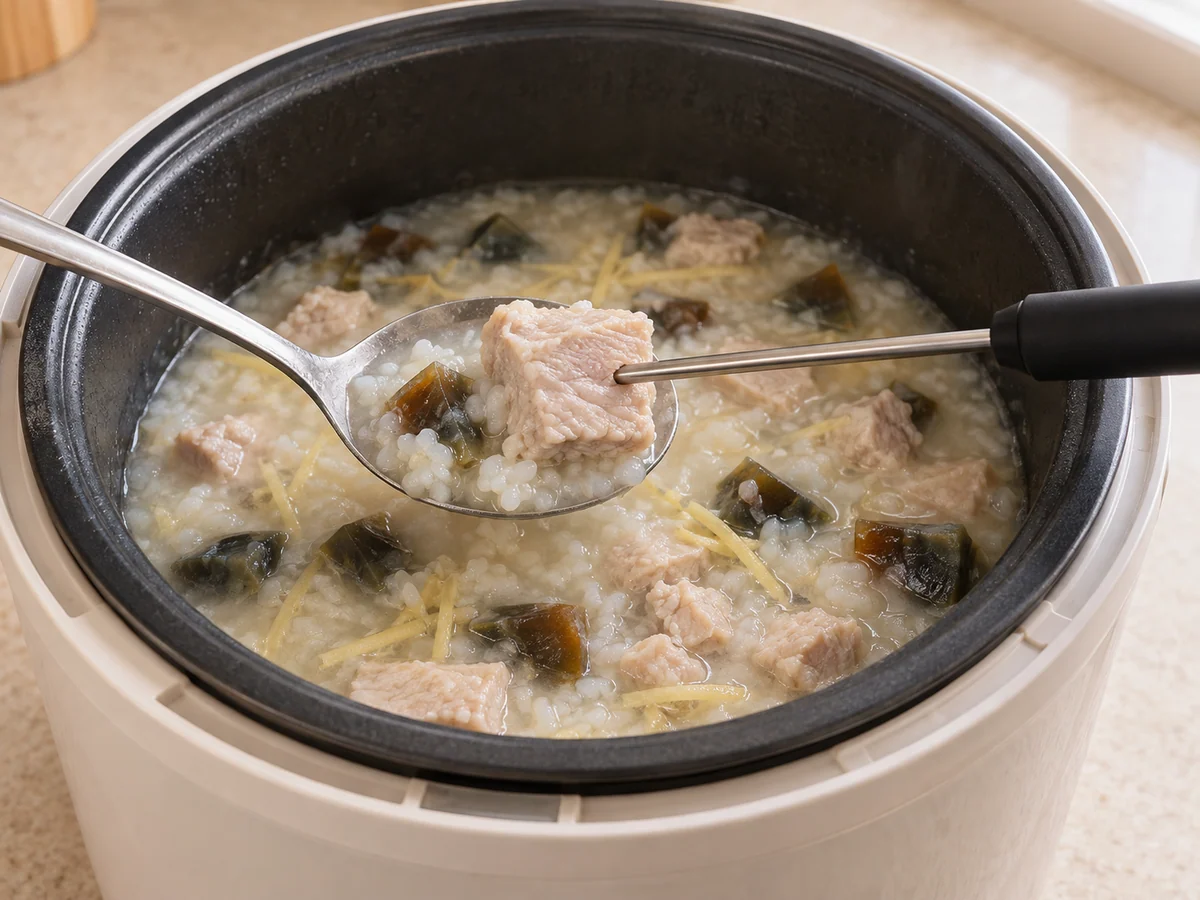
Pork and century egg congeeCheck rice and pork
When the program finishes and opening is safe, check rice has no hard center. Use a suitable thermometer for at least 63°C in the thickest pork center; continue an appropriate cooking program if needed.
Look forRice is soft and pork center reaches at least 63°C.
See the full recipe ↗ 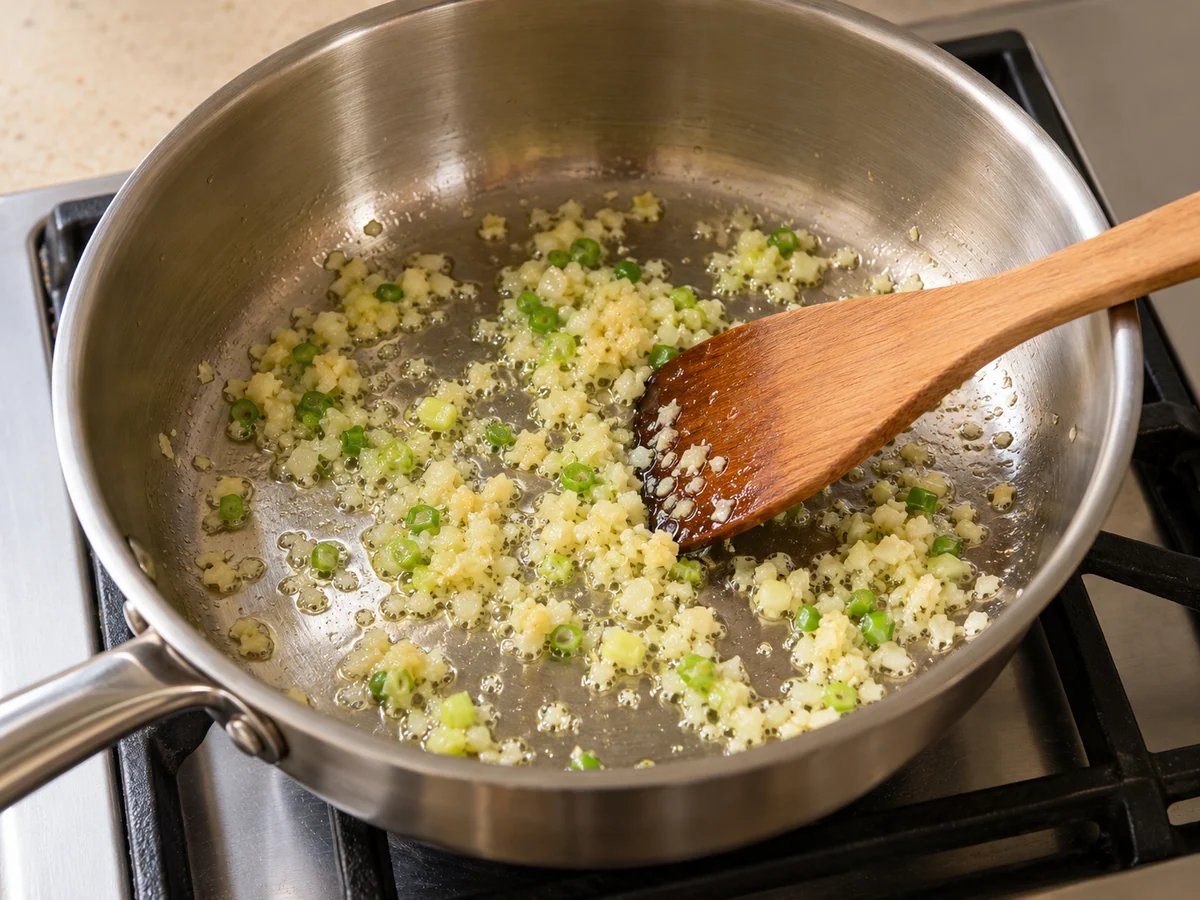
Tomato and egg soupCook aromatics
Warm oil over medium-low heat without waiting for smoke. Add aromatics and stir with a 30 sec check; add tomato once fragrant and unburnt.
Look forAromatics are fragrant without blackening.
See the full recipe ↗ 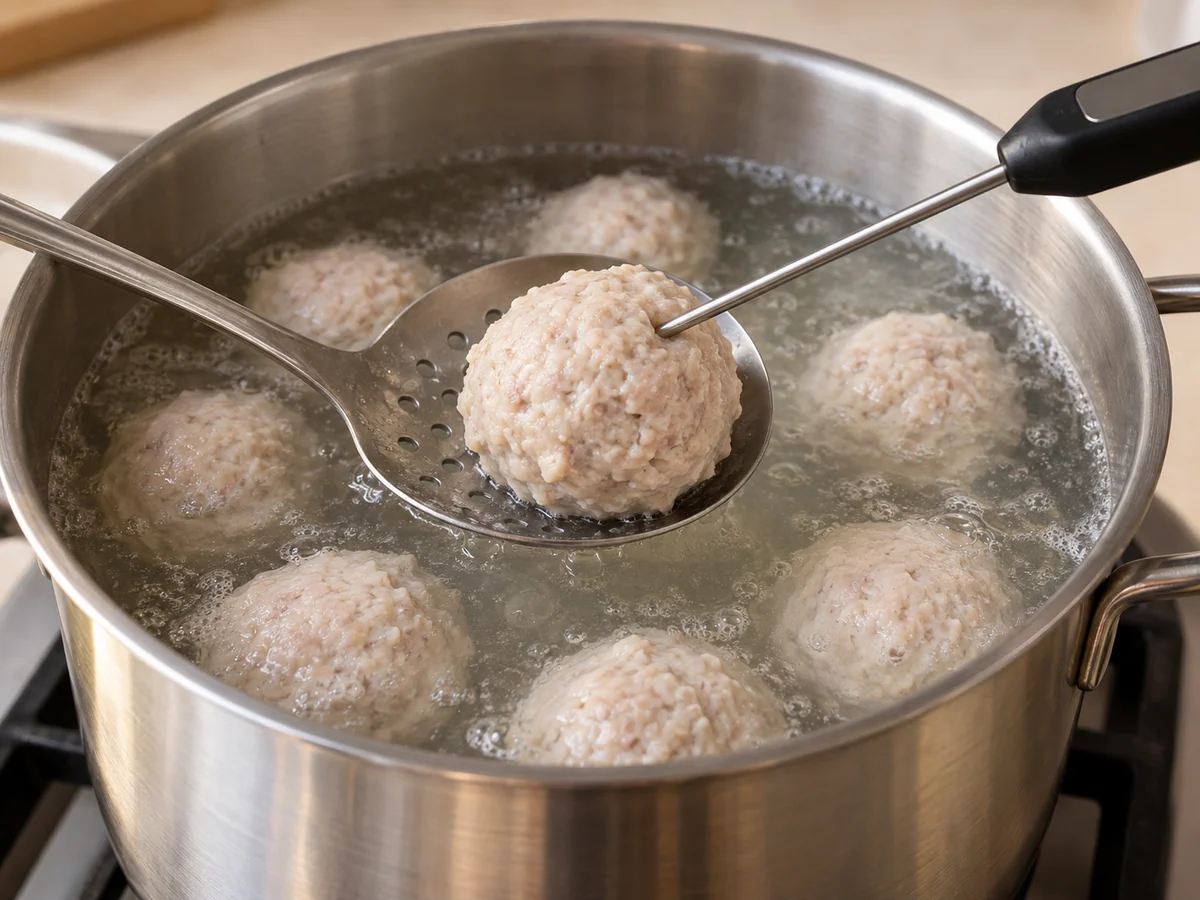
Poached pork meatball soupCheck the center after floating
Start a 1 min first check only after all meatballs in this batch float. Probe the largest center for at least 71°C and continue gently cooking if needed; floating and one minute are not proof.
Look forLargest meatball centers reach at least 71°C and hold their shape.
See the full recipe ↗ 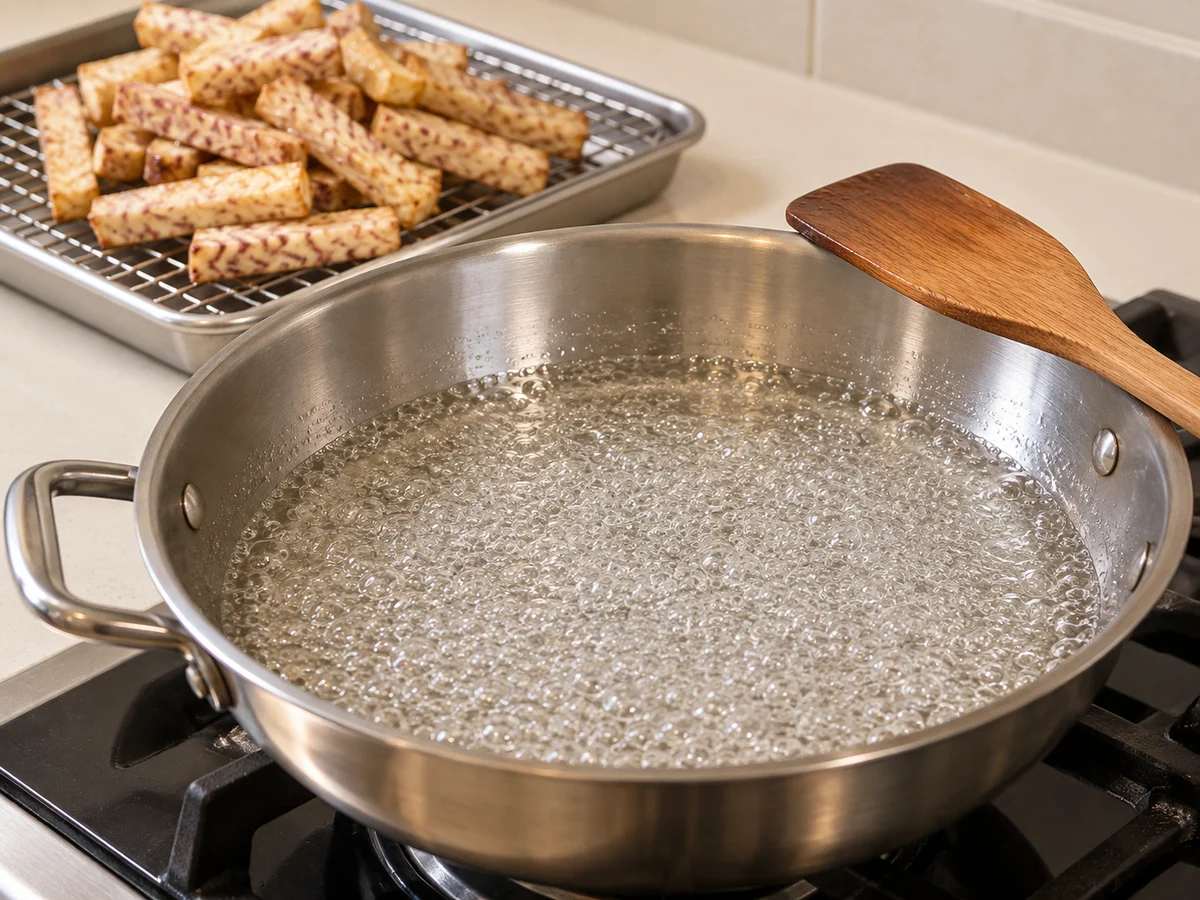
Sugar-crusted taroDrain and make syrup separately
Drain taro on a rack and leave frying oil in its pot to cool. In a separate clean pan, dissolve sugar in the syrup water over low heat and cook to fine bubbles without browning. Never put the syrup water into the frying-oil pot.
Look forThe syrup is clear with fine even bubbles and no caramel color.
See the full recipe ↗ FROM INSPIRATION TO DINNERYour next step is in the kitchen.
Bring a little guidance along. Open EagerCook for the cooking experience.