
Tea eggs
Cook the eggs first, then crack the shells and simmer them in spiced tea.
A semi-dry spiced vegetable dish with potatoes started before cauliflower. One ordinary-pan method, without the creamy cashew-gravy variation. 2 generous side portions; rice or flatbread separate
2 servings · 5 steps
Only identified risks are listed. An omission is not an absence claim. Check actual products, substitutions and cross-contact risks. Inspect potatoes before peeling; reject green, heavily sprouted, shriveled or spoiled potatoes. If the finished dish unexpectedly tastes bitter, stop eating and discard it; further heating is not a remedy. Do not taste raw potato to test it. Wash hands before and after preparation. Use clean equipment and rinse ready-to-eat produce under running potable water without soap. Separate utensils for raw meat, egg or flour from ready-to-eat food; wash hands and clean contact surfaces afterward. This draft chooses a conservative household routine: remove chilled ingredients close to use, and eat cold dishes promptly or refrigerate immediately. Divide cooked food being saved into shallow portions, cool rapidly and refrigerate promptly rather than leaving an entire pot to cool at room temperature. Target refrigeration within 1 hour after cooking or cold preparation finishes, at 4°C or below, and use within 24 hours of preparation. For refrigerated ready-to-eat food taken out repeatedly, count cumulative room-temperature exposure rather than restarting the clock after refrigeration; this draft sets a conservative cumulative limit of 1 hour. US USDA guidance gives 2 hours in ordinary conditions or 1 hour above about 32°C. The 24-hour plan is an editorial limit, not a universal official shelf life. Reheating is not a remedy for poor storage. Reheat cooked leftovers only once. Rice follows the rice-specific policy below; for other cooked food this draft chooses US USDA leftover guidance, checking a center temperature of at least 74°C (165°F) with a clean probe and bringing soups and sauces back to a boil. This selected leftover method does not replace each recipe’s initial cooking method and is not presented as the only global standard. Discard food with an uncertain storage history or signs of spoilage; do not use smell or tasting as proof of safety.
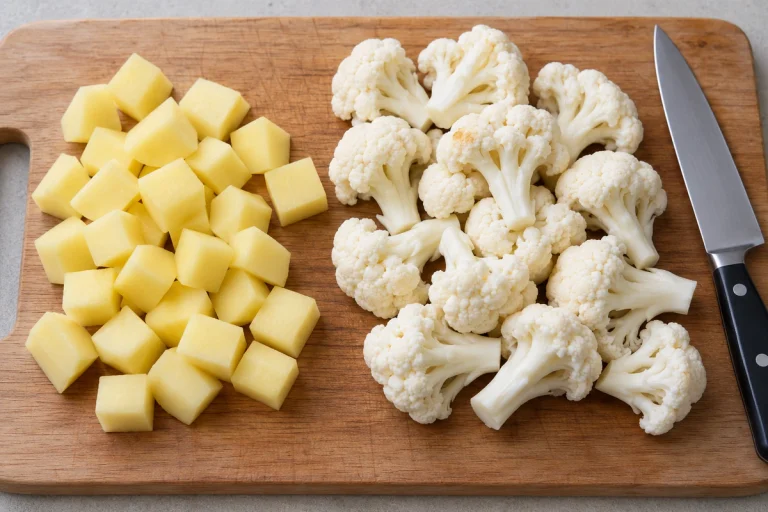
Inspect potatoes, peel and cut into 1.5 cm cubes. Wash/drain cauliflower and divide into 3 cm florets, trimming stems to no thicker than 1 cm. Prepare onion, tomato, ginger, garlic and cilantro. Measure spices and keep garam masala for the finish. If the result differs: Recut oversized potato pieces rather than using high heat that burns their exterior
Smaller potato cubes and larger florets for compatible cooking
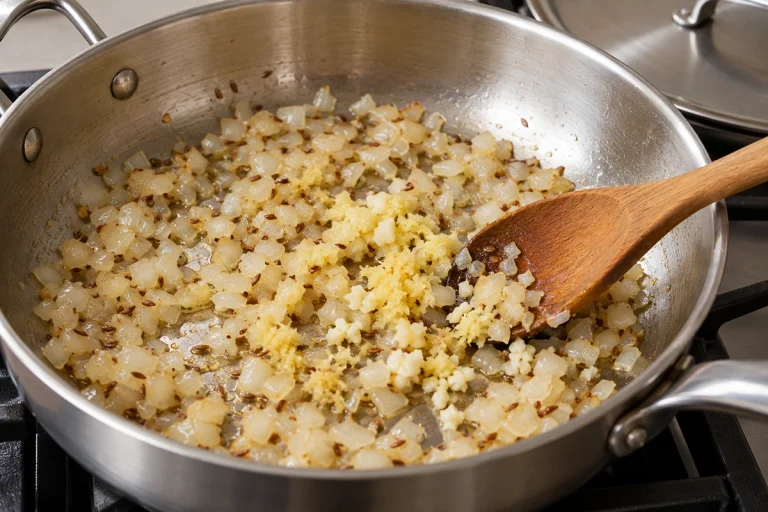
Heat oil over medium heat, add cumin seeds and let them gently sizzle for about 20 seconds. Add onion and cook over medium-low about 4 minutes until softened. Stir ginger and garlic for 30 seconds, then proceed immediately to the potato-and-water stage. Keep tomato until the vegetables are tender. If the result differs: Remove from heat if spices smoke; if burnt, remake the base rather than mixing it into vegetables
Soft onion and fragrant ginger/garlic without scorching
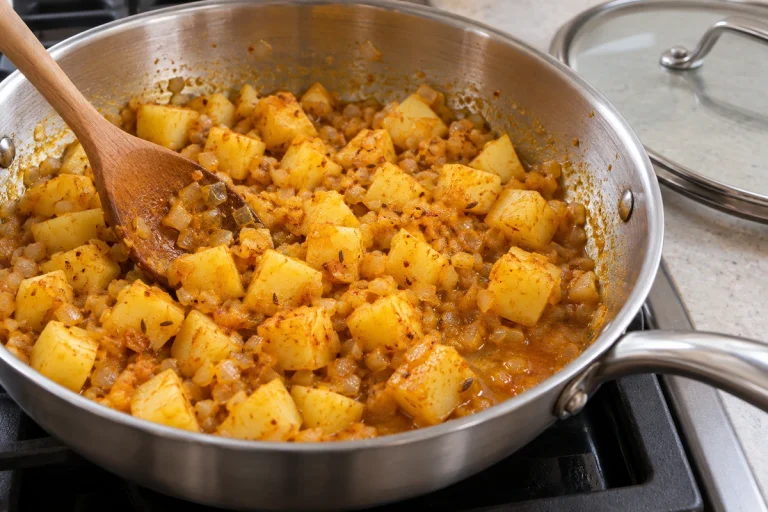
Add potatoes, coriander, turmeric, chile powder and salt, immediately followed by 30 mL of the measured 60 mL water; turn to coat. Cover over low heat, setting the first check for 8 minutes once gentle bubbling resumes. Turn once midway; the fork should enter the outside while the center is still somewhat firm. If the result differs: If entirely hard, continue covered with 2-minute checks; add reserve water 15 mL at a time if drying Start the timer: Gentle bubbling resumes after water is added and the lid closed Timer purpose: A reminder to inspect, not evidence of doneness When the timer ends: Inspect now: Potatoes soften on the outside and the base stays moist. If entirely hard, continue covered with 2-minute checks; add reserve water 15 mL at a time if drying
Potatoes soften on the outside and the base stays moist
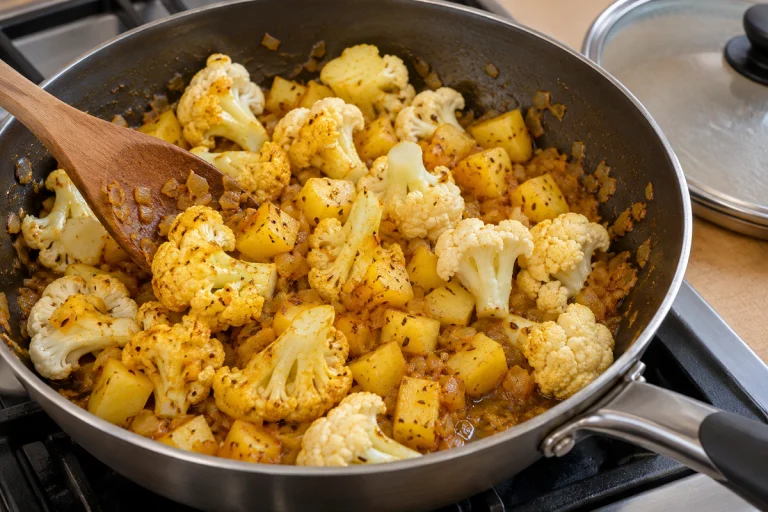
Add cauliflower and the remaining 30 mL water, turning gently to coat. Cover over low heat with the first check for 10 minutes and turn gently midway. A fork must enter potato centers and the thickest cauliflower stems easily while florets largely retain their shape. If the result differs: If firm, continue with 3-minute checks and add 15 mL reserve water as needed. Reserve use across both stages is at most 60 mL; keep this a semi-dry dish rather than a gravy Start the timer: Gentle bubbling resumes after cauliflower is added and covered Timer purpose: A reminder to inspect, not evidence of doneness When the timer ends: Inspect now: Both vegetables are tender without hard potato centers. If firm, continue with 3-minute checks and add 15 mL reserve water as needed. Reserve use across both stages is at most 60 mL; keep this a semi-dry dish rather than a gravy
Both vegetables are tender without hard potato centers
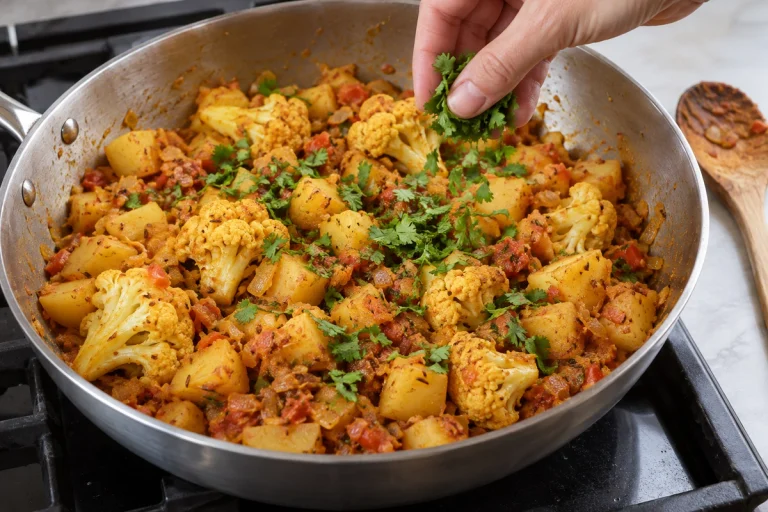
Once vegetables are tender, uncover and add tomato. Turn gently over medium heat for about 4–5 minutes until tomato softens and most loose liquid reduces. Stir in garam masala for about 30 seconds, turn off heat, add cilantro and serve as two side portions. If the result differs: Do not reduce further if already dry; move gently rather than vigorously stirring fragile florets
Spices lightly coat vegetables without gravy or a scorched dry base