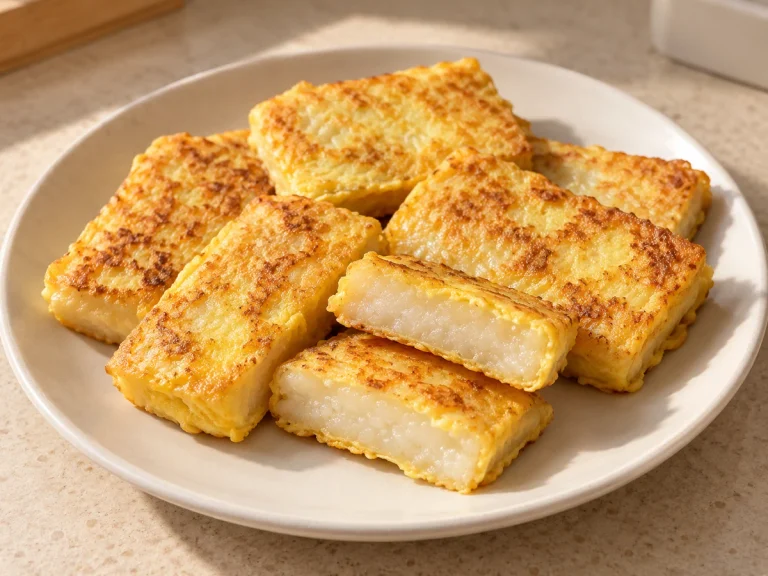

Tea eggs
Cook the eggs first, then crack the shells and simmer them in spiced tea.
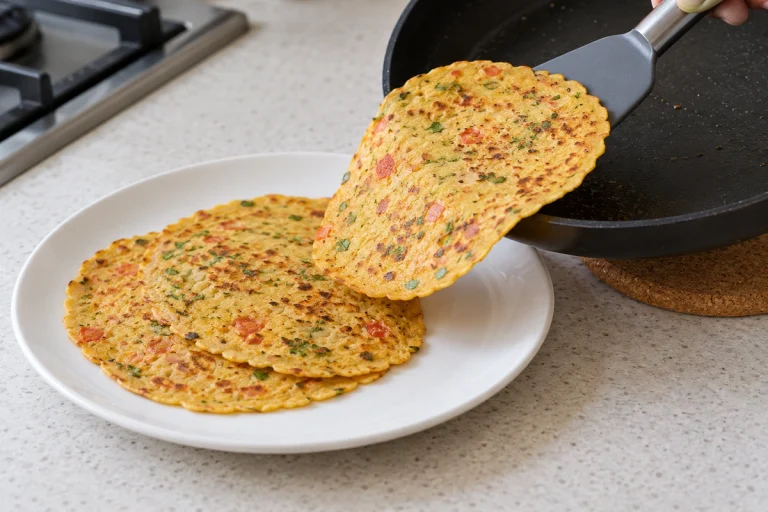
Thin savory pancakes of fine gram flour and finely minced vegetables, portioned and cooked through; no baking powder or hing. About six 16 cm pancakes, 2 portions; actual yield unmeasured
2 servings · 5 steps
Only identified risks are listed. An omission is not an absence claim. Check actual products, substitutions and cross-contact risks. Other identified food-allergy risks outside the 14 groups: chickpea Chickpeas are legumes and can cause allergy. This is not an allergen-free recipe; check the actual flour and spice labels and cross-contact risks. Rejects the reference’s raw-flour tasting suggestion. Handle flour, batter and contact surfaces as raw food and taste only after cooking through. CDC flour guidance is not besan-specific temperature validation. Wash hands before and after preparation. Use clean equipment and rinse ready-to-eat produce under running potable water without soap. Separate utensils for raw meat, egg or flour from ready-to-eat food; wash hands and clean contact surfaces afterward. This draft chooses a conservative household routine: remove chilled ingredients close to use, and eat cold dishes promptly or refrigerate immediately. Divide cooked food being saved into shallow portions, cool rapidly and refrigerate promptly rather than leaving an entire pot to cool at room temperature. Target refrigeration within 1 hour after cooking or cold preparation finishes, at 4°C or below, and use within 24 hours of preparation. For refrigerated ready-to-eat food taken out repeatedly, count cumulative room-temperature exposure rather than restarting the clock after refrigeration; this draft sets a conservative cumulative limit of 1 hour. US USDA guidance gives 2 hours in ordinary conditions or 1 hour above about 32°C. The 24-hour plan is an editorial limit, not a universal official shelf life. Reheating is not a remedy for poor storage. Reheat cooked leftovers only once. Rice follows the rice-specific policy below; for other cooked food this draft chooses US USDA leftover guidance, checking a center temperature of at least 74°C (165°F) with a clean probe and bringing soups and sauces back to a boil. This selected leftover method does not replace each recipe’s initial cooking method and is not presented as the only global standard. Discard food with an uncertain storage history or signs of spoilage; do not use smell or tasting as proof of safety.
Confirm the flour is fine besan and within labeled storage/use conditions; do not taste raw flour to assess quality. Wash and mince vegetables as listed, keeping onion and tomato pieces no larger than 2 mm. Wash hands after handling chile. If the result differs: Reject mold, pests or obvious spoilage rather than masking it with cooking or spices
Fine vegetables will not create thick raw batter pockets
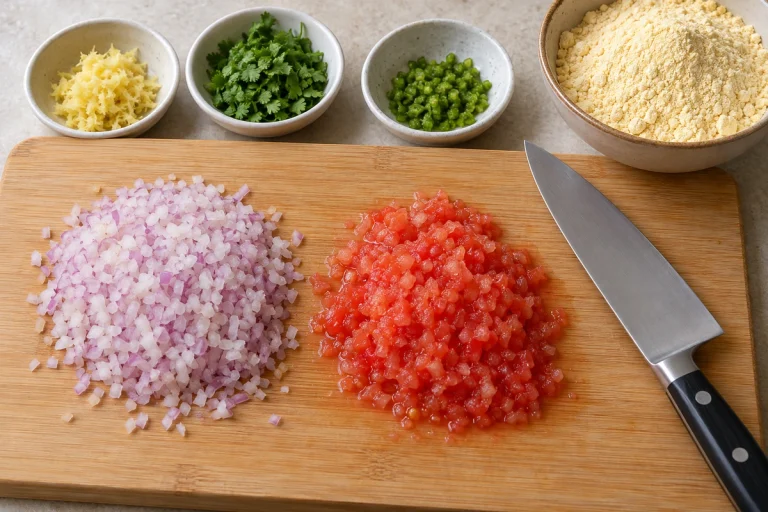
Combine besan, ajwain, turmeric and salt. Whisk in 150 mL of the measured 200 mL water until no dry pockets remain, then add vegetables, ginger, cilantro and the remaining 50 mL. Rest about 5 minutes. Batter should fall in a broad ribbon and spread when the bowl tilts; only if too thick, add reserve water 5 mL at a time, up to 30 mL. If the result differs: Do not taste raw batter. If too much water was accidentally added, rest 5 minutes and check again; do not try to compensate for watery batter by cooking a thicker layer on the same timing
Pourable batter without dry lumps and evenly distributed vegetables

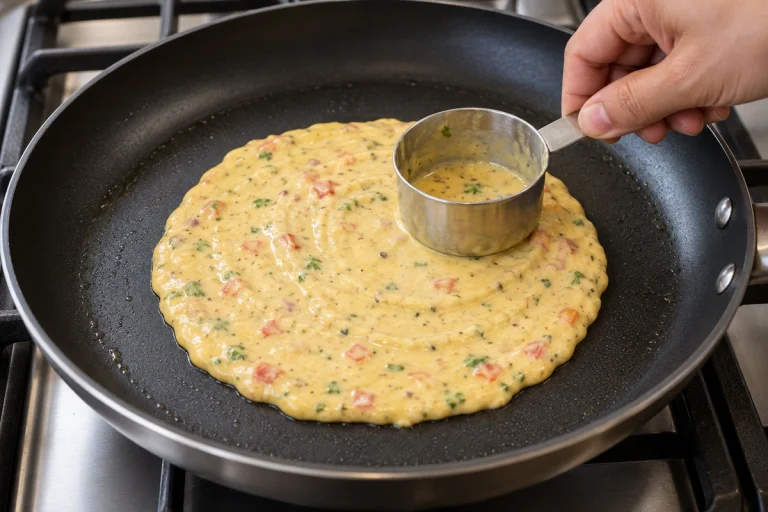
Preheat the pan over medium heat for about 1 minute, then reduce to medium-low and spread about 2.5 mL oil. Stir batter before each portion, pour 60 mL into the center and gently spread with the cup base to about 16 cm across and 2–3 mm thick. Set the first check for 3 minutes, uncovered. If the result differs: If still fluid, continue in 30-second checks. Lower heat if the base darkens too quickly and spread the next pancake evenly; browning alone does not prove doneness Start the timer: The 60 mL batter portion is spread into a thin circle Timer purpose: A reminder to inspect, not evidence of doneness When the timer ends: Inspect now: Surface changes from wet/glossy to set, edges lift and the base has golden spots. If still fluid, continue in 30-second checks. Lower heat if the base darkens too quickly and spread the next pancake evenly; browning alone does not prove doneness
Surface changes from wet/glossy to set, edges lift and the base has golden spots
Flip with a broad spatula and gently press edges into contact with the pan. Set the first check for 2 minutes. Both sides should have golden spots, and a cut through the center must reveal a set texture without wet, sticky raw batter. Cut open the first pancake before removing it and check the centers of later ones too. If the result differs: If dark outside and wet inside, reduce heat and cook both sides in 30-second turns until set. Keep later pancakes at 60 mL and 16 cm rather than thickening them to force a yield Start the timer: The flipped pancake is in contact with the pan Timer purpose: A reminder to inspect, not evidence of doneness When the timer ends: Inspect now: No raw batter in the center; pancake lifts intact. If dark outside and wet inside, reduce heat and cook both sides in 30-second turns until set. Keep later pancakes at 60 mL and 16 cm rather than thickening them to force a yield
No raw batter in the center; pancake lifts intact
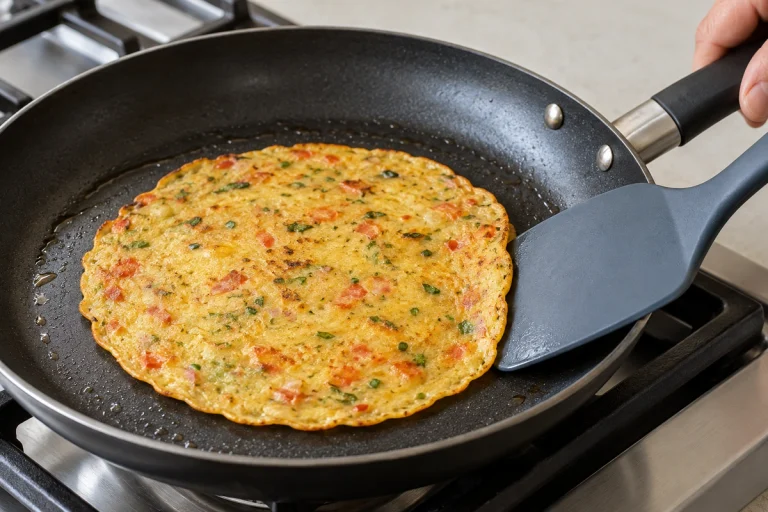
Move cooked pancakes to a clean plate. Stir before each further 60 mL portion and repeat steps 3 and 4, distributing the oil without exceeding 15 mL total. Expect about 6 pancakes; spread a smaller final portion to the same thickness and inspect it earlier. After cooking the final pancake, turn off the burner and move the pan off the heat. Serve as cooked, roughly divided between two people. If the result differs: If the pan is too hot to spread batter, briefly cool it off heat before the next portion. Do not stack warm pancakes for prolonged holding
Every pancake is thin and cooked through; exact count may vary with flour absorption