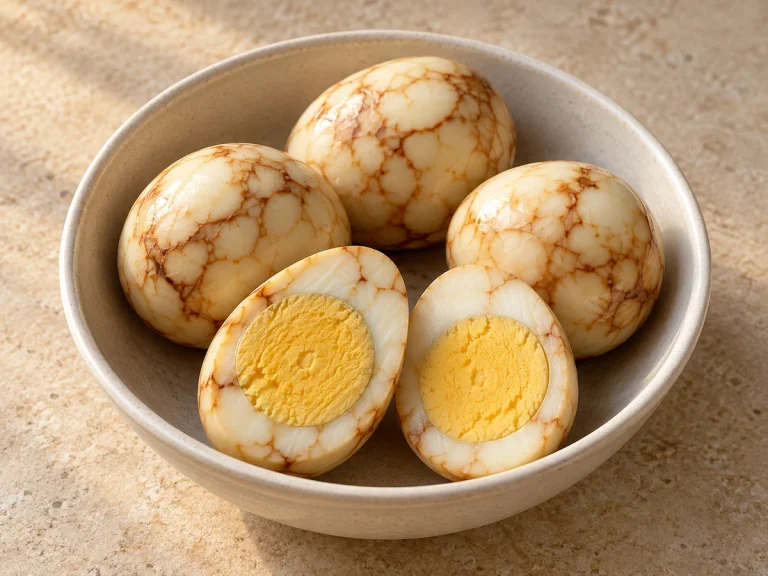
Tea eggs
Cook the eggs first, then crack the shells and simmer them in spiced tea.
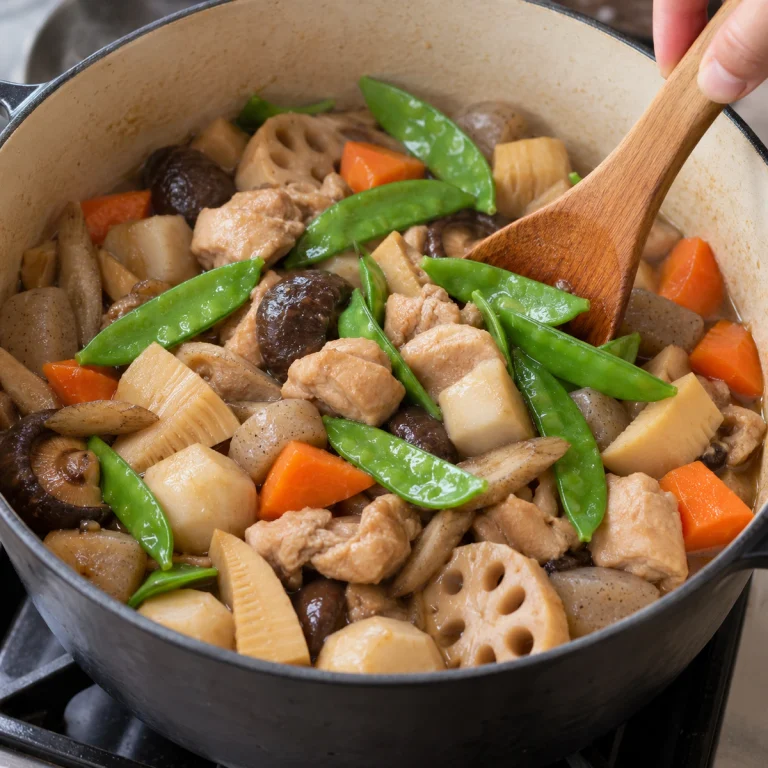
Chicken and a variety of root vegetables are sautéed before simmering in this classic Japanese home-style dish.
6 servings · 6 steps
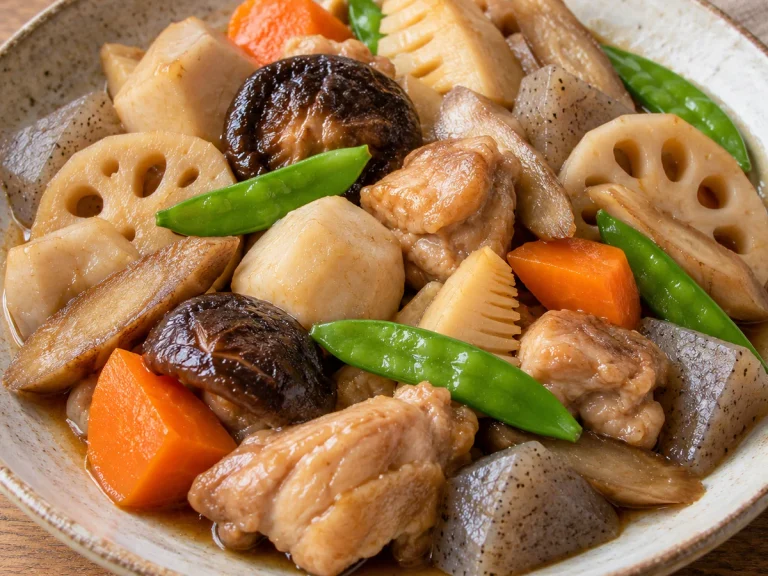
The chicken center must reach 74°C. You may wear gloves when peeling taro; cook the taro and root vegetables through. Wash utensils used for raw meat separately. Check the actual product packaging for allergens in blended seasonings and processed foods; this recipe is not certified allergen-free.
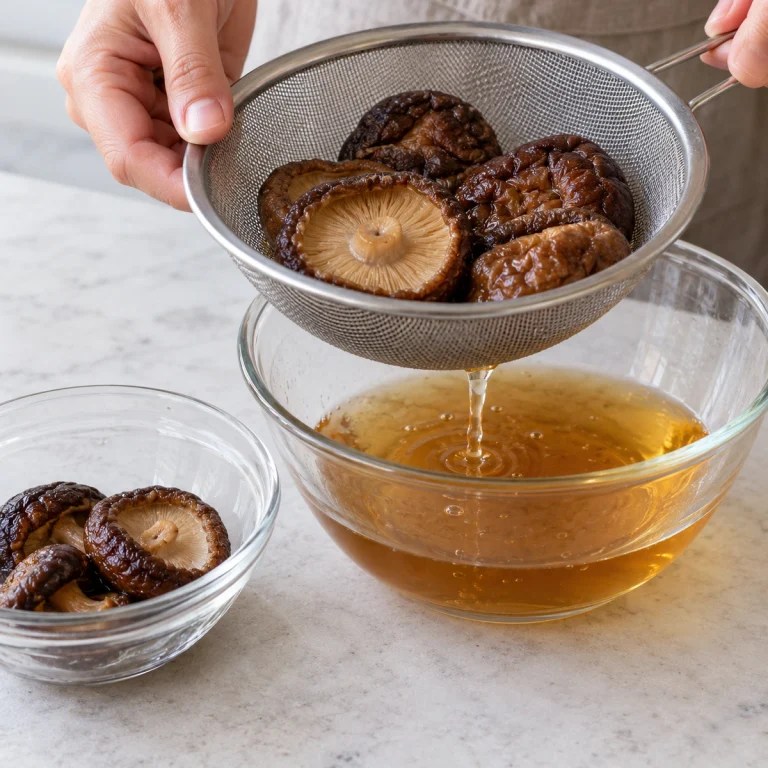
Soak the dried mushrooms for 20–30 minutes until soft, reserving the filtered soaking water. Cut the chicken into evenly thick pieces about 3.8 cm across and mix with the sake and soy sauce for marinating.
The mushrooms are softened, and the chicken pieces are similar in size and refrigerated until needed.
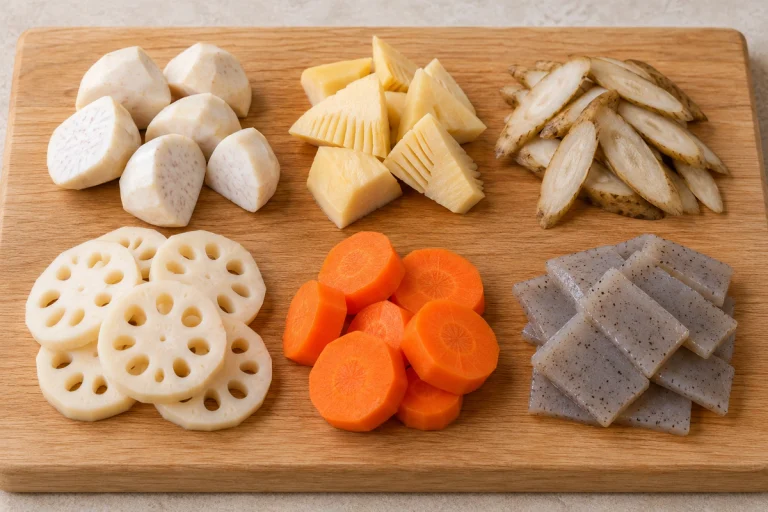
Peel and halve the taro and cut the bamboo shoots into bite-size pieces. Thinly slice the burdock diagonally, and cut the lotus root into 6 mm slices, carrot into 1.3 cm slices and konnyaku into 6 mm slices. Soak the burdock and lotus root separately, each in 2 cups of water with half a tablespoon of vinegar, for 15 minutes.
The root vegetables are cut and drained, and the taro is peeled.
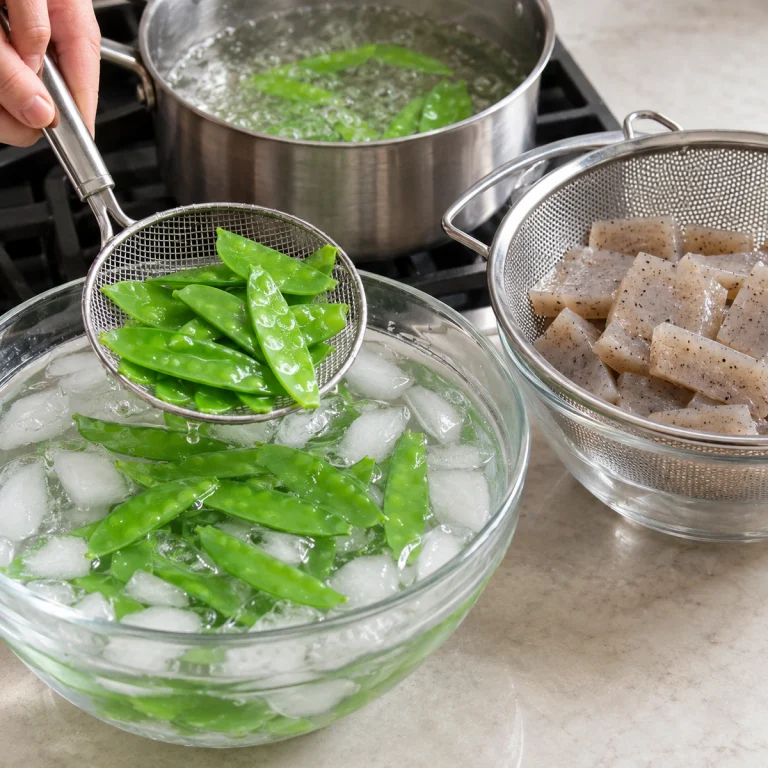
Remove the strings from the snow peas. Blanch in boiling water with the salt allocated for blanching for 30–60 seconds, then transfer to ice water. Blanch the konnyaku separately for 2–3 minutes.
The snow peas are cooked but crisp, and the konnyaku is drained.
Use 1 tablespoon of sesame oil in a pot over medium heat to sauté the chicken until its surface turns white, then temporarily remove it. Use the remaining oil to sauté the vegetables and mushrooms, excluding the snow peas.
The chicken is only partially sautéed and is not yet ready to eat.
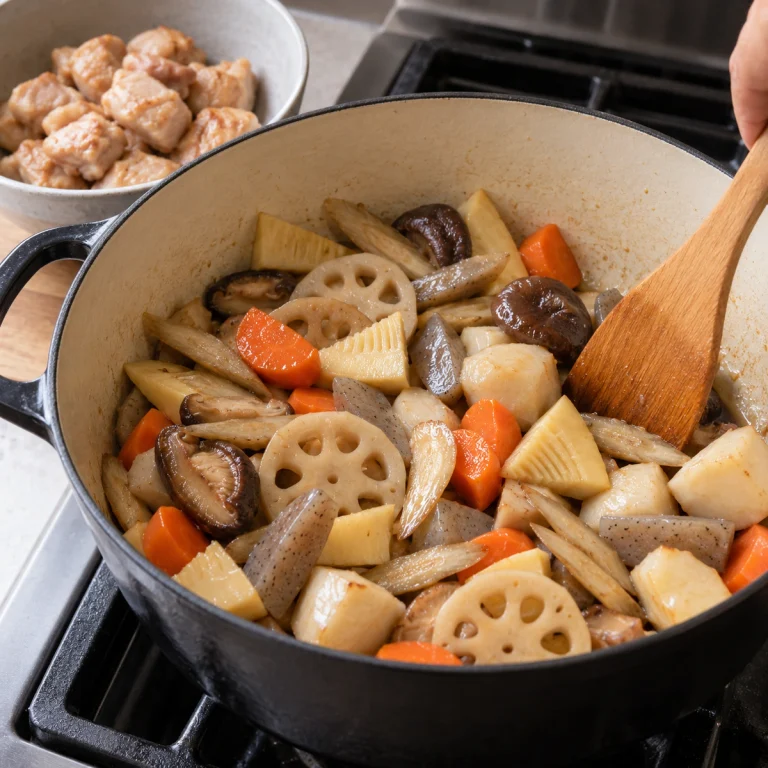
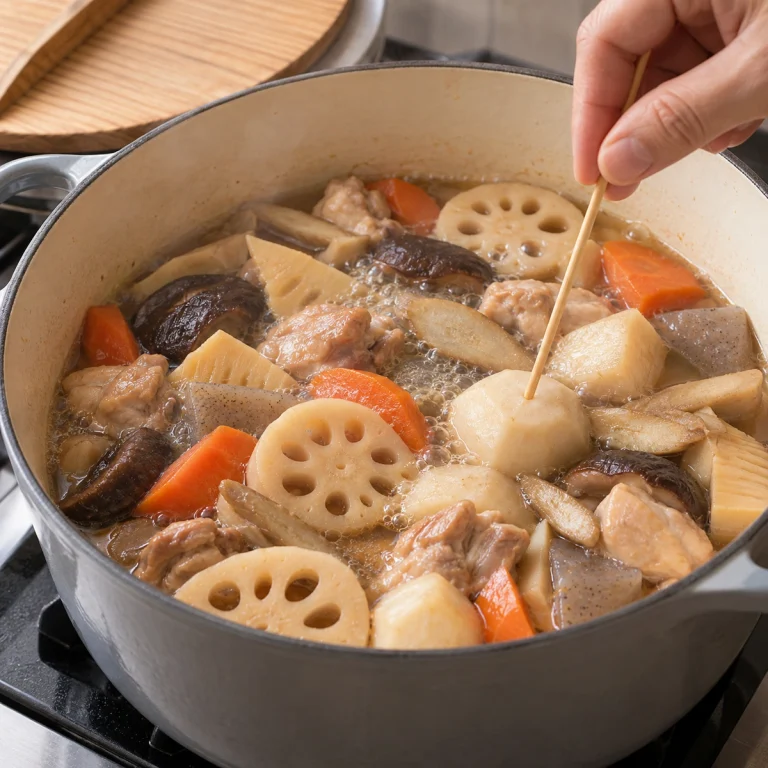
Add 2 cups of dashi and the filtered mushroom soaking water. Skim off the foam, add the simmering seasonings and return the chicken to the pot. The liquid should reach about eighty percent of the way up the ingredients. Cook with a drop lid for 10 minutes, then uncovered for 10 minutes.
Even the firmest taro and lotus root can be pierced through, and the chicken center is at 74°C.
Gently stir in the cooked snow peas and heat through, then serve with a little of the cooking liquid.
All ingredients are hot throughout and have not been broken up by vigorous stirring.