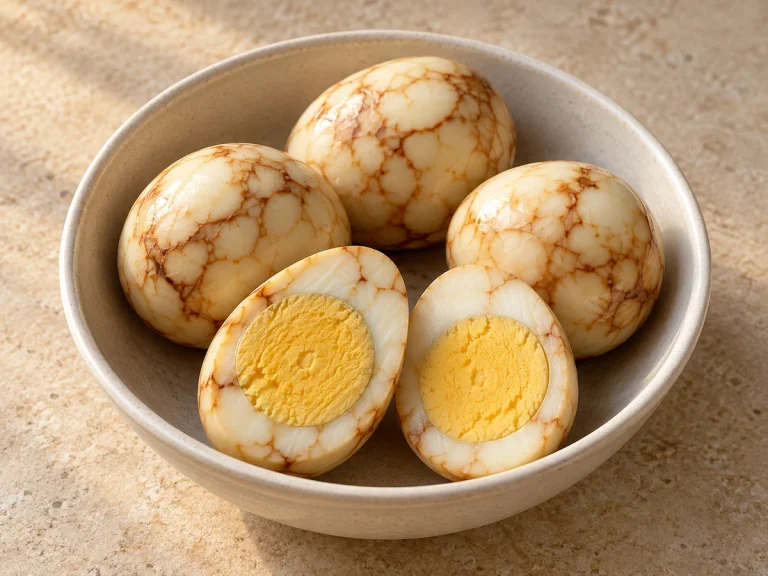
Tea eggs
Cook the eggs first, then crack the shells and simmer them in spiced tea.
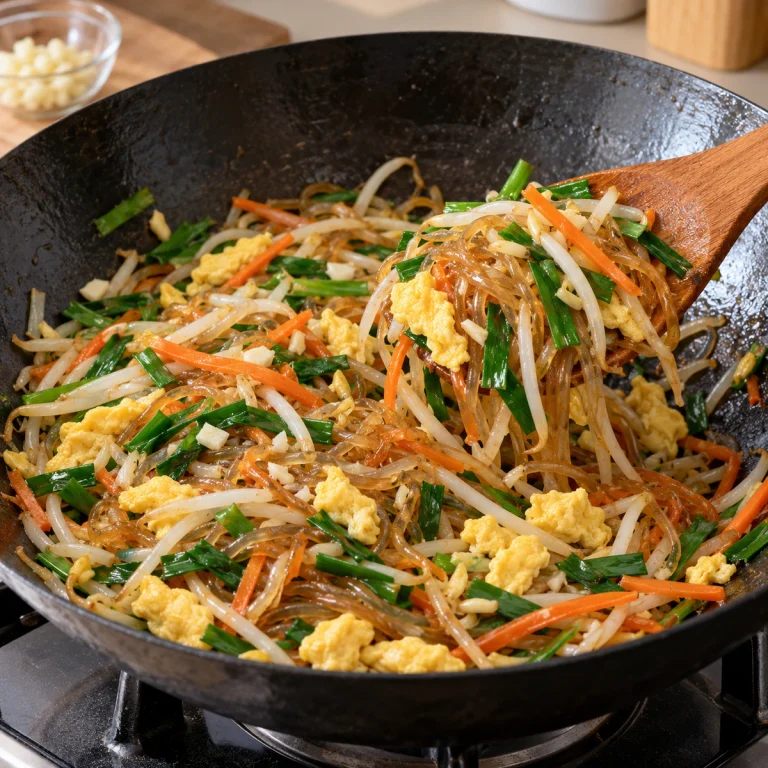
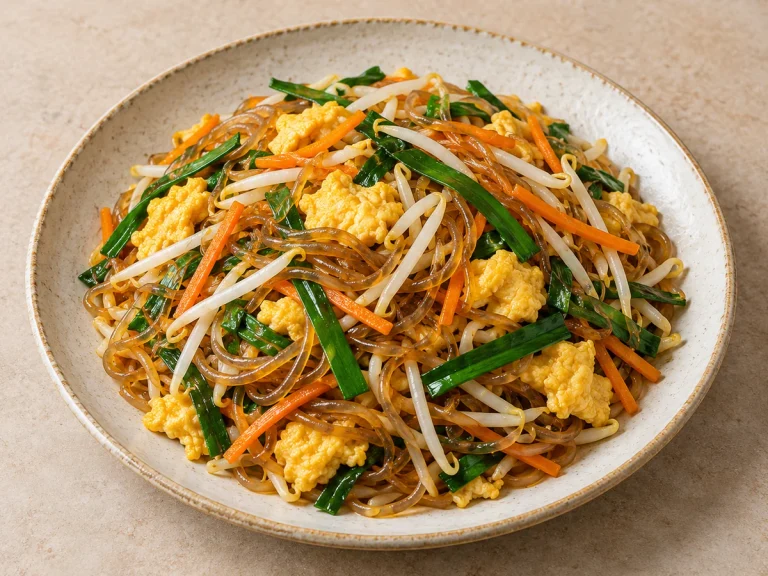
Glass noodles, eggs, bean sprouts, carrot and Chinese chives are prepared separately before being stir-fried together. The finished dish is moist and glossy, with no pooled liquid.
4 servings · 4 steps
Keep utensils for raw and cooked food separate. Times are only a guide; all ingredients must be fully cooked. A teaspoon is 5 ml, a tablespoon is 15 ml, and a measuring cup is about 237 ml; a cup measure of a solid ingredient cannot be treated as the same number of grams. Check allergen labels on packaged foods.
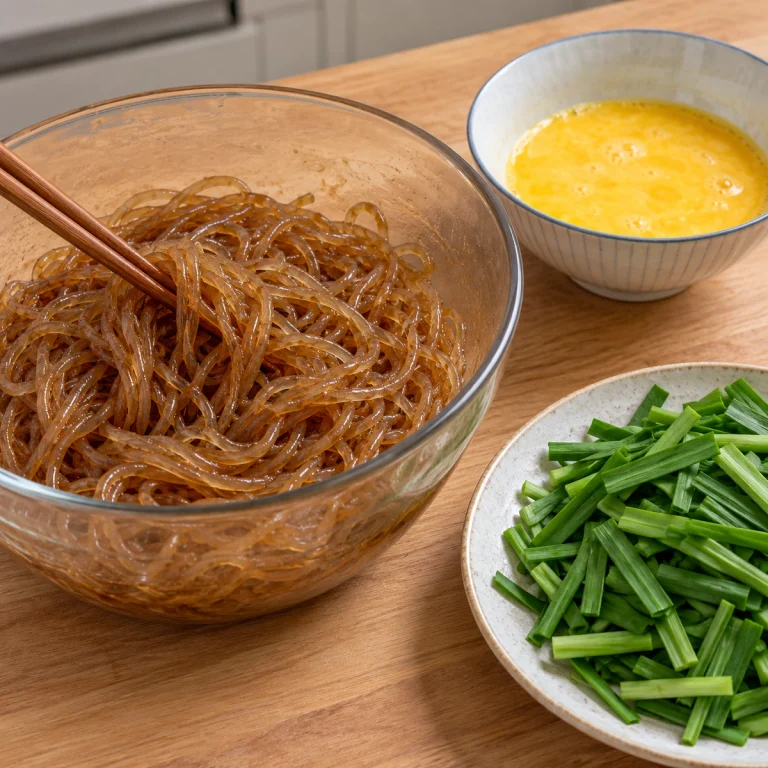
Cook the noodles according to the package instructions until soft and drain. Toss with dark soy sauce, sesame oil and 2 tablespoons of water. Beat the eggs evenly and mix in the wine and the salt for the egg mixture. Cut the Chinese chives into 5 cm lengths.
The noodles have no hard centers, and the egg mixture is uniform
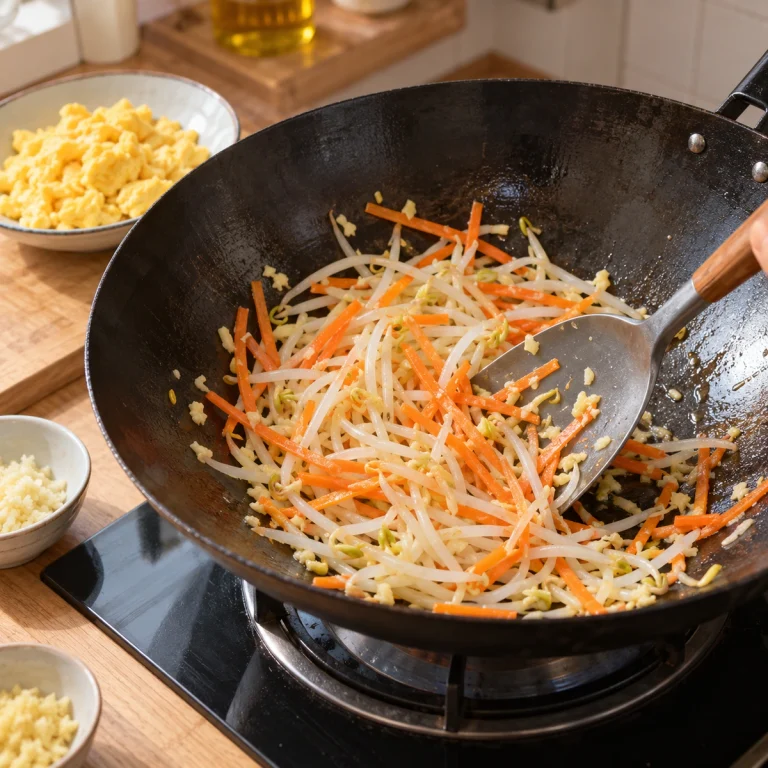
Scramble the eggs in 2 tablespoons of oil until mostly set and transfer to a bowl. Use the remaining oil to stir-fry the ginger and carrot for 1 minute, then add half the minced garlic and the bean sprouts and stir to combine.
The eggs form soft pieces, the carrot is slightly softened, and the bean sprouts are beginning to lose their rawness
Add the oyster sauce, light soy sauce, sugar, vinegar and ground Sichuan peppercorns. Stir to combine, then add the Chinese chives, noodles and eggs. Add the extra stir-frying water only if the mixture becomes dry and sticky.
The noodles are loose, with the eggs and vegetables evenly distributed
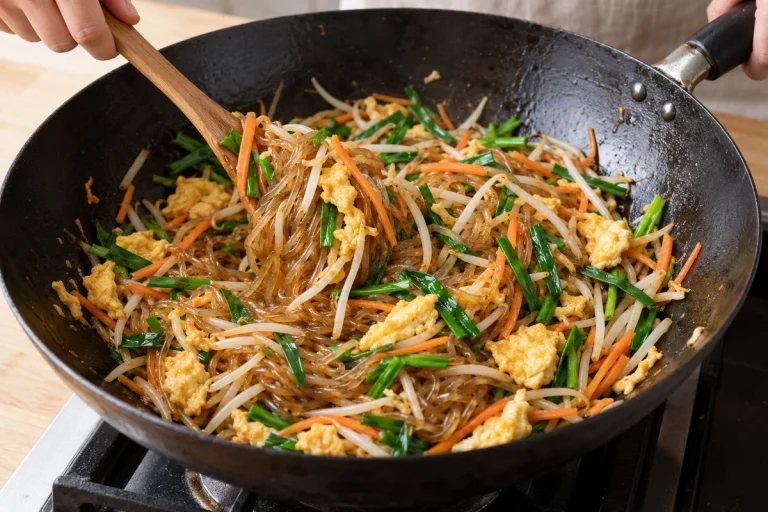
Add the remaining minced garlic, taste and add salt if necessary. Stir-fry until the Chinese chives soften and the bean sprouts and eggs are fully cooked, then serve.
The eggs have no raw liquid, the bean sprouts are no longer raw, and the surface is glossy with no liquid pooled on the plate