Tea eggs
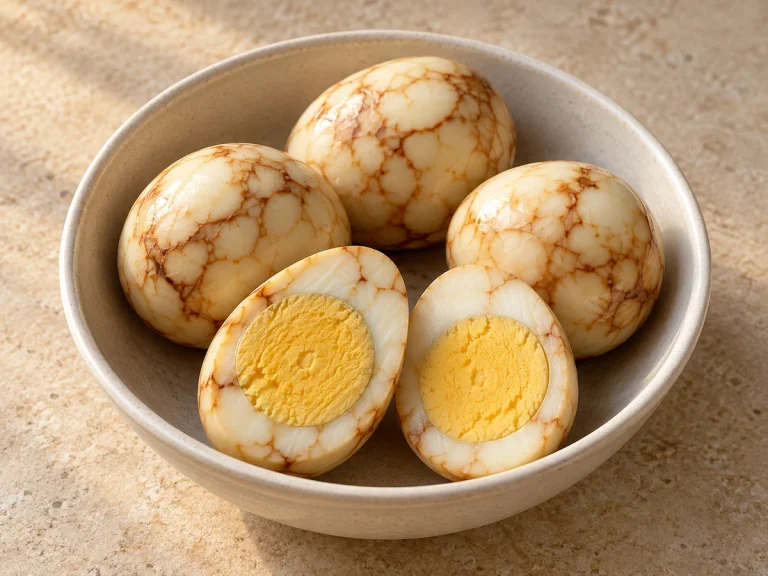
Cook the eggs first, then crack the shells and simmer them in spiced tea.
Fresh ginger juice sets milk heated to seventy degrees Celsius into a curd as it rests. A thermometer and a bowl placed on a stable surface are needed.
1 servings · 4 steps
Keep utensils for raw and cooked food separate. Times are only a guide; ingredients must be cooked through. A teaspoon is 5 ml, a tablespoon is 15 ml, and a measuring cup is about 237 ml. A cup measure of a solid ingredient cannot be treated as the same number of grams. Check allergen labels on packaged foods. Do not use raw milk; fresh ginger juice is not a reliable disinfectant. Use a food thermometer rather than testing hot milk with a finger.
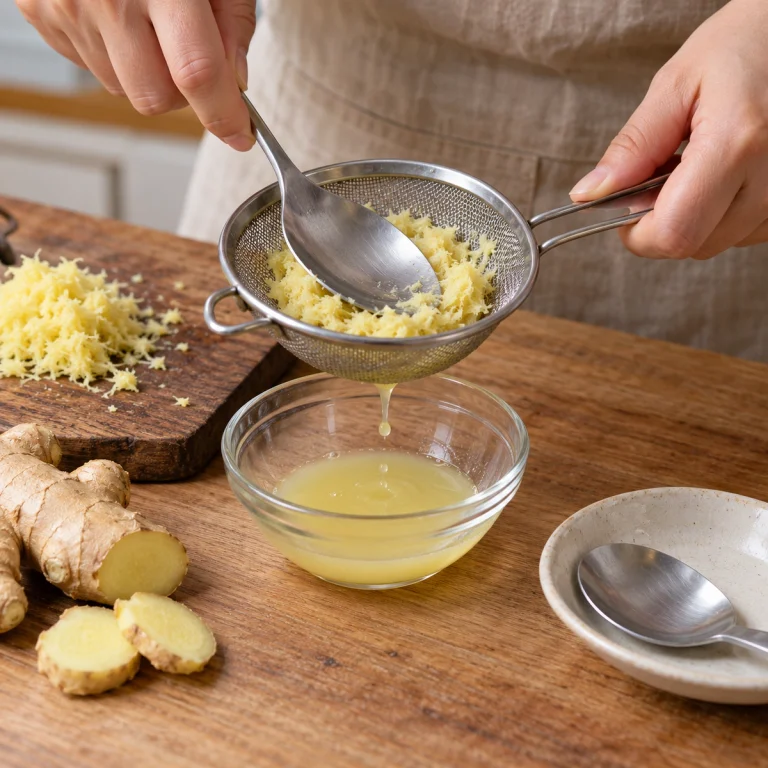
Wash and peel the ginger, then grate it finely. Press it through a fine strainer to extract the juice, and measure 1 tbsp into a small bowl.
The juice is separated from the coarse pulp, about 15 ml
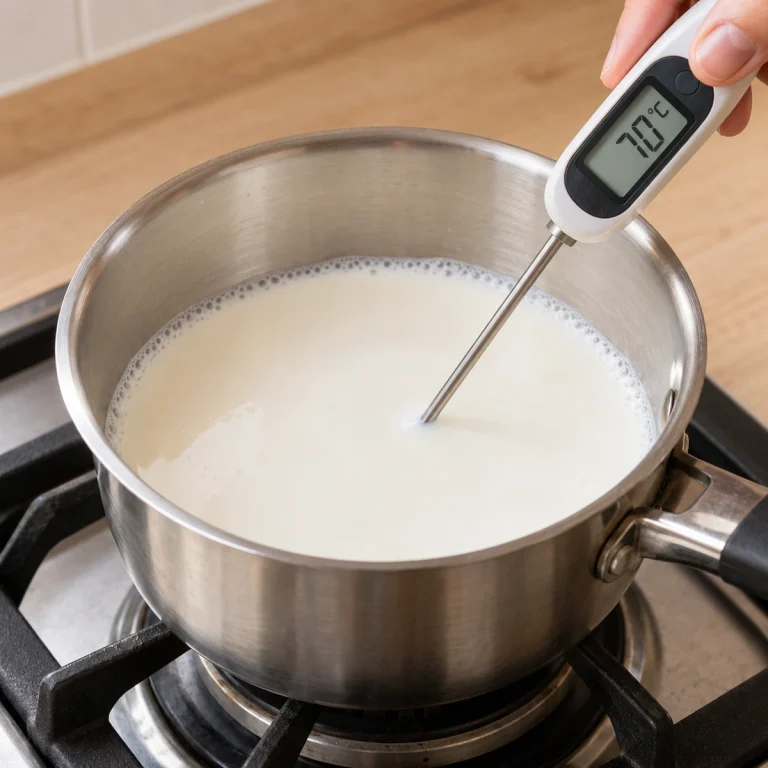
Heat the milk in a small saucepan and stir in the sugar when warm. Remove from the heat immediately when the thermometer reaches 70℃.
The sugar has dissolved, and the milk is at 70℃ without boiling
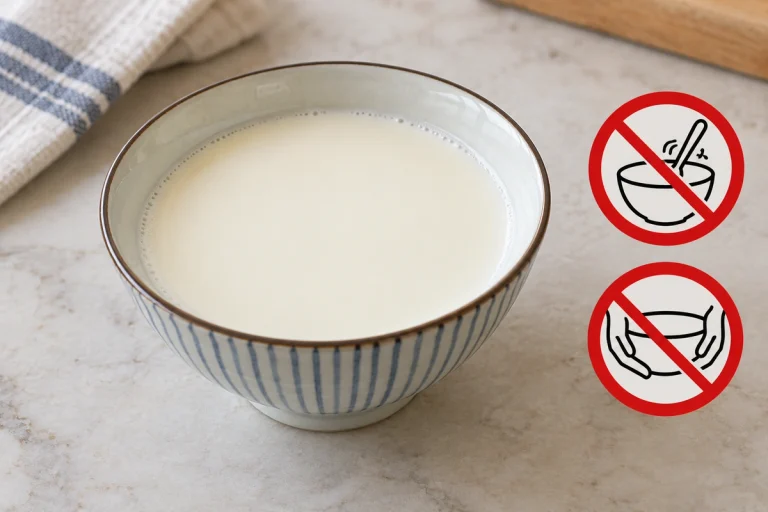
Stir the ginger juice at the bottom of the bowl again, then quickly pour in the hot milk. Do not stir or move the bowl afterward; let stand for 10 minutes.
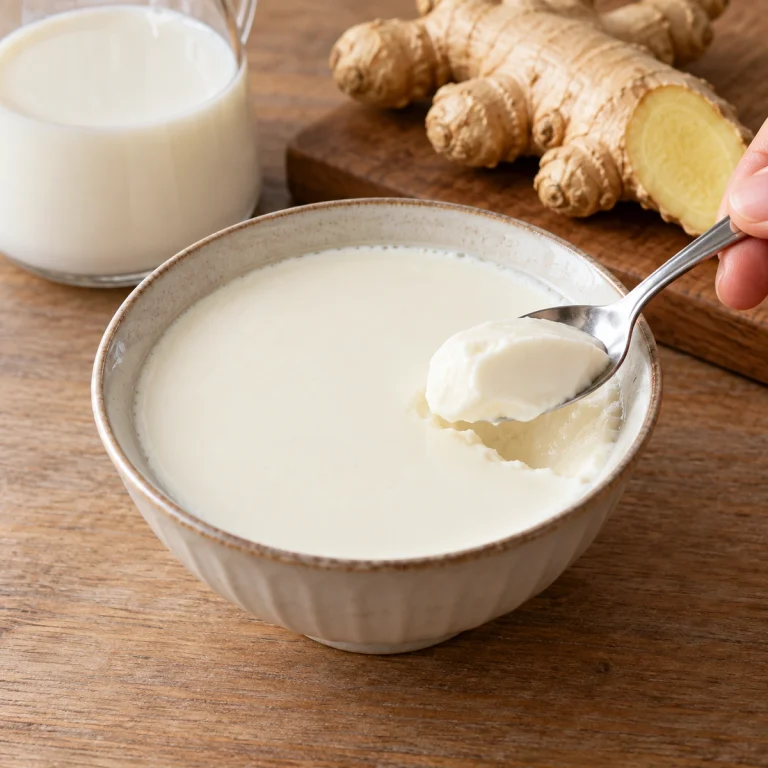
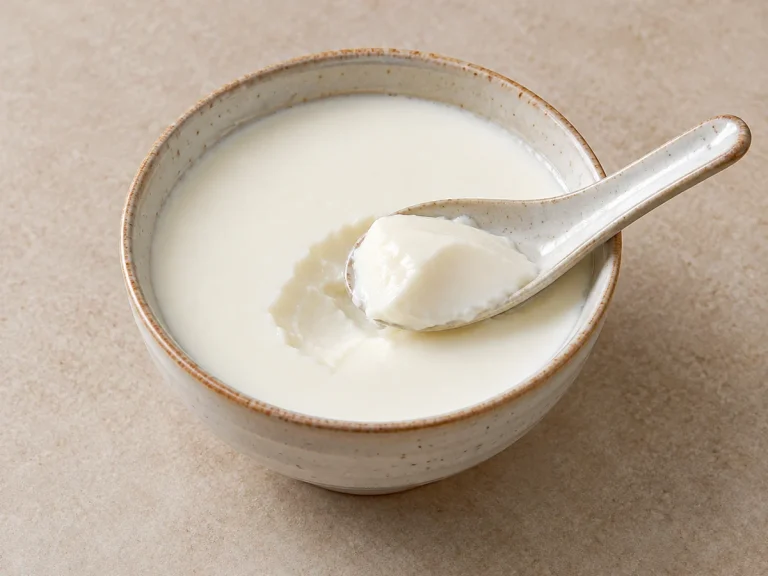
A tender curd has formed at the surface and can be gently scooped up in pieces
Once set, serve warm, or refrigerate promptly and serve cold. Add a little honey and washed berries if desired. If it has not set, check the ginger juice and milk temperature first; success is not guaranteed for every batch.
The curd is tender and smooth, without being stirred apart into liquid