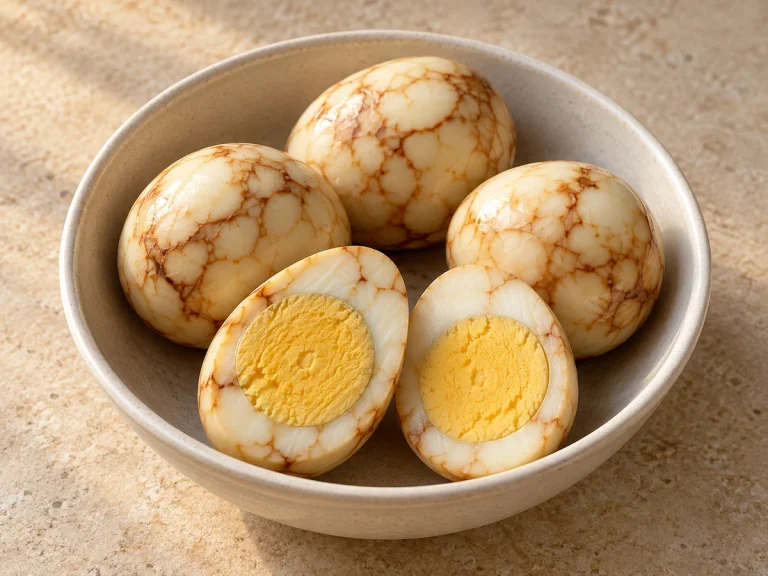
Tea eggs
Cook the eggs first, then crack the shells and simmer them in spiced tea.
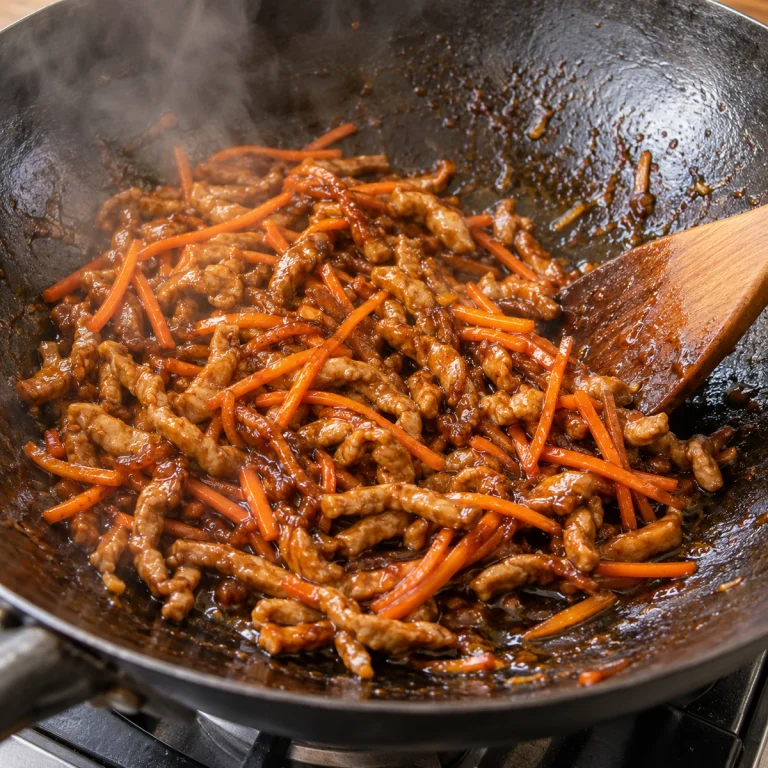
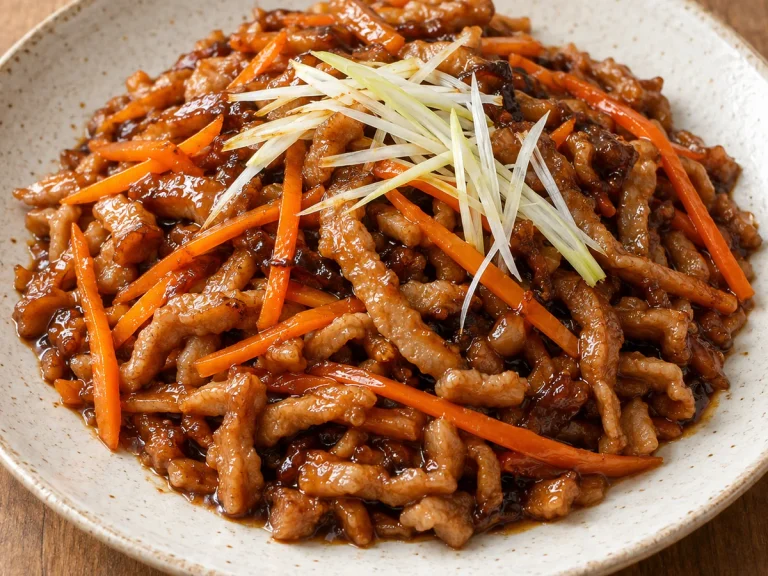
A home-style version of Jingjiang pork strips, with pork and carrot strips stir-fried in sweet wheat sauce. The carrot is retained from the source recipe.
2 servings · 4 steps
Keep utensils for raw and cooked food separate. Times are only a guide; ingredients must be cooked through. A teaspoon is 5 ml, a tablespoon is 15 ml, and a measuring cup is about 237 ml. A cup measure of a solid ingredient cannot be treated as the same number of grams. Check allergen labels on packaged foods.
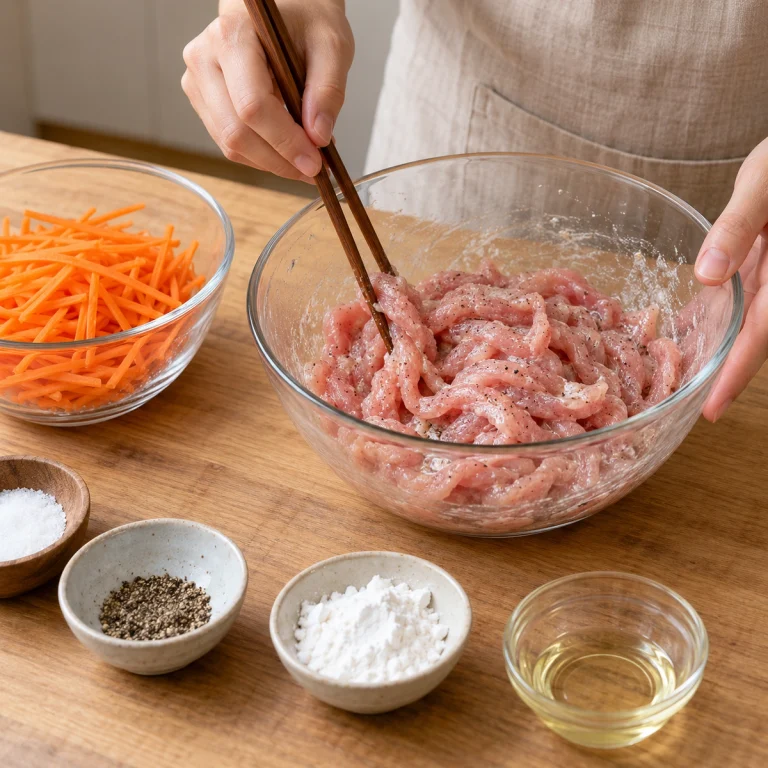
Cut the pork into thin strips and mix with the salt, wine, black pepper, starch, and 1 tsp oil. Marinate for 15 minutes. Cut the carrots into strips.
The pork strips are slightly sticky, with the marinade evenly distributed
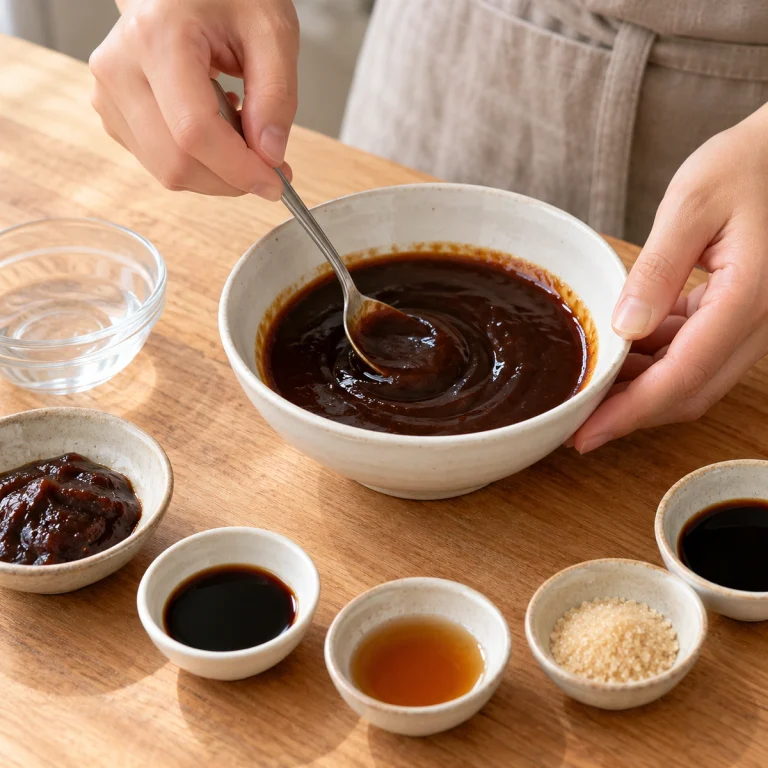
Mix the water, sweet wheat sauce, dark soy sauce, vinegar, sugar, and light soy sauce.
There are no large lumps of sweet wheat sauce or undissolved sugar
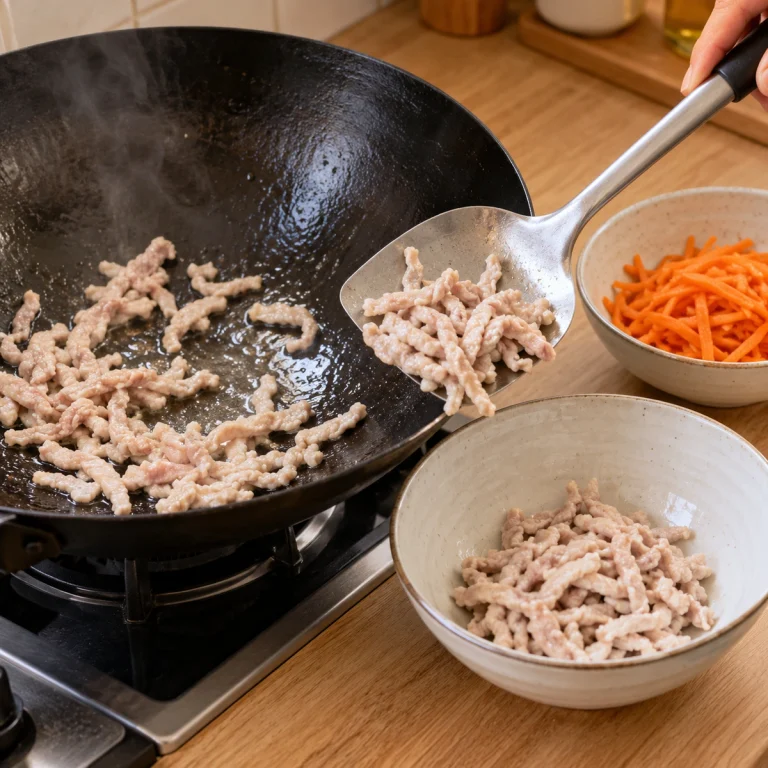
Stir-fry the carrots in 1 tbsp oil over medium heat for about 1 minute, then remove. Use the remaining 2 tbsp oil over high heat to stir-fry and separate the pork strips; remove when their surfaces change color.
The carrots are slightly soft, and the pork strips are separated without clumping
Pour the sauce into the same wok and cook until bubbling. Return the pork and carrots and toss until the pork is fully cooked. Drizzle with sesame oil, plate, and scatter the scallion whites over the top.
The pork strips have no raw, soft centers, and their surfaces are glossy rather than sitting in watery sauce