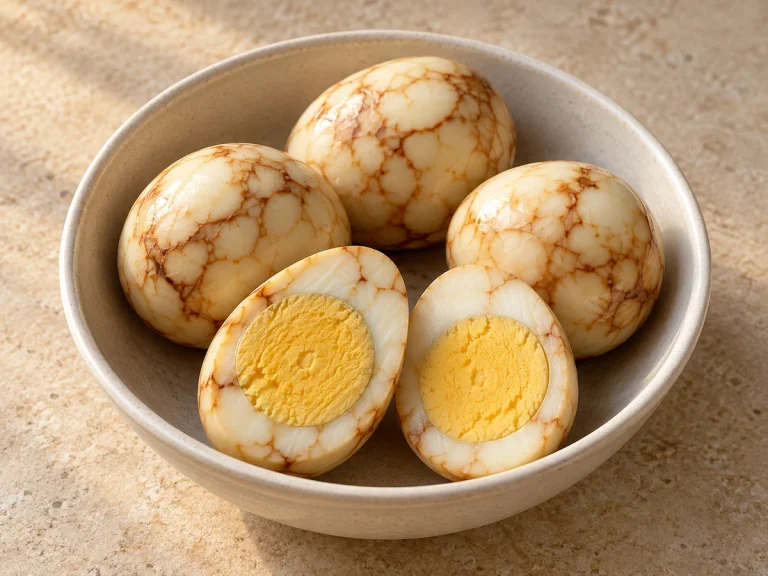
Tea eggs
Cook the eggs first, then crack the shells and simmer them in spiced tea.
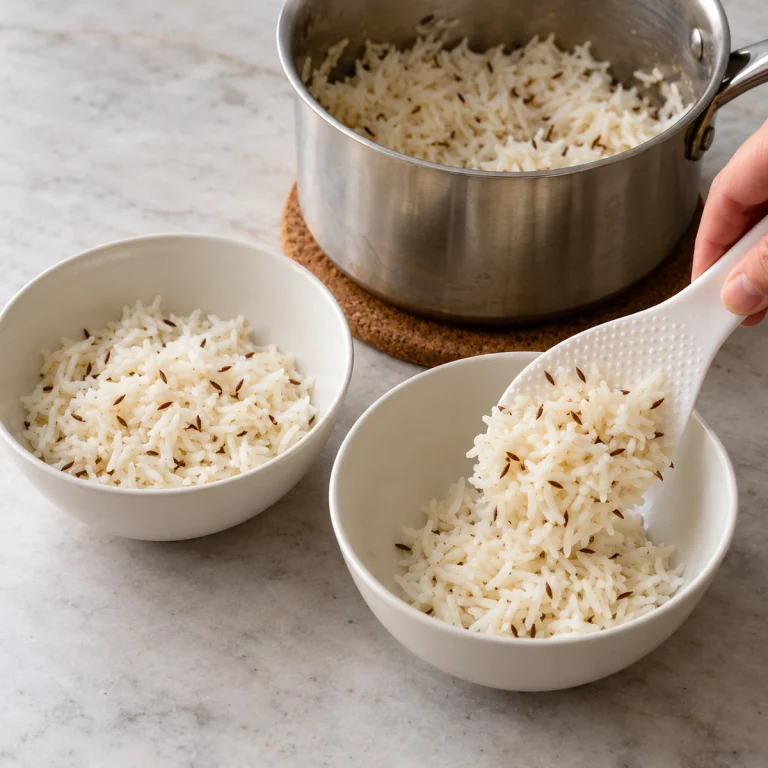
A basmati-rice side flavored with whole cumin and a little oil, made in an ordinary covered pot rather than a pressure cooker. 2 side portions; finished weight is unmeasured
2 servings · 5 steps
Only identified risks are listed. An omission is not an absence claim. Check actual products, substitutions and cross-contact risks. Use the specified aged white basmati rice; spices do not extend cooked-rice storage. Cool rice rapidly in small portions and count room-temperature exposure cumulatively. Wash hands before and after preparation. Use clean equipment and rinse ready-to-eat produce under running potable water without soap. Separate utensils for raw meat, egg or flour from ready-to-eat food; wash hands and clean contact surfaces afterward. This draft chooses a conservative household routine: remove chilled ingredients close to use, and eat cold dishes promptly or refrigerate immediately. Divide cooked food being saved into shallow portions, cool rapidly and refrigerate promptly rather than leaving an entire pot to cool at room temperature. Target refrigeration within 1 hour after cooking or cold preparation finishes, at 4°C or below, and use within 24 hours of preparation. For refrigerated ready-to-eat food taken out repeatedly, count cumulative room-temperature exposure rather than restarting the clock after refrigeration; this draft sets a conservative cumulative limit of 1 hour. US USDA guidance gives 2 hours in ordinary conditions or 1 hour above about 32°C. The 24-hour plan is an editorial limit, not a universal official shelf life. Reheating is not a remedy for poor storage. Reheat cooked leftovers only once. Rice follows the rice-specific policy below; for other cooked food this draft chooses US USDA leftover guidance, checking a center temperature of at least 74°C (165°F) with a clean probe and bringing soups and sauces back to a boil. This selected leftover method does not replace each recipe’s initial cooking method and is not presented as the only global standard. Discard food with an uncertain storage history or signs of spoilage; do not use smell or tasting as proof of safety. If rice will not be eaten promptly, divide immediately into shallow small portions, cool rapidly and aim to refrigerate within 1 hour of cooking. This batch adds a more conservative plan: eat within 24 hours after cooking finishes, without restarting the clock at refrigeration or removal. Do not cool a whole pot slowly at room temperature; repeated refrigeration does not reset cumulative room-temperature exposure. For rice reheating this batch selects the FSA method: reheat only once until steaming hot throughout. A clean thermometer reading of at least 74°C at the center can provide additional confirmation but is not required equipment for rice. This rice rule replaces the general leftover thermometer requirement above. Salt, nori, cumin or later reheating do not remedy poor storage; discard rice with an uncertain history.
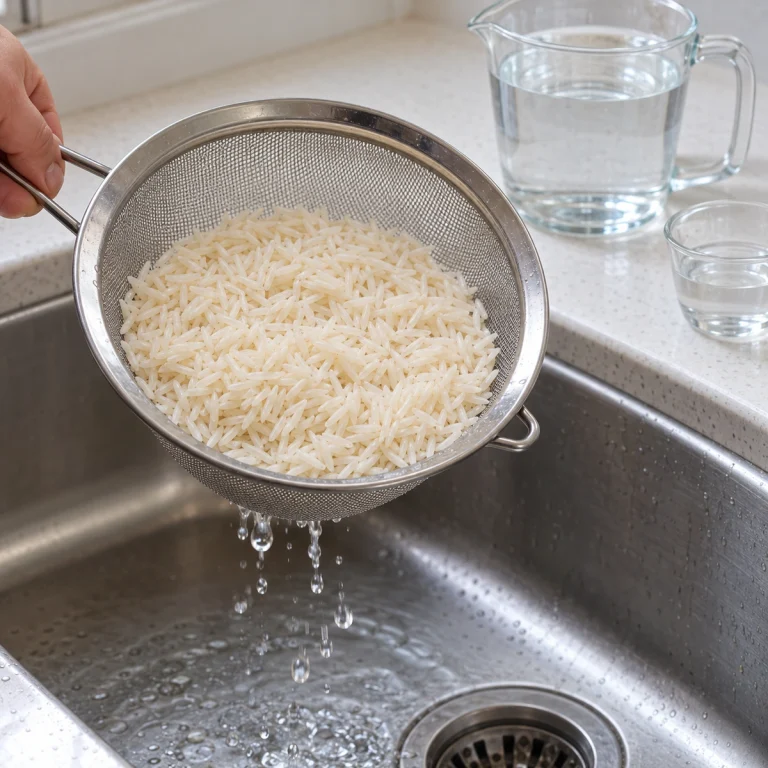
Check that the rice package suits a soaked stovetop absorption method; if it specifies a different method, do not treat these amounts as universal. Gently rinse 150 g rice in the sieve until runoff is no longer strongly milky. Put it in a bowl with 450 mL soaking water for 20 minutes. Drain in the sieve for about 2 minutes and discard all soaking water. Separately measure 300 mL cooking water and 50 mL reserve. If the result differs: Do not apply these amounts to unspecified rice, brown rice or instant rice. Rinse gently without crushing grains Start the timer: When soaking water fully covers the rice Timer purpose: A reminder to inspect, not evidence of doneness When the timer ends: Drain and discard soaking water before heating cumin; do not pour the soaking water into the rice pot.
Rice is soaked and drained; soaking water is distinct from water going into the pot
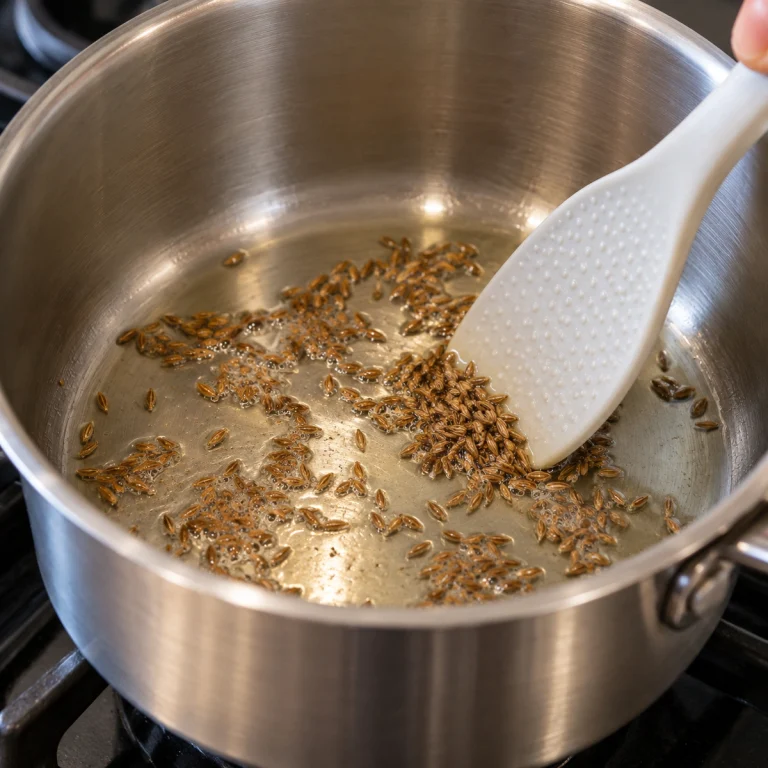
Warm 10 mL oil over medium-low heat until it flows freely without smoking. Add 1 teaspoon cumin and stir gently for about 30–60 seconds. When small bubbles appear, the aroma rises and seeds darken slightly, add the drained rice and fold for about 30 seconds to coat it lightly. If the result differs: Remove the pot from heat if cumin darkens rapidly. If blackened with an acrid smell, restart with a clean pot and fresh oil and cumin rather than mixing burnt spices into rice
Cumin smells fragrant without blackening; rice grains remain intact
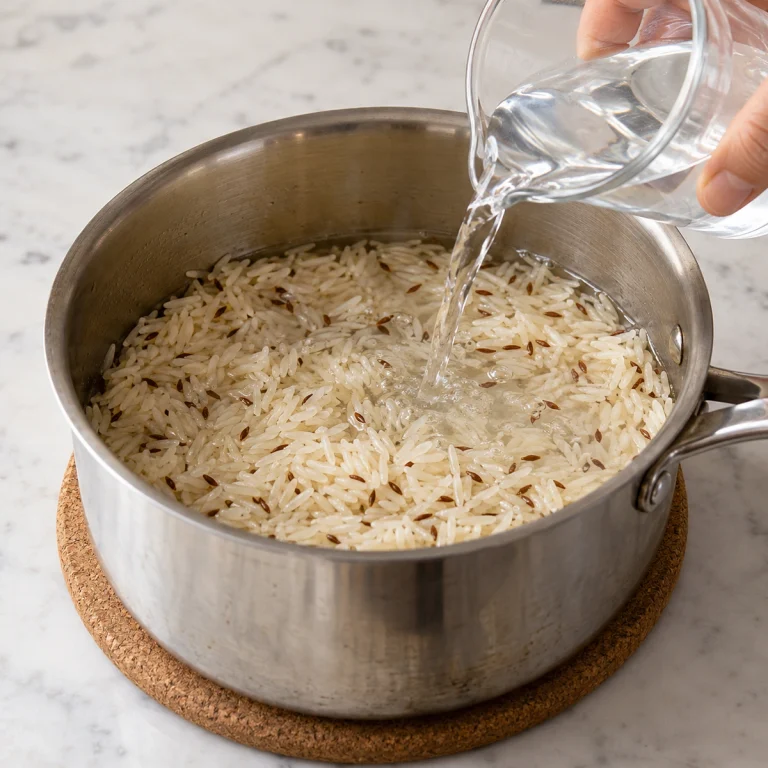
Take the pot briefly off heat and slowly add 300 mL cooking water from a low height, guarding against splashes. Add 1 g salt, stir once and return to medium heat until bubbling across the surface. Cover and lower heat to maintain a gentle simmer. Cook for 12 minutes before a quick inspection. Absorption may take about 15–18 minutes; lift the lid briefly only to check rather than repeatedly stirring. If rice is firm and the base has no water, add 25 mL reserve, cover and cook gently for another 2–3 minutes; use no more than 50 mL reserve. If the result differs: If water remains, cover and cook gently for another 1–2 minutes before checking. Turn off immediately if scorching is smelled and do not scrape the base. If still hard after the reserve is used, do not mark it done: the rice or pot needs adjustment according to its package Start the timer: When water is bubbling across the surface, the lid is on and heat has been reduced Timer purpose: A reminder to inspect, not evidence of doneness When the timer ends: Quickly inspect water. This first reminder does not mean rice is cooked. Continue until no hard center or free water remains, adding reserve in 25 mL portions only if needed.
Grains are expanded with no hard center in a cooled test grain, and no free water remains at the base
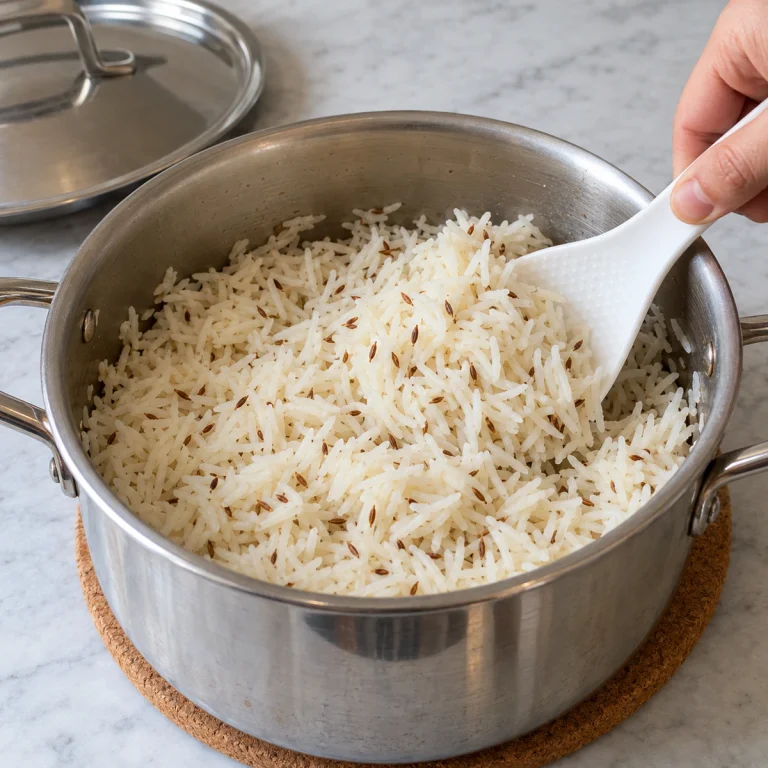
Once rice is cooked and the water absorbed, turn off the heat. Keep the lid on for a 10 minute rest. Open away from steam, then lift and separate grains gently from the side with the rice paddle without crushing them. If the result differs: This rest improves the texture of cooked rice; it does not replace cooking. Hard centers require further cooking with liquid rather than resting alone Start the timer: When rice is cooked, water absorbed and the burner is off Timer purpose: A reminder to inspect, not evidence of doneness When the timer ends: Open away from steam, separate grains gently and portion promptly; follow rice-specific cooling rules for any being saved.
Heat is off; grains separate gently with cumin distributed through them
Divide into two portions and serve hot with the meal. Immediately spread any rice being saved into shallow small portions, aiming to refrigerate within 1 hour of cooking and eat within 24 hours after cooking finishes; see the rice safety appendix. Do not leave a whole pot slowly cooling on the switched-off burner. If the result differs: Cumin, salt and oil are not preservation measures. Reheating cannot rescue rice with an uncertain room-temperature storage history
Rice for eating is portioned, and any being saved is undergoing rapid cooling in shallow portions