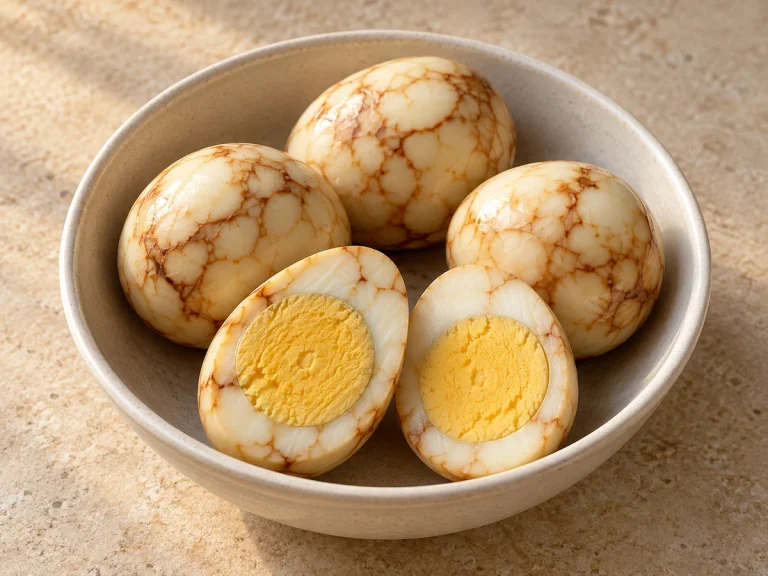
Tea eggs
Cook the eggs first, then crack the shells and simmer them in spiced tea.
Kai Look Keuy; Chinese home-cooking instructions rewritten from an attributed recipe.
6 servings · 4 steps
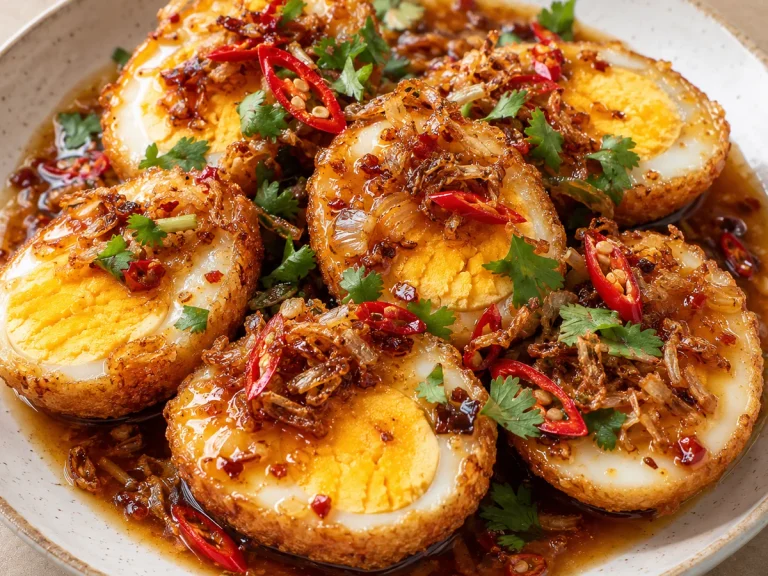
Both egg whites and yolks must be set. Dry the eggs thoroughly before frying, and keep the hot oil at no more than one-third of the pot. Do not put wet eggs into hot oil. Keep tools for raw and cooked food separate. Check the actual packages of compound seasonings for allergens.
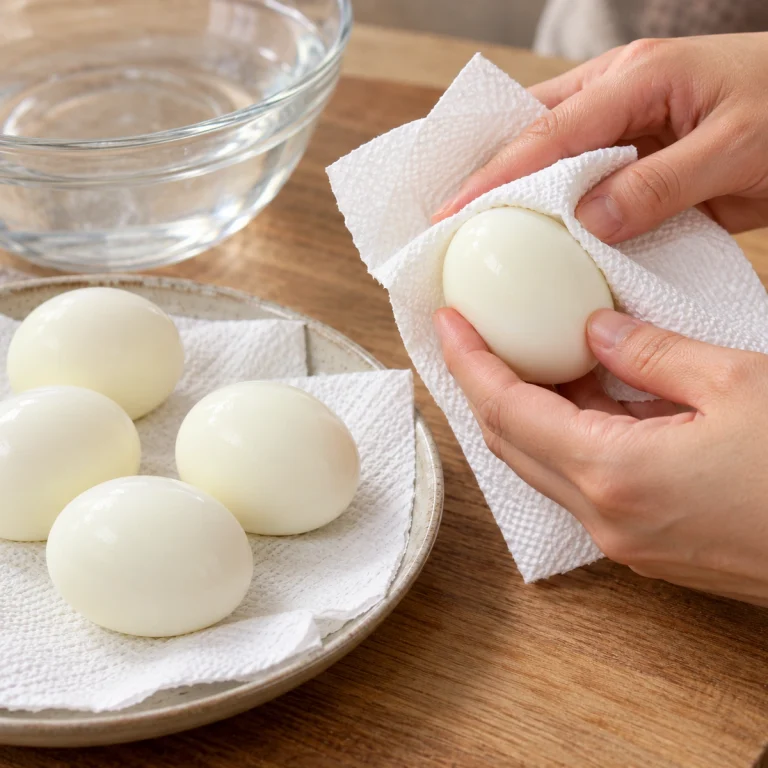
Boil the eggs in boiling water for 8–10 minutes, checking that the yolks and whites are set. Cool in cold water, then peel and dry thoroughly.
The eggs are fully cooked and their surfaces are dry.
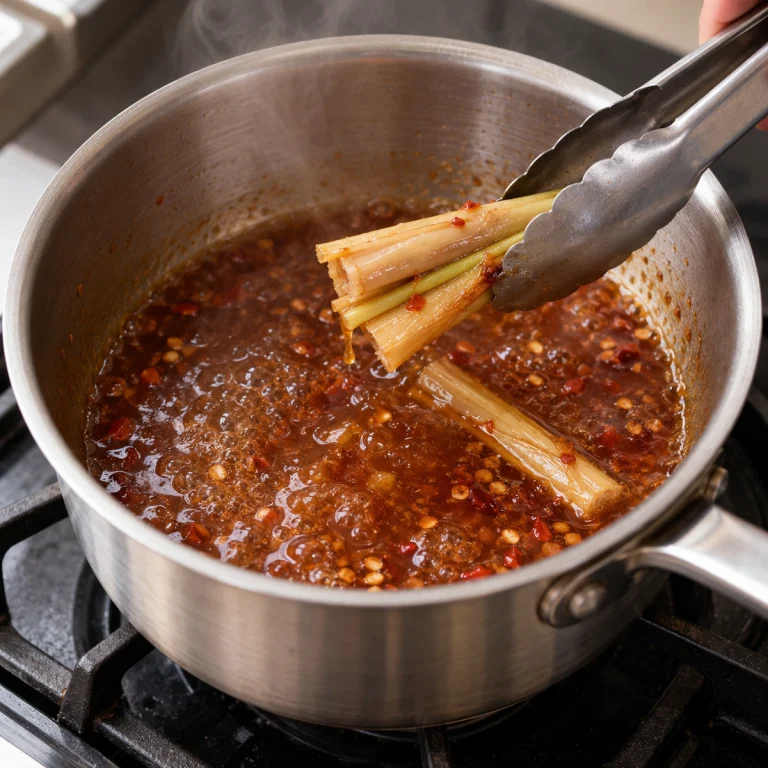
Bring the sugar, water, fish sauce, tamarind, lemongrass and crushed chili to a boil, then simmer gently for about 5 minutes. Remove the lemongrass once the sauce thickens slightly.
The sugar has completely dissolved and the sauce remains pourable.
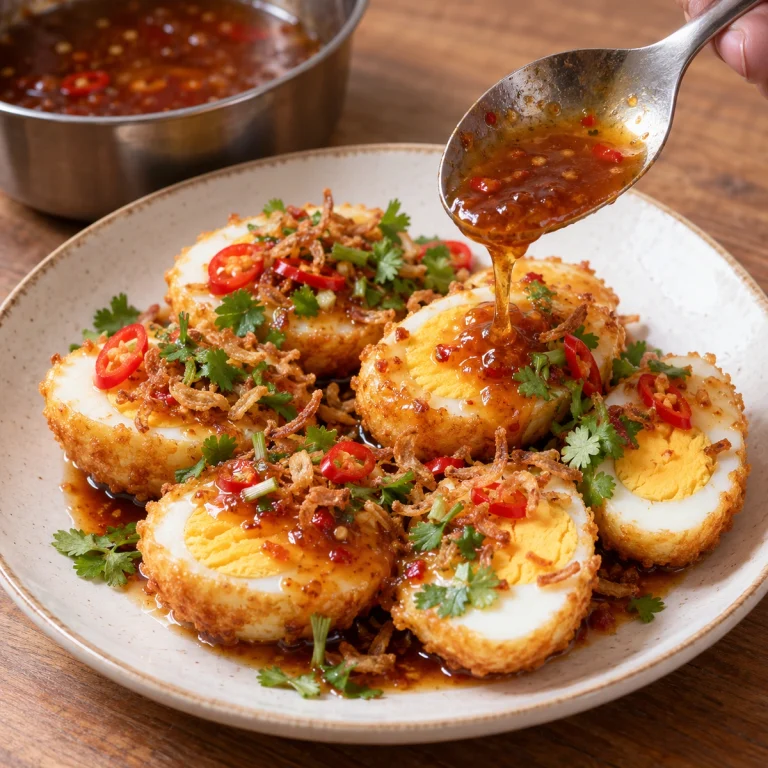
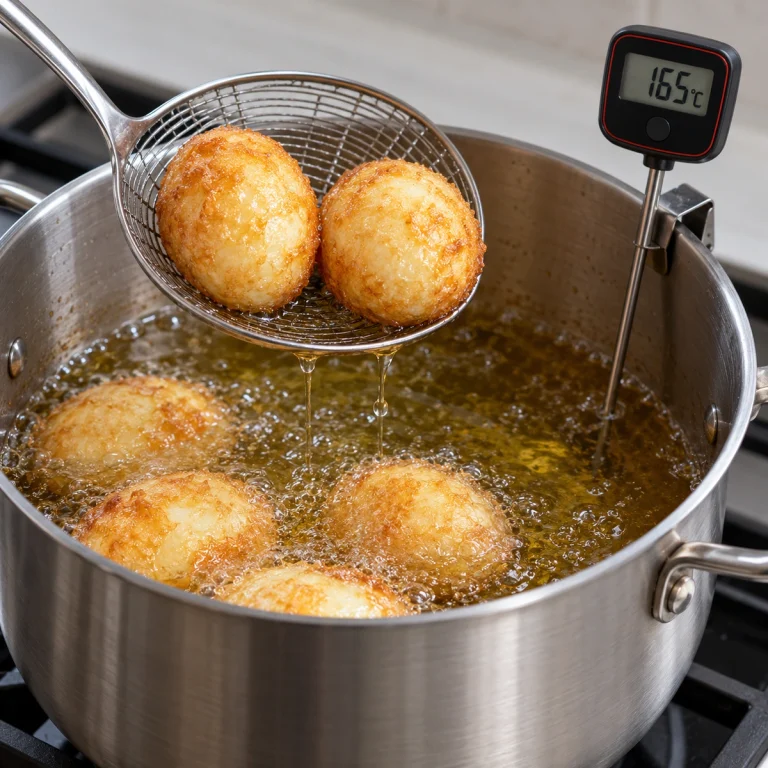
Heat the oil to 165°C. Carefully lower the dry eggs into the pot and fry for 3–4 minutes, turning until golden on the outside. Lift out and drain.
The egg exteriors are golden without blackening.
Halve the eggs, arrange on a plate and pour over the sauce. Sprinkle with cilantro, fried shallots and red chili.
Every egg half is coated with sauce and the toppings are evenly distributed.