
Tea eggs
Cook the eggs first, then crack the shells and simmer them in spiced tea.
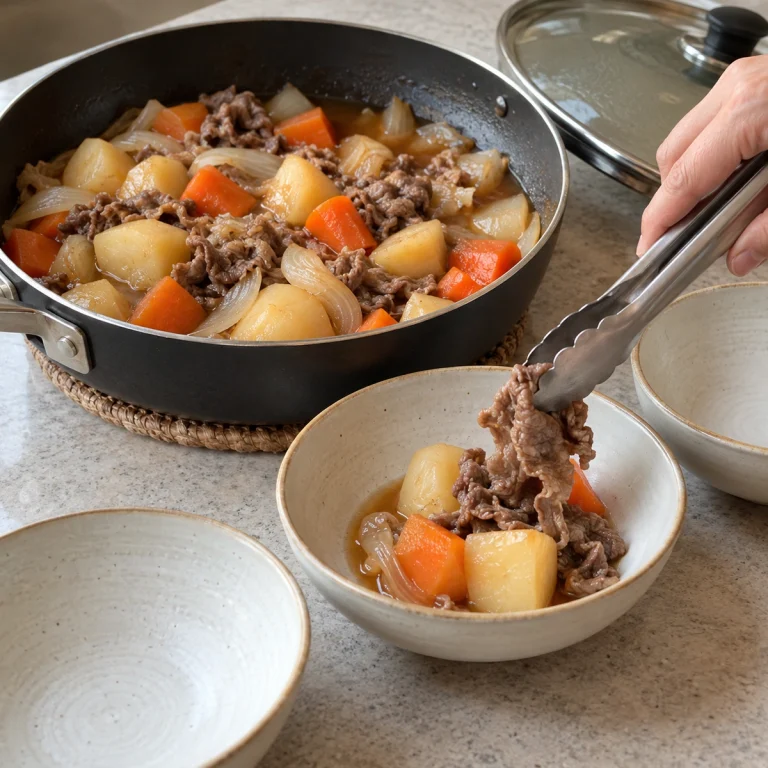
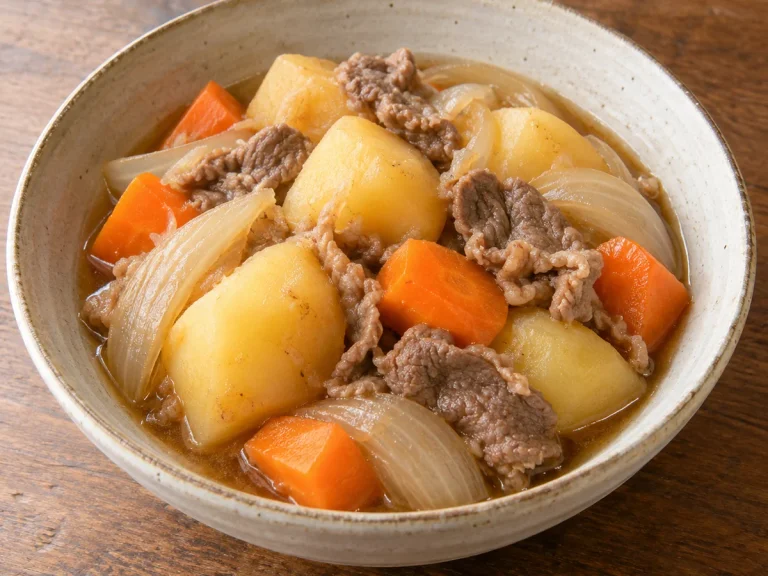
Beef, potatoes, carrots, and onions are simmered until tender in a sweet-savory soy sauce broth, then briefly rested off the heat to absorb flavor. Makes 3 servings; serve the staple food separately.
3 servings · 6 steps
This applies only to the listed whole-muscle beef slices, not ground, injected, or mechanically tenderized meat. Every slice must reach 63°C at the center and rest off the heat for at least 3 minutes. Use a fine-tipped probe suitable for 6 mm meat slices; broth temperature cannot replace meat temperature. Do not rinse raw meat. Keep meat juices and raw-meat utensils separate from cooked food. Sake and hon-mirin contain alcohol; do not claim that a short simmer removes all alcohol. Check the actual packaging of blended seasonings and processed products such as nori for allergens; this draft is not certified allergen-free.
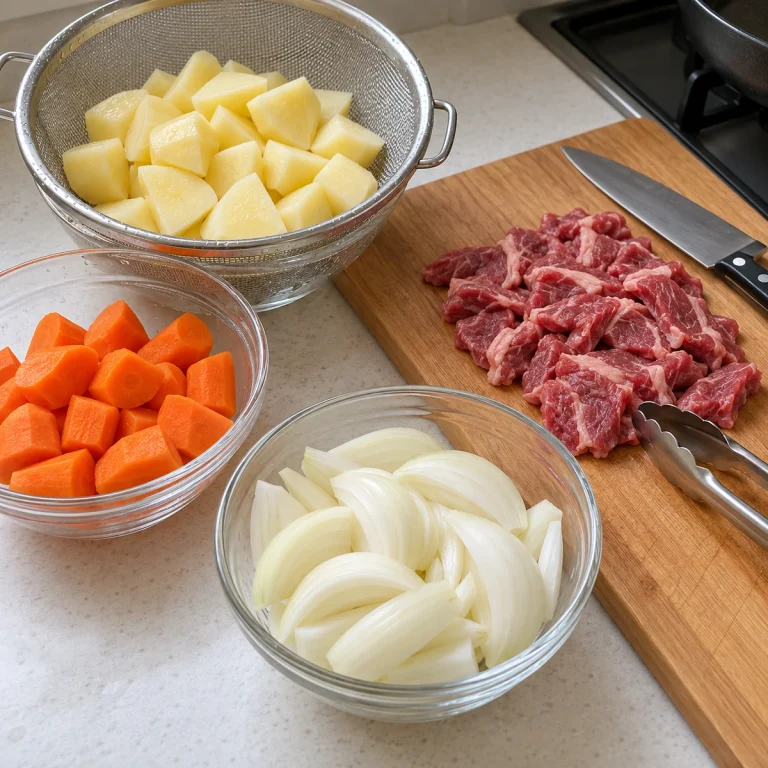
Cut the potatoes into pieces about 2 cm across, soak for about 5 minutes, and drain. Cut the carrots into pieces about 1 cm thick and the onions into wedges about 1 cm wide. Take the beef out only just before putting it in the pan and cut into bite-sized pieces; do not rinse raw meat. Prepare the vegetables first, keep raw-meat utensils separate, and wash them promptly.
The vegetable pieces are similar in size, the beef slices are about 6 mm thick, and utensils for raw and cooked food are separate
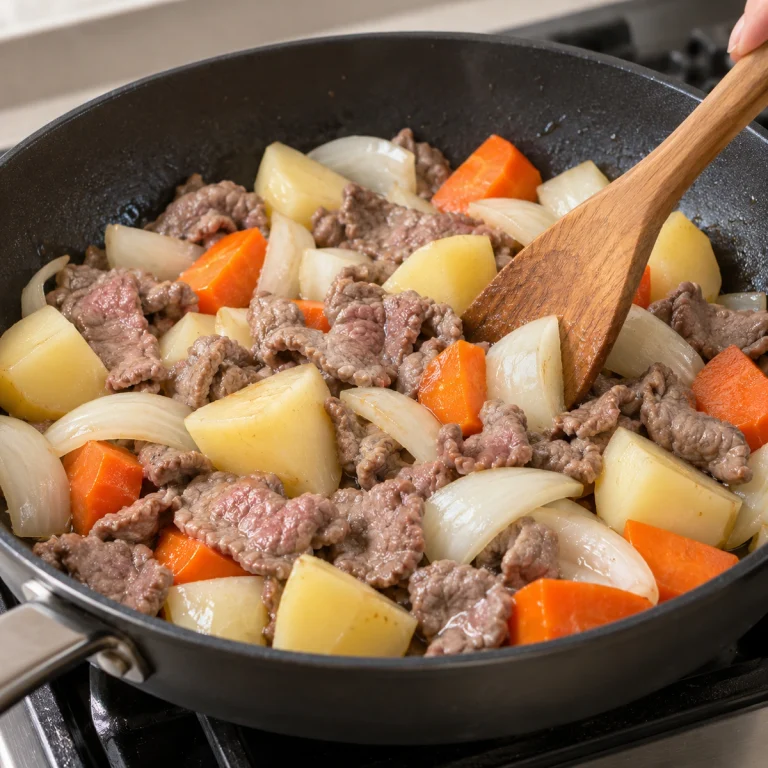
Add 1 tablespoon of oil to a wide skillet and heat over medium heat until the oil flows but does not smoke. Spread out the beef and stir-fry until the surfaces change color, then add the drained potatoes, carrots, and onions and toss to coat with oil. A change in surface color marks only the initial stir-fry, not safe doneness.
The meat slices are not clumped together, the vegetables have a thin coating of oil, and the pan bottom is not blackened
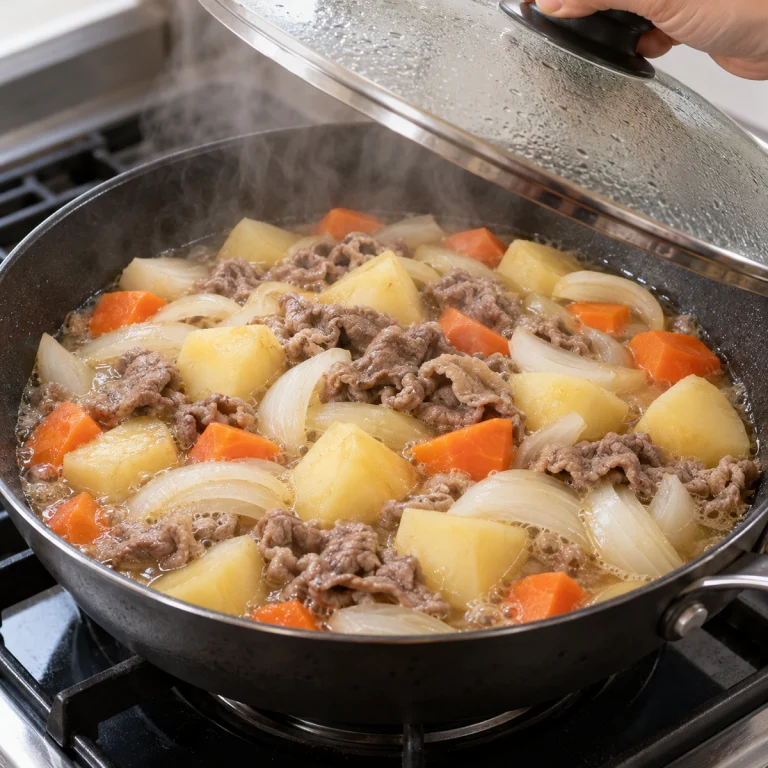
Add the sake, water, sugar, and mirin. Bring to a boil, cover, and reduce the heat to low to maintain continuous gentle bubbling. Simmer for 8 minutes before checking. Arrange the ingredients as flat as possible; if the pan bottom is nearly dry, add a little water and do not let it heat dry.
The roots are beginning to soften and flowing broth remains in the pan
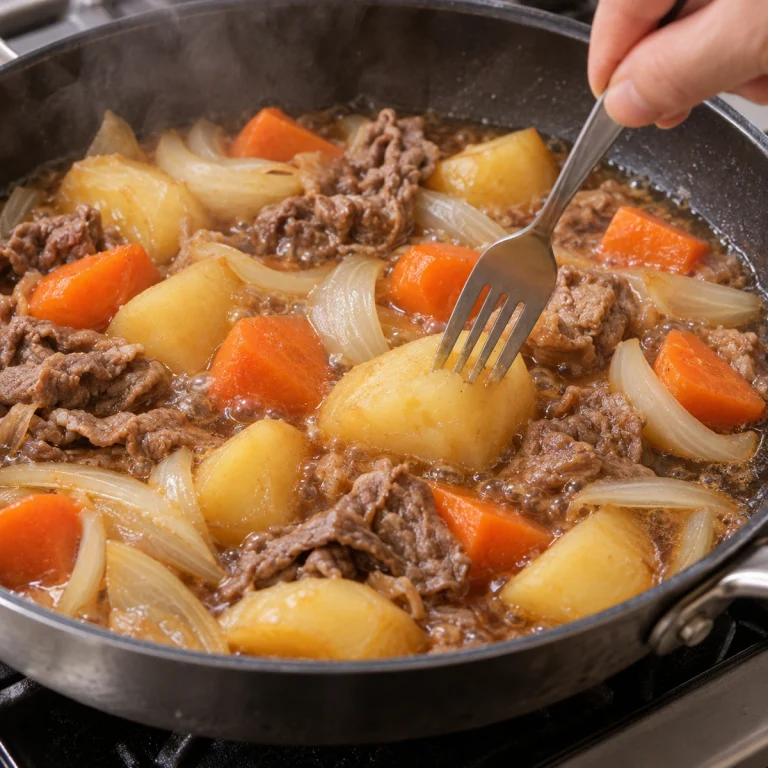
Add 3 tablespoons of soy sauce, turn the ingredients gently, and bring back to a boil. Cover, reduce the heat to low, and cook for another 6 minutes before checking. Pierce the largest potato and carrot pieces with a fork. If still hard, continue gently simmering and check again at intervals; add a little water if needed.
A fork enters the centers of the largest root pieces easily, and broth remains
Uncover and reduce moderately over medium heat, leaving about two-thirds of the liquid present before reducing; do not let the pan dry out. Use a clean, fine-tipped probe suitable for thin meat, inserting it from the side into the center of every slice without touching the pan. Check each slice for at least 63°C; continue heating any that have not reached that temperature. Clean and disinfect the probe after testing undercooked meat before checking again. Do not substitute broth temperature for meat temperature.
Every meat slice is at least 63°C at the center, the roots are tender throughout, and a small amount of flowing broth remains
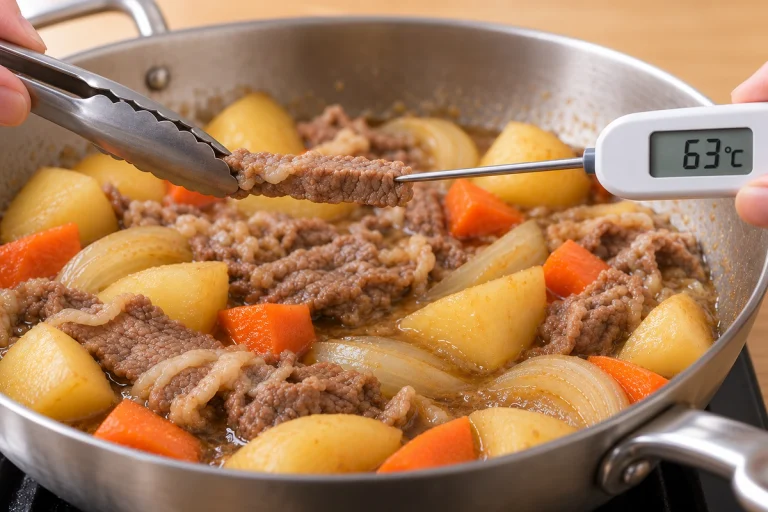
After every meat slice reaches 63°C and the roots are tender throughout, turn off the heat and move the pan away from the heat source. Cover and rest for 10 minutes, then divide into 3 portions. Do not add raw ingredients during this time; complete at least 3 minutes of resting before cutting or eating. Serve promptly after the 10-minute flavor-resting period, without leaving it at room temperature for a long time.
All meat slices have been off the heat for at least 3 minutes, this step's 10 minutes are complete, and the lid is open for portioning