
Tea eggs
Cook the eggs first, then crack the shells and simmer them in spiced tea.
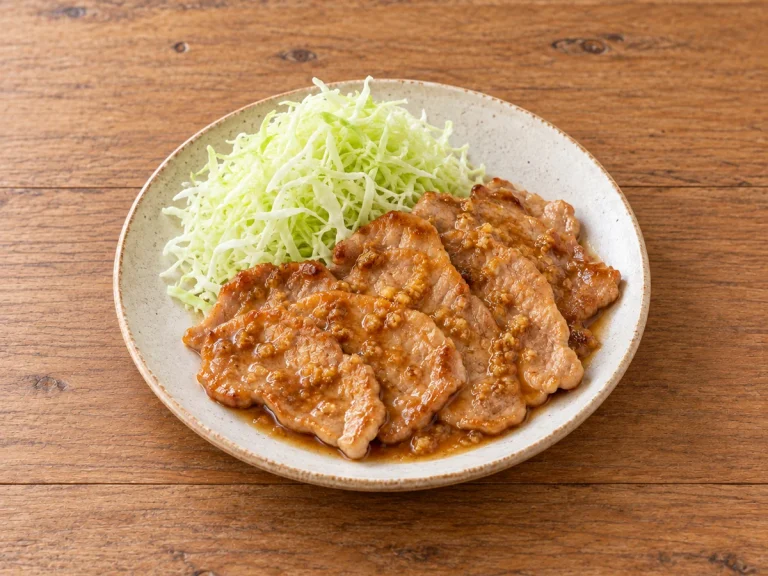
Pork shoulder is briefly marinated with ginger and sake, then pan-fried until cooked through and coated with sweet-savory ginger sauce. Serve with shredded cabbage; 2 main-course portions.
2 servings · 5 steps
Use only the listed whole-muscle pork; this method is not for ground, injected, or mechanically tenderized meat. Each slice must reach a center temperature of at least 63°C before being removed from the heat and rested for at least 3 minutes. Measure thin slices from the side using a suitable fine-tip probe; sauce temperature or meat color cannot substitute. If raw meat juices contaminate the raw cabbage, discard the contaminated cabbage and wash and sanitize the utensils. Sake contains alcohol, and brief cooking cannot be claimed to remove it completely. Allergens in blended seasonings, nori, and other processed products depend on the actual packaging; this version is not certified allergen-free.
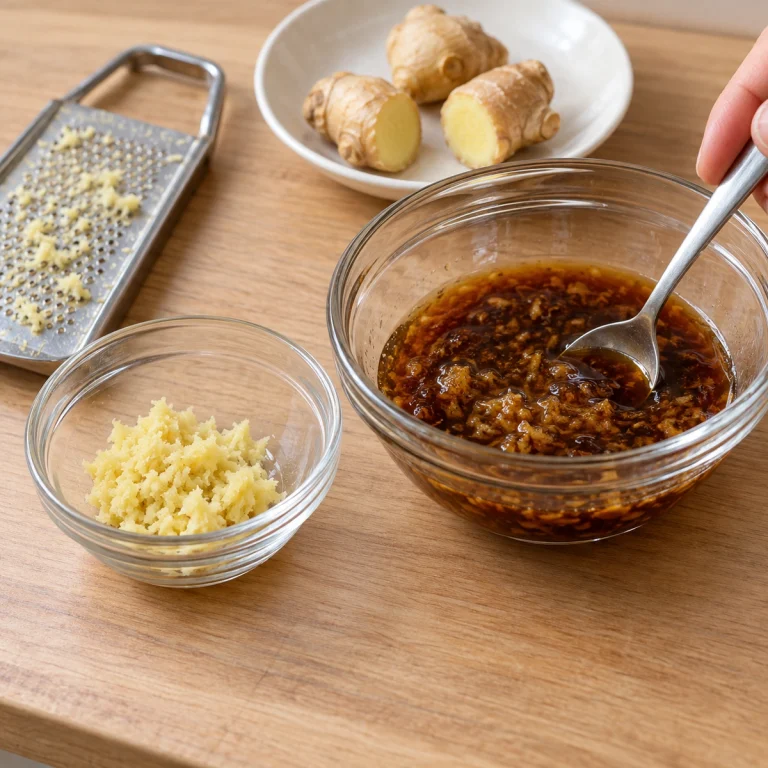
Wash your hands. Rinse the cabbage leaf by leaf and soak in drinking water for about 10 minutes. Shred finely, soak in cold drinking water for about another 10 minutes, drain, and refrigerate on a clean plate. While the cabbage soaks, grate 3 similar-sized ginger pieces and divide into a 1-piece portion and a 2-piece portion. Mix the 2-piece portion with 2 tablespoons of soy sauce, 1 tablespoon of sugar, and 1 tablespoon of sake to make a separate sauce. Only then handle the raw pork.
The shredded cabbage is drained and refrigerated. Marinade ginger and sauce ginger are separate, and the sauce has not touched raw meat.
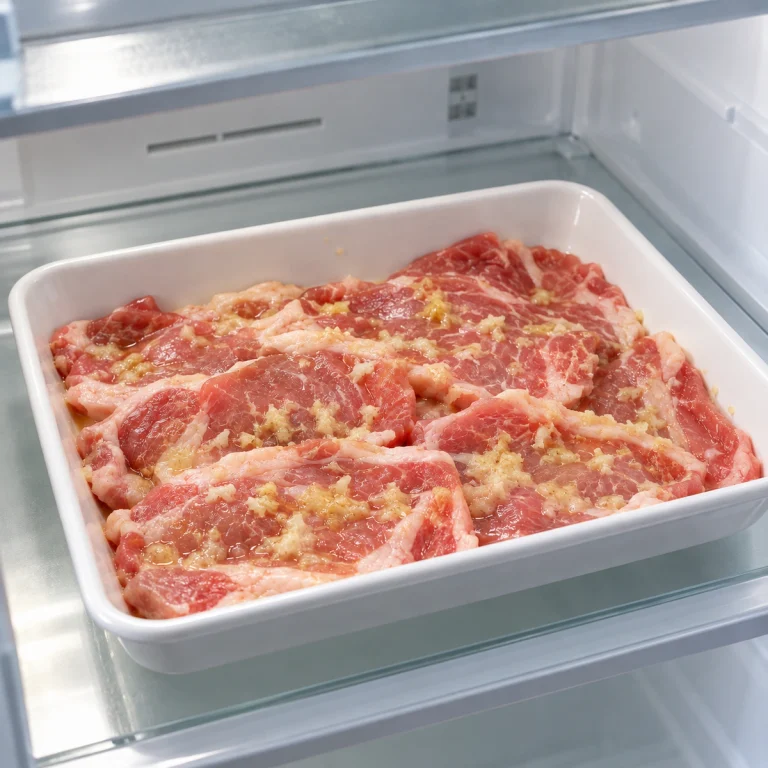
Pat the pork dry with paper towels; do not rinse it. Mix in the 1-piece ginger portion and 2 teaspoons of sake, place on a clean raw-meat plate, and marinate in the refrigerator for 5 minutes. The plate, tongs, and residual juices used with raw pork must not directly touch the cabbage or cooked meat.
Each pork slice is coated in ginger and sake, and the brief refrigerated marinade is complete.
Add half a tablespoon of oil to a skillet and heat over medium heat until the oil flows without smoking. Arrange the slices in a single layer without overlapping. Cook for 2 minutes initially and check the underside; flip when light brown, then cook for about 30 seconds to 1 minute. Even when both sides are browned, still treat the meat as uncooked. Reduce the heat if it darkens too quickly.
The slices are spread out with light brown undersides; center doneness still needs checking.

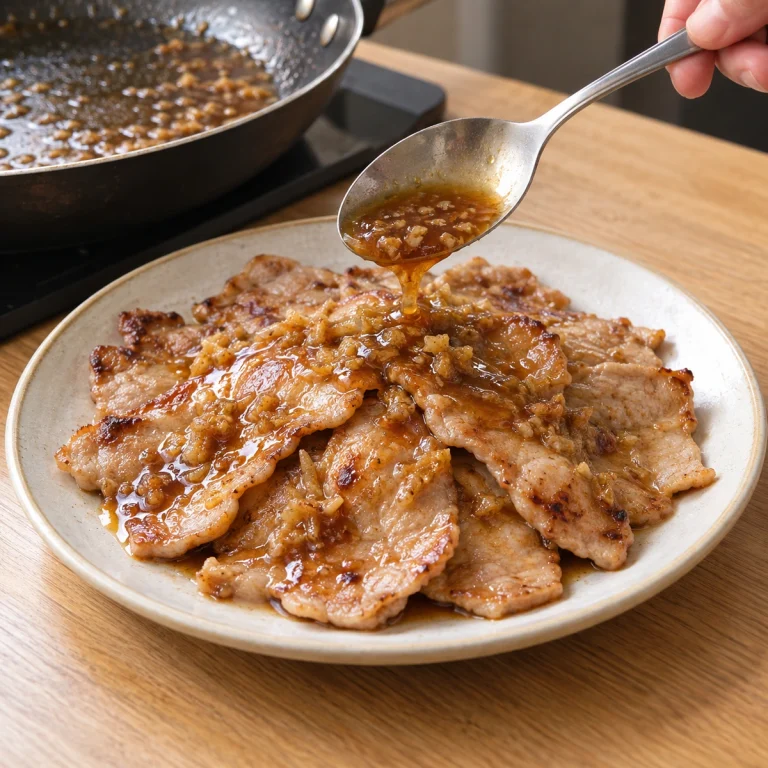
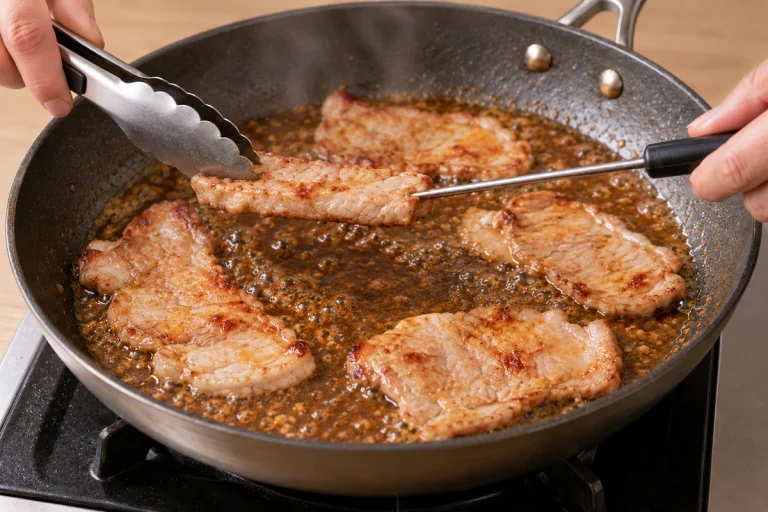
Move the pork aside to expose the pan bottom and pour in the sauce that has not touched raw meat. Increase the heat as needed to bring all the sauce to a boil, then reduce to medium-low and turn the slices to coat. With a clean fine-tip probe suitable for 5-millimeter slices, enter each slice from the side into the center of its thickest part; every slice must reach at least 63°C. Continue gentle heating if below temperature, adding a little water if the sauce is nearly dry. Clean and sanitize the probe after testing undercooked meat before testing again.
Each slice's center is at least 63°C, and the slightly thickened sauce remains fluid with no burnt bitterness.
Once every slice reaches 63°C, turn off the heat. Switch to clean cooked-food tongs and transfer the slices to another clean plate, pouring over the ginger sauce that has boiled in the pan. Rest for at least 3 minutes from when the last slice leaves the heat, without cutting or eating during this time. Then divide into 2 portions and serve with the refrigerated shredded cabbage.
All pork slices have been off the heat for a full 3 minutes, and the cabbage has not touched raw-meat utensils.