
Tea eggs
Cook the eggs first, then crack the shells and simmer them in spiced tea.
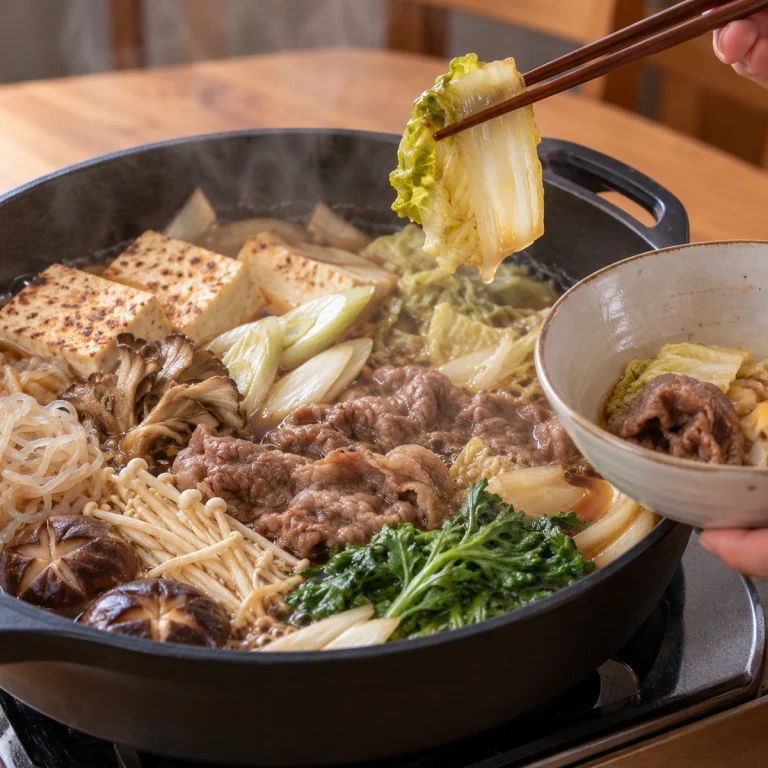
Thin beef is seared first, then cooked in batches with vegetables and tofu in a sweet-savory sauce. Kombu stock adjusts the sauce's strength as needed.
2 servings · 5 steps
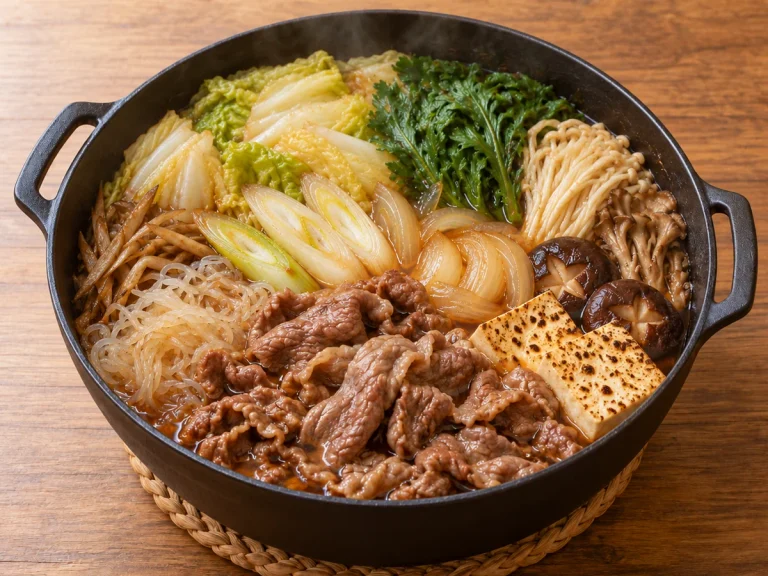
This version is not dipped in raw egg. Keep utensils for raw meat and cooked food separate, and cook each batch of meat and mushrooms through. Do not let the concentrated sauce boil dry. Allergens in blended seasonings and processed foods depend on the packaging of the products used; this recipe is not certified allergen-free.
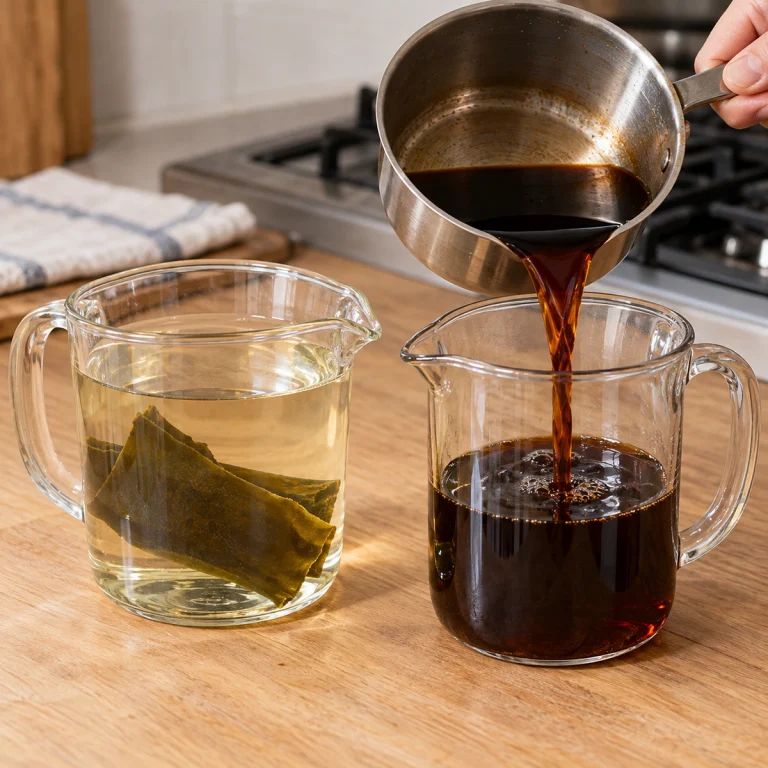
Soak the kombu in the listed water for at least 30 minutes. In a separate pan, bring the sake and mirin to a boil and cook over low heat for about 1 minute. Add the sugar and soy sauce and cook until the sugar dissolves. Put the stock and sauce into two separate pitchers.
The sugar is dissolved and the two liquids have not all been mixed together.
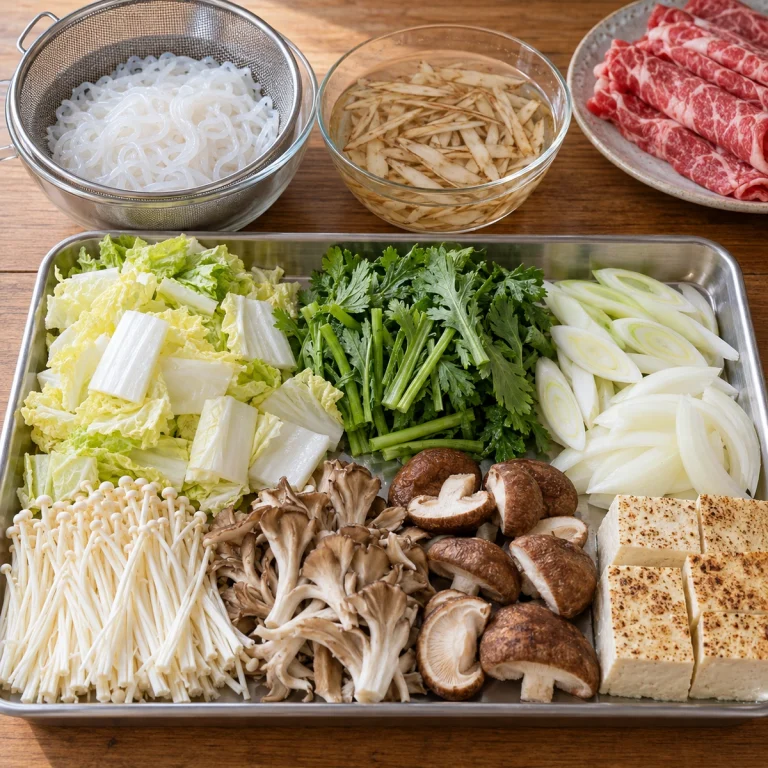
Cut the napa cabbage and chrysanthemum greens into 5-centimeter pieces. Slice the long green onion and onion diagonally, remove the mushroom bases and separate them, and cut the tofu into pieces. Shave the burdock thinly and soak in water for 5 minutes. Blanch the konjac noodles for 2 minutes.
The vegetables are washed and drained, and the beef is set out separately.
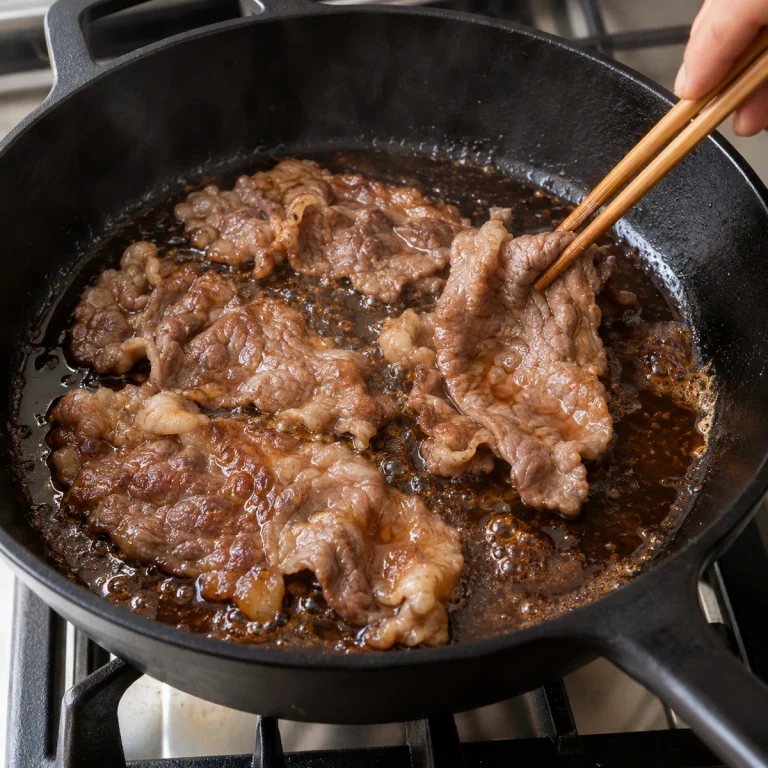
Add oil to a heavy pan over medium heat, then pour in only a thin layer of concentrated sauce covering the bottom, about 3–6 millimeters deep. Sear the beef through on both sides in batches, adding a little kombu stock to reduce saltiness if desired.
The beef is fully cooked and the pan sauce has not dried out.
Add some vegetables, tofu, and mushrooms, with seasoning sauce reaching about 1/3 of the ingredients' height, then add a little kombu stock. Cook gently until done, adjusting with stock or concentrated sauce to taste.
The napa cabbage stems are soft, the mushrooms cooked, and the tofu heated through.
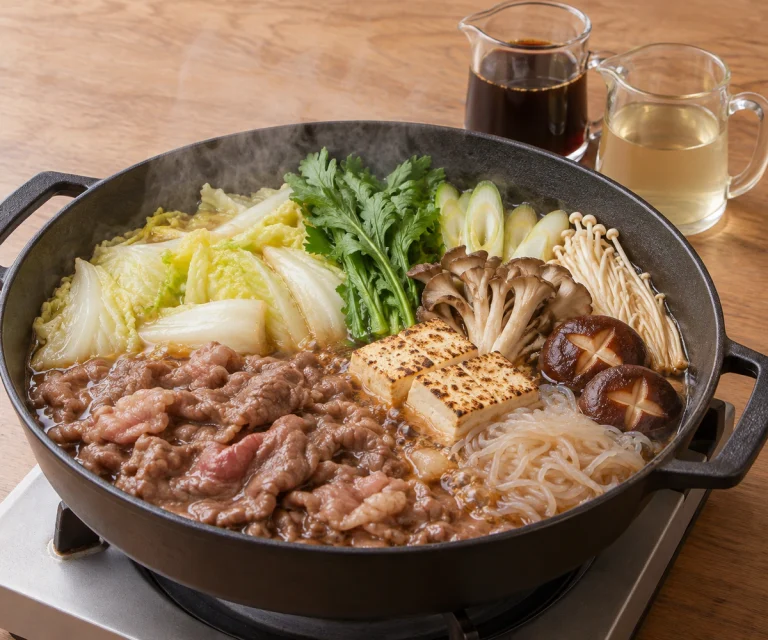
Use clean serving chopsticks to remove cooked food before adding the next batch. If desired, add cooked udon at the end and heat through.
Every batch is cooked before eating, with enough liquid in the pan.