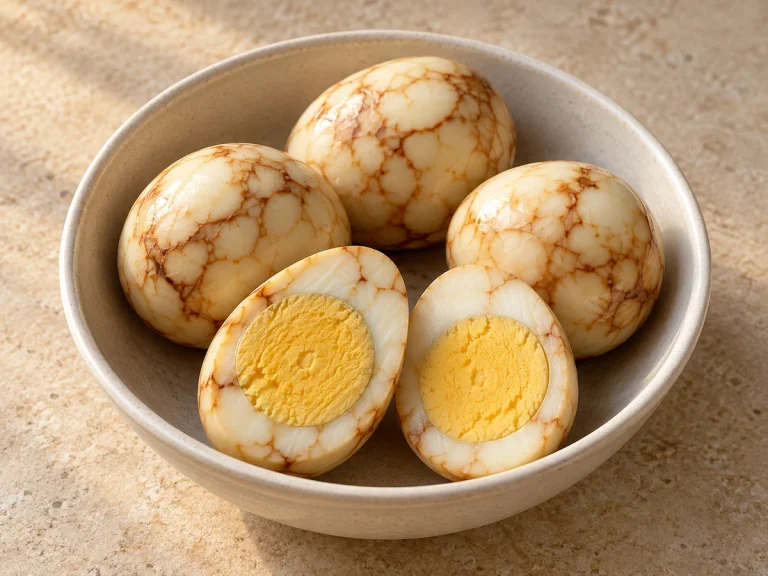
Tea eggs
Cook the eggs first, then crack the shells and simmer them in spiced tea.
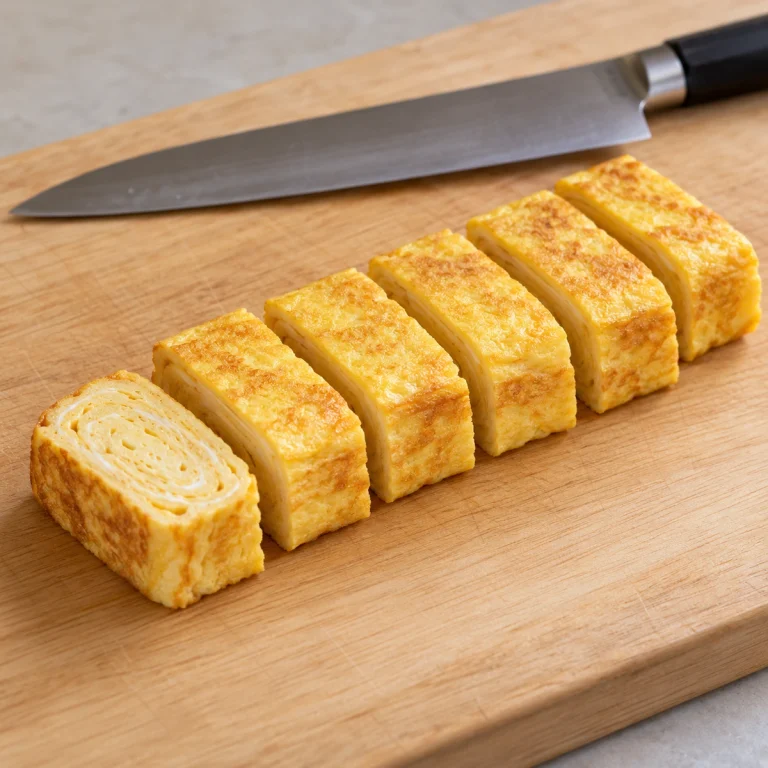
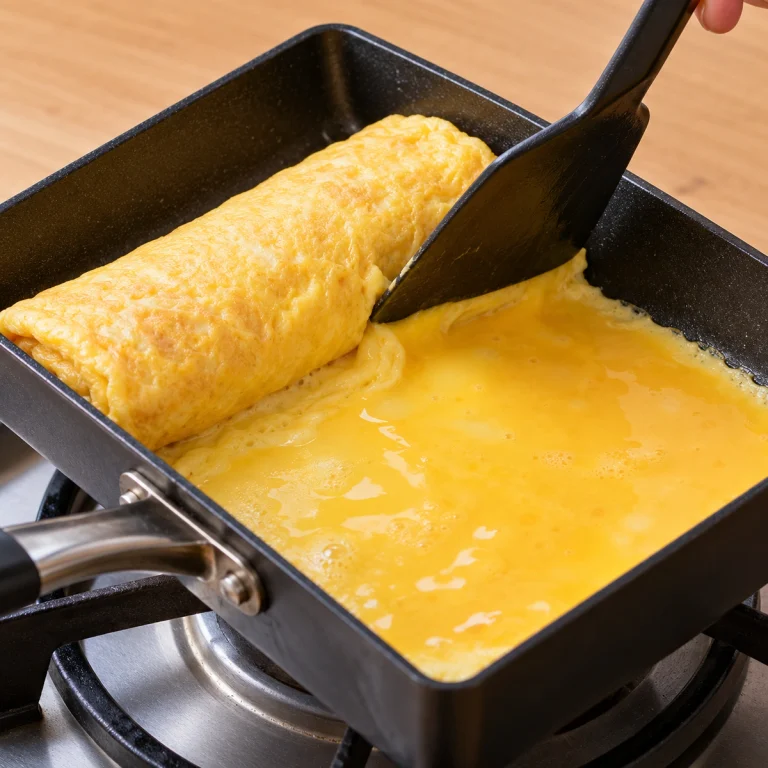
Egg mixture is spread in thin layers and rolled repeatedly to make a layered Japanese omelet. This version uses no dashi.
2 servings · 5 steps
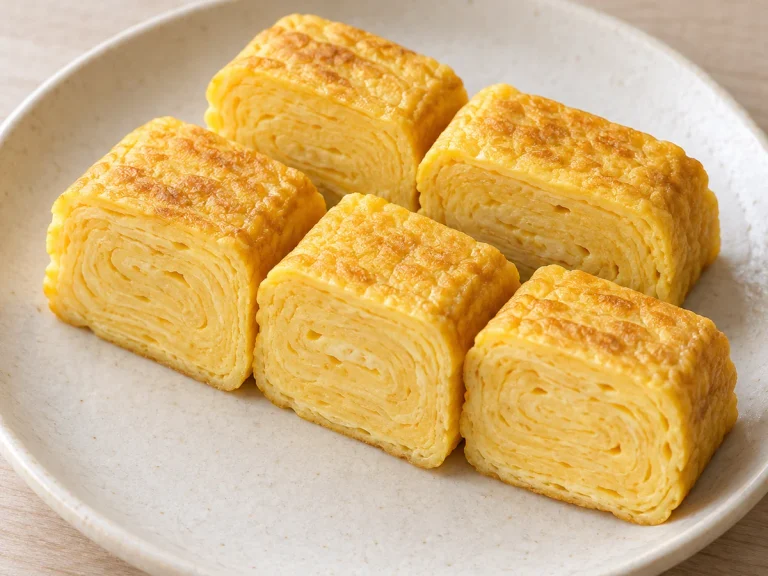
The egg mixture must set; use a food thermometer to check that the center of the egg dish reaches 71°C. Wash bowls and utensils that touched raw egg after use, and do not let them directly touch the finished omelet. For compound seasonings and processed foods, check allergens on the packaging of the products you use. This recipe is not certified allergen-free.
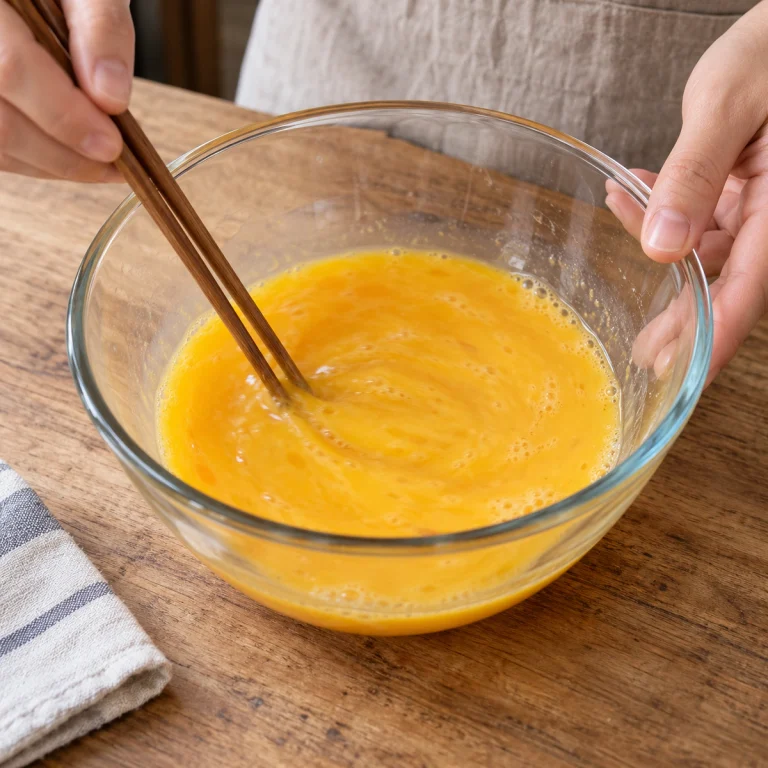
Gently mix the eggs, sugar, salt, soy sauce and optional water, avoiding incorporating a lot of air.
No large pieces of egg white or thick layer of foam remain.
Heat the pan over medium heat and brush with a thin coat of oil. Pour in a little egg mixture to make a thin layer.
Egg evenly covers the pan bottom, and a drop of egg mixture makes a gentle sizzling sound.
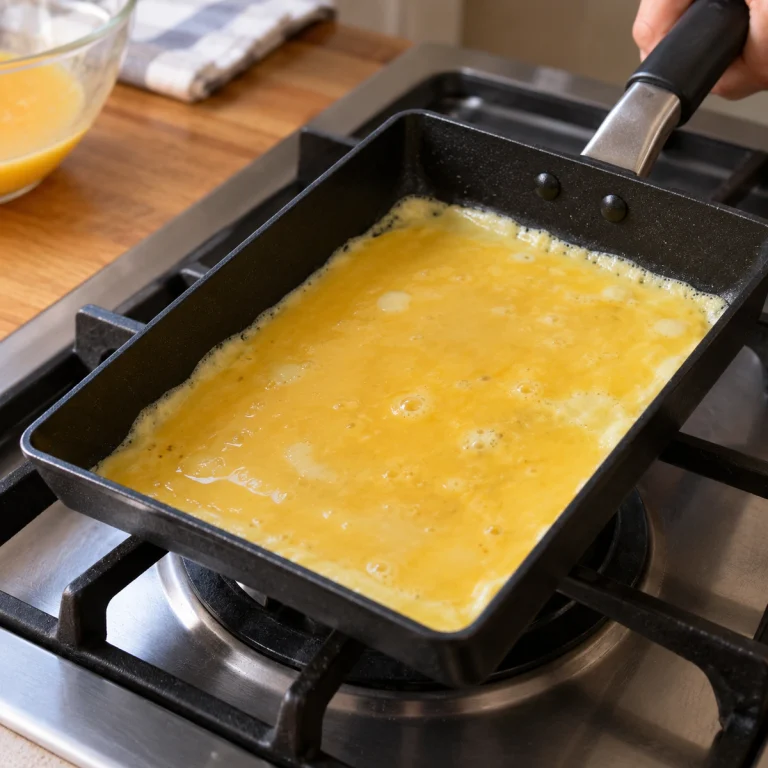
When the bottom has set and the top is no longer runny, roll from one side and push the roll to the edge of the pan.
The top is no longer runny, and the thin egg layer can be rolled intact.
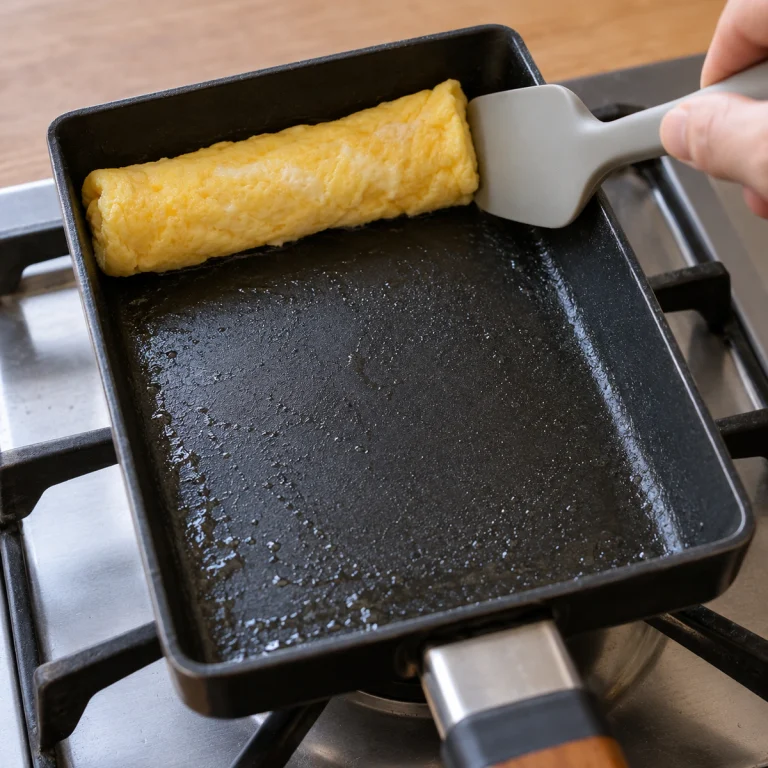
Oil the empty area and add egg mixture. Lift the roll so the egg mixture flows underneath. Once set, roll again, repeating until all the mixture is used.
Each layer is set before rolling, and the final layer has no runny egg mixture.
Press into a log, remove from the pan and cut into 6 pieces. Confirm that the egg mixture has set before eating.
The layers remain intact in the cut surfaces, and no runny egg mixture remains at the center.