
Tea eggs
Cook the eggs first, then crack the shells and simmer them in spiced tea.
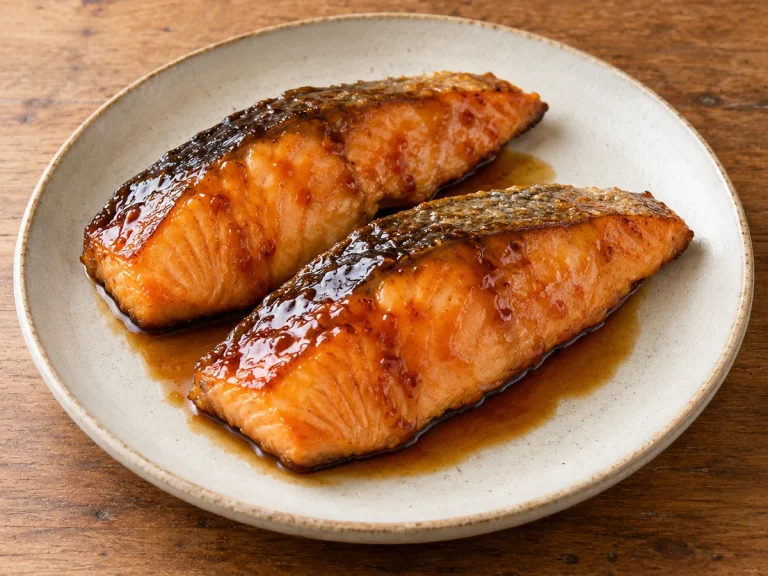
Skin-on salmon is pan-fried until cooked through at the center, then thinly coated in sweet and savory teriyaki sauce. Makes 2 servings, with 1 piece of fish of about 100 grams per person; serve starches and vegetables separately.
2 servings · 4 steps
Fully thaw the fish before following this recipe. For vacuum-packed fish, follow the label and completely remove it from the packaging before thawing in the refrigerator; do not thaw on the counter. The thickest centers of both pieces must reach 63°C; sauce color or elapsed time cannot establish doneness. Wash and sanitize utensils and probes that have touched raw or undercooked fish before they touch the finished food, and prepare a separate spatula and plate for cooked fish. Sake and mirin contain alcohol; do not claim that cooking removes it completely. Check the actual packaging of blended seasonings, nori and other processed products for allergens; this recipe is not certified allergen-free.
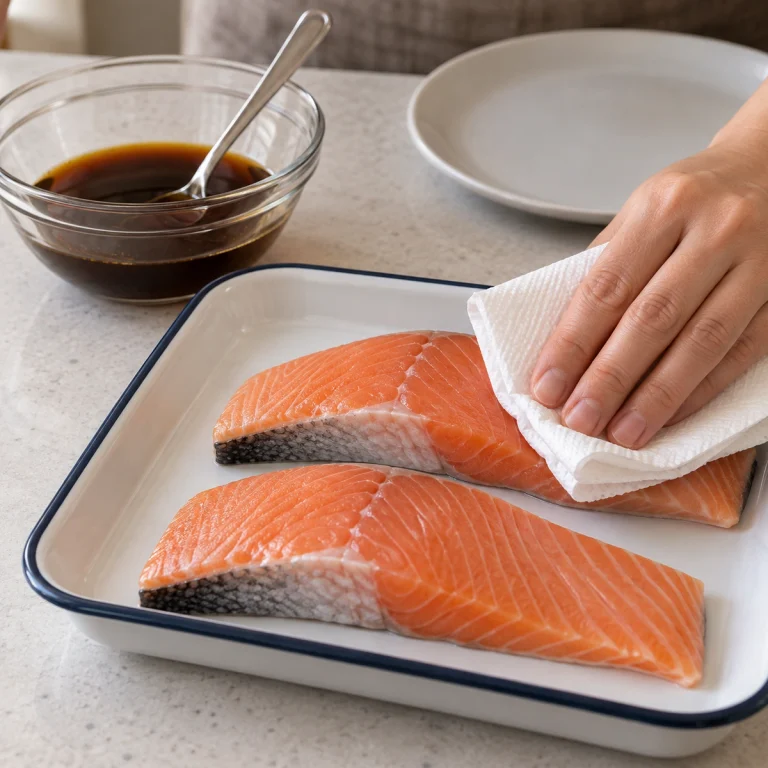
Mix the soy sauce, mirin, sake and sugar in a bowl that does not touch raw fish. If using frozen fish, fully thaw it in the refrigerator first. For vacuum-packed fish, follow the label and completely remove it from the packaging before refrigerating to thaw; do not merely cut a small opening or leave it on the counter. Pat the fish dry and check that the bones have been removed. Wash your hands after handling it, and keep raw-fish and cooked-fish plates separate.
The 2 pieces are fully thawed, with no obvious surface droplets, and the sauce has not touched raw fish.
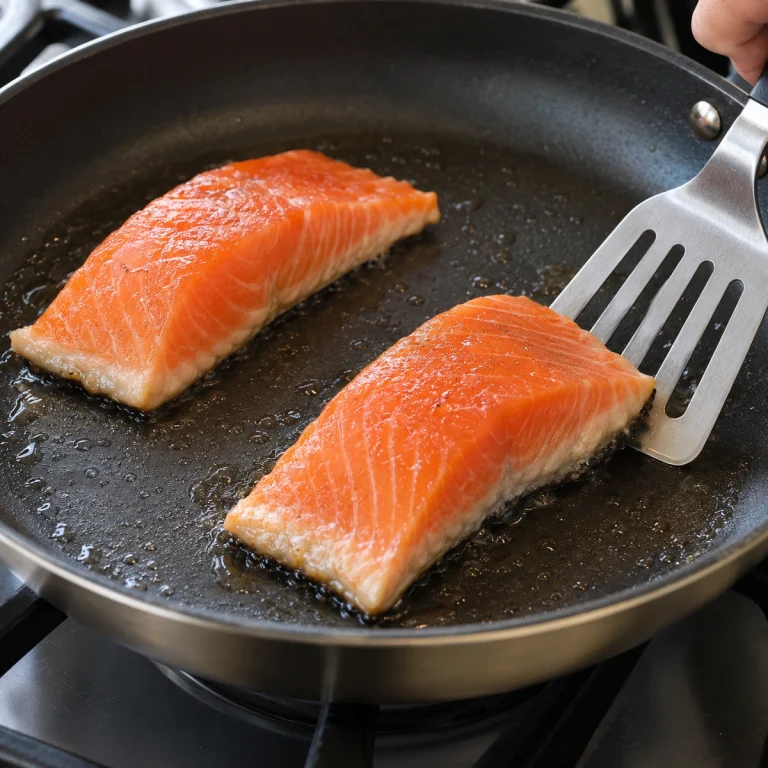
Add half a tablespoon of oil to the skillet and heat over medium heat without smoking. Place the fish skin-side down with space between the pieces. Cook for 2 minutes first, then check whether it can be gently lifted and turned. If still stuck, cook briefly again and observe; do not tear it free. Reduce the heat if it blackens or smokes. The center may still be undercooked at this stage.
A fish spatula can gently lift the skin, and the edges are beginning to turn pale; color has not been used to determine doneness.
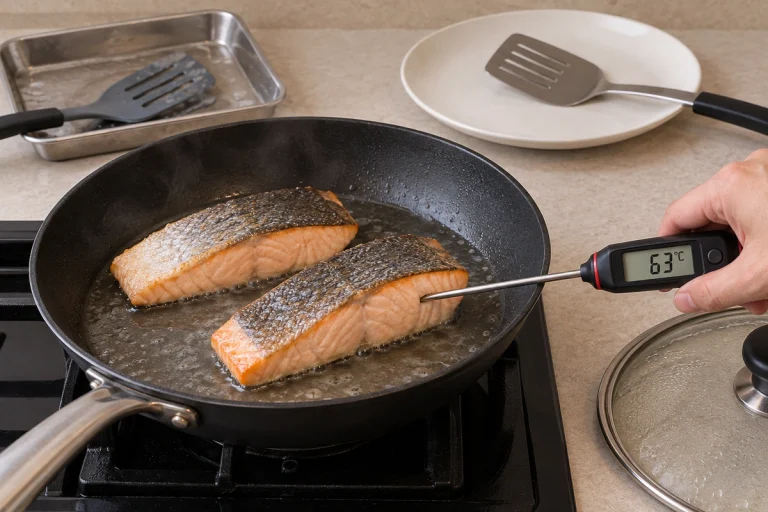
Support the fish as you turn it. Carefully add 30 milliliters of water along the pan edge, cover and reduce to medium-low heat. Once steam returns, heat for 2 minutes before the first check. Insert a clean probe from the side into the center of the thickest part; both pieces must reach 63°C. If not, continue covered cooking and recheck every 1 minute, adding a little water if the pan is nearly dry. Once the temperature is met, switch to a clean cooked-food fish spatula and move the fish to the cooked-fish plate.
The thickest centers of both salmon pieces have reached 63°C, and the pieces remain whole.
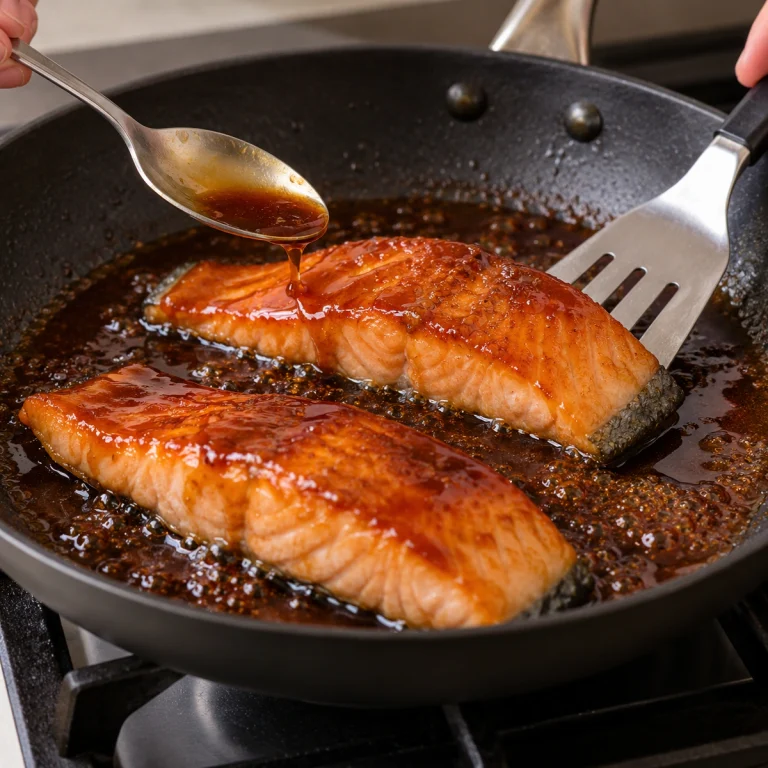
Pour the separately prepared sauce into the pan after removing the fish. Stir over medium-low heat until the entire sauce surface bubbles, then make the first check after reducing for 1 minute. Turn off the heat once it lightly coats the back of a spoon. If too thick, loosen with a little extra water; if burned and bitter, discard the burned sauce. Using a clean cooked-food fish spatula, return the cooked fish to the pan and coat gently, then immediately divide into 2 servings.
The sauce is thin, glossy and flowing, and the cooked fish remains whole and coated; its temperature was verified in the previous step.