
What to watch
Corn gets a thin glossy coating, and the mushroom sauce stays glossy and flowing.
Re-stir, add gradually and watch the sauce turn from cloudy to clear and lightly coating.
Corn gets a thin glossy coating, and the mushroom sauce stays glossy and flowing.
Add and stir as the recipe directs, stopping at its target instead of forcing in all the slurry.
Slurry thickening uses starch; reduction cooks off liquid. Use the full recipe for the intended consistency and heating conditions.
These are selected learning moments. Open the complete recipe for quantities, preparation and all cooking checks. Times are checkpoints for that recipe.
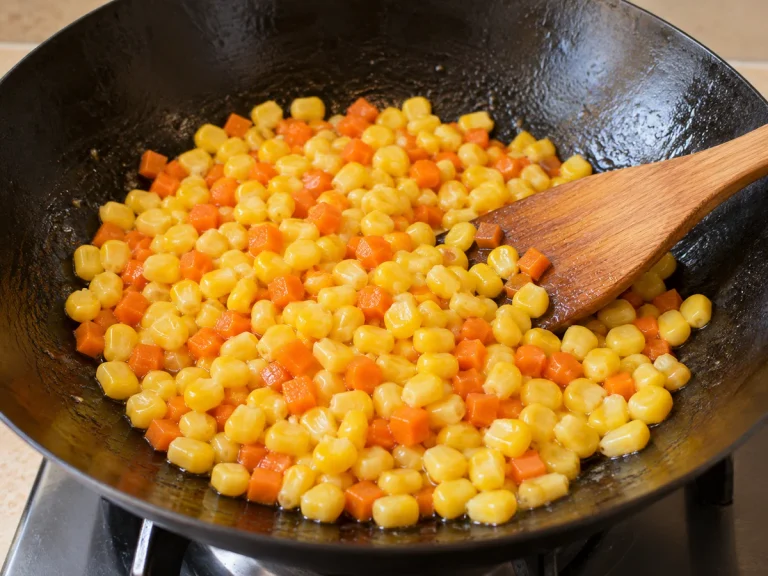
Add slurry gradually and watch for a thin clear coating.
Re-stir the slurry and add gradually while tossing. Heat until the milky starch becomes clear and glossy and lightly coats the corn; stop before the sauce becomes heavy even if some slurry remains.
The glaze is clear and thin without raw white starch or thick gel clumps.
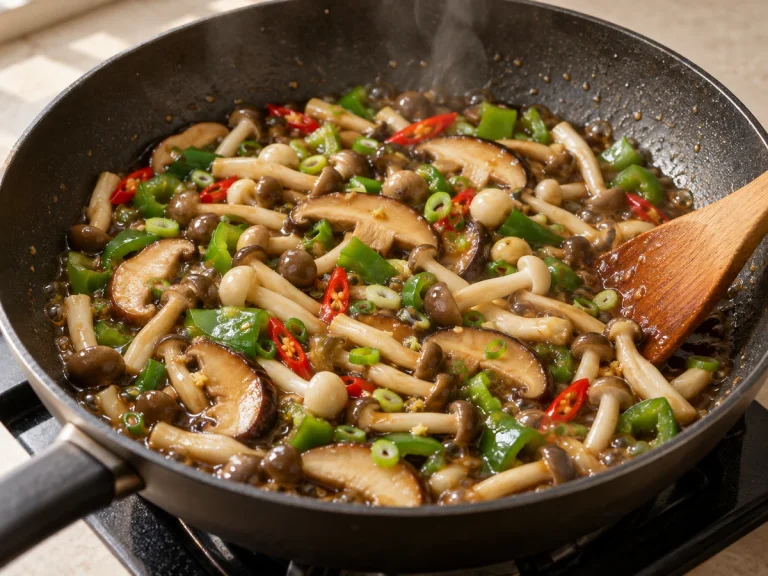
Re-stir the slurry and keep the sauce glossy and flowing.
Add mushrooms, soy sauce, oyster sauce and chicken seasoning. Re-stir the slurry and pour it in while stirring; cook until bubbling and lightly coating the mushrooms. Add cooking wine and scallion, stir and heat throughout without reducing to a dry paste.
Mushrooms are hot through with a glossy, flowing coating.
Bring a little guidance along. Open EagerCook for the cooking experience.