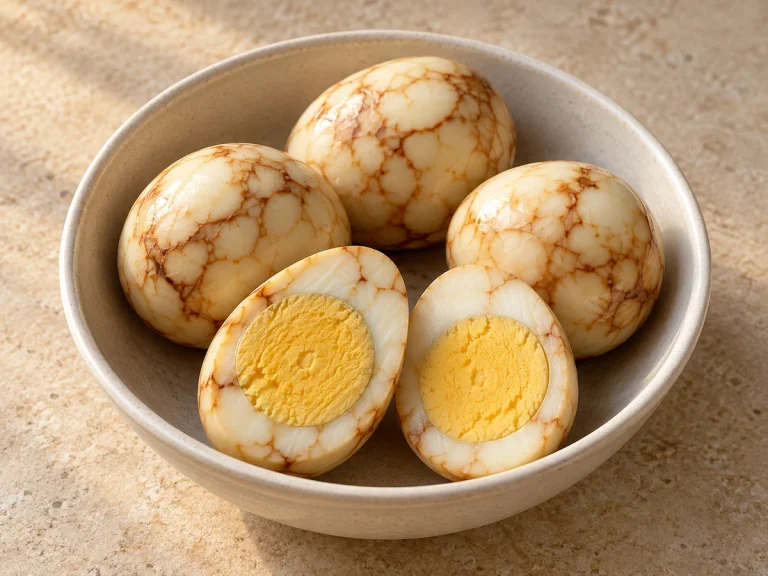
Tea eggs
Cook the eggs first, then crack the shells and simmer them in spiced tea.
Start with 150 grams of short-grain white rice to make 4 small plain nori-wrapped rice balls for 2 people, with 2 each. Salt is only for seasoning; this version includes soaking, cooking, and covered resting time.
2 servings · 6 steps
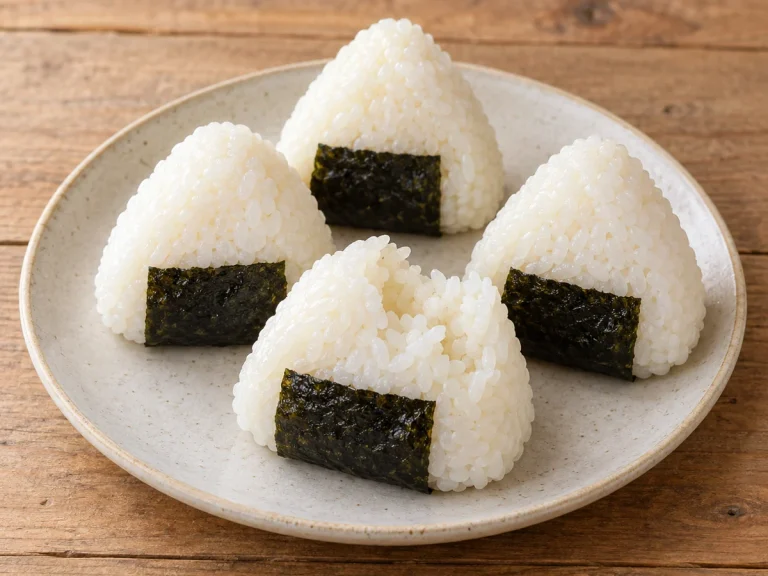
Do not leave cooked rice at room temperature for a long time. If not eating immediately, divide into small portions and cool quickly, aiming to refrigerate within 1 hour after cooking and eat within 24 hours. Do not try to remedy an unknown storage history by reheating; if reheating is needed, do so at most once and heat the whole portion through. Salt and nori only add flavor and do not preserve the rice. Wash your hands before handling rice balls. Use a clean rice paddle and plastic wrap suitable for warm food, avoid burns, and remove all the wrap. Allergens in blended seasonings, nori, and other processed products depend on the actual packaging; this version is not certified allergen-free.
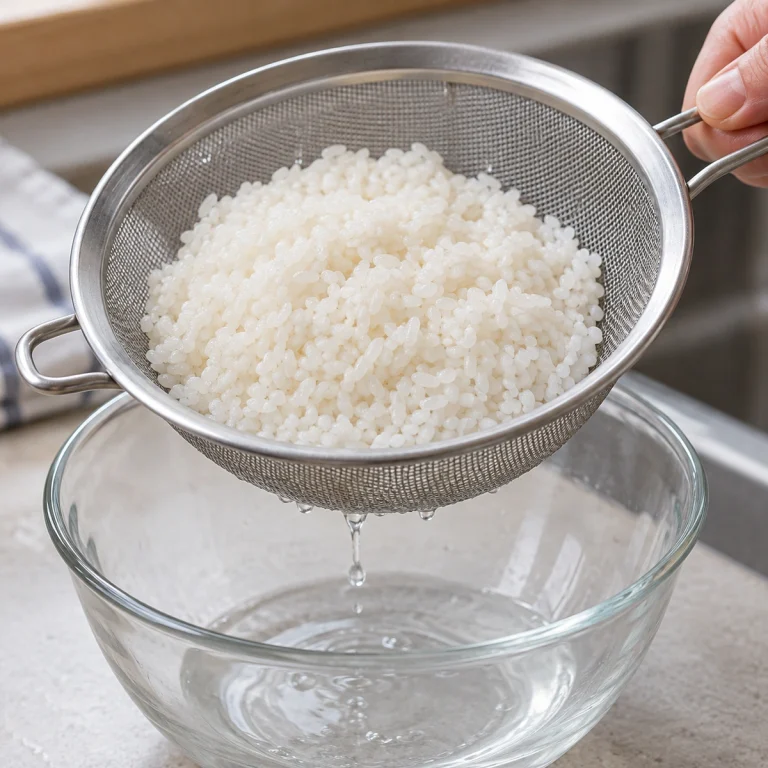
Wash your hands and weigh 150 grams of dry short-grain white rice. Add drinking water, rinse quickly and gently, and discard the water. Repeat gentle rinsing until the water is fairly clear. Drain free water in a fine strainer, but do not leave wet rice in the strainer for more than 5 minutes. Do not apply this water quantity to brown rice, glutinous rice, or long-grain rice.
The rice is rinsed and water no longer flows steadily from the strainer; the original dry-rice amount remains 150 grams.
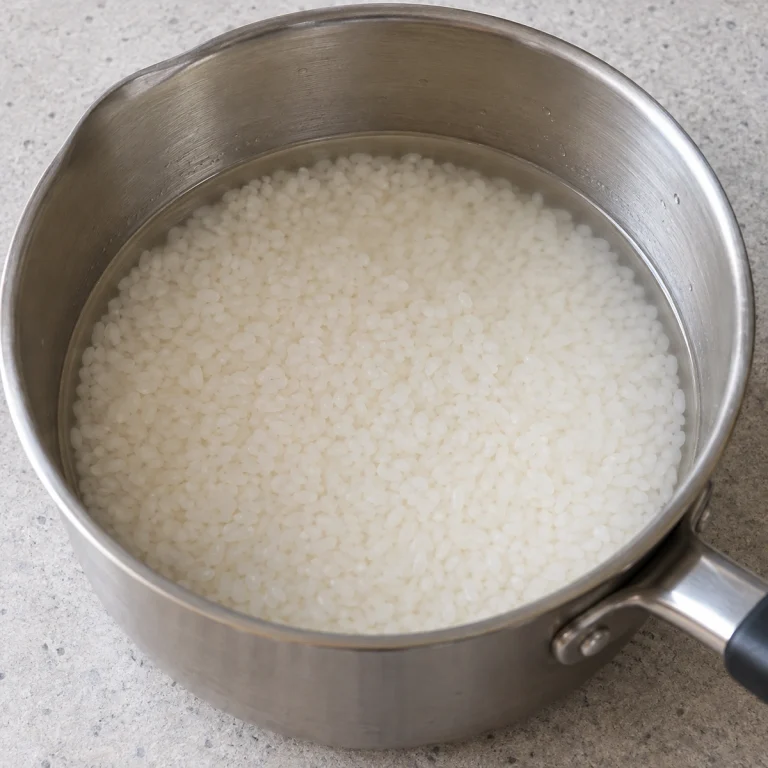
Put the rice in a small heavy-bottomed pot, add 200 milliliters of water, and soak for 30 minutes. Use this same water to cook the rice afterward; do not discard it or add another 200 milliliters.
The grains are whiter and have absorbed water, with the measured soaking water still in the pot.
Leave the lid slightly ajar and bring to a boil over medium heat, then immediately reduce to low and cover tightly. Cook for 13 minutes initially. Briefly uncover to check: if obvious water remains, cover and cook for another 1–2 minutes before checking. If the pot is dry but the rice centers are hard, add 10 milliliters of reserved water along the edge, cover, and cook for 2 minutes before rechecking. Use no more than 20 milliliters of reserved water. Turn off the heat if you smell burning; do not scrape burned rice into the rest.
No obvious free water remains, and the grains are soft without hard white centers.
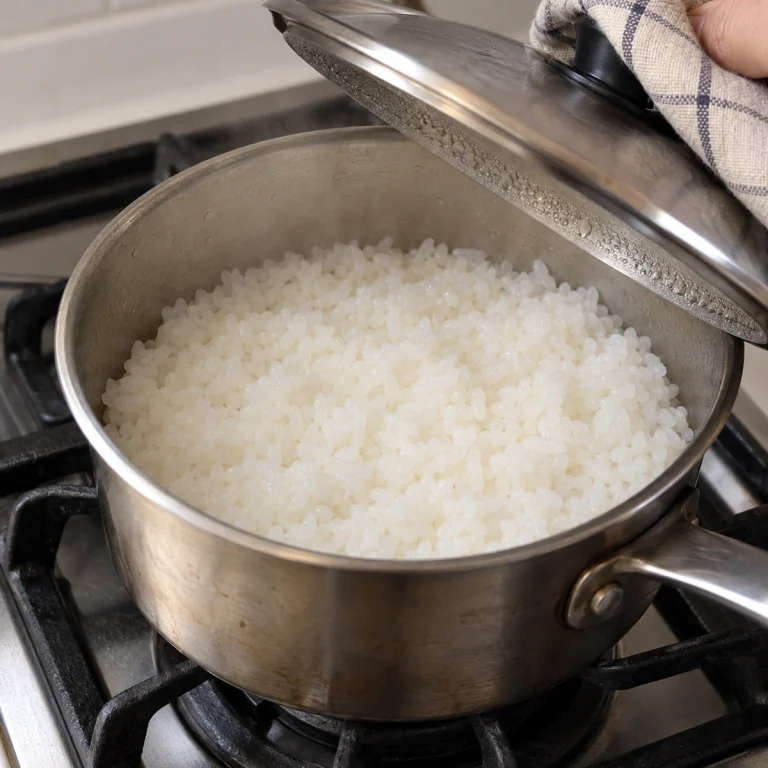
After confirming that the rice is soft and no free water remains, turn off the heat and move away from the heat source. Cover tightly and rest for 10 minutes without opening the lid. Then uncover, keeping clear of steam, and gently fluff with a clean rice paddle.
The 10-minute covered rest is complete, and the rice is soft and slightly sticky with no pooled water.
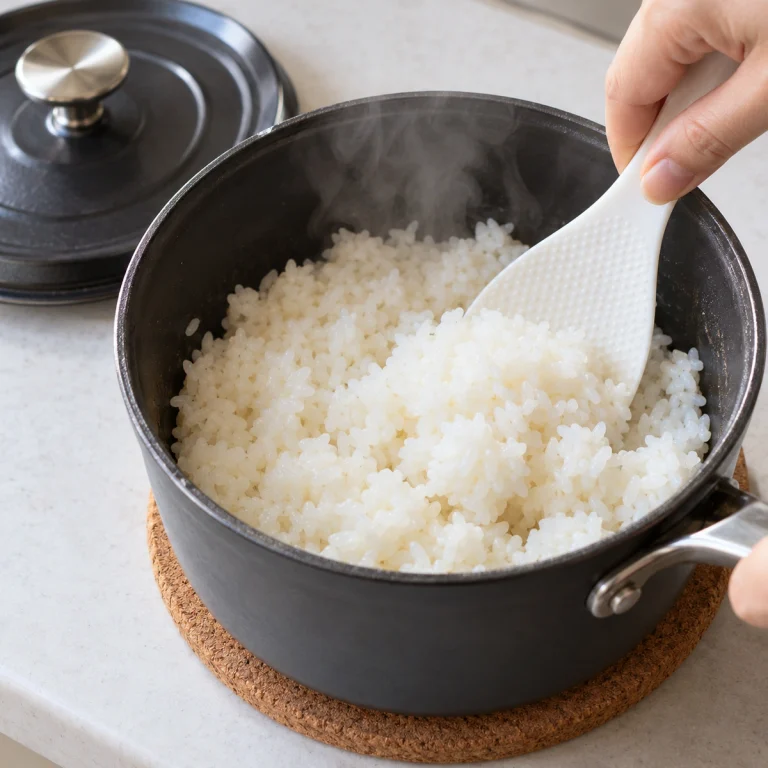
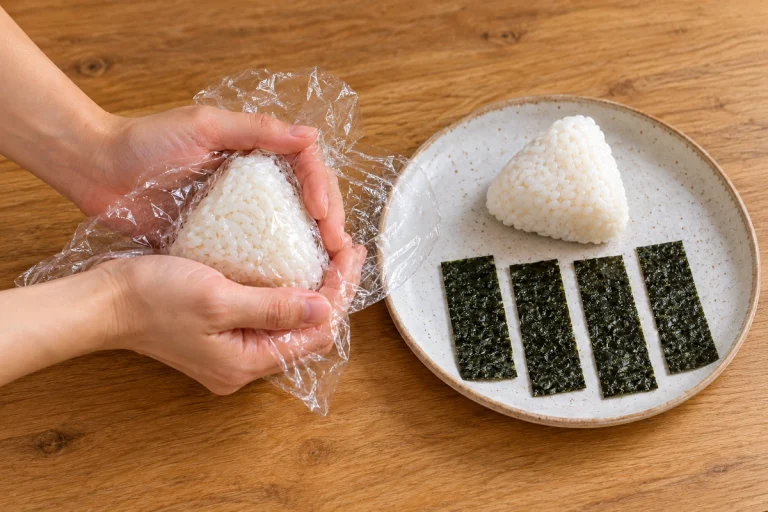
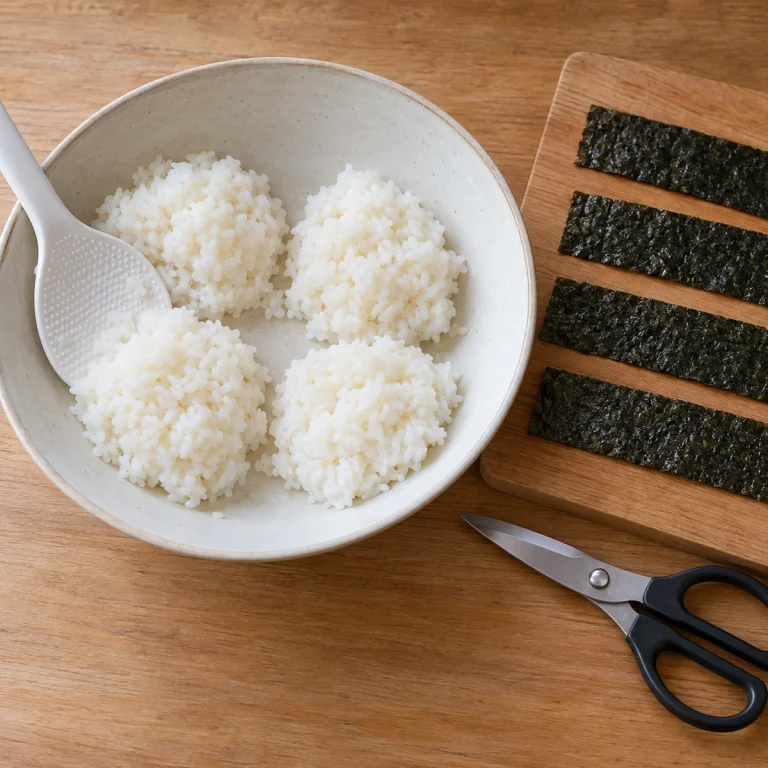
Use a rice paddle to mix in 1 gram of salt evenly. Transfer to a clean wide bowl and briefly let heat escape until the rice is warm and can be handled through plastic wrap without burning your hands. Divide evenly into 4 portions; do not leave it out for a long time waiting for room temperature. Cut the nori into 4 strips.
The 4 portions are similar in size, the rice is warm and slightly sticky, and the nori strips are ready.
Wrap a portion in clean plastic wrap labeled suitable for contact with warm food. Press gently into a round or triangular rice ball rather than a hard ball. Remove the wrap and add a nori strip, repeating to make 4. Eat immediately after making them. If not eating yet, divide into small portions and cool quickly, aiming to refrigerate within 1 hour after cooking and eat within 24 hours. Do not leave them on the counter as a packed lunch; salt and nori cannot guarantee safety at room temperature.
All 4 rice balls have no remaining plastic wrap, hold their shape, and have a clear storage timeline.