THE COOKPATH KITCHENPreparation
Preparation: Gather and prepare ingredients before cooking. Examples include Tea eggs, Steamed flower rolls, Boiled corn. Open a full recipe for ingredients and the complete method.
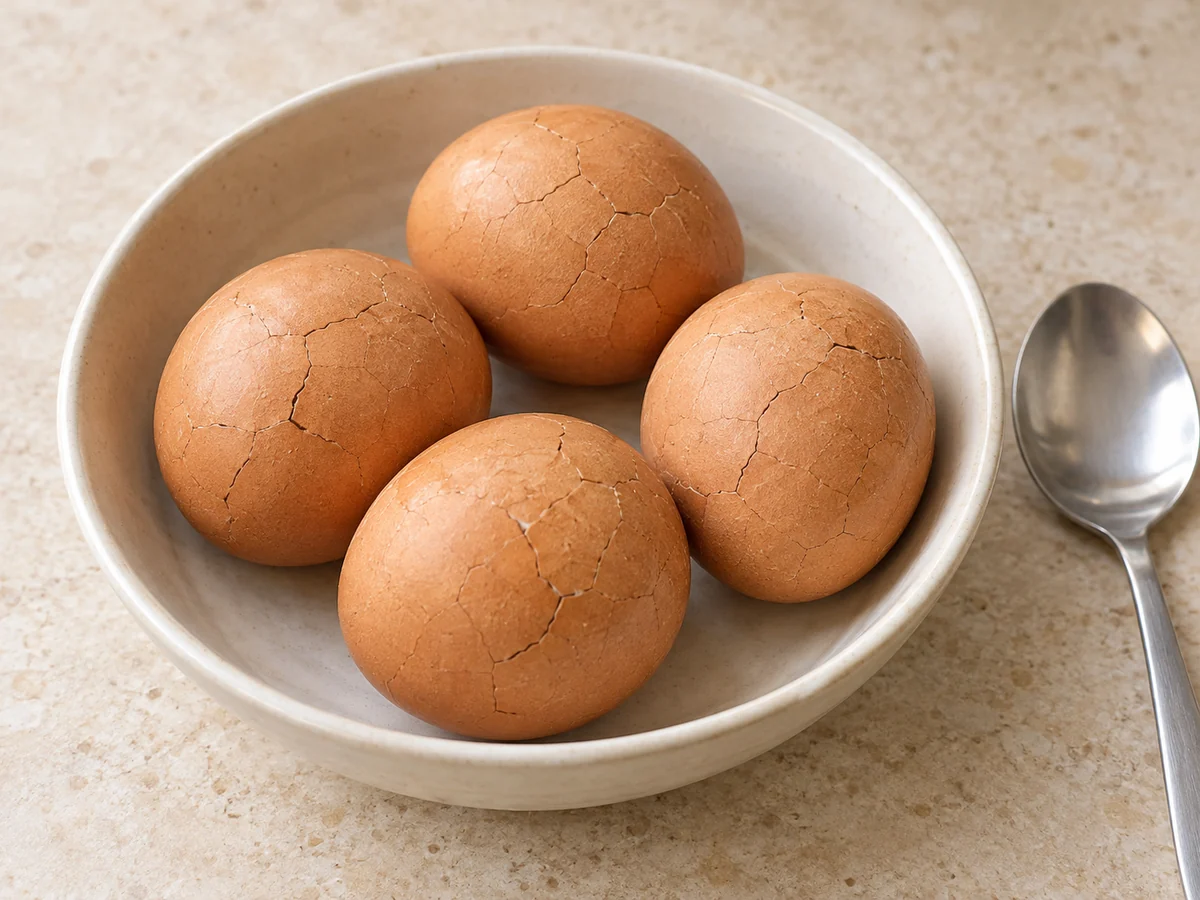
Tea eggsCool and crack the shells
Lift the eggs out with a slotted spoon and cool in cold water until safe to handle. Tap gently to make fine cracks while keeping the shells on.
Look forThe shells are cracked without crushing the eggs.
See the full recipe ↗ 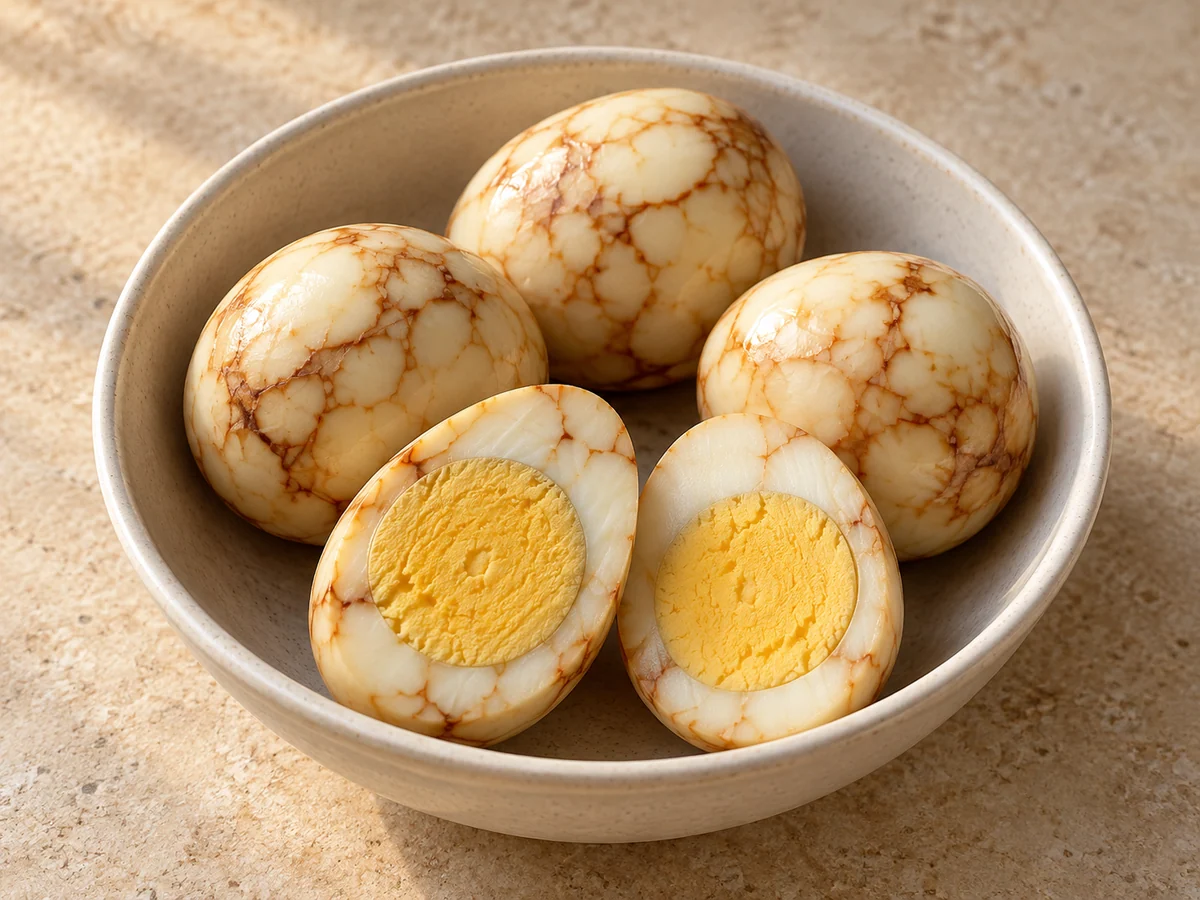
Tea eggsPeel and serve
Cool briefly, peel and serve. Refrigerate eggs that will not be eaten promptly; do not leave them in the tea at room temperature for an extended period.
Look forPeeled eggs show marbled lines and fully set yolks.
See the full recipe ↗ 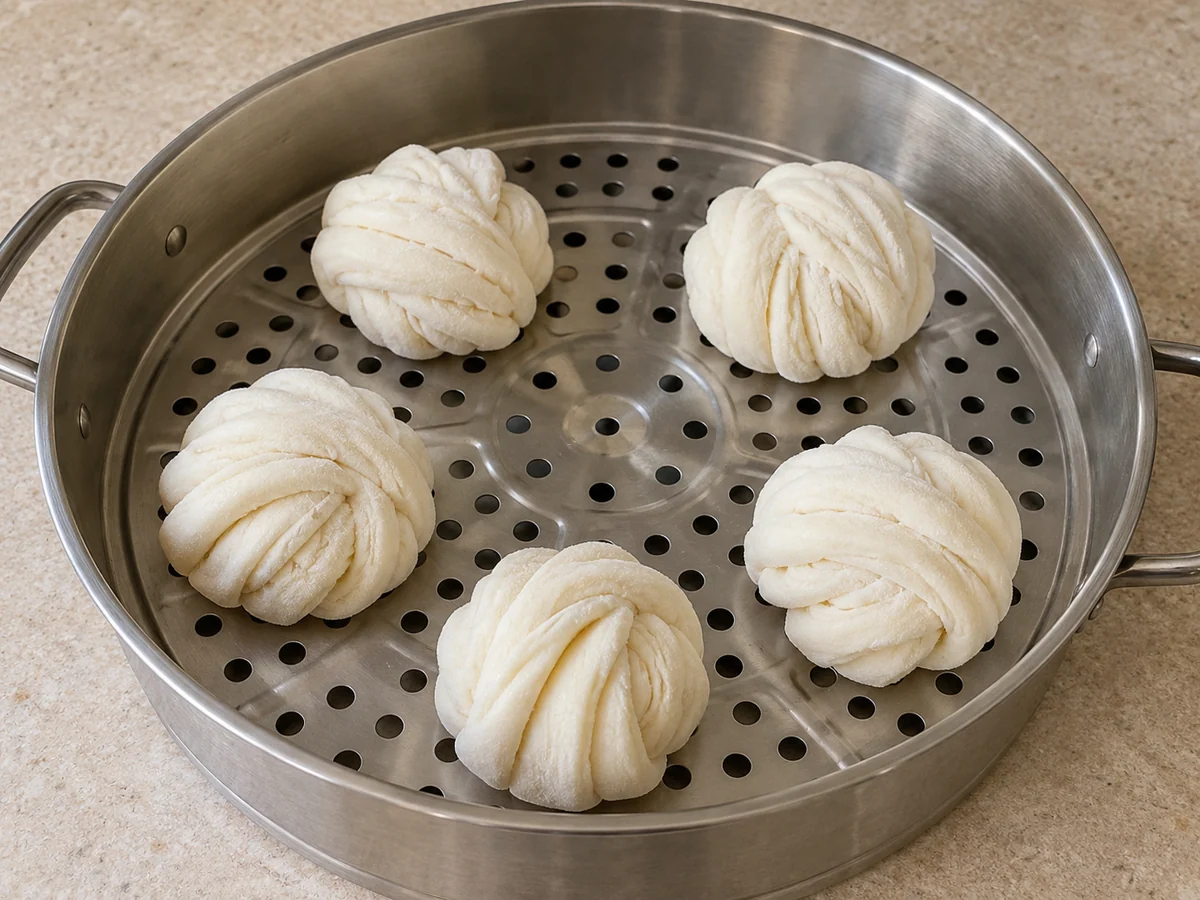
Steamed flower rollsCheck the package and arrange
Read the package steaming directions, ingredients and allergens. Arrange the rolls with gaps in a heatproof dish or steamer without stacking.
Look forThere is space for steam to circulate around the rolls.
See the full recipe ↗ 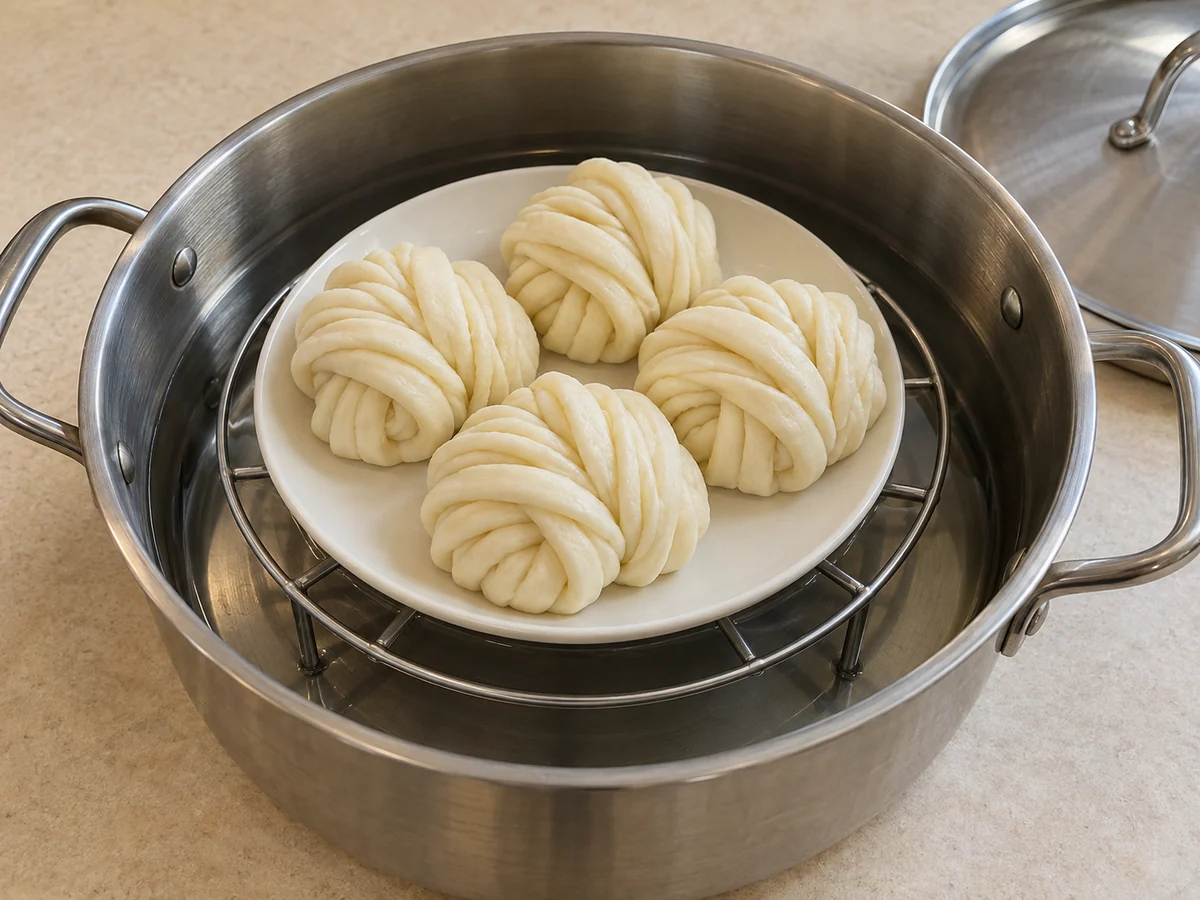
Steamed flower rollsPrepare the steamer
Add enough water according to the steamer instructions and fit the rack and dish securely. Keep the water below the food and cover.
Look forThe rack is stable and the water stays below the rolls.
See the full recipe ↗ 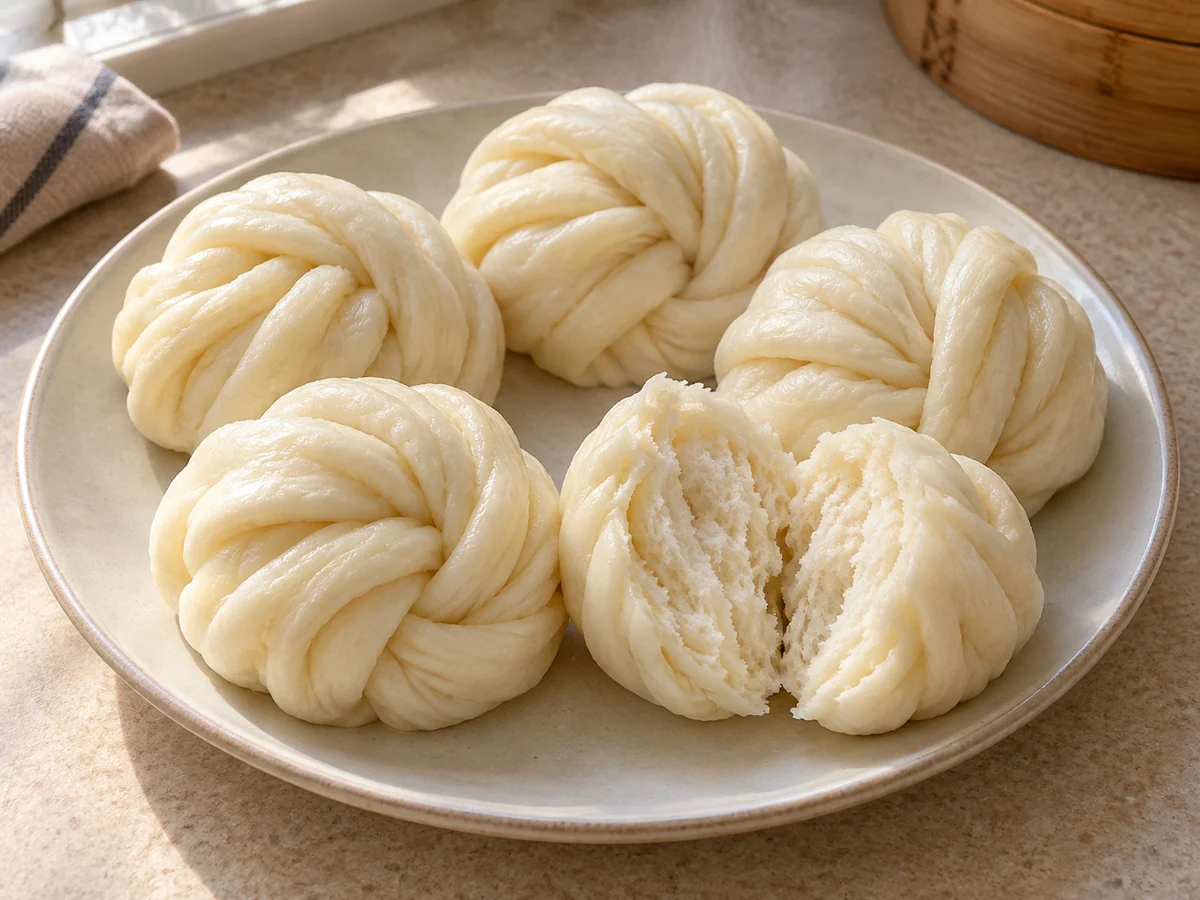
Steamed flower rollsRemove safely and serve
Turn off the heat and lift the lid away from your body. Use oven mitts or a plate lifter to remove the dish. Cool slightly before eating; do not touch hot rolls to test doneness.
Look forThe centers are hot through and your hands stay clear of steam.
See the full recipe ↗ 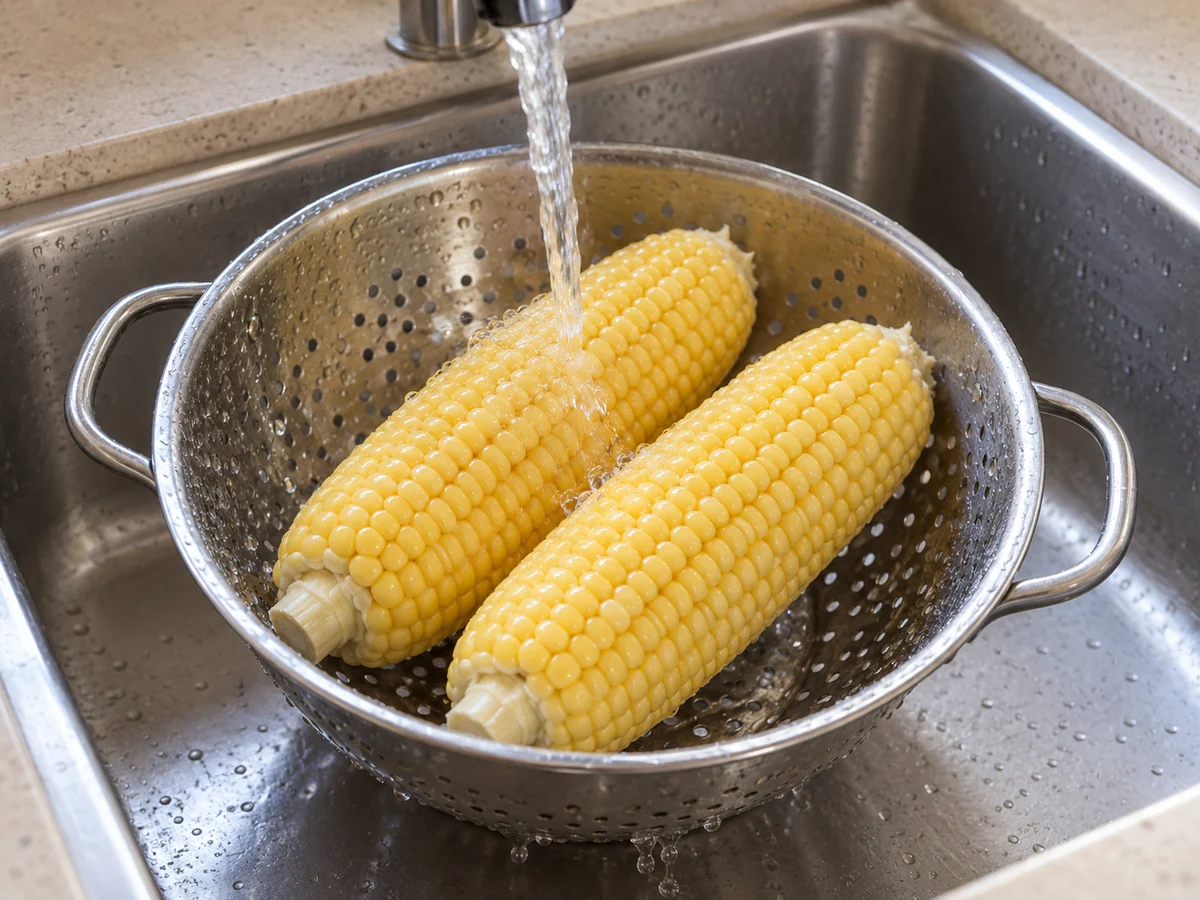
Boiled cornPrepare the corn
Remove dirty outer husks and silks. You may leave a few clean inner husks. Rinse under running water.
Look forThe corn and any remaining husks are clean.
See the full recipe ↗ 
Boiled cornDrain and cool briefly
Turn off the heat, lift out the corn with tongs, drain and cool briefly before eating.
Look forThe corn is drained and cool enough to handle and eat.
See the full recipe ↗ 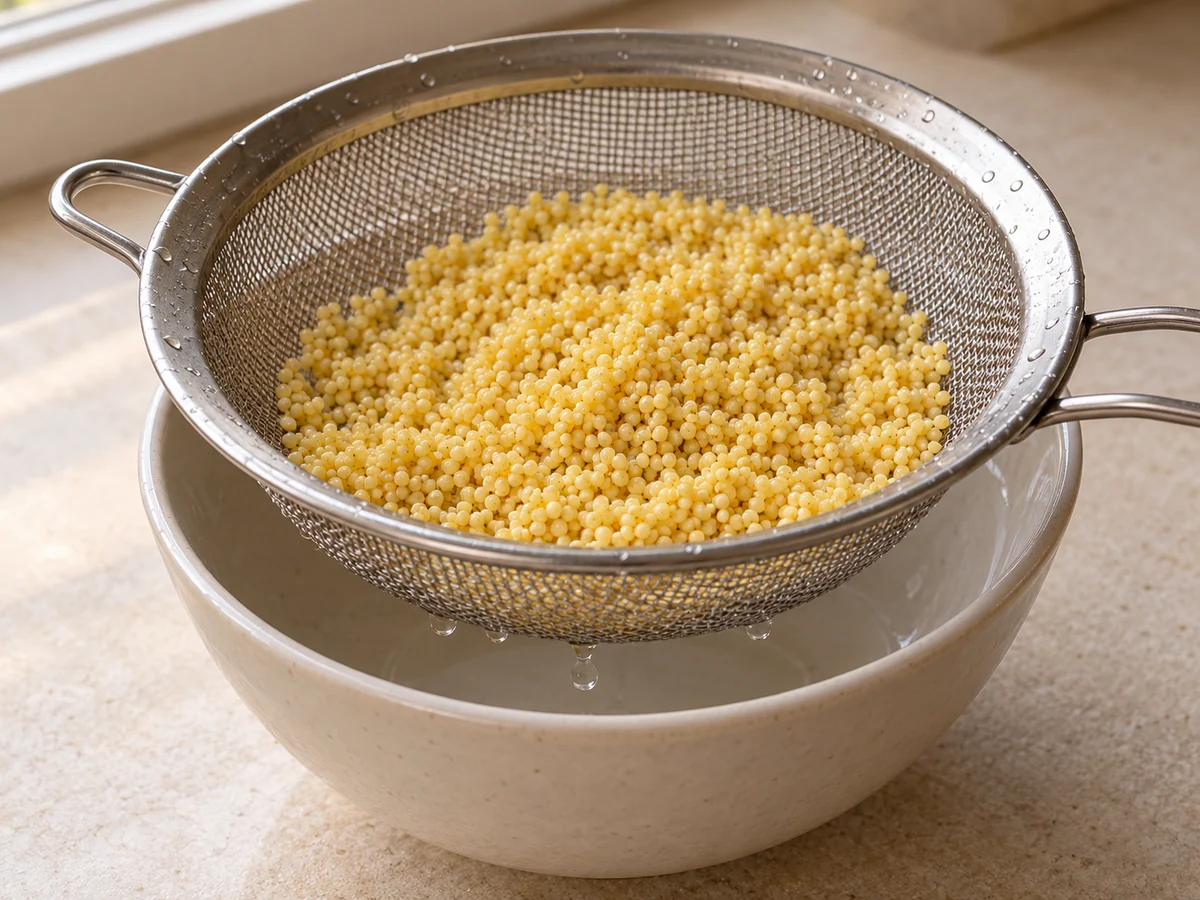
Millet congeeRinse the millet
Rinse the millet gently once in a fine sieve and drain.
Look forThe millet is clean without vigorous rubbing.
See the full recipe ↗ 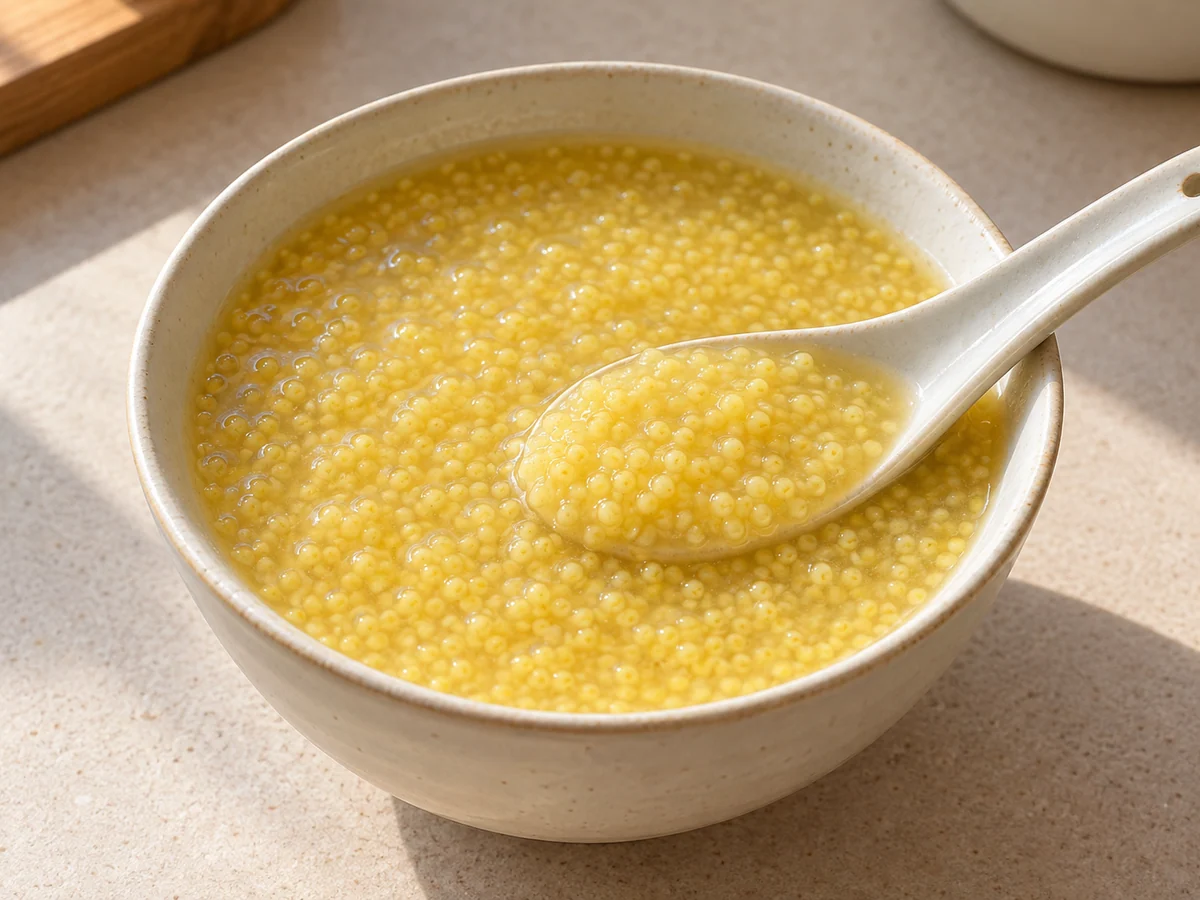
Millet congeeTurn off and serve
Turn off the heat, ladle into bowls and let cool slightly before eating.
Look forThe tender grains are evenly suspended in the porridge.
See the full recipe ↗ 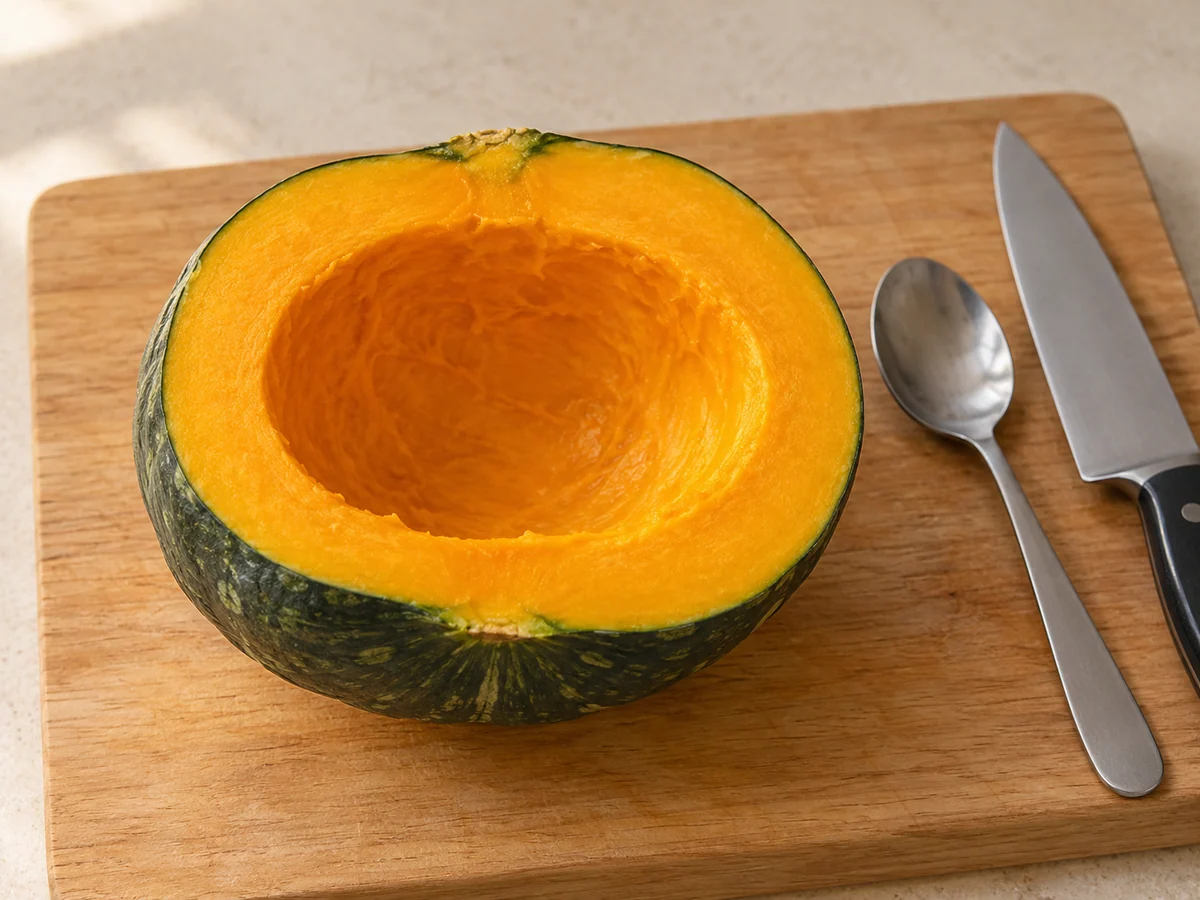
Steamed pumpkinWash and deseed
Wash the pumpkin, stabilize it on the board and cut it open. Remove the seeds and stringy flesh. Peel if appropriate for the variety, taking care with hard slippery skin.
Look forThe pumpkin is clean and deseeded and the board is stable.
See the full recipe ↗ 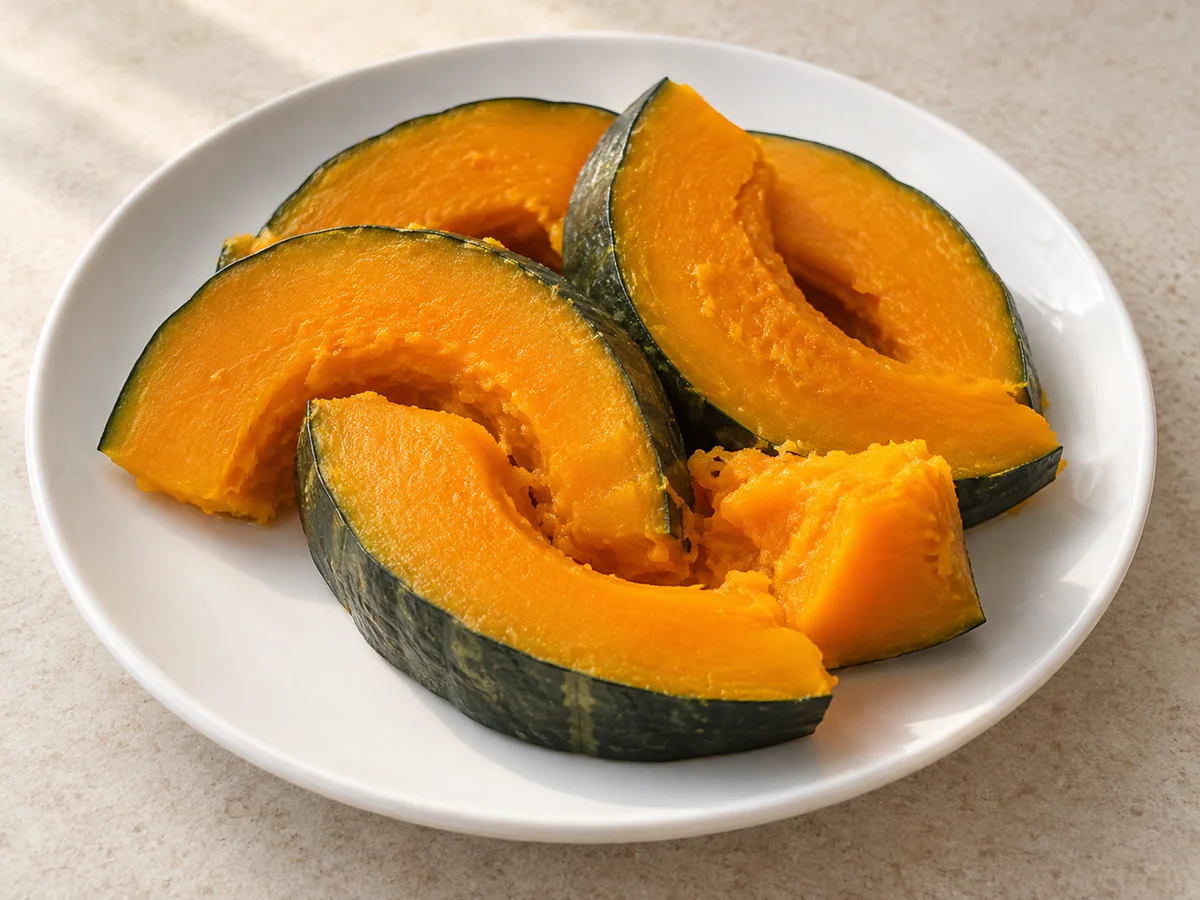
Steamed pumpkinRemove safely
Turn off the heat and open the lid away from you. Remove the dish with oven mitts or a plate lifter and let cool slightly before eating.
Look forThe pieces hold their shape but are soft inside.
See the full recipe ↗ 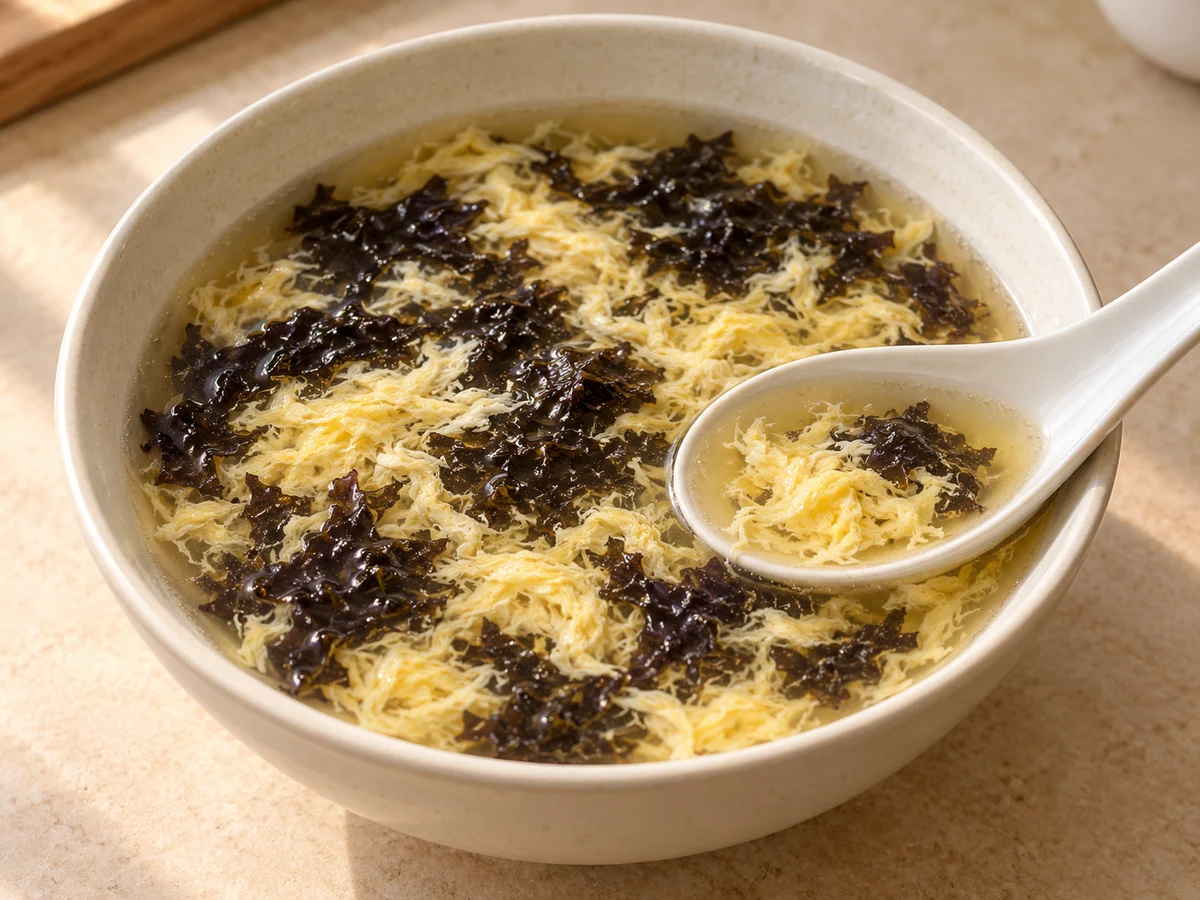
Seaweed egg drop soupTurn off and serve
When the egg is fully cooked, turn off the heat, ladle into bowls and cool slightly before drinking.
Look forThe soup contains fully cooked ribbons with no raw egg.
See the full recipe ↗ 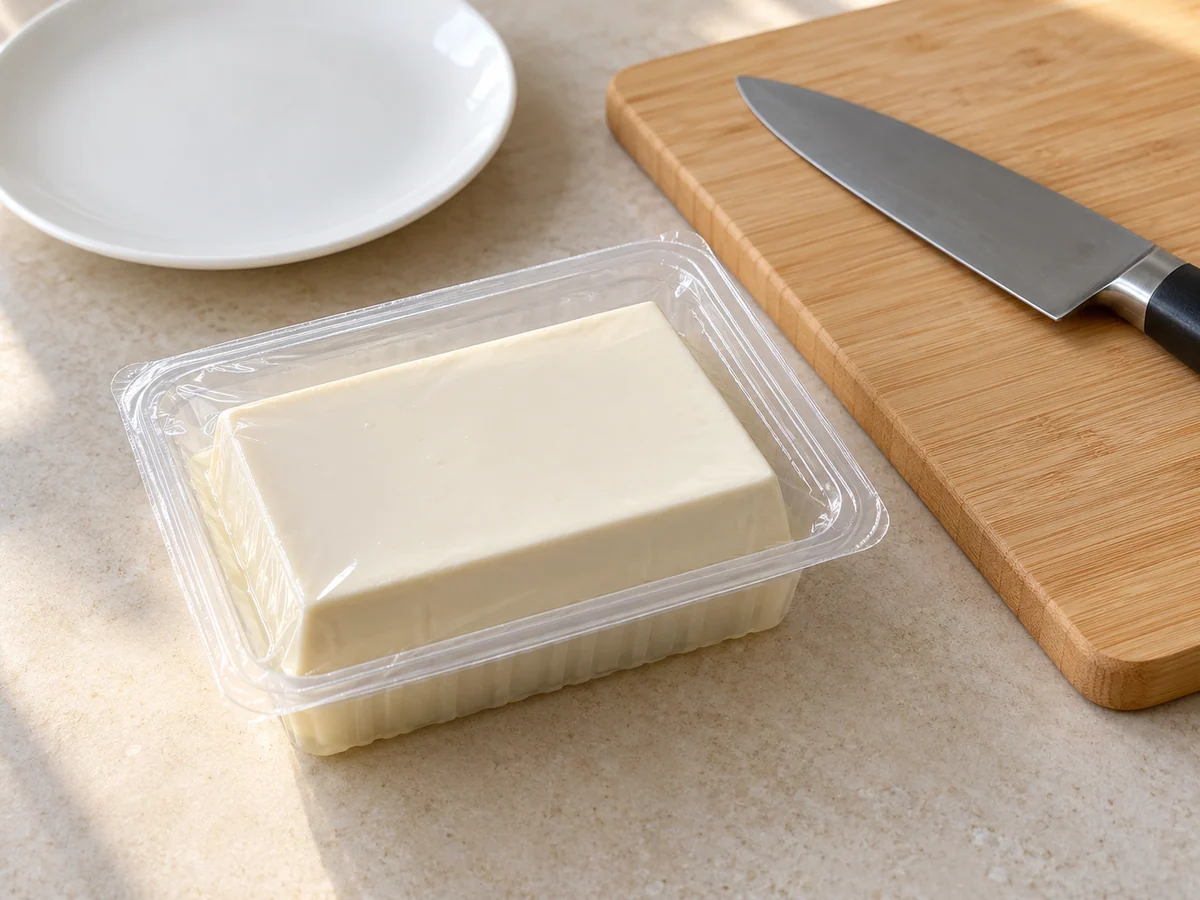
Century egg and tofuCheck the chilled tofu
Check that the tofu is within its use-by date, has been kept chilled as labeled, and is ready to eat. If cooking is required, follow the package and cool safely first. Use a clean board, knife and plate.
Look forThe package is intact and the preparation follows its label.
See the full recipe ↗ 
Pan-fried dumplingsCheck and arrange the dumplings
Check the ingredients, allergens and pan-frying directions. Put the oil in a nonstick frying pan and arrange the dumplings in one layer with gaps.
Look forThe dumplings are not stacked and package instructions have been checked.
See the full recipe ↗ 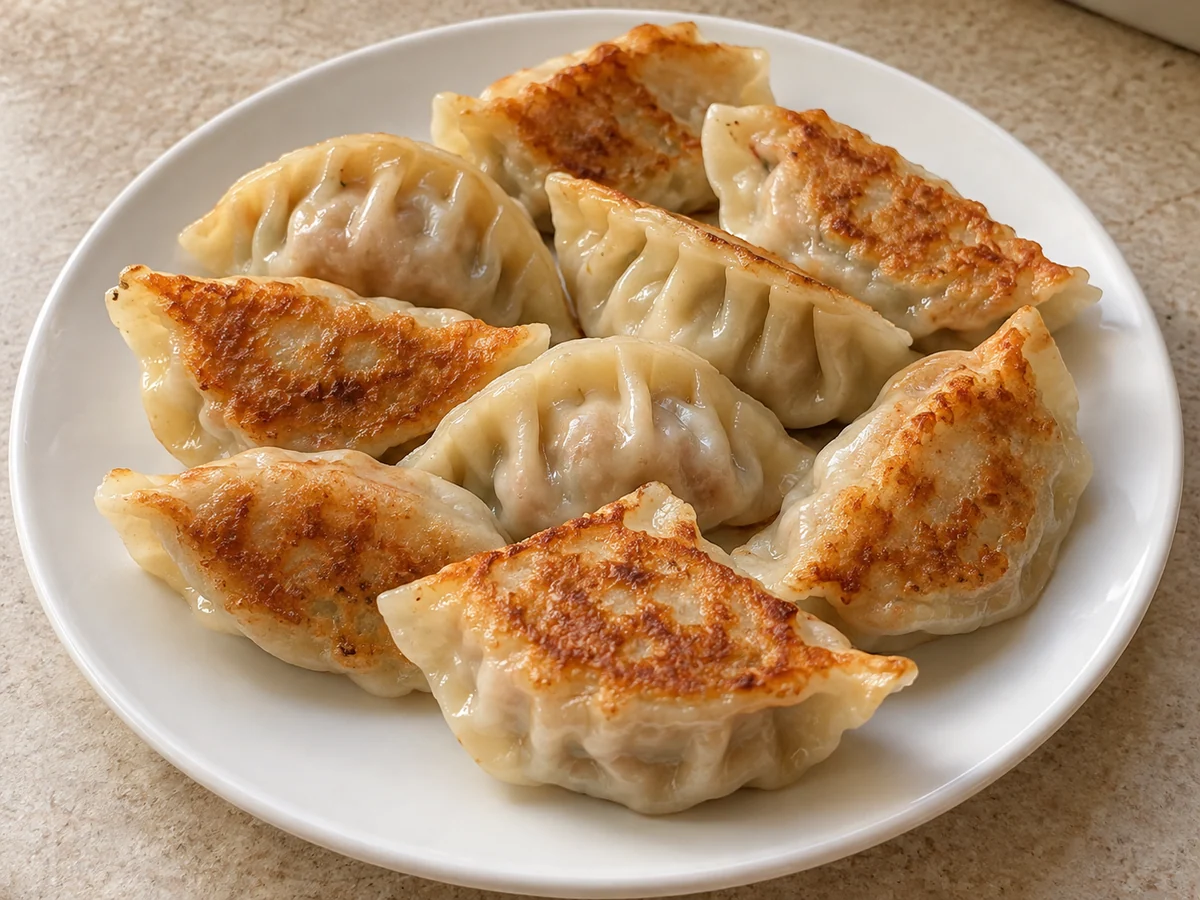
Pan-fried dumplingsPlate while hot
Transfer with a spatula or tongs and face the crisp bases upward. Let the very hot filling and juices cool slightly before eating.
Look forThe dumplings are intact with crisp bases and hot, cooked filling.
See the full recipe ↗ 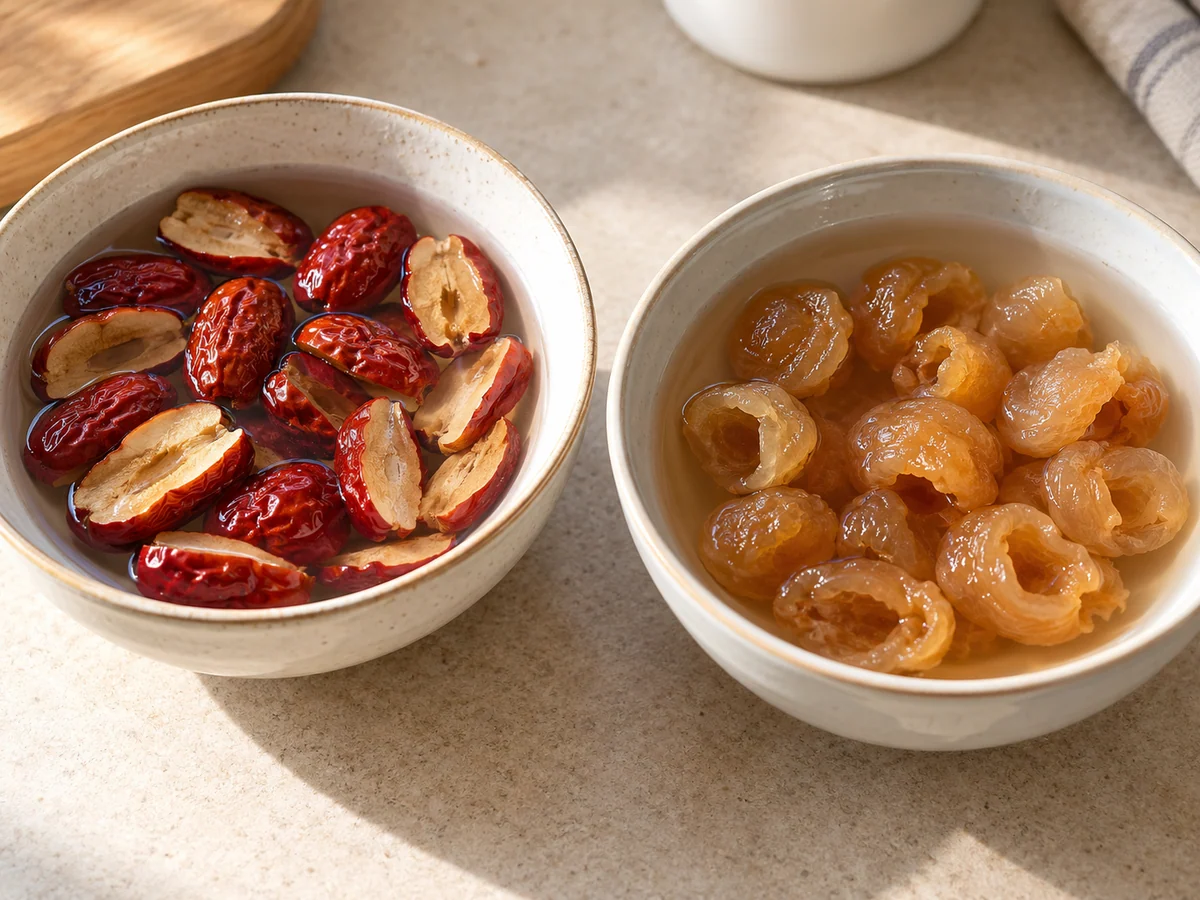
Longan and red date congeePeel, pit and soak
Shell and pit the longan. Wash and pit the dates. Soak in separate bowls of clean water and set a 10 min reminder, then drain once softened.
Look forBoth fruits are pitted and slightly softened.
See the full recipe ↗ 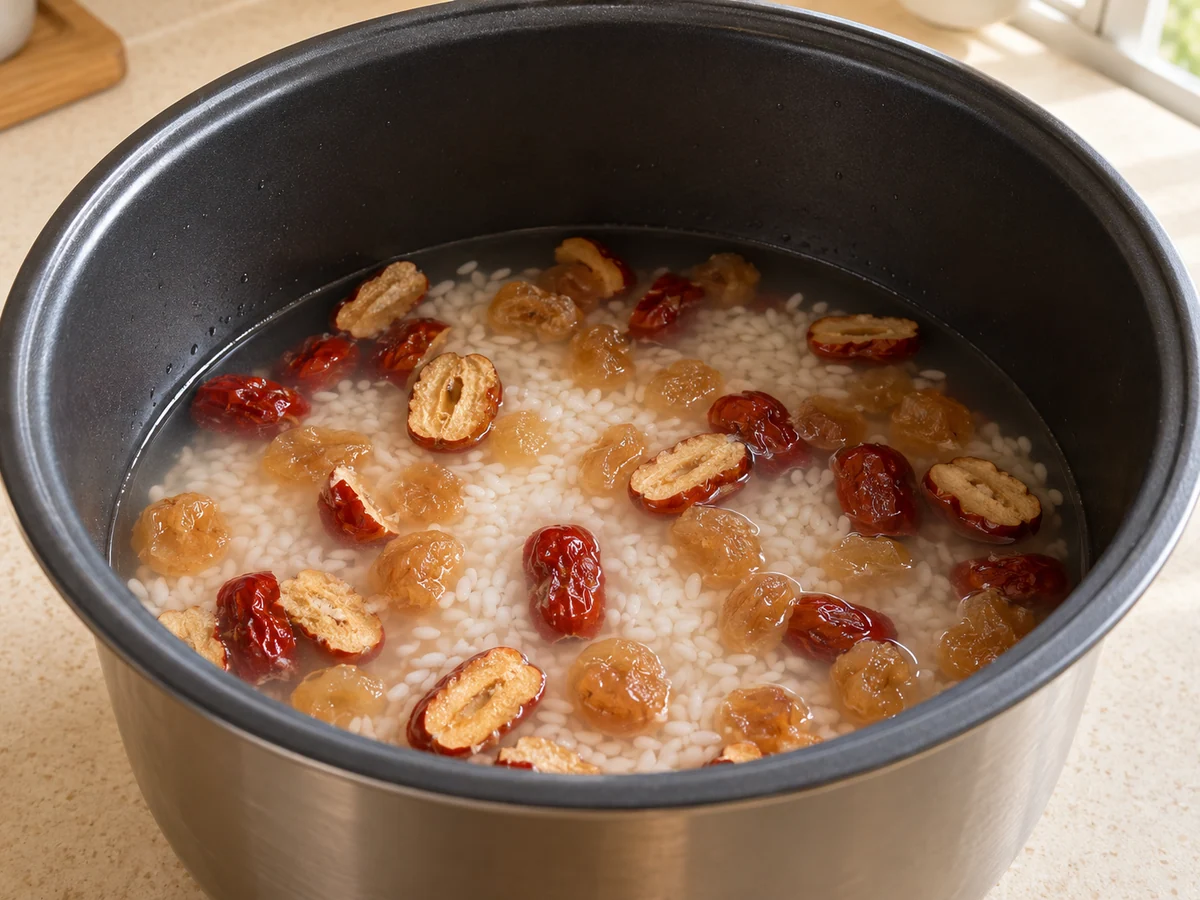
Longan and red date congeeRinse rice and check capacity
Rinse and drain the rice into the cooker. Add the listed porridge water, longan and dates. Stay below the cooker’s maximum porridge line; divide proportionally into batches if necessary.
Look forThe ingredients are distributed evenly and below the porridge limit.
See the full recipe ↗ 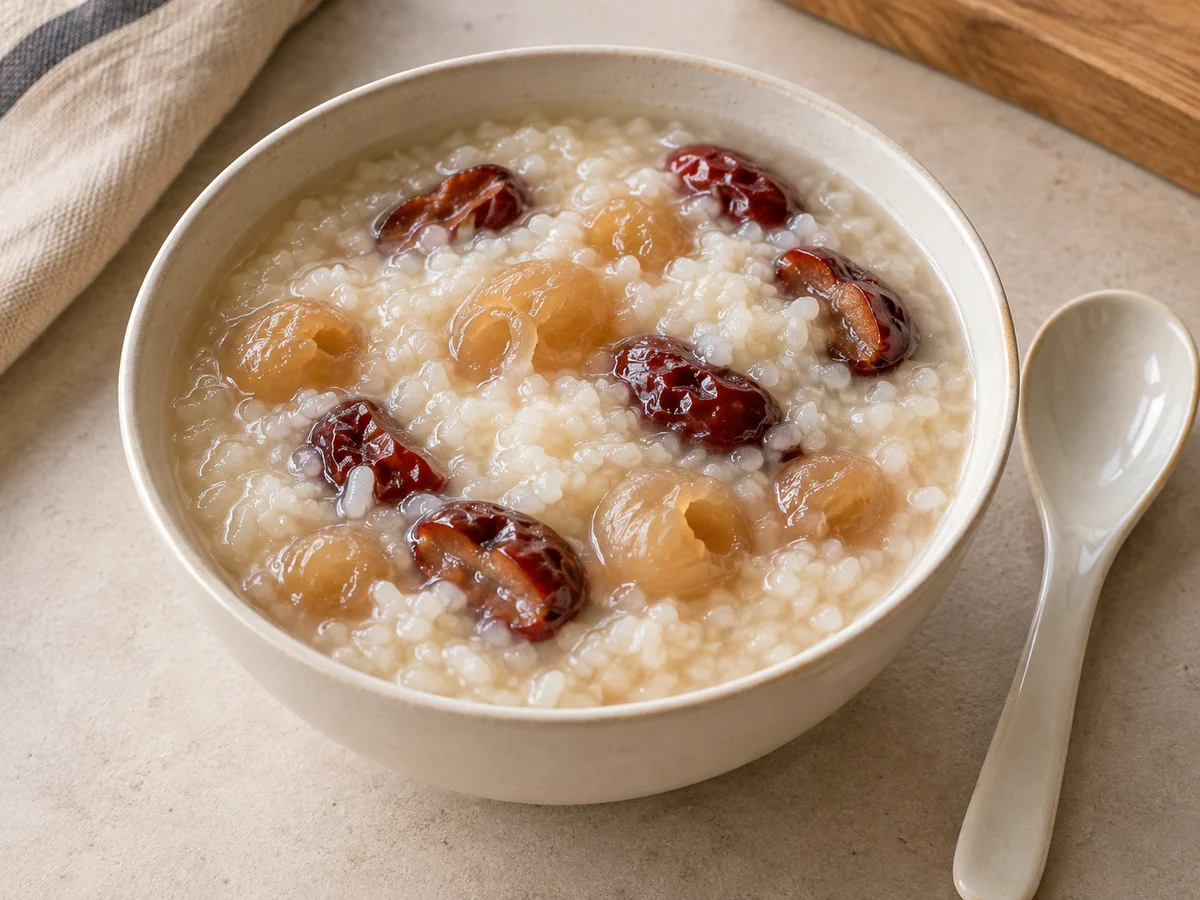
Longan and red date congeeStir and serve
After cooking ends, stir gently with a rice paddle, ladle into bowls and cool slightly before eating.
Look forThe grains and fruit are evenly distributed with no pits.
See the full recipe ↗ 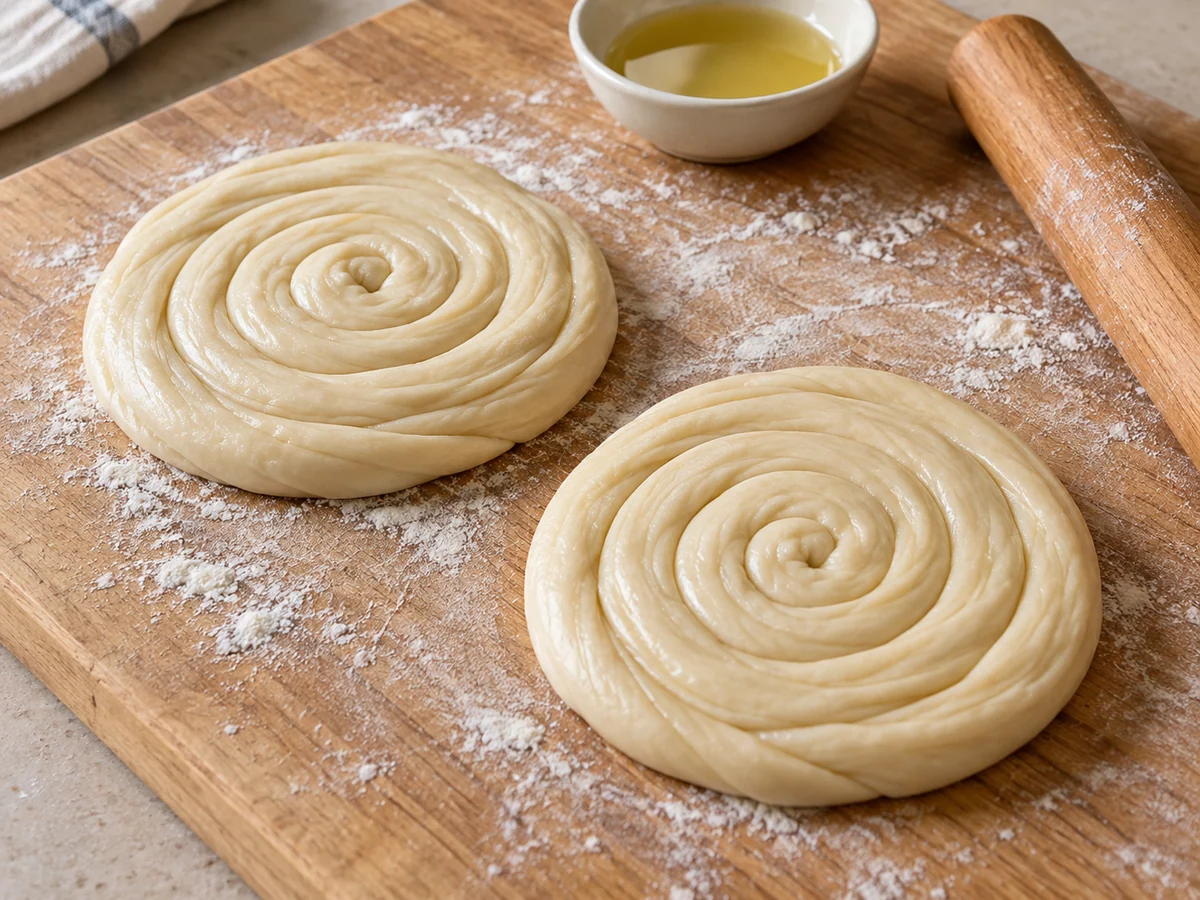
Flaky Chinese flatbreadRoll, oil and coil
Divide the dough into similar pieces sized for the pan and roll each thin. Spread about half the oil thinly across the sheets, sprinkle on the salt, roll into ropes and coil each rope.
Look forThe dough forms coils with evenly distributed oil and salt.
See the full recipe ↗ 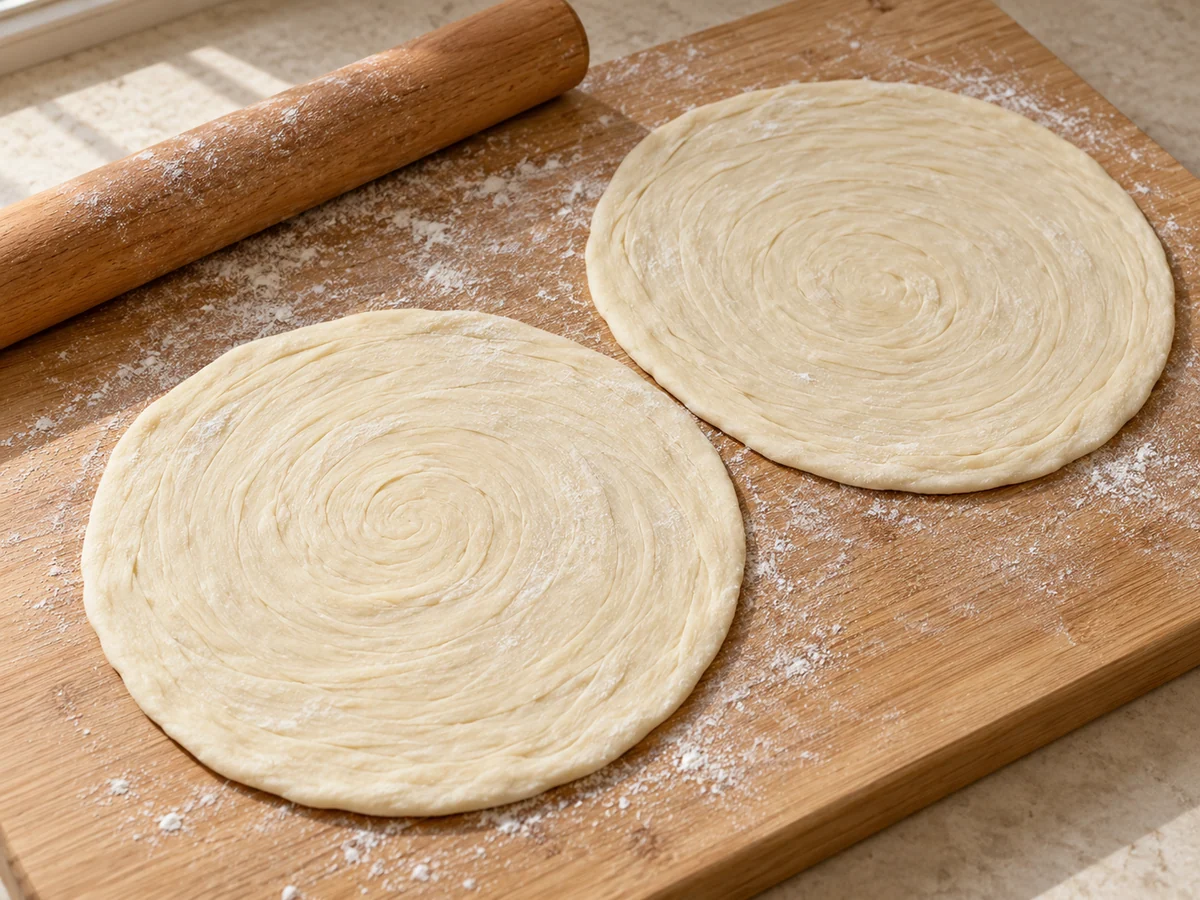
Flaky Chinese flatbreadRelax and flatten the coils
Cover the coils and rest for 10 min, then roll gently into evenly thin pancakes. If they spring back strongly, let them relax longer rather than forcing them.
Look forThe flatbreads are evenly thin with visible layers.
See the full recipe ↗ 
Flaky Chinese flatbreadFill and fold
Divide the cooked egg, lettuce, ham and cheese among the flatbreads, roll or fold and serve warm.
Look forThe breads are crisp and pliable with evenly divided, safely prepared fillings.
See the full recipe ↗ 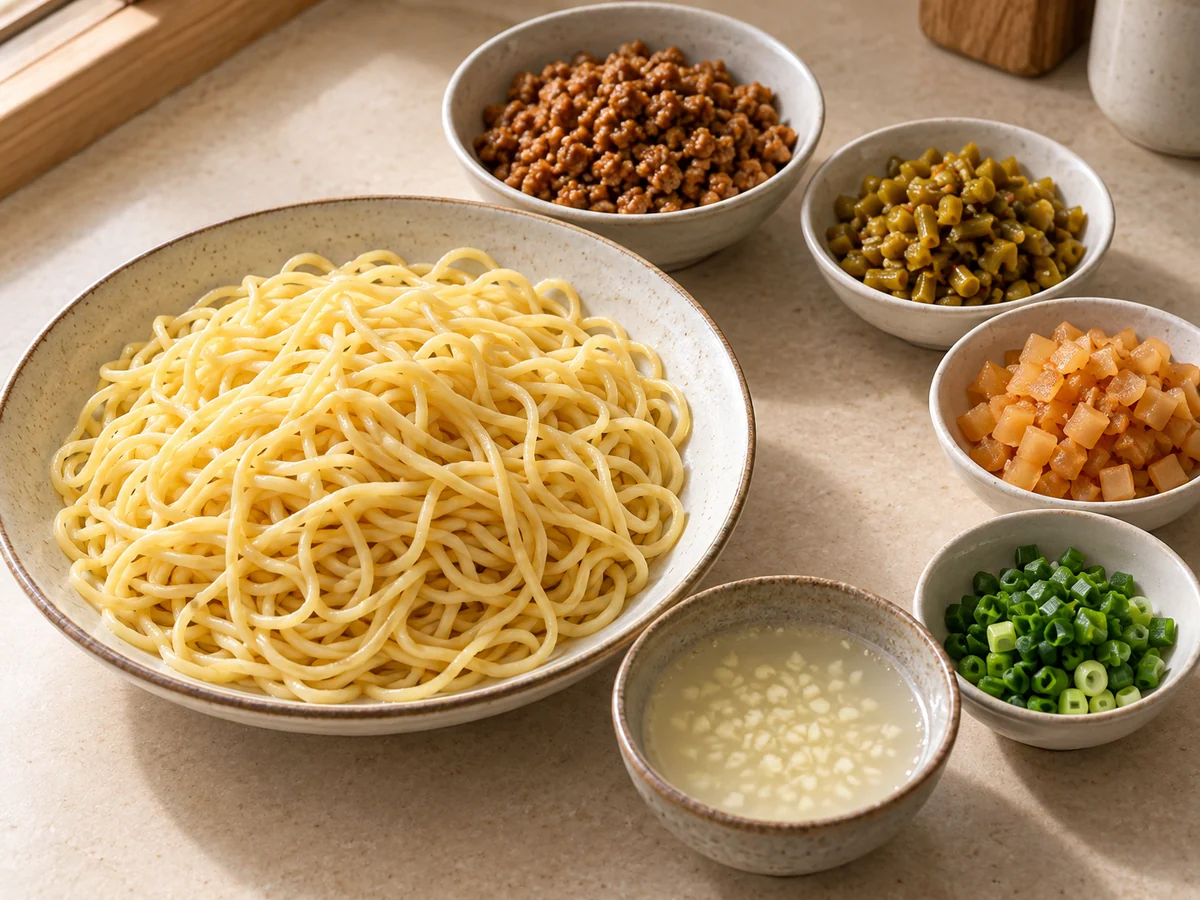
Wuhan hot dry noodlesCheck cooked ingredients and chop
Use cooked alkaline noodles and cooked minced pork, not raw substitutes; check storage and reheating directions. Peel and mince the infusion garlic in a heatproof bowl, add the listed hot infusion water and stir with a spoon. Set a 10 min steeping check and use freshly. For each 250 g cooked noodles, stir and measure 30 ml garlic water including fine garlic bits; leave the remainder unused. Measure it separately from the hot water used later to thin sesame paste. Chop scallion, pickled beans and radish.
Look forCooked noodles and pork are confirmed, toppings chopped and freshly infused garlic water measured for the noodle weight.
See the full recipe ↗ 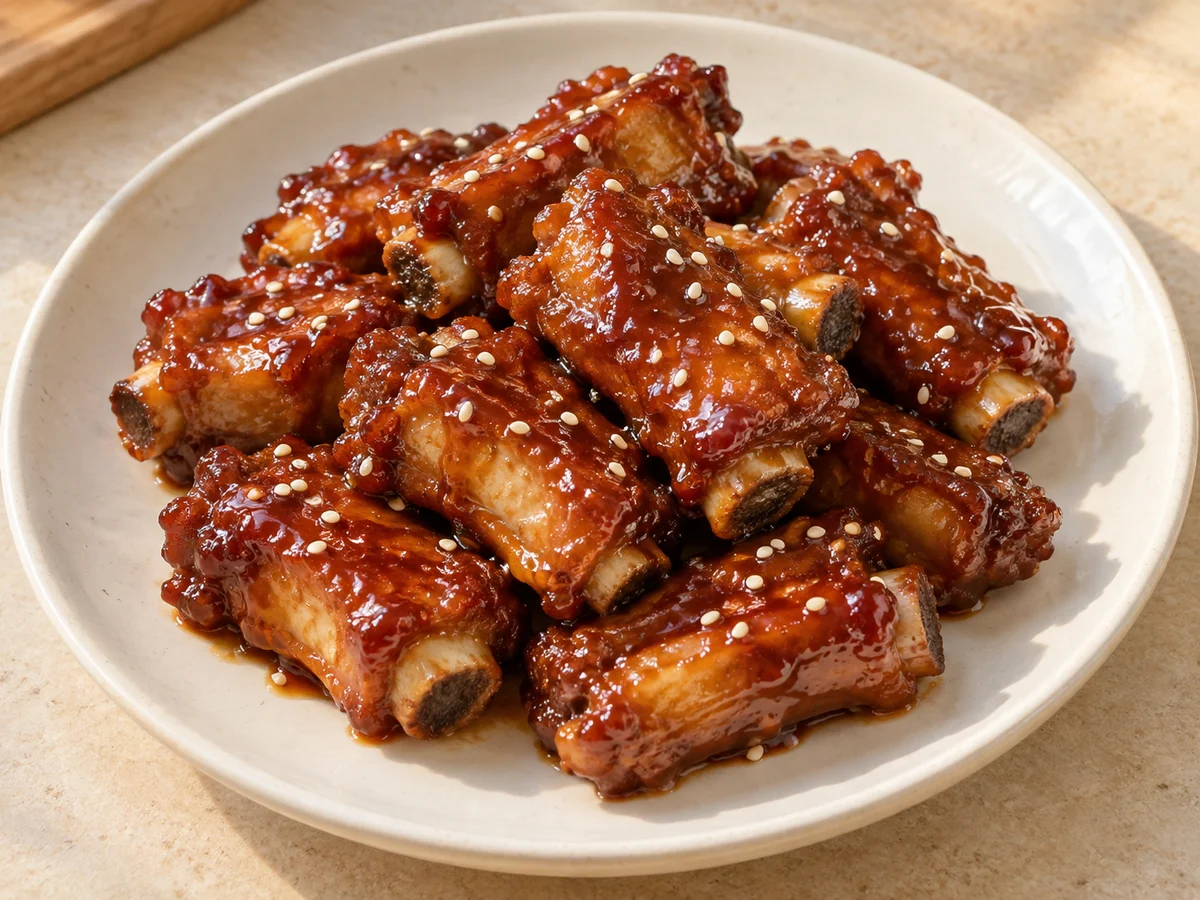
Sweet and sour spare ribsRest and finish with sesame
Plate and set a 3 min rest reminder, then sprinkle with sesame. Wait until the rest is complete before eating; hot sugary glaze can burn.
Look forThe ribs have completed their safety rest and carry a glossy glaze.
See the full recipe ↗ 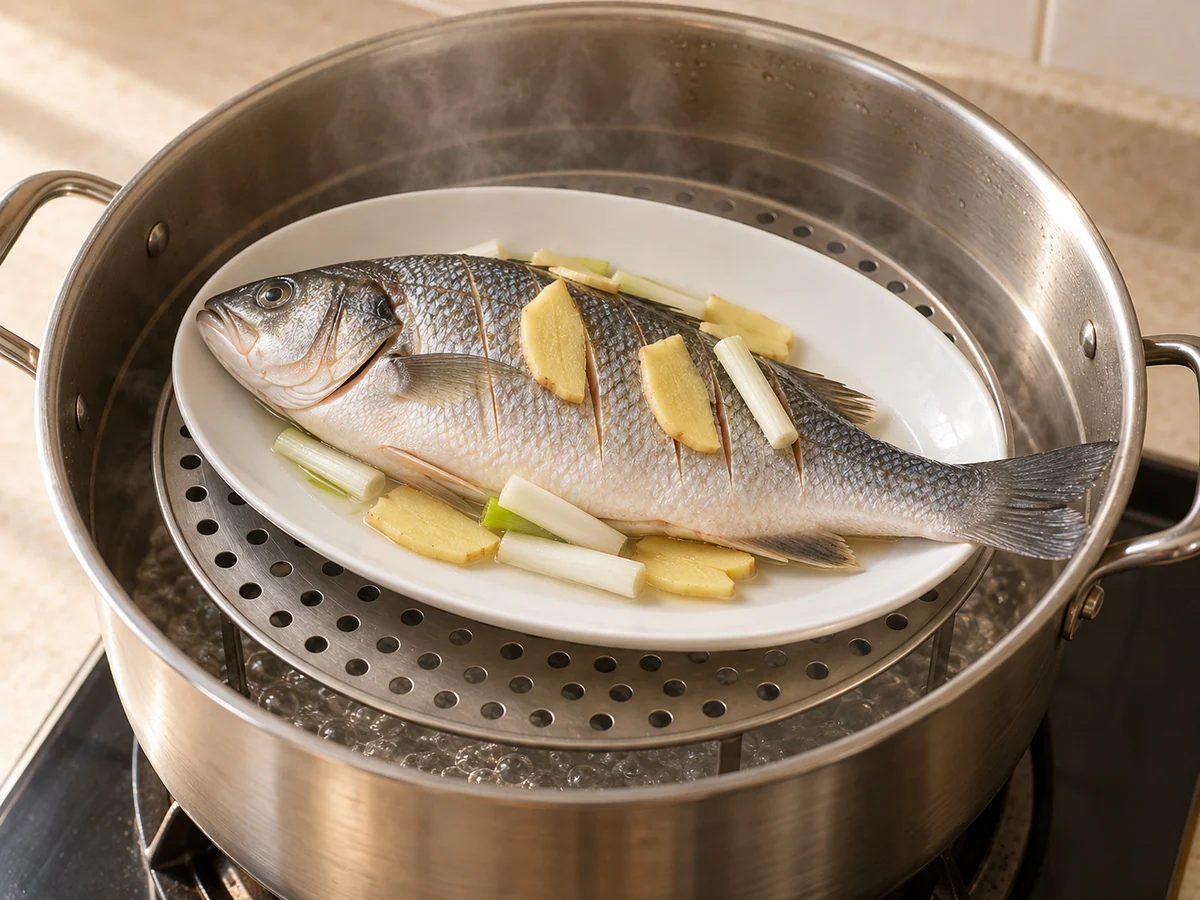
Steamed sea bassArrange the fish and steamer
Place ginger slices and scallion whites in and around the fish. Set it on a stable heatproof steaming plate or rack with steam circulation. Add water below the dish and bring to a steady boil; never test water temperature with your hand.
Look forThe dish is stable above the water with steady steam.
See the full recipe ↗ 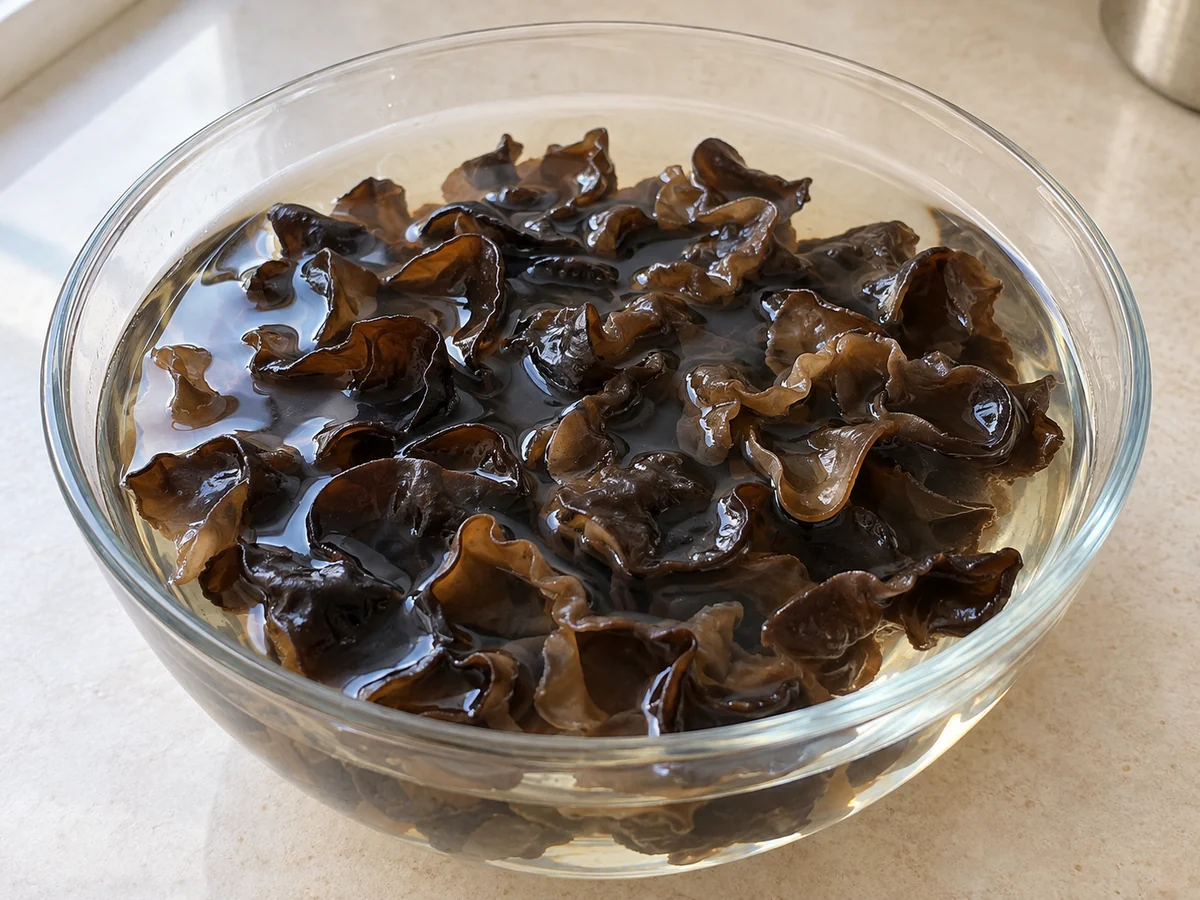
Wood ear mushroom saladWash and briefly soak
Rinse the dried mushrooms under running water, put in a clean container with the soaking water and set a 45 min check. Keep total room-temperature soaking within 2 hours or soak under refrigeration for longer. Discard any that become slimy or smell abnormal.
Look forThe mushrooms are expanded and pliable without slime or an abnormal smell.
See the full recipe ↗ 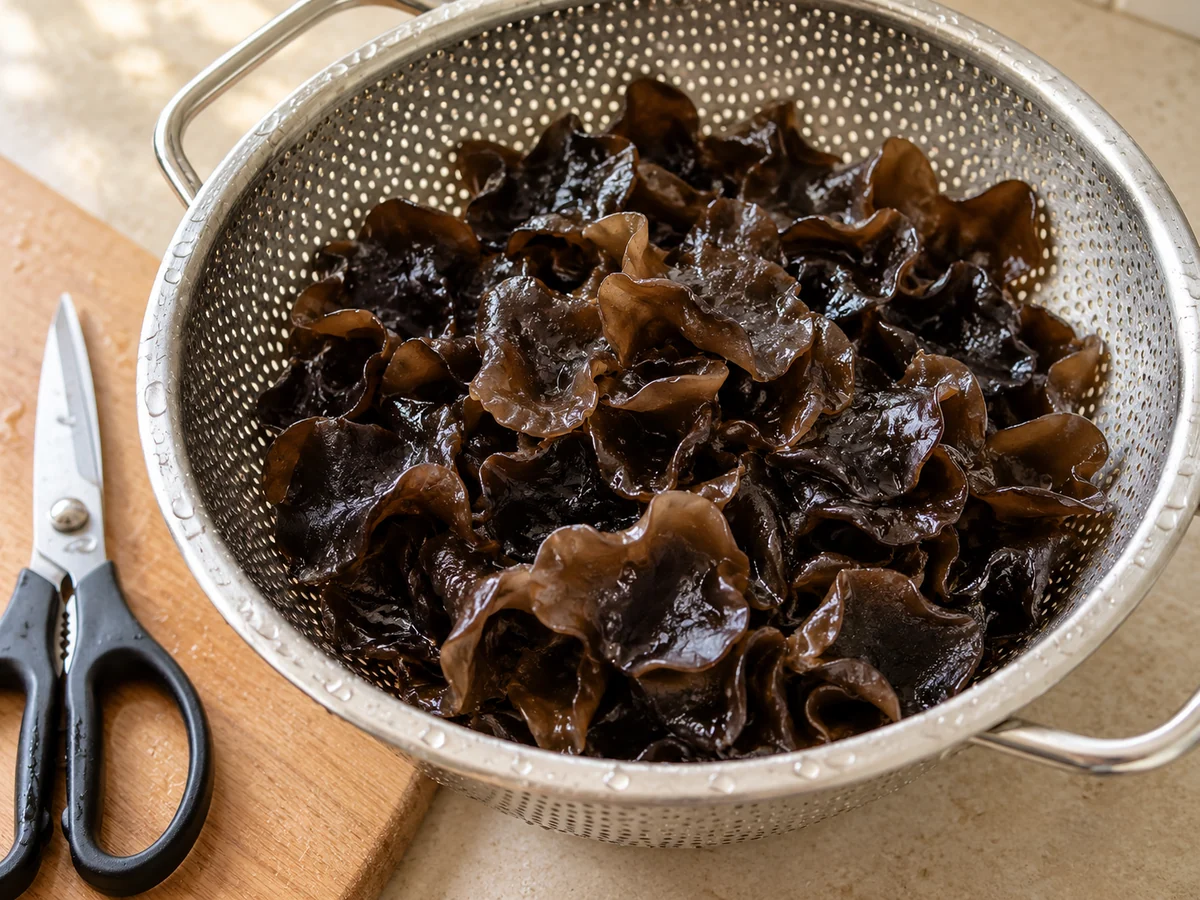
Wood ear mushroom saladTrim and rinse
Discard the soaking water. Snip off hard bases, tear large pieces smaller, rinse under running water and drain.
Look forThe mushrooms are clean, trimmed and reasonably even in size.
See the full recipe ↗ 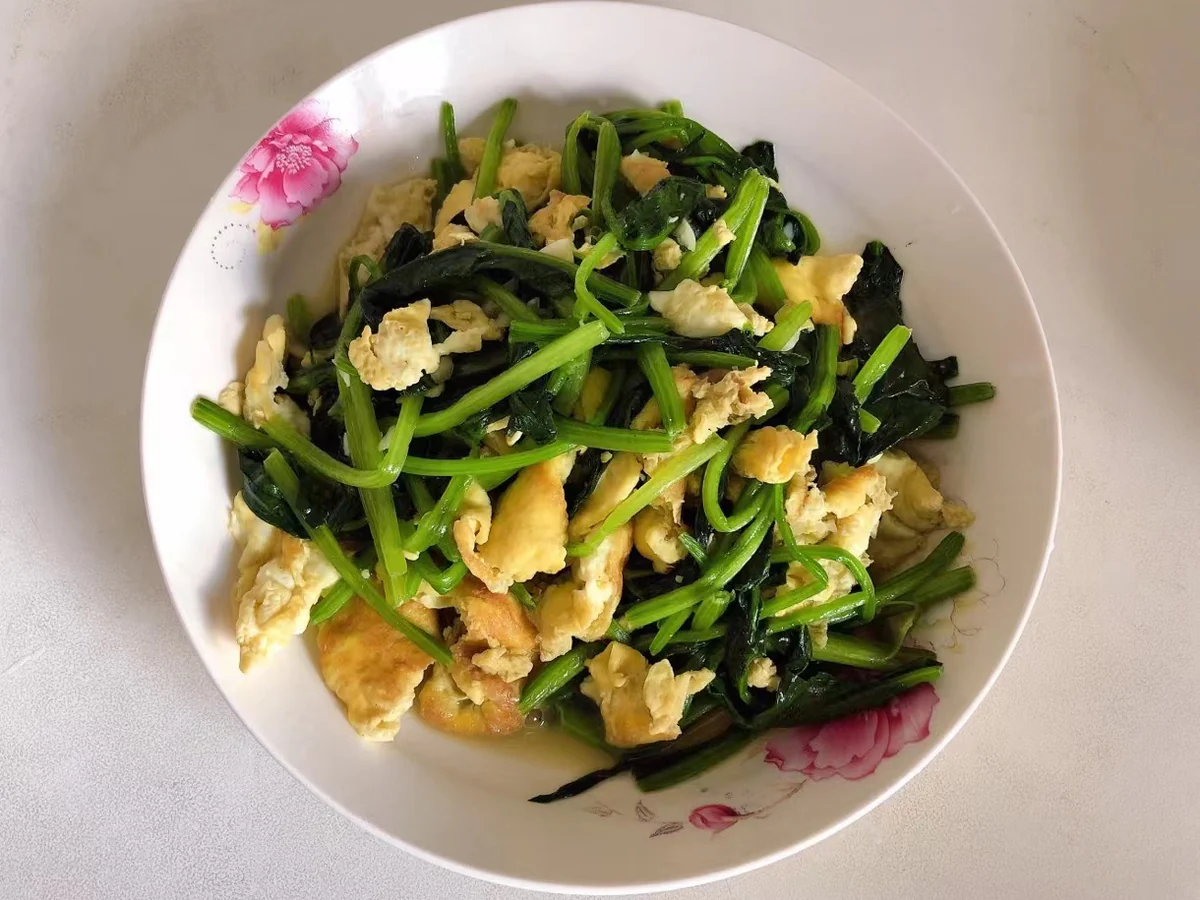
Spinach and eggsCheck and serve
Plate promptly using clean utensils.
Look forSet golden egg curds mixed with wilted spinach, with a little thin sauce.
See the full recipe ↗ 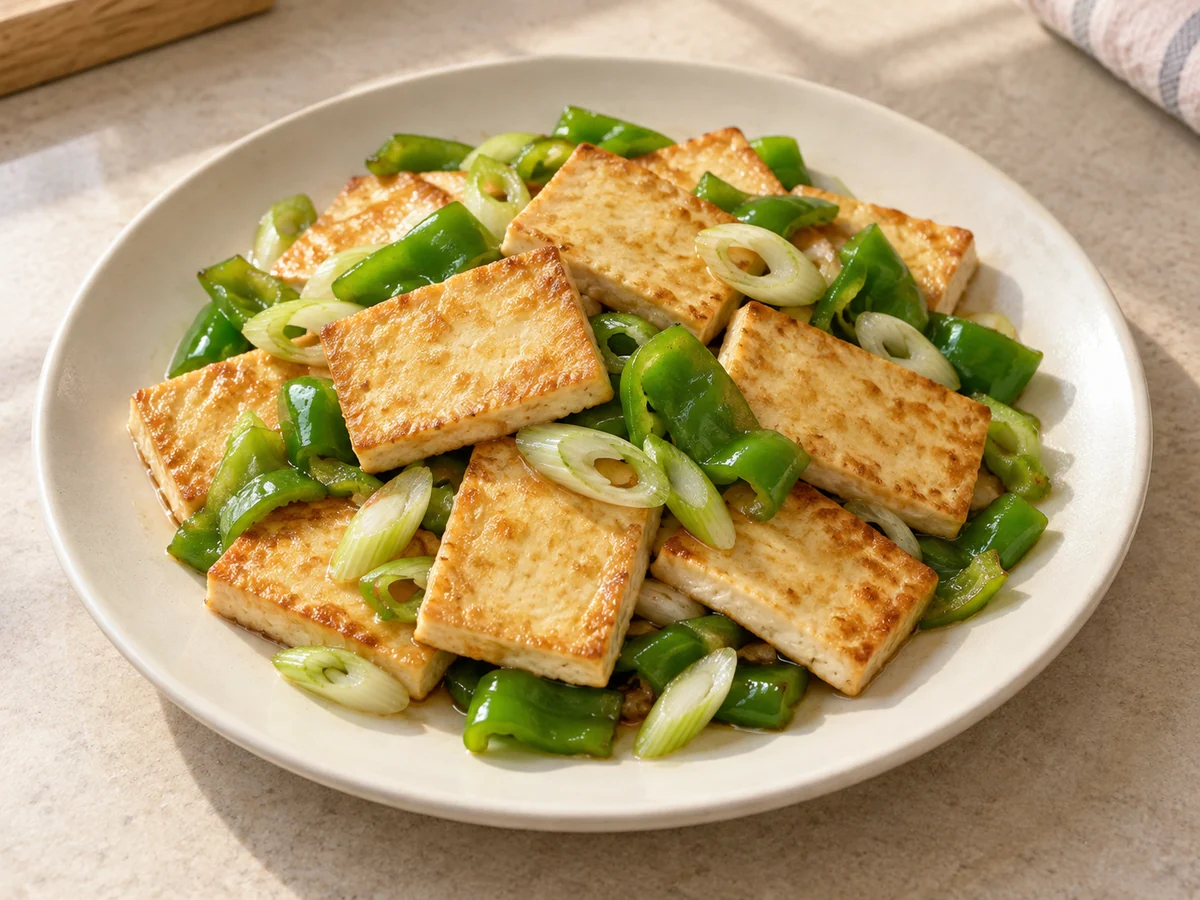
Scallion pan-fried tofuCheck and serve
Add the scallions, mix gently, and plate.
Look forGolden tofu slices with softened green pepper and scallion, without pooled water.
See the full recipe ↗ 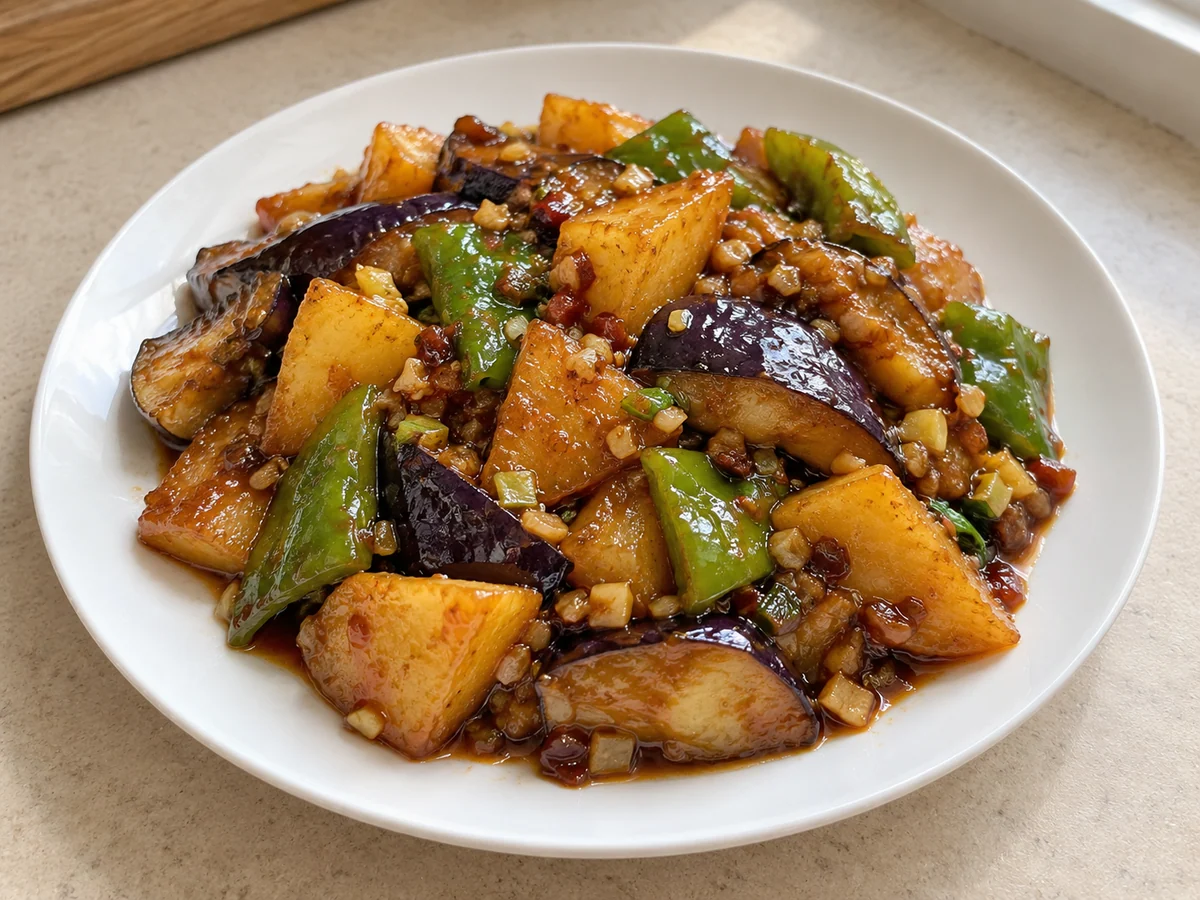
Eggplant, potato and pepper stir-fryCheck and serve
Turn off the heat, mix in the remaining half of the garlic, and plate.
Look forGolden potato, soft eggplant and blistered pepper evenly glazed with garlic-speckled sauce.
See the full recipe ↗ 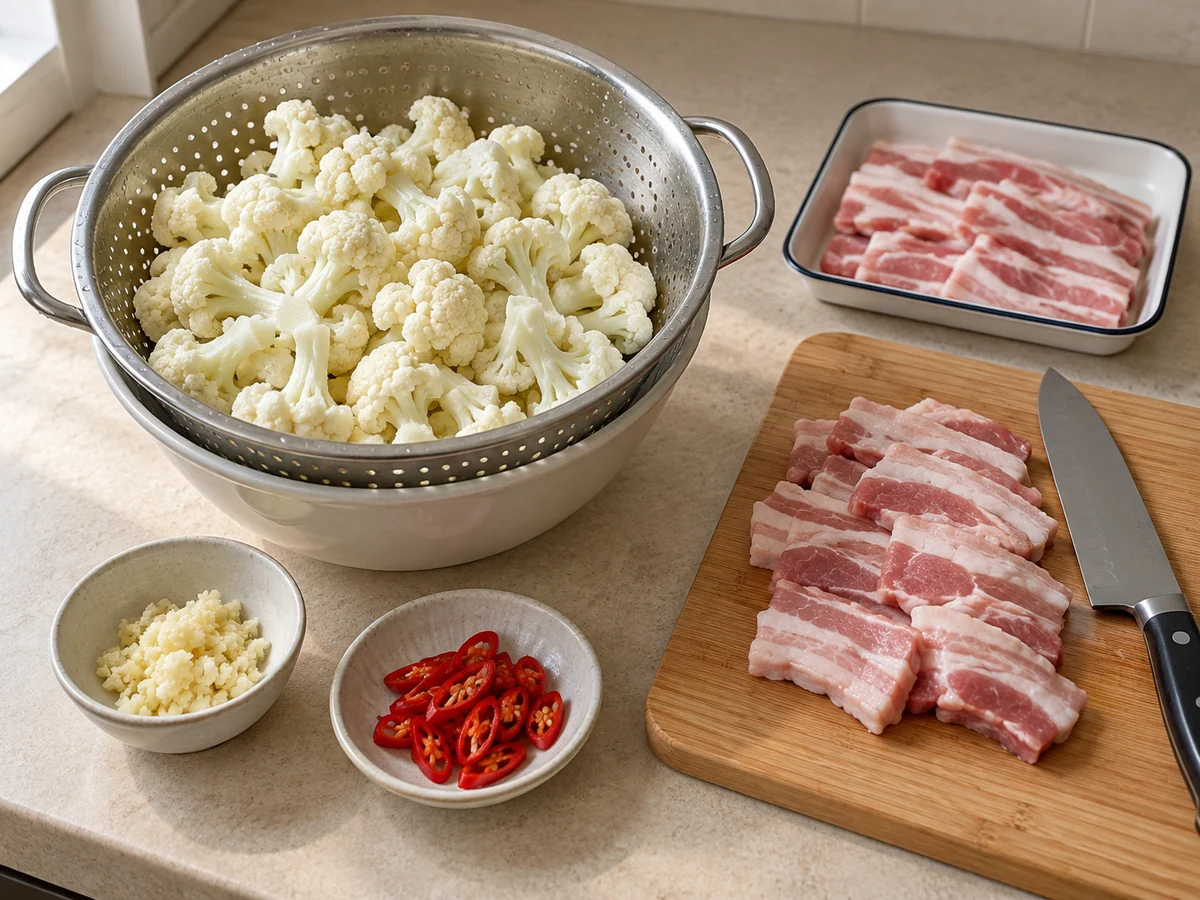
Dry-pot cauliflowerWash and prepare
Soak the cauliflower in water with the listed soaking salt and start a 20 min reminder, then discard that water, rinse and divide into small florets. Crush garlic and slice chili. Slice pork thinly on a separate board; wash hands and equipment after raw pork.
Look forCauliflower is clean and divided; pork and vegetables are handled separately.
See the full recipe ↗ 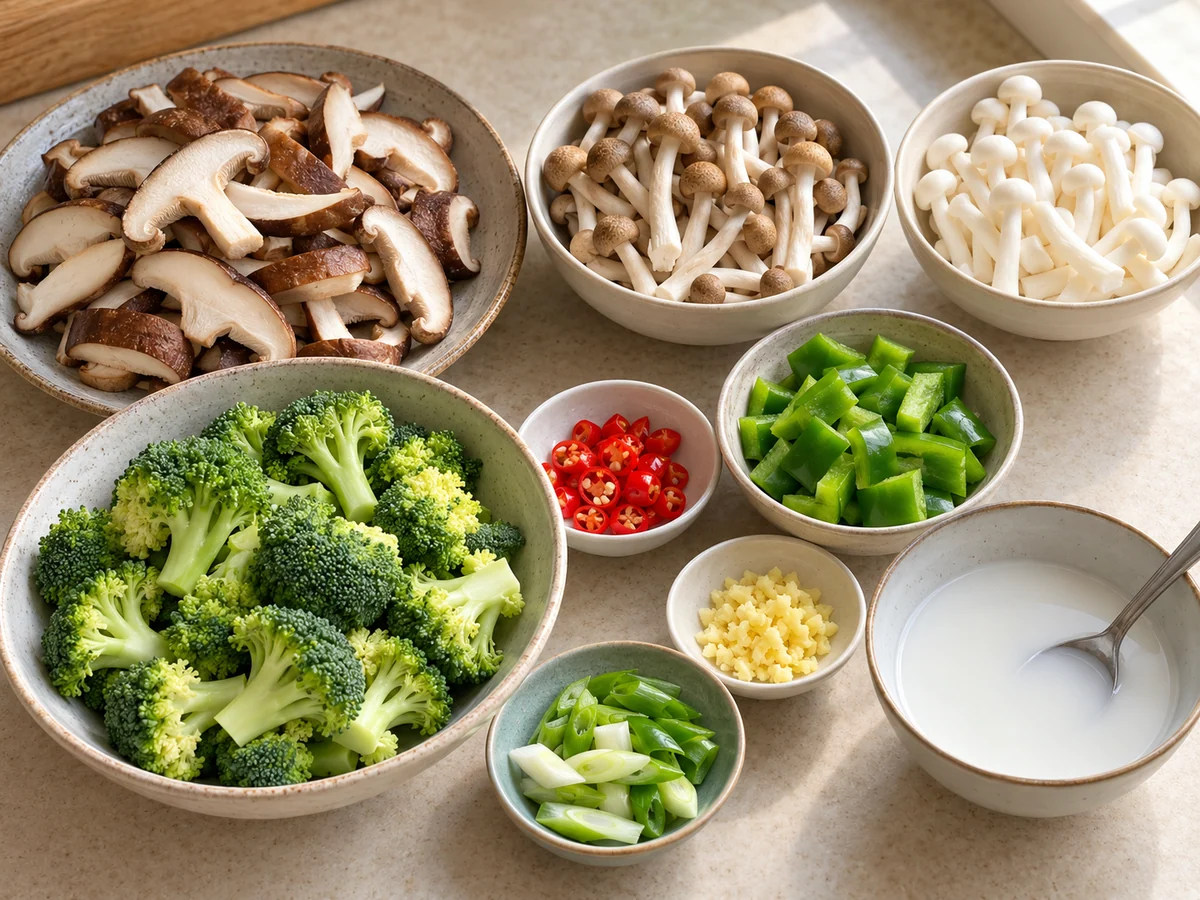
Mixed mushrooms in oyster saucePrepare produce and slurry
Trim and wash the mushrooms, slice shiitake about 0.5–1 cm thick and divide broccoli into small florets. Chop chili, bell pepper and scallion; prepare ginger. Mix starch with the listed slurry water.
Look forProduce is prepared and starch dispersed in water.
See the full recipe ↗ 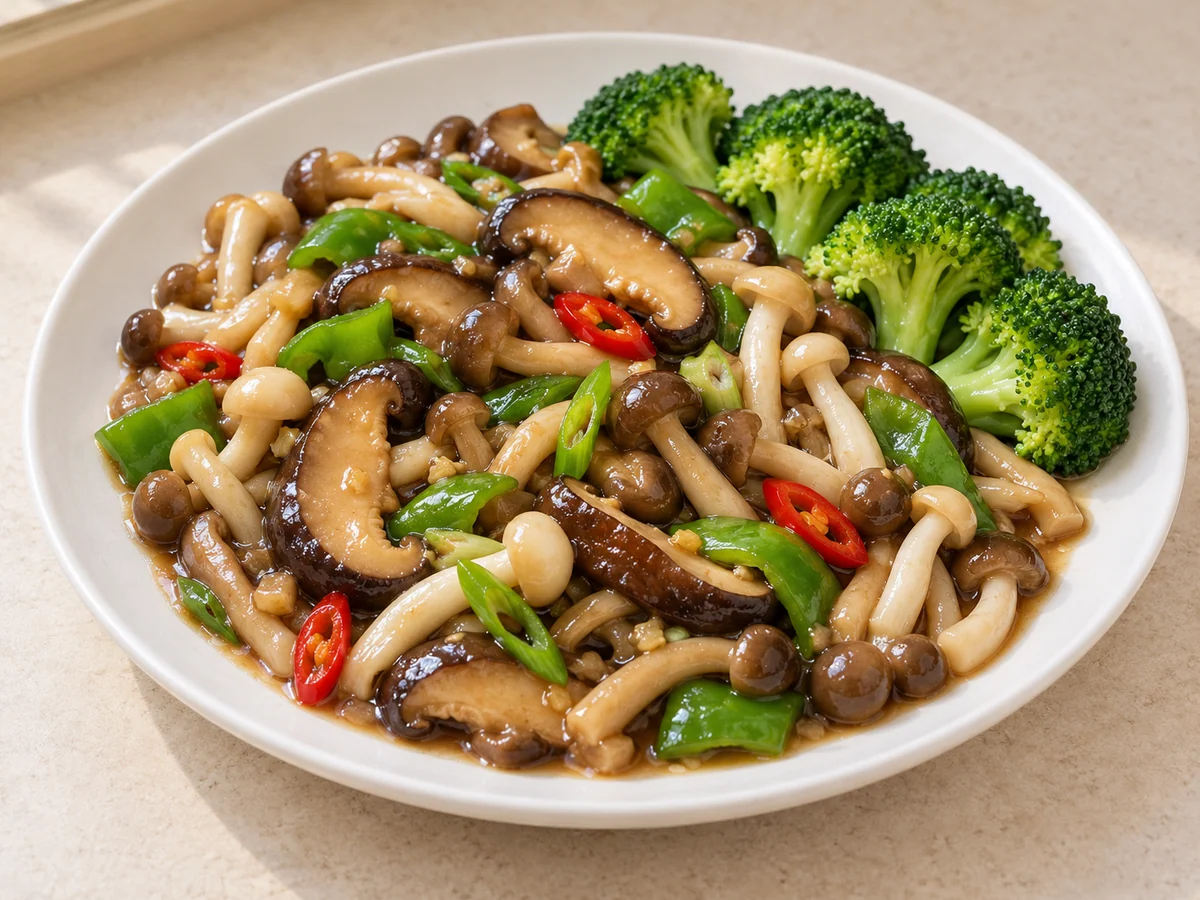
Mixed mushrooms in oyster sauceCheck and serve
Plate the mushrooms beside the broccoli and serve warm.
Look forThree cooked mushrooms in a glossy light glaze beside intact cooked broccoli florets.
See the full recipe ↗ 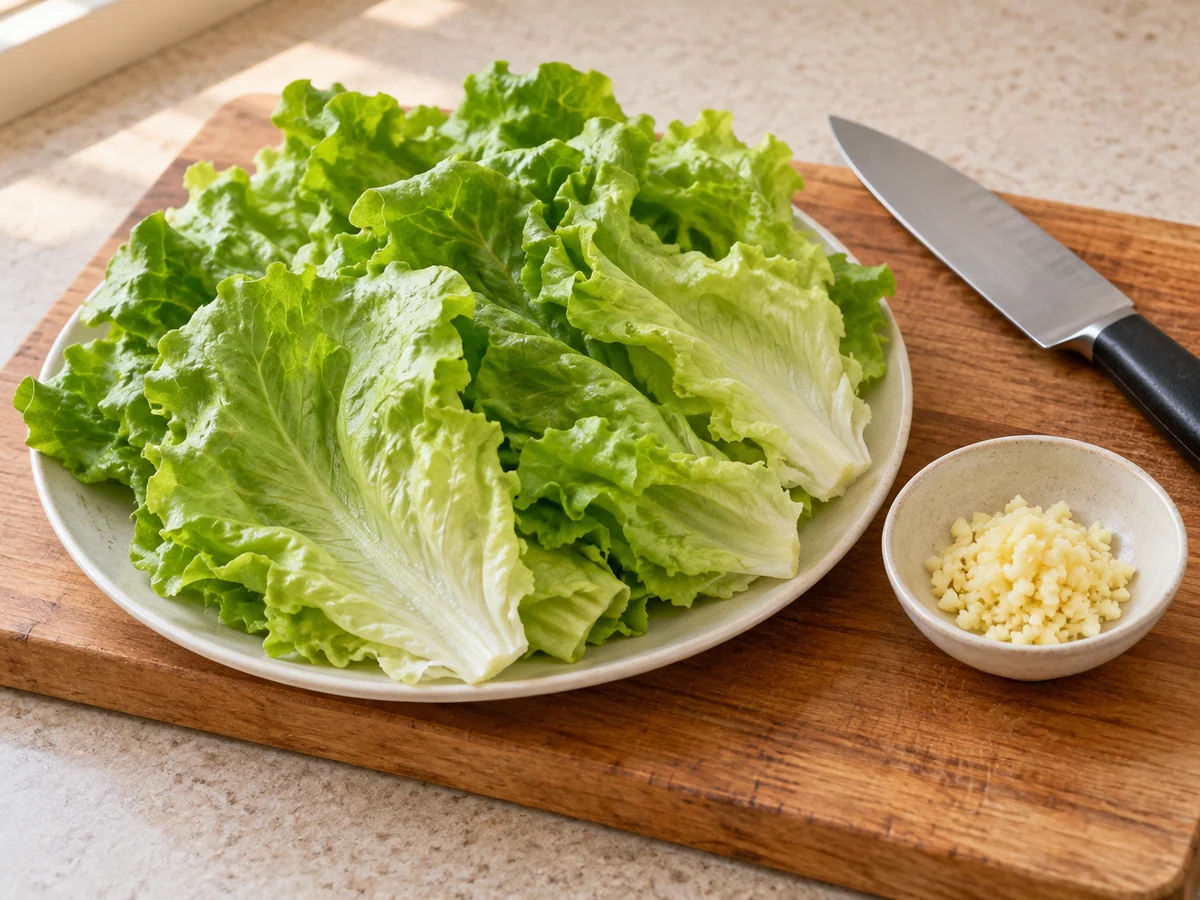
Lettuce in oyster saucePrepare lettuce and garlic
Discard damaged lettuce leaves, wash each leaf and drain. Peel and mince the garlic.
Look forLeaves are clean and garlic minced.
See the full recipe ↗ 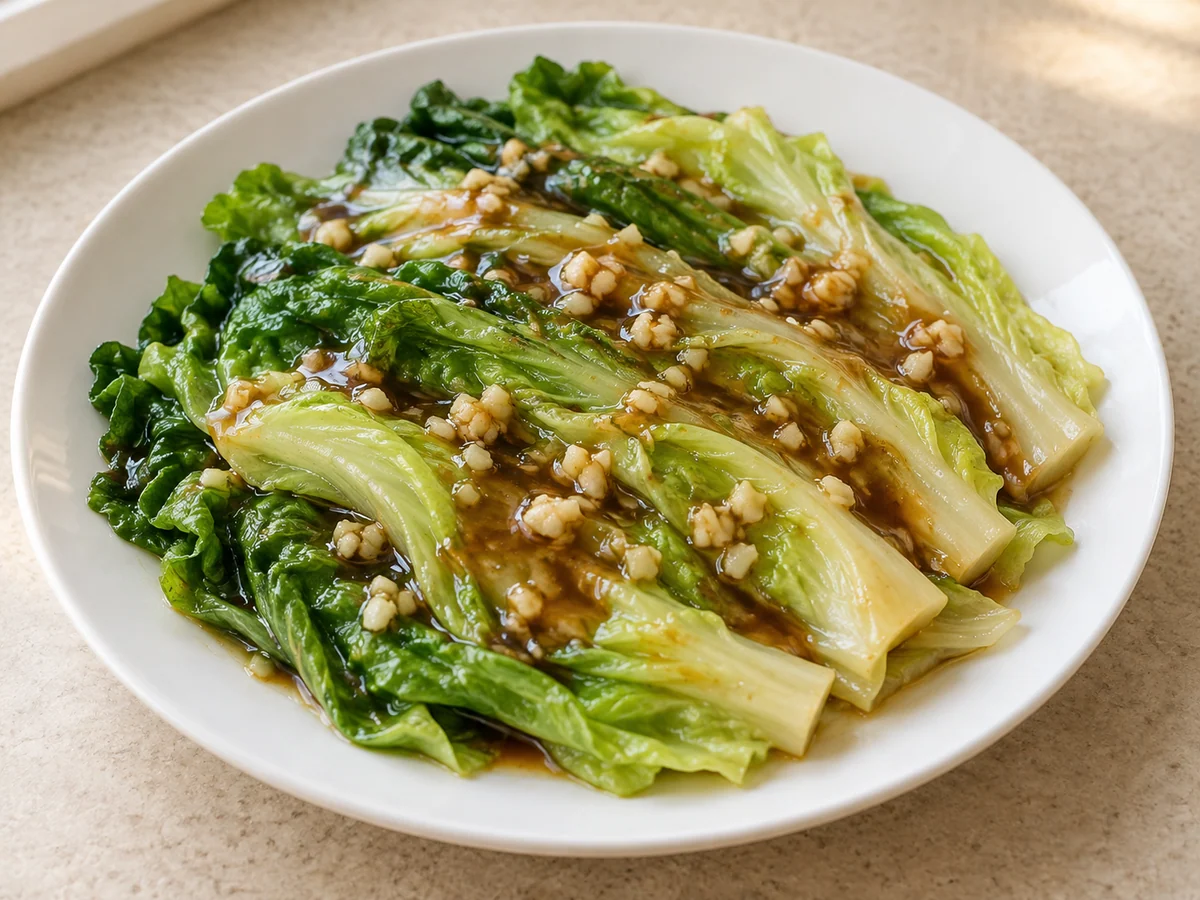
Lettuce in oyster sauceCheck and serve
Spoon the hot sauce evenly over the drained lettuce.
Look forDrained, wilted but intact lettuce leaves evenly topped with garlicky oyster sauce.
See the full recipe ↗ 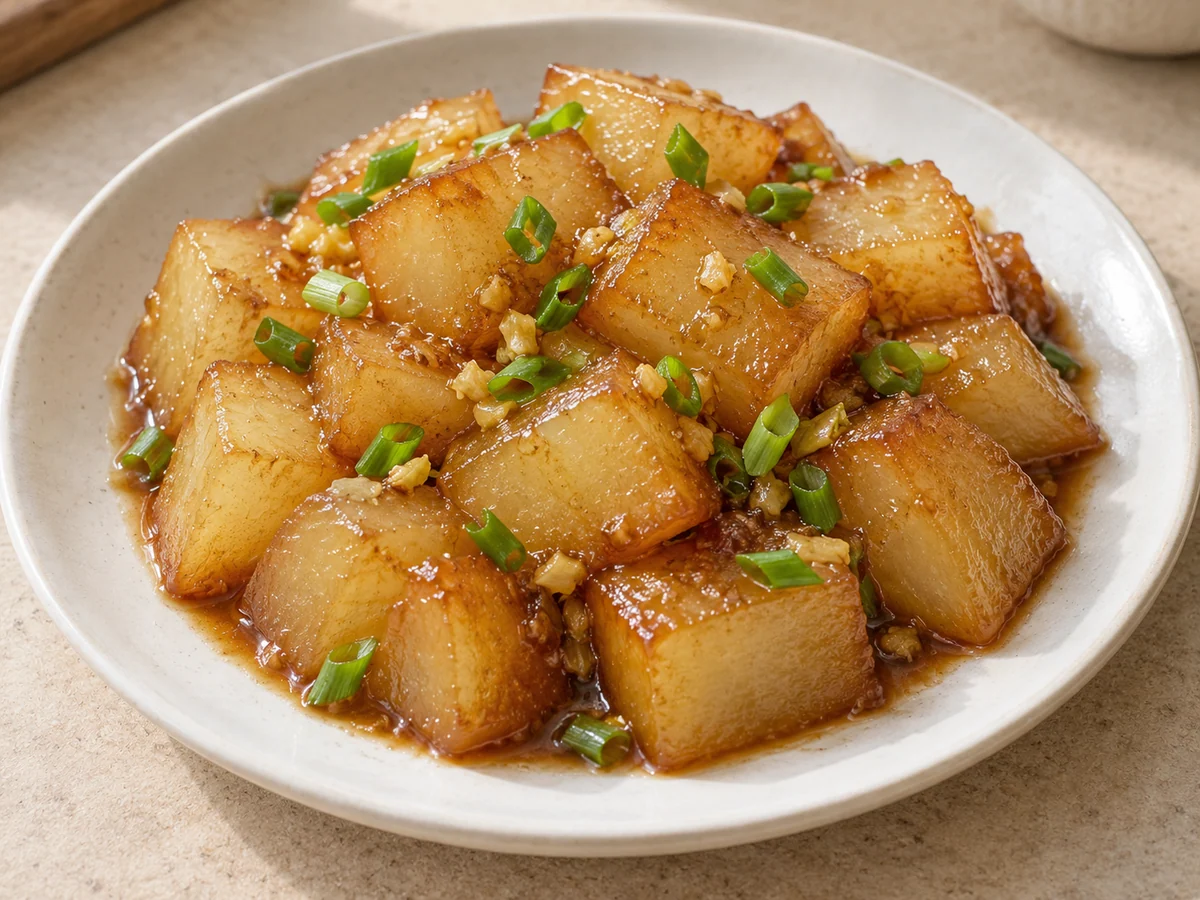
Soy-braised winter melonCheck and serve
Pour the hot sauce over the melon and serve warm.
Look forTender winter-melon pieces with translucent edges and a glossy brown coating.
See the full recipe ↗ 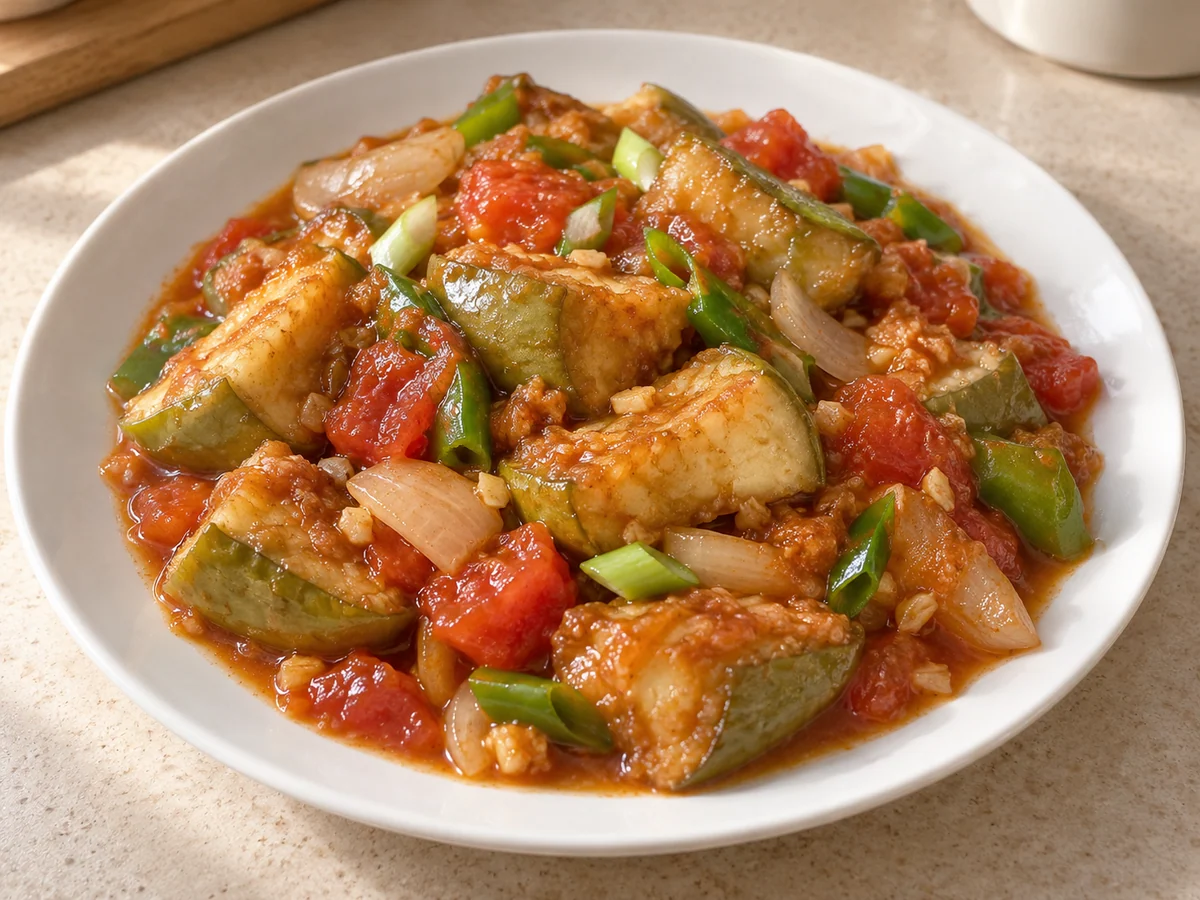
Soy-braised eggplantCheck and serve
Turn off the heat and plate with clean utensils. Handle frying oil only after it has fully cooled.
Look forTender eggplant mixed with tomato, onion and pepper in a thick but flowing sauce.
See the full recipe ↗ 
Blistered green peppersCheck and serve
Plate the peppers with a little sauce and cool briefly before eating.
Look forWrinkled pepper strips with light blistering, a thin sweet-tangy glaze and unburnt garlic.
See the full recipe ↗ 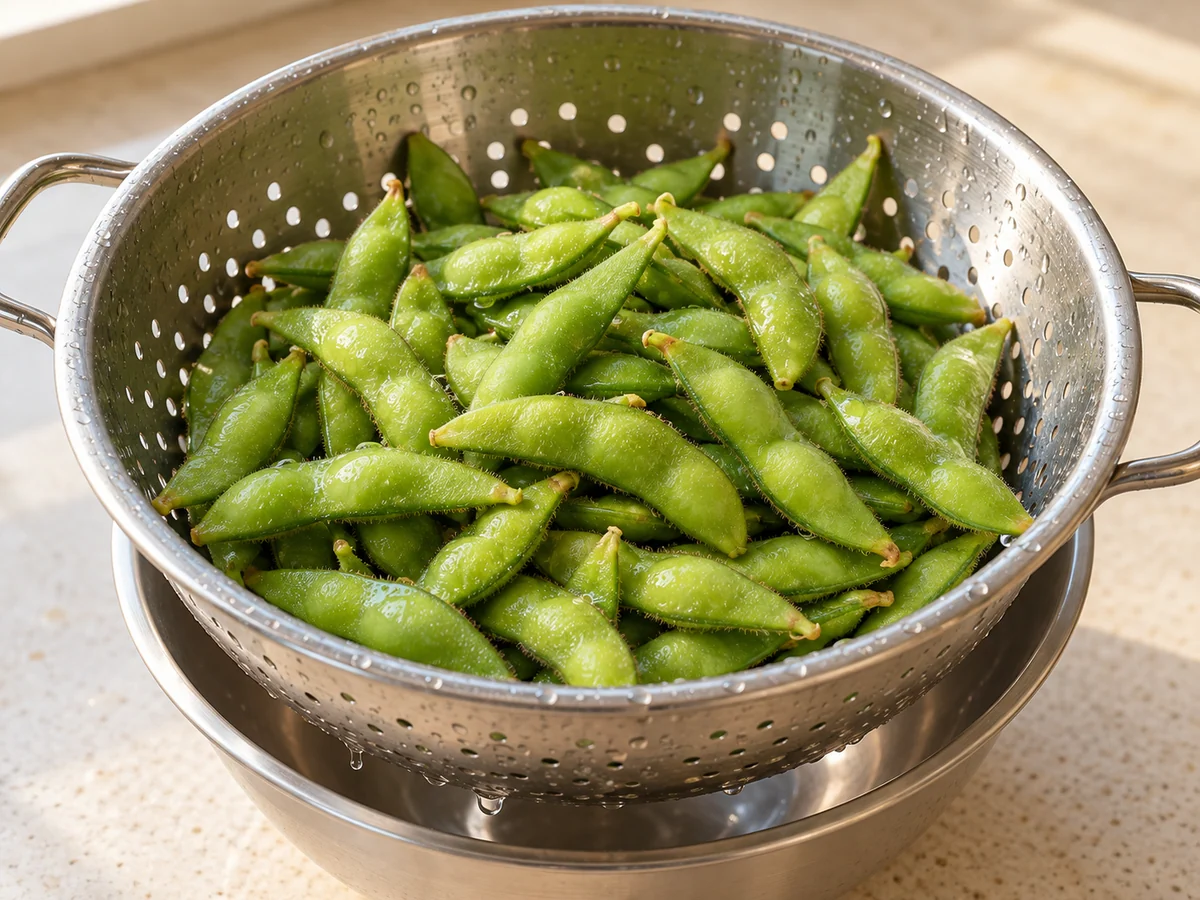
Edamame with preserved plumsSoak the pods
Wash the pods, add soaking water and the listed salt, and set a 15 min check. Drain the soaking water afterward and rinse with clean water.
Look forPods are clean and soaking water discarded.
See the full recipe ↗ 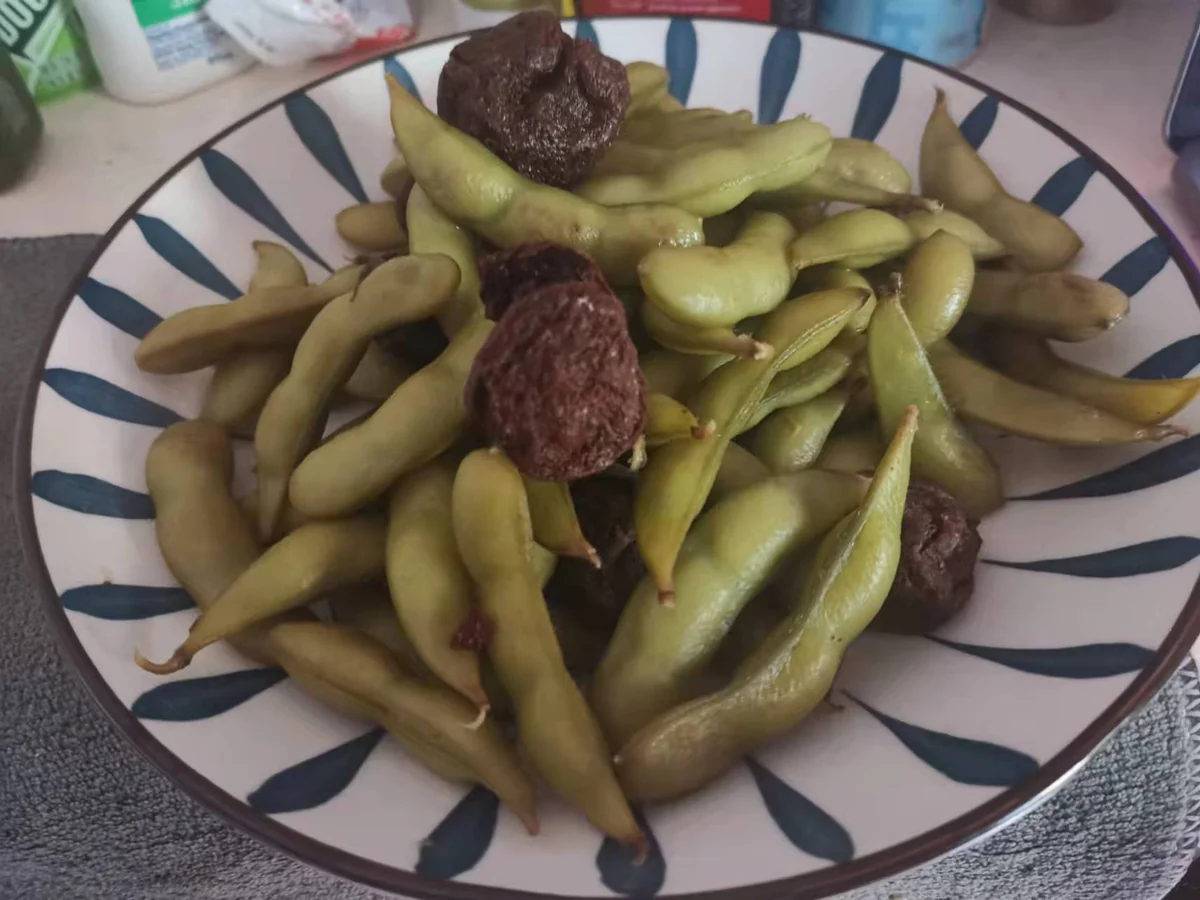
Edamame with preserved plumsCheck and serve
Lift out with a slotted spoon and cool slightly, then shell and eat the beans; discard pods and plum stones.
Look forCooked edamame pods drained with preserved plums, with tender beans; discard pods and stones when eating.
See the full recipe ↗ 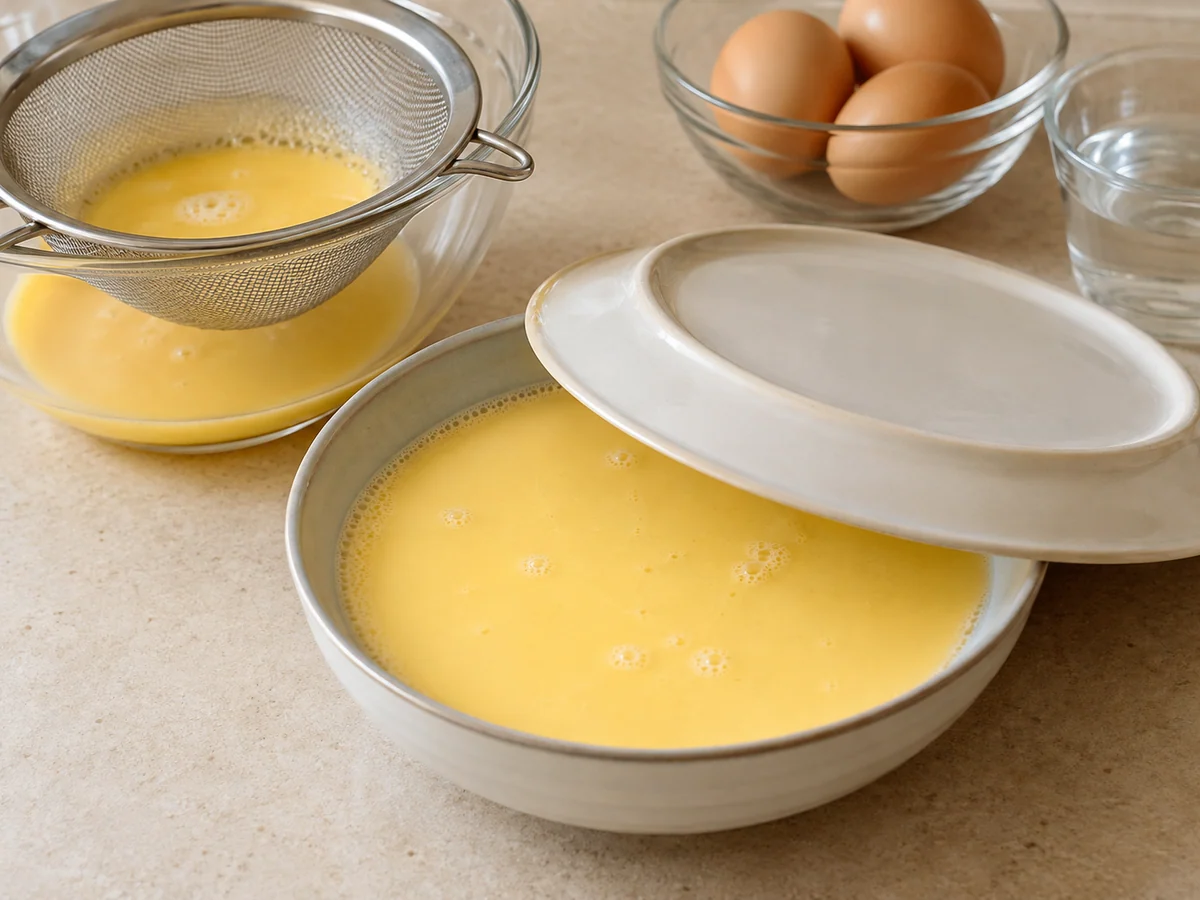
Steamed egg custardStrain and cover the bowl
Stir the water into the eggs, strain into a shallow heatproof bowl and skim large bubbles. Cover with a heatproof plate or loose foil to keep out condensation; do not use non-heatproof plastic wrap.
Look forThe mixture has few bubbles and a heatproof cover protects it from drips.
See the full recipe ↗ 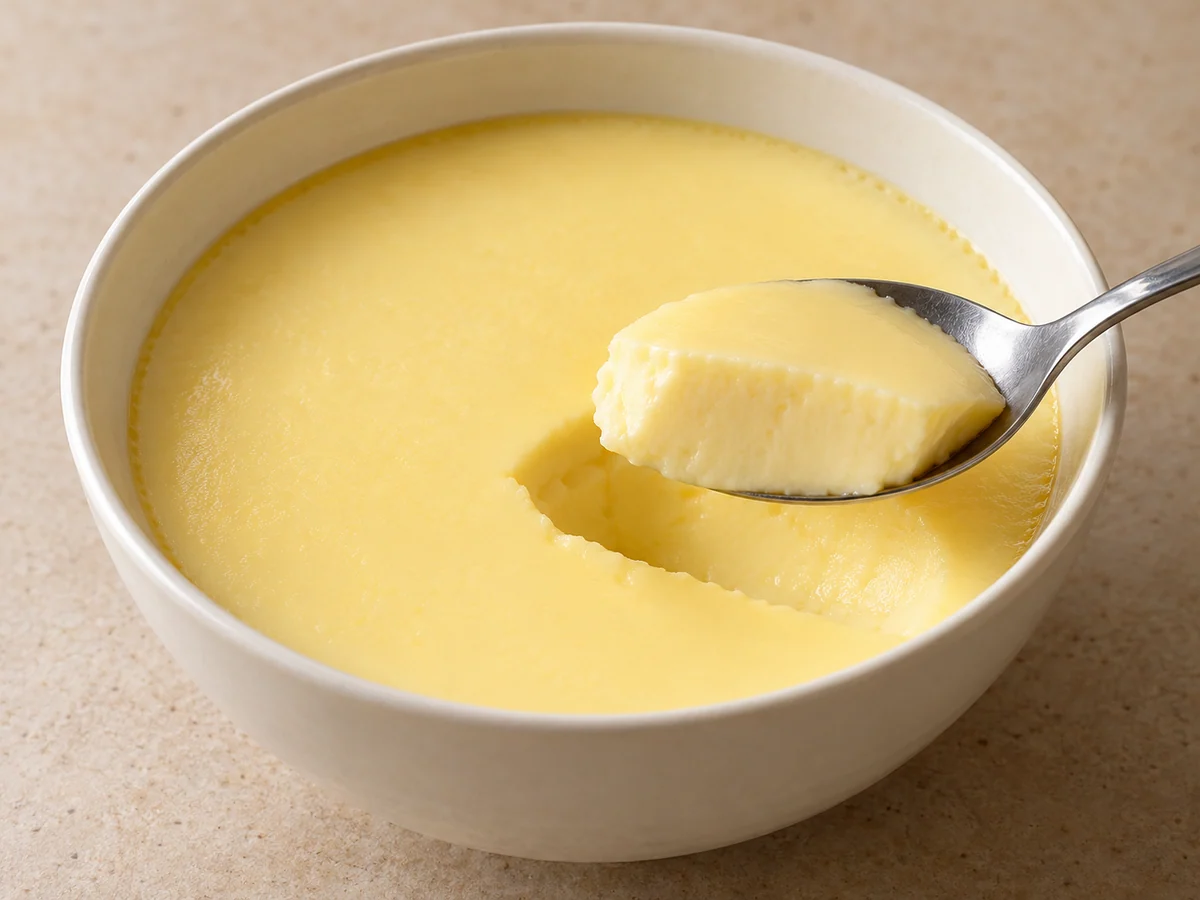
Steamed egg custardRemove safely and cool briefly
Turn off the heat, open the lid away from you and remove the bowl with mitts or a plate lifter. Uncover and cool slightly before eating.
Look forThe custard is set throughout with a smooth surface and fully cooked center.
See the full recipe ↗ 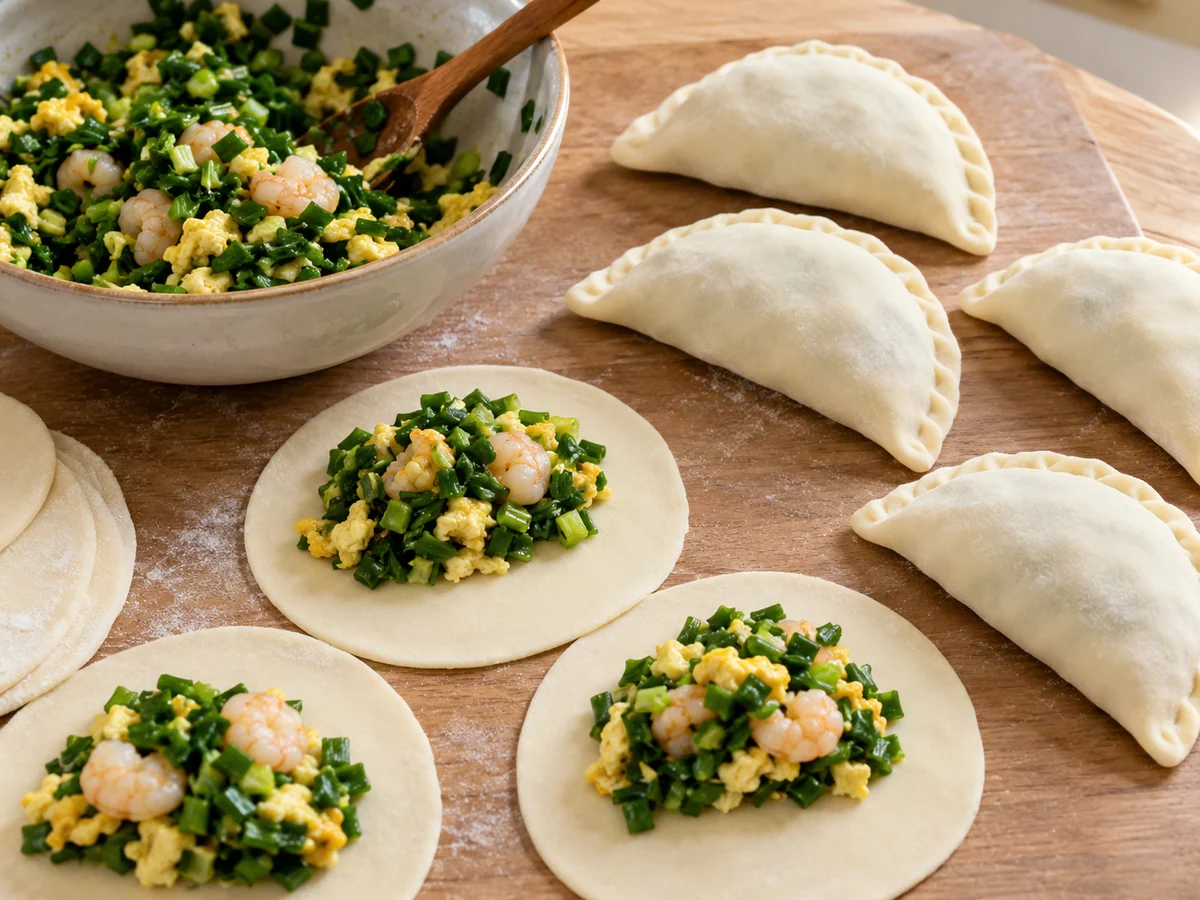
Chive and egg pocketsSeal into half moons
Put filling on one half of each wrapper, leaving a clean rim. Fold, pinch securely and flatten gently without pushing filling into the seam.
Look forThe seams are sealed and the pockets have even, modest thickness.
See the full recipe ↗ 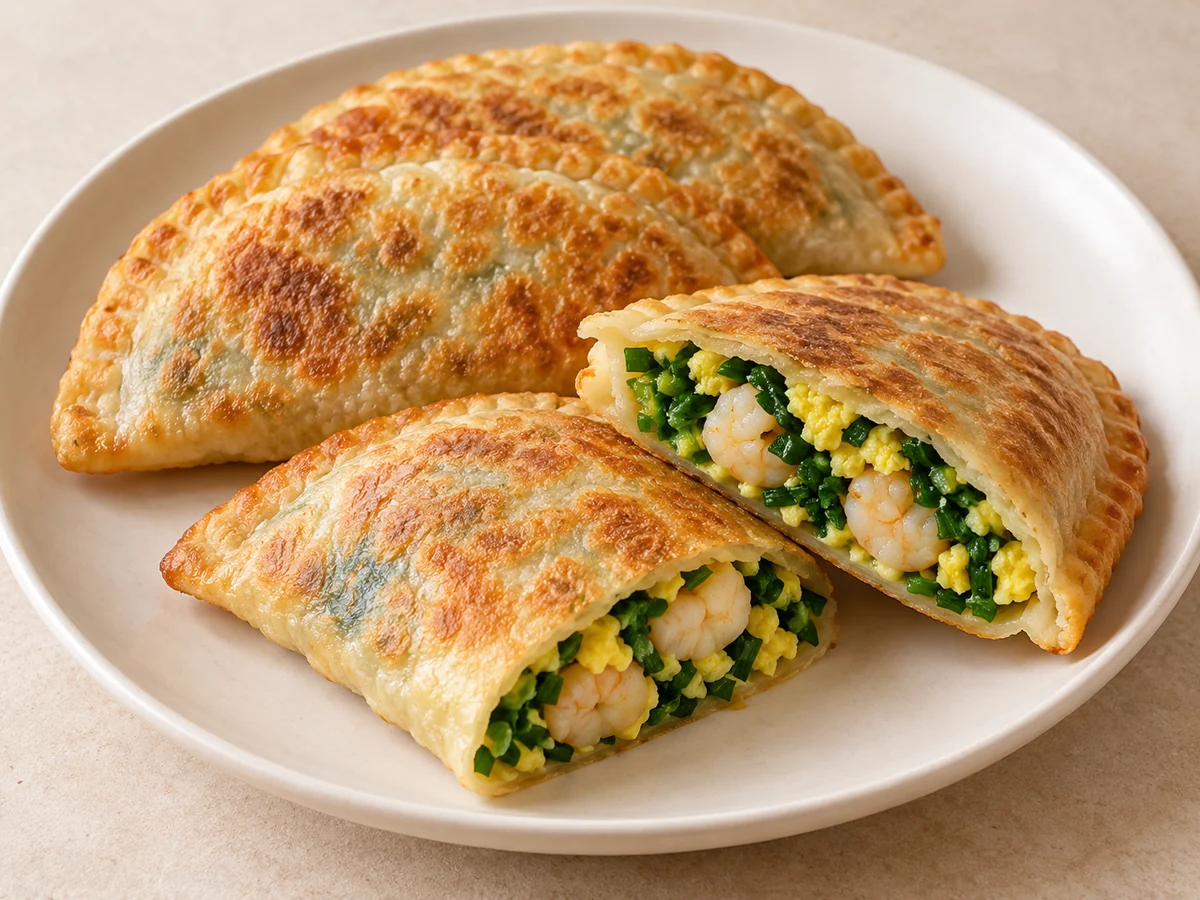
Chive and egg pocketsPlate and cool briefly
Lift out with a spatula and cool briefly before eating; the filling may be hotter than the crust.
Look forThe pockets are intact with golden crusts and fully heated filling.
See the full recipe ↗ 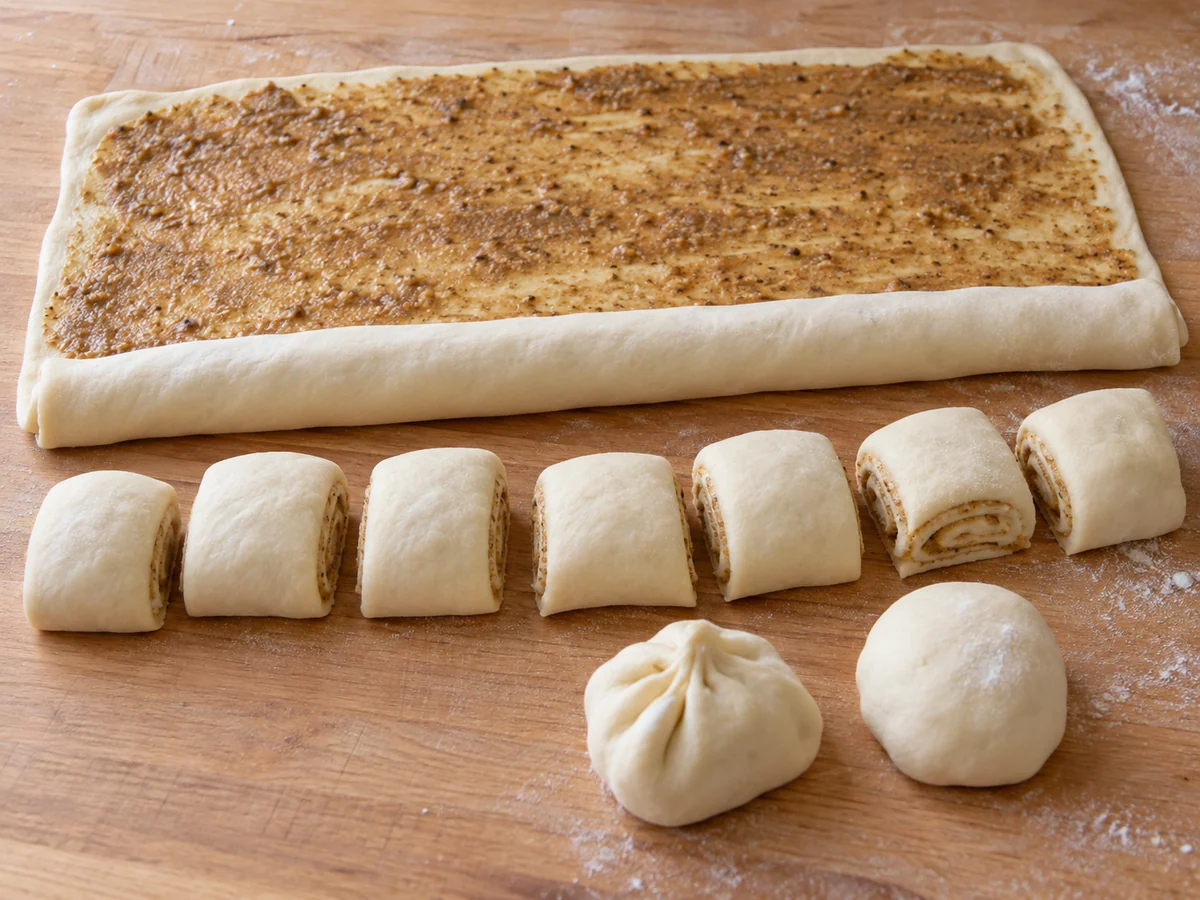
Sesame shaobingRoll and divide the layers
Roll the dough into a rectangle, spread the paste and roll from a long side. Divide into similar portions, fold and pinch closed. The original batch makes about seven breads; adjust the count with the ingredient batch.
Look forEach portion has layers with the paste enclosed.
See the full recipe ↗ 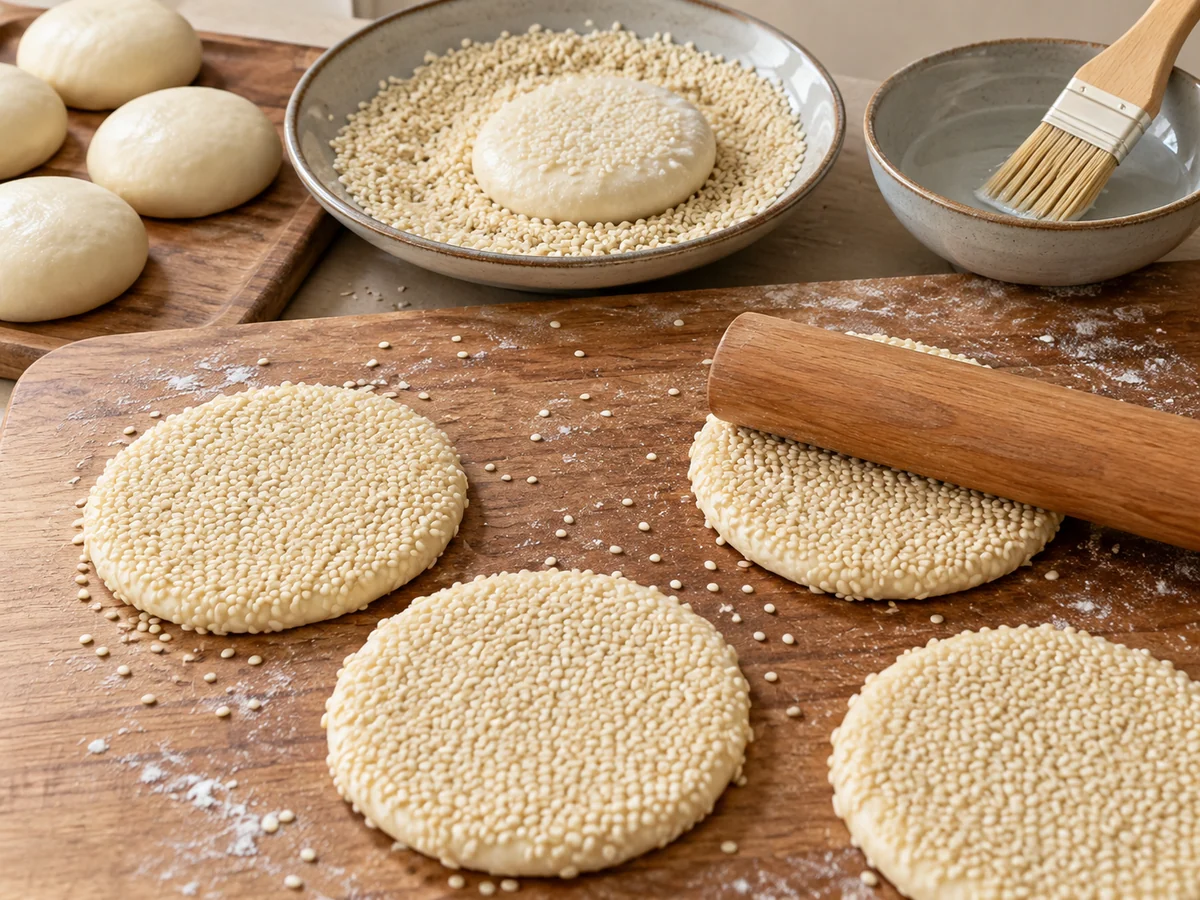
Sesame shaobingCoat with sesame and flatten
Brush one side lightly with drinking water, press into sesame seeds and gently roll into evenly thick rounds.
Look forThe sesame adheres and the breads are evenly thick.
See the full recipe ↗ 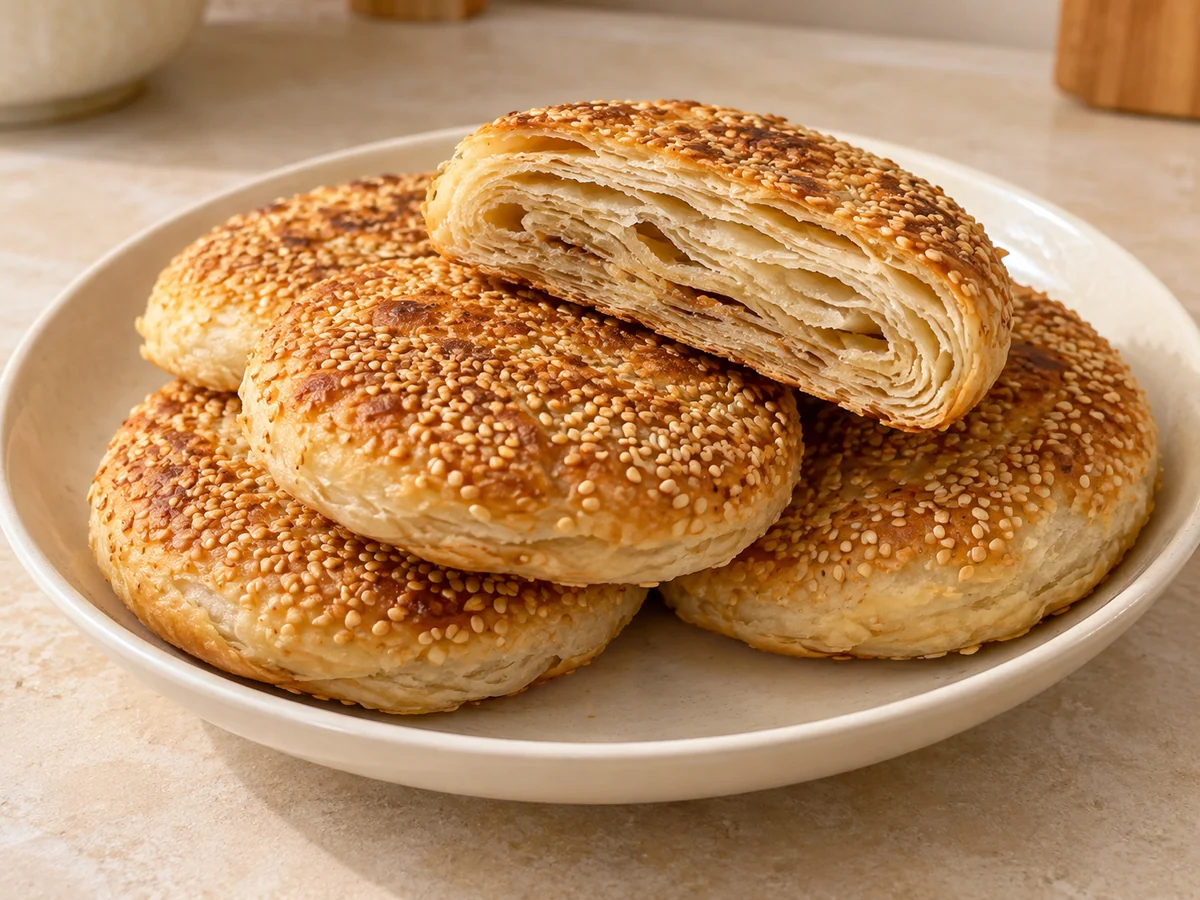
Sesame shaobingRemove and cool briefly
Remove with a spatula, cool briefly and break one open to inspect the layers.
Look forThe inside has cooked layers without sticky raw dough.
See the full recipe ↗ 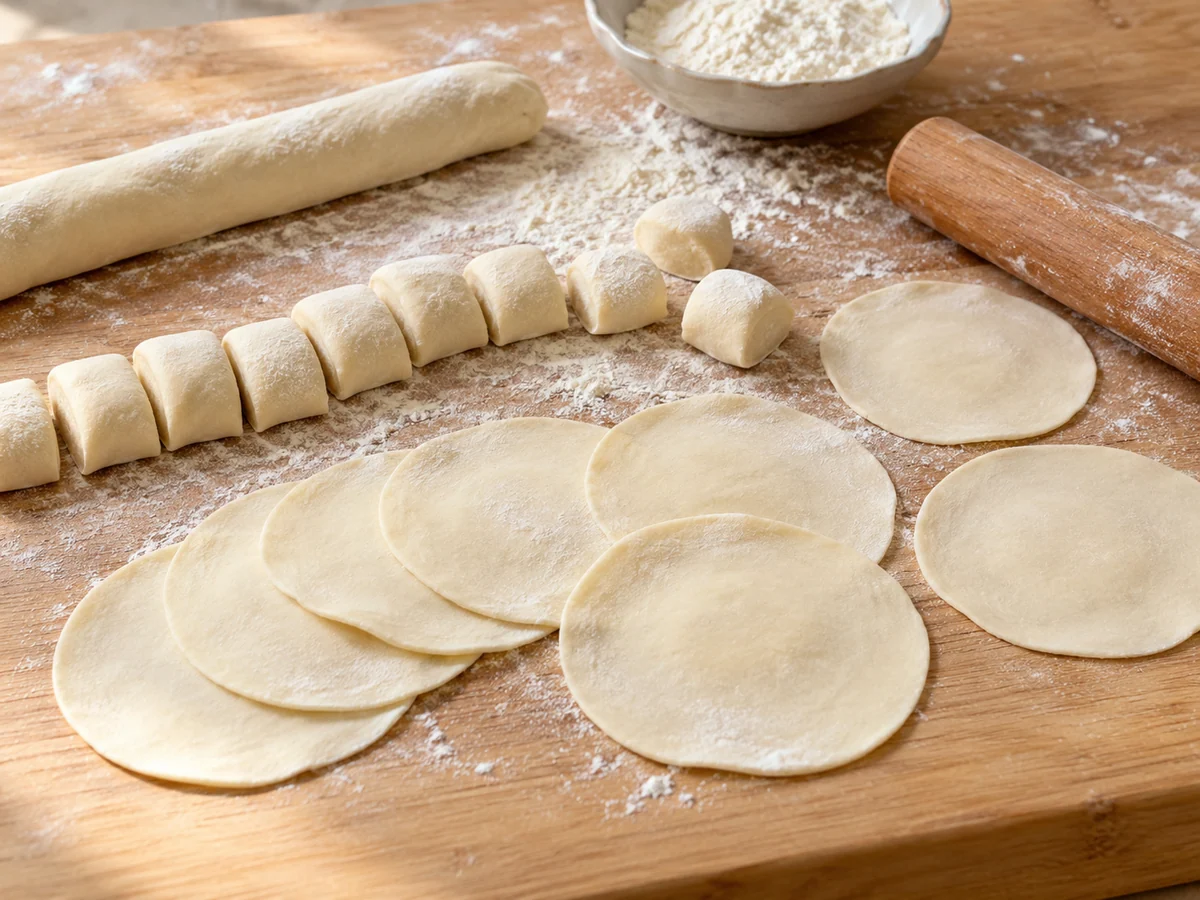
Handmade boiled dumplingsDivide and roll wrappers
Roll the dough into a rope and divide into similar portions, about twenty wrappers for the original batch. Dust lightly and roll each round slightly thicker in the center than at the rim. Adjust wrapper count when scaling, rather than making them thicker.
Look forThe wrappers are similar in size with thicker centers and thin rims.
See the full recipe ↗ 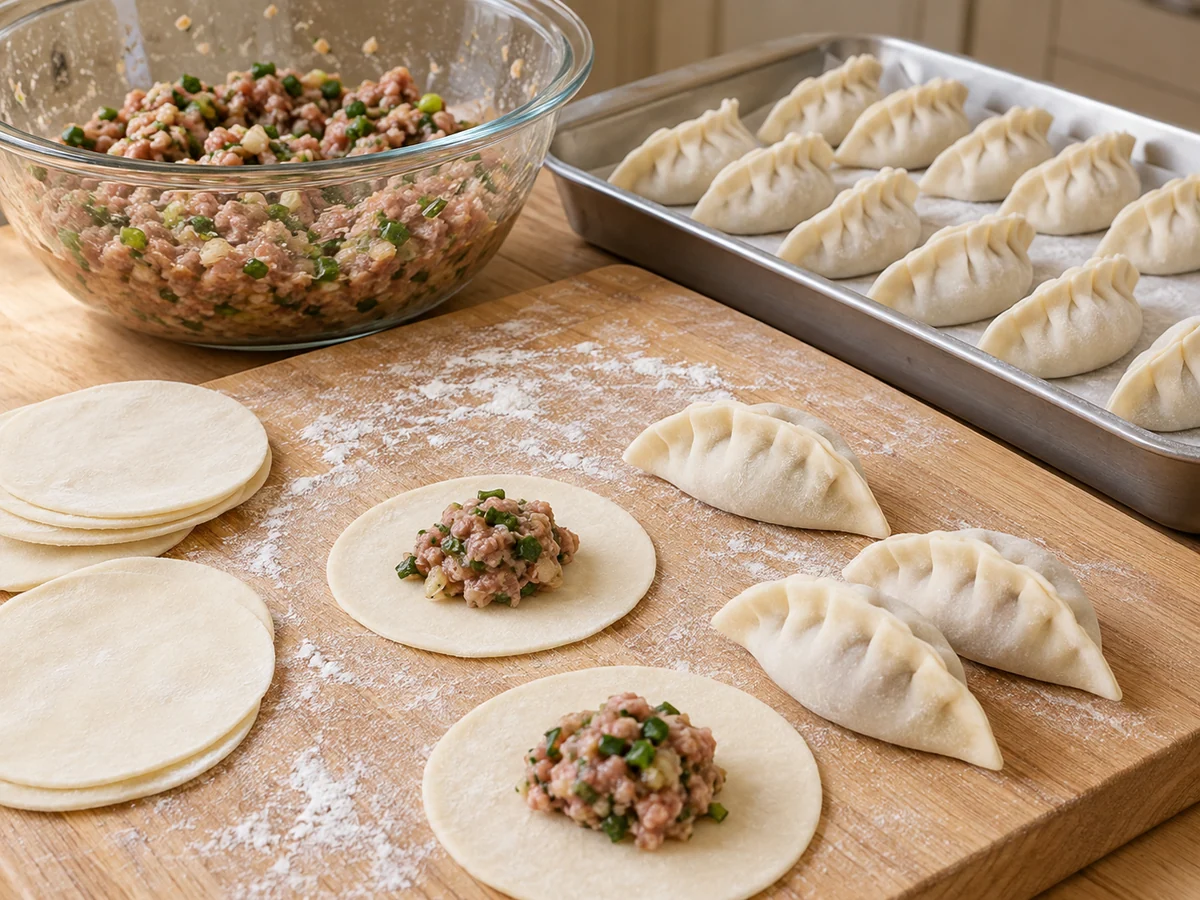
Handmade boiled dumplingsFill and seal
Place a modest amount of filling in the center, keep the rim clean and fold and pinch shut. Avoid overfilling. Refrigerate waiting dumplings and raw filling in batches and keep raw and cooked utensils separate.
Look forThe dumplings are securely sealed with no exposed filling.
See the full recipe ↗ 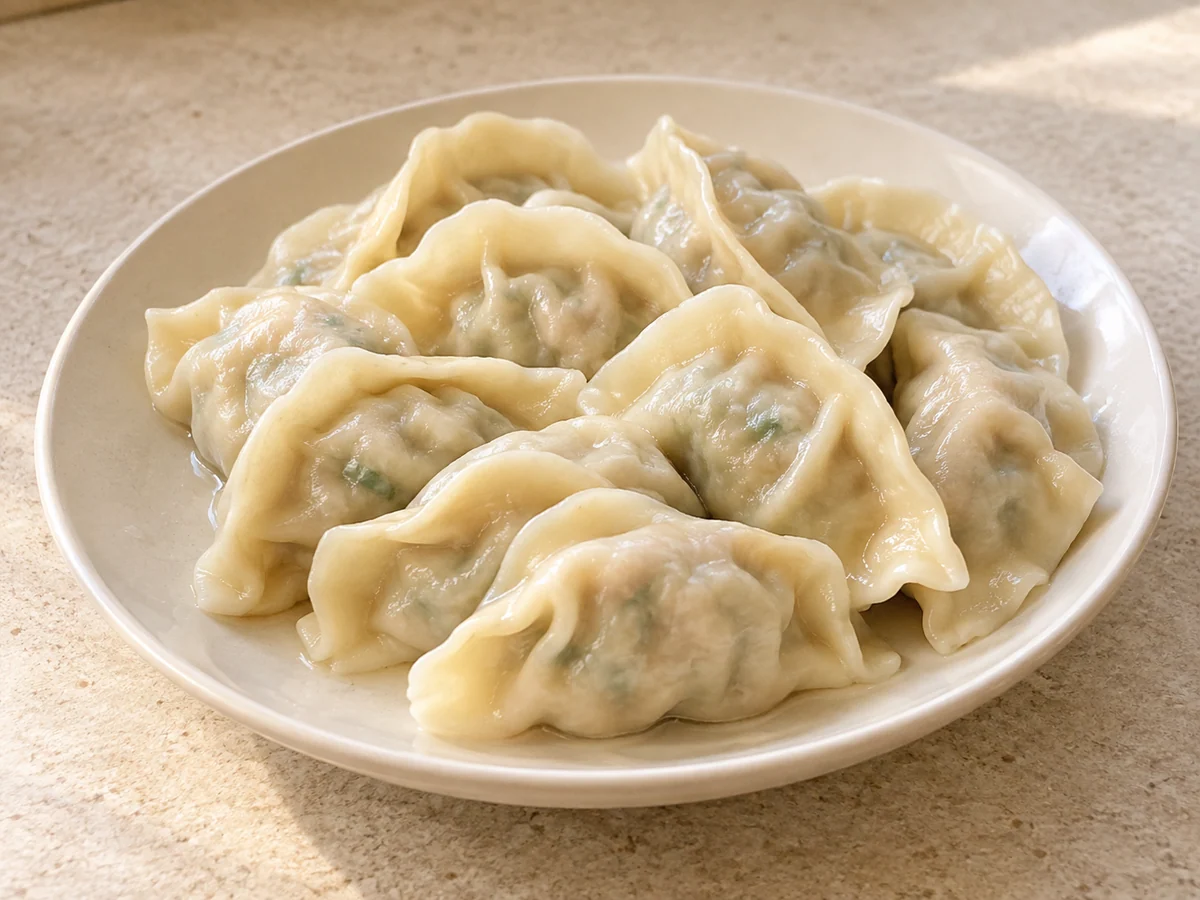
Handmade boiled dumplingsDrain and plate
Once cooked, lift out with a slotted spoon, drain and serve on a clean plate. Cool slightly before eating the hot filling.
Look forThe dumplings are cooked and intact with little cooking water on the plate.
See the full recipe ↗ 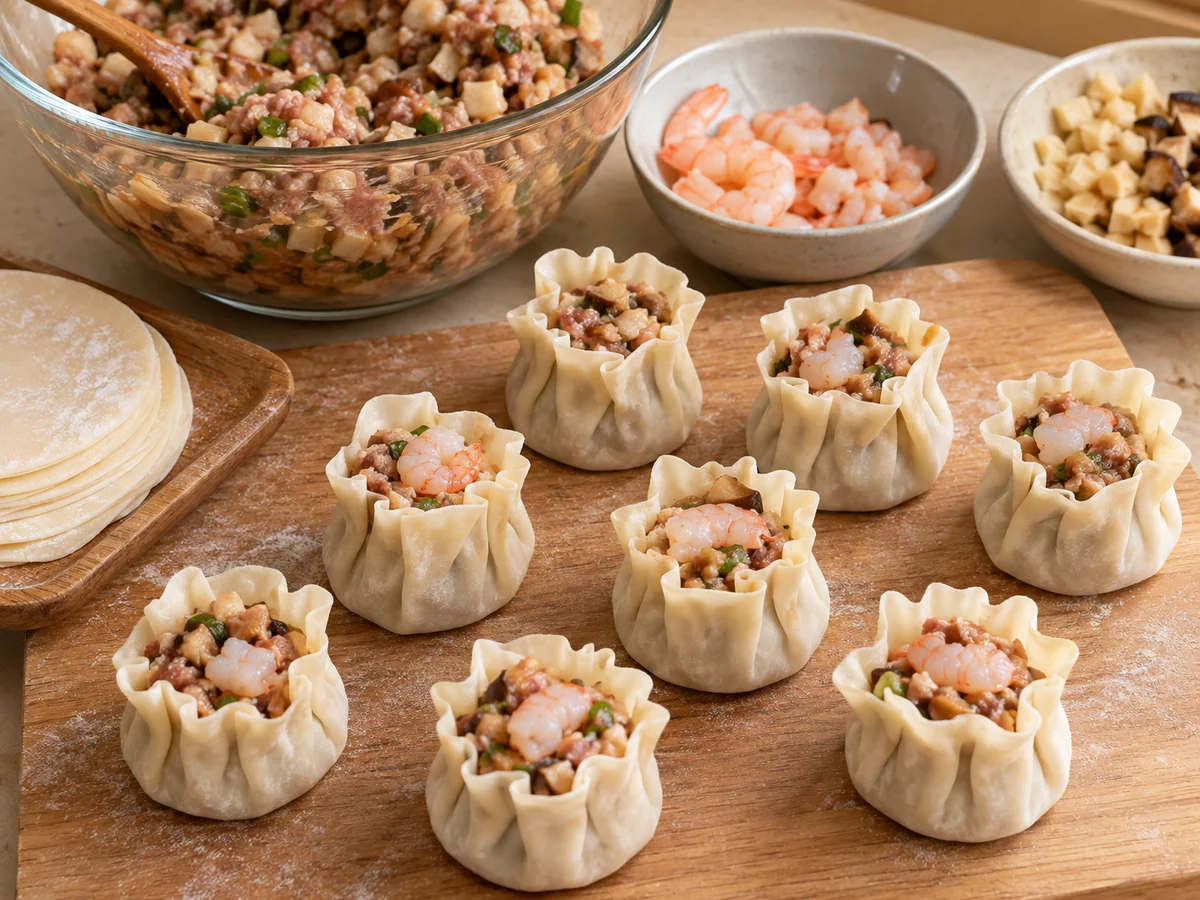
Pork shumaiShape the shumai
Place a modest amount of filling in each wrapper and gather the sides, leaving the top open and flattening the base. Divide optional shrimp across the tops, cutting them if necessary rather than overfilling.
Look forThe shumai stand upright with open tops and contained filling.
See the full recipe ↗ 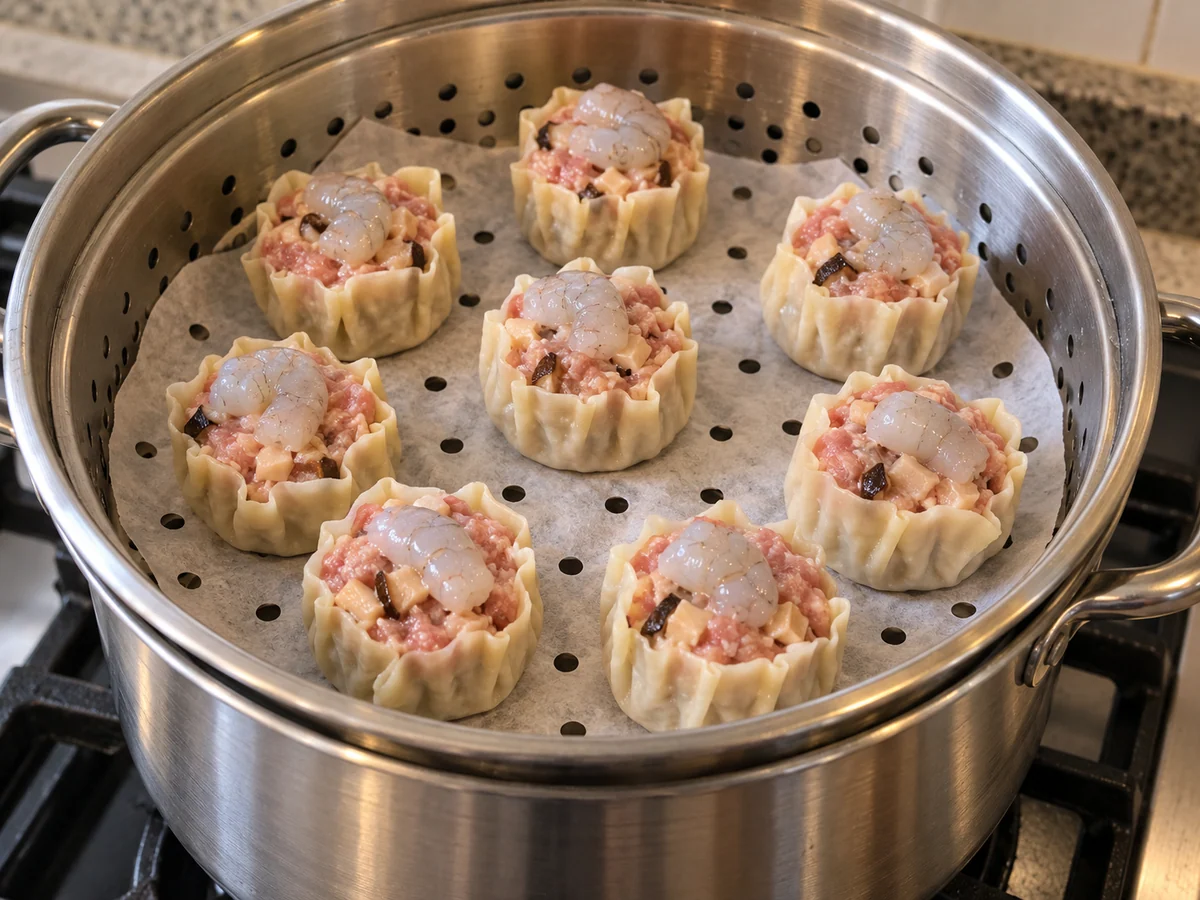
Pork shumaiArrange with space in the steamer
Line the steamer with perforated steaming paper and leave gaps between shumai. Add sufficient water below the basket and bring it to a boil before setting the basket on top.
Look forThere are gaps for steam and the shumai do not sit in water.
See the full recipe ↗ 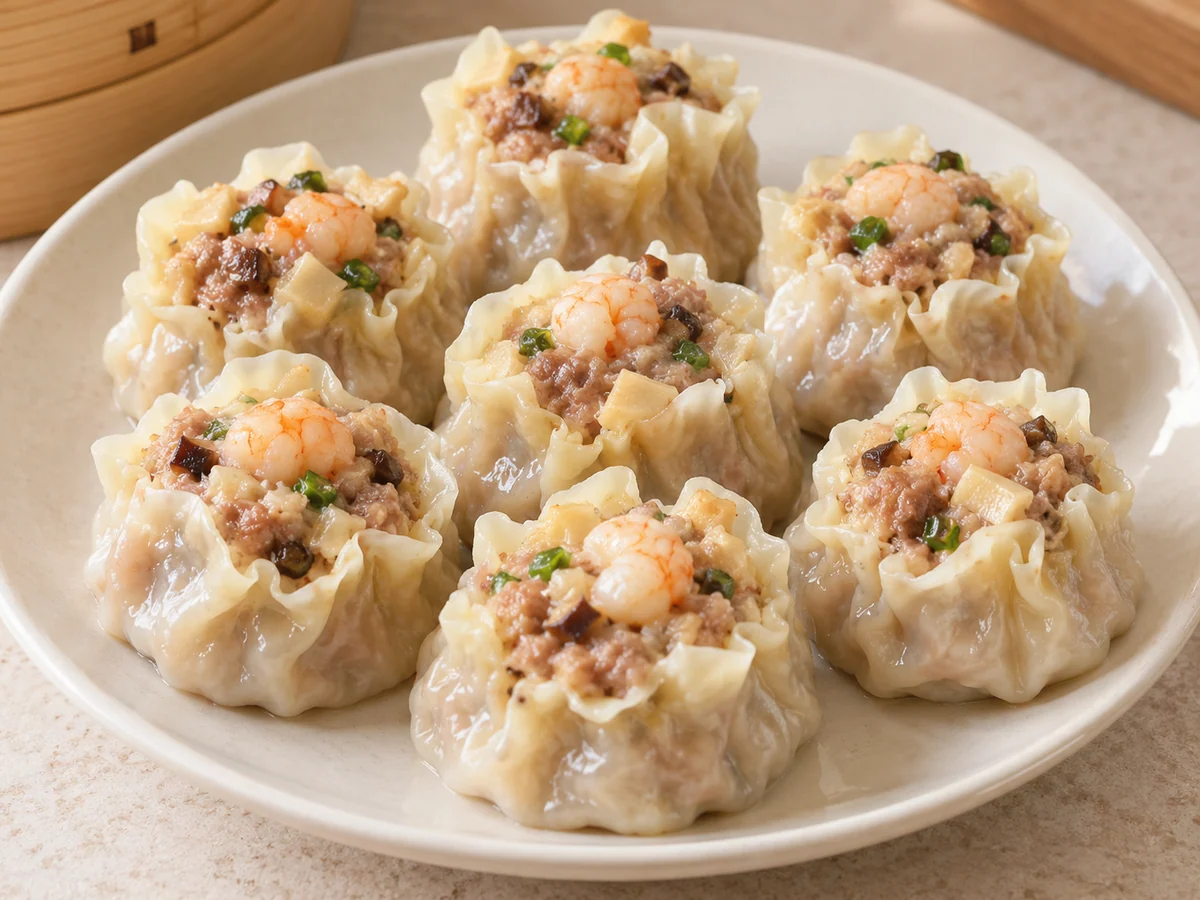
Pork shumaiRemove clear of the steam
Turn off the heat, lift the lid away from you and remove the basket with mitts. Cool briefly before eating, especially if hot aspic juices are inside.
Look forThe shumai are intact, cooked through and not soggy underneath.
See the full recipe ↗ 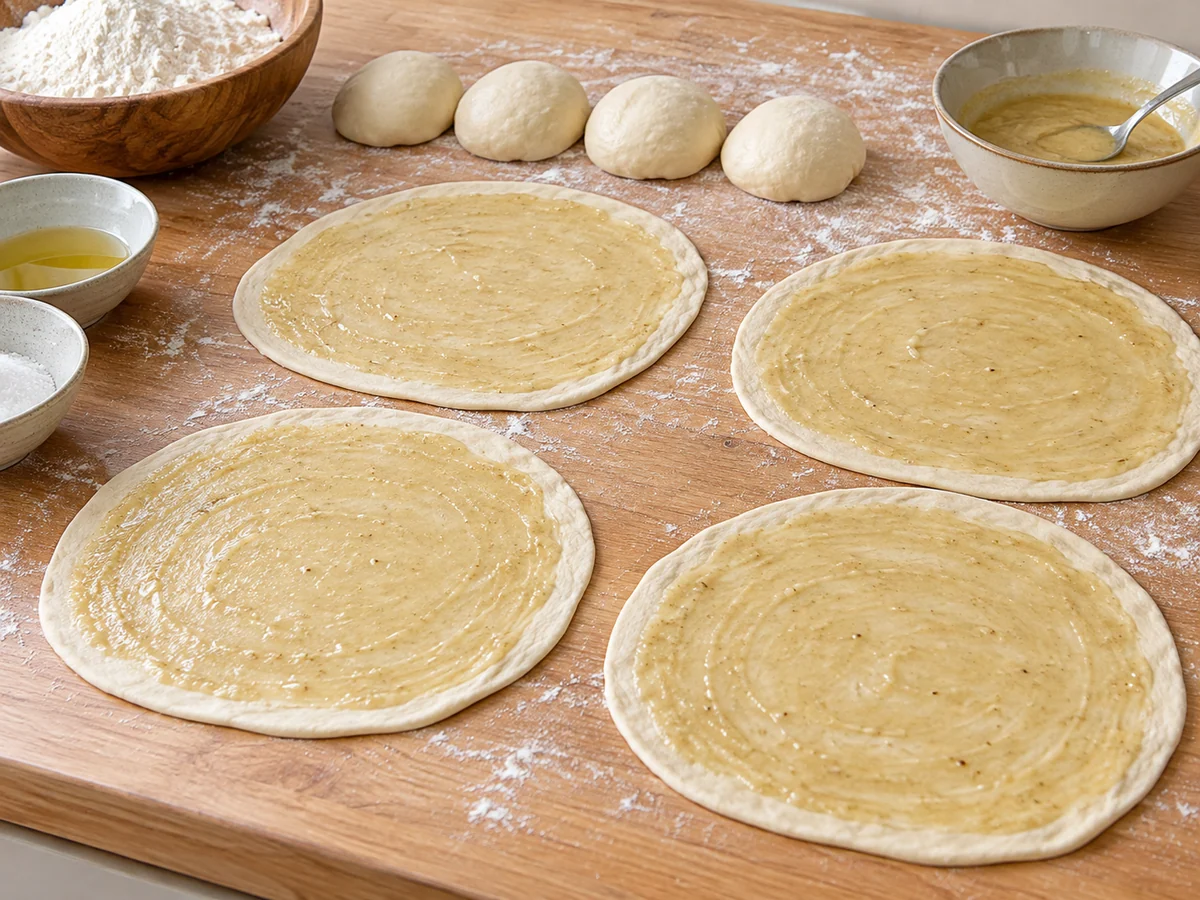
Pan-cooked flatbreadDivide dough and spread paste
Gently press and divide the dough into equal portions, about four breads for the original batch. Roll out and divide the paste evenly among them, spreading thinly and leaving a little border.
Look forThe paste forms an even thin layer on similar-sized sheets.
See the full recipe ↗ 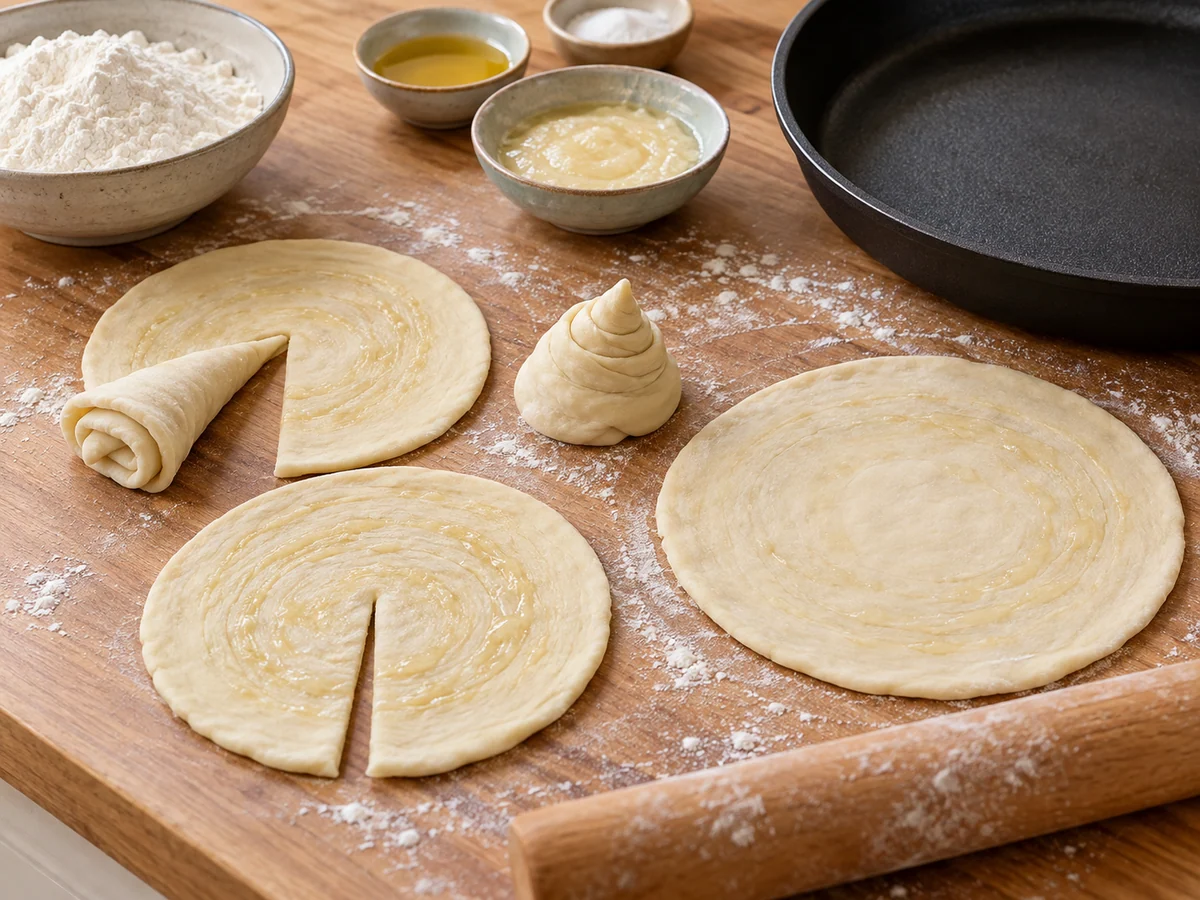
Pan-cooked flatbreadRoll the layers and flatten
Cut from the center to the edge, roll around the slit into a cone and pinch closed. Press down from the tip and roll to about 3 mm thick, sized to fit the pan.
Look forThe breads are evenly thin, contain their paste and fit flat in the pan.
See the full recipe ↗ 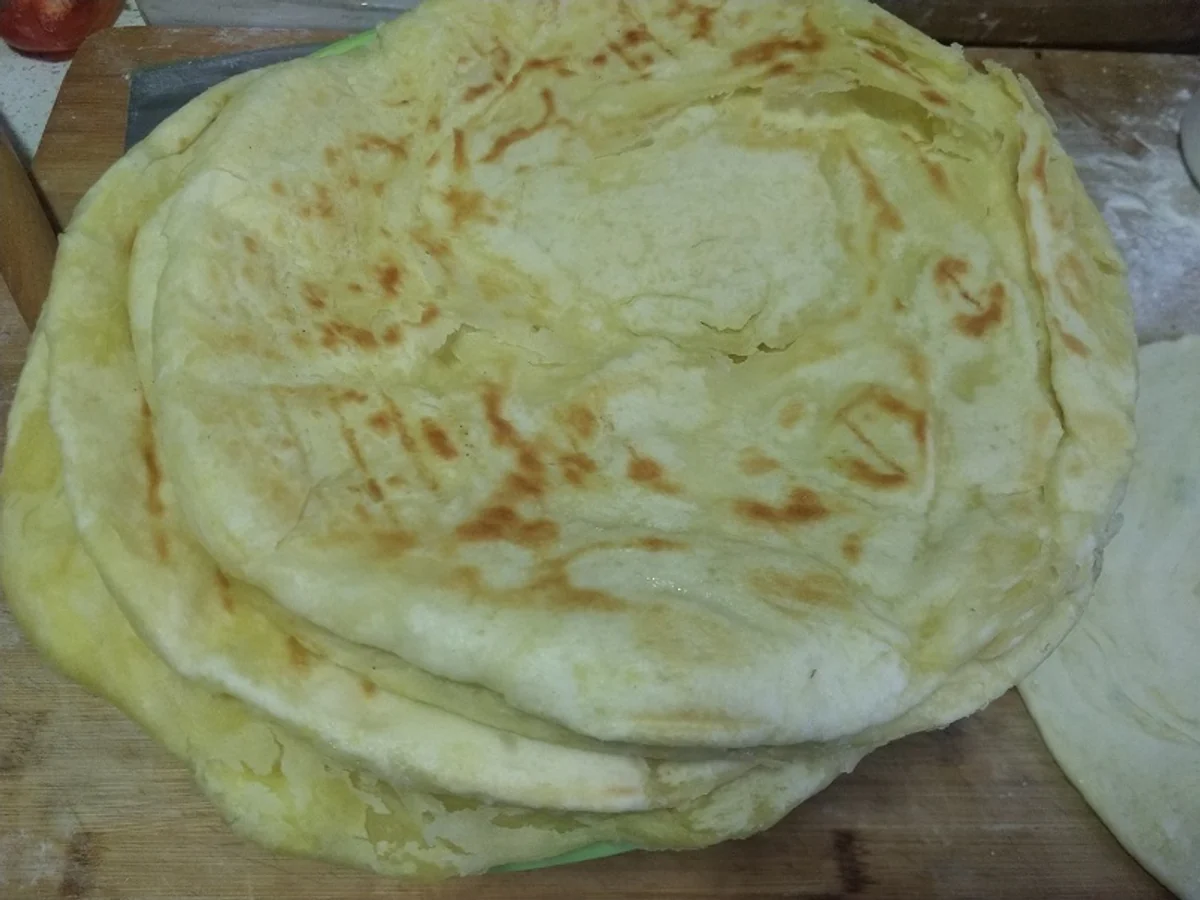
Pan-cooked flatbreadRemove and loosen the layers
Remove with a spatula, cool briefly, then gently loosen or cut the layers. The inside should be cooked and soft rather than wet and raw.
Look forThe layers are distinct, golden outside and cooked and soft inside.
See the full recipe ↗ 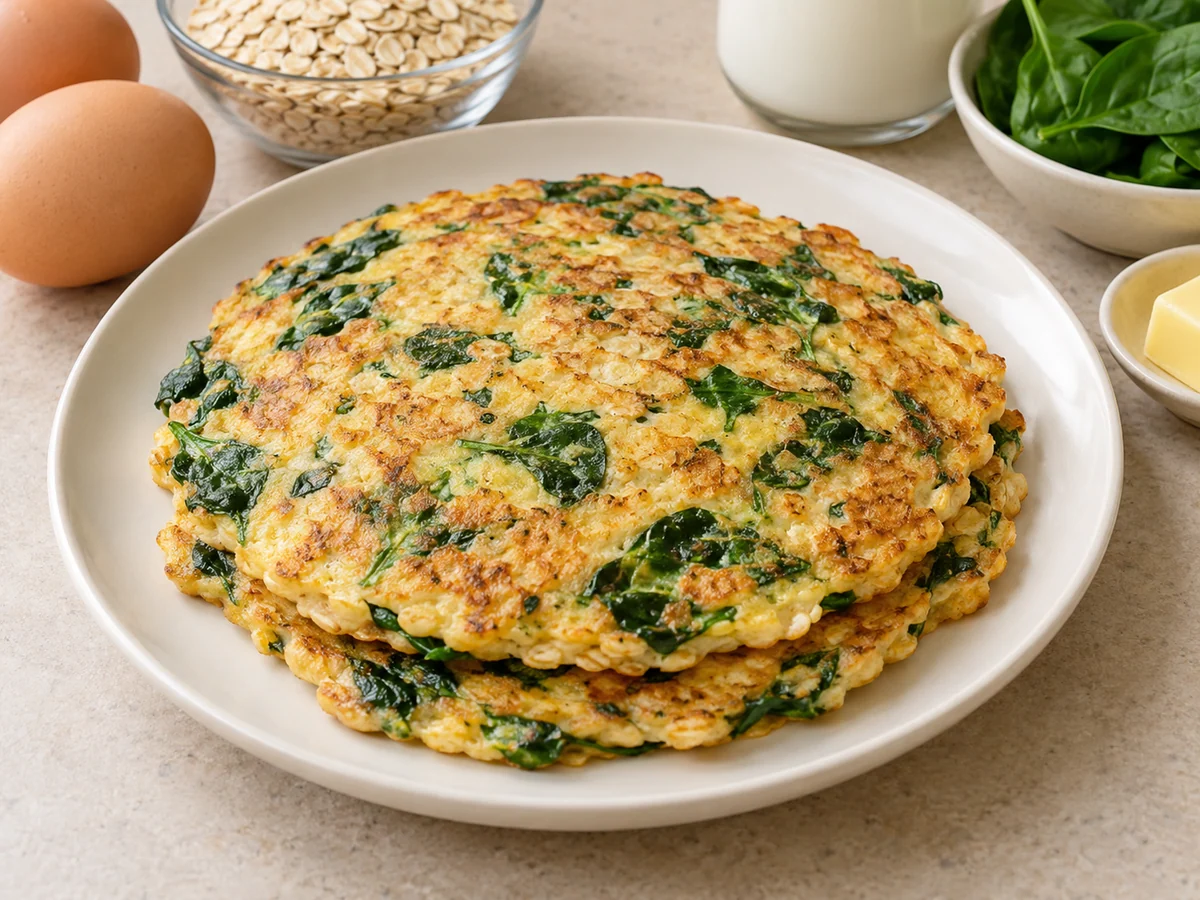
Oat and egg pancakesPlate and cool briefly
Transfer to a clean plate, cool briefly and cut to serve.
Look forThe pancake holds its shape, is cooked through and has soft oats.
See the full recipe ↗ 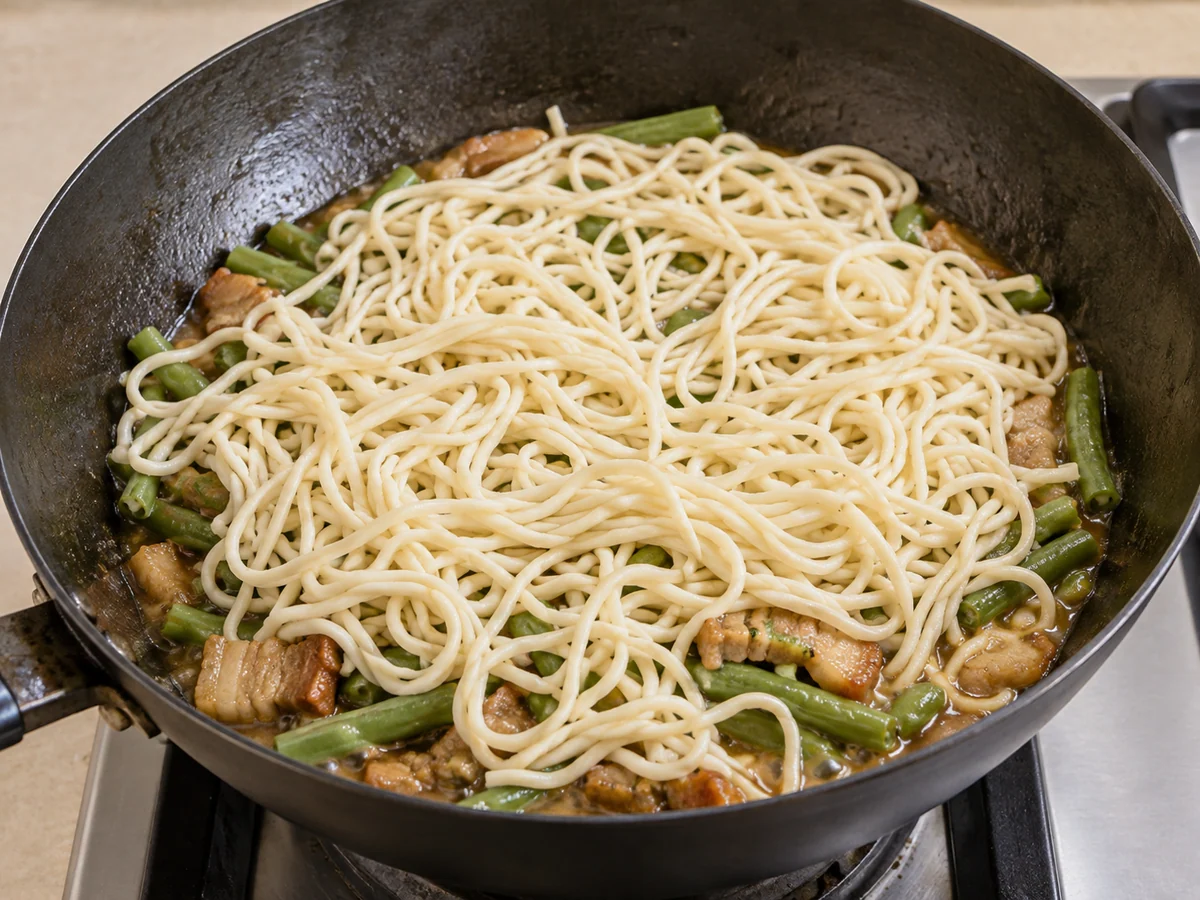
Green bean braised noodlesBoil the sauce and layer noodles
Add the listed braising water and bring to a boil. Ladle about half the liquid into a heatproof bowl. Loosen noodles over the vegetables without packing them into a thick clump, leaving enough liquid below to steam.
Look forThe noodles lie loosely over the vegetables with sauce below.
See the full recipe ↗ 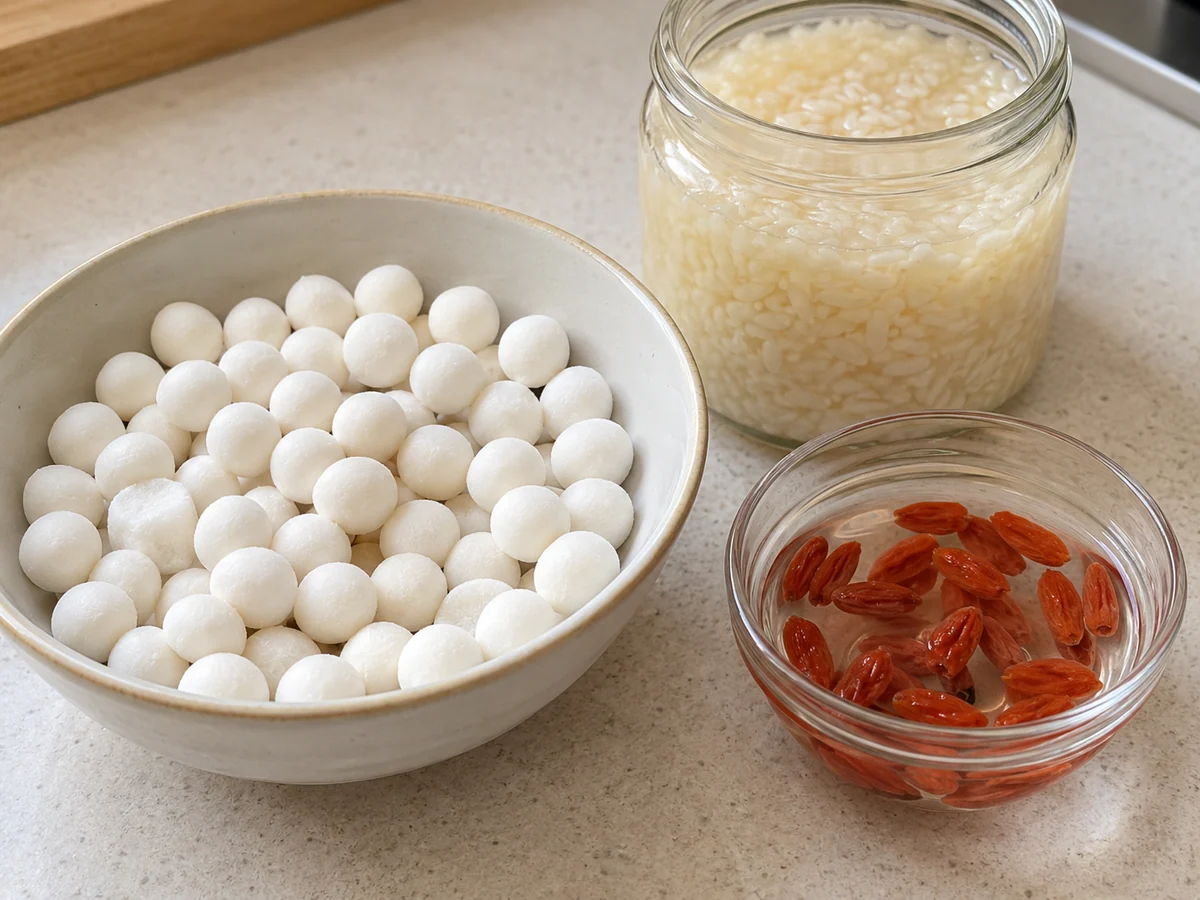
Small rice balls in sweet rice wineCheck rice wine and rice balls
Check the storage, use-by date and cooking directions for unfilled small rice balls and fermented rice. Rinse optional goji berries. This soup contains fermented rice; check its ingredients and alcohol information.
Look forThe ingredients are suitable for use and the rice balls are small and unfilled.
See the full recipe ↗ 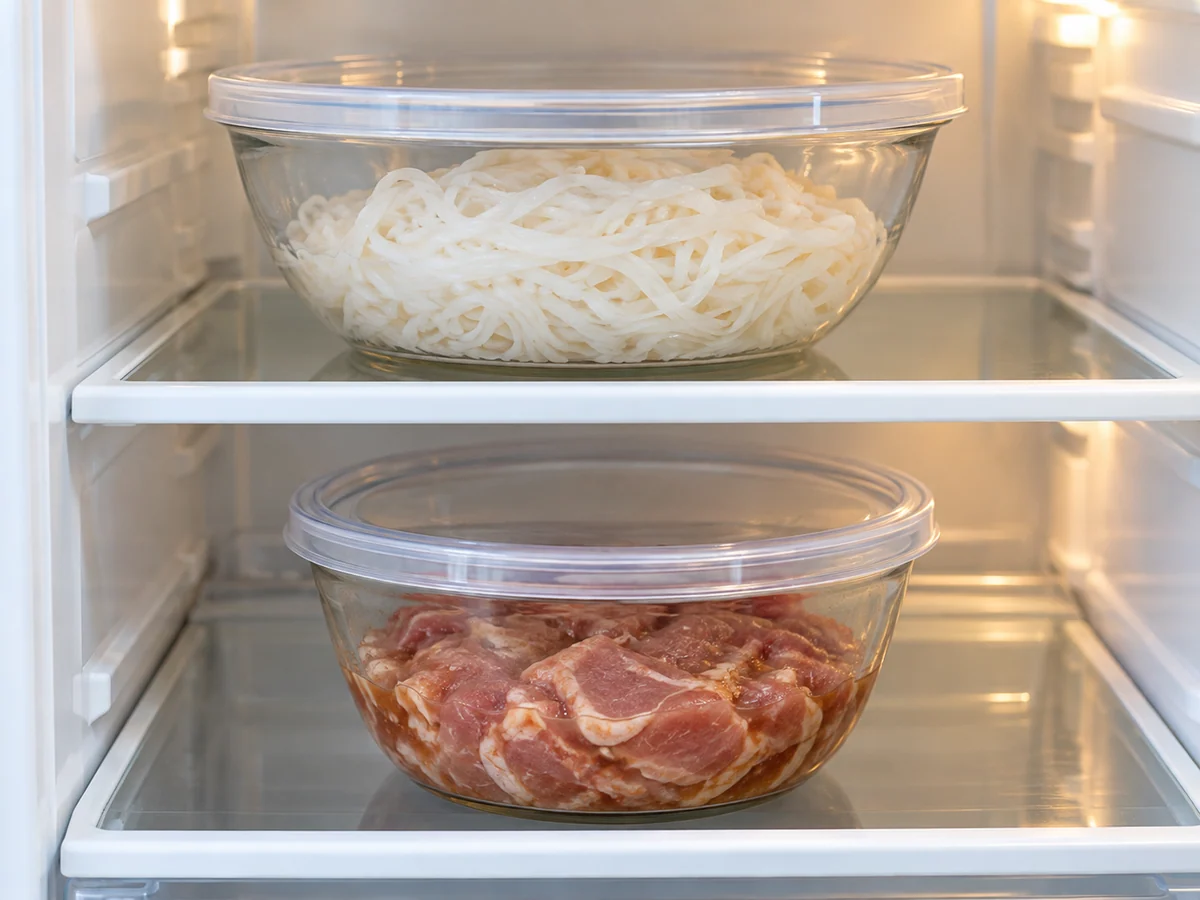
Laoyou pork rice noodle soupSoak noodles and season pork
Weigh dry flat rice noodles, about 3–5 mm wide, according to the current ingredient list: the baseline two portions use 250 g before soaking, not hydrated weight; follow the scaled list when portions change. Follow the chosen package’s complete soaking and draining method; if it requires separate precooking, finish that and drain first. Softening is not cooking. Thinly slice pork, mix with cooking wine, starch and about one-third of the soy sauce, cover and refrigerate. Wash hands and tools after raw pork.
Look forThe noodles are softened and the evenly thin pork is kept refrigerated.
See the full recipe ↗ 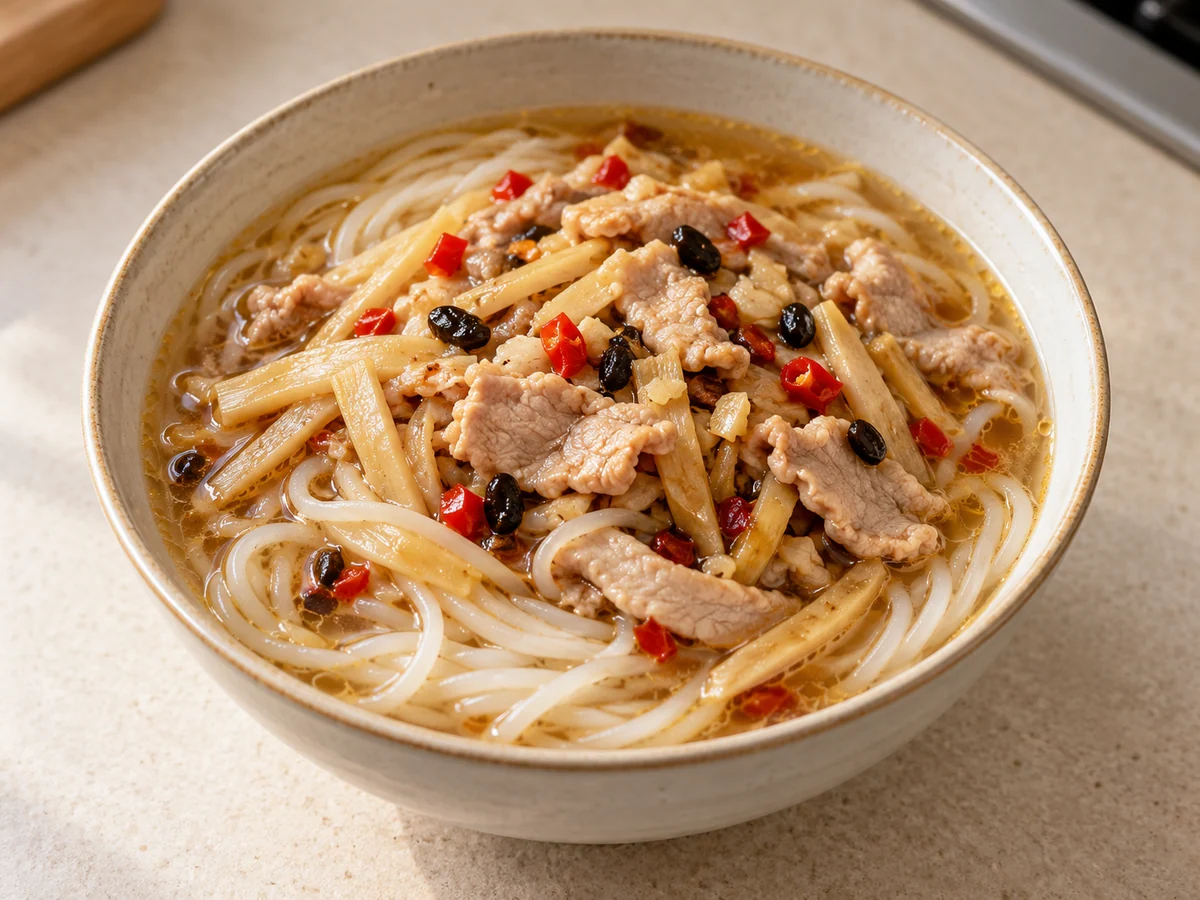
Laoyou pork rice noodle soupRest and serve
Turn off the heat and set a 3 min rest reminder. Serve after the pork has completed its safety rest.
Look forThe pork is cooked and rested and the noodles are tender.
See the full recipe ↗ 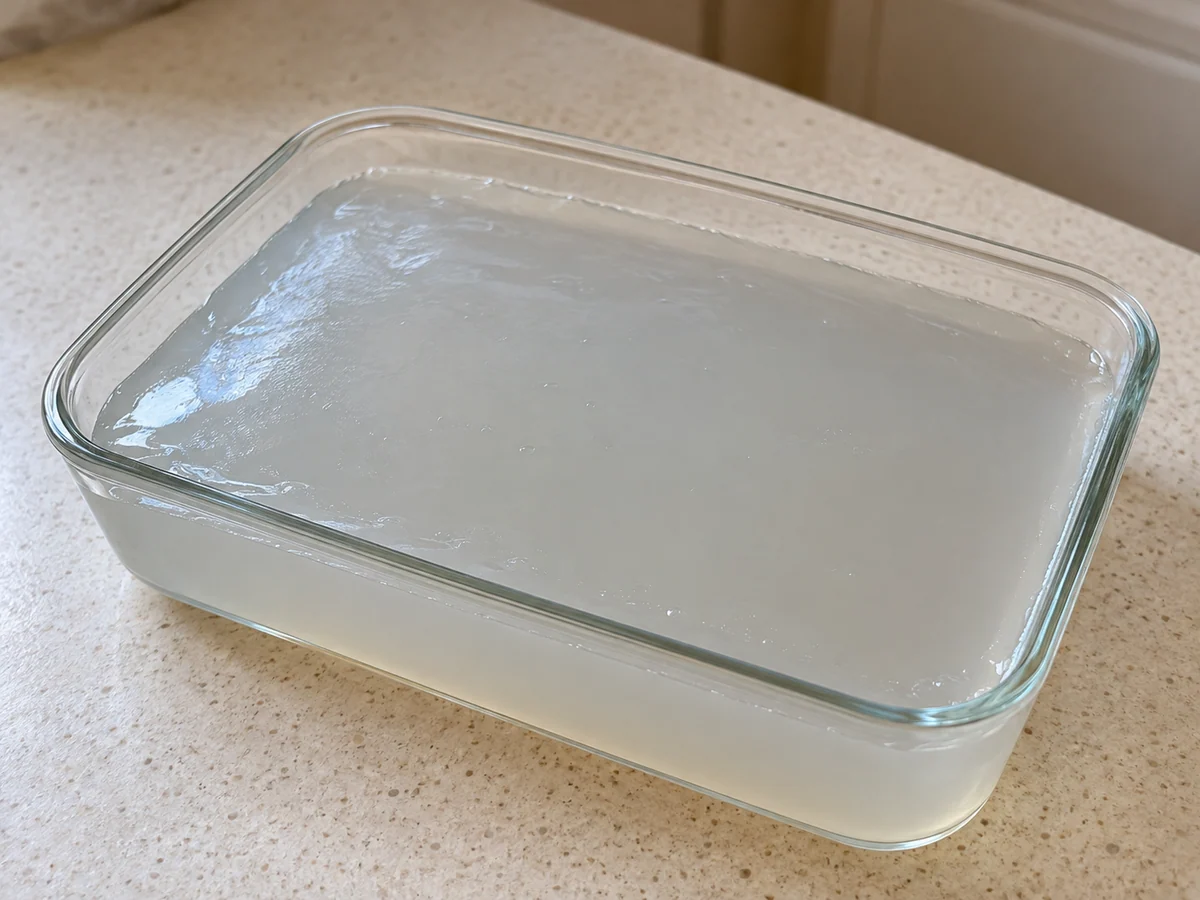
Pea-starch jellyMold and chill until set
Carefully pour into the shallow container. Let the initial steam subside briefly, then refrigerate promptly and set a 2 hr first check. Wait until fully cold and firm enough to unmold, chilling longer if needed; do not leave it cooling at room temperature for hours.
Look forThe jelly is fully chilled, firm and resilient enough to hold its shape.
See the full recipe ↗ 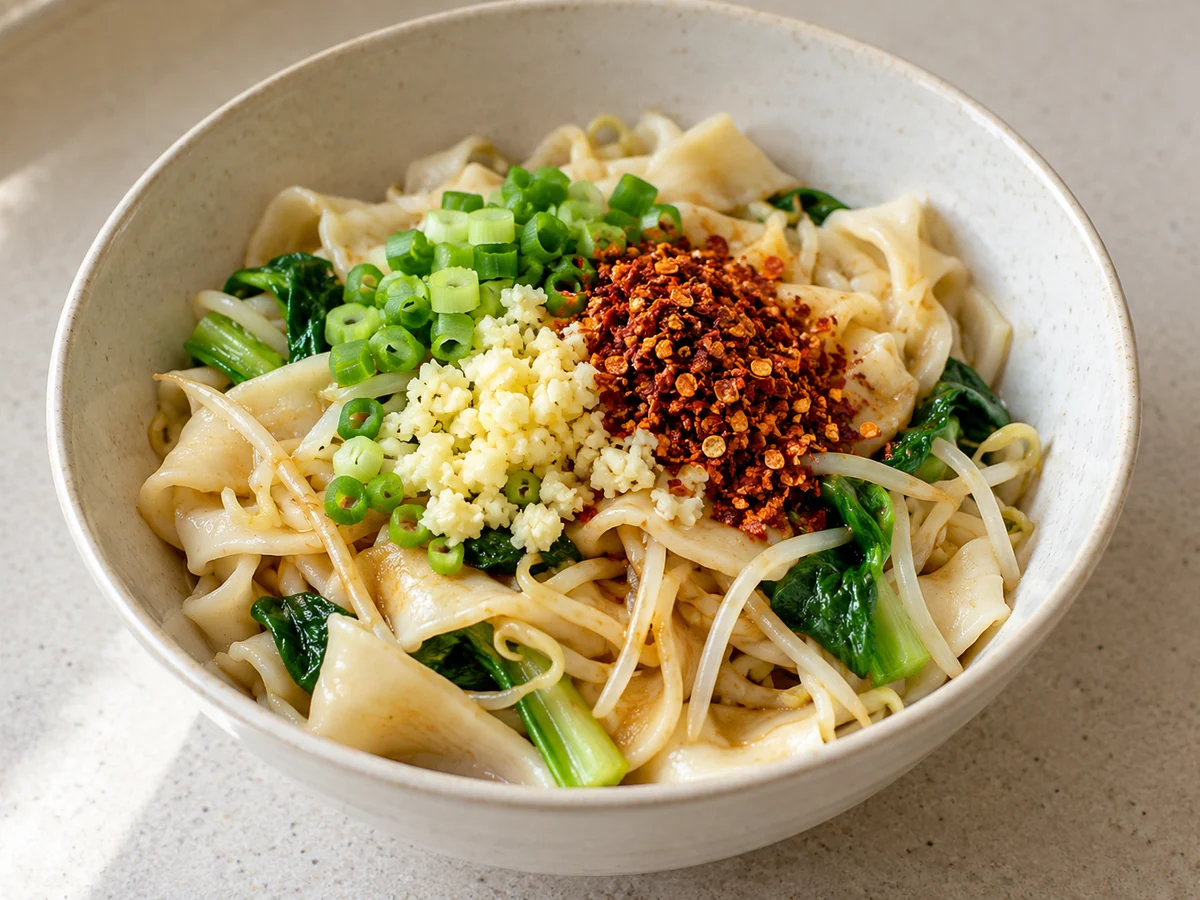
Shaanxi hot oil noodlesDrain well and add aromatics
Drain noodles and vegetables thoroughly into the heatproof bowl and mix with soy and vinegar. Pile scallion, garlic and chili on top, avoiding pooled water that can splatter when oil is added.
Look forThe aromatics sit on the noodles with no visible pool of water.
See the full recipe ↗ 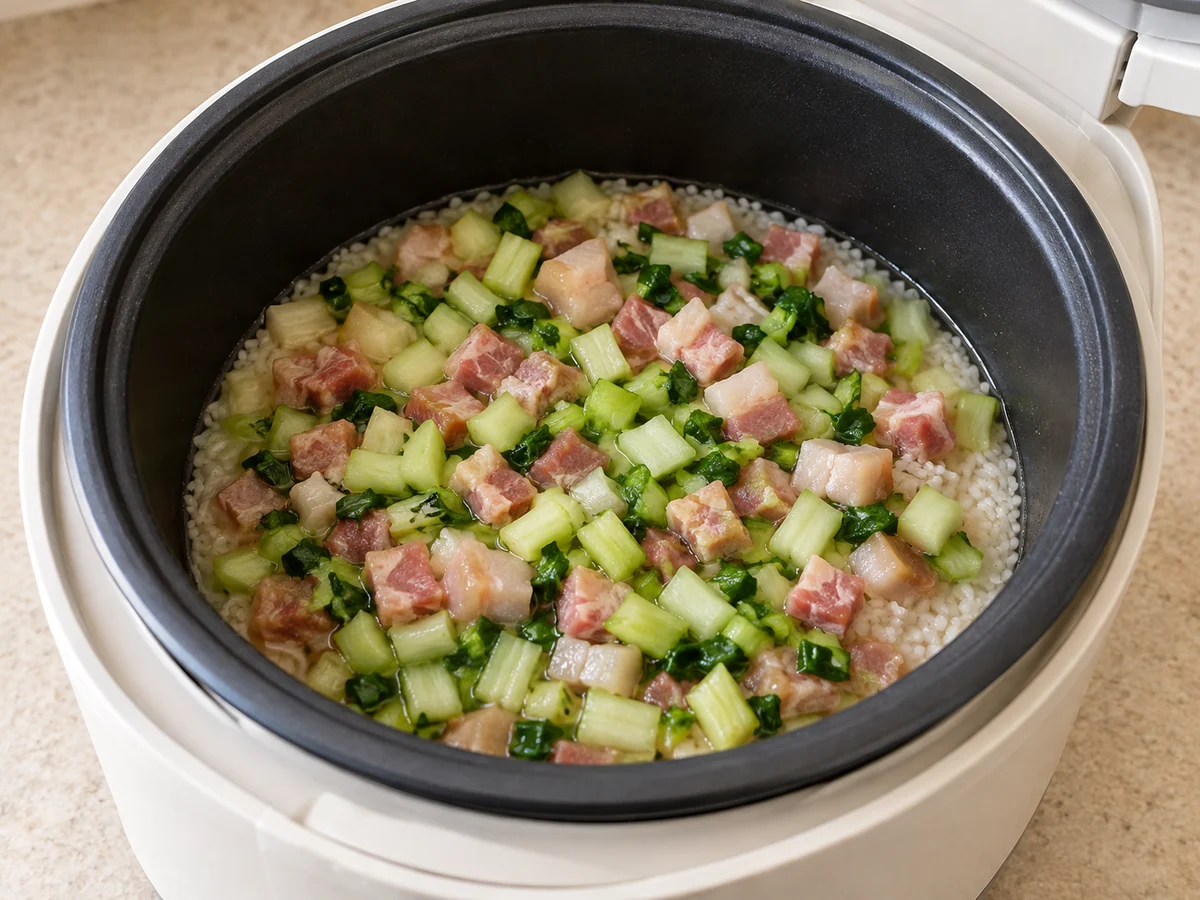
Salted pork and greens riceLayer over rice and cook
Rinse and drain rice into the cooker and add the listed rice water. Layer pork and stems on top without stirring. Use a suitable mixed-rice program within the fill limit, adjusting water to the rice and appliance instructions.
Look forRice, water and toppings are in place for an appropriate program without overfilling.
See the full recipe ↗ 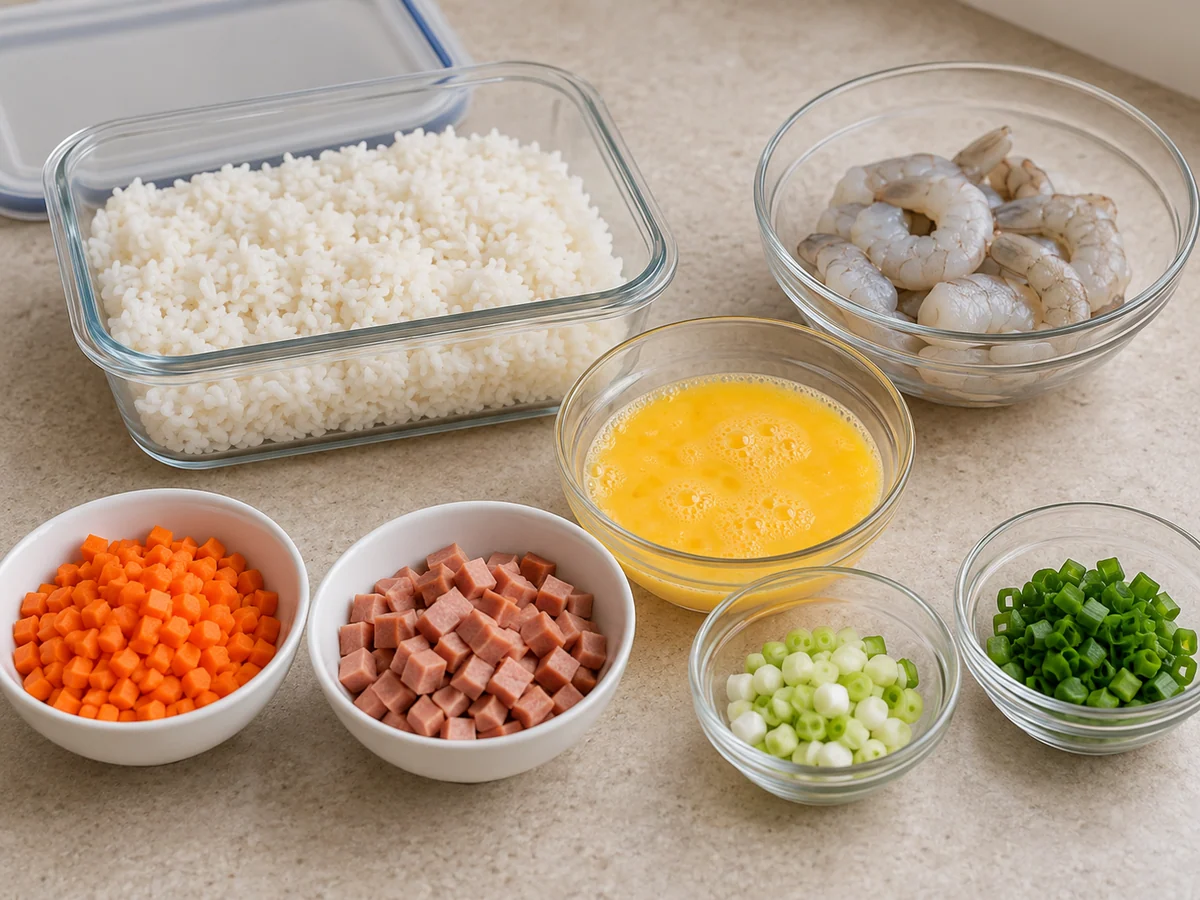
Yangzhou fried riceCheck rice storage and prepare
Use rice cooled promptly after cooking and refrigerated, ideally cooled within one hour. Do not use rice left at room temperature for an extended period. Dice carrot and luncheon meat, separate chopped scallion whites and greens and beat eggs. Thaw shrimp under refrigeration as labeled.
Look forThe rice’s storage is suitable, ingredients are cut and shrimp is thawed.
See the full recipe ↗ 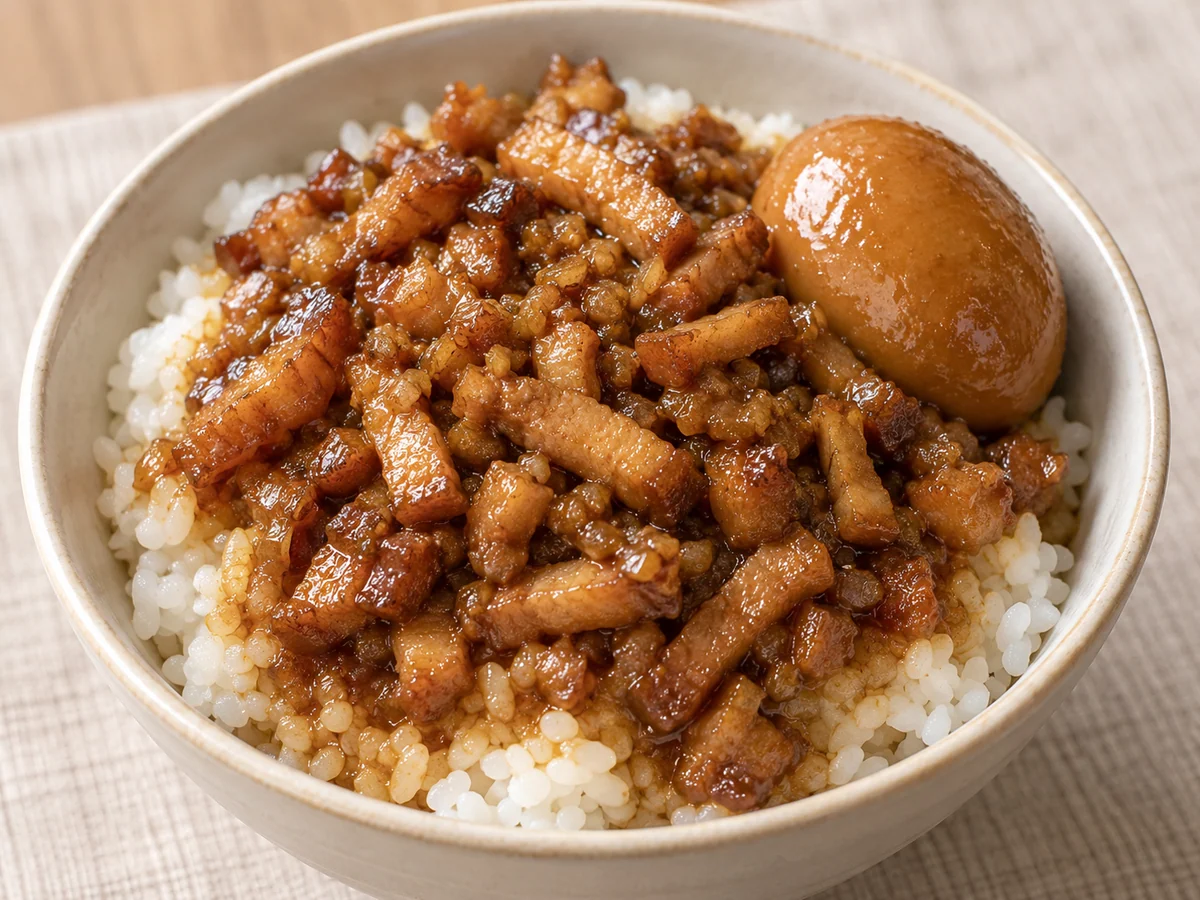
Taiwanese braised pork riceServe over hot rice
Serve hot rice in bowls, spoon over pork and sauce and add an optional braised egg. Refrigerate leftover pork and rice promptly in separate containers.
Look forTender braised pork and sauce cover the hot rice.
See the full recipe ↗ 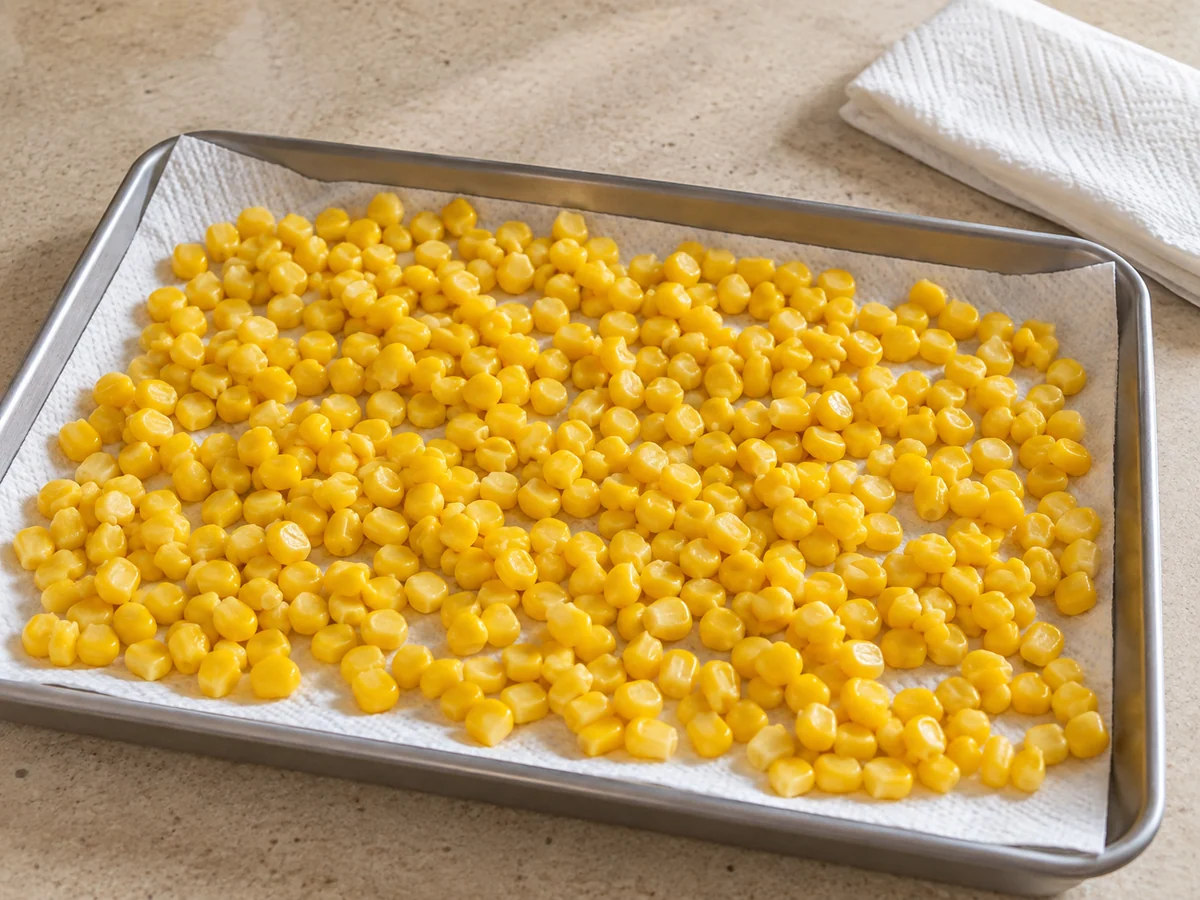
Pepper-salt cornBlot surface droplets
Spread corn in a strainer or on a tray lined with kitchen paper. Blot with fresh paper until no droplets remain, leaving only slight dampness for the starch to stick. Never tip wet kernels into hot oil.
Look forNo droplets or pooled water remain on the corn.
See the full recipe ↗ 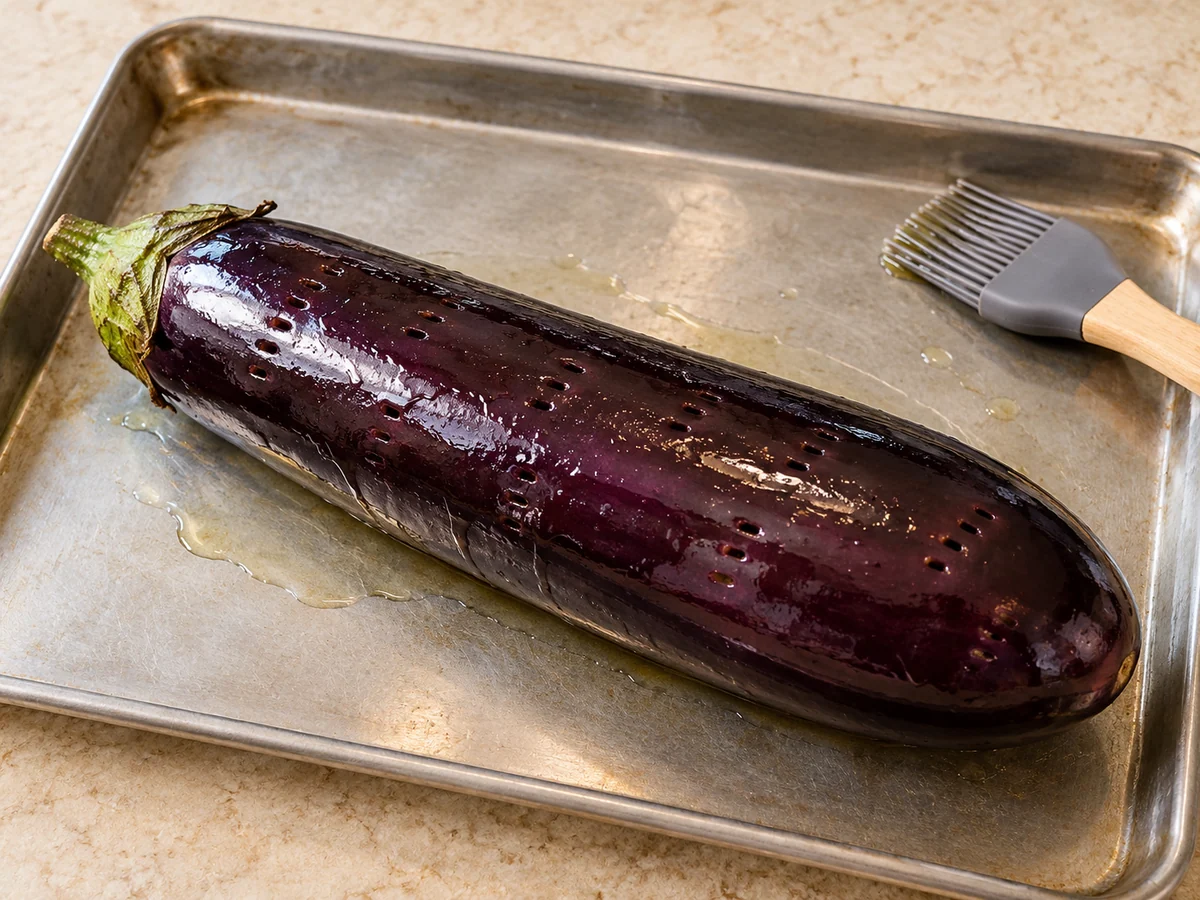
Garlic roasted eggplantPreheat and prepare the eggplant
Preheat the fan oven to 200°C according to its instructions. Wash and dry the eggplant, prick several holes with a fork, place on a rimmed tray and brush the skin evenly with oil.
Look forThe dry eggplant has small punctures and an even coating of oil.
See the full recipe ↗ 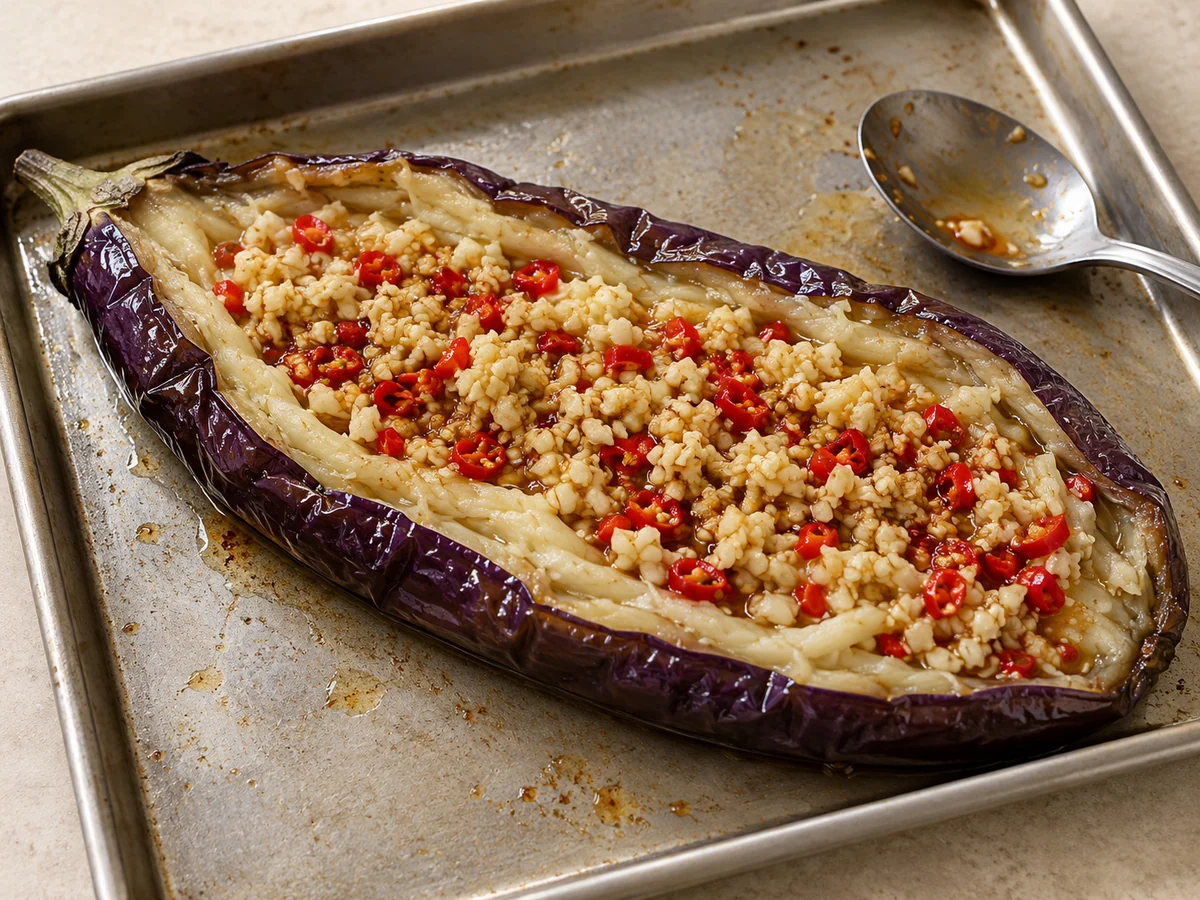
Garlic roasted eggplantOpen safely and add sauce
Set the tray securely and hold the eggplant with tongs. Split lengthwise while keeping the base joined, directing steam away from your face. Loosen the flesh with a fork and spread on the sauce; do not handle the hot eggplant with bare hands.
Look forThe eggplant opens like a boat with sauce spread across the loosened flesh.
See the full recipe ↗ 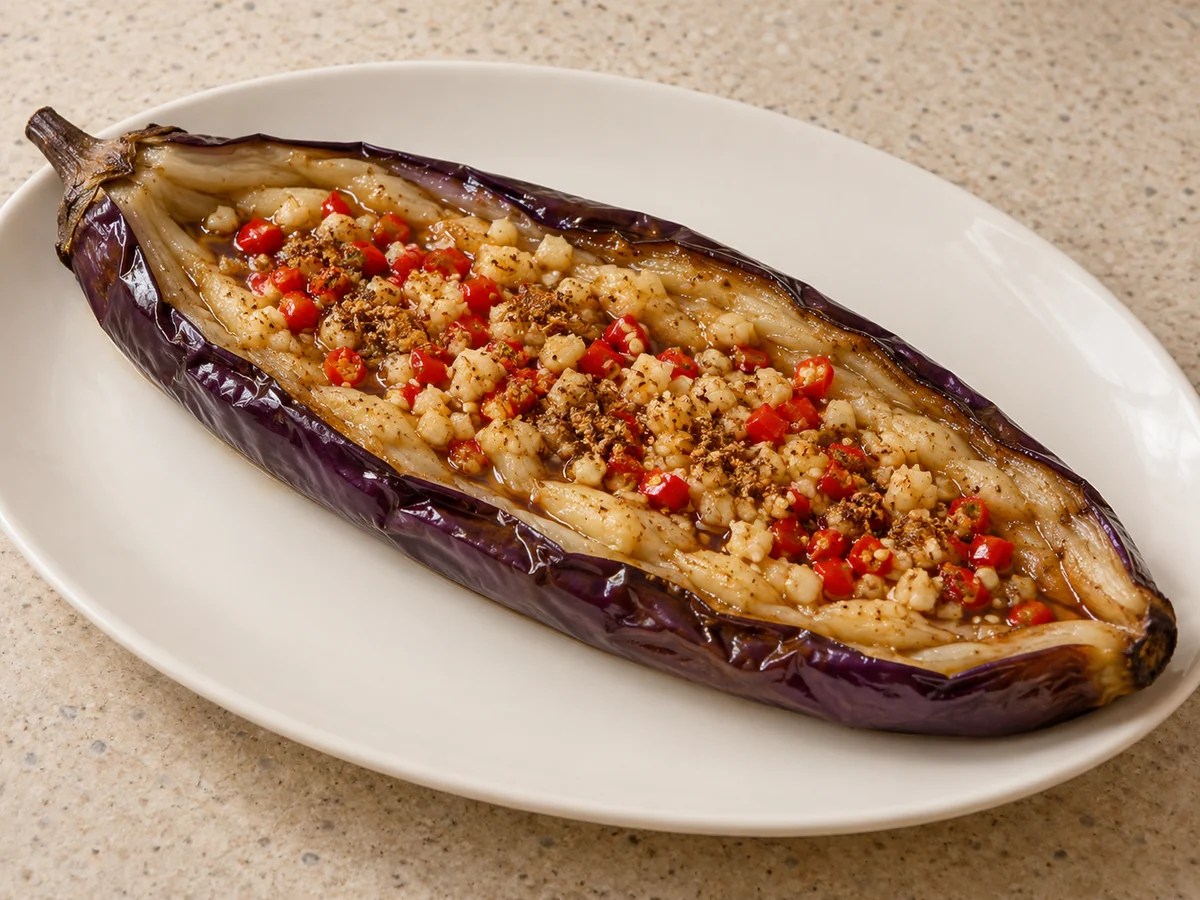
Garlic roasted eggplantRemove and cool briefly
Turn off the oven, remove the tray with mitts and lift onto a plate with a spatula. Cool briefly and scoop out the flesh with a spoon.
Look forThe opened eggplant holds its shape with garlic, chili and cumin on top.
See the full recipe ↗ 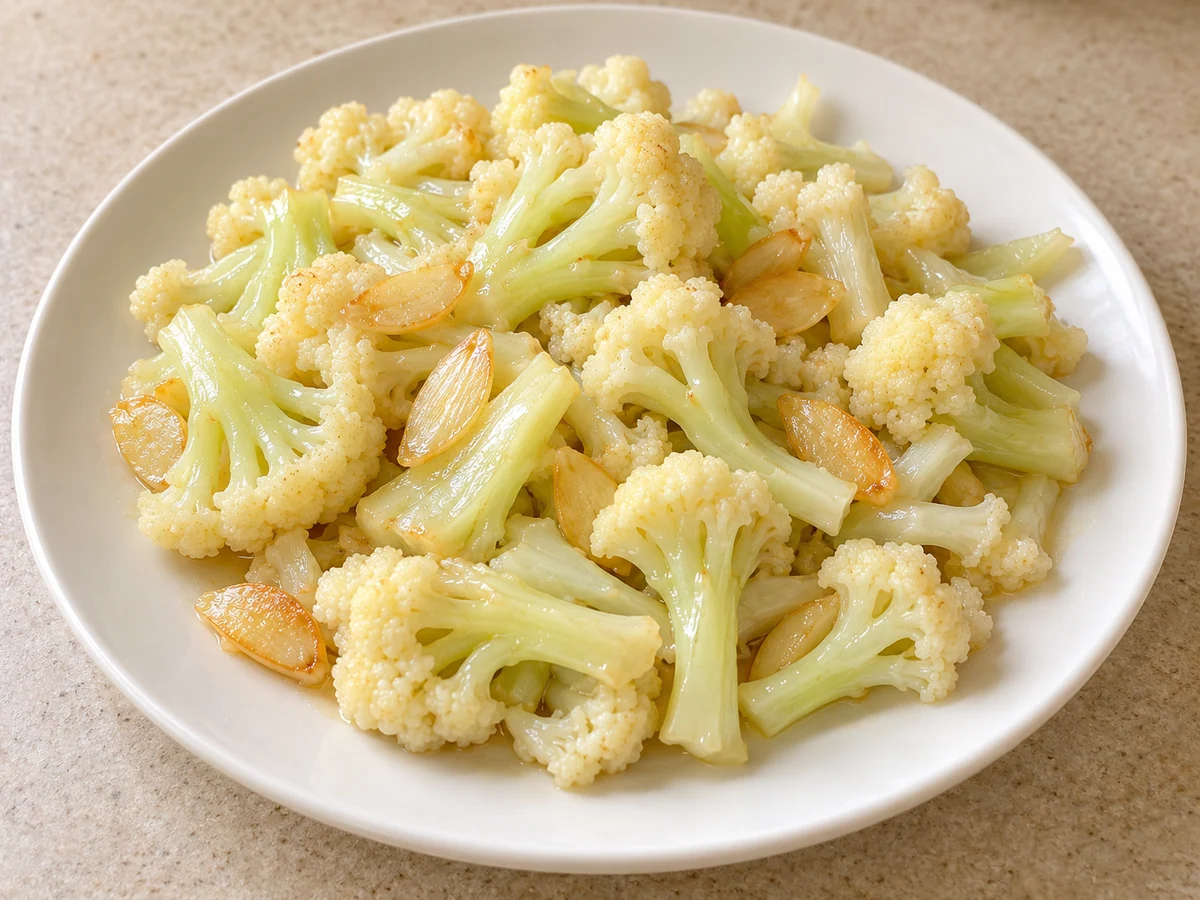
Cauliflower stir-fryUncover, toss and serve
Open the lid away from your face, toss and let excess moisture evaporate briefly before plating. Avoid breaking up the florets or scorching the pan dry.
Look forThe tender-crisp florets are intact without a pool of water.
See the full recipe ↗ 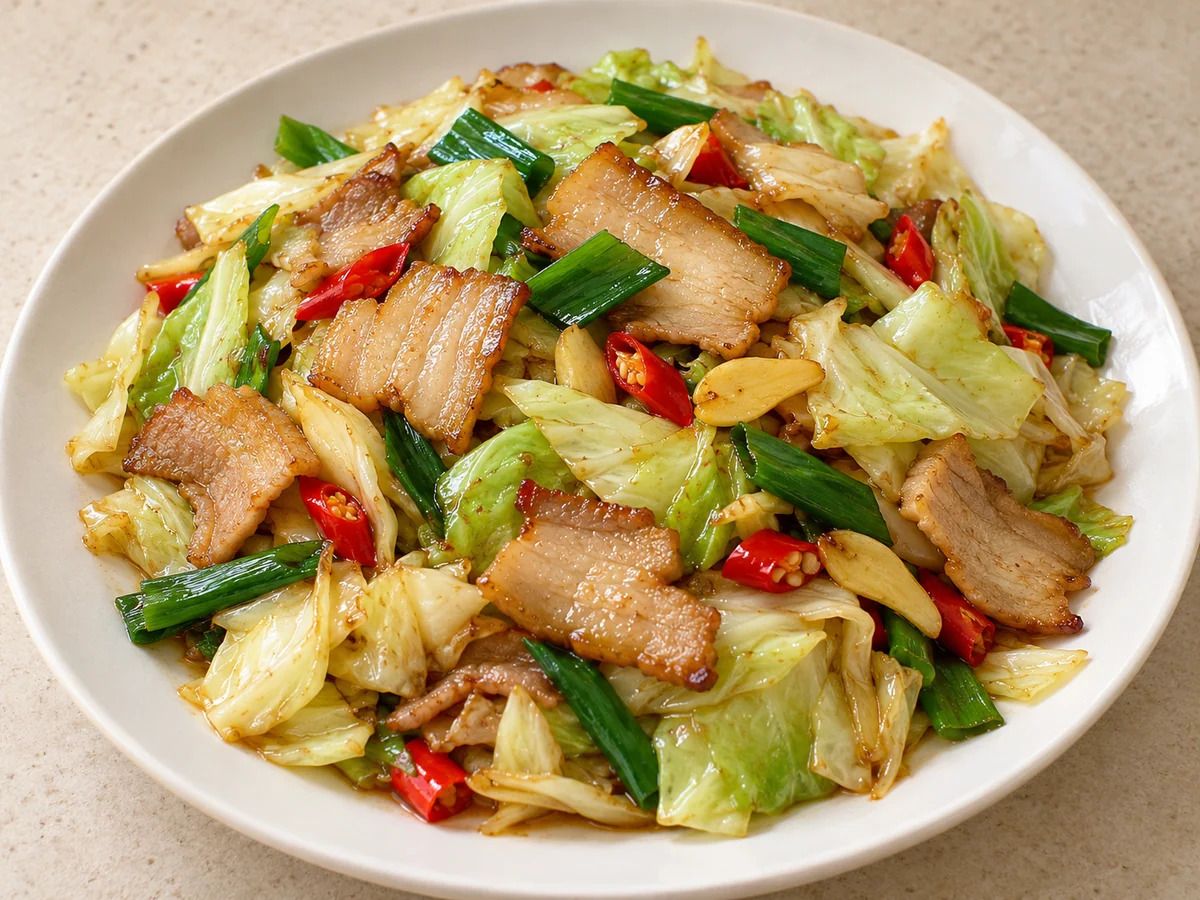
Hand-torn cabbage stir-fryRest before serving
Turn off the heat and plate, setting a 3 min rest reminder before eating to complete the whole-cut pork safety rest.
Look forTender cabbage and pork slices are lightly coated in sauce without pooled water.
See the full recipe ↗ 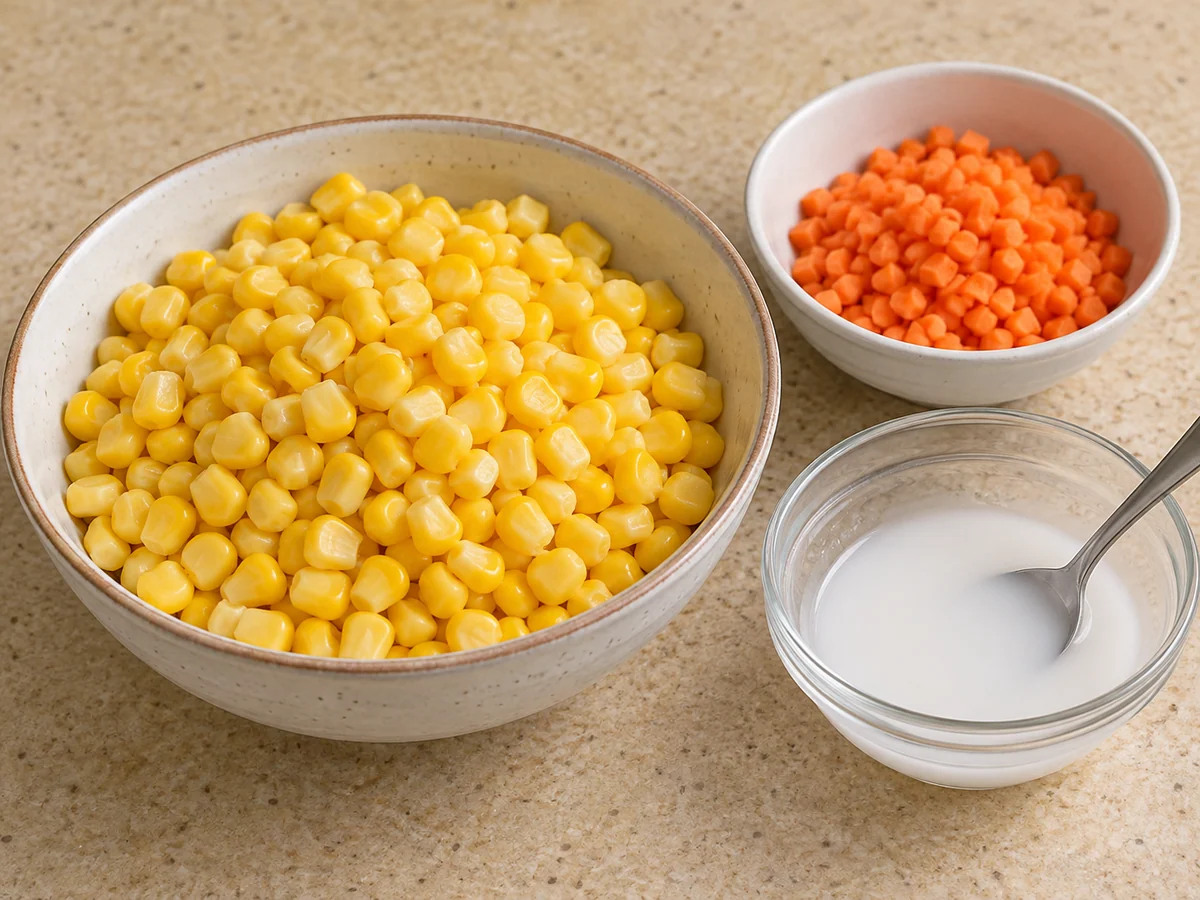
Pine nut and corn stir-fryPrepare corn and slurry
Drain corn and, if using, wash and finely dice the carrot. Mix starch with the measured slurry water and set the toasted pine nuts aside for the end.
Look forCorn is drained, carrot is finely diced and the slurry is evenly mixed.
See the full recipe ↗ 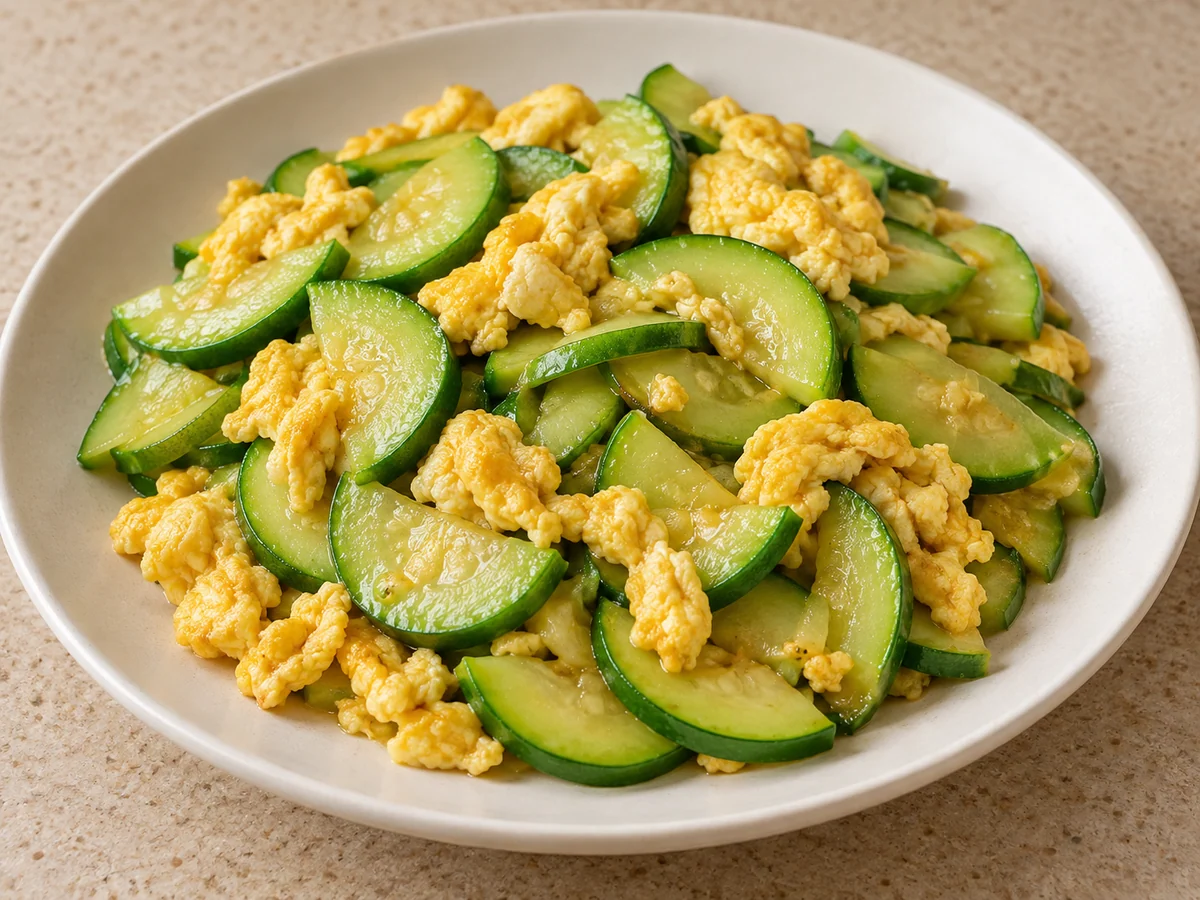
Zucchini and eggsPlate promptly
Turn off the heat and plate promptly. Tomato, if used, adds a little reddish juice; avoid prolonged cooking that dries the eggs.
Look forZucchini and egg curds are evenly distributed, with softened tomato if included.
See the full recipe ↗ 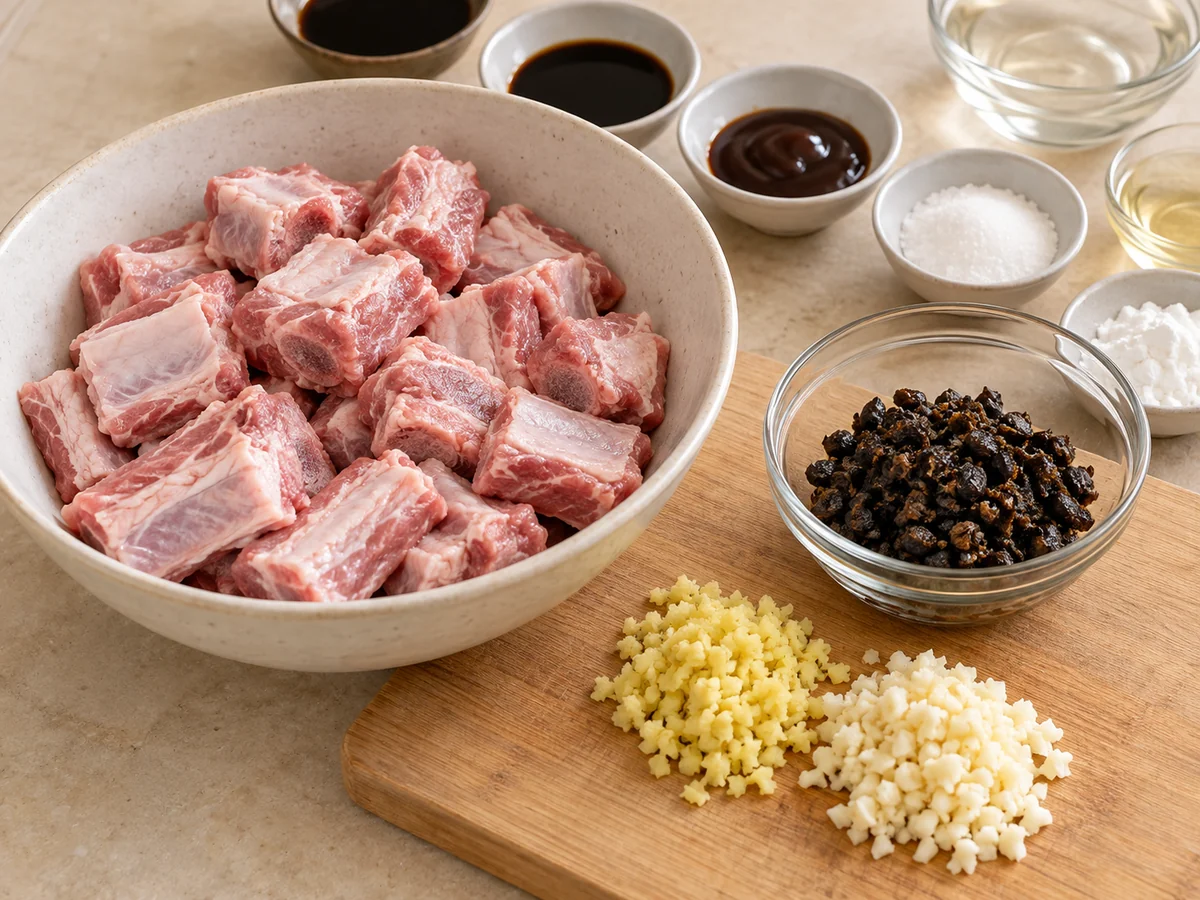
Steamed spare ribs with black beansPrepare ribs and fermented beans
Use ribs already chopped into small pieces, remove loose bone fragments and blot dry rather than repeatedly washing raw meat. Soak the fermented beans for 5 min, drain and chop lightly; mince ginger and garlic.
Look forRibs are surface-dry, fermented beans lightly chopped and aromatics minced.
See the full recipe ↗ 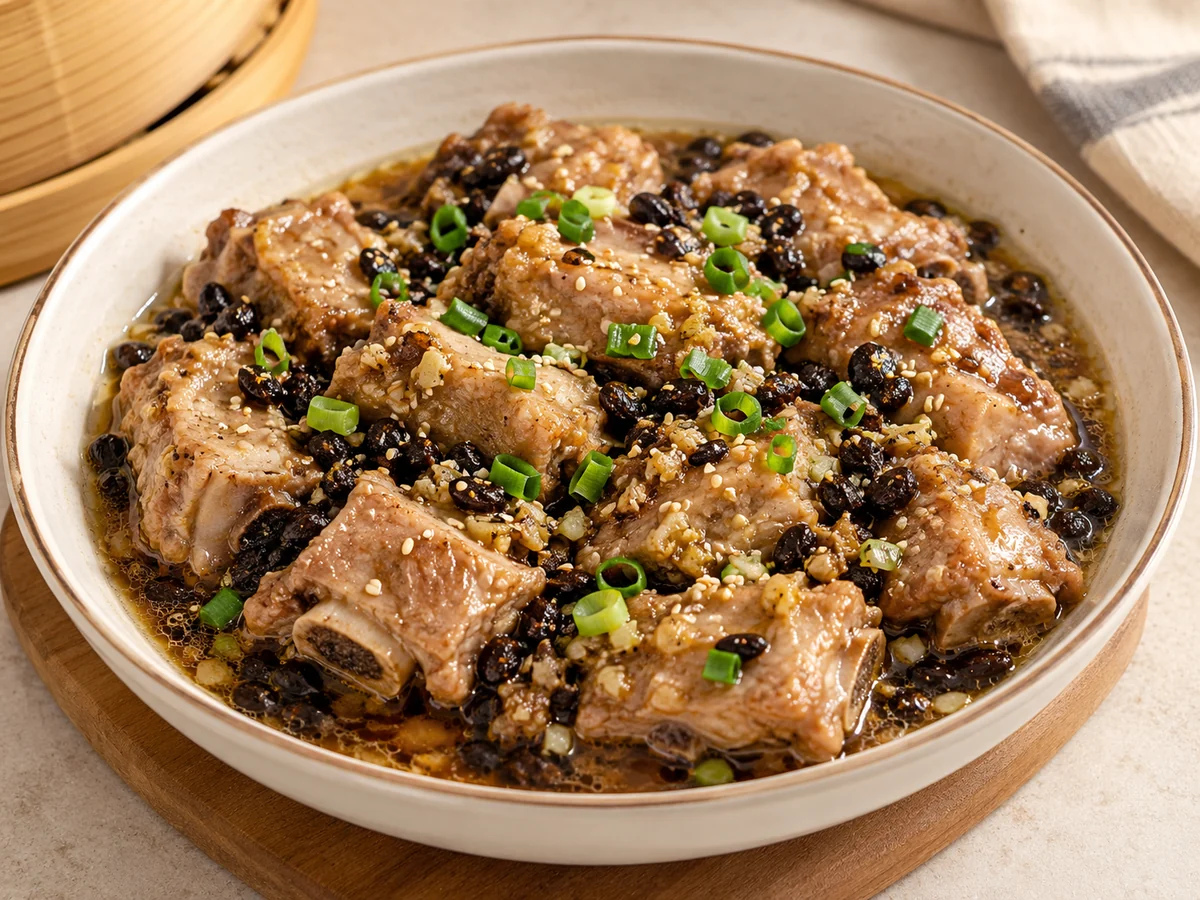
Steamed spare ribs with black beansRemove safely and rest
Turn off heat, open the lid away from you and remove the dish with mitts or a lifter. Set a 3 min safety rest, then garnish with optional scallion and toasted sesame. No hot-oil finishing pour is needed.
Look forThe ribs sit in black-bean sauce with a little optional scallion and sesame.
See the full recipe ↗ 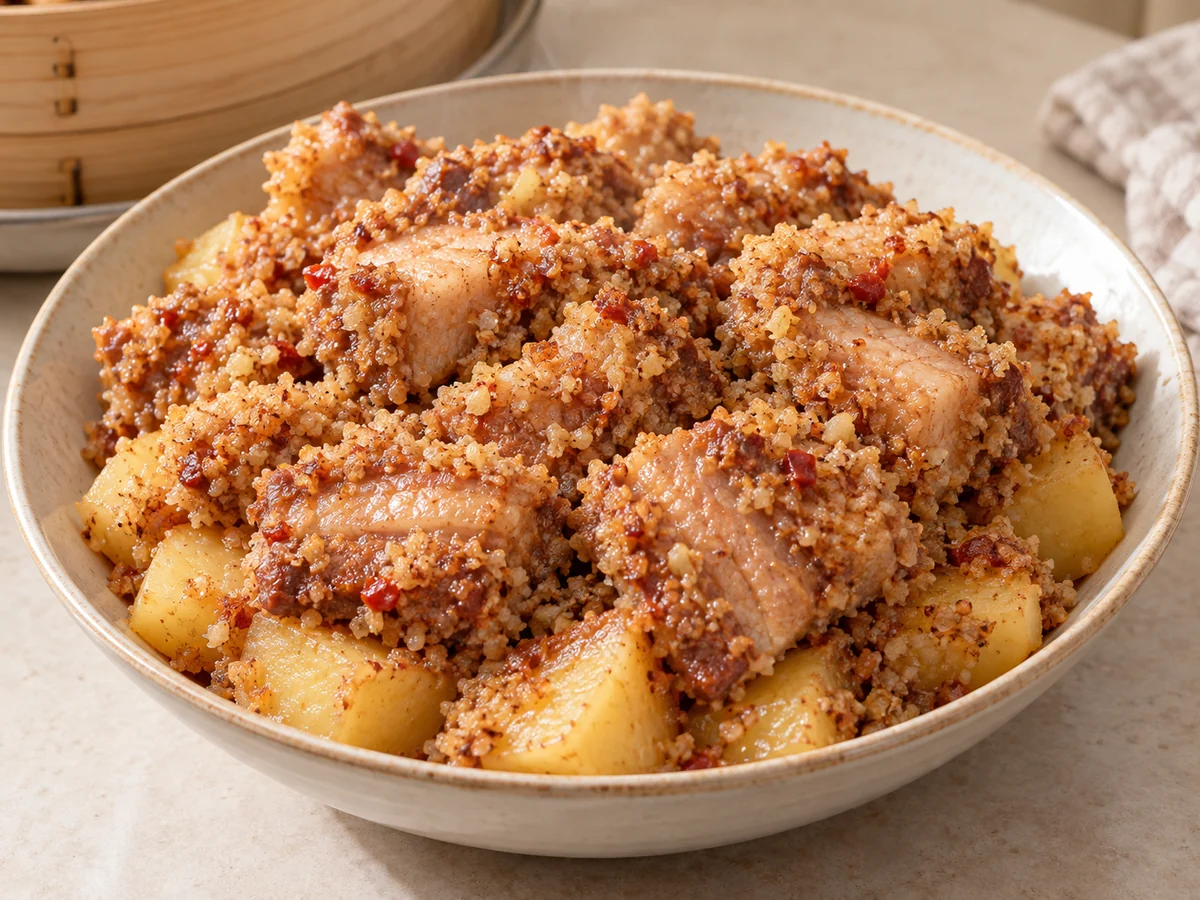
Rice powder steamed porkRemove and rest
Remove with mitts or a plate lifter, keeping clear of steam. Set a 3 min safety rest before eating; the potato underneath may remain very hot.
Look forRice-coated pork remains arranged over tender potato with an even coating.
See the full recipe ↗ 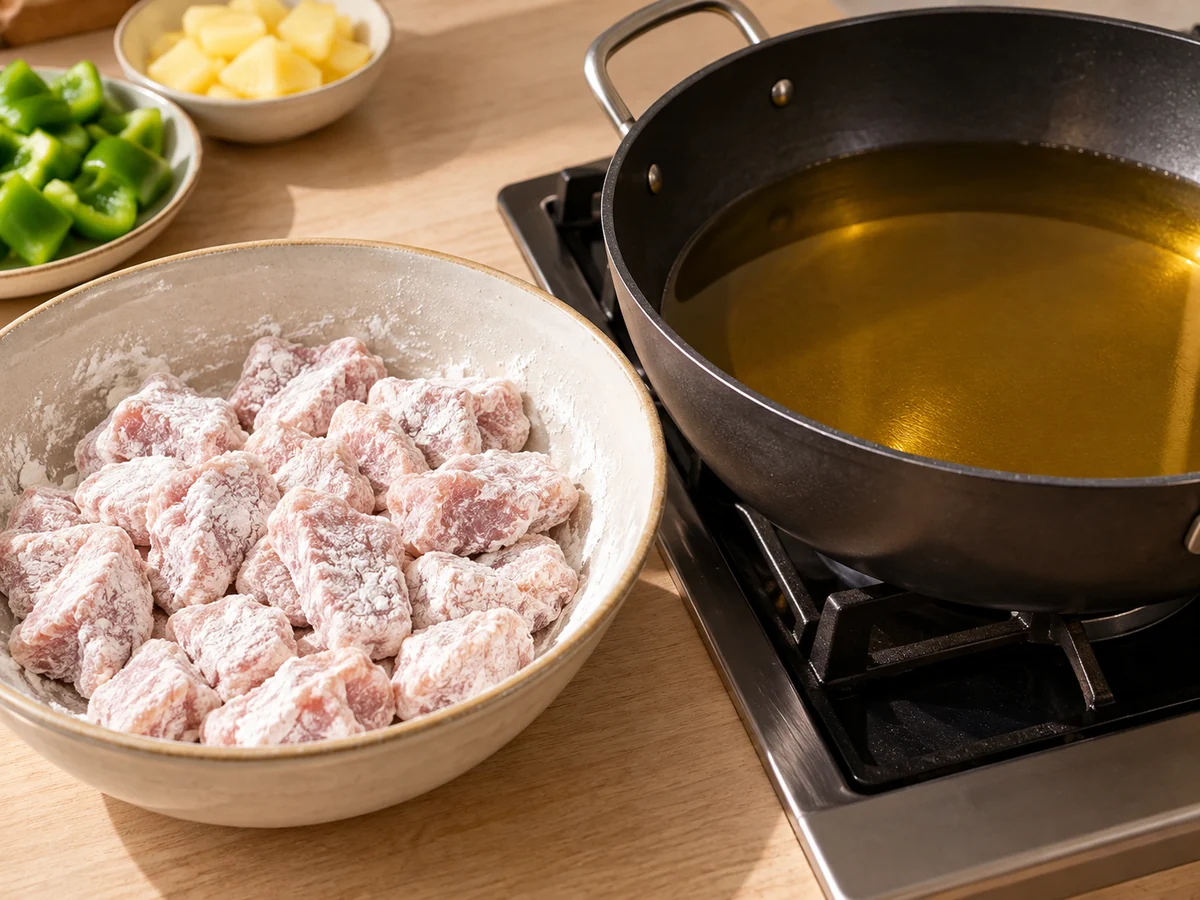
Sweet and sour porkCoat and control oil temperature
Coat pork evenly in coating starch and shake off excess. Heat frying oil in a dry deep pan to about 175°C using an oil thermometer, with generous headroom. Do not heat until smoking or allow water into the oil.
Look forPork pieces have an even starch coating and the oil in the dry pan is controlled.
See the full recipe ↗ 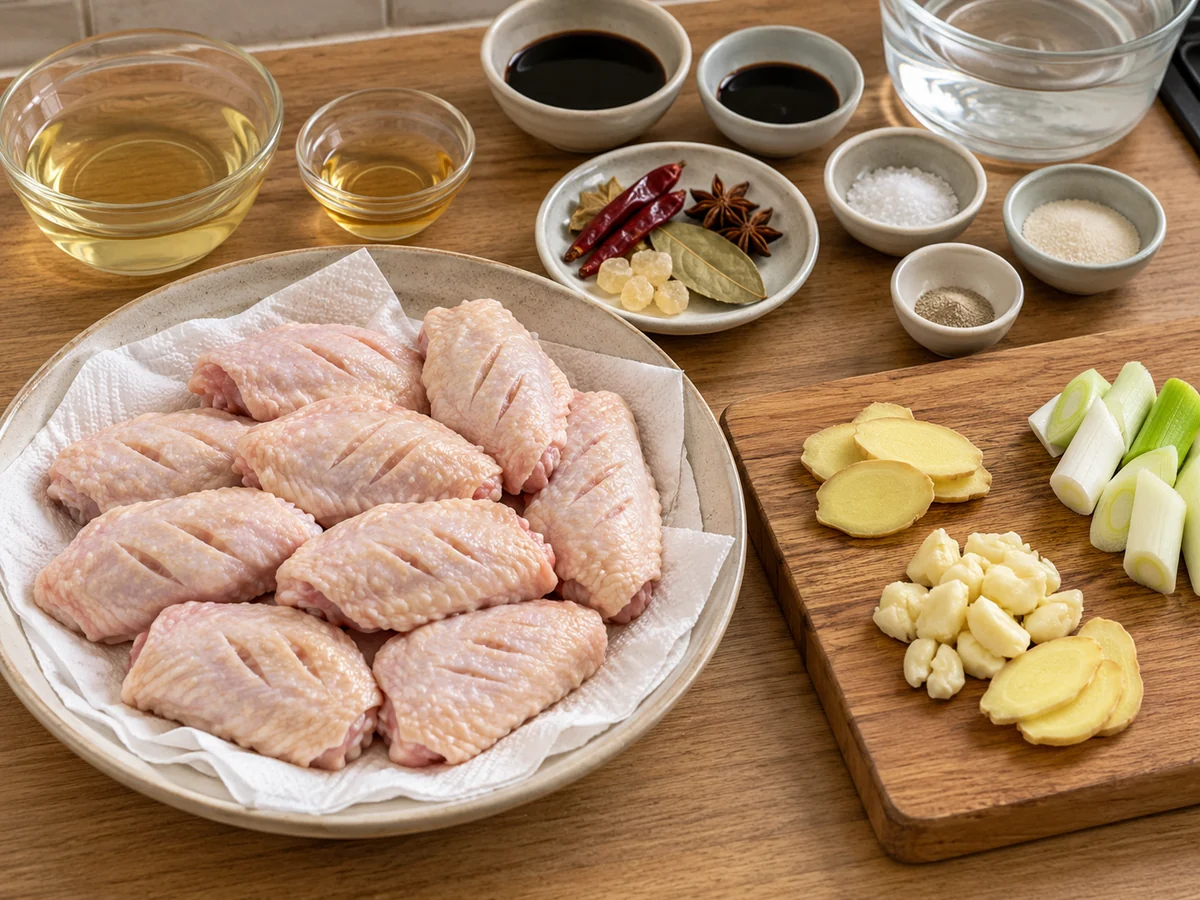
Soy-braised chicken wingsPrepare wings and aromatics
Blot wings dry and make shallow slashes in thick areas without rinsing raw chicken. Slice ginger, crush garlic and cut leek. Divide wine into a slightly larger blanching share and a smaller braising share. Do not use wings with spoilage odors.
Look forWings are dry with shallow slashes and the aromatics and wine are divided.
See the full recipe ↗ 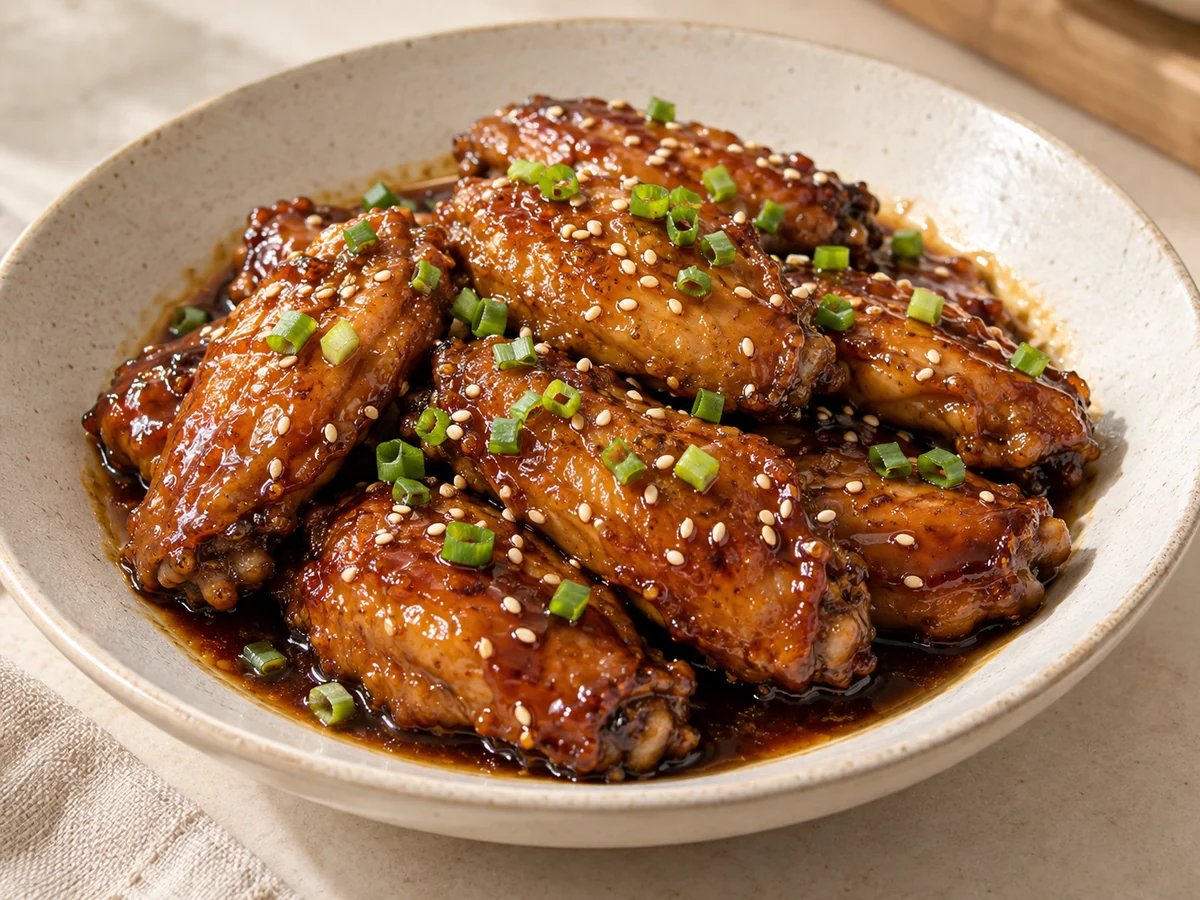
Soy-braised chicken wingsFinish with sesame and scallion
Plate the wings with a little pan sauce, sprinkle toasted sesame and chopped scallion and cool briefly before eating.
Look forGlossy wings are finished with white sesame and green scallion.
See the full recipe ↗ 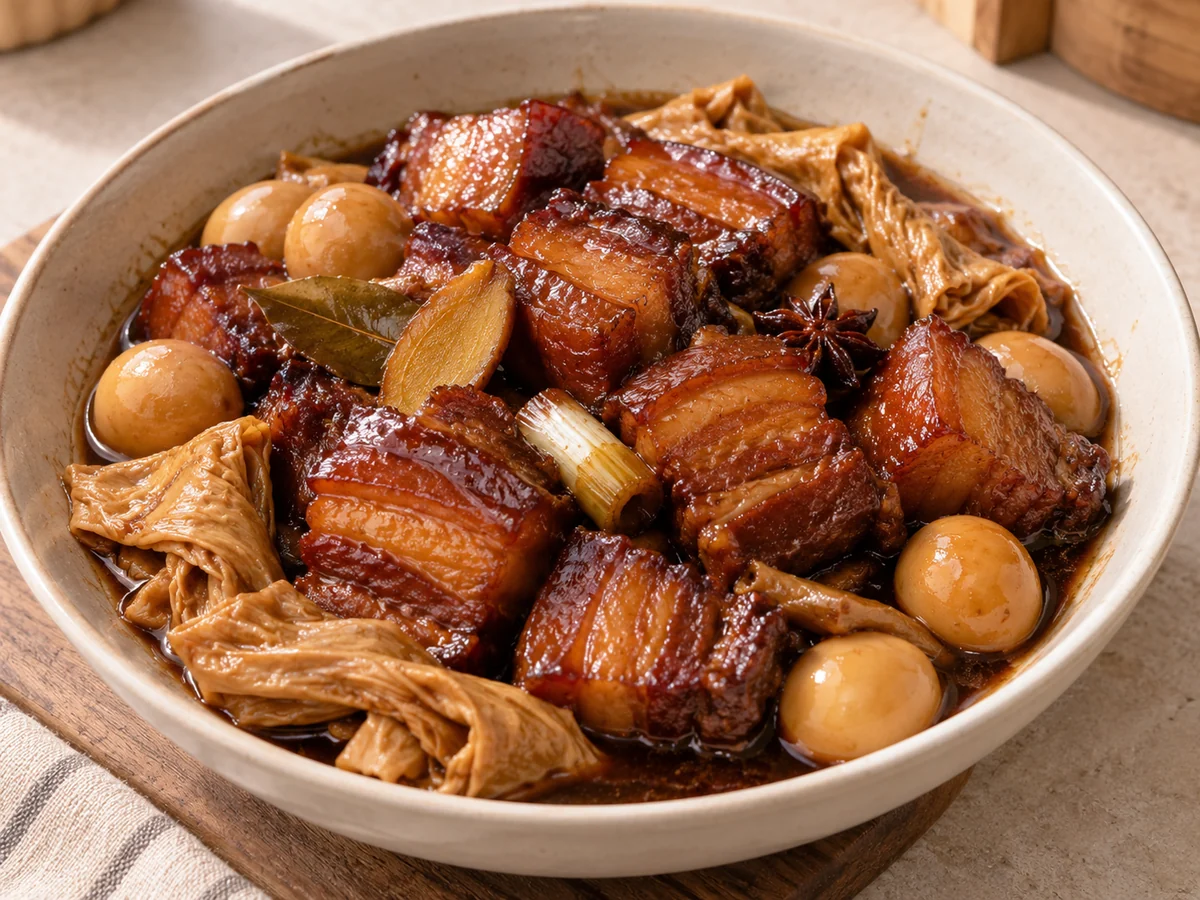
Red-braised pork bellyRest and serve
Remove from heat and set a 3 min safety rest before eating. For this large batch, promptly refrigerate uneaten portions in shallow containers rather than leaving the whole pot on the stove.
Look forIntact braised pork pieces are coated in sauce with optional quail eggs and tofu skin.
See the full recipe ↗ 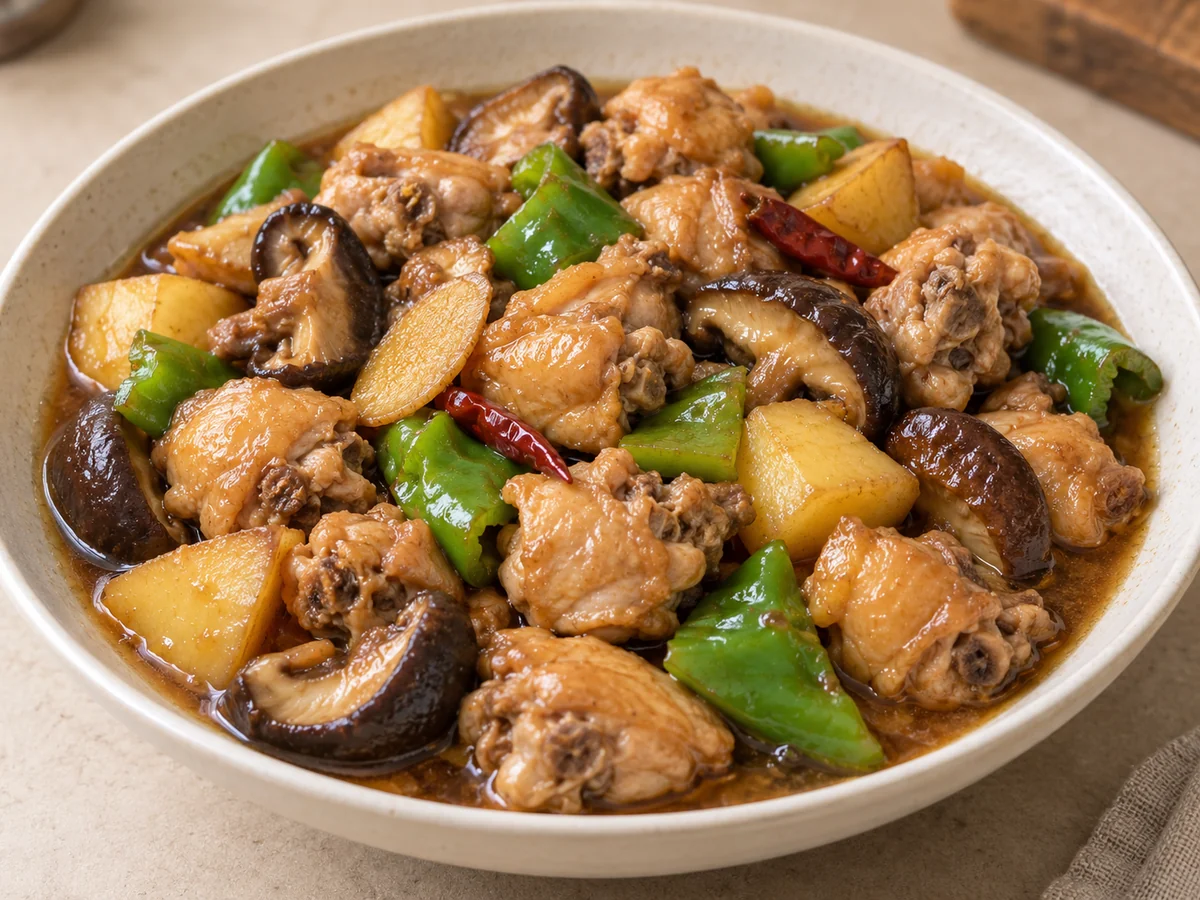
Braised chicken with mushroomsServe with the sauce
Turn off the heat and serve with the sauce in a deep dish. Take care with chicken bones and cool briefly before eating.
Look forChicken, shiitake, green pepper and optional potato are evenly coated in broth.
See the full recipe ↗ 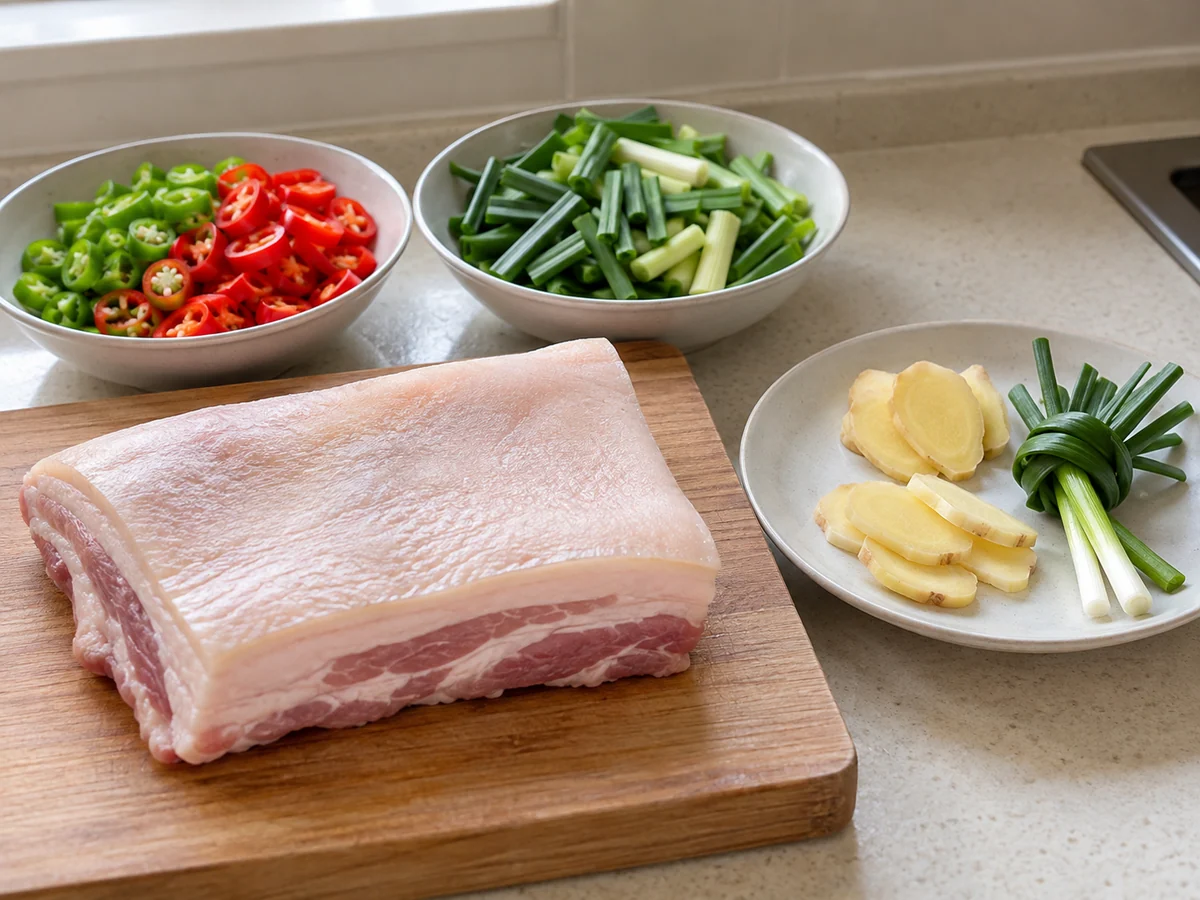
Twice-cooked porkPrepare pork and vegetables
Choose pork with its skin already cleaned; never press meat onto a hot pan by hand. Slice ginger, dividing equally between boiling and frying, and tie the scallions. Slice optional peppers and green garlic, using separate raw-meat and vegetable work areas.
Look forPork skin is prepared and vegetables are separately ready.
See the full recipe ↗ 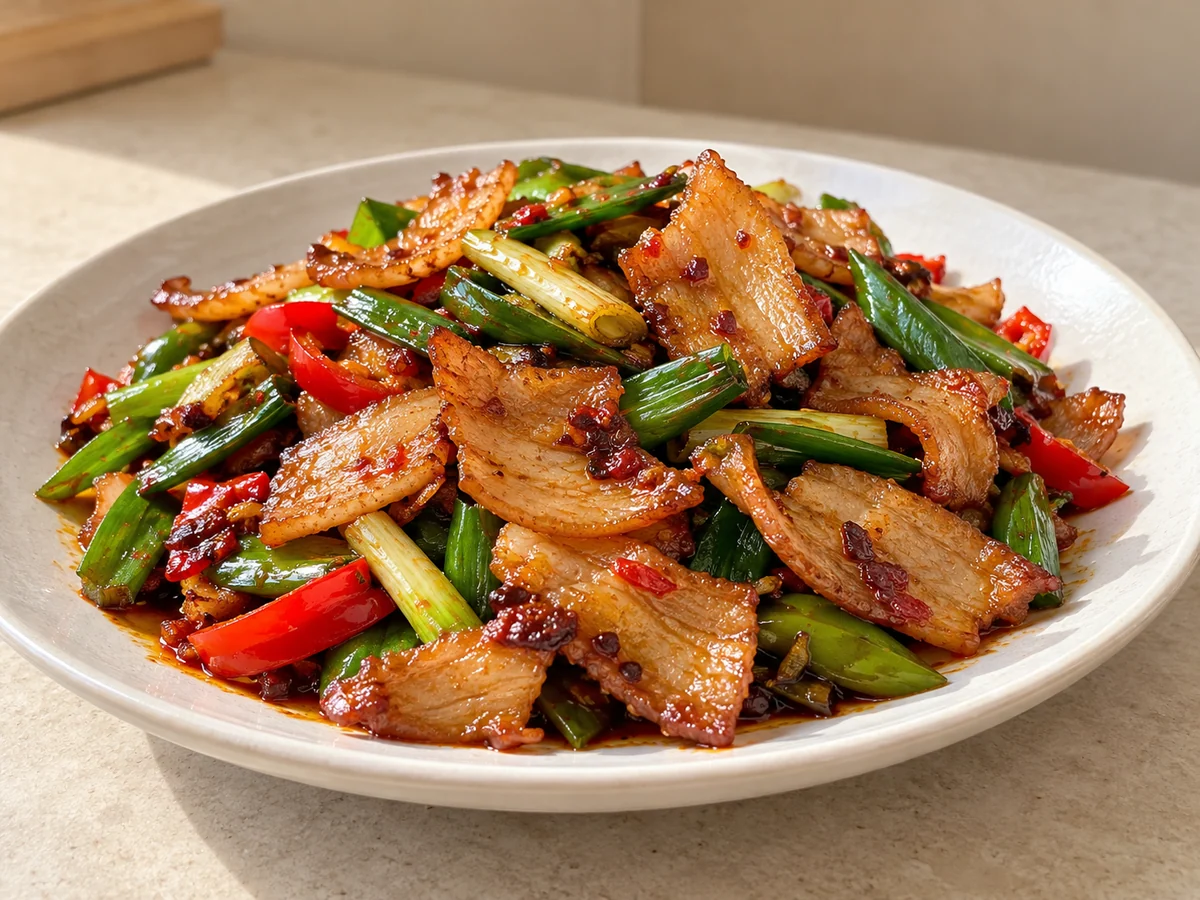
Twice-cooked porkFinish and serve
Plate with clean utensils and serve warm.
Look forSlightly curled pork slices in a red bean-paste glaze with just-soft green garlic and peppers.
See the full recipe ↗ 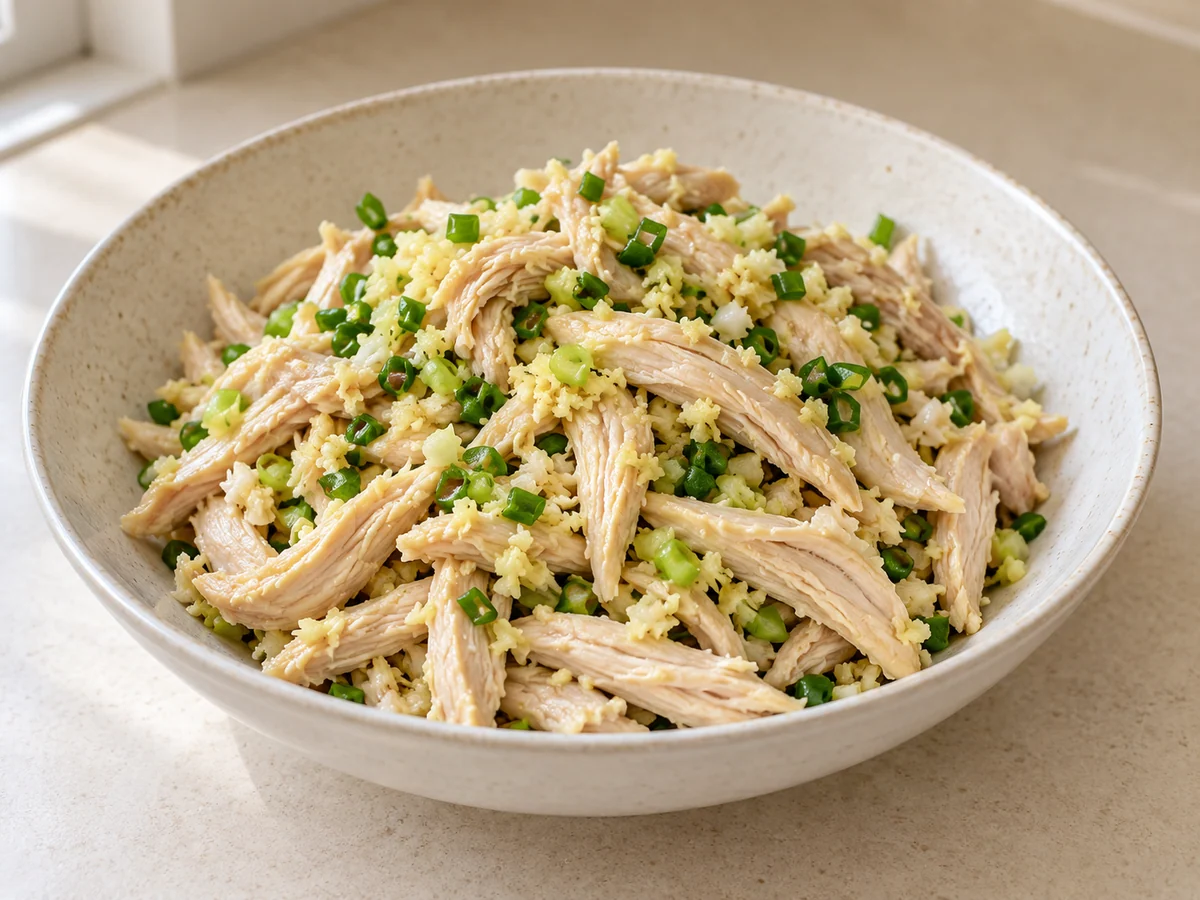
Ginger-scallion chickenFinish and serve
Toss with ginger-scallion oil and serve promptly; refrigerate promptly if waiting.
Look forDeboned cooked chicken in coarse strips, evenly dressed with minced ginger and scallion.
See the full recipe ↗ 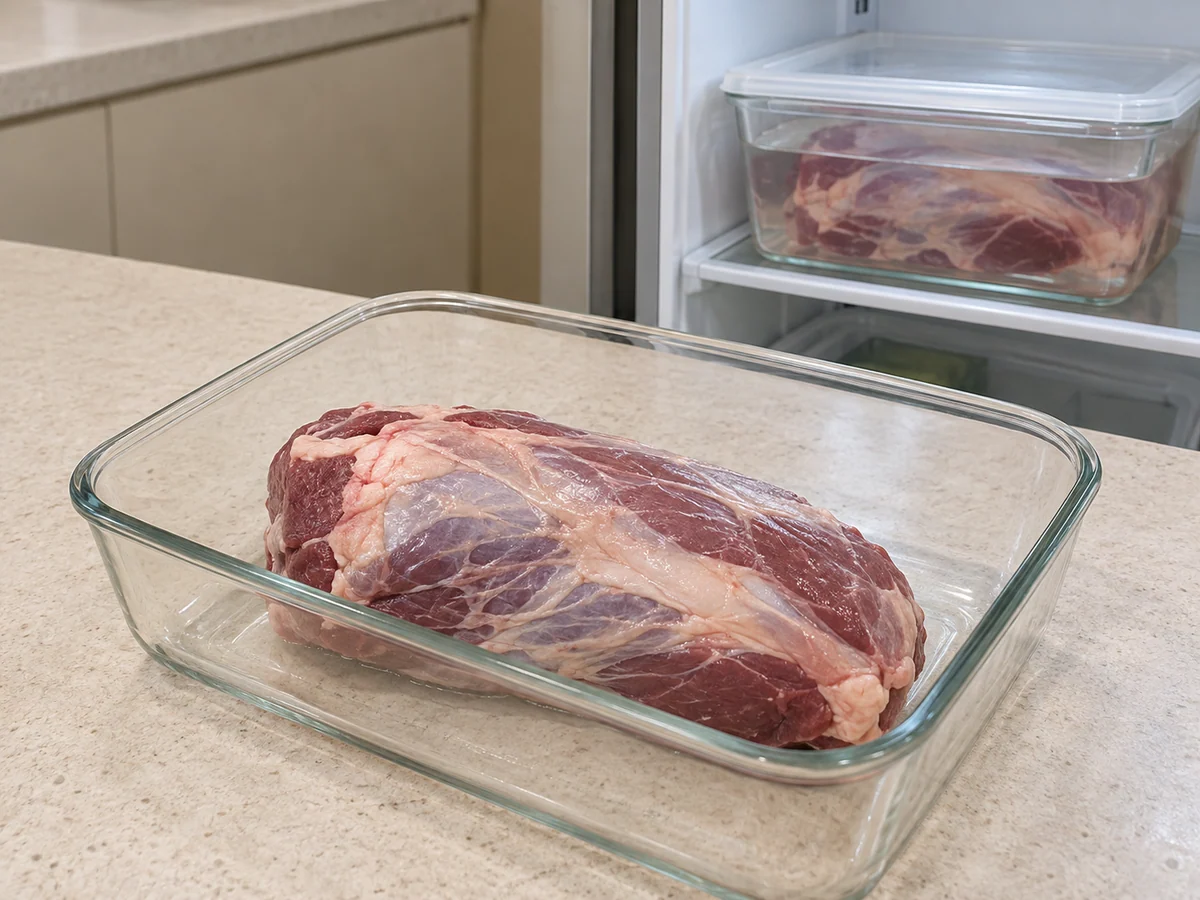
Spiced braised beefSoak under refrigeration
Cover beef with cold water in a clean container and refrigerate, starting a 1 hr reminder. Drain and discard soaking water afterward; do not leave raw meat soaking at room temperature.
Look forBeef is soaked under refrigeration and the water discarded.
See the full recipe ↗ 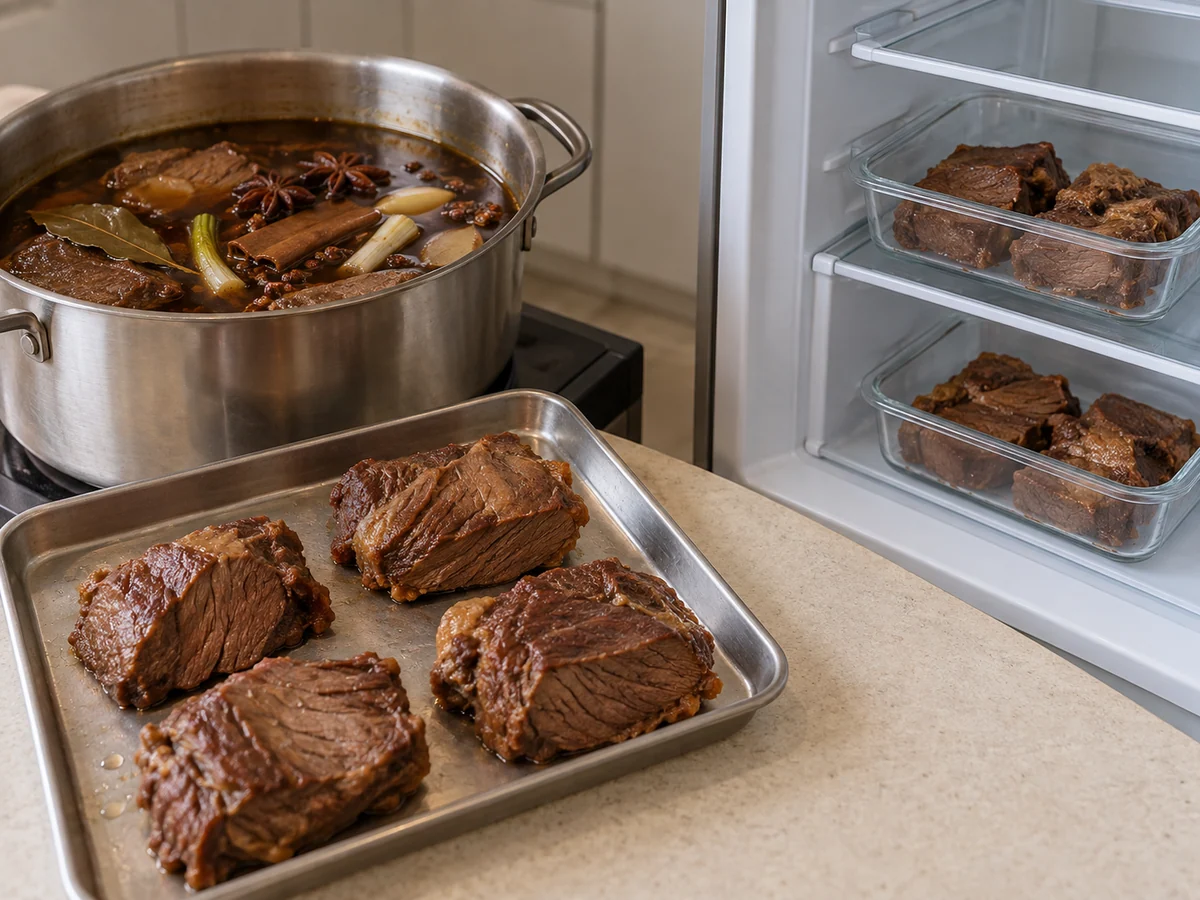
Spiced braised beefRest then chill promptly
Remove temperature-verified beef from the heat and start a 3 min rest timer. After it finishes, divide with clean utensils into small portions in shallow containers and refrigerate promptly. Do not tightly wrap large hot pieces or leave them at room temperature. Keep the refrigerator at 4°C or below and seal once chilled through.
Look forBeef is promptly chilled in small shallow portions until cold through.
See the full recipe ↗ 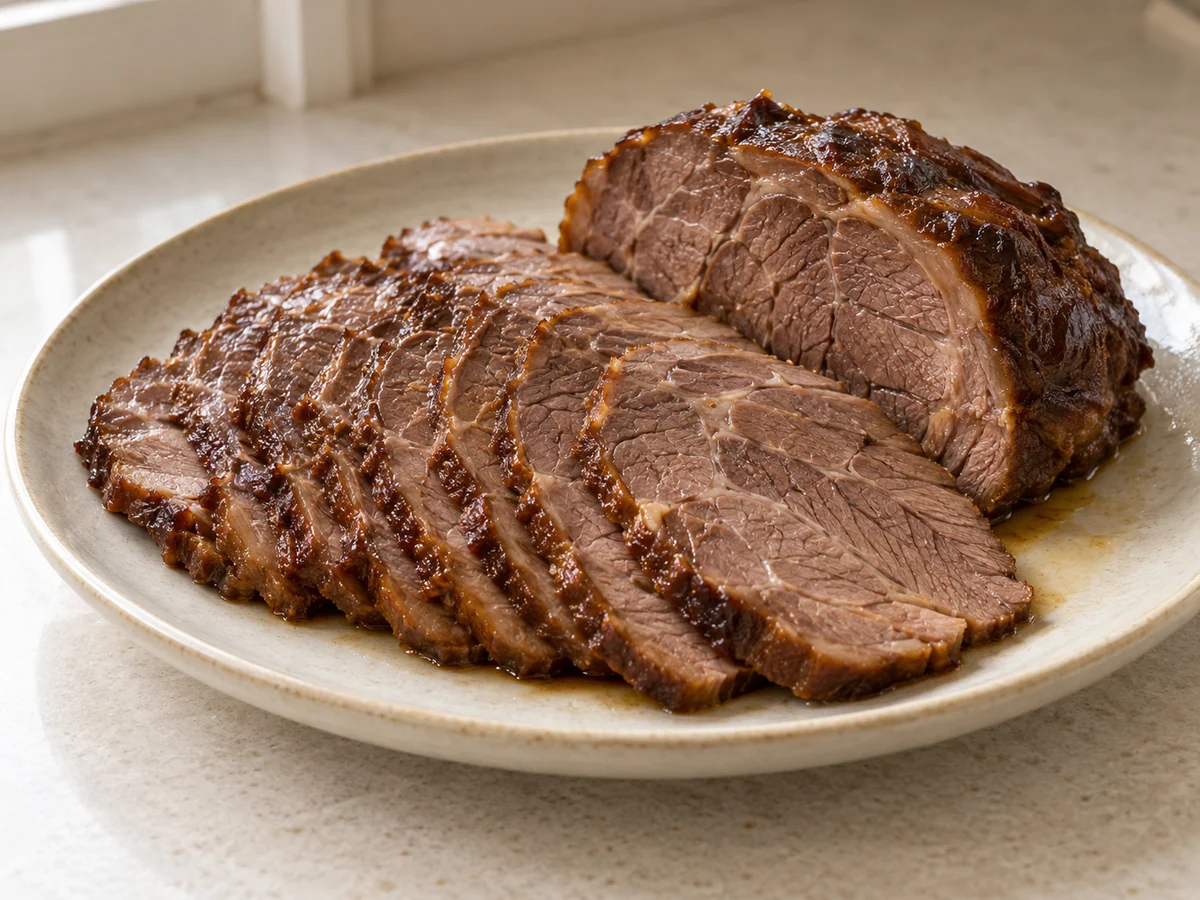
Spiced braised beefFinish and serve
Once chilled through, slice across the grain with a clean knife, serve only what is needed and keep the rest refrigerated.
Look forChilled beef shank sliced across the grain into intact firm slices with a brown braised exterior.
See the full recipe ↗ 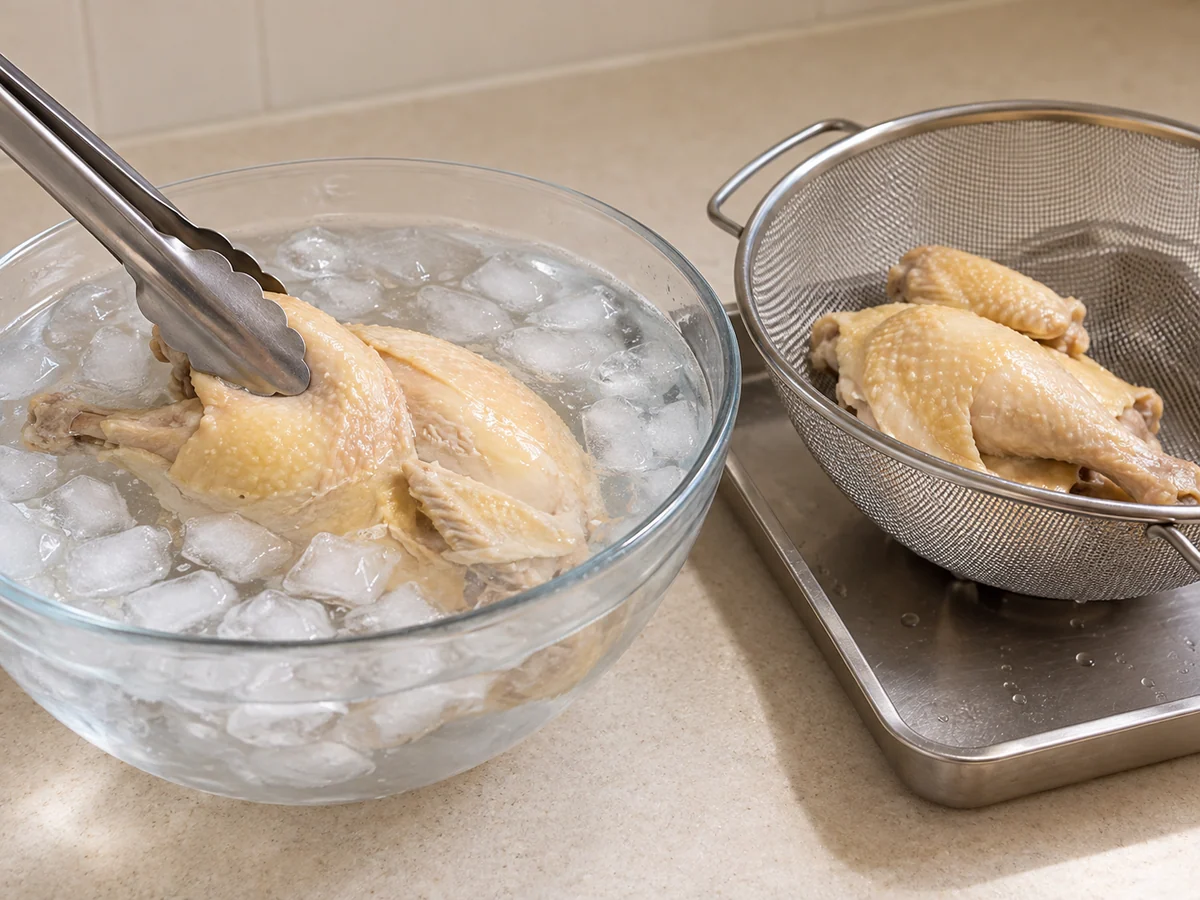
Sichuan mouthwatering chickenCool promptly
Use clean tongs to transfer cooked chicken to potable ice water; cool quickly enough to handle, then remove and drain. If not dressing and eating promptly, divide into small portions in shallow containers and refrigerate until chilled through; avoid prolonged room-temperature soaking.
Look forCooked chicken is drained for prompt serving or promptly refrigerated.
See the full recipe ↗ 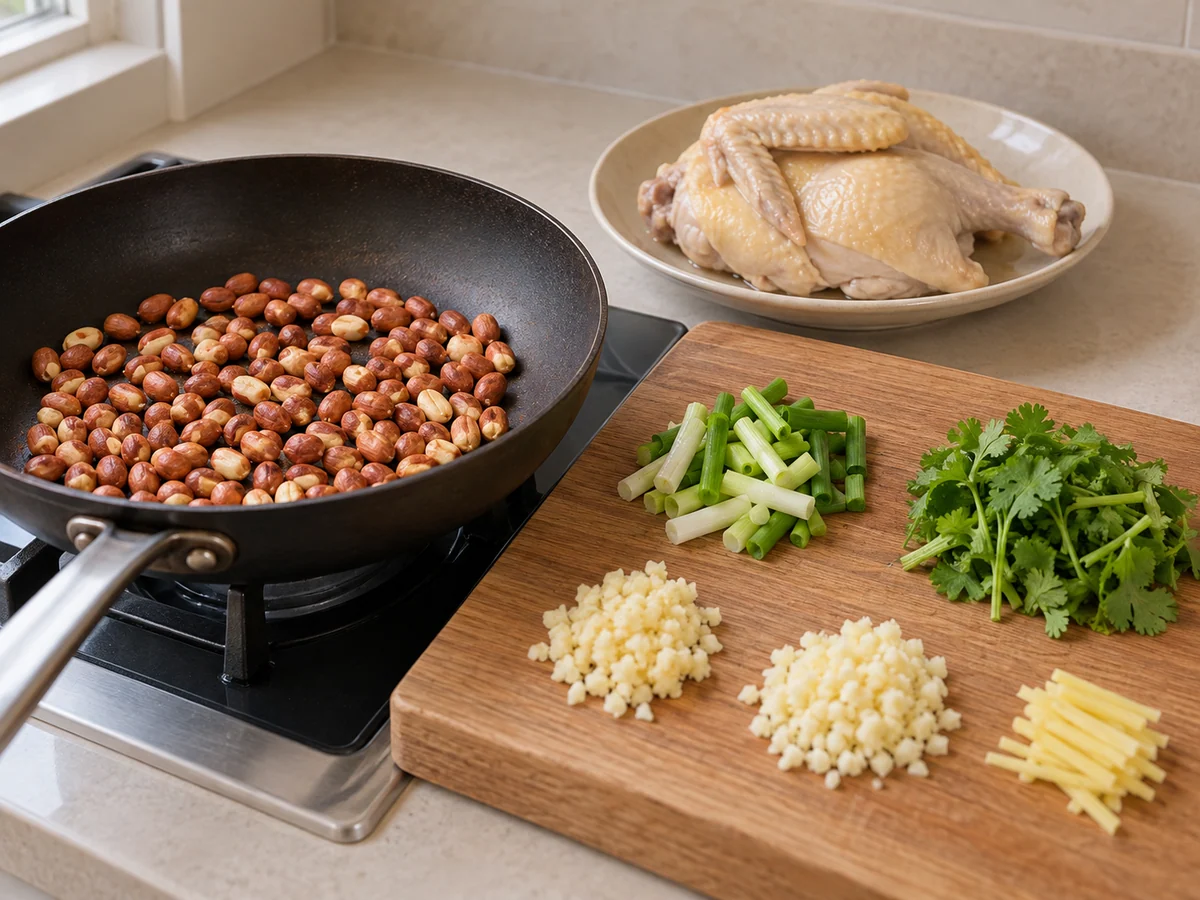
Sichuan mouthwatering chickenToast peanuts and cut aromatics
Toast peanuts in a dry pan over low heat until fragrant, stirring often; cool, skin and crush. Slice remaining scallions; mince and halve the garlic; wash and chop coriander.
Look forPeanuts are fragrant without burning and aromatics ready.
See the full recipe ↗ 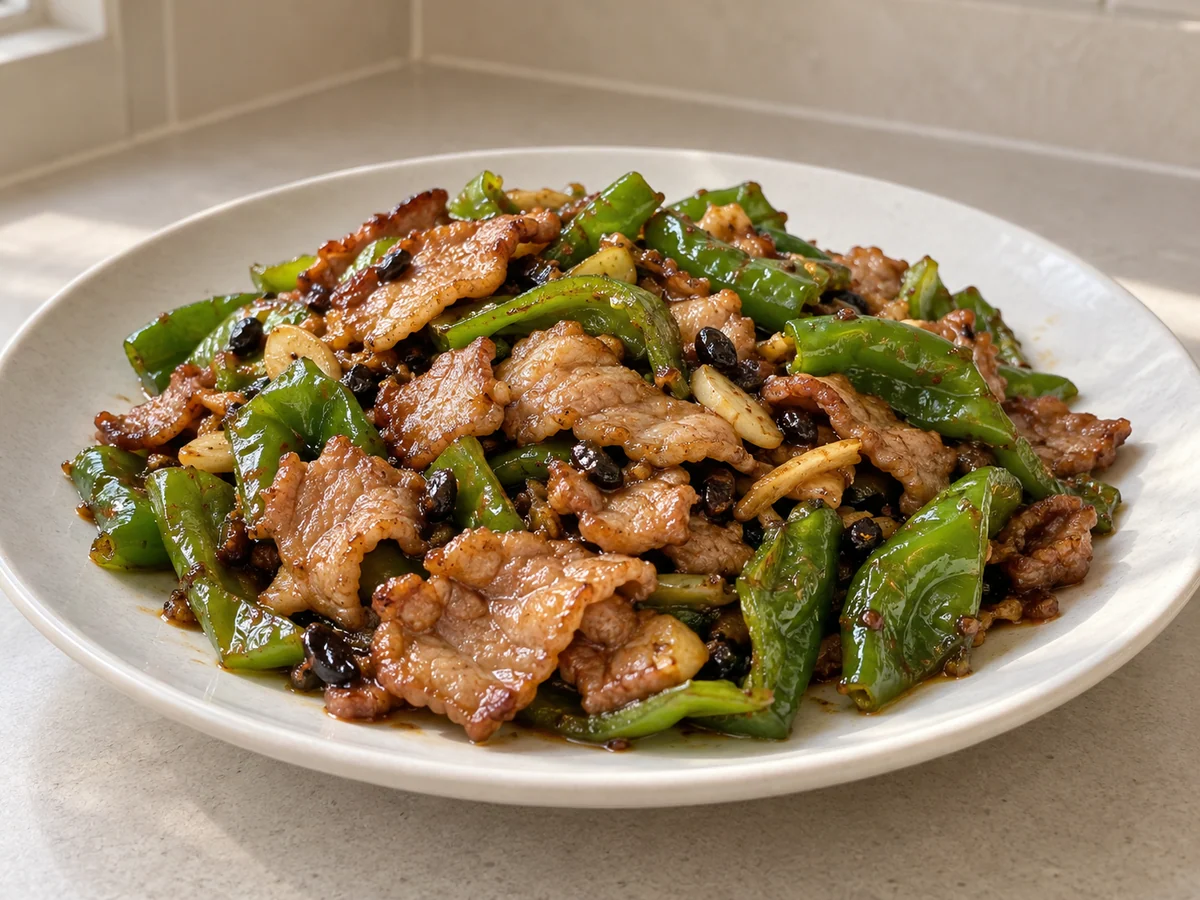
Pepper and pork stir-fryRest off the heat
After confirming the pork temperature, turn off heat, plate and start a 3 min rest reminder. Rest at least 3 minutes before eating.
Look forCoated thin pork slices with slightly softened, wrinkled peppers and no excess water.
See the full recipe ↗ 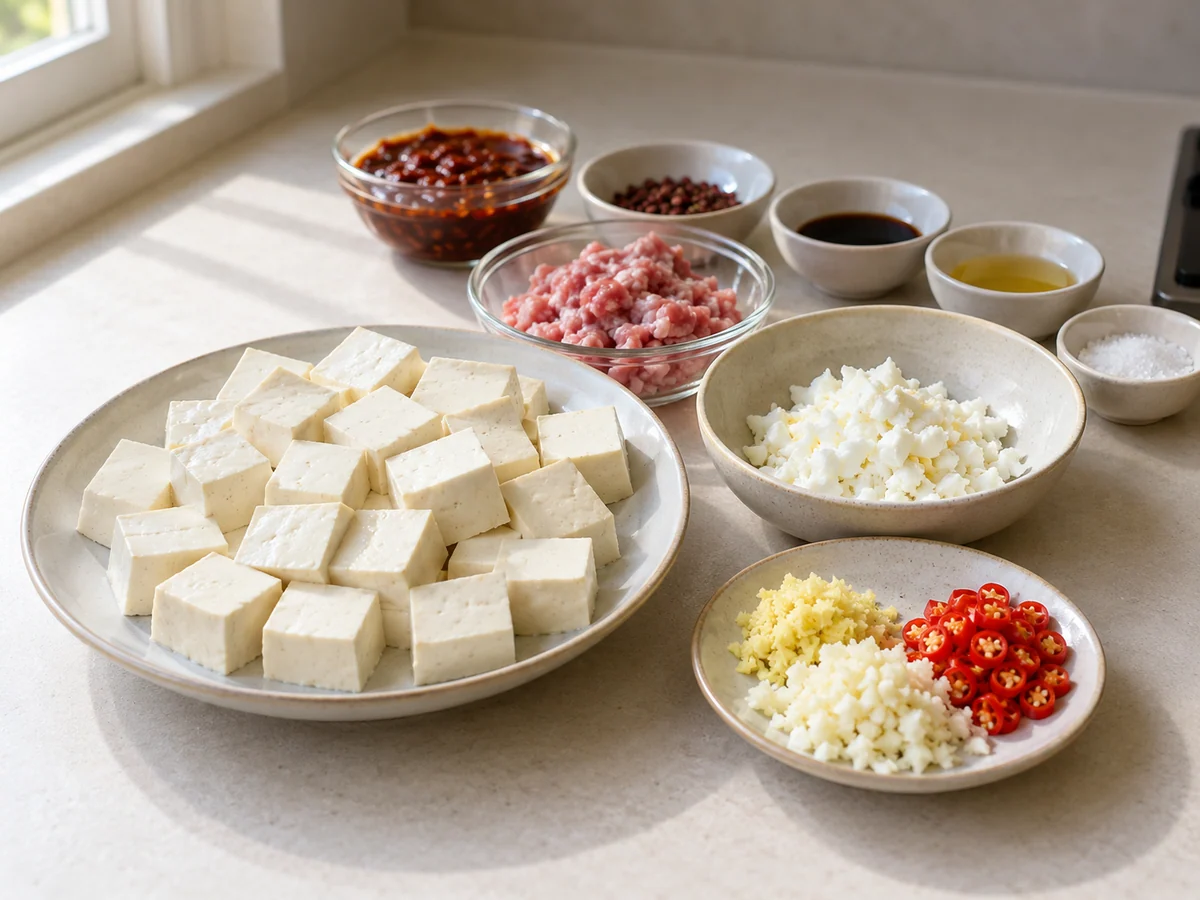
Mapo tofuPrepare tofu and aromatics
Check tofu and cooked salted-egg labels and storage directions. Move tofu to a clean plate and cut into roughly 2.5–3 cm cubes. Peel the cooked egg, keeping and crushing only its white. Mince ginger and garlic and slice optional chilies.
Look forTofu cubes are intact and cooked egg white and aromatics ready.
See the full recipe ↗ 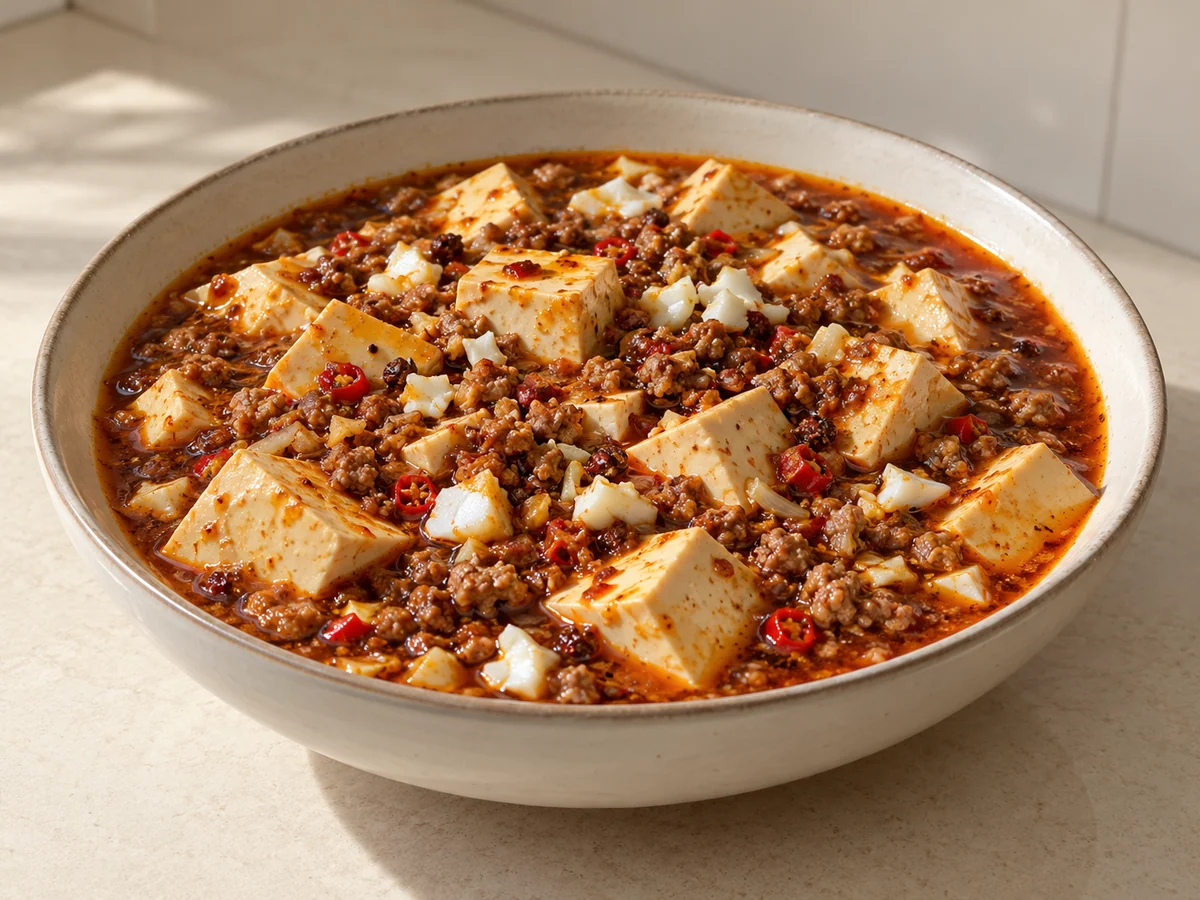
Mapo tofuFinish and serve
Gently plate tofu with its minced-pork sauce; this is the salted-egg-white version rather than the traditional bean-paste preparation.
Look forIntact tofu cubes with minced pork and salted egg-white bits in flowing reddish-brown sauce.
See the full recipe ↗ 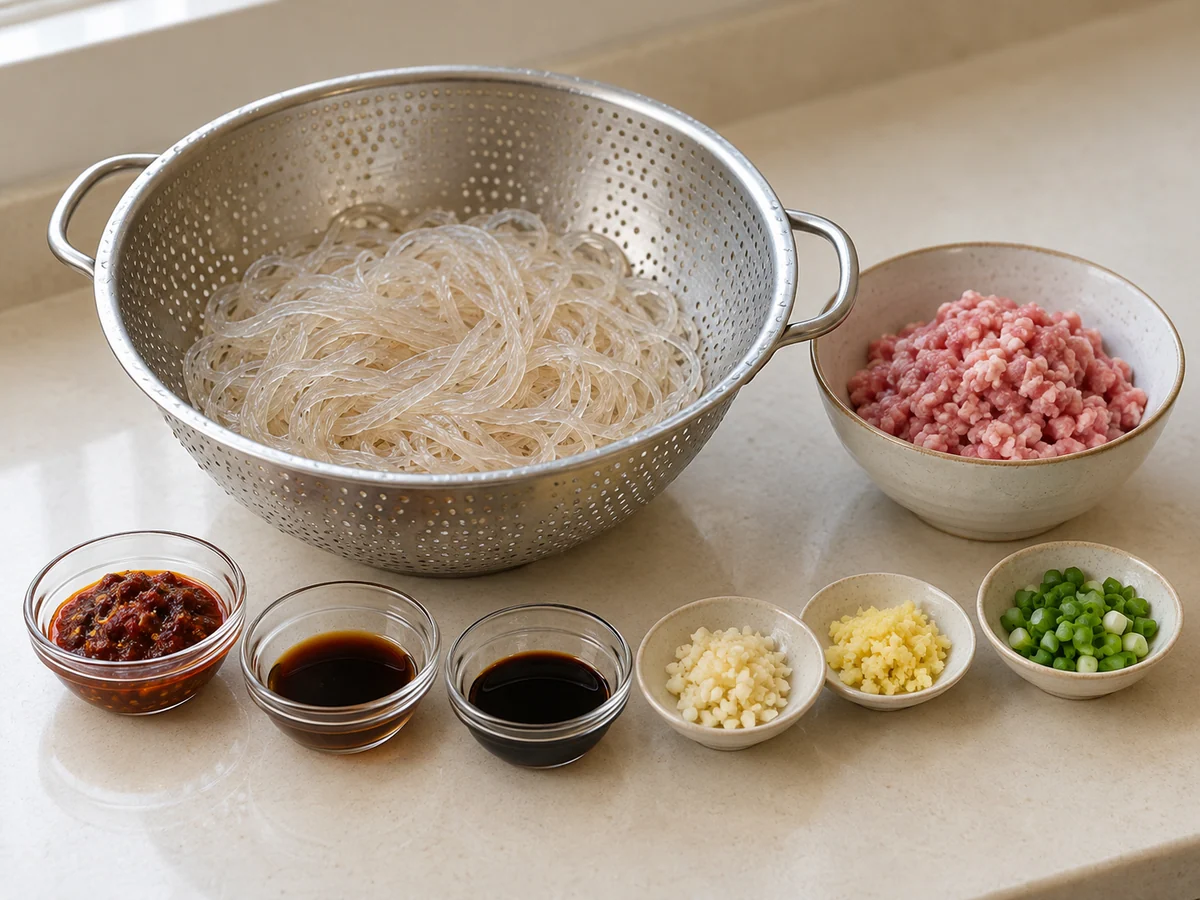
Minced pork and glass noodlesSoften noodles and prepare aromatics
Soak vermicelli in clean water with a 20 min check, following package directions and pliability rather than time alone. Drain when softened. Mince ginger, garlic and optional scallion.
Look forNoodles are pliable and drained; aromatics prepared.
See the full recipe ↗ 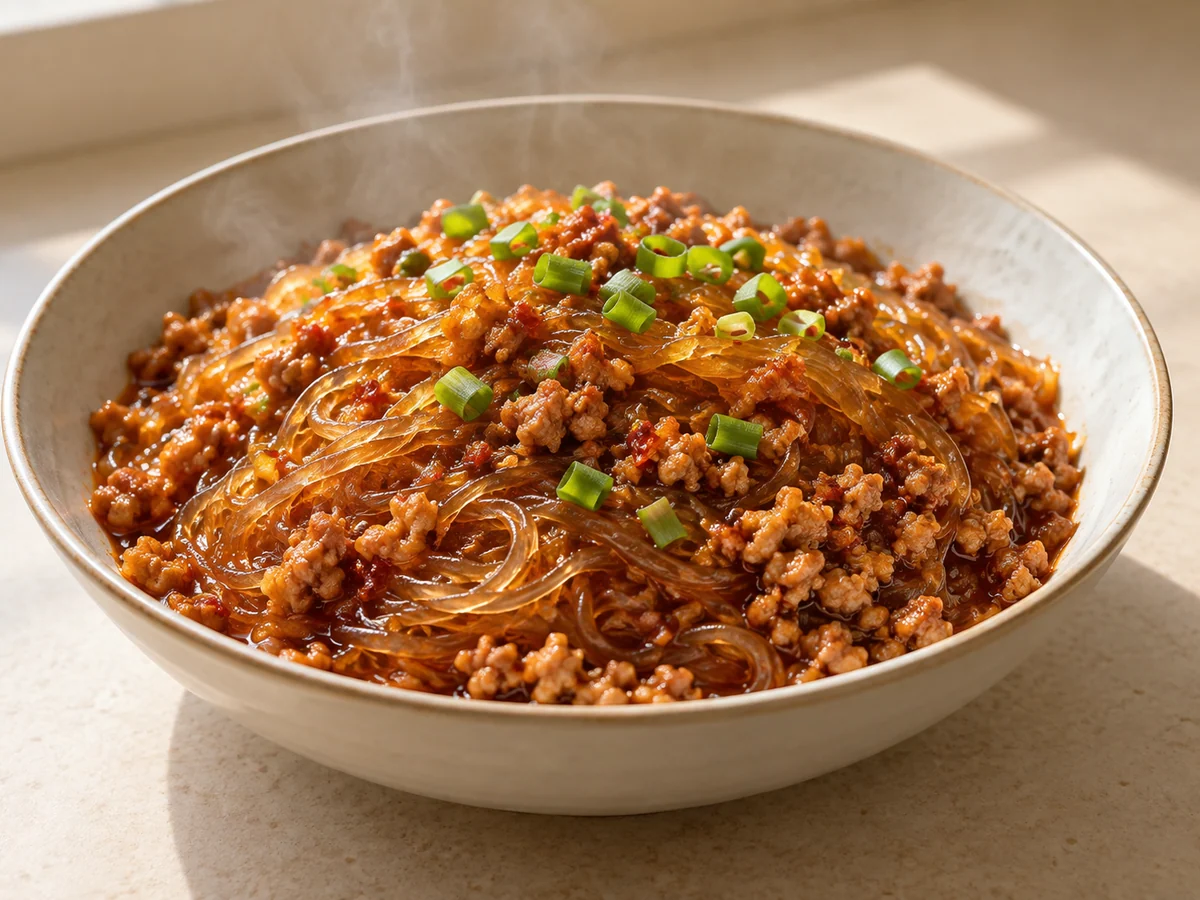
Minced pork and glass noodlesFinish and serve
Add a little optional scallion, toss gently and plate.
Look forMoist vermicelli coated with fine pork crumbles and reddish-brown sauce, with optional scallion.
See the full recipe ↗ 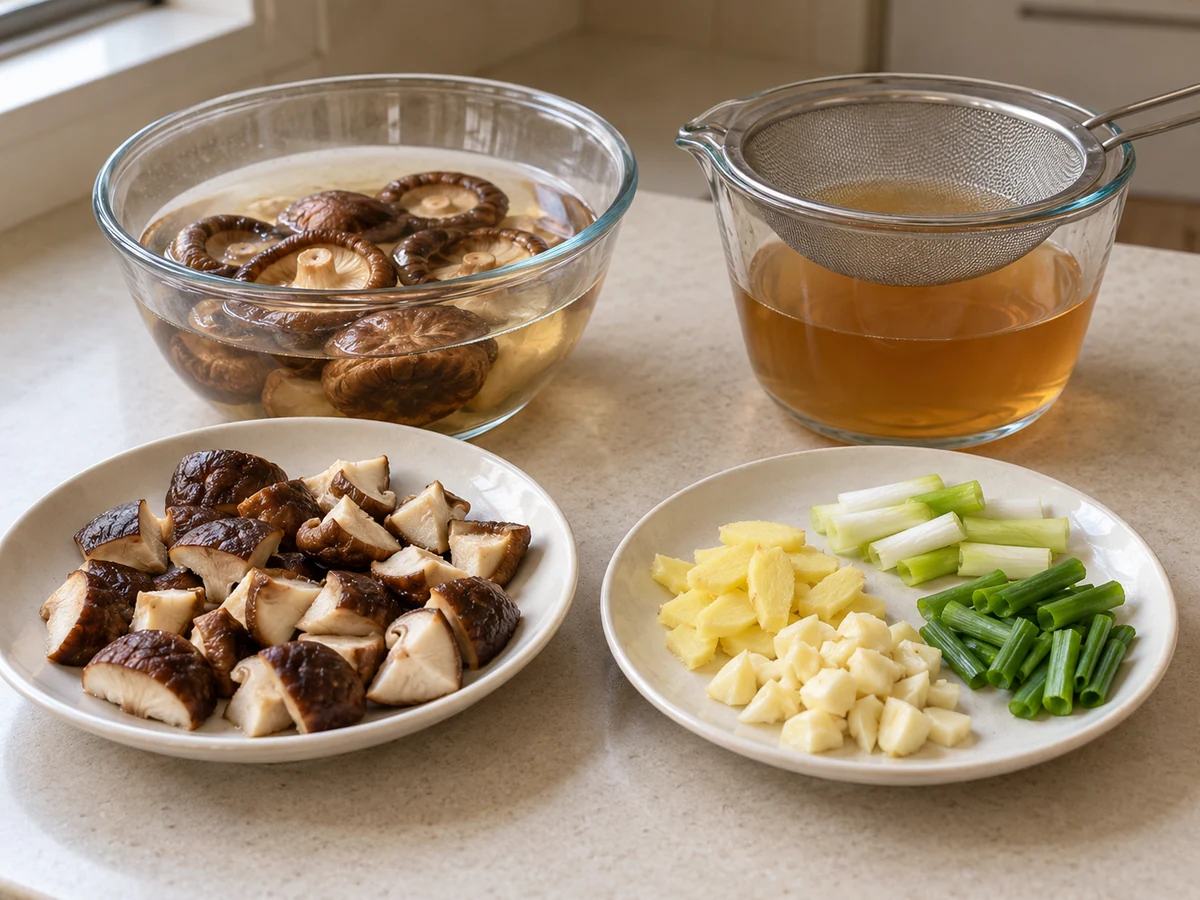
Chicken with shiitake mushroomsSoak mushrooms and prepare
Rinse dried shiitake, then soak in the listed water until pliable, adding a little more if needed to immerse. Keep total room-temperature soaking within 2 hours or refrigerate for longer; discard slimy or off-smelling mushrooms. Quarter them and strain the soaking water through a fine sieve. Chop ginger and garlic and separate scallion whites from greens.
Look forMushrooms are pliable without abnormal signs, soaking liquid strained and aromatics ready.
See the full recipe ↗ 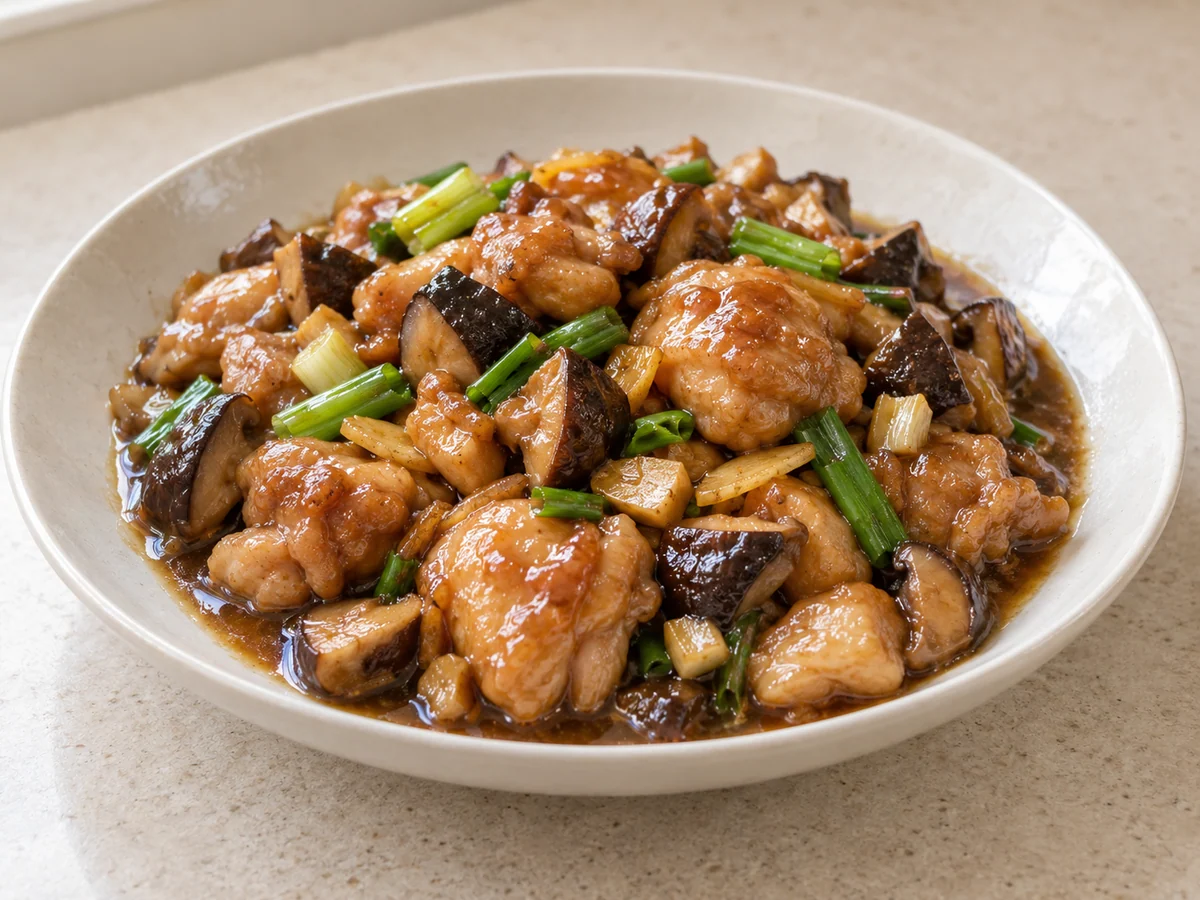
Chicken with shiitake mushroomsFinish and serve
Plate with clean utensils and serve warm.
Look forChicken-leg pieces and shiitake in a glossy brown coating with scallion greens and a little thick sauce.
See the full recipe ↗ 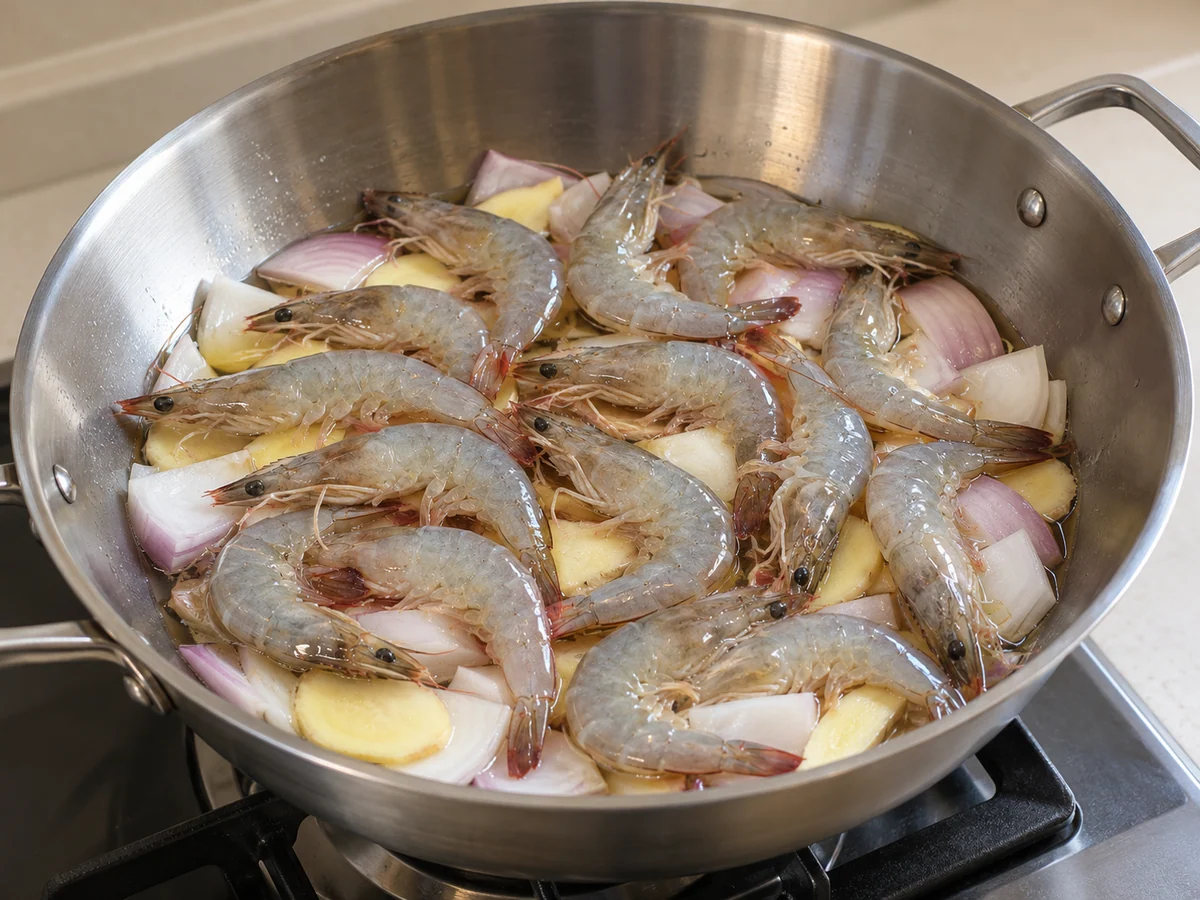
Covered-pan shrimp with ginger and onionPrepare the vegetable bed and shrimp
Cut onion and slice ginger into a pan bed. Clean and drain shrimp, arrange over it and add wine; avoid deep piles and divide into pans for larger quantities. Separately chop scallion and garlic.
Look forShrimp is spread over onion and ginger with wine in the pan.
See the full recipe ↗ 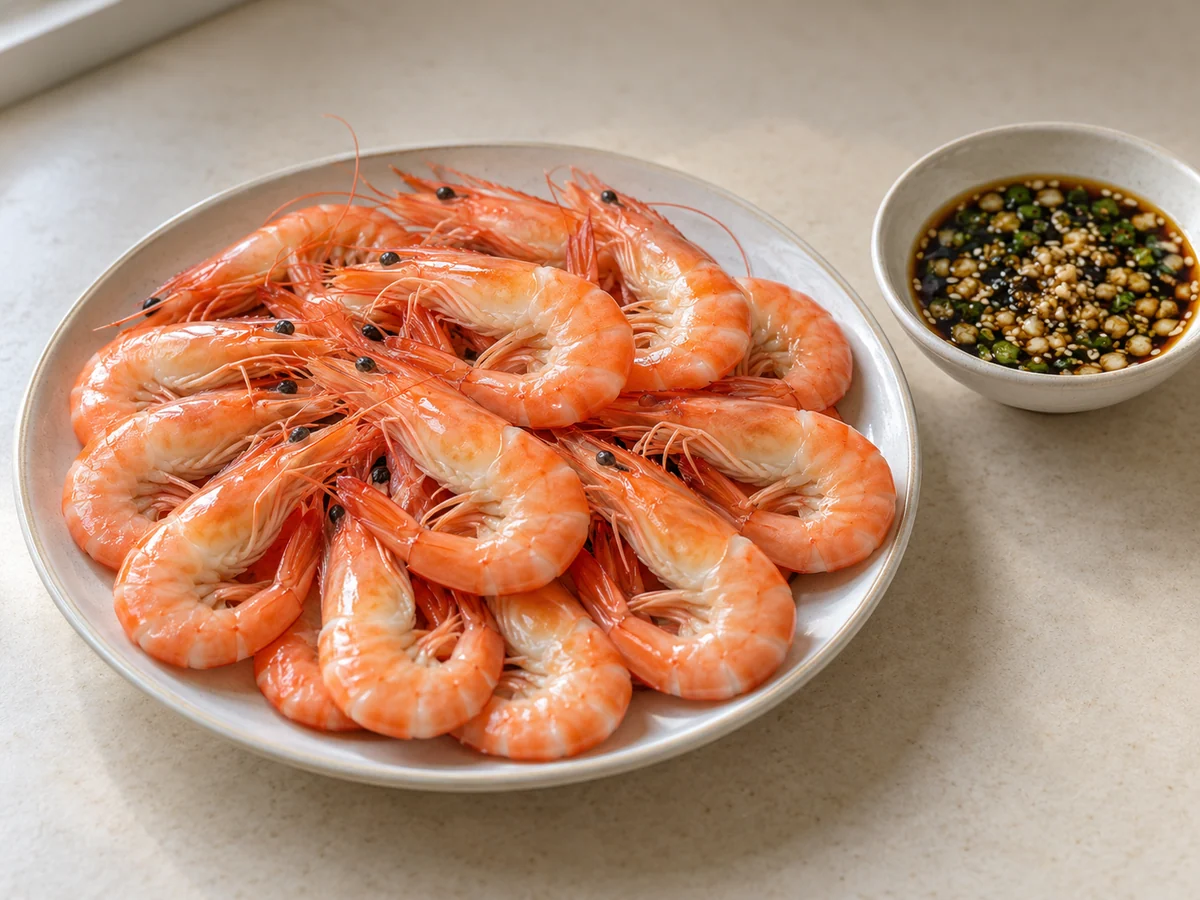
Covered-pan shrimp with ginger and onionFinish and serve
After checking doneness, transfer shrimp to a clean plate with dip separately; watch for sharp shells.
Look forCooked shrimp with pearly opaque flesh and red shells, with scallion-garlic dip in a separate dish.
See the full recipe ↗ 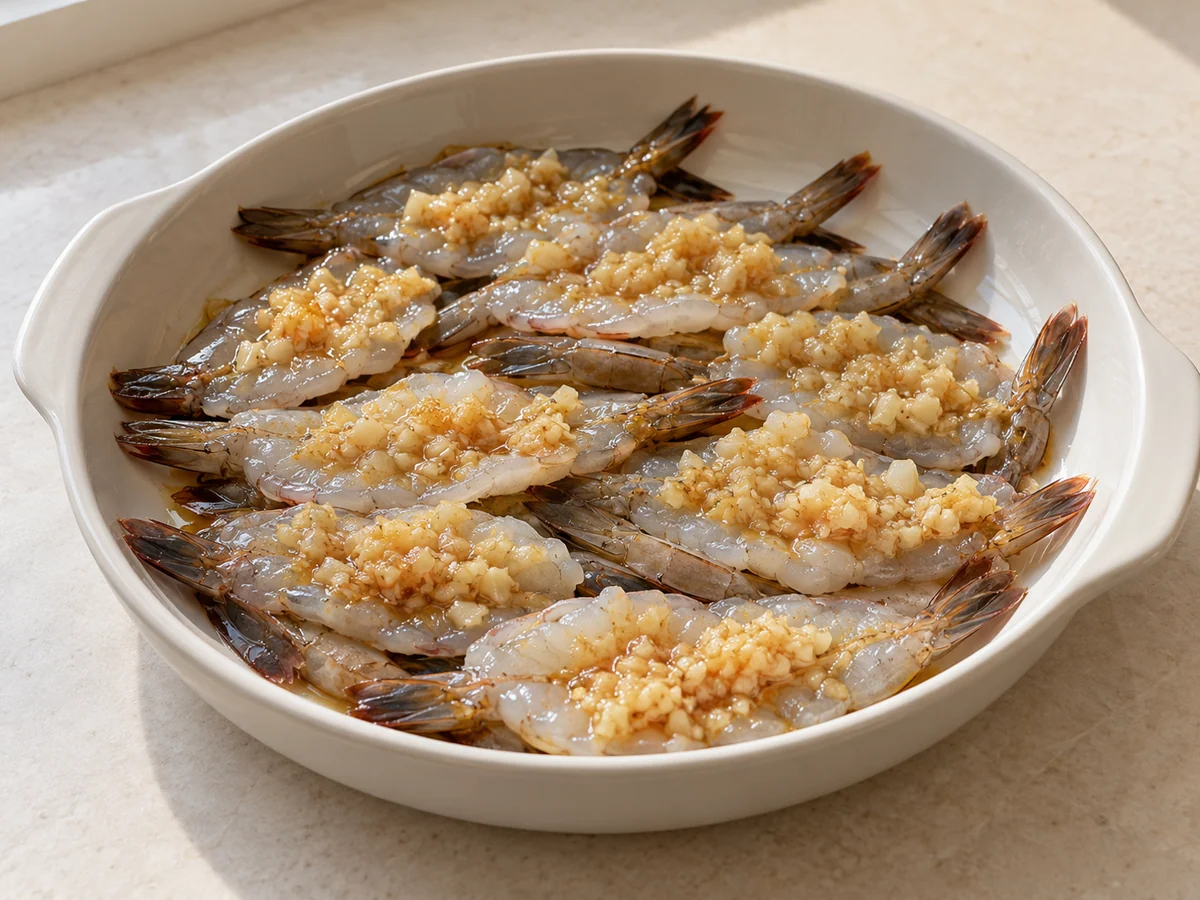
Garlic shrimpArrange shrimp and sauce
Check garlic-sauce ingredients and storage directions. Drain butterflied, deveined raw shrimp, open flat on a heatproof plate and distribute sauce over the flesh. Do not substitute cooked shrimp and assume the same timing.
Look forShrimp lies flat with garlic sauce evenly over the flesh.
See the full recipe ↗ 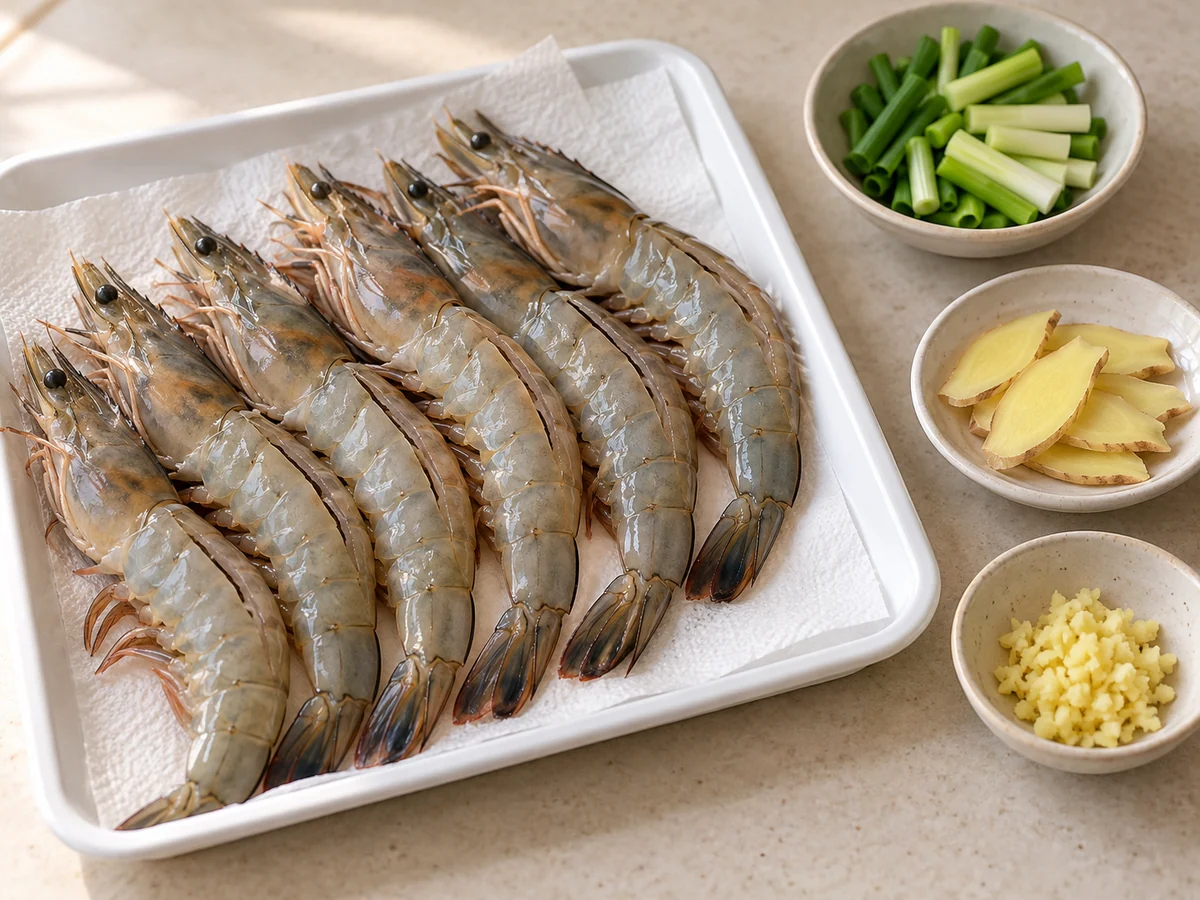
Oil-braised prawnsPrepare prawns and aromatics
Use prawns with sharp points trimmed, backs opened and veins removed. Drain and pat dry. Slice scallions; divide ginger in half, slicing one half and mincing the other.
Look forPrawns are surface-dry and aromatics ready.
See the full recipe ↗ 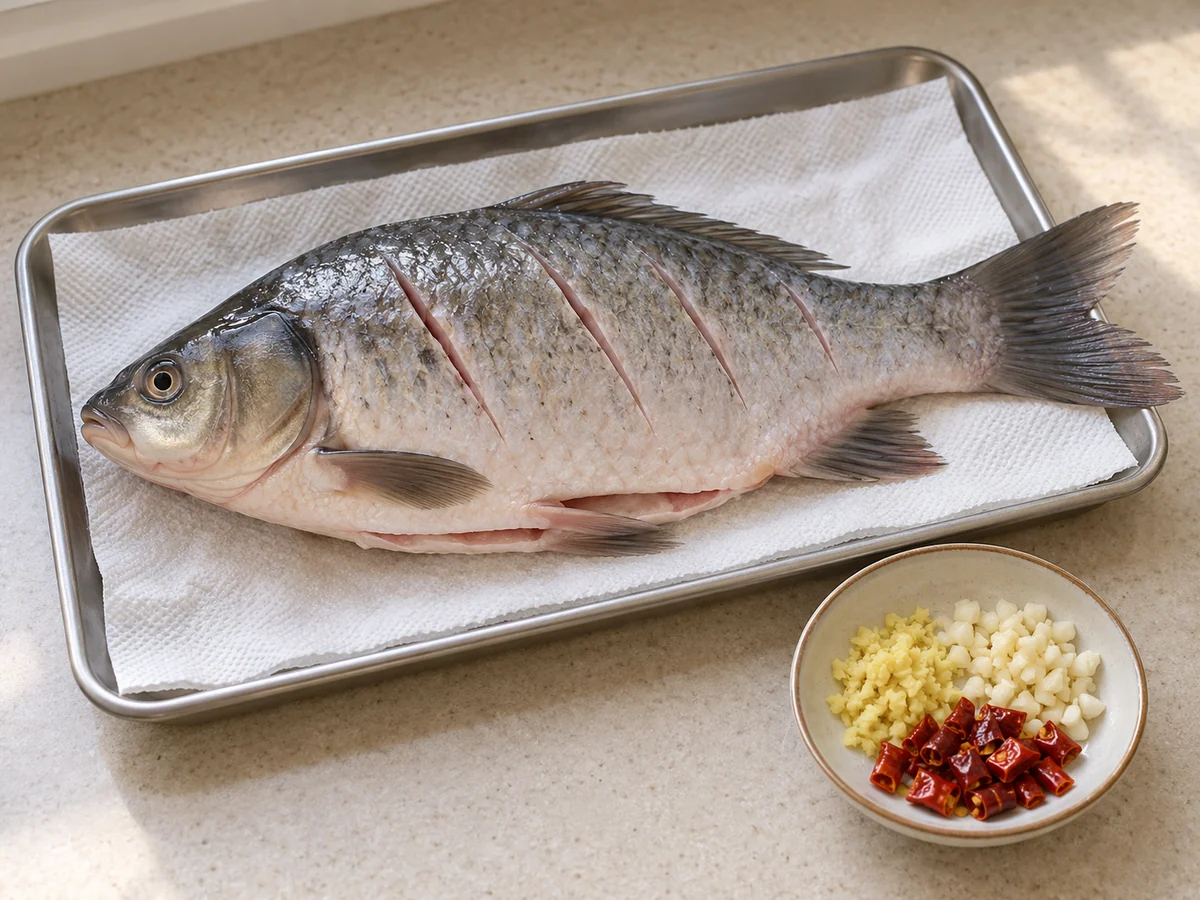
Red-braised fishPrepare and dry fish
Use cleaned fish, make shallow cuts on both sides and pat its surface dry. Chop ginger, garlic and dried chili; separately wash and chop optional scallion and coriander away from raw-fish utensils.
Look forFish is surface-dry and aromatics separate from serving garnishes.
See the full recipe ↗ 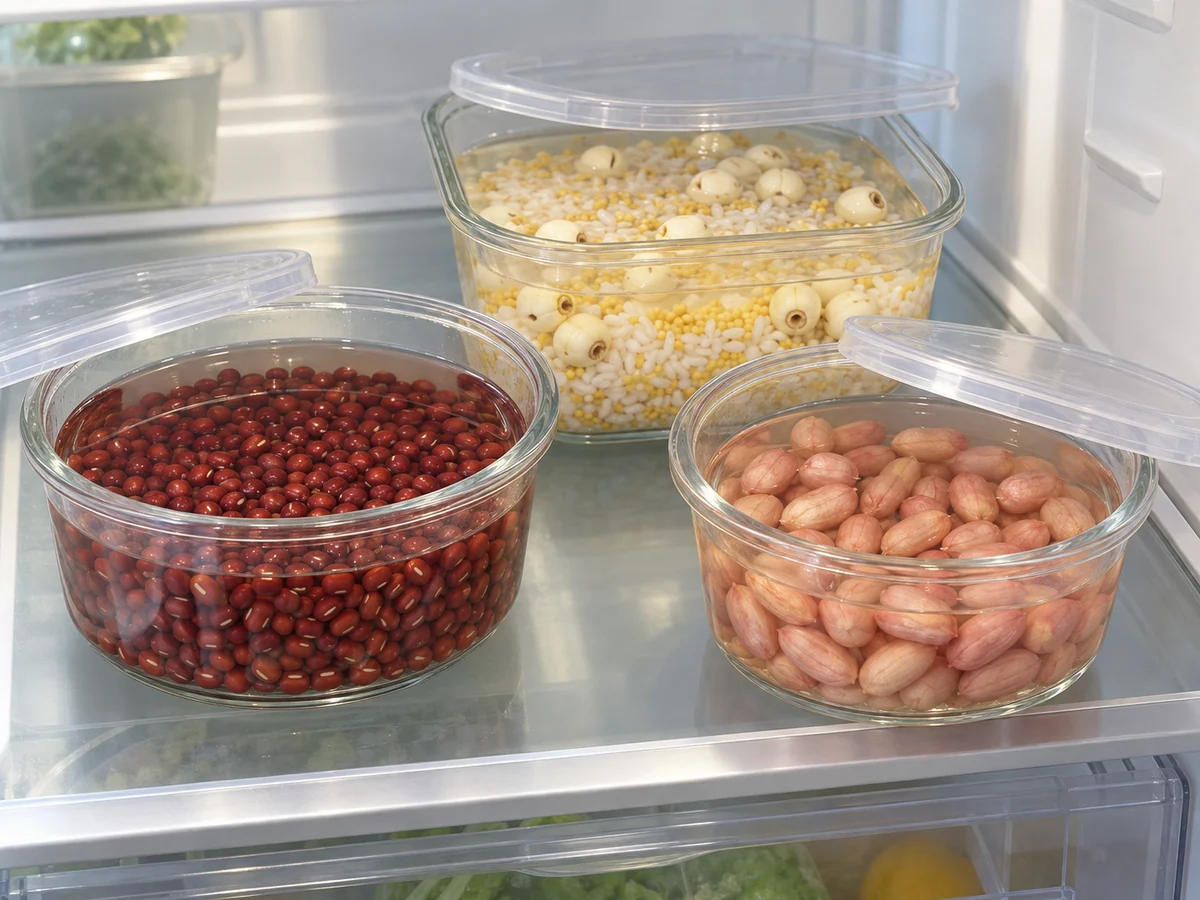
Laba mixed-grain congeeSoak ahead under refrigeration
Rinse adzuki beans and peanuts, cover separately with water and refrigerate with a 8 hr check. About 3 hours before planned cooking, separately rinse and refrigerate-soak the three grains and lotus seeds. Do not substitute red kidney beans into this method.
Look forBeans, peanuts, grains and lotus are appropriately soaked under refrigeration.
See the full recipe ↗ 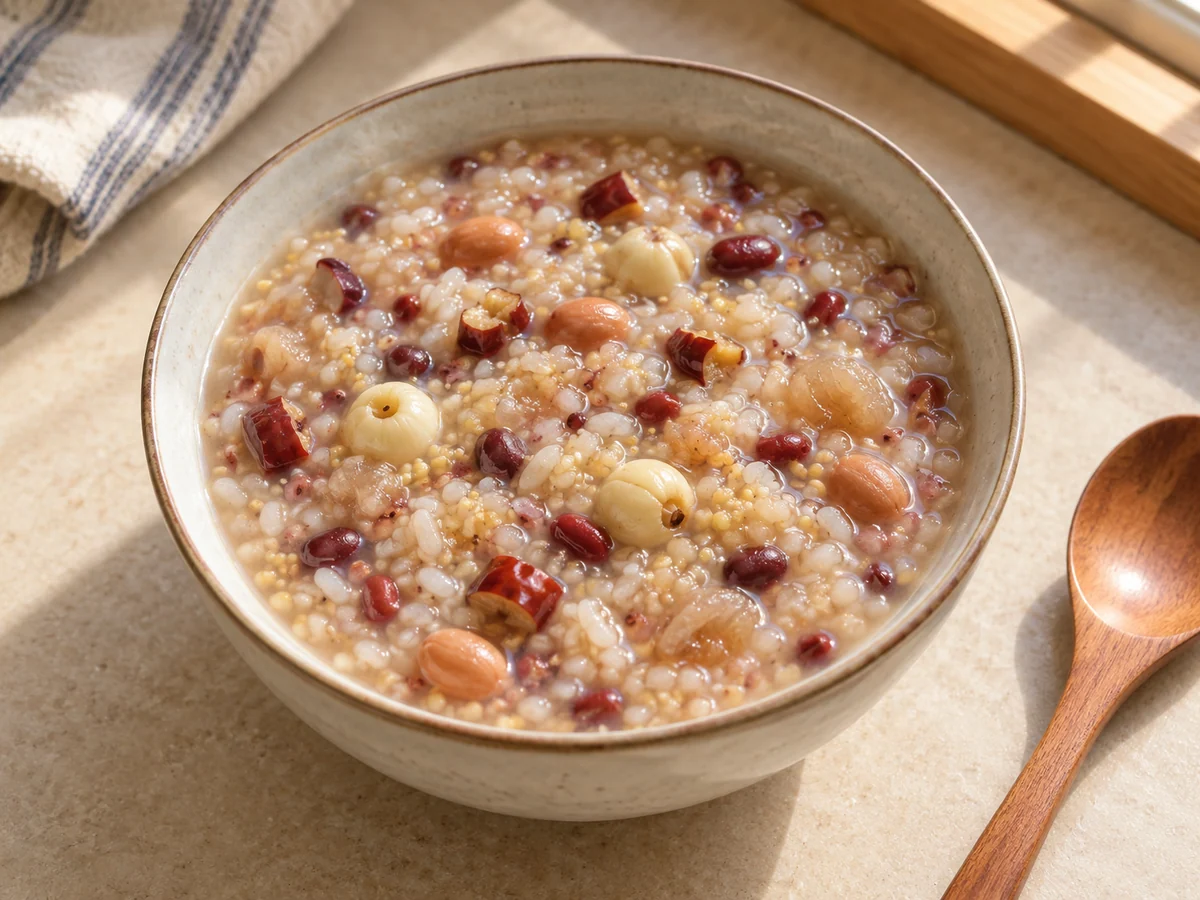
Laba mixed-grain congeeFinish and serve
Stir, ladle into bowls and cool slightly before eating; promptly refrigerate leftovers in shallow containers.
Look forOpened grains, tender adzuki and lotus, and dates and longan in thick but flowing porridge.
See the full recipe ↗ 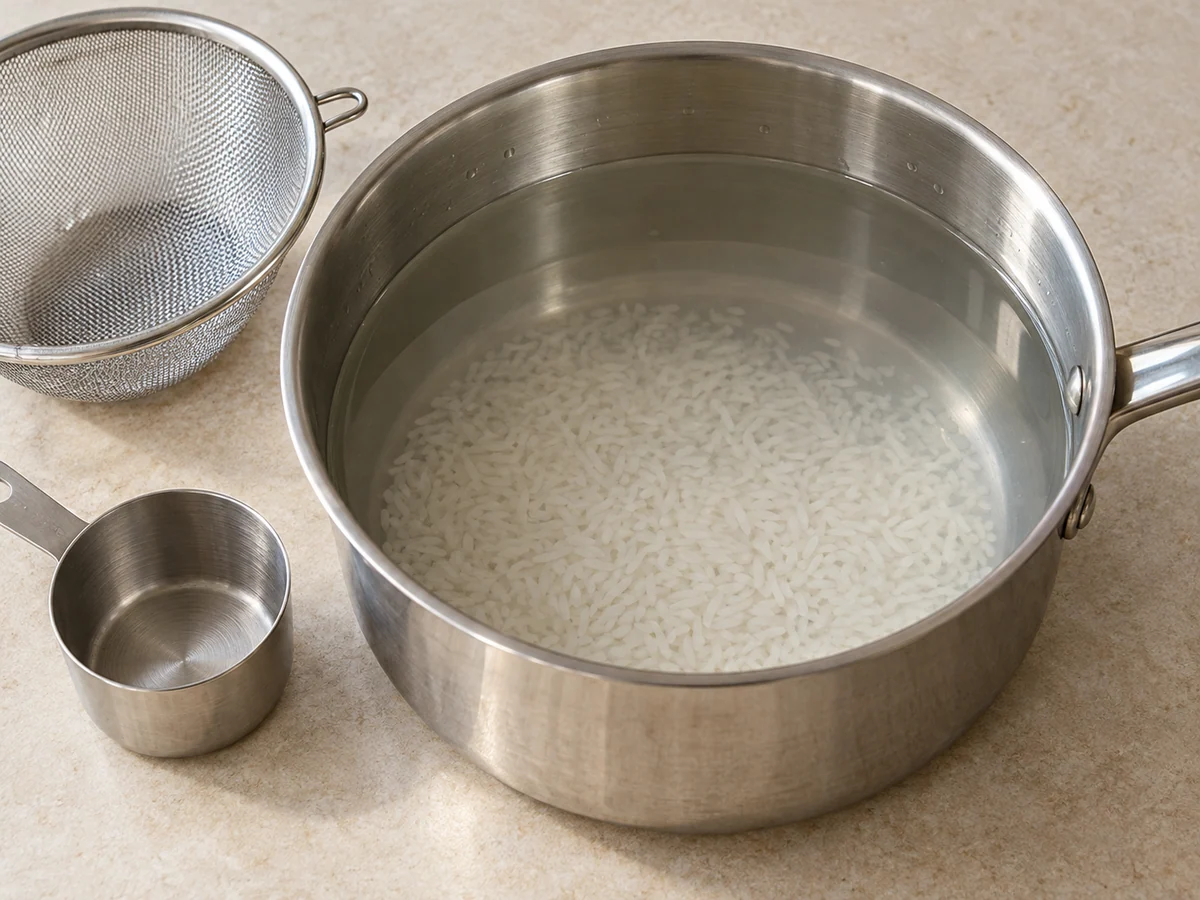
Plain rice congeeMeasure and rinse rice
Measure the raw rice volume in a measuring cup, rinse and drain. Put rice and listed water in a pot with ample boiling headroom.
Look forRice is clean, the rice-water ratio defined and pot roomy.
See the full recipe ↗ 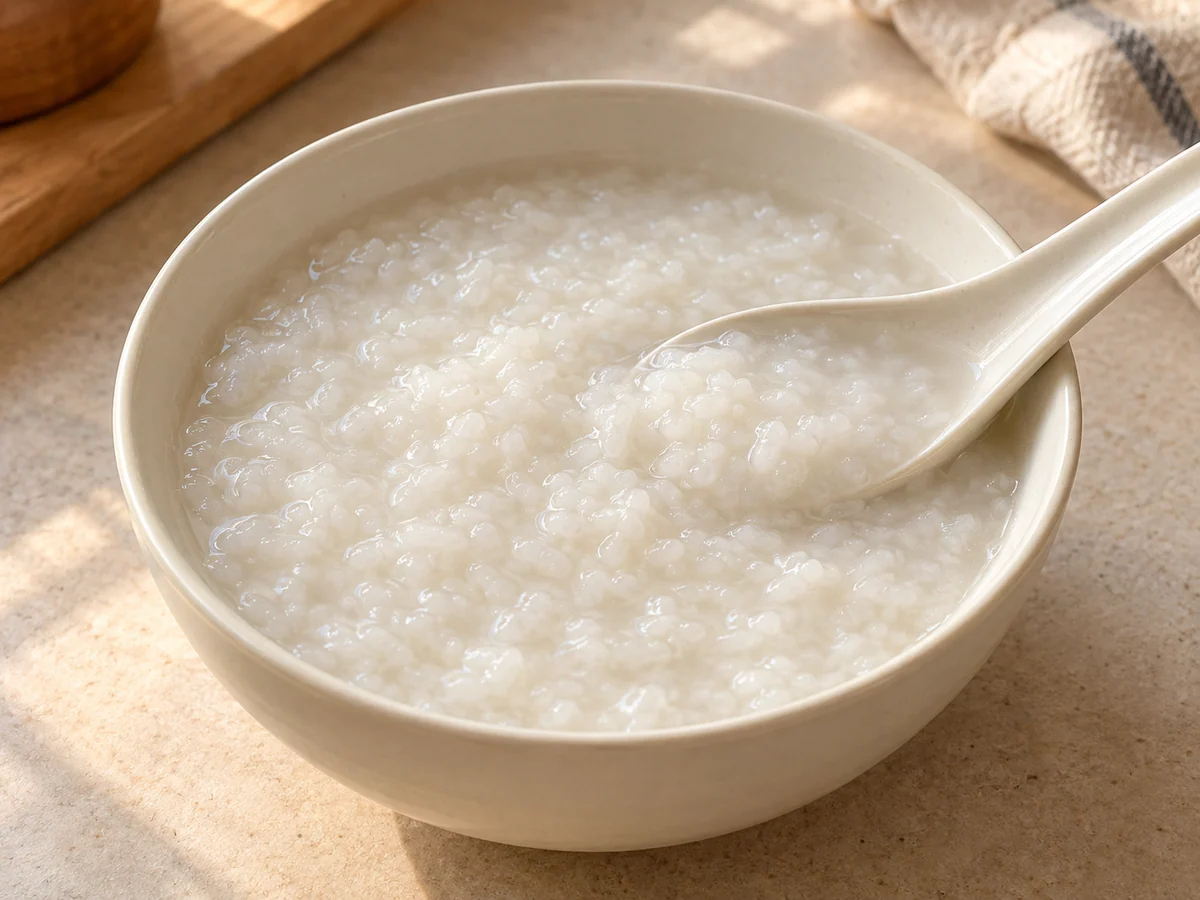
Plain rice congeeFinish and serve
Turn off heat, stir and ladle into a bowl, taking care with the hot porridge.
Look forVery soft, partly opened rice grains in smooth white congee that flows slowly.
See the full recipe ↗ 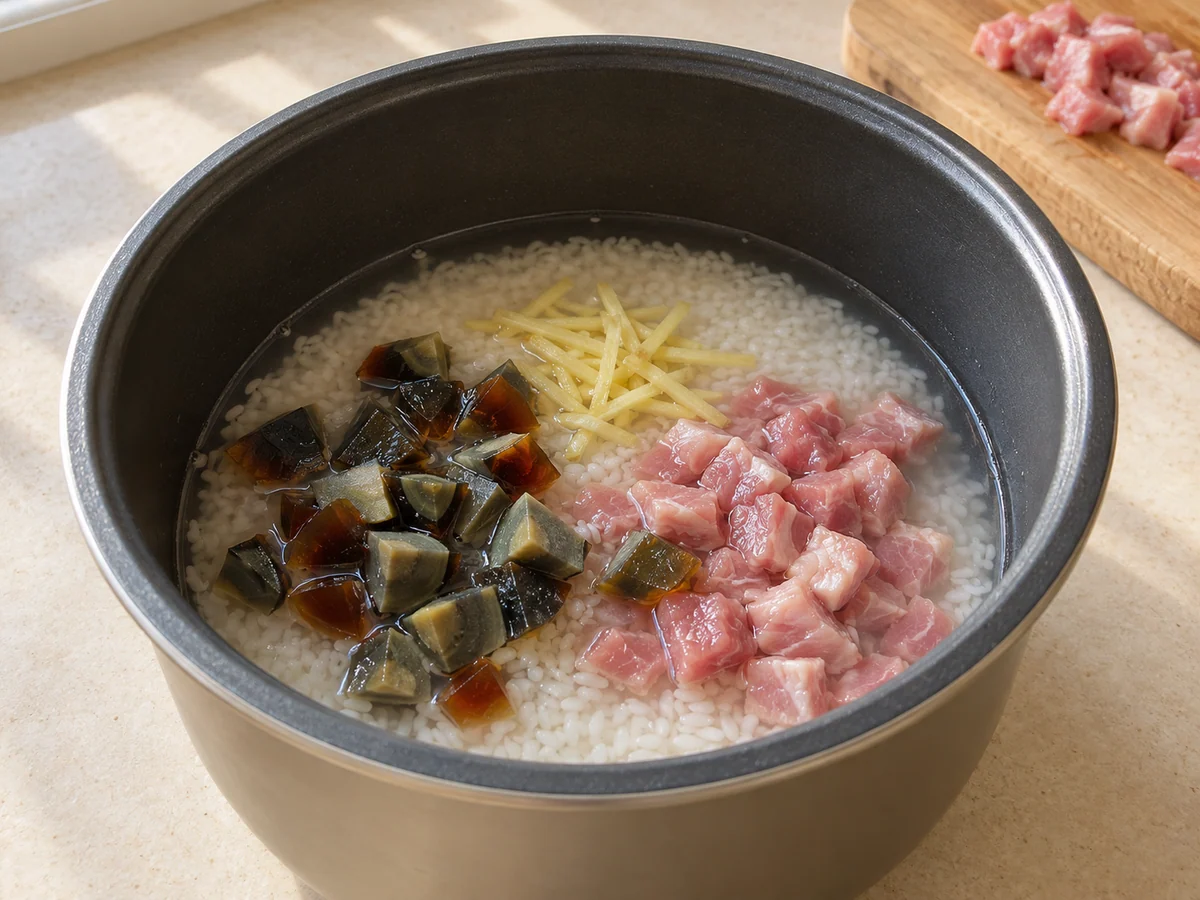
Pork and century egg congeePrepare the main ingredients
Measure rice by volume, rinse and place in the cooker with porridge water. Cut pork into small pieces on a separate board without rinsing raw meat, coat with oil and add. Peel and chop century eggs, shred ginger and add; wash after raw pork.
Look forMain ingredients are prepared below the cooker safe porridge fill line.
See the full recipe ↗ 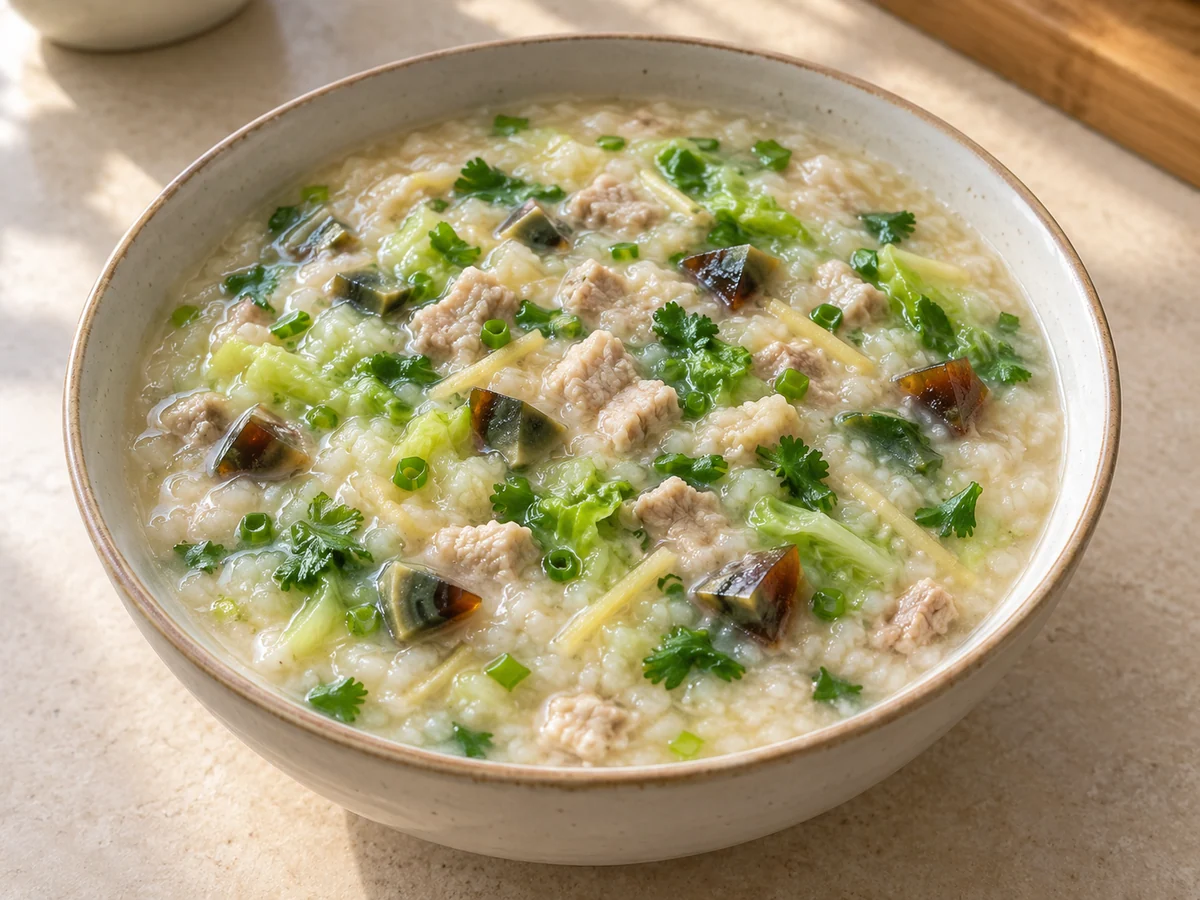
Pork and century egg congeeFinish and rest off the heat
Mix in blanched lettuce, herbs and seasoning and heat through, then stop heating or switch off as the cooker instructions direct; do not lift a hot inner pot. Start a 3 min rest timer and serve after it finishes.
Look forSoft congee holds cooked pork, century-egg pieces and wilted lettuce with herbs mixed through.
See the full recipe ↗ 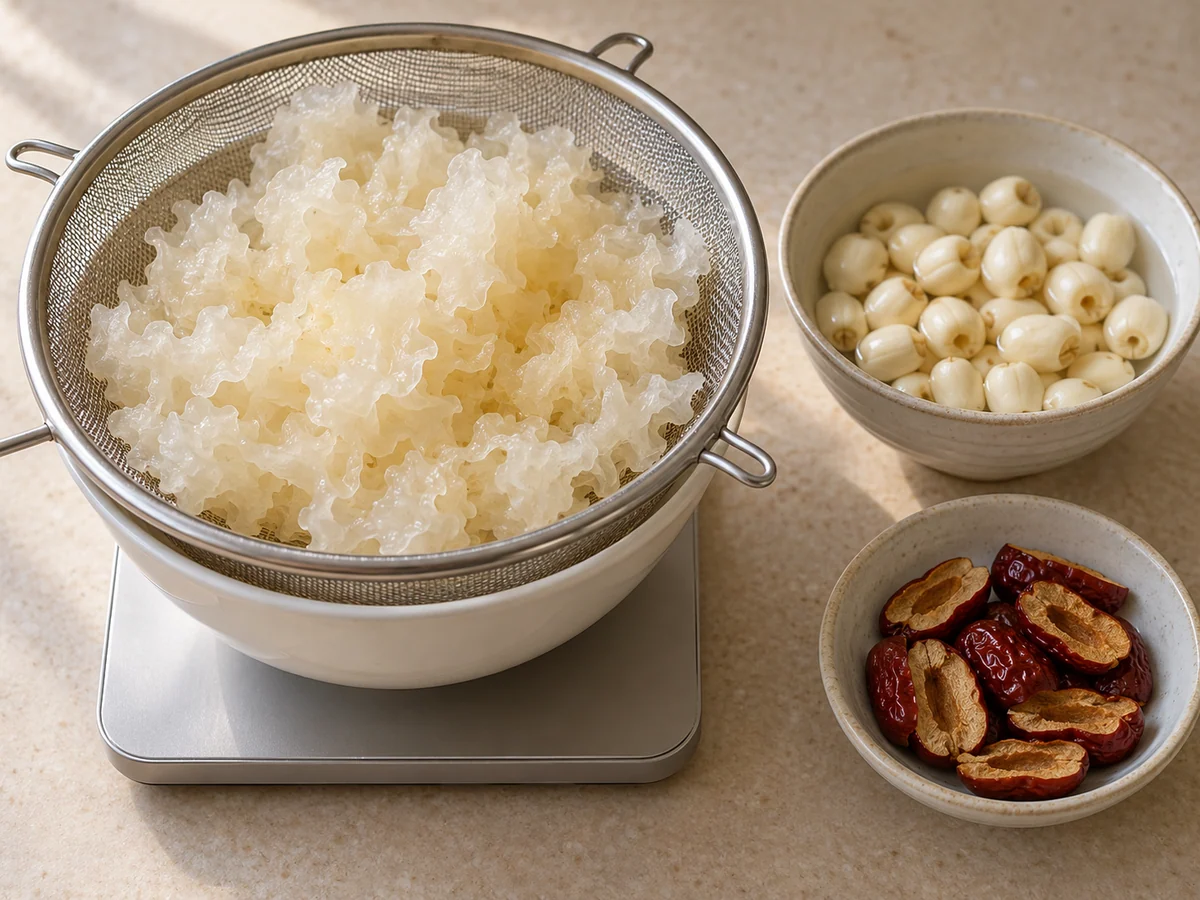
Snow fungus and lotus seed sweet soupSoak, trim and weigh
Soak snow fungus as labeled, trim its hard base, rinse, drain and only then weigh the listed amount; it is not a dry weight. Separately soften lotus seeds and check dates are pitted. Keep total room-temperature fungus soaking within 2 hours or refrigerate longer soaks; discard slime or abnormal odors.
Look forFungus is prepared by hydrated weight, lotus softened and dates pitted.
See the full recipe ↗ 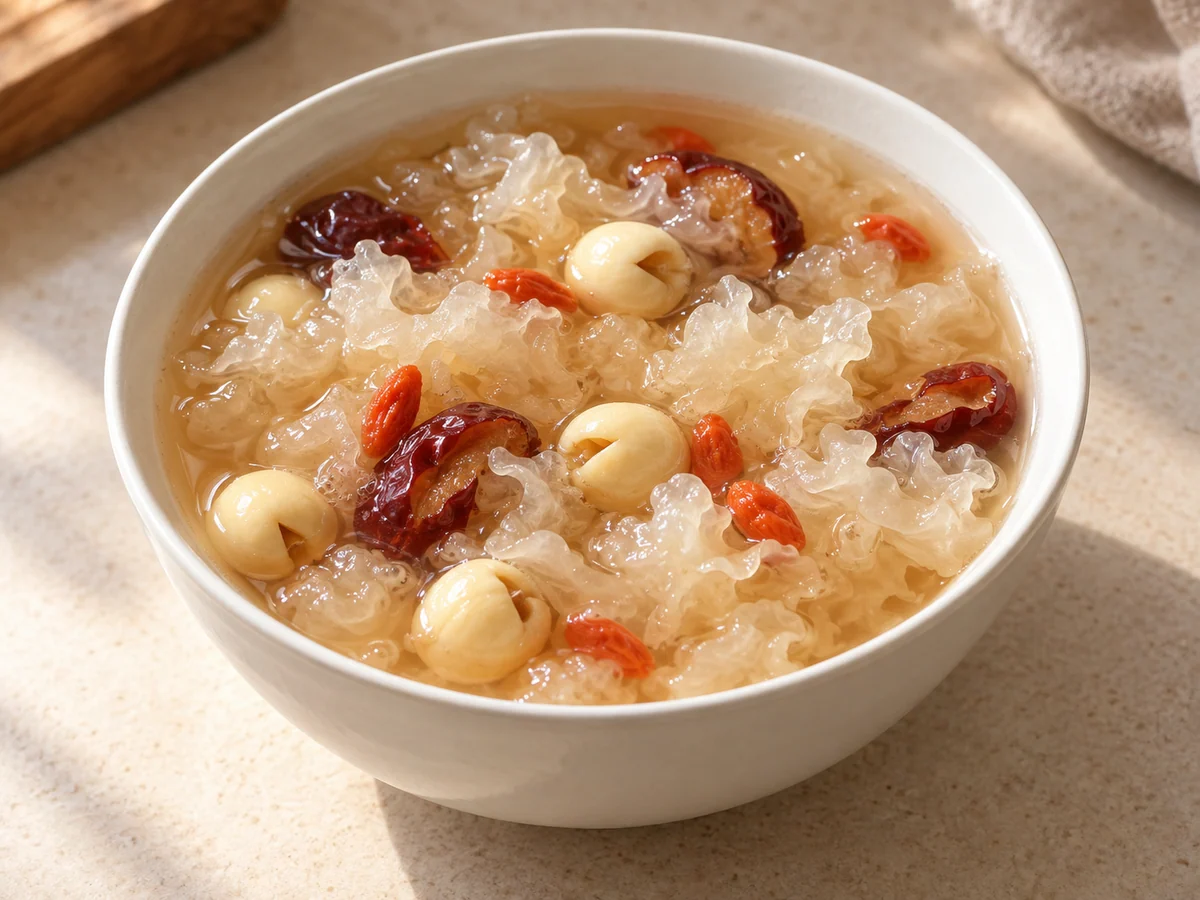
Snow fungus and lotus seed sweet soupFinish and serve
Ladle into small bowls and cool briefly; for chilled service, promptly refrigerate in shallow containers until cold through.
Look forSoft snow-fungus pieces, tender lotus and dates in lightly syrupy soup with optional goji.
See the full recipe ↗ 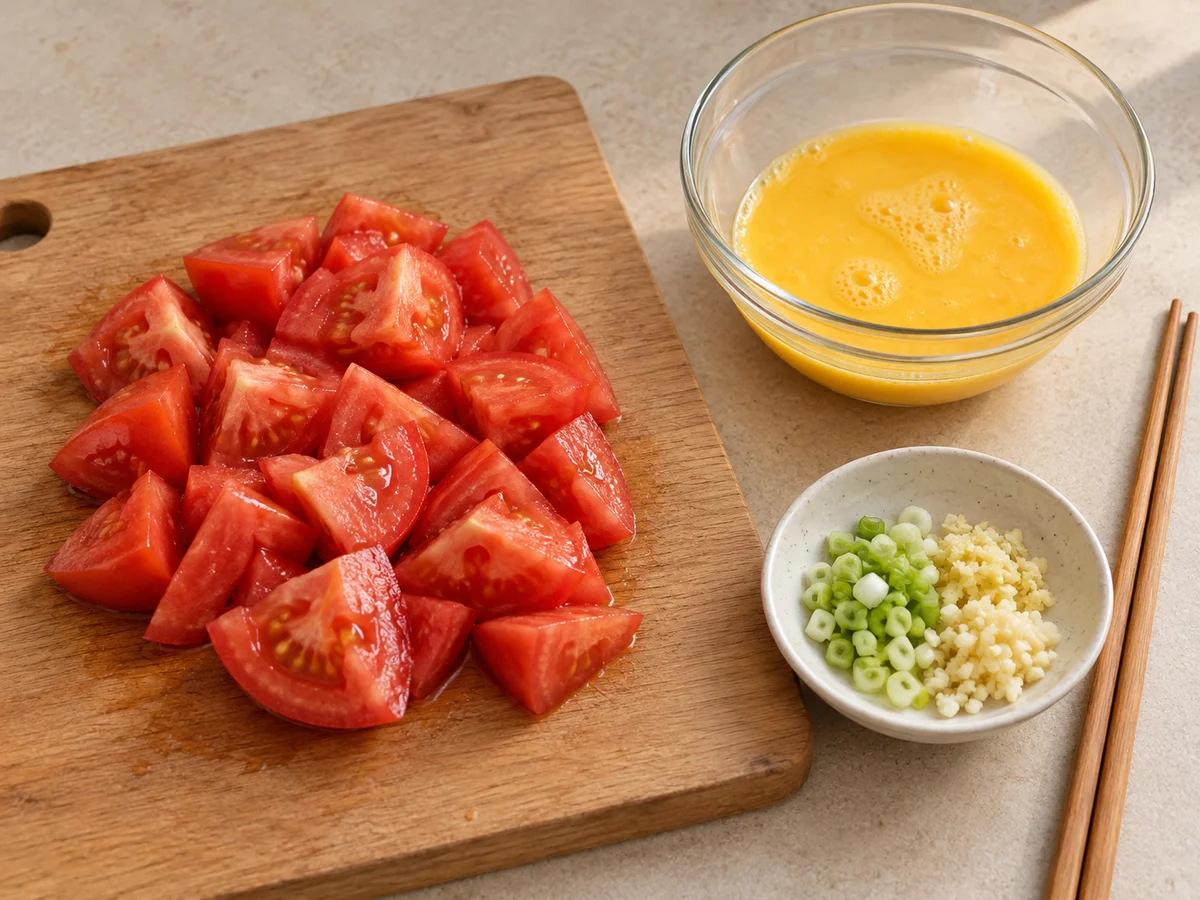
Tomato and egg soupPrepare tomato and egg
Wash and cut tomato. Combine scallion, ginger and garlic to the listed total in your preferred balance, then mince. Beat egg in a separate bowl and wash hands and utensils after raw egg.
Look forTomato is cut, aromatics minced and egg evenly beaten.
See the full recipe ↗ 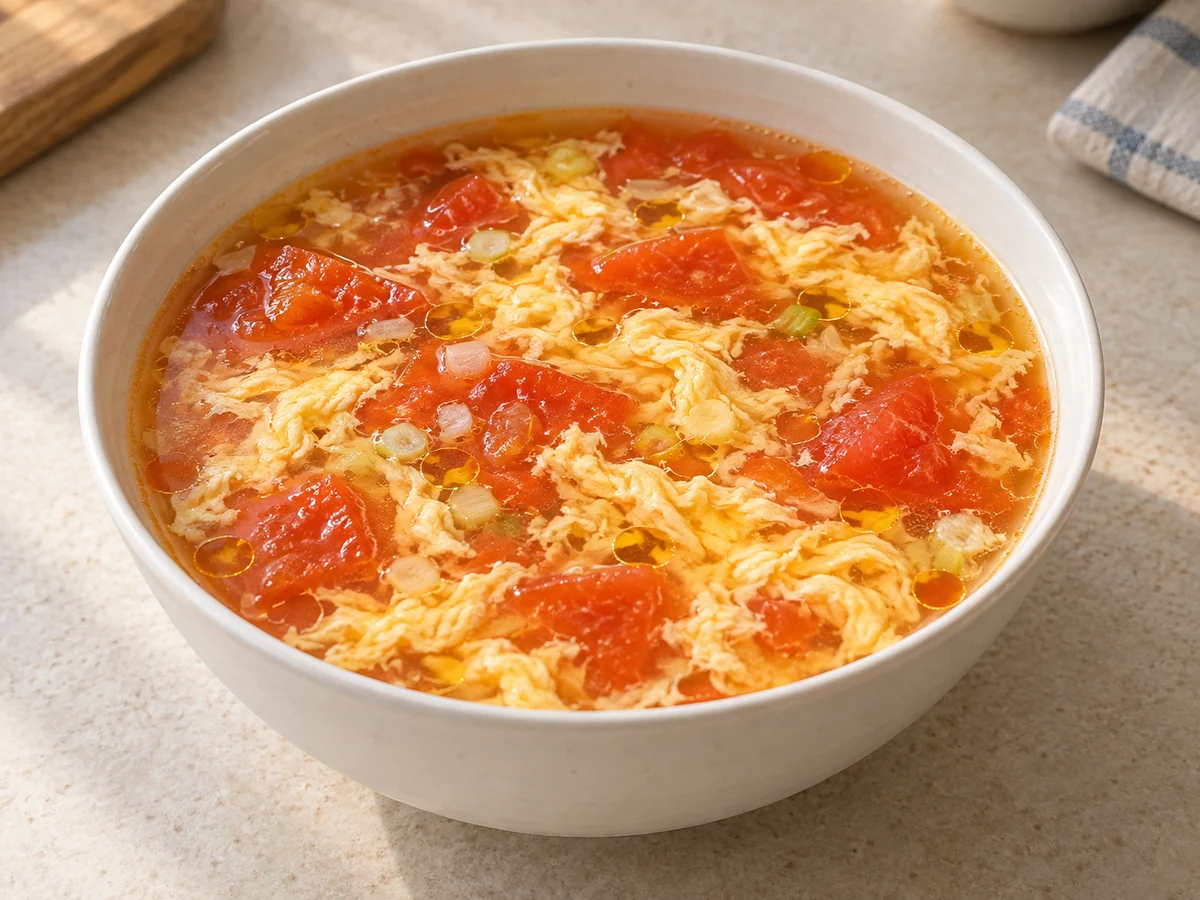
Tomato and egg soupFinish and serve
After verifying the egg is cooked, season lightly with salt, add sesame oil, stir and serve.
Look forSoft tomato chunks and set egg ribbons in hot soup with a little sesame oil.
See the full recipe ↗ 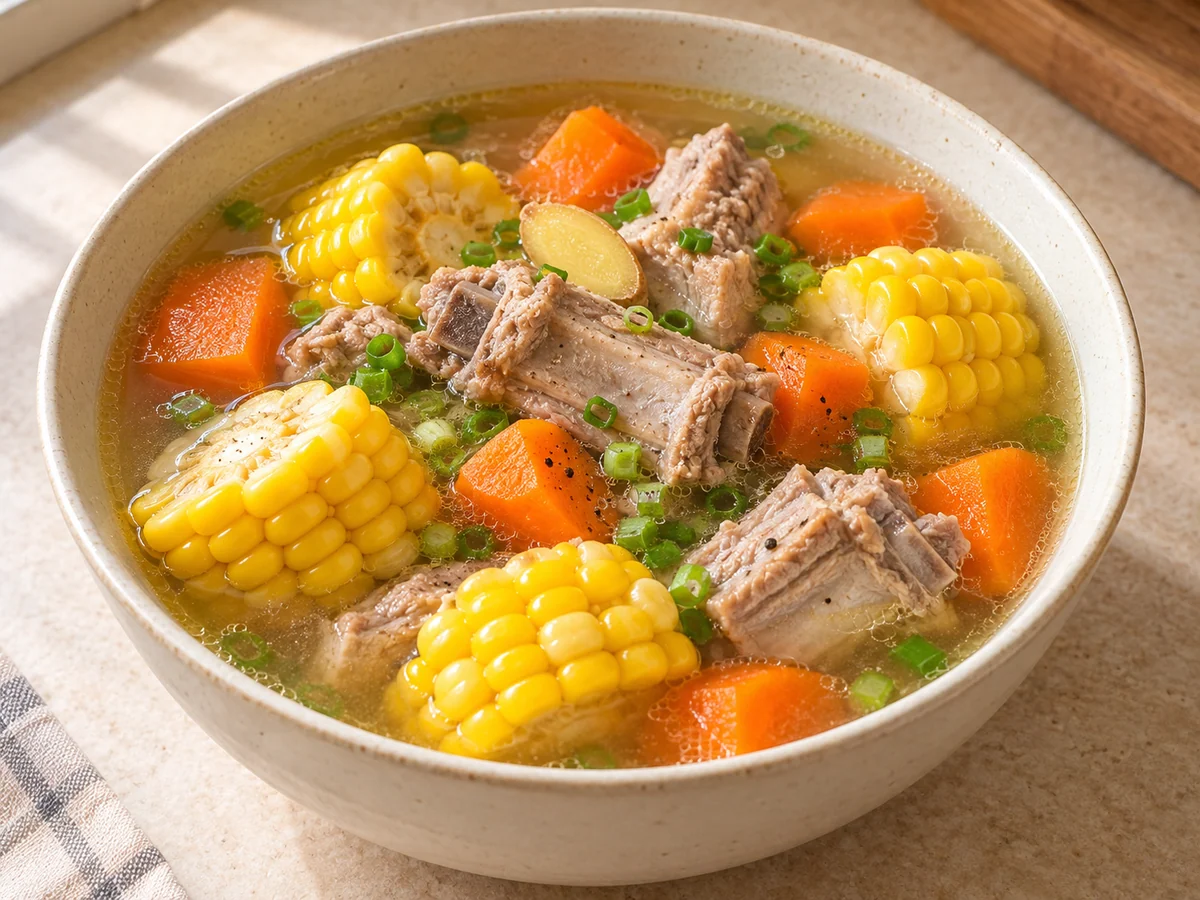
Corn and pork rib soupSeason and rest off the heat
After verifying the meat center, season lightly and add scallion, then stop heating and remove from the heat source. Start a 3 min rest timer and serve after it finishes.
Look forTender ribs, corn sections and soft carrot in broth topped with scallion.
See the full recipe ↗ 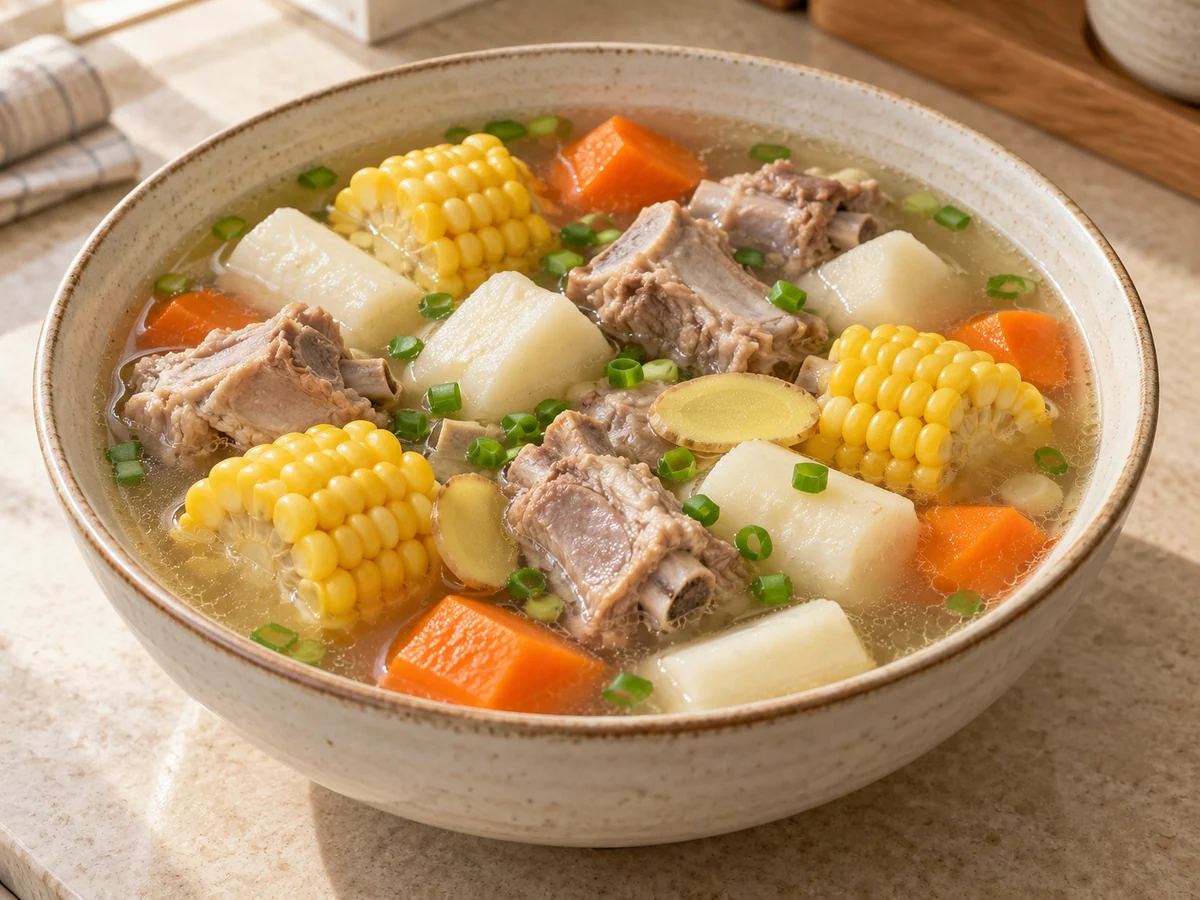
Pork rib, yam and corn soupRest off the heat before serving
After the meat center is verified and heating ends, remove the pot from the heat source and start a 3 min rest timer. Serve after it finishes.
Look forIntact tender yam, corn, carrot and cooked ribs in broth with a little scallion.
See the full recipe ↗ 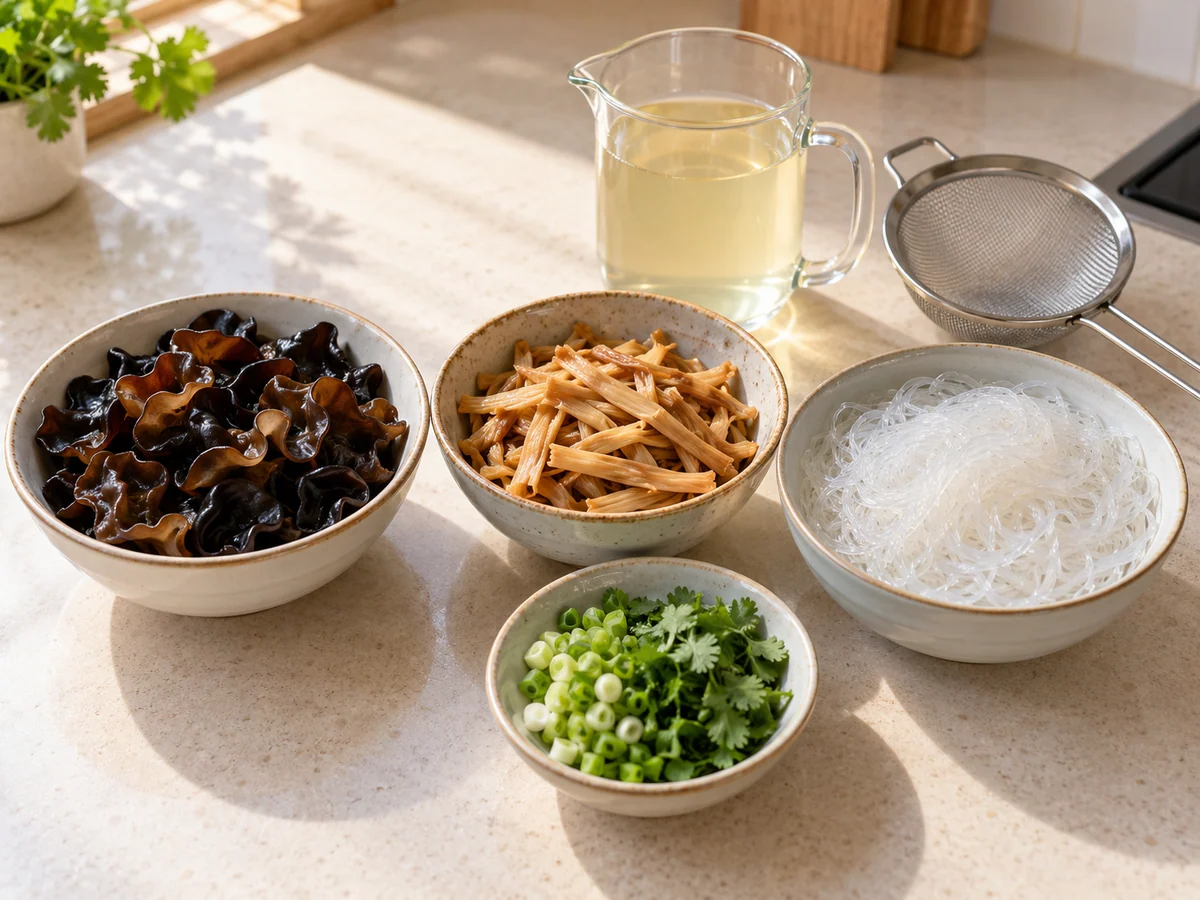
Poached pork meatball soupPrepare cooked accompaniments first
First make aromatic water: put the listed infusion peppercorns, scallion and ginger in a heatproof bowl, add the listed hot drinking water and press aromatics with a spoon, never hands in hot water. Set a 10 min steeping check, strain and cool. Weigh only 80 g cooled strained liquid per 500 g pork; top up a shortfall with drinking water and leave any excess unused. Add no salt. Separately soak and fully cook wood ear, dried daylily and vermicelli as labeled; do not line bowls with fresh daylily, raw wood ear or merely softened noodles. Wash and chop herbs.
Look forAccompaniments are fully cooked, aromatic water strained, cooled and weighed, and cooked-food utensils clean.
See the full recipe ↗ 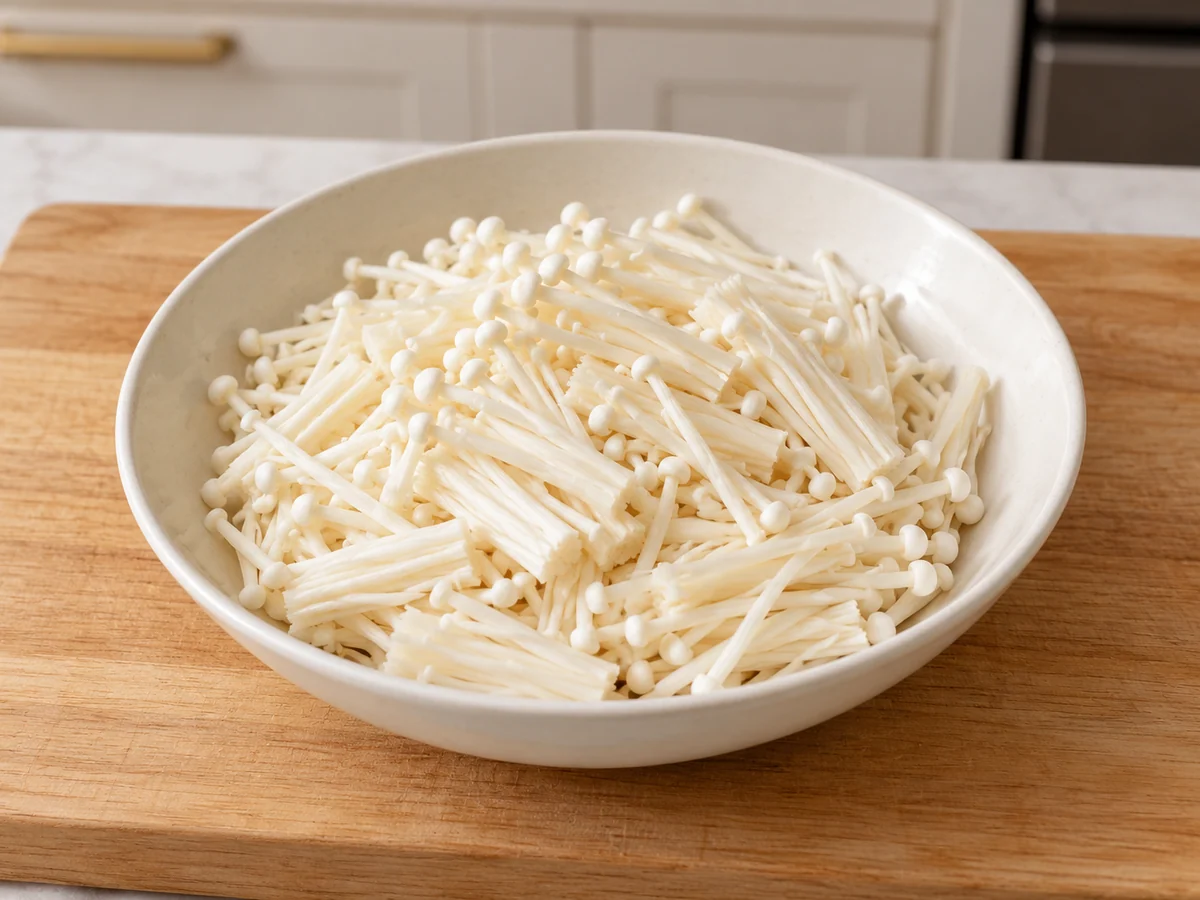
Enoki mushroom soupCheck and cut enoki
Keep enoki refrigerated as labeled and check the use-by date. Trim the base, separate, wash and cut into manageable lengths. Keep raw mushrooms away from ready-to-eat food and wash hands and equipment afterward.
Look forThe base is removed and the mushrooms are clean and separated.
See the full recipe ↗ 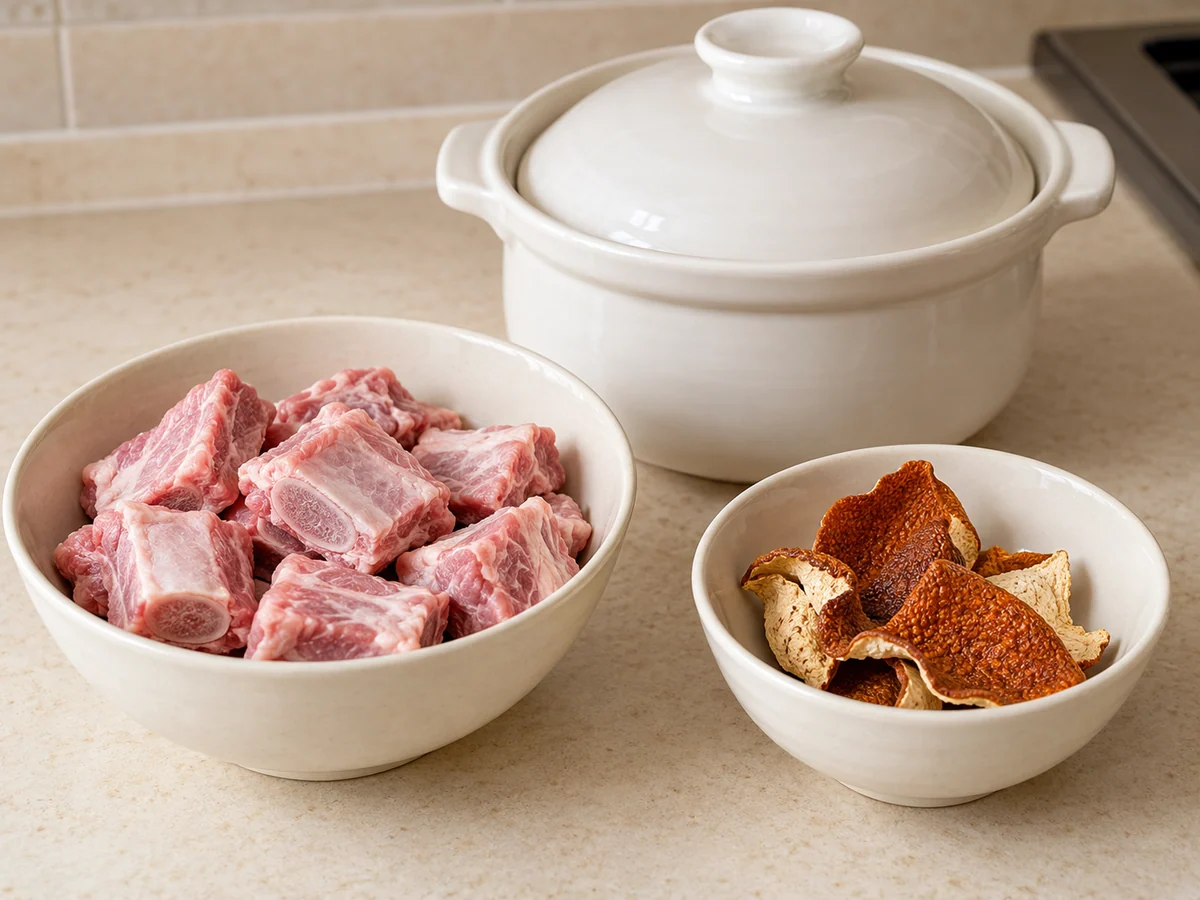
Dried mandarin peel and rib soupPrepare ribs and mandarin peel
Choose culinary dried mandarin peel and rinse as labeled. Use ribs already cut into small pieces rather than forcing an ordinary knife through bone. Prepare a covered bowl designed for double-boiling.
Look forThe peel is culinary-grade and clean and the rib pieces fit the soup bowl.
See the full recipe ↗ 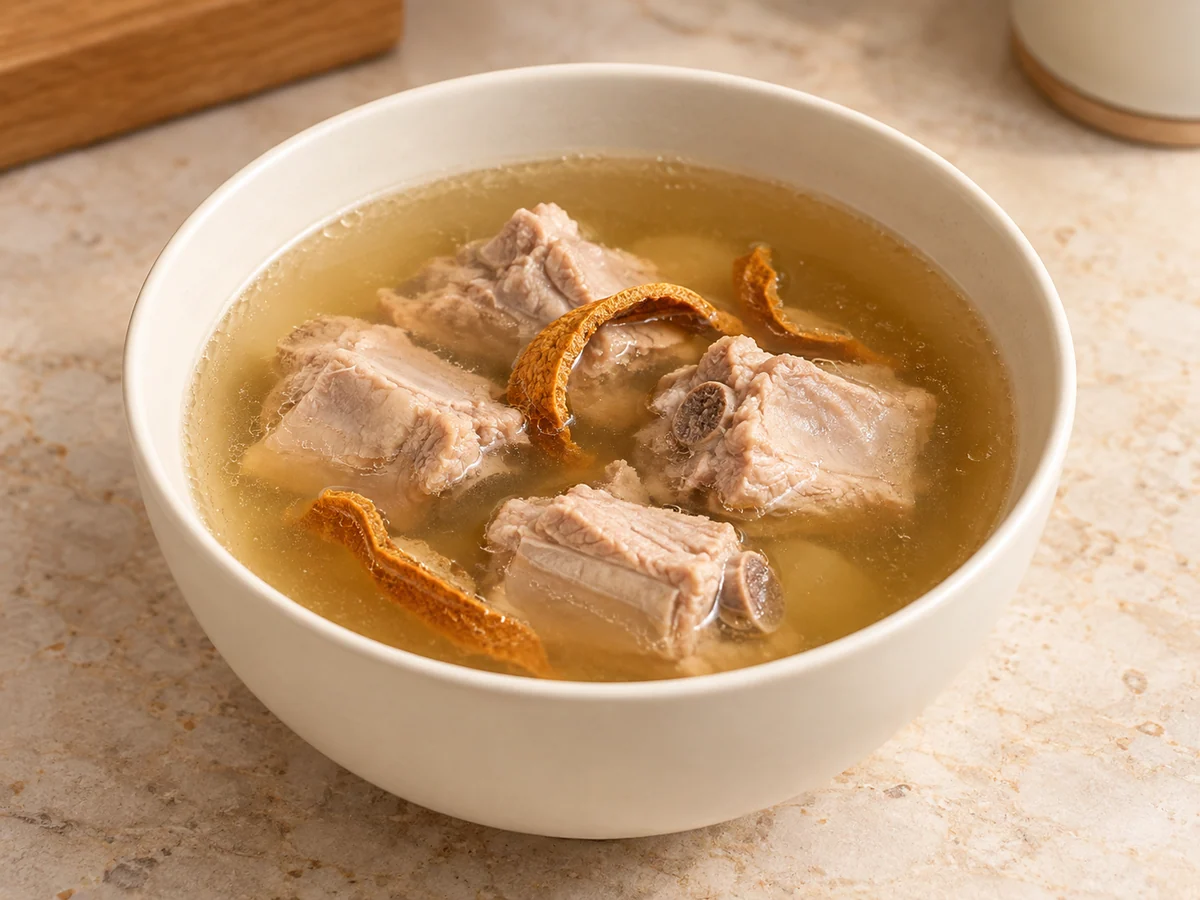
Dried mandarin peel and rib soupRemove safely and rest
Turn off the heat, remove with mitts or a bowl lifter and set a 3 min rest reminder before eating. Set the hot bowl securely before opening it.
Look forThe ribs have rested and are visible with peel in the clear broth.
See the full recipe ↗ 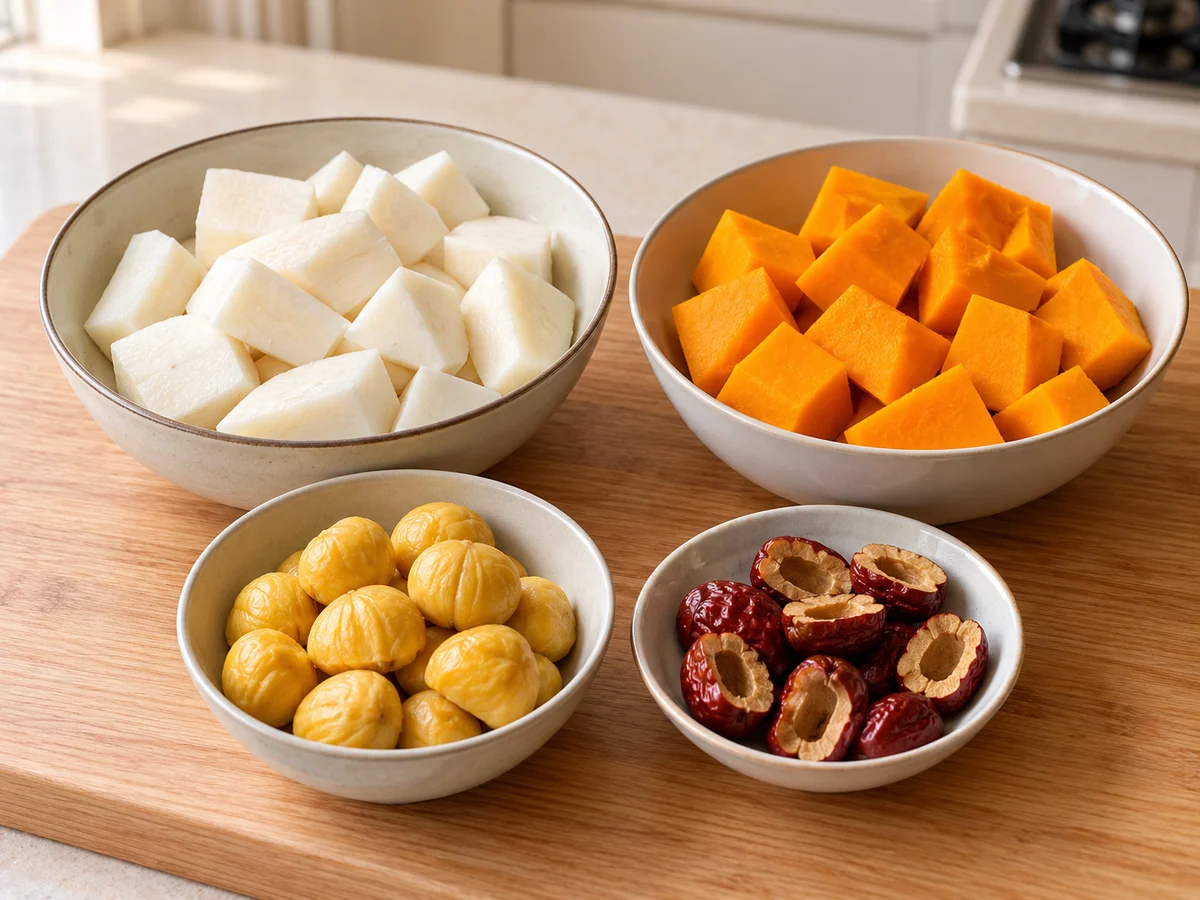
Yam and pumpkin chicken soupPrepare yam, pumpkin and dates
Wear food-safe gloves to peel and cut yam and use chestnuts with shell and inner skin removed. Wash, seed and cut pumpkin and wash and pit dates. Handle raw chicken separately and do not rinse it; wash hands and clean the board and knife afterward.
Look forYam and pumpkin pieces are even, dates pitted and raw chicken separated.
See the full recipe ↗ 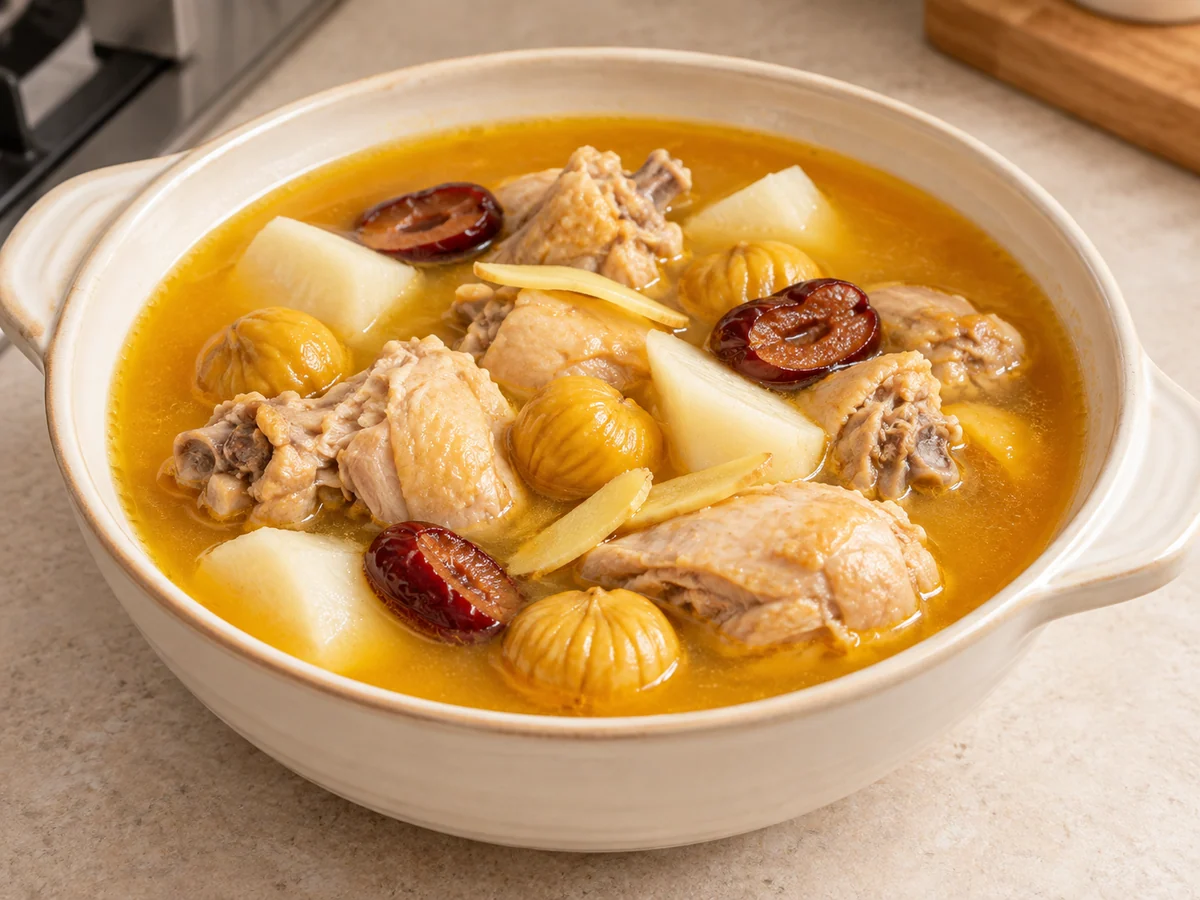
Yam and pumpkin chicken soupServe and cool briefly
Turn off the heat, ladle into bowls and cool slightly before eating, watching for bones.
Look forThe golden soup contains chicken, yam, chestnuts and pitted dates.
See the full recipe ↗ 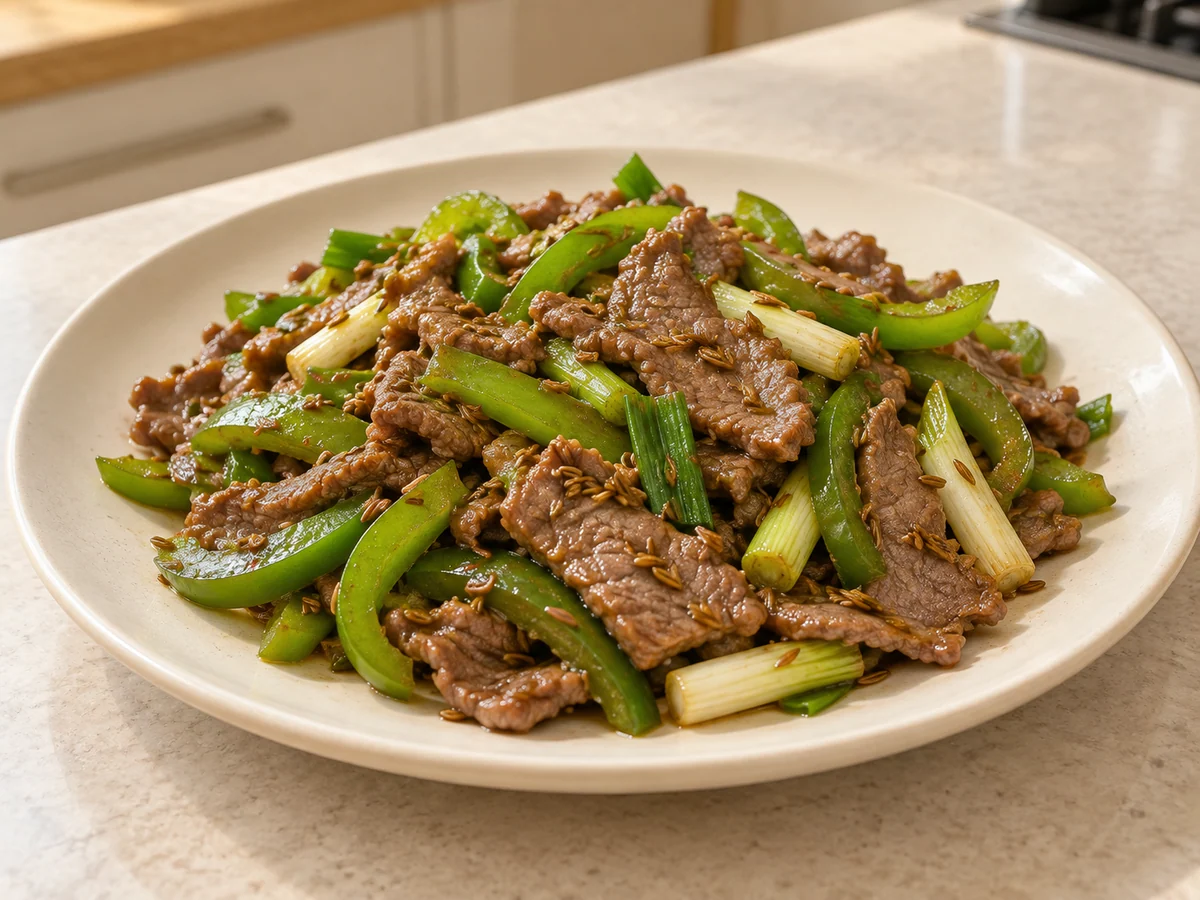
Cumin beefRest off heat and serve
After checking doneness, turn off heat and plate. Set a 3 min rest reminder and eat after it is complete.
Look forBeef and pepper are evenly mixed and the meat has completed its safety rest.
See the full recipe ↗ 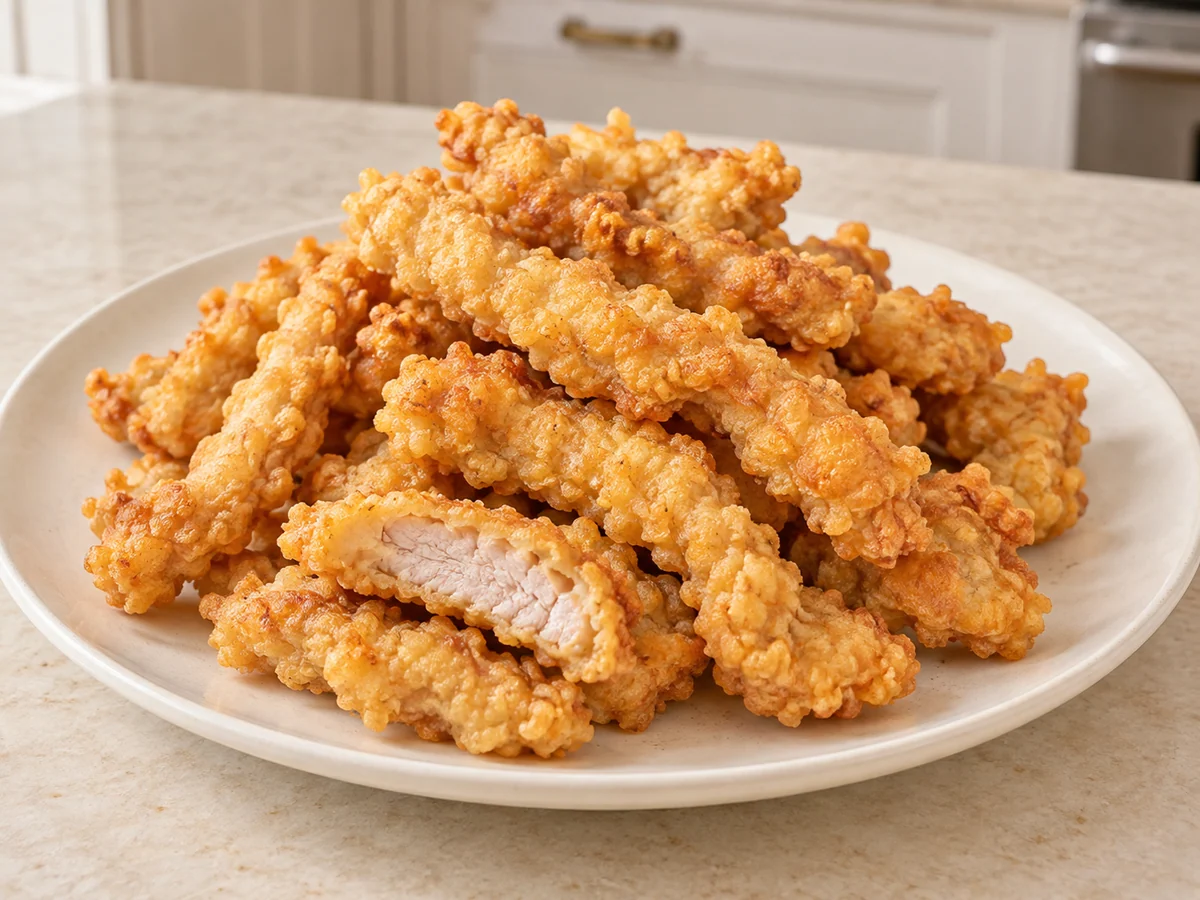
Crispy pork stripsDrain and rest
Drain on a clean rack and set a 3 min rest reminder before eating. Keep raw-meat plates and tongs away from the finished food. Handle oil only after cooling and do not store partially cooked pork.
Look forThe strips are golden and intact, fully cooked and rested.
See the full recipe ↗ 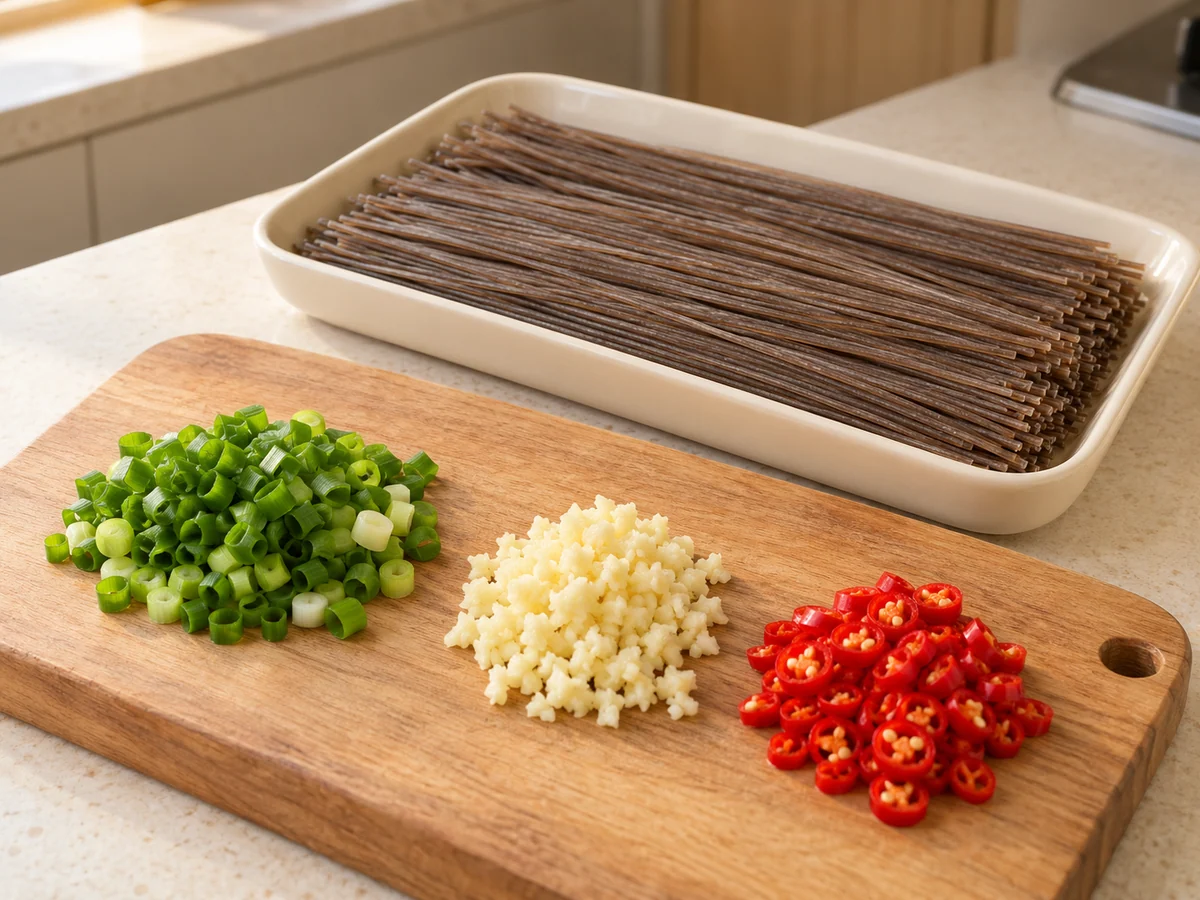
Sour and spicy fern starch noodlesCheck product and toppings
Use commercially packaged edible fern-starch noodles and follow storage and cooking directions. Wash and chop any scallion, garlic and chili on clean equipment for ready-to-eat toppings.
Look forThe product directions are clear and toppings clean and chopped.
See the full recipe ↗ 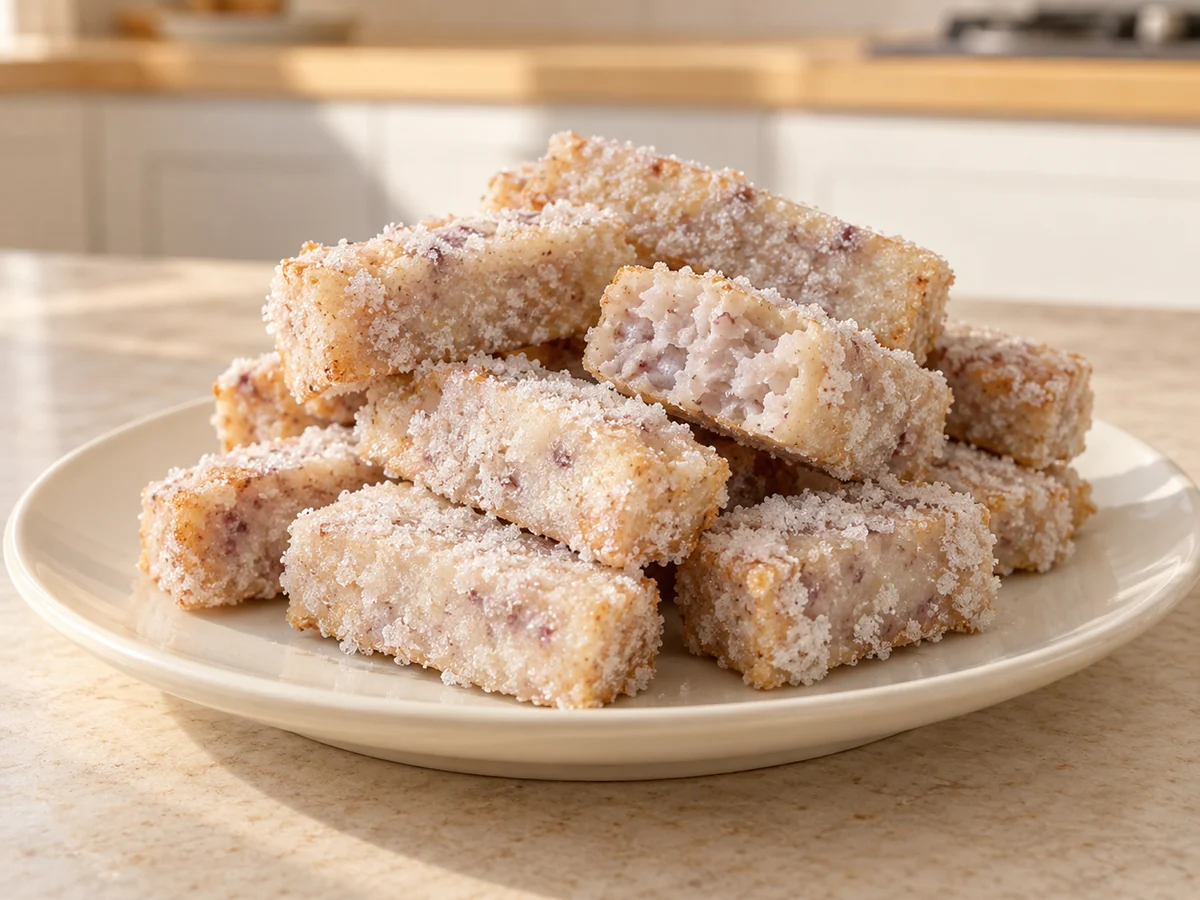
Sugar-crusted taroCool before eating
Spread on a clean plate and let both sugar coating and taro centers cool to a comfortable eating temperature.
Look forThe white sugar crust is dry and the taro inside tender.
See the full recipe ↗ FROM INSPIRATION TO DINNERYour next step is in the kitchen.
Bring a little guidance along. Open EagerCook for the cooking experience.