THE COOKPATH KITCHENKnife work
Knife work: Follow the cutting and slicing instructions for each dish. Examples include Egg-coated glutinous rice cakes, Steamed pumpkin, Chive scrambled eggs. Open a full recipe for ingredients and the complete method.
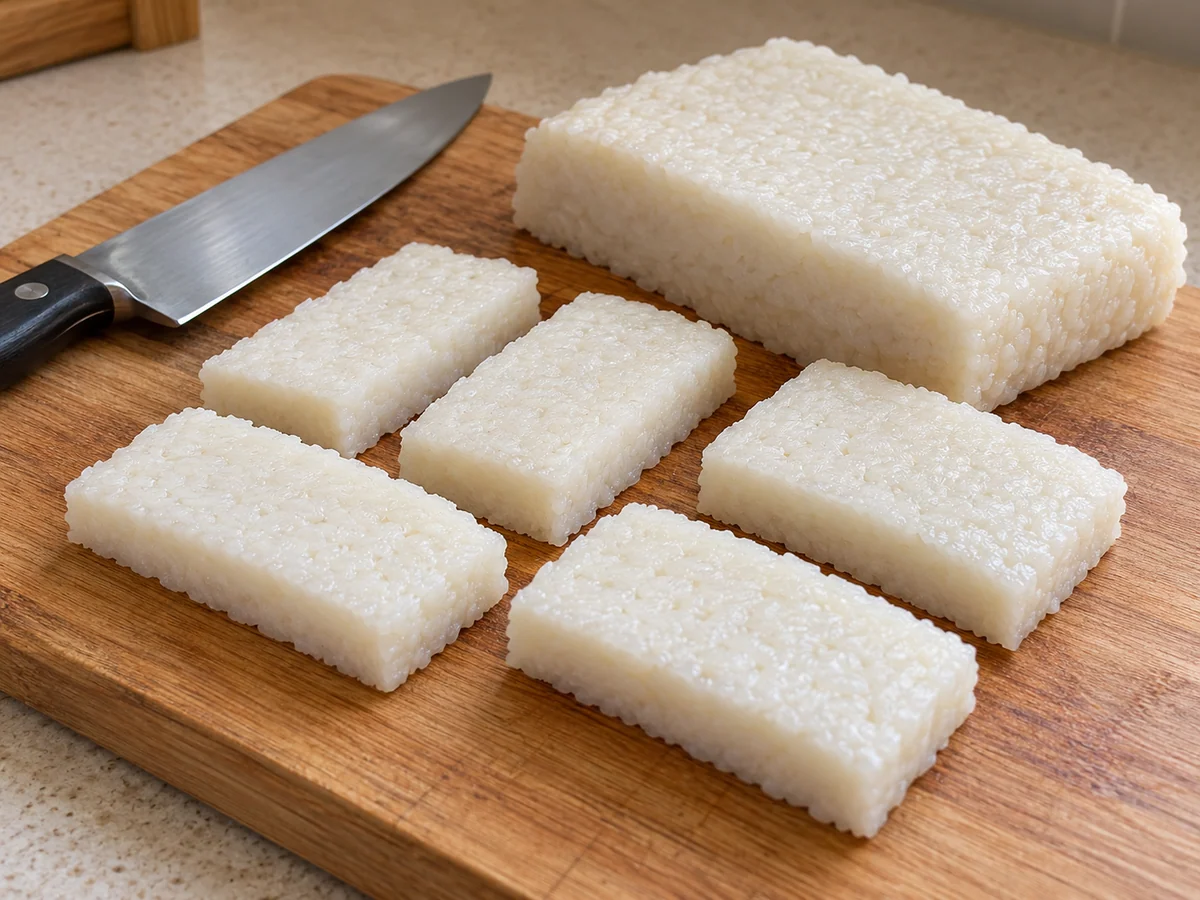
Egg-coated glutinous rice cakesCut the rice cakes
On a stable board, cut the rice cakes into small rectangles that are easy to turn. If too hard to cut safely, soften according to the package before cutting.
Look forThe pieces are similar in size and lie flat in the pan.
See the full recipe ↗ 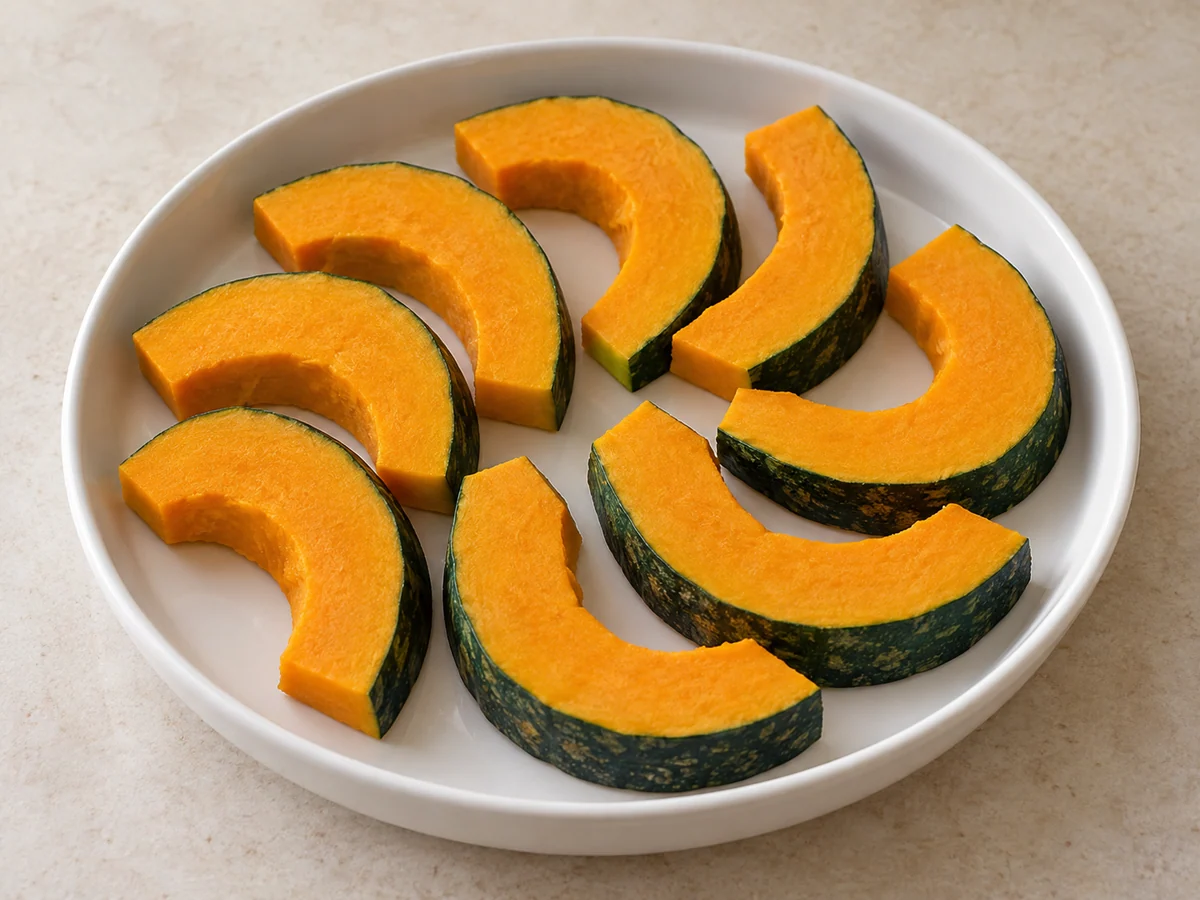
Steamed pumpkinCut even slices
Cut into slices about 2 cm thick and arrange evenly in a heatproof dish.
Look forThe slices have similar thicknesses so they cook evenly.
See the full recipe ↗ 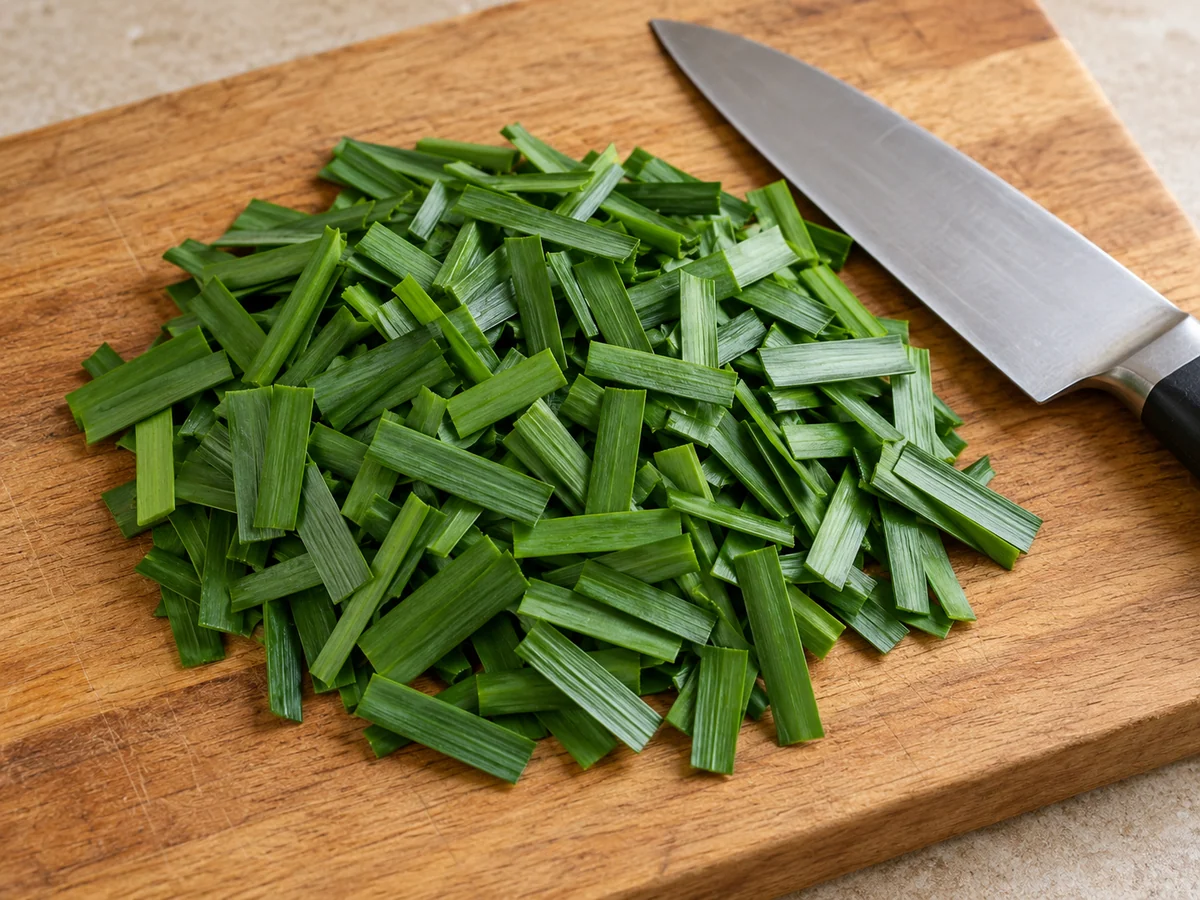
Chive scrambled eggsWash and cut the chives
Wash the chives, drain thoroughly and cut into roughly 3 cm lengths.
Look forThe chives have no visible water droplets and similar lengths.
See the full recipe ↗ 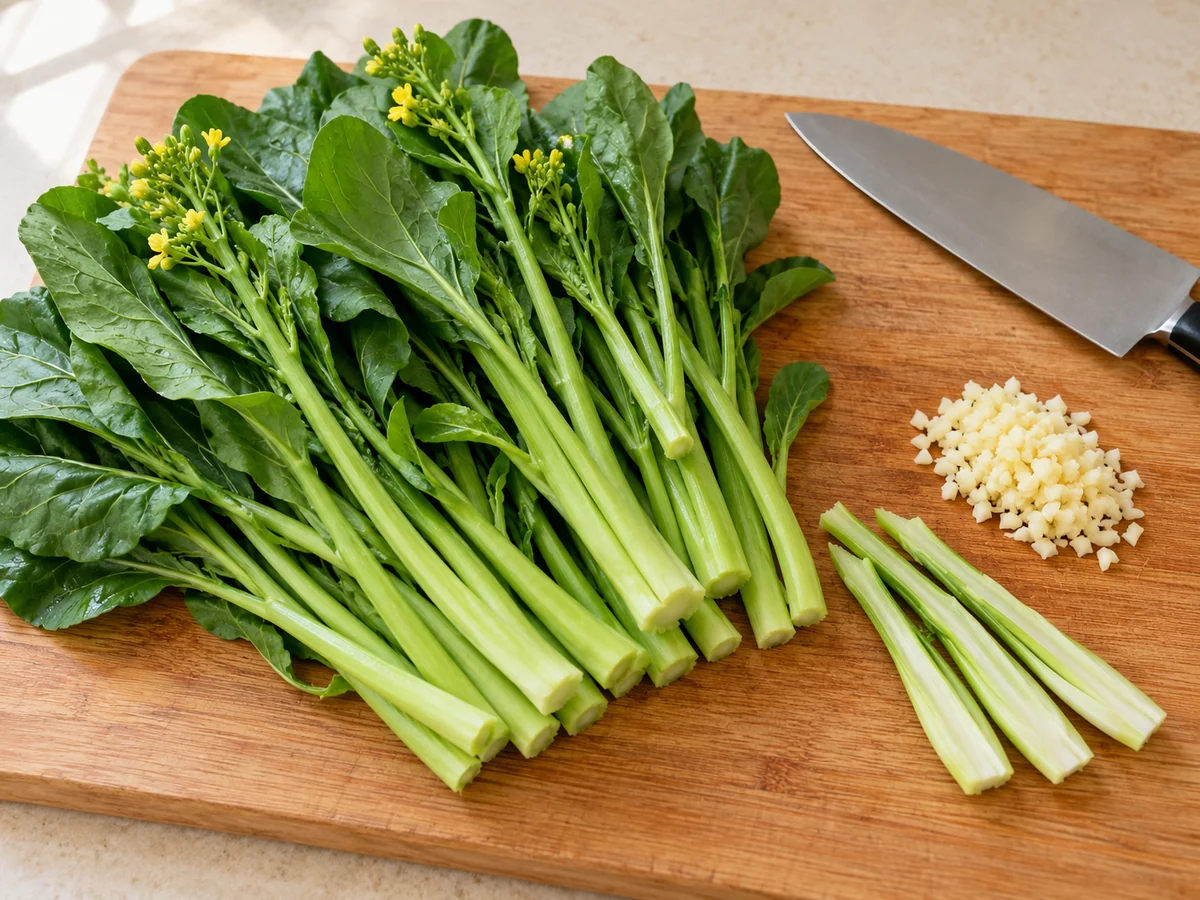
Blanched choy sumPrepare the greens and garlic
Wash the choy sum and trim tough bases. Split thick stems to help them cook evenly. Mince the garlic and optional chili; wash your hands after handling chili.
Look forThe stems are reasonably even and the garlic is ready.
See the full recipe ↗ 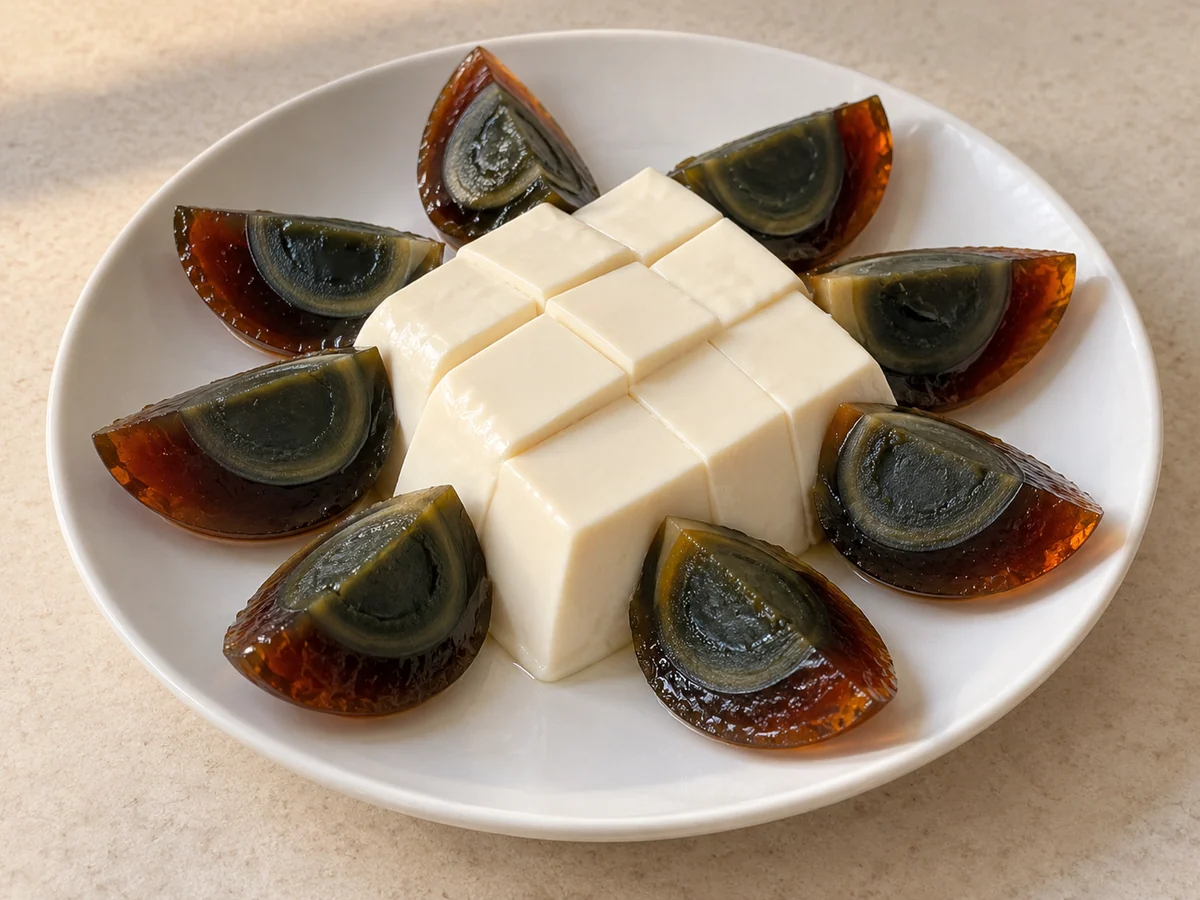
Century egg and tofuCut the eggs and tofu
Peel the century eggs and cut each into quarters. Drain the tofu, gently slice or cube it and plate with the eggs.
Look forThe tofu holds its shape and the egg wedges are even.
See the full recipe ↗ 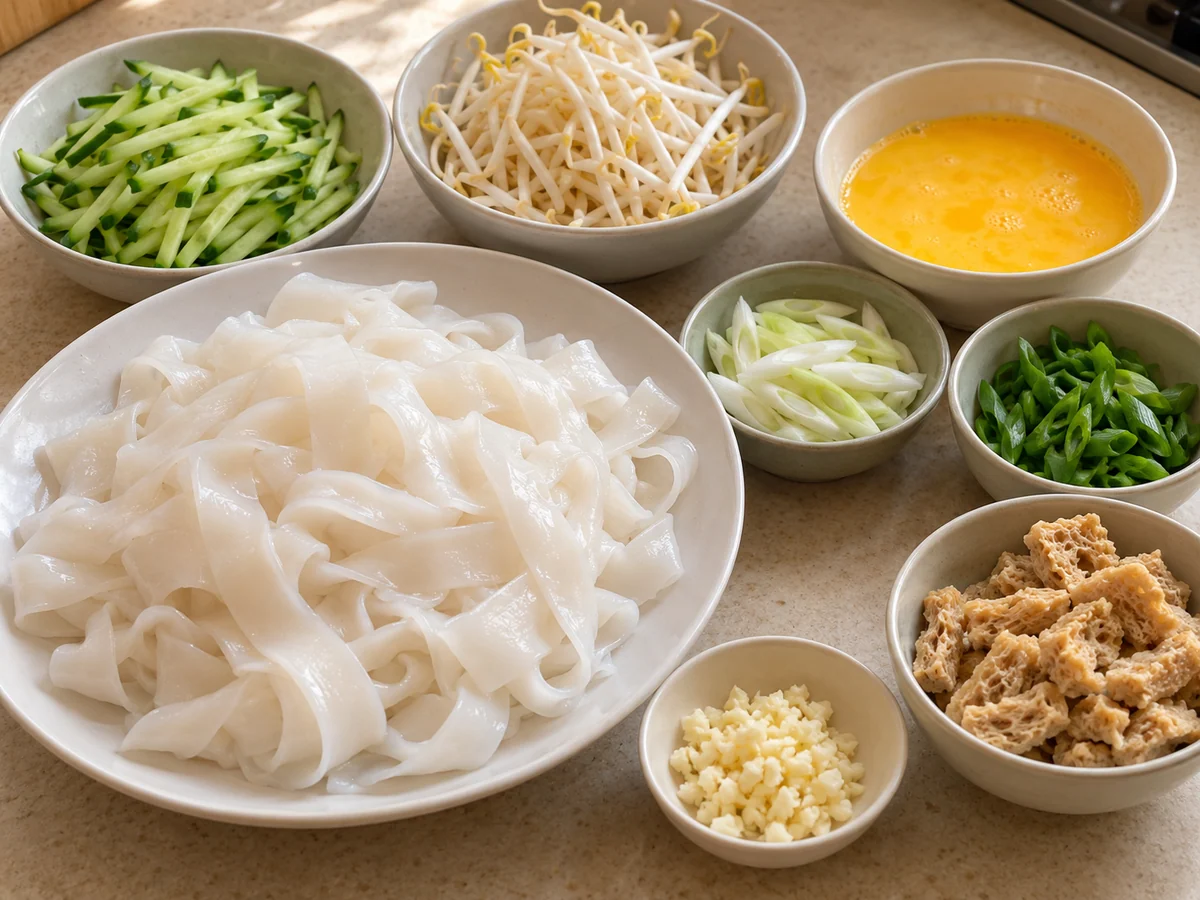
Stir-fried rice noodlesPrepare vegetables and noodles
Store and prepare the fresh noodles as labeled, separating gently and preheating if required. Shred the cucumber, separate and slice scallion whites and greens, crush the garlic and cut cooked gluten into pieces. Beat the egg.
Look forAll ingredients are ready and the noodles are separated without breaking.
See the full recipe ↗ 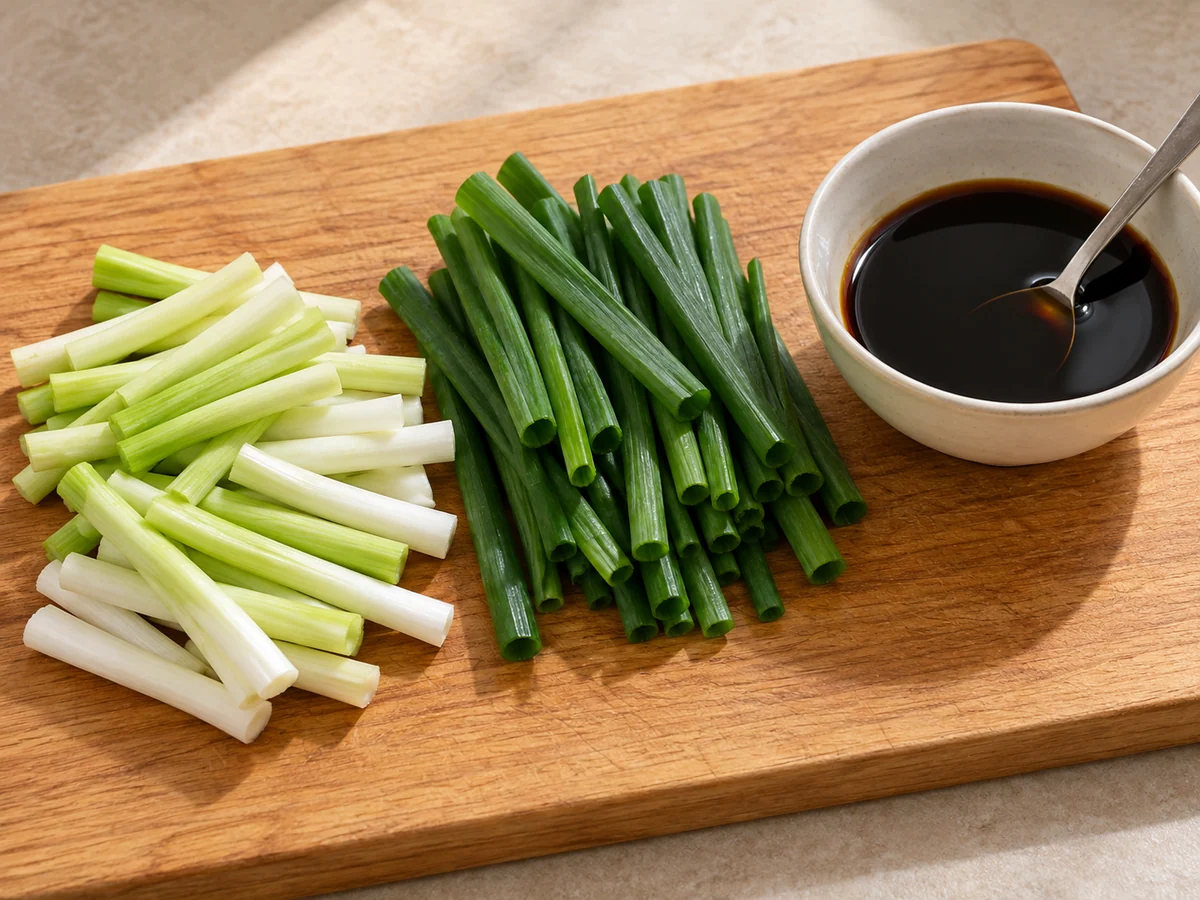
Scallion oil noodlesWash and dry the scallions
Wash, drain and dry the scallions, then cut into long sections, separating whites from greens. Mix both soy sauces and sugar in a bowl.
Look forThe scallions are dry and the sauce mixture is ready.
See the full recipe ↗ 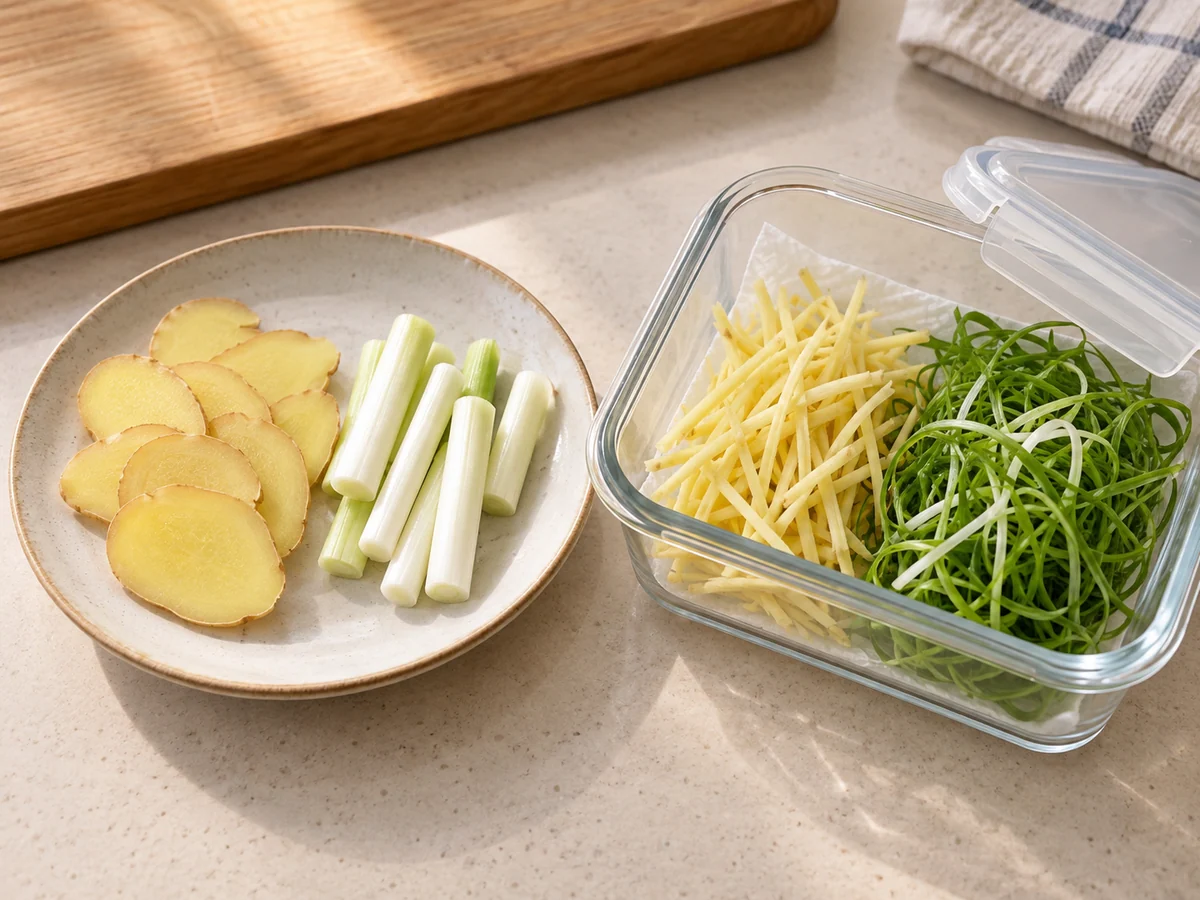
Steamed sea bassPrepare ginger and scallion
Slice half the ginger and finely shred the rest. Cut scallion whites into sections and greens into fine strips. Keep the garnish in a clean container away from raw-fish utensils.
Look forSteaming aromatics and clean finishing garnish are kept separate.
See the full recipe ↗ 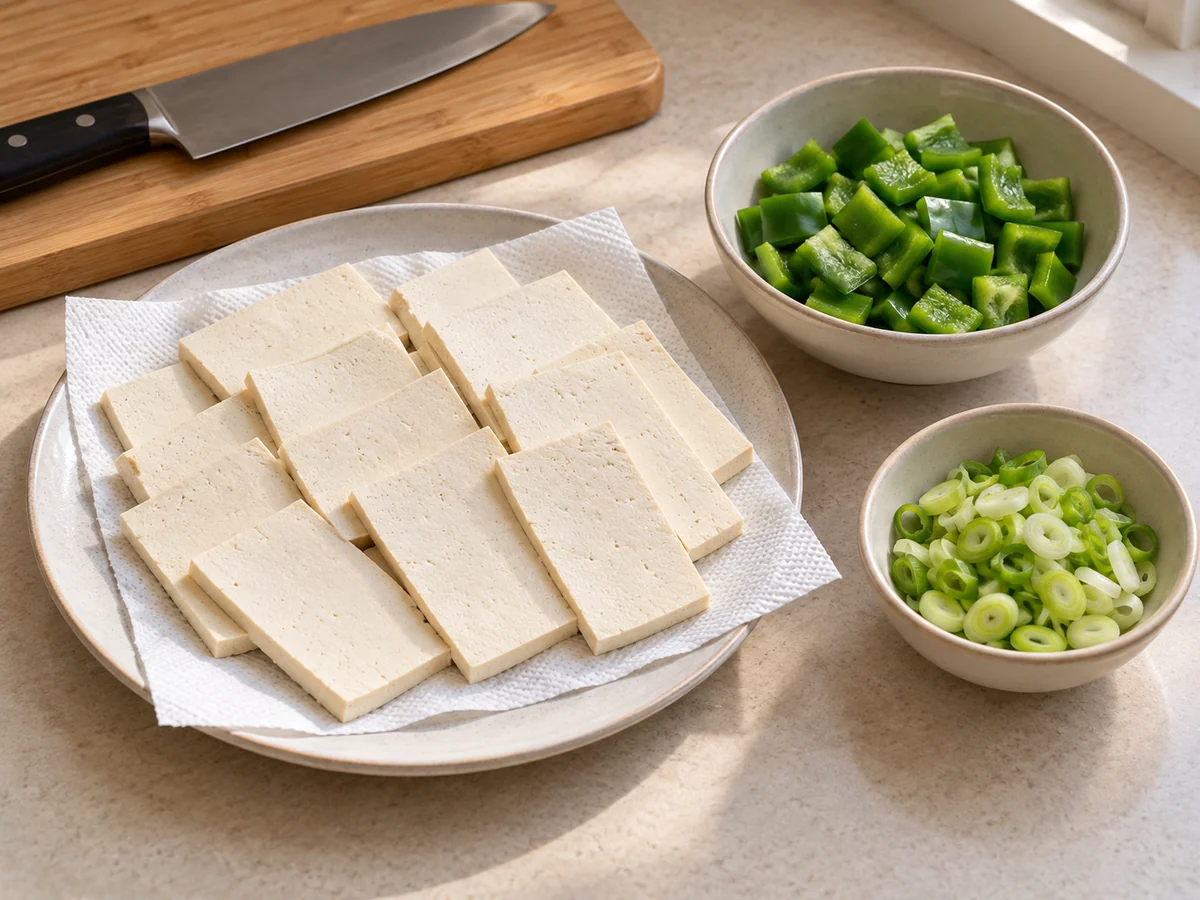
Scallion pan-fried tofuCut and dry ingredients
Weigh the current ingredient-list amount of drained firm tofu; the baseline three portions use 900 g, about three 300 g blocks. Follow the scaled ingredient list when portions change, rather than using three arbitrary packages. Slice about 5 mm thick and pat the surfaces dry. Chop scallion; rinse, deseed and cut pepper into about 1 cm pieces. Fry in uncrowded single-layer batches.
Look forTofu slices are intact and surface-dry; other ingredients are separated.
See the full recipe ↗ 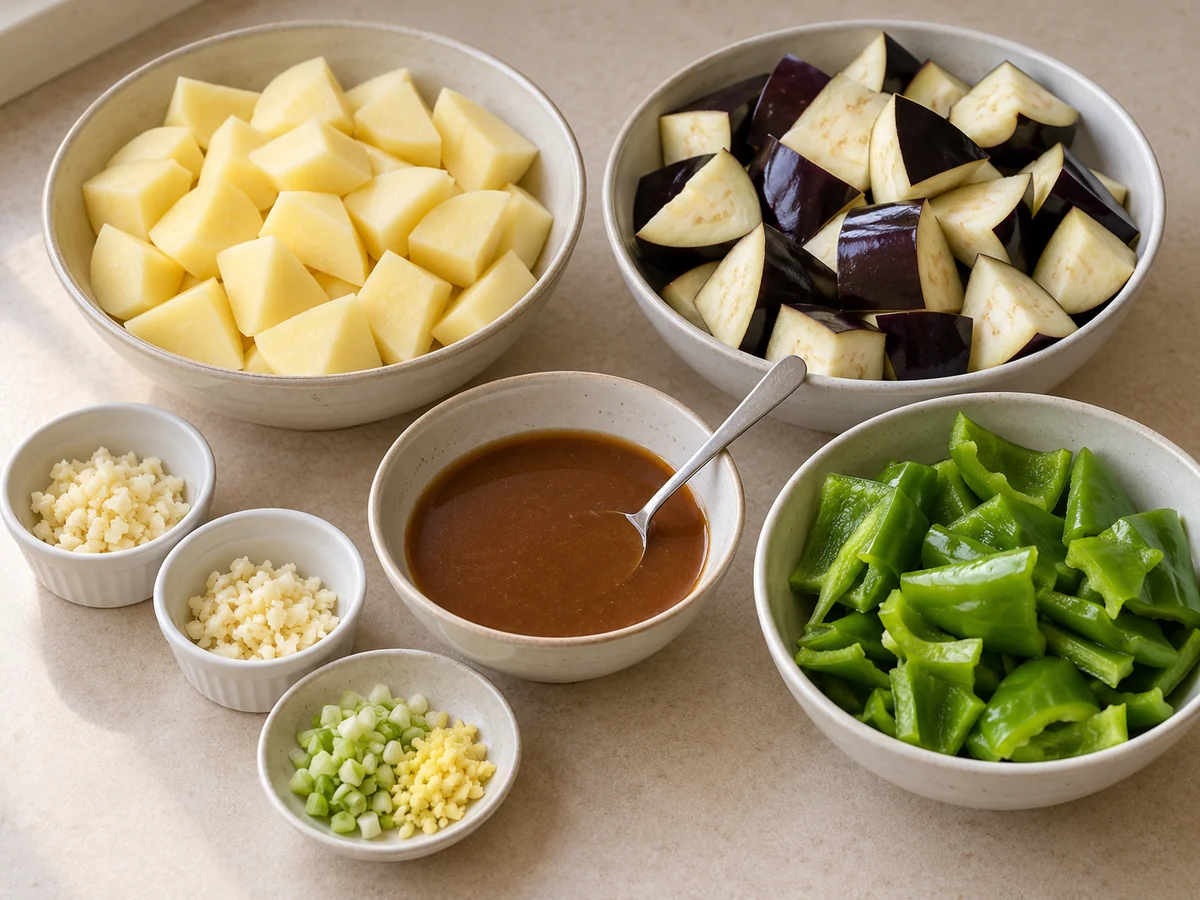
Eggplant, potato and pepper stir-fryPrepare, dry and mix sauce
Peel the potato; cut potato and eggplant into roughly 15 g pieces, and tear peppers slightly larger. Thoroughly dry the vegetables before frying. Mince scallion and ginger; mince and split garlic equally. Mix the light soy sauce, sugar, starch and listed sauce water; keep the bowl ready beside the stove.
Look forVegetables are surface-dry, garlic is split and sauce mixed.
See the full recipe ↗ 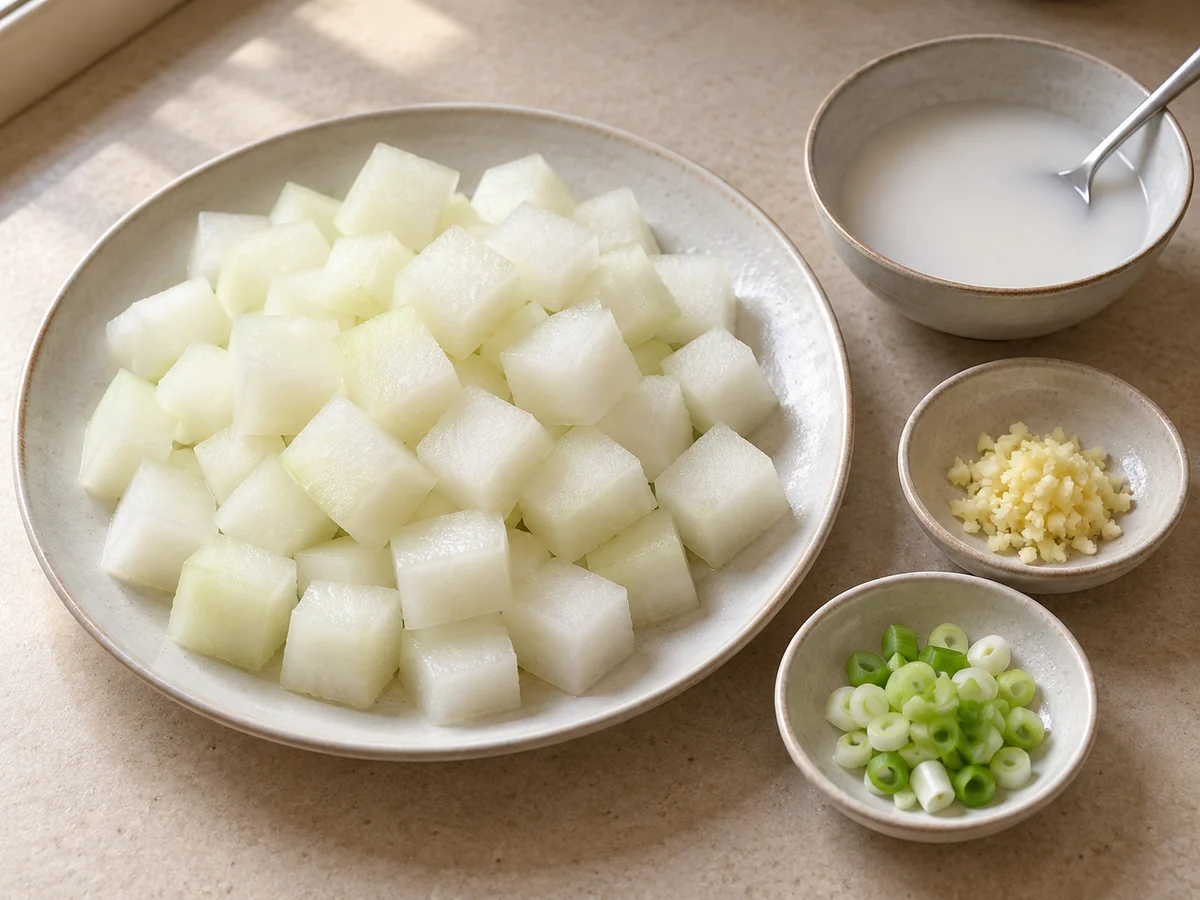
Soy-braised winter melonPrepare melon and slurry
Peel and deseed the melon, cut pieces no larger than 2 cm and dry their surfaces. Prepare ginger and scallion; gradually mix cool water into the starch to make a flowing slurry.
Look forMelon pieces are similar and surface-dry; slurry flows.
See the full recipe ↗ 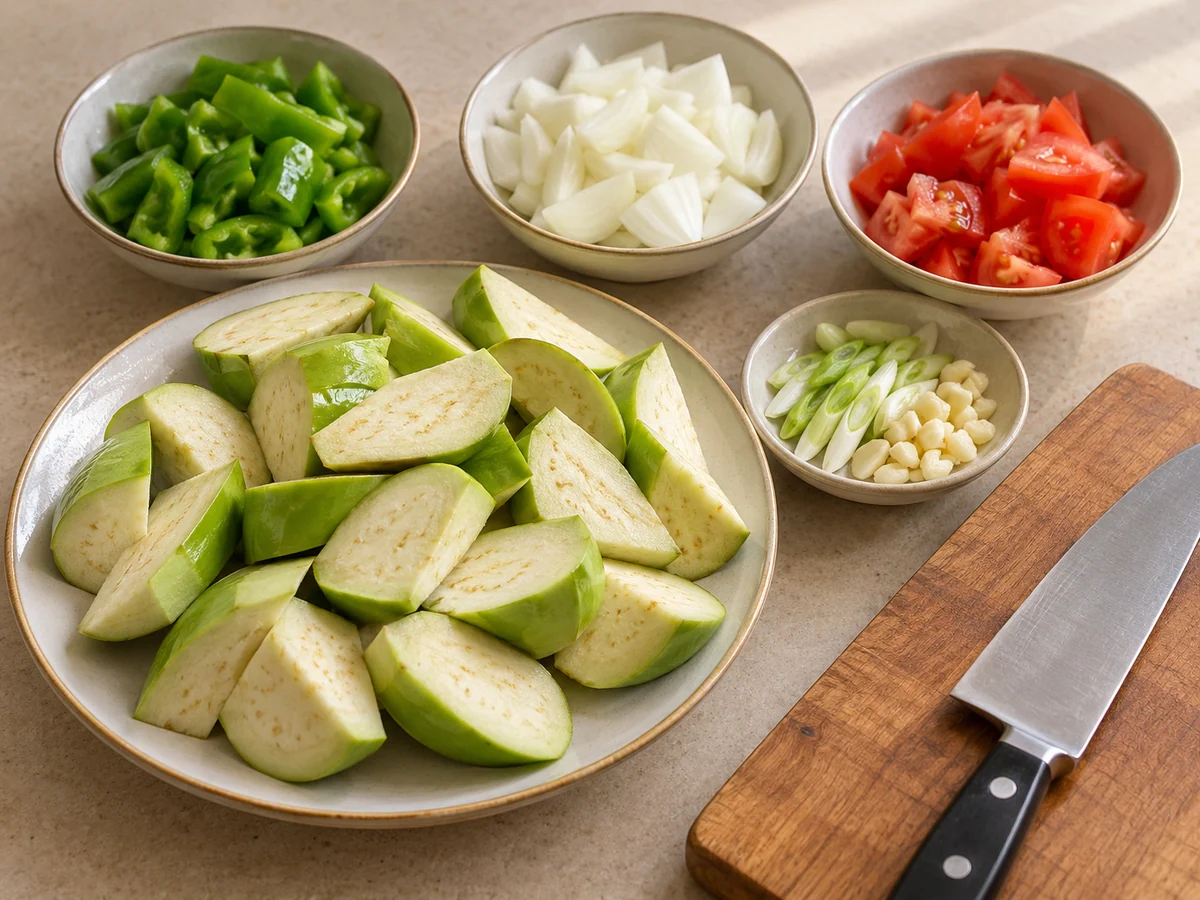
Soy-braised eggplantPrepare vegetables
Slice eggplant about 2 cm thick, cut into strips and then diagonal chunks. Chop pepper, onion and tomato; thinly slice scallion and crush garlic. Drain washed produce and keep the groups separate.
Look forVegetables are prepared and eggplant pieces are similar in size.
See the full recipe ↗ 
Blistered green peppersPrepare and dry peppers
Stem and wash peppers, cut each lengthwise into 3–4 strips and dry thoroughly. Peel and mince garlic. Wash after handling peppers and avoid touching your eyes.
Look forPepper surfaces are dry and garlic minced.
See the full recipe ↗ 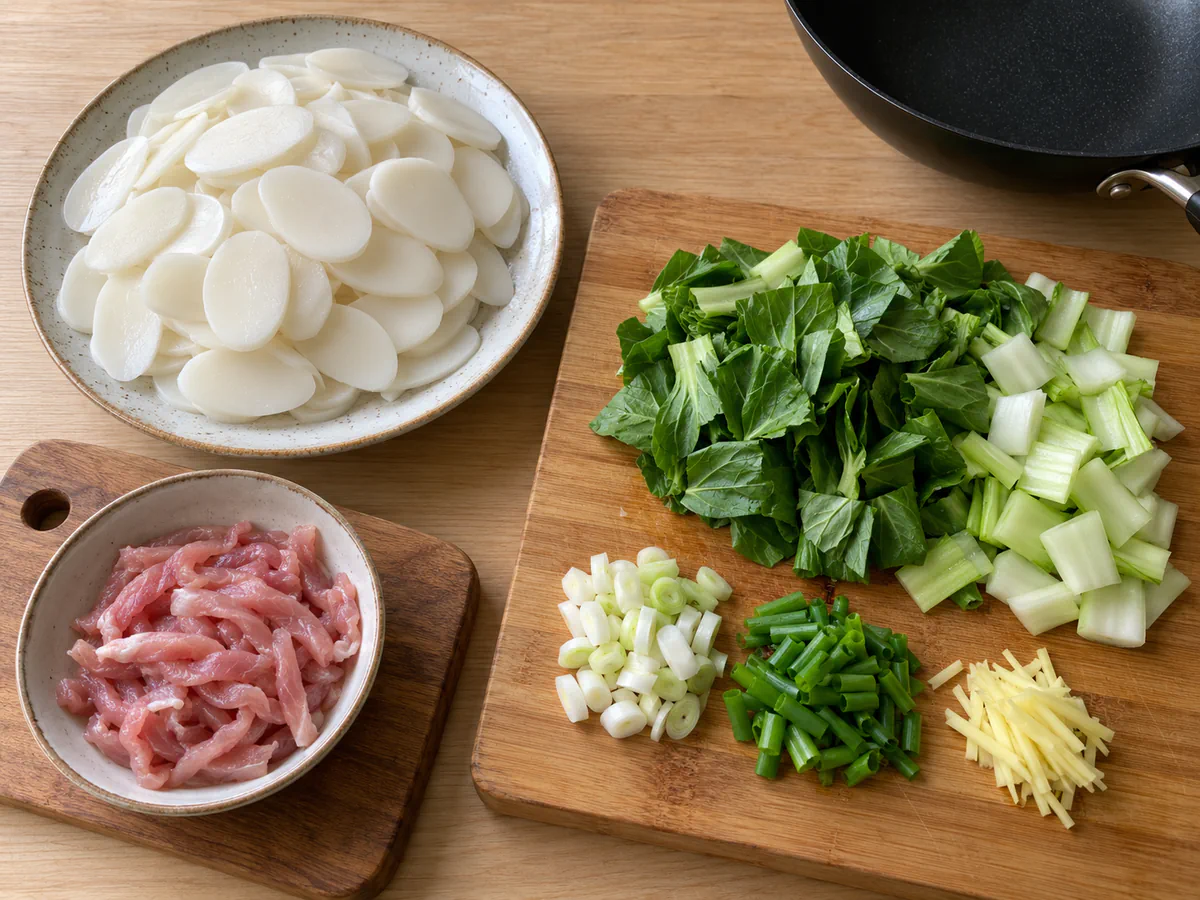
Stir-fried rice cakes with pork and bok choyPrepare pork and vegetables
Wash and drain bok choy; separate stems from leaves. Cut scallion and ginger. On a separate board, slice pork across the grain into roughly 3 mm strips; clean hands and equipment afterward. Separate refrigerated rice-cake slices. Frozen or dried products need package-directed preparation first; never force a knife through frozen blocks.
Look forEven pork strips, separated stems and leaves, and loose rice-cake slices.
See the full recipe ↗ 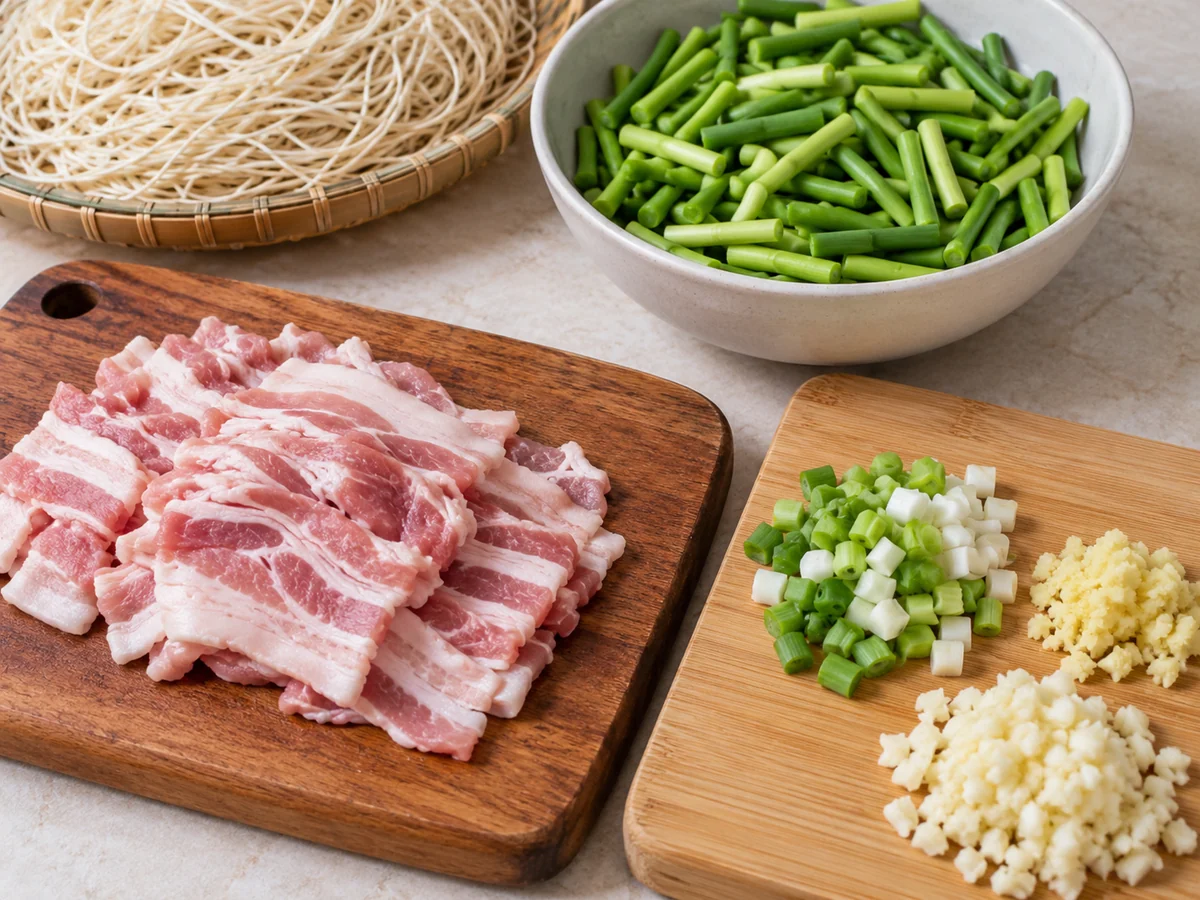
Henan steamed noodlesCut pork and garlic scapes
Thinly slice the pork, wash and cut garlic scapes into short lengths, and chop scallion, ginger and garlic. Keep raw-meat equipment separate and clean it afterward.
Look forThe pork slices are even and vegetables are prepared separately.
See the full recipe ↗ 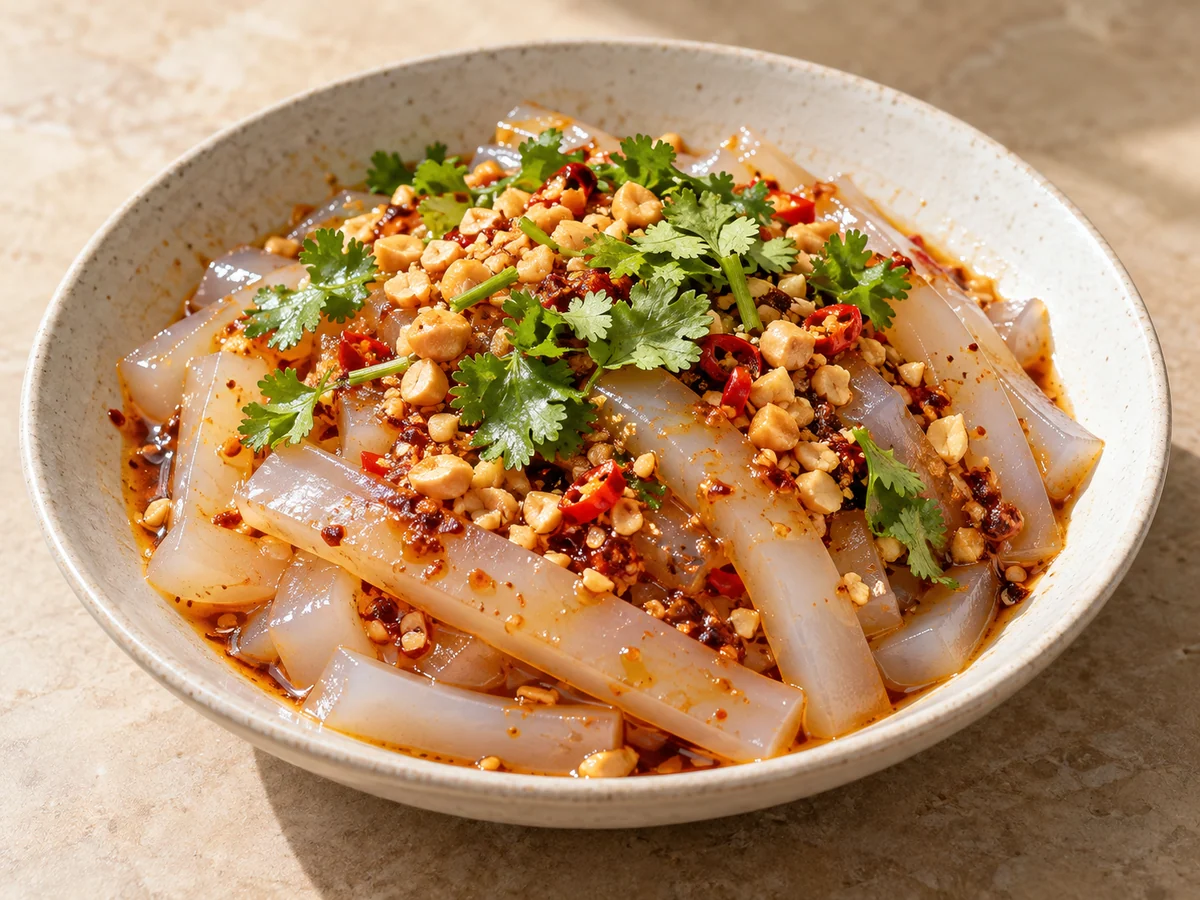
Pea-starch jellySlice and dress
Unmold and slice on a clean board, spoon over the dressing and add washed optional cilantro. Eat promptly and refrigerate while waiting.
Look forThe jelly strips are intact and springy with an even coating of dressing.
See the full recipe ↗ 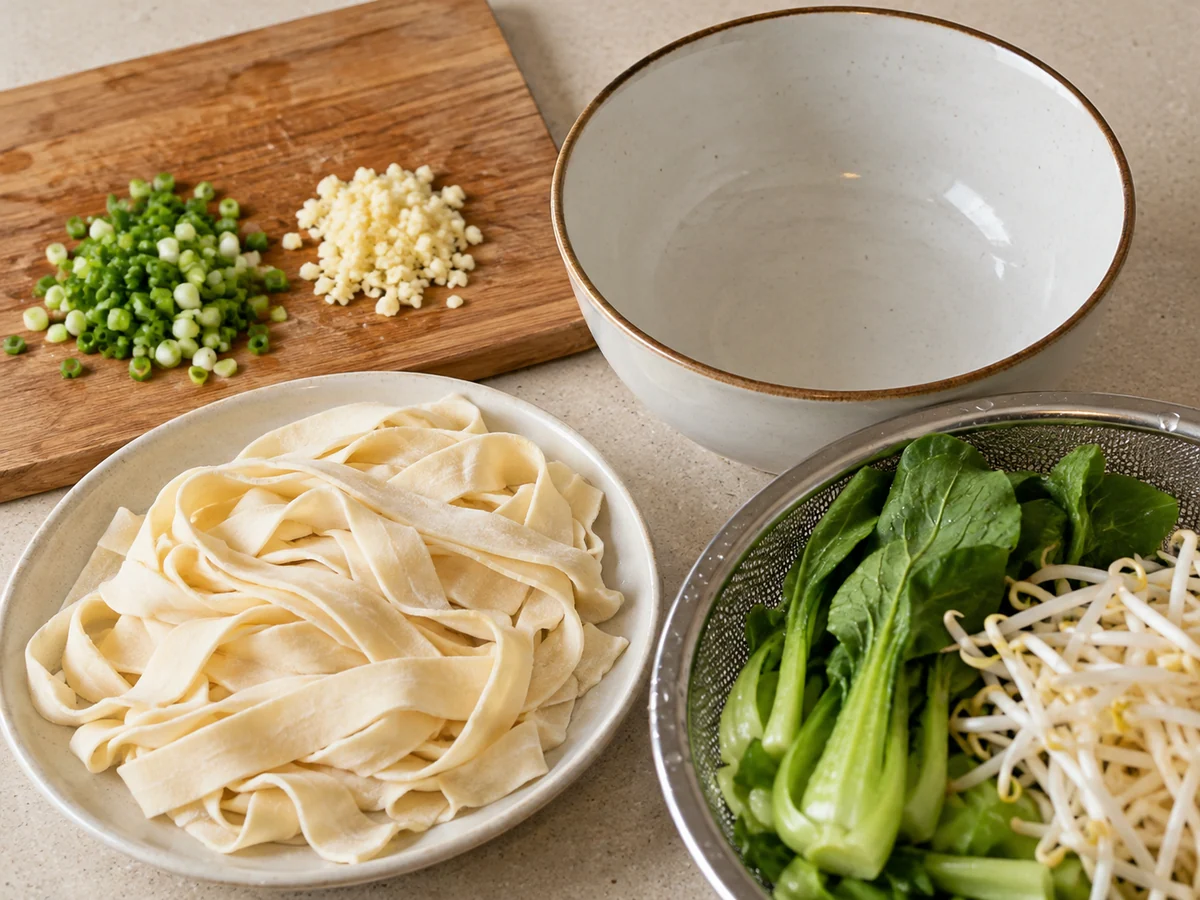
Shaanxi hot oil noodlesPrepare vegetables and a heatproof bowl
Weigh the fresh wide noodles before cooking: this version uses 190 g per portion, not four variable-size strands or 190 g dried noodles. Chop scallion and mince garlic; rinse greens and optional sprouts. Prepare a deep heatproof bowl that tolerates hot oil and dry its rim. Follow the noodle package and do not stretch already-formed noodles.
Look forThe aromatics are ready, the bowl is heatproof and stable and vegetables are clean.
See the full recipe ↗ 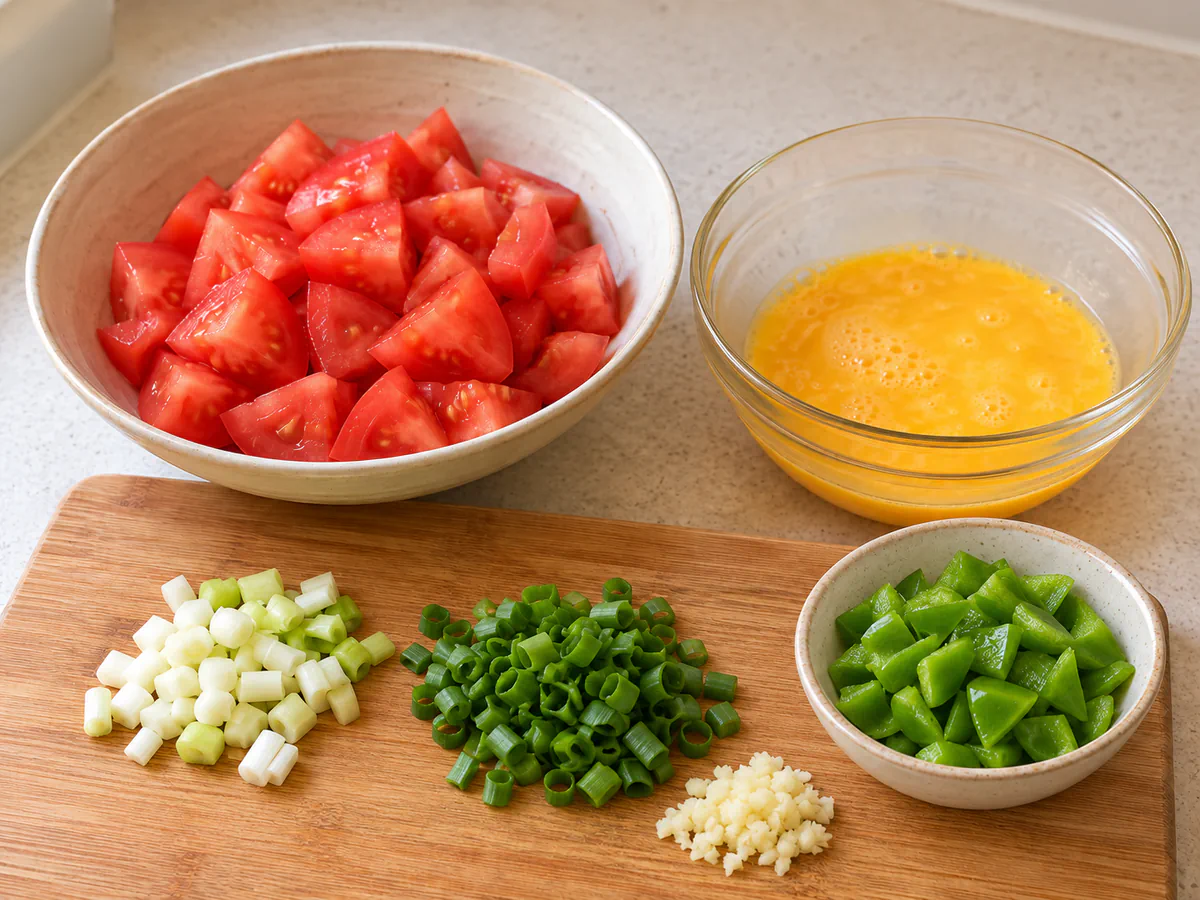
Tomato and egg noodlesCut tomato and beat egg
Rinse and chop tomato. Trim and deseed the green bell pepper, weigh it, then cut small diamonds. Weigh peeled garlic and mince it. Chop scallion whites and greens separately and beat the egg; keep raw-egg utensils separate from cooked-food utensils.
Look forTomato, pepper diamonds, minced garlic and separate scallion whites/greens are prepared; egg is beaten.
See the full recipe ↗ 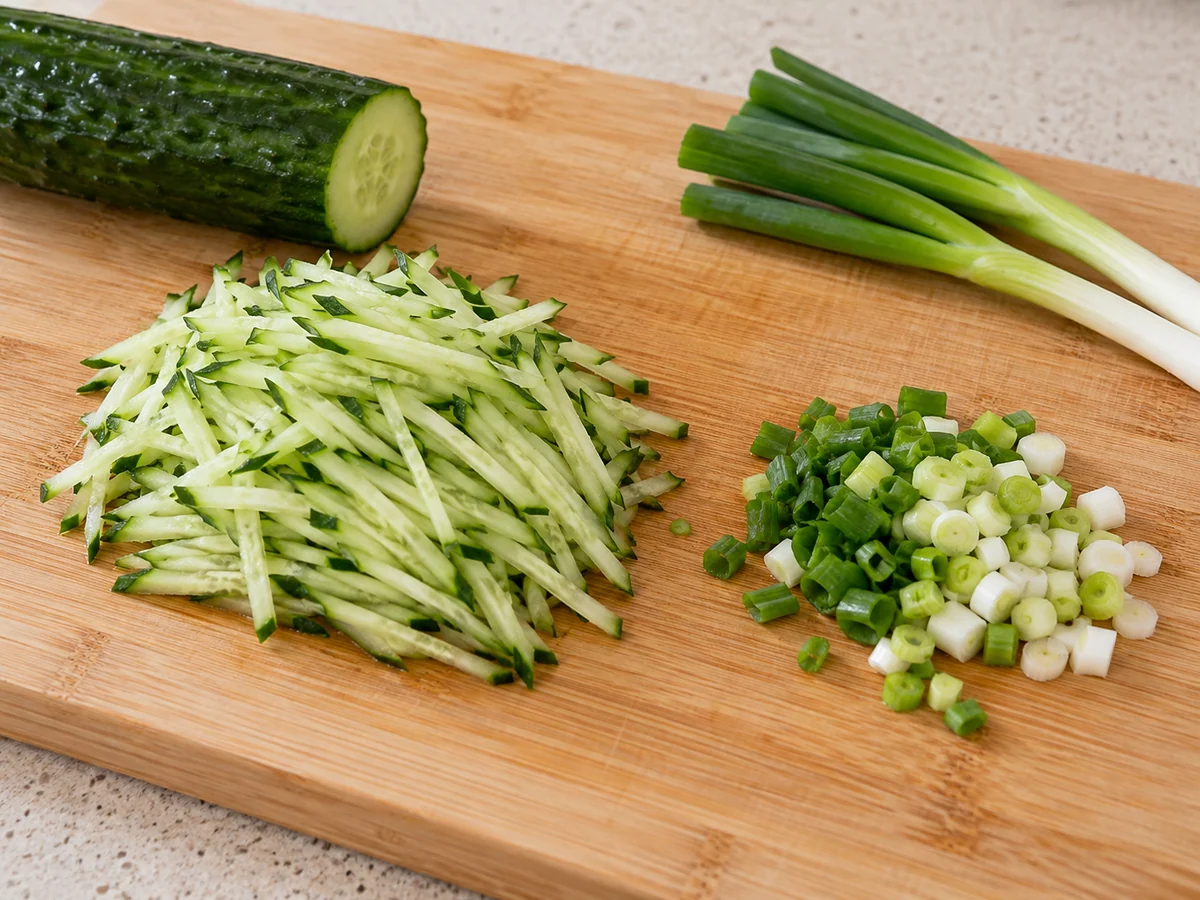
Zhajiang noodlesPrepare cucumber and scallion
Wash and shred the cucumber and chop scallion. Use clean equipment for the ready-to-eat cucumber, separate from raw pork.
Look forThe cucumber shreds are clean and scallion is chopped.
See the full recipe ↗ 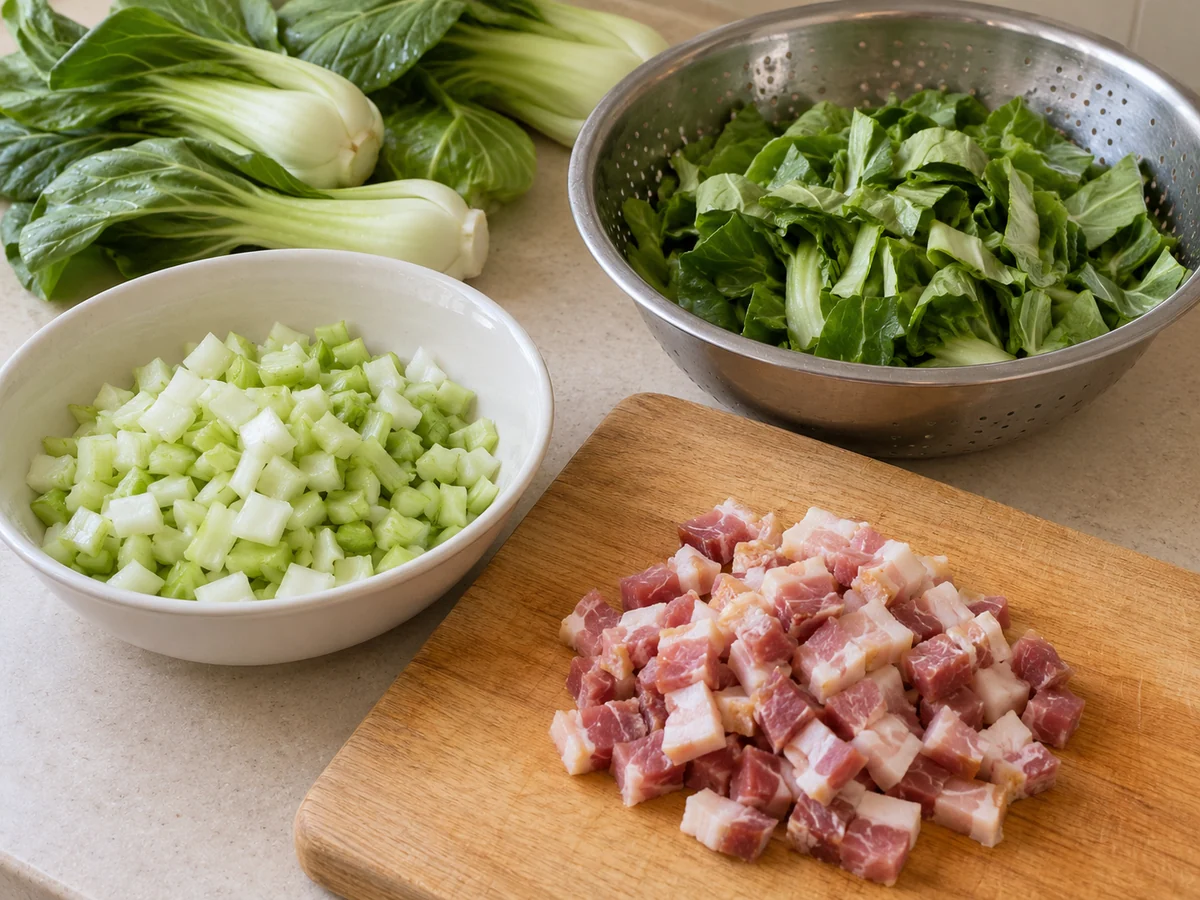
Salted pork and greens ricePrepare greens and check cured pork
Check the cured pork’s storage and thorough-cooking directions, then dice it small. Wash the greens, dice stems and slice leaves, keeping raw-pork equipment separate.
Look forThe pork cubes are similar and stems and leaves are separated.
See the full recipe ↗ 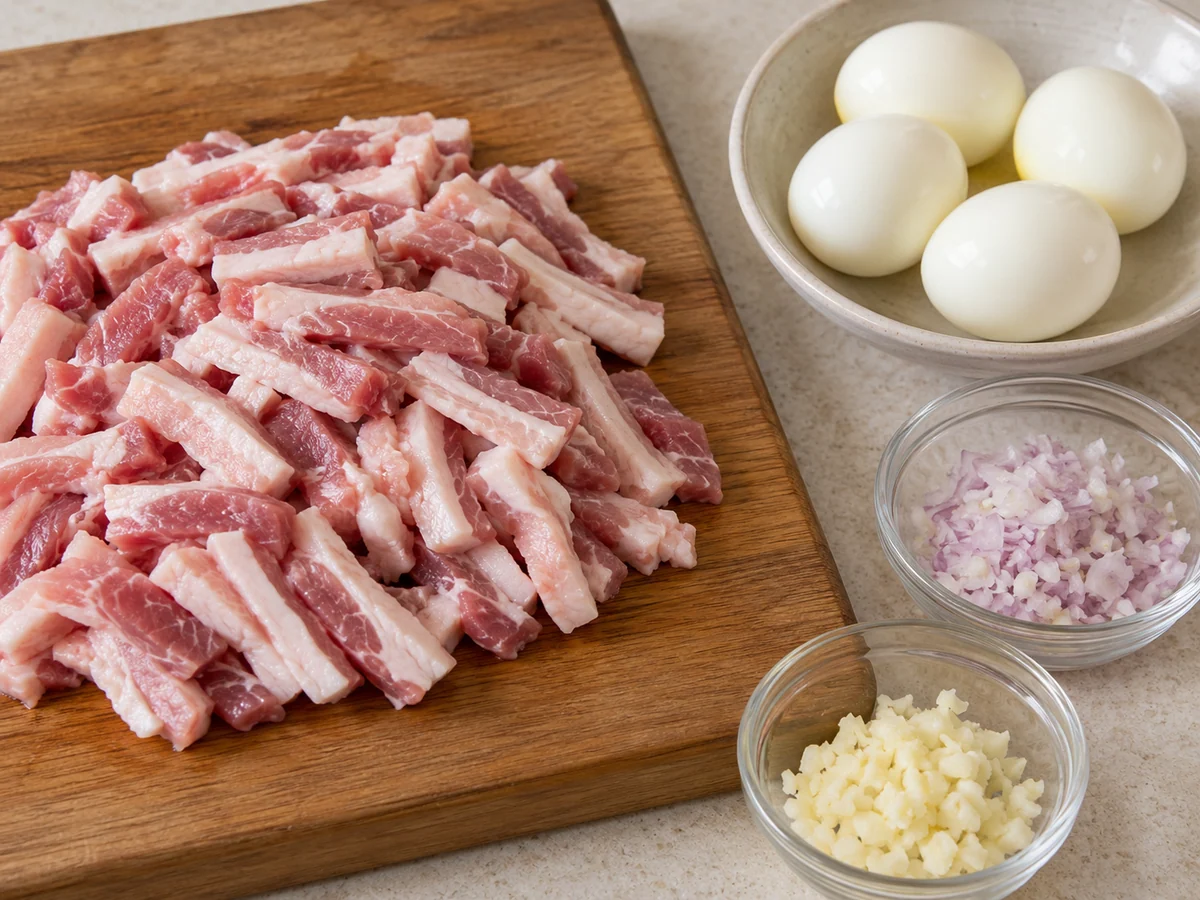
Taiwanese braised pork riceCut pork and prepare optional eggs
Cut pork belly into fine strips retaining lean and fat. Thaw frozen pork safely in the refrigerator rather than leaving it at room temperature. Mince shallots and garlic. If using eggs, boil until white and yolk are firm, cool until safe to handle and peel.
Look forPork strips are even, aromatics ready and optional eggs fully cooked and peeled.
See the full recipe ↗ 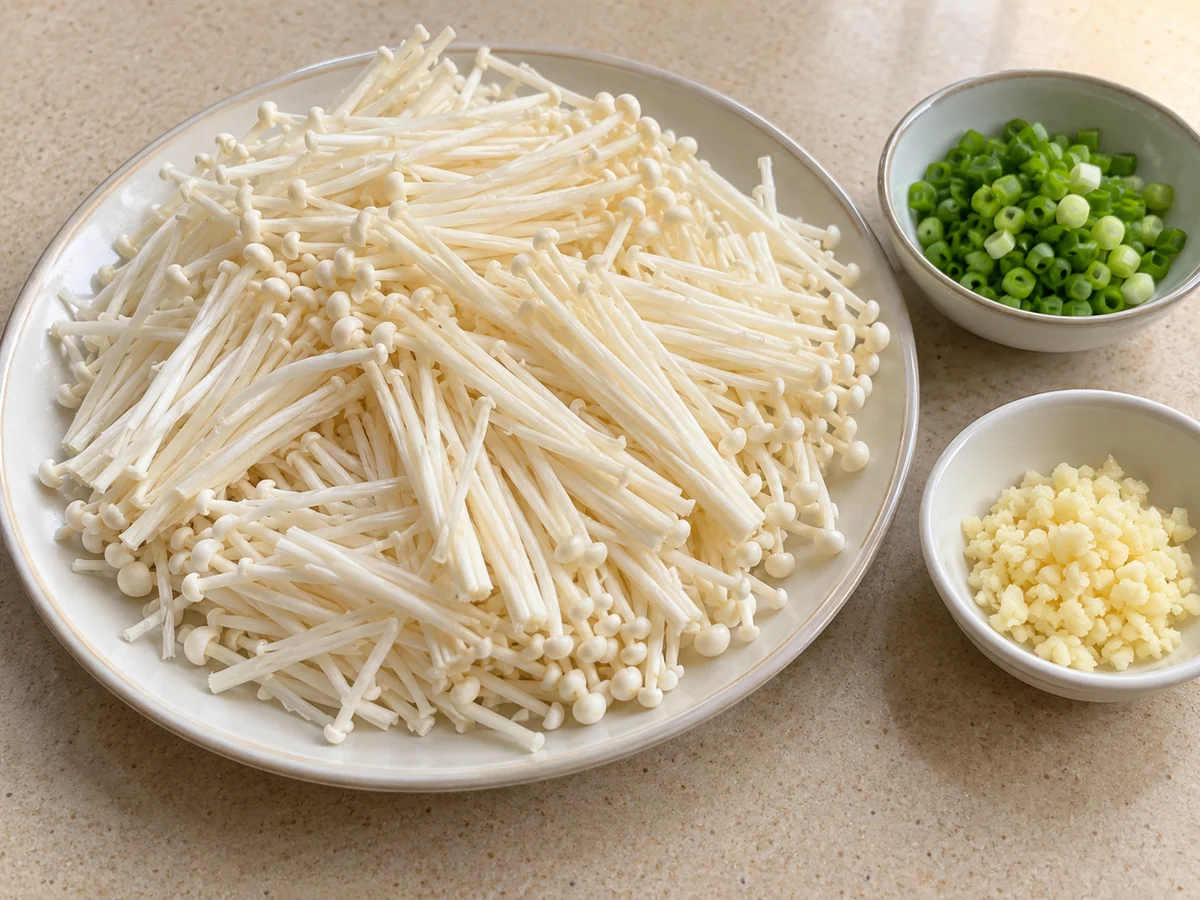
Enoki mushroom saladPrepare mushrooms and aromatics
Trim the enoki base, separate into small loose clusters, wash and drain. Wash and chop scallion and mince garlic. Clean any board or strainer that touched raw mushrooms before using it for cooked ones.
Look forThe mushrooms are separated into small loose clusters with chopped aromatics beside them.
See the full recipe ↗ 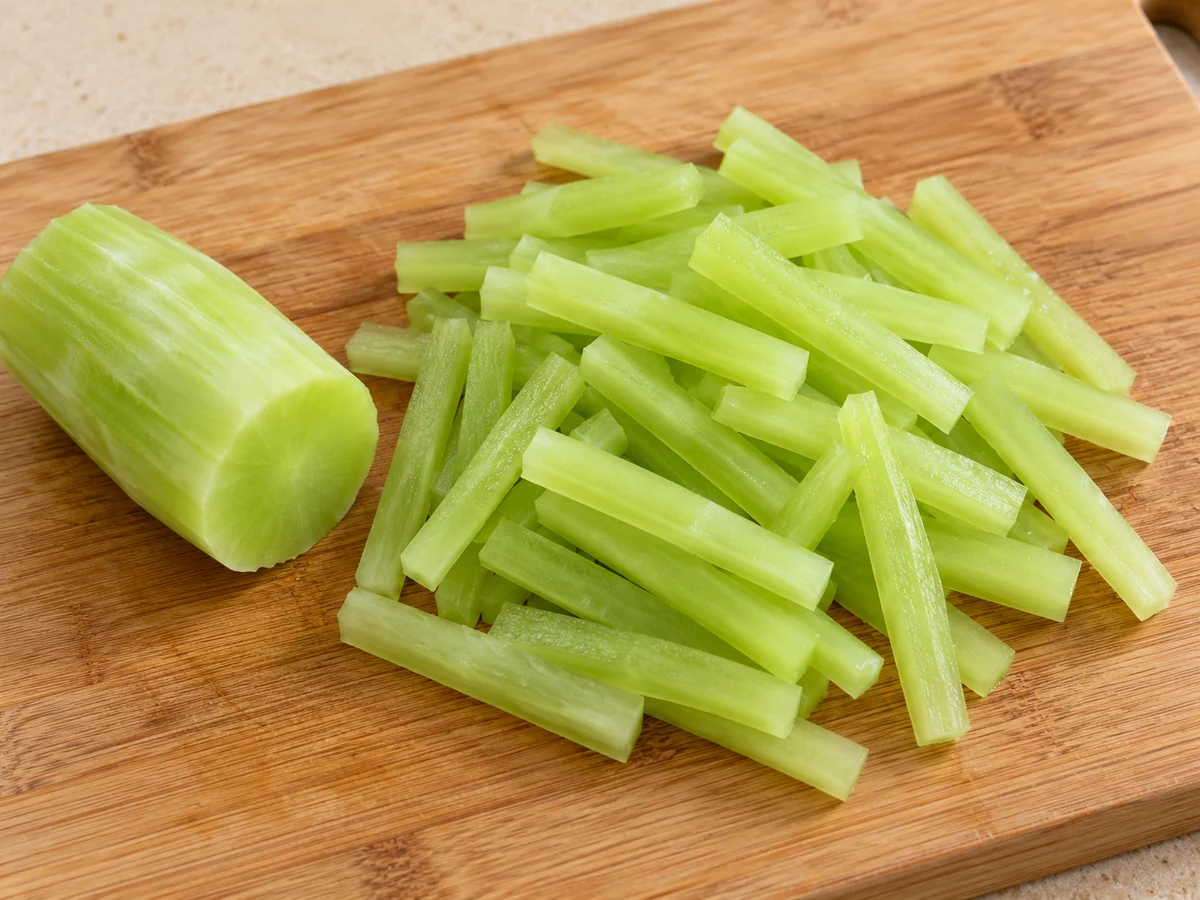
Celtuce saladPeel and cut batons
Wash the celtuce, peel away the tough skin to the tender green flesh and cut even batons. If using radish, wash, peel and cut thin batons. Slice ginger and chop garlic and chili.
Look forCeltuce has no tough skin and the batons are evenly sized.
See the full recipe ↗ 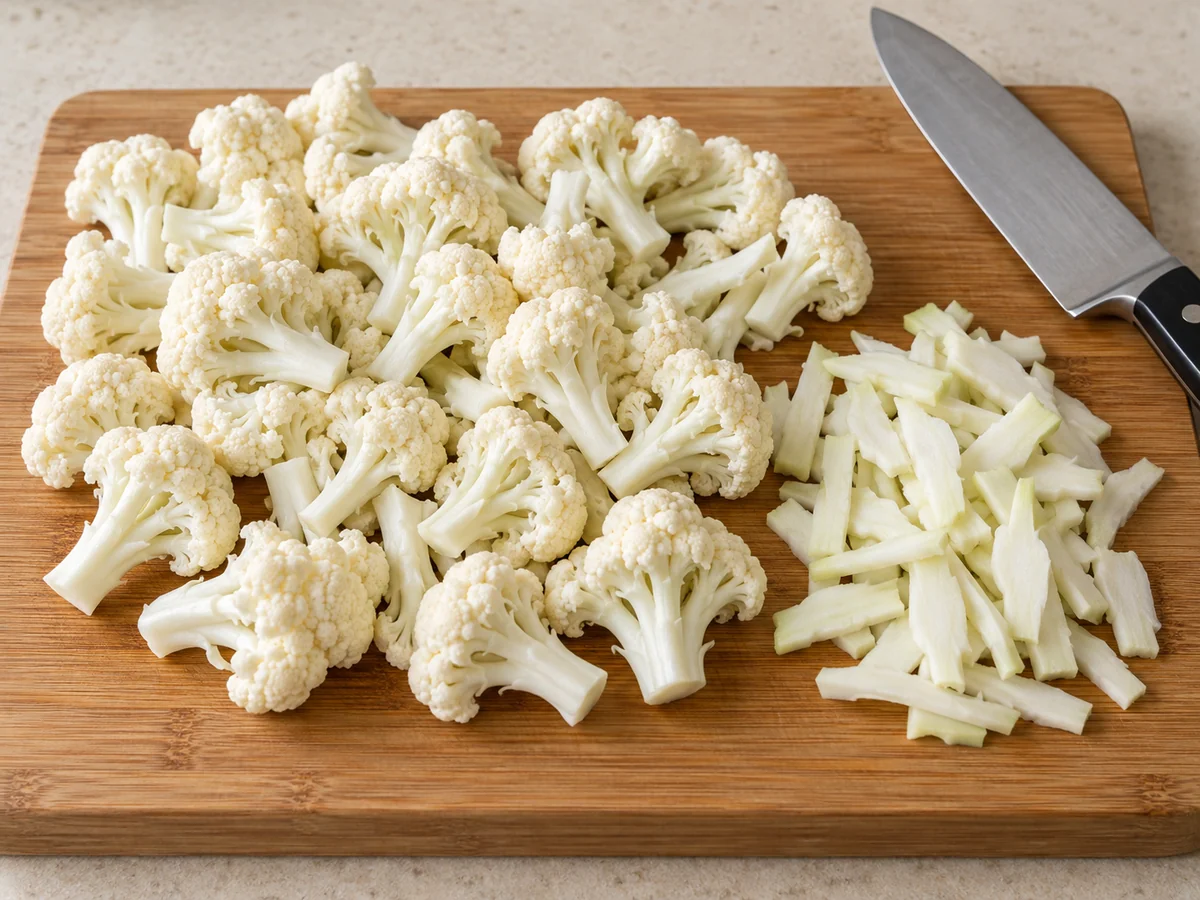
Cauliflower stir-fryPrepare florets and garlic
Wash and break cauliflower into similarly sized small florets and slice thick stems thinly. Peel and slice garlic and measure the water for the pan separately.
Look forFlorets are similarly small and thick stems are thinly sliced.
See the full recipe ↗ 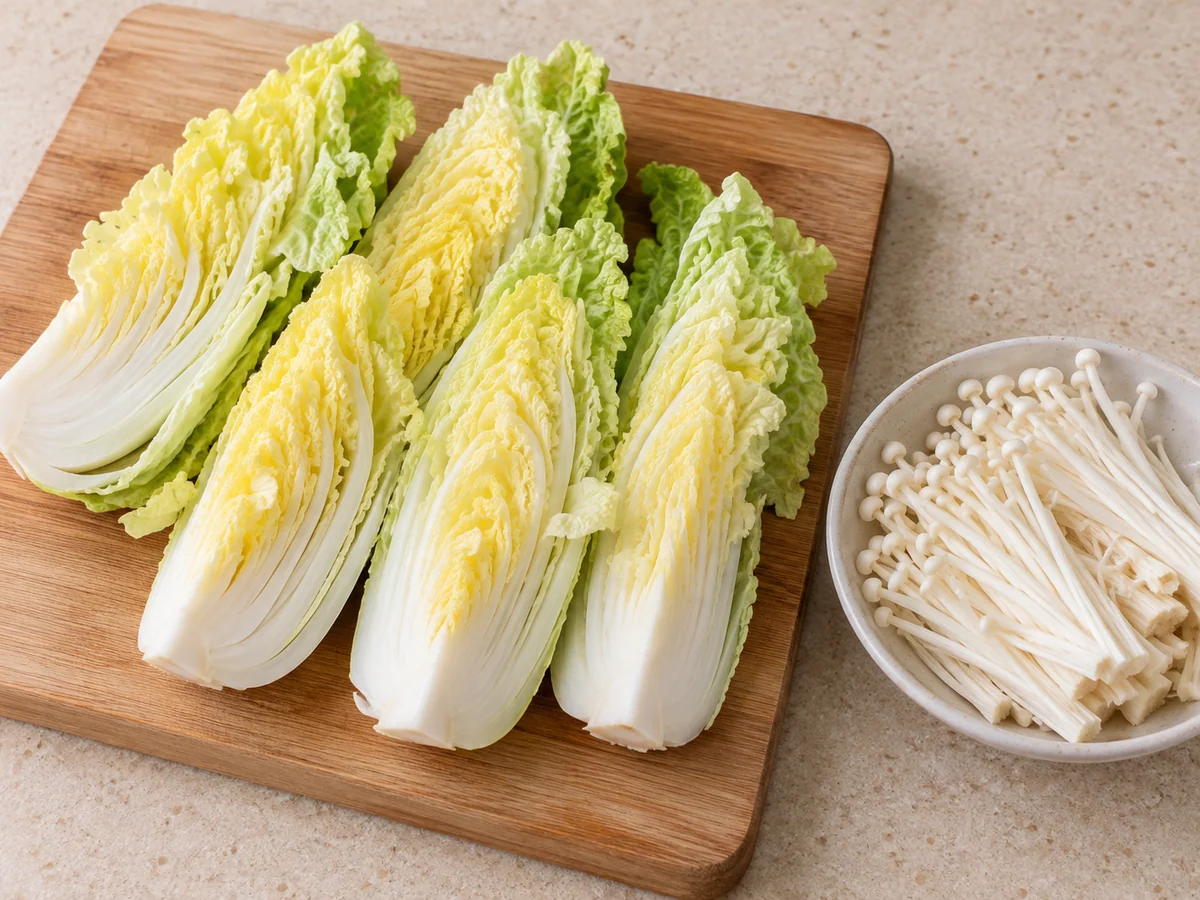
Baby napa cabbage in brothPrepare the cabbage
Wash between the cabbage leaves and cut lengthwise into manageable wedges, splitting thick cores. If using enoki, trim the base, separate and wash, keeping it apart from other prepared food.
Look forCabbage wedges retain their leaves and any enoki is in small loose clusters.
See the full recipe ↗ 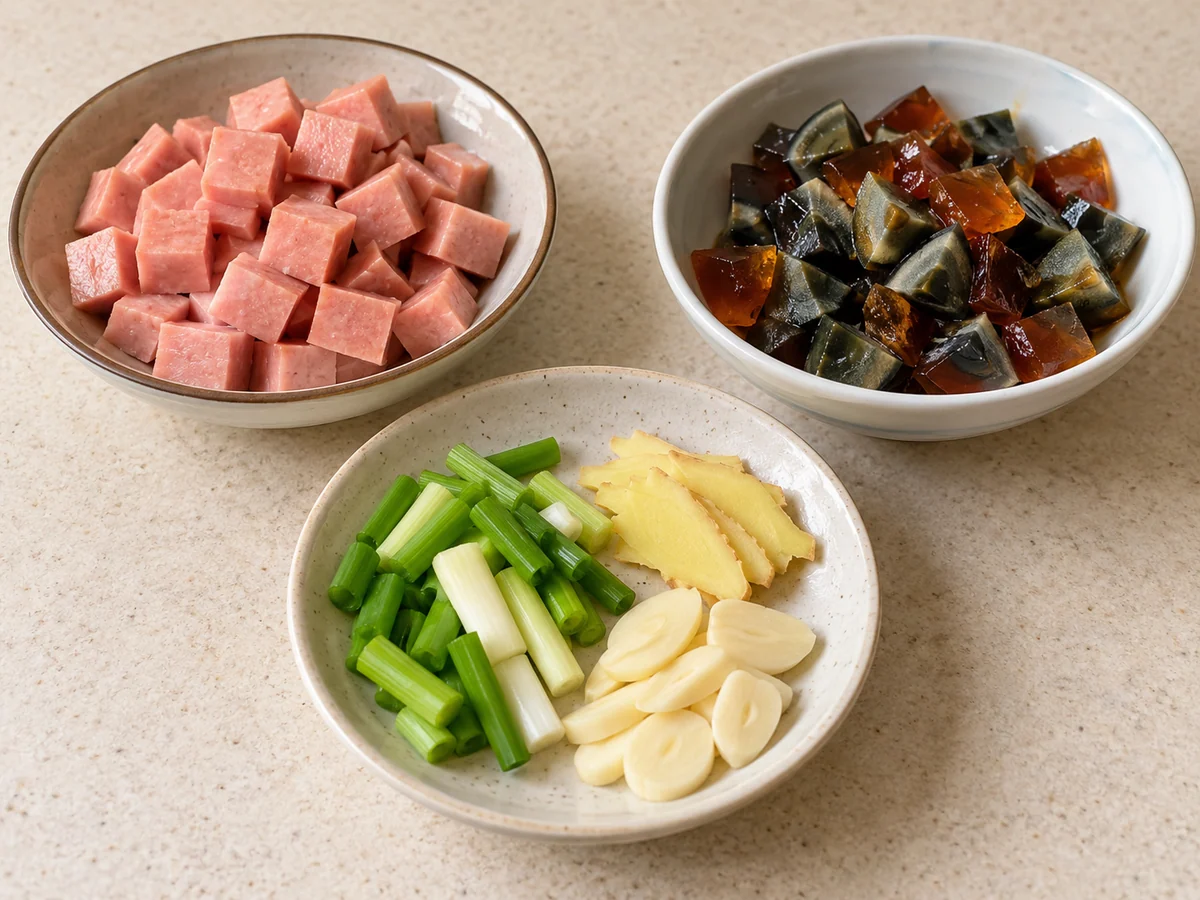
Baby napa cabbage in brothCut aromatics and additions
Cut scallion into pieces, slice ginger and garlic and dice the luncheon meat. If using century egg, check that it is ready to eat, peel and dice with clean utensils and keep separately.
Look forAromatics are prepared, with diced meat and optional century egg in separate bowls.
See the full recipe ↗ 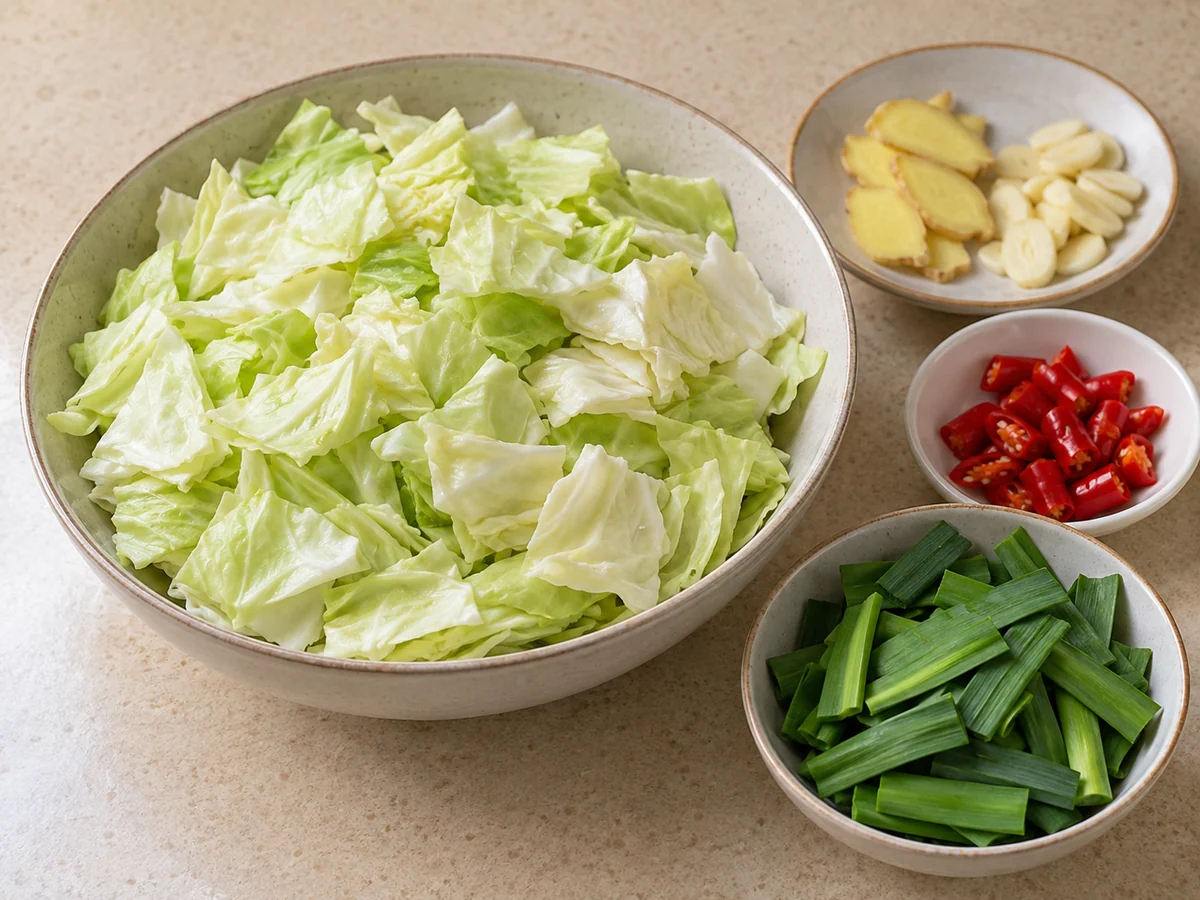
Hand-torn cabbage stir-fryTear and dry the cabbage
Remove the cabbage core, tear bite-size pieces, wash and drain thoroughly. Slice ginger and garlic and cut chili and green garlic. Prepare vegetables before handling raw pork.
Look forCabbage pieces are similar in size and free of droplets, with aromatics prepared.
See the full recipe ↗ 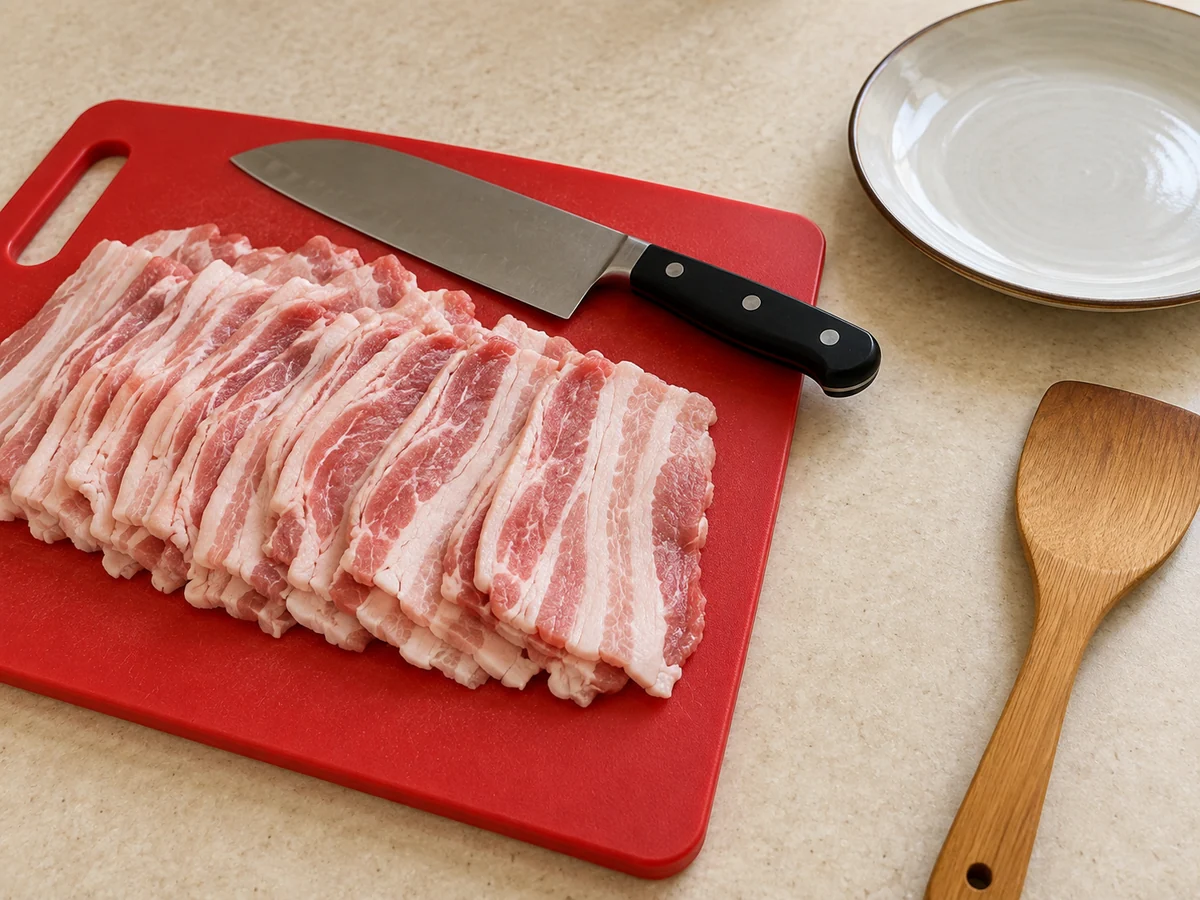
Hand-torn cabbage stir-frySlice the pork thinly
Use a separate board to cut pork belly into even thin slices and blot surface moisture. Do not rinse raw meat; wash hands and clean the knife and board afterward.
Look forPork slices have even thickness and raw-meat utensils are kept separate.
See the full recipe ↗ 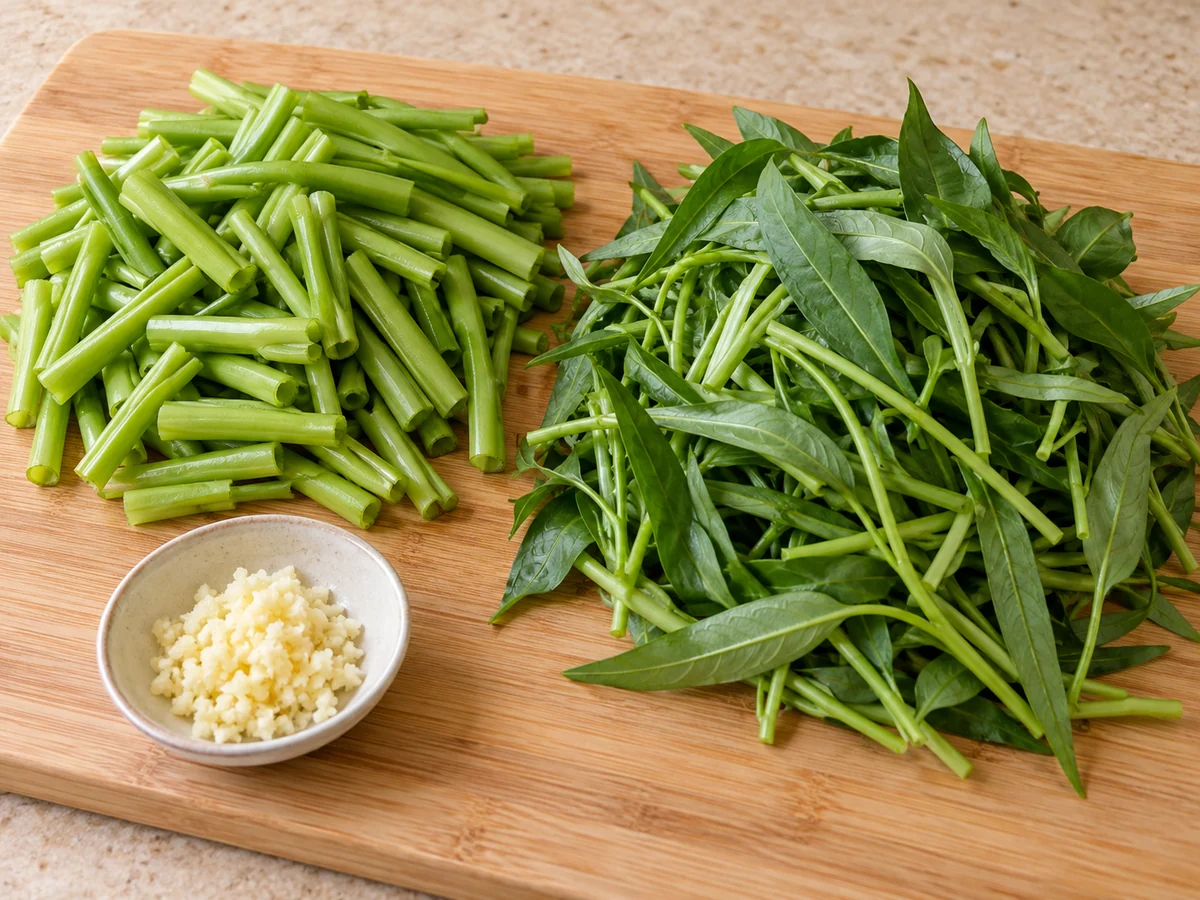
Garlic water spinachWash and cut the greens
Remove damaged leaves and tough stems, wash thoroughly and drain. Cut manageable lengths and separate thicker stems from leaves. Finely mince the garlic.
Look forThe greens are clean and drained, with thicker stems separated from leaves.
See the full recipe ↗ 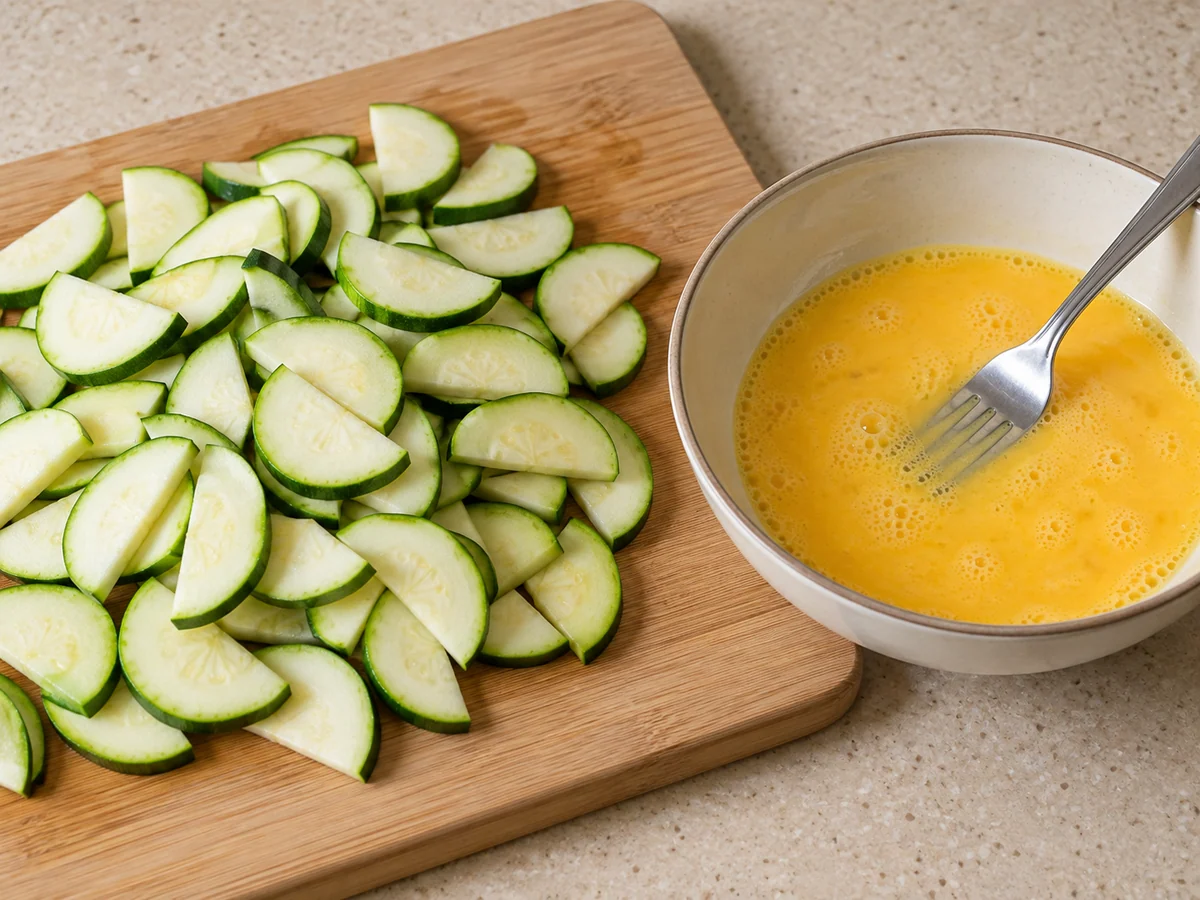
Zucchini and eggsCut vegetables and beat eggs
Wash and cut zucchini into evenly thin slices. If using tomato, wash and dice it. Beat the eggs in a bowl and wash hands after handling the shells.
Look forZucchini slices are even and the beaten egg has no large white streaks.
See the full recipe ↗ 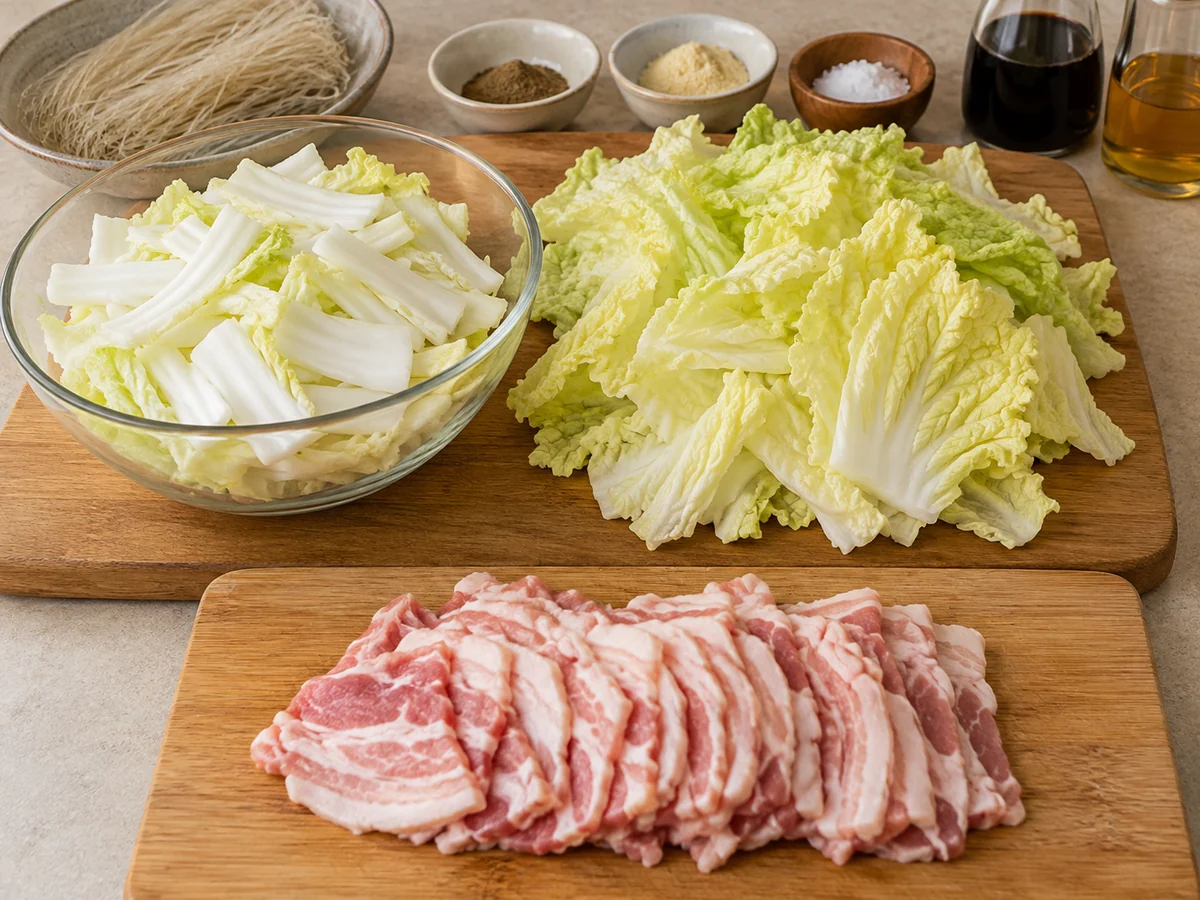
Pork, cabbage and vermicelli stewPrepare pork and cabbage
Wash napa and cut stems and tender leaves separately. On a separate board, slice pork belly about 3 mm thick without rinsing raw meat. Wash hands and clean utensils afterward.
Look forCabbage stems and leaves are separate and pork slices are evenly thin.
See the full recipe ↗ 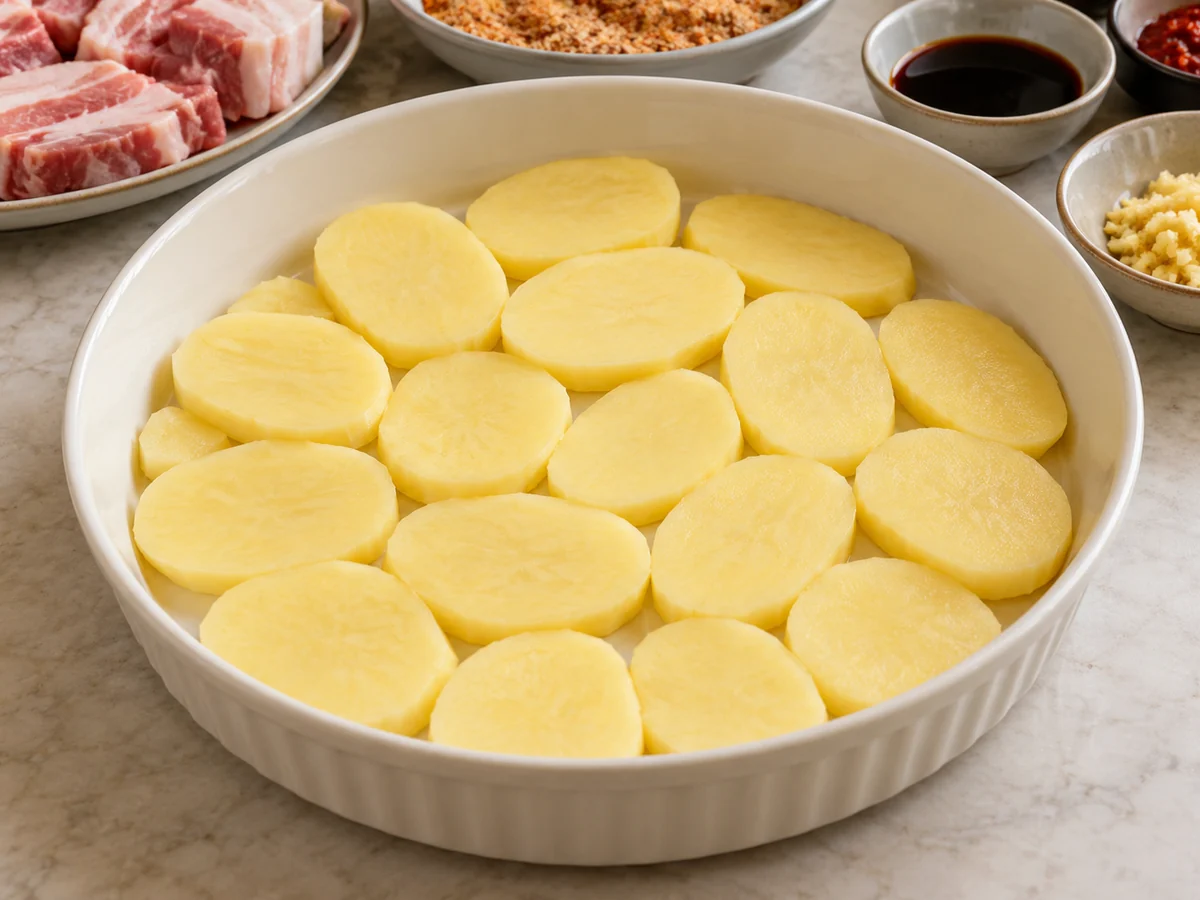
Rice powder steamed porkPrepare the potato base
Peel and slice potato about 8 mm thick. Arrange in a wide heatproof dish without a thick pile. Fill the steamer to its safe working level below the rack.
Look forPotato slices are spread evenly across a wide dish.
See the full recipe ↗ 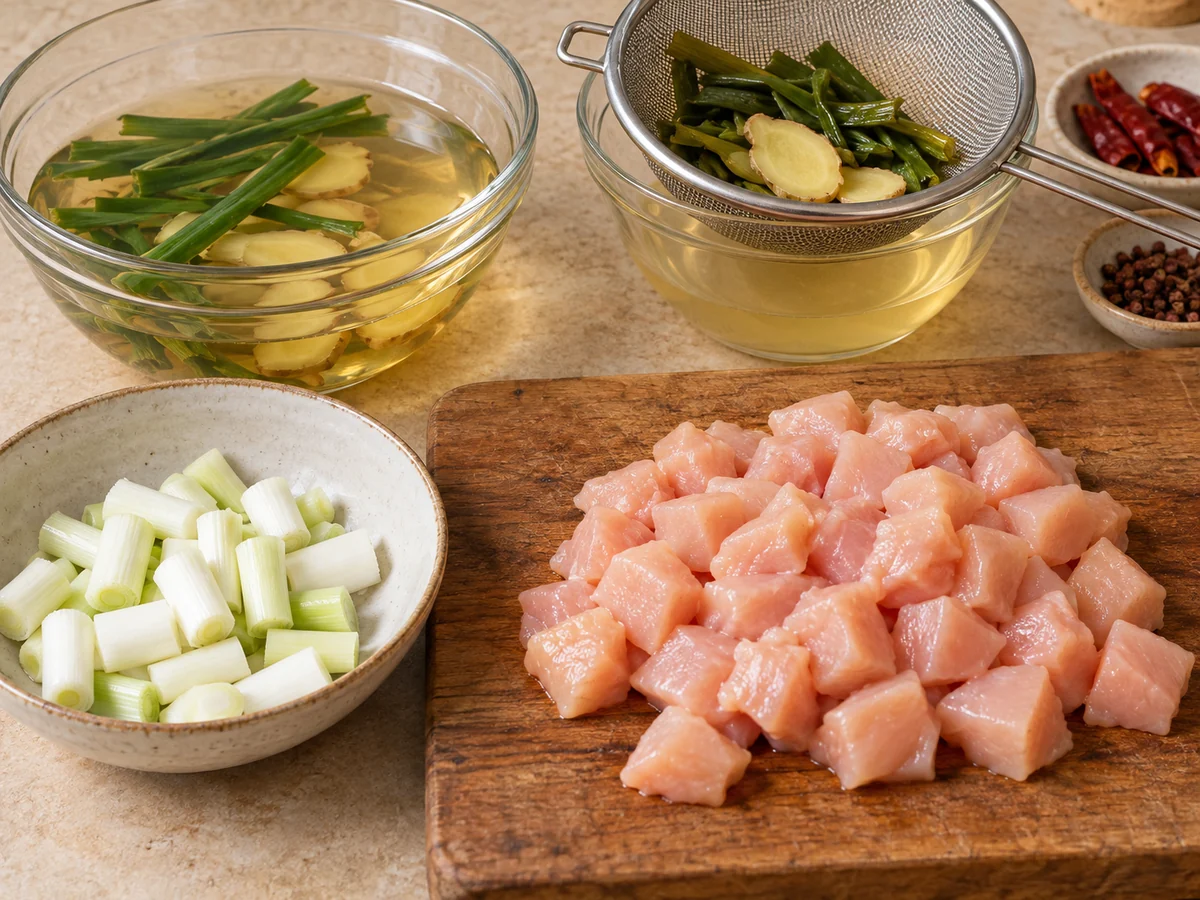
Kung pao chickenMake infusion and dice chicken
Separate leek whites and greens; cut whites into pieces. Steep greens and sliced ginger in the measured boiling infusion water in a heatproof bowl, cool briefly and strain. Dice chicken breast about 1.5 cm on separate equipment without rinsing raw chicken.
Look forThe infusion is strained, chicken cubes even and leek whites set aside.
See the full recipe ↗ 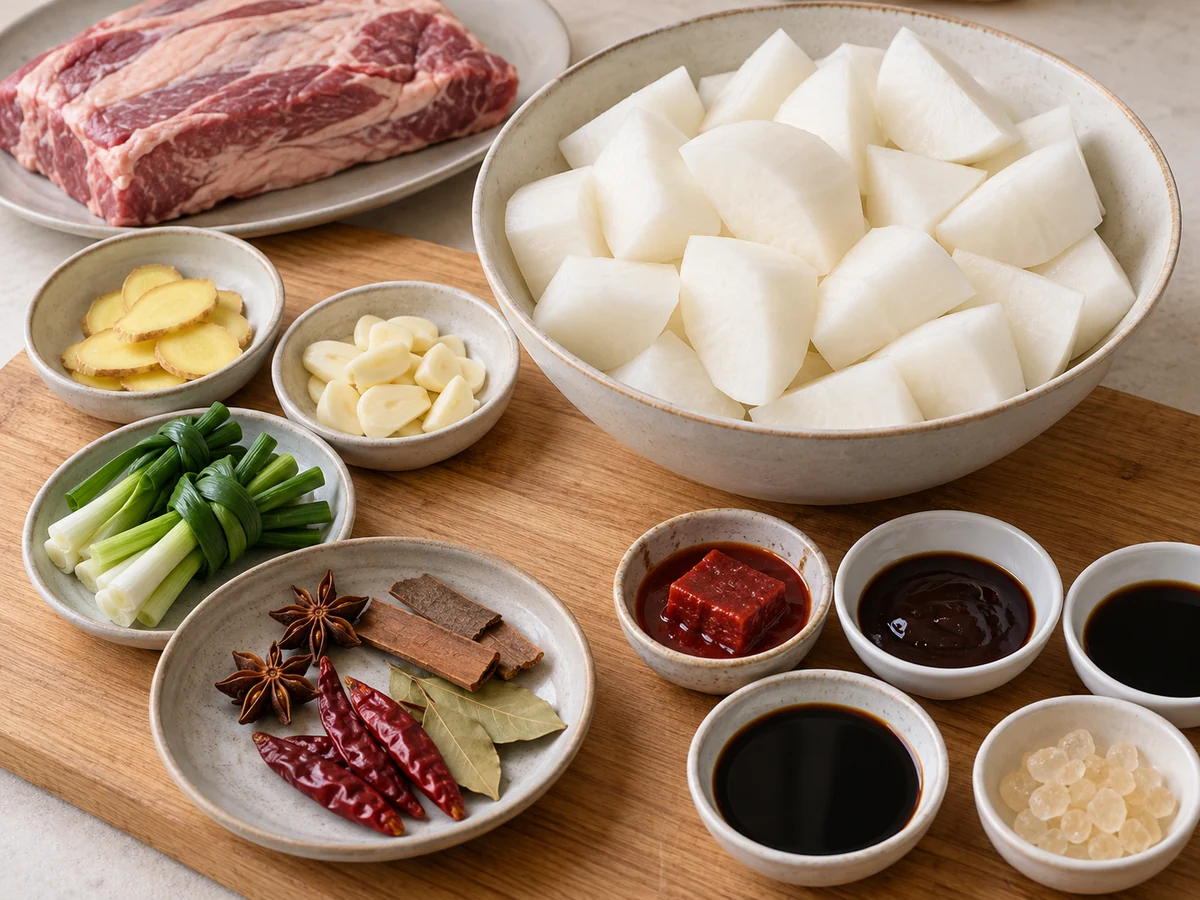
Cantonese beef brisket and radishPrepare radish and spices
Wash, peel and cut radish into similar chunks. Slice ginger and garlic and knot the scallions. Check the whole spices are clean and keep them ready to add and later remove.
Look forRadish pieces are similar in size, with aromatics and whole spices separate.
See the full recipe ↗ 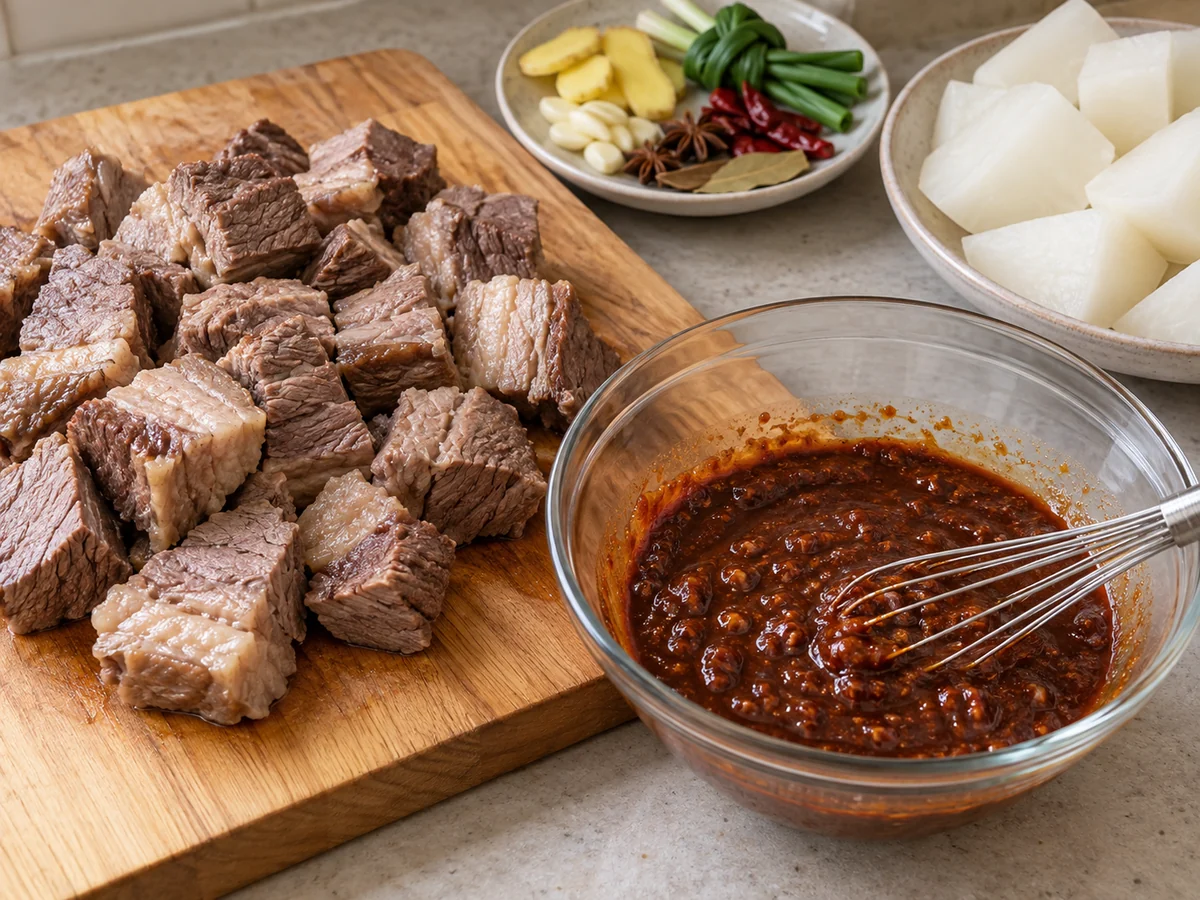
Cantonese beef brisket and radishCut safely and mix the sauce
Let beef cool briefly on a stable heatproof board and hold with tongs while cutting into chunks; do not grip hot meat with bare hands. Mash red bean curd and mix with chu hou, oyster sauce, soy and rock sugar, reserving salt until tasting.
Look forBeef is in chunks and the fermented bean curd is mashed into the sauce.
See the full recipe ↗ 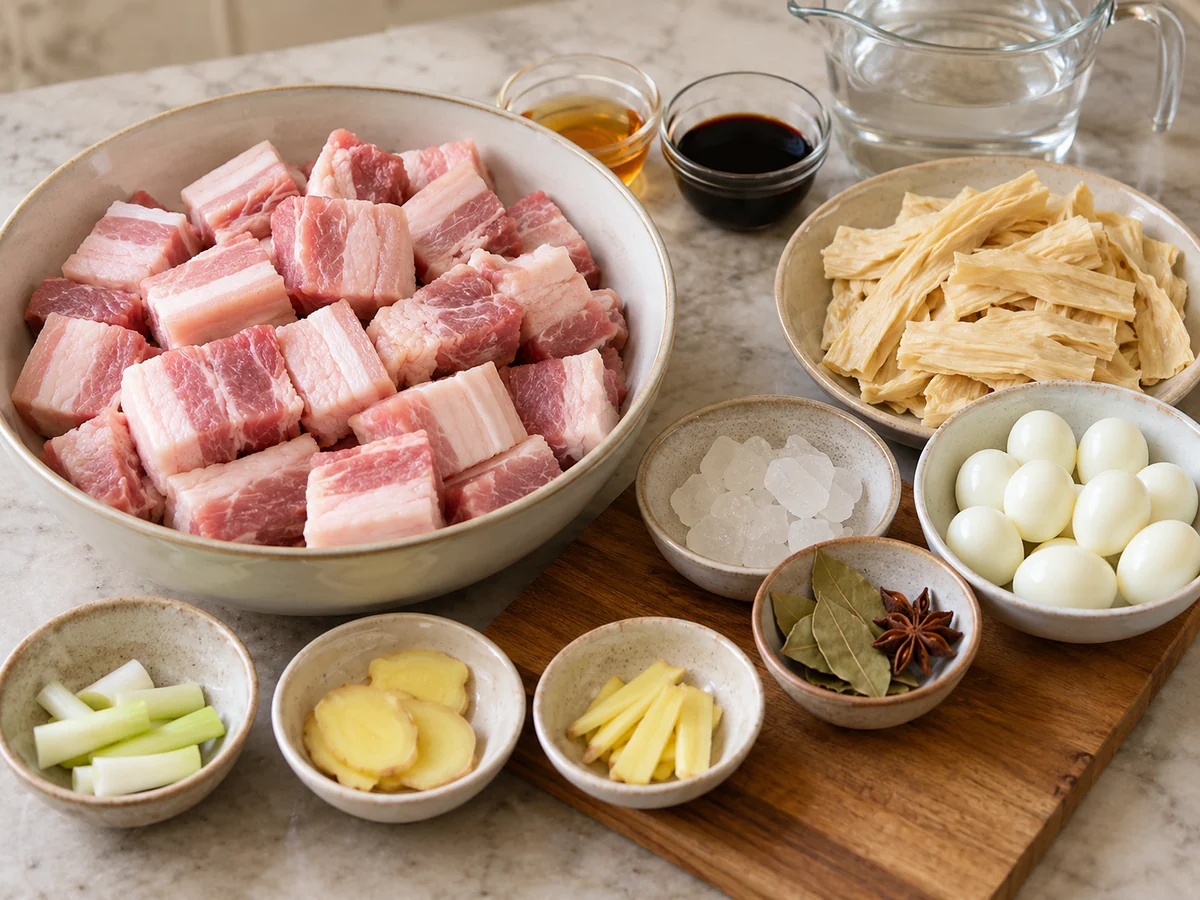
Red-braised pork bellyCut pork and prepare additions
Cut pork into chunks about 4.5 cm without rinsing raw meat. Divide ginger into three portions and wine in two. Cut optional tofu skin into broad strips and keep fully hard-cooked peeled quail eggs refrigerated until needed.
Look forPork chunks are similarly sized, ginger divided and optional cooked eggs and tofu skin prepared.
See the full recipe ↗ 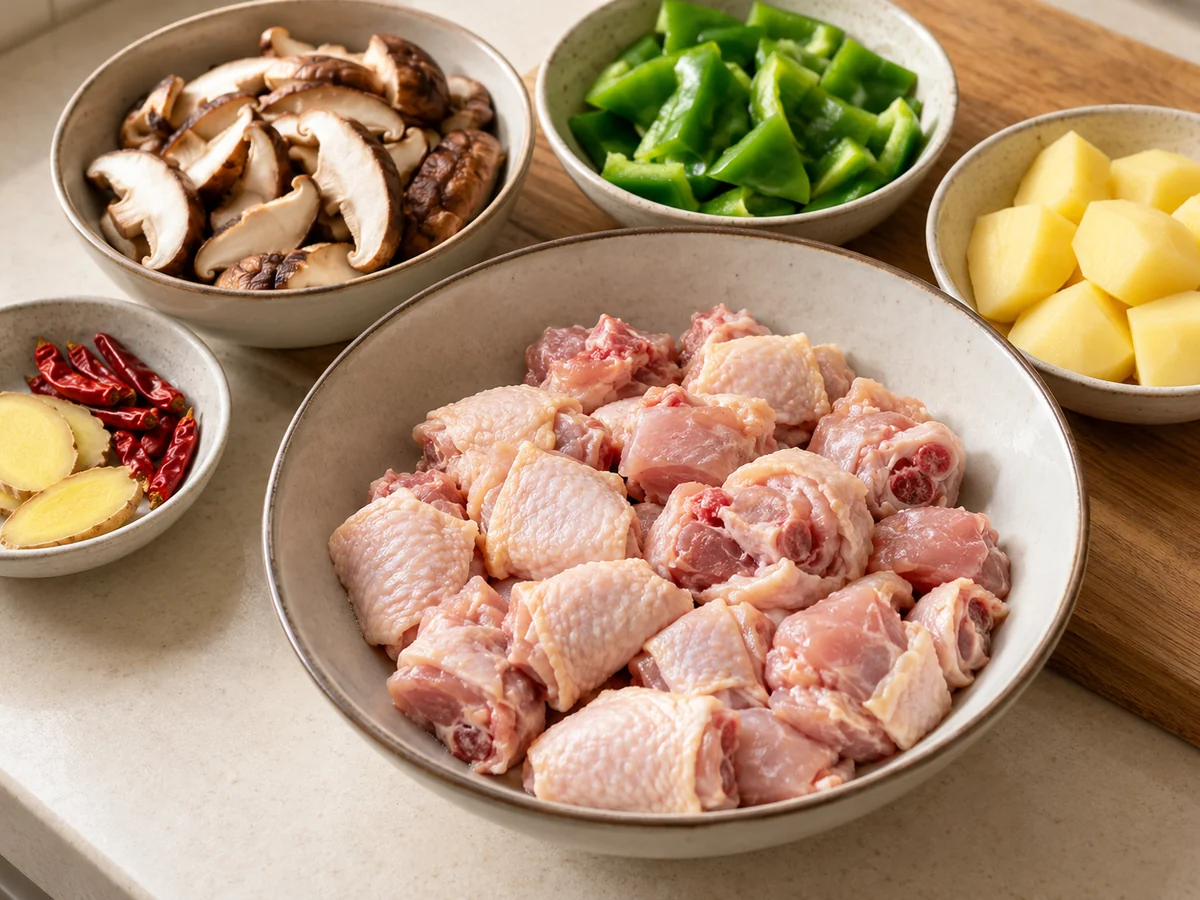
Braised chicken with mushroomsPrepare chicken and vegetables
Use chicken legs already cut into pieces about 4 cm; remove loose bone fragments and blot dry without rinsing. Trim tough shiitake stems and slice, wash and cut peppers and peel and chunk optional potato, keeping equipment separate from raw chicken.
Look forChicken pieces are evenly sized and dry, with mushrooms, peppers and optional potato separate.
See the full recipe ↗ 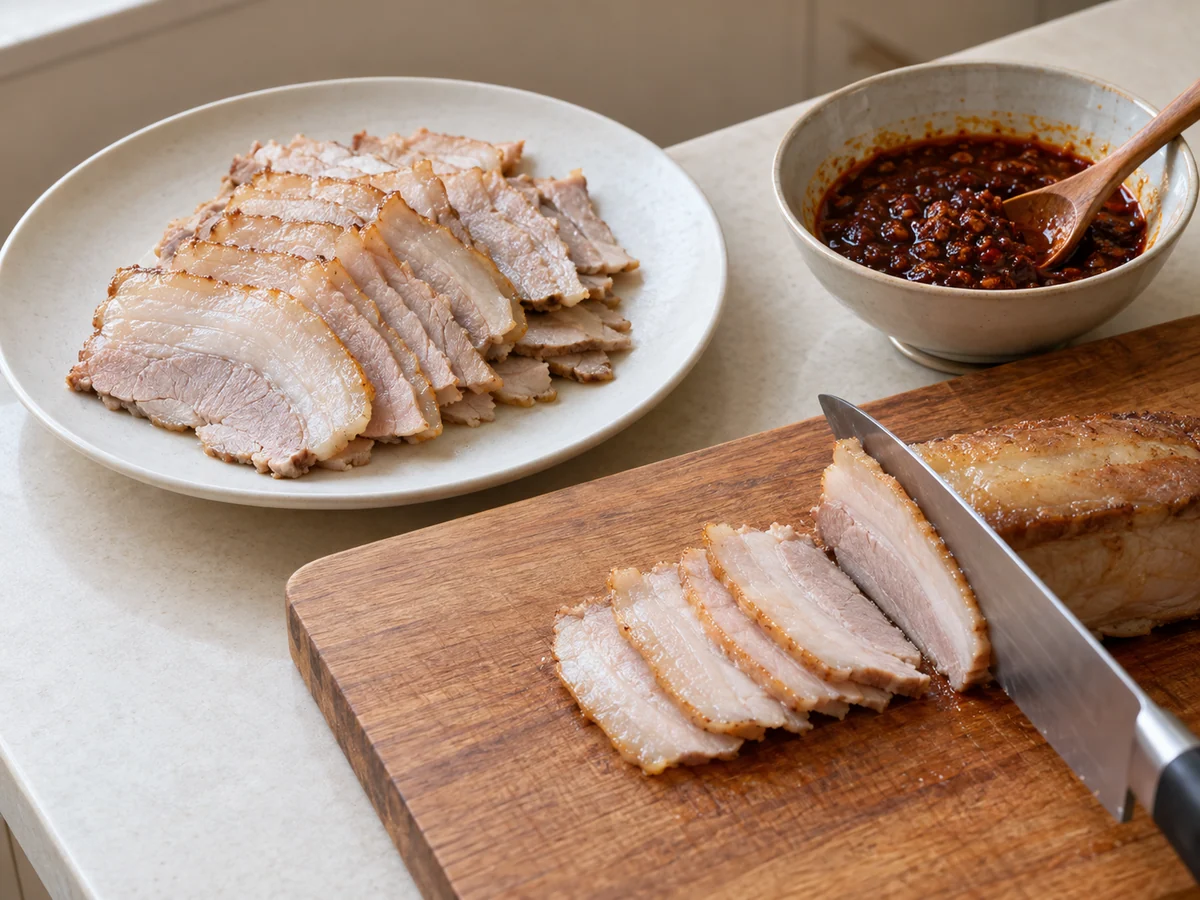
Twice-cooked porkRest then slice
Lift temperature-verified pork onto a clean plate and start a 3 min rest timer off the heat. After it finishes, cool just enough to handle, blot dry and cut about 2 mm thin without prolonged room-temperature holding. Mix half the bean paste with soy sauce.
Look forSlices are thin and surface-dry; sauce is ready.
See the full recipe ↗ 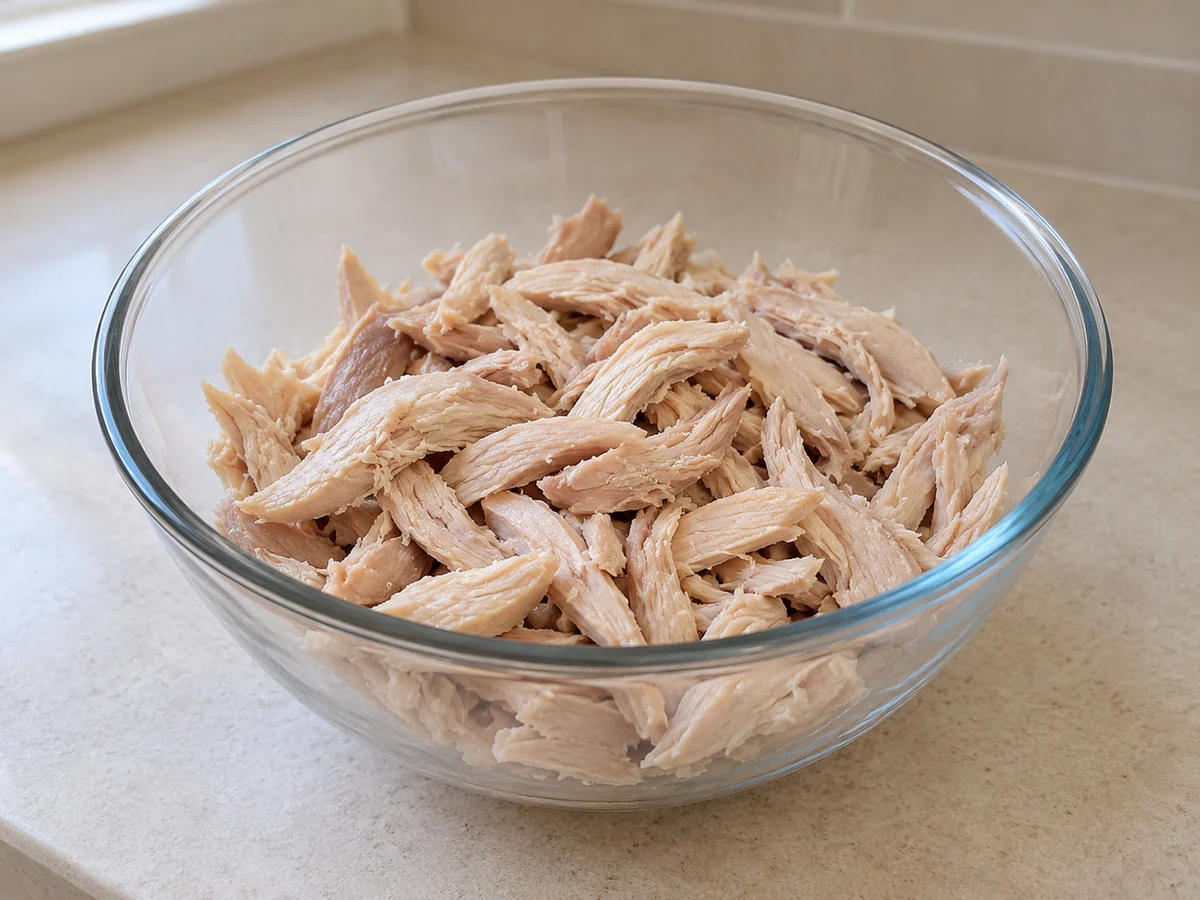
Ginger-scallion chickenDebone and shred
After confirming doneness, cool briefly and use clean tongs and forks to remove bones and shred roughly 1 cm wide pieces. Keep cooked chicken away from raw-poultry bowls and boards.
Look forBones are removed and cooked pieces sit in a clean bowl.
See the full recipe ↗ 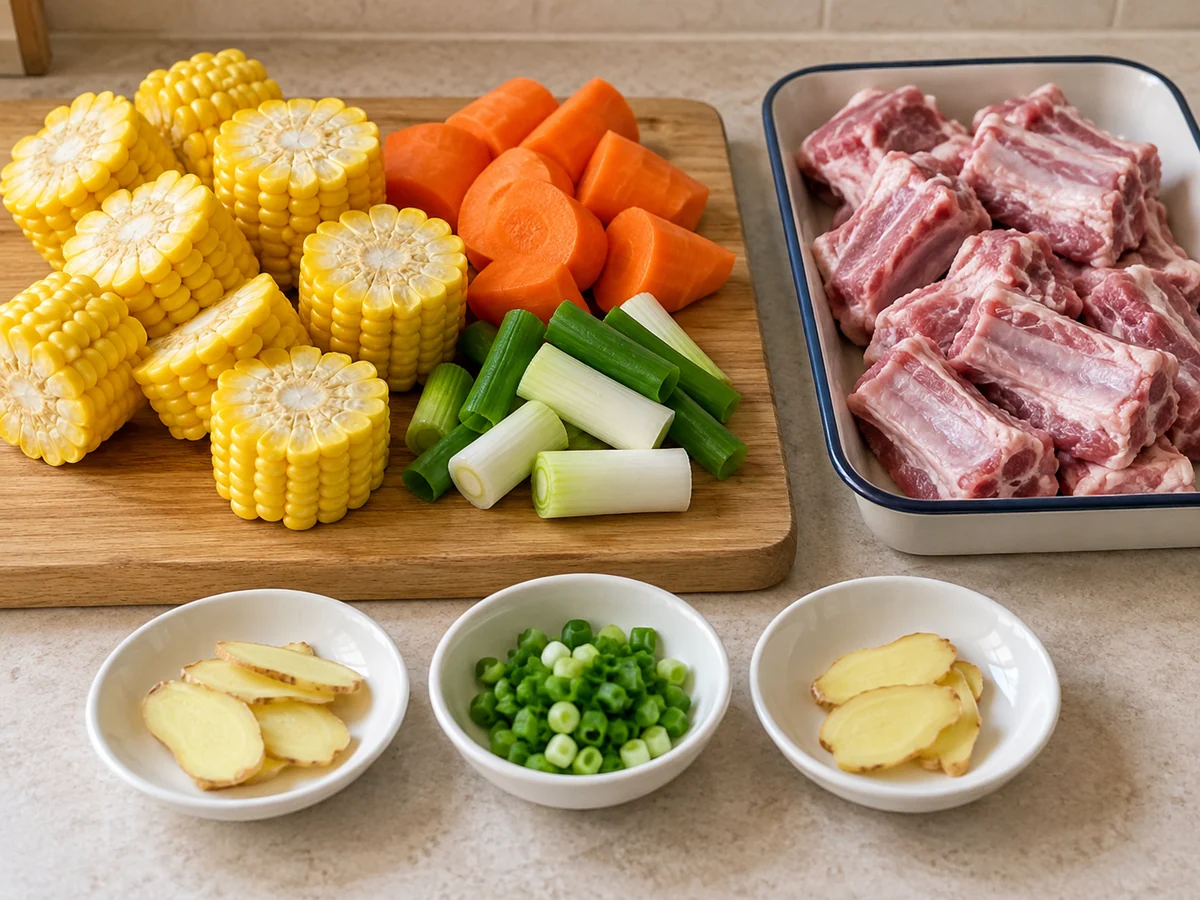
Corn and pork rib soupPrepare vegetables
Cut corn into short sections and carrot into chunks, slice large scallion and chop the smaller scallion. Slice and divide ginger in two portions. Use ribs already cut into small pieces and separate raw-meat and vegetable work areas.
Look forVegetables are prepared, ginger divided and ribs in small pieces.
See the full recipe ↗ 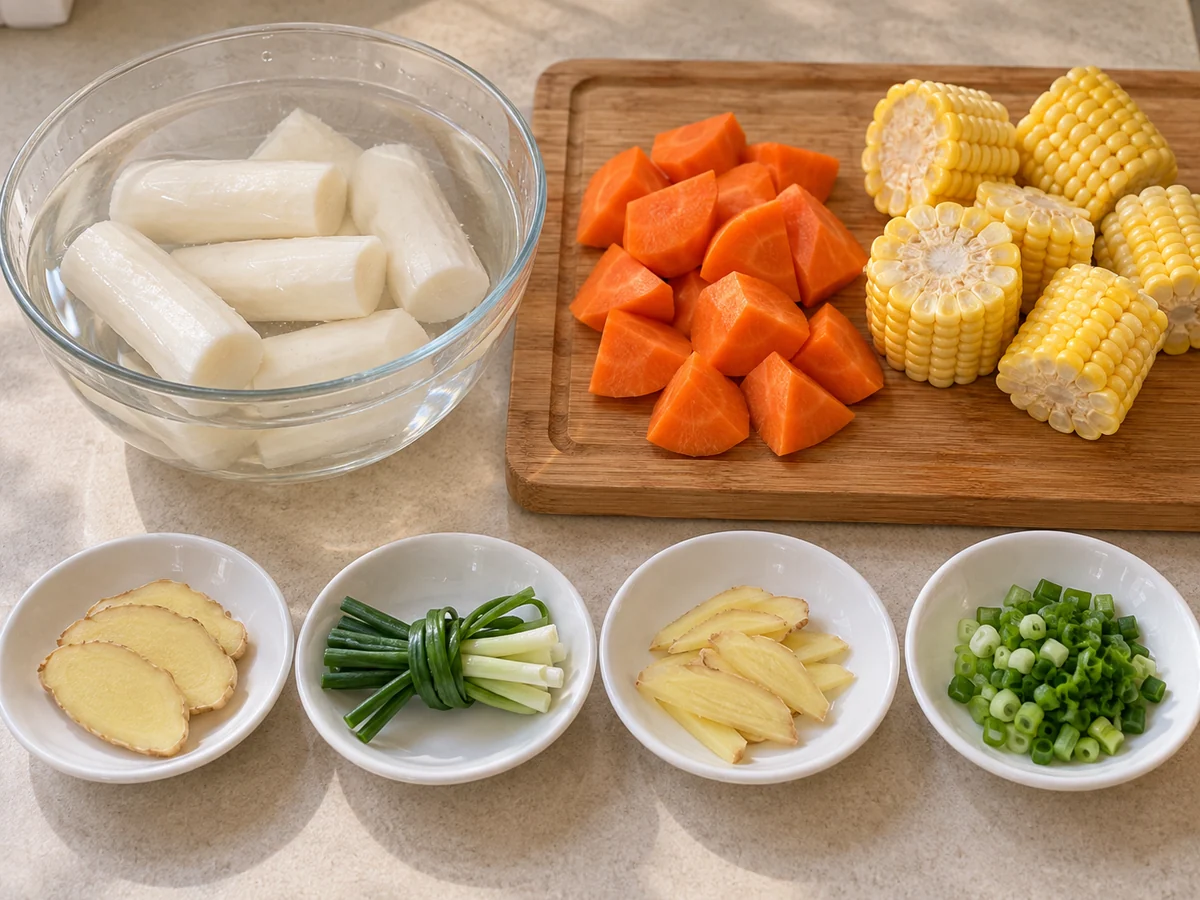
Pork rib, yam and corn soupPrepare vegetables
Wear gloves to peel yam and cut about 4 cm sections; hold in clean water if waiting. Cut carrot about 3 cm and corn about 4 cm. Divide ginger slices in half; tie half the scallion and chop the rest.
Look forVegetables are evenly sized and ginger/scallion separated by use.
See the full recipe ↗ 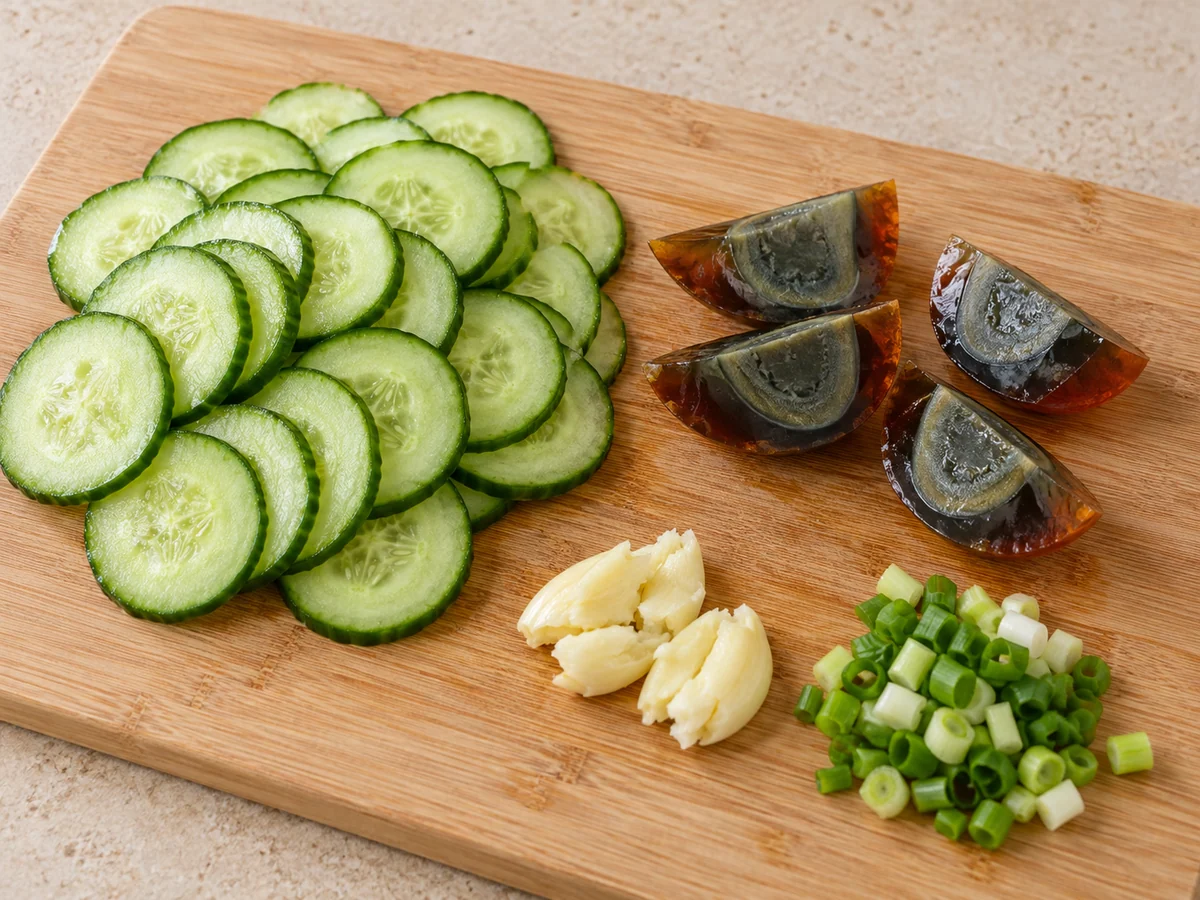
Cucumber and century egg soupSlice cucumber and century eggs
Wash and thinly slice cucumber, peel and crush garlic and chop scallion. Check century eggs as labeled, peel and cut into even wedges.
Look forThe cucumber slices are even and the egg wedges intact.
See the full recipe ↗ 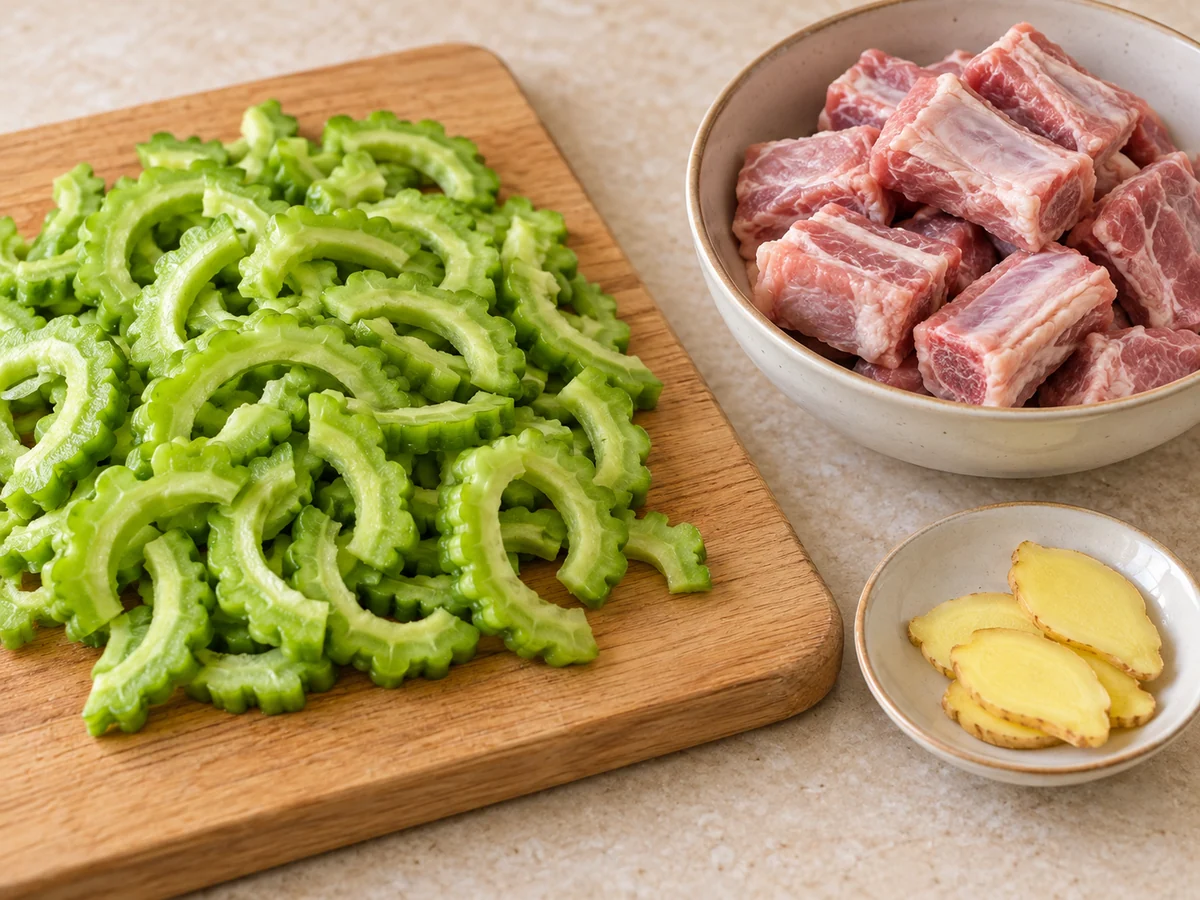
Bitter melon and pork rib soupPrepare bitter melon and ribs
Ask the seller to cut ribs into small pieces. Wash and halve bitter melon, remove seeds and white pith and slice into thin strips. Slice optional ginger and rinse dried shrimp as labeled.
Look forThe bitter melon is seeded and trimmed and rib pieces are similar.
See the full recipe ↗ 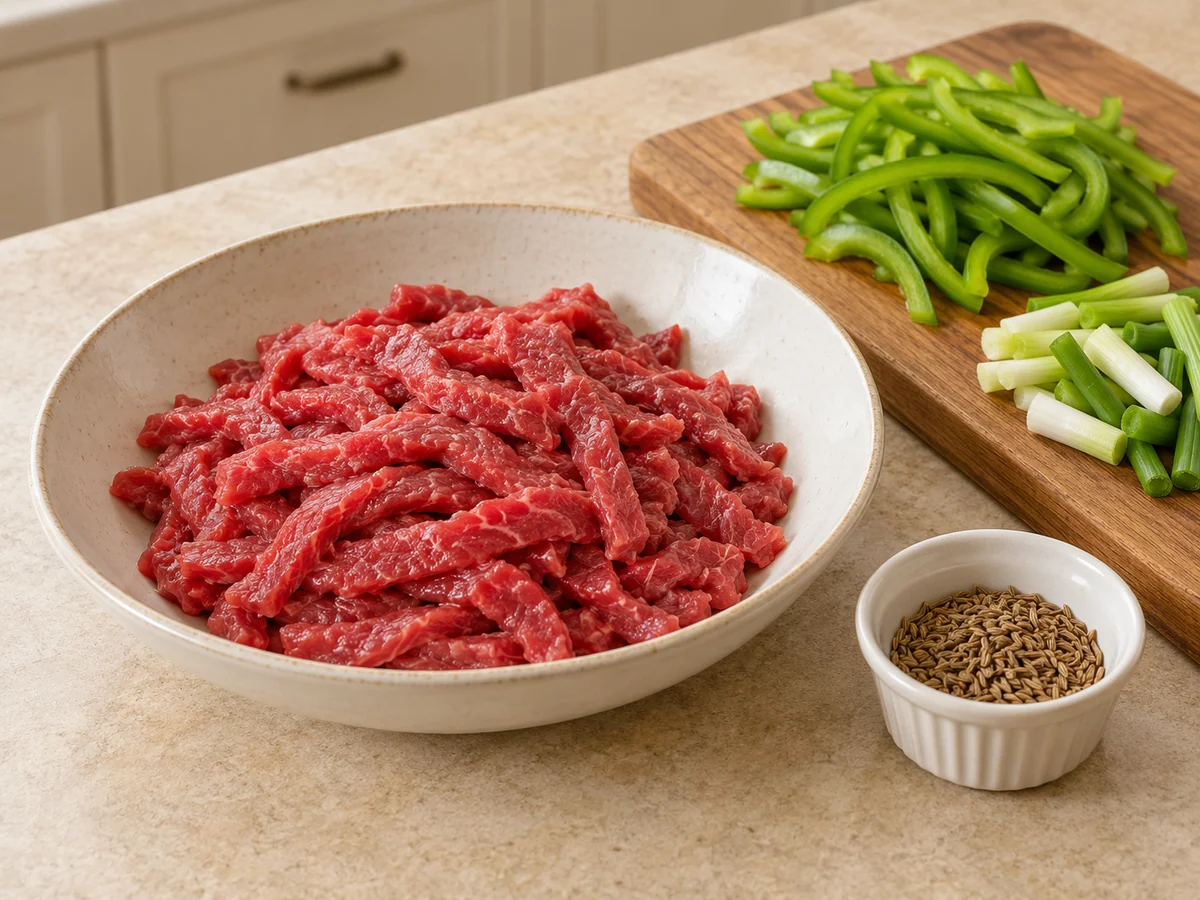
Cumin beefSlice beef and peppers
Thaw beef safely, pat dry and slice thinly across the grain. Wash, seed and shred green pepper, cut scallion and chop optional chilies. Lightly crush cumin in a mortar if desired.
Look forThe beef slices are evenly thin and peppers shredded.
See the full recipe ↗ 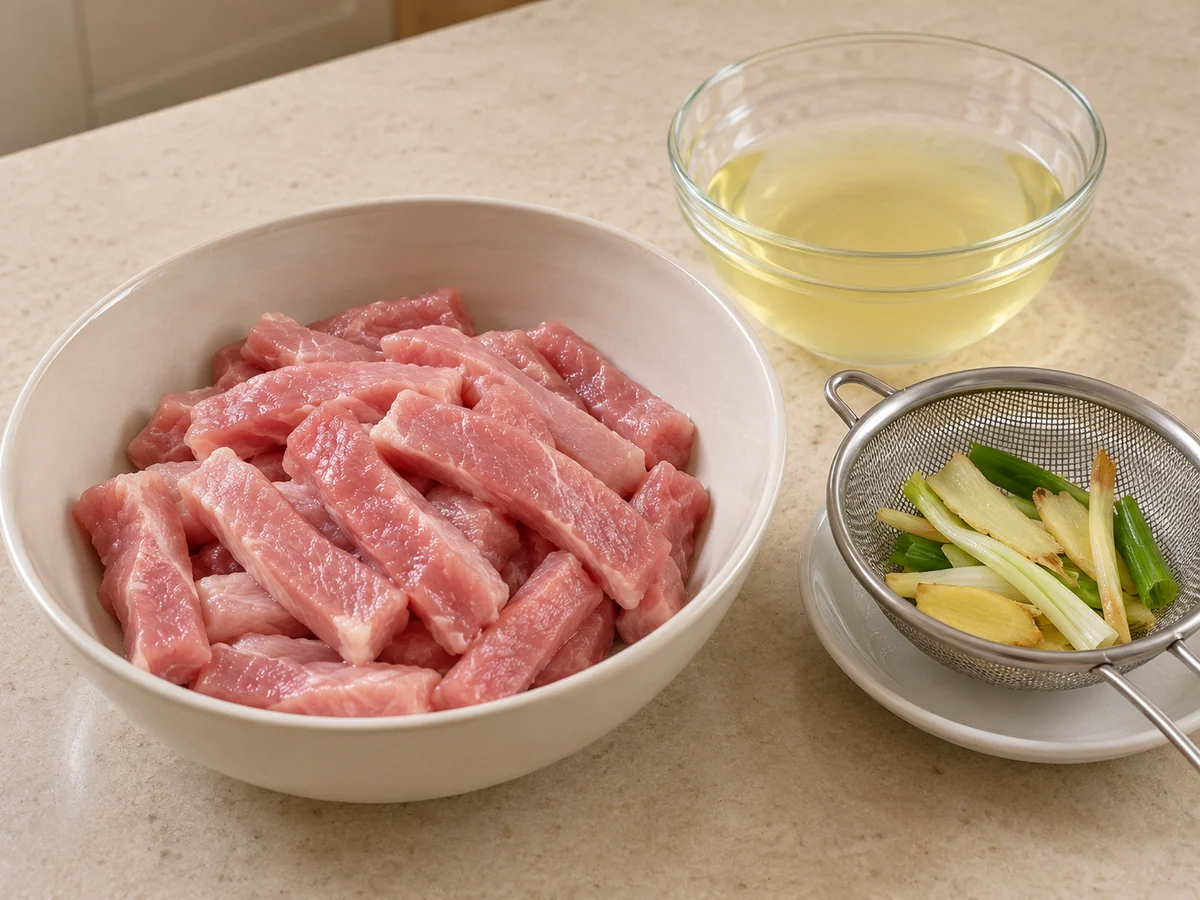
Crispy pork stripsMake aromatic water and cut pork
Shred ginger, work it with scallion, wine and water to release aroma and strain the liquid. Cut pork into even strips about 1.5 cm thick. Keep raw meat separate and wash hands after handling it.
Look forThe aromatic water is strained and pork strips are evenly thick.
See the full recipe ↗ 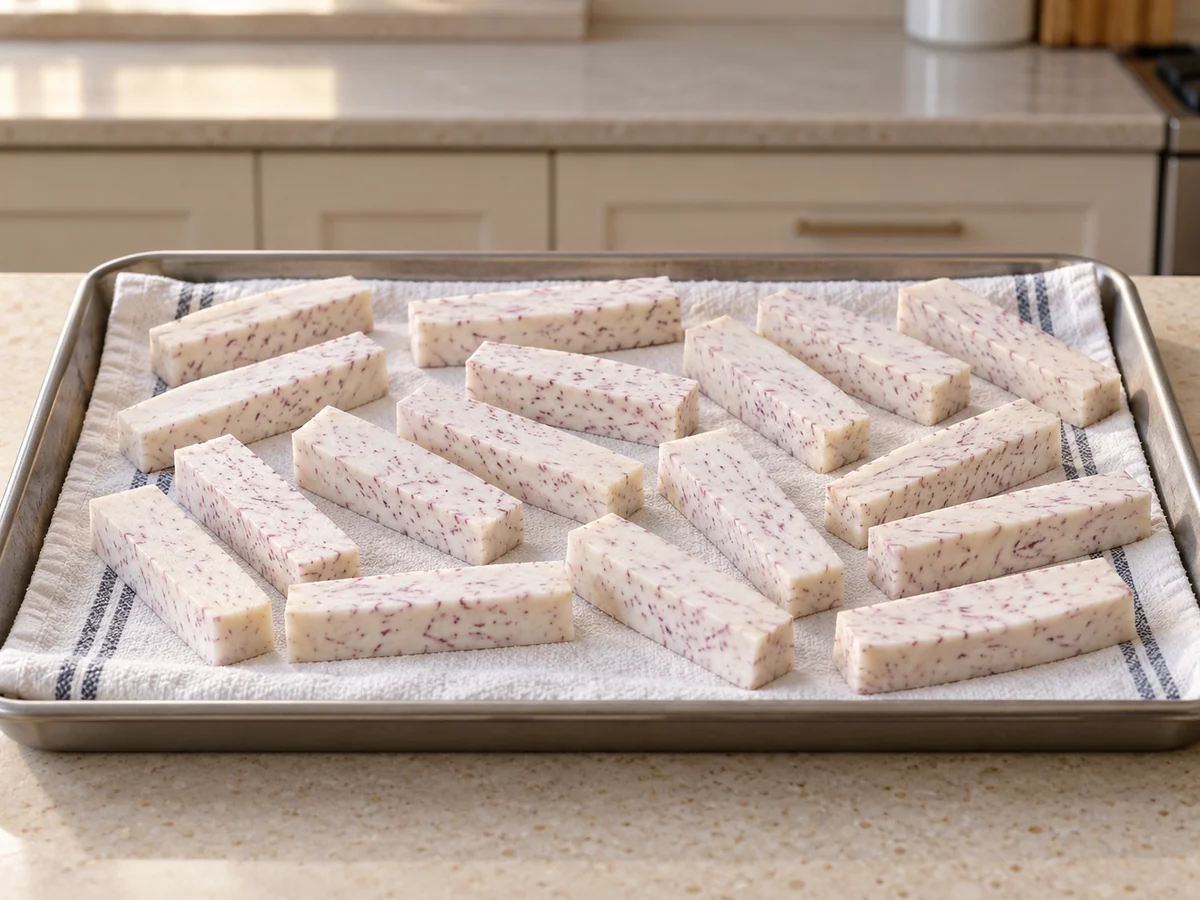
Sugar-crusted taroCut and dry taro
Wear food-safe gloves to handle taro, cut into evenly sized thick batons and dry thoroughly. Do not eat raw taro; dry optional washed scallion well too.
Look forThe taro batons are even and have no surface water droplets.
See the full recipe ↗ 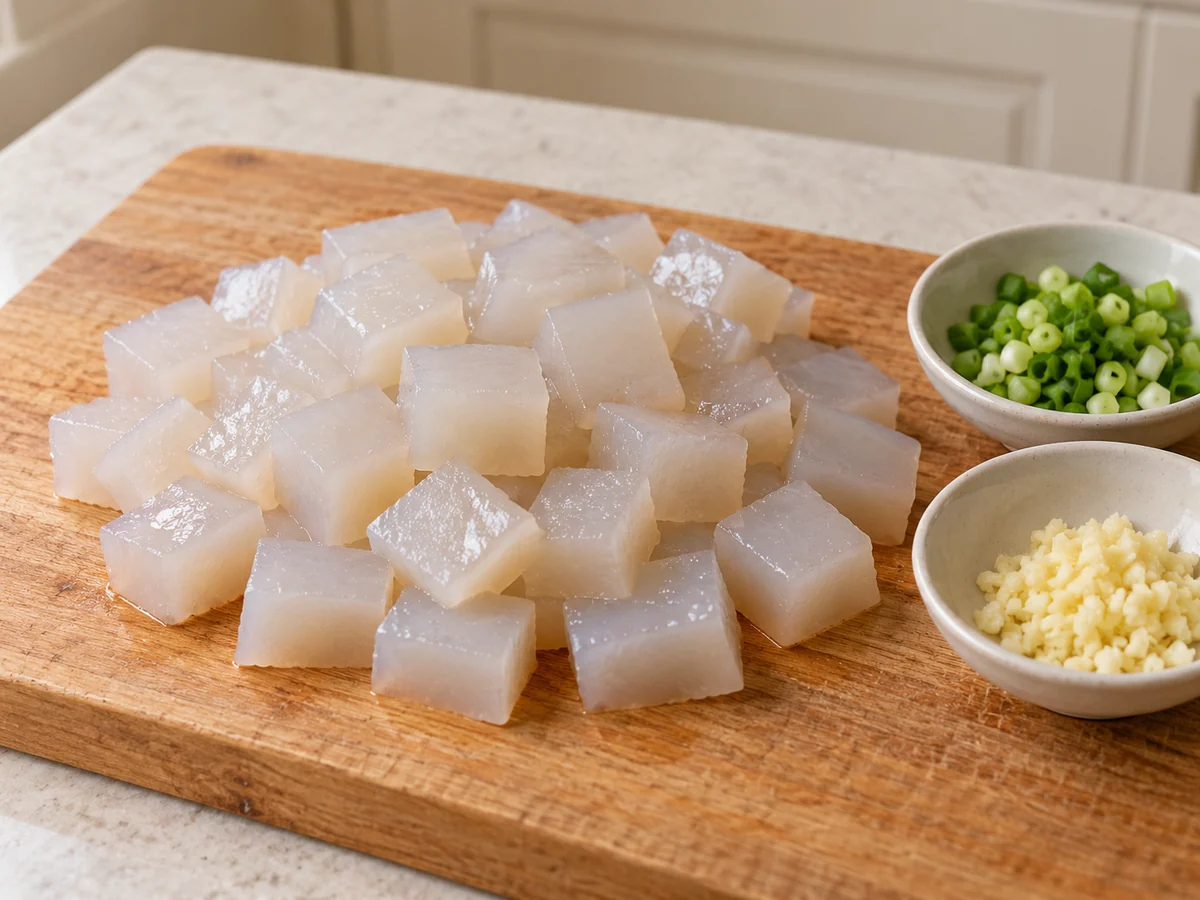
Stir-fried starch jellyCheck and cut the jelly
Keep jelly chilled as labeled and confirm it is already cooked. Cut it into evenly sized small cubes, wash and chop scallion and mince garlic.
Look forThe jelly is cooked and evenly cubed and aromatics are ready.
See the full recipe ↗ FROM INSPIRATION TO DINNERYour next step is in the kitchen.
Bring a little guidance along. Open EagerCook for the cooking experience.