
What to watch
Watch stems and leaves separately. After lifting the ribs out, remove scum and dry their surfaces.
Choy sum stems and leaves enter in stages; ribs are skimmed and still need further cooking.
Watch stems and leaves separately. After lifting the ribs out, remove scum and dry their surfaces.
Use the recipe to decide a cold-water or boiling-water start, when to remove the food and what cooking follows.
Blanching is not boiling everything for one minute. Blanched ribs are not necessarily cooked, and stems and leaves have different checks.
These are selected learning moments. Open the complete recipe for quantities, preparation and all cooking checks. Times are checkpoints for that recipe.
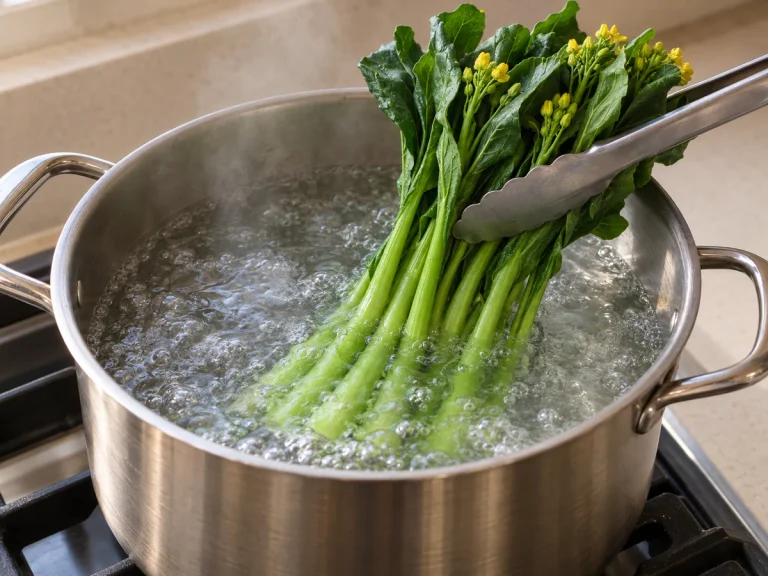
Put thick stems in first, then the leaves; read the sequence together.
Bring enough drinking water to cover the greens to a boil with the blanching salt and oil. Hold the greens with tongs and immerse the thicker stems first. Start a 1 min check-in when the thick stems enter the boiling water.
The stems brighten while the leaves remain above the water.
Lower the entire greens into the water. At the check point, test the stems for the desired tenderness, then lift out, drain and plate. Start a 1 min check-in when the whole greens enter the boiling water.
The stems are tender enough to bite and the leaves are wilted but intact.
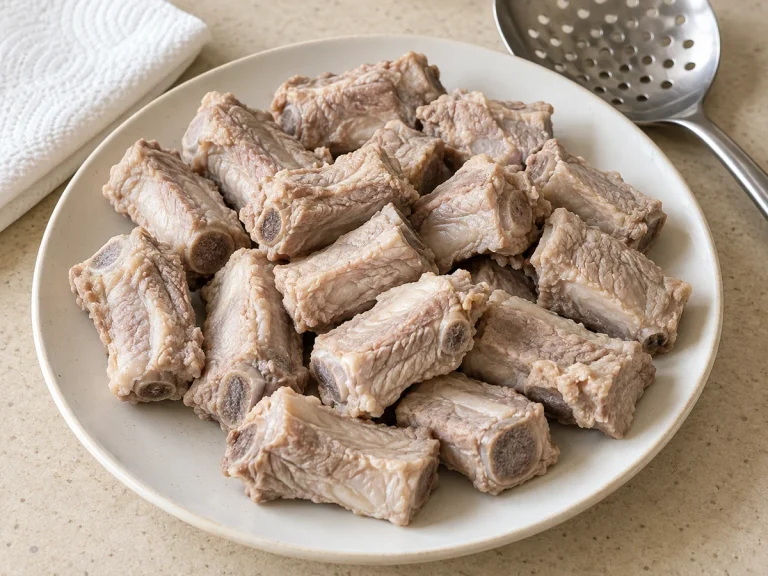
Skim and dry the ribs; later cooking is still required.
Cover the ribs and ginger with cold water and bring to a boil. Skim, reduce to a simmer and set a 2 min check. Lift out with a slotted spoon, discard ginger and foam, drain thoroughly and blot dry; blanching does not mean the meat is fully cooked.
The ribs are free of foam and surface water but still need further cooking.
Bring a little guidance along. Open EagerCook for the cooking experience.