THE COOKPATH KITCHENSimmering
Simmering: Watch the gentle cooking and texture cues in each dish. Examples include Tea eggs, Boiled corn, Millet congee. Open a full recipe for ingredients and the complete method.
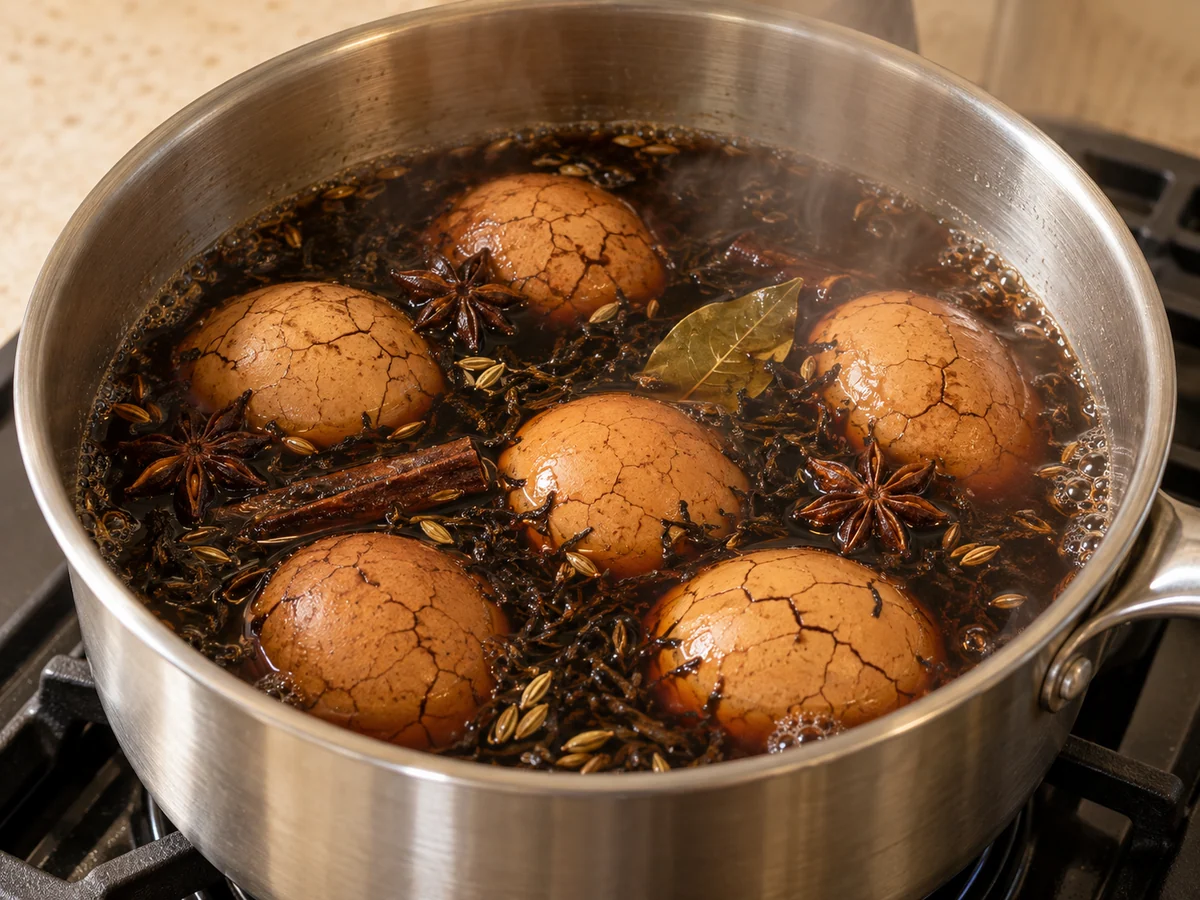
Tea eggsSimmer in the tea
Bring to a boil, reduce to medium-low and maintain gentle bubbling. At the check point, look for tea-colored cracks and keep the eggs hot throughout. Simmer further if desired, then turn off the heat and remove them. Do not leave them soaking at room temperature for an extended period. Start a 15 min check-in after the tea returns to a boil and you reduce the heat.
Look forThe liquid bubbles gently and the cracked shells show tea-colored lines.
See the full recipe ↗ 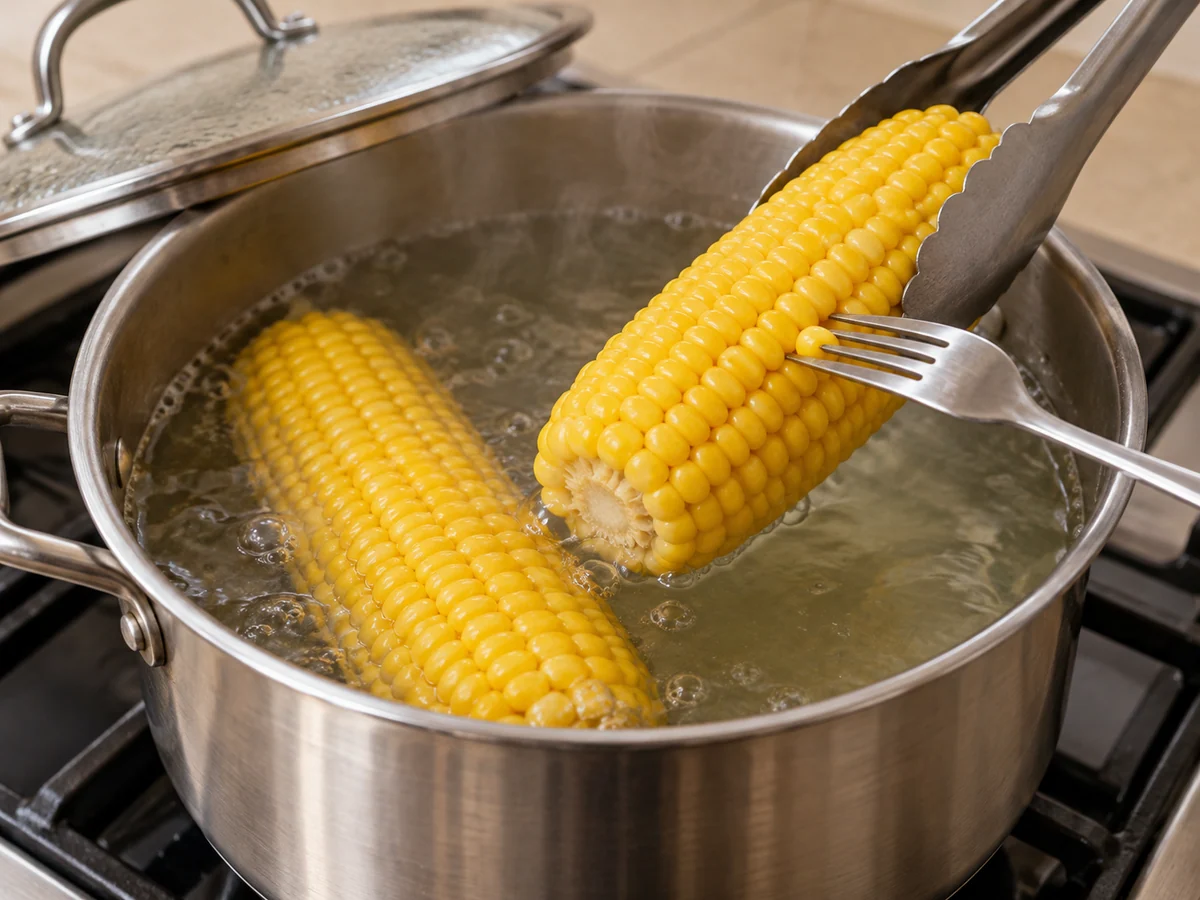
Boiled cornSimmer until tender
Reduce to a gentle simmer and leave the lid slightly ajar. At the check point, lift the corn with tongs and test a kernel for tenderness. Continue cooking firmer varieties as needed. Start a 15 min check-in after the water boils and you reduce the heat.
Look forThe kernels are tender with no hard raw center.
See the full recipe ↗ 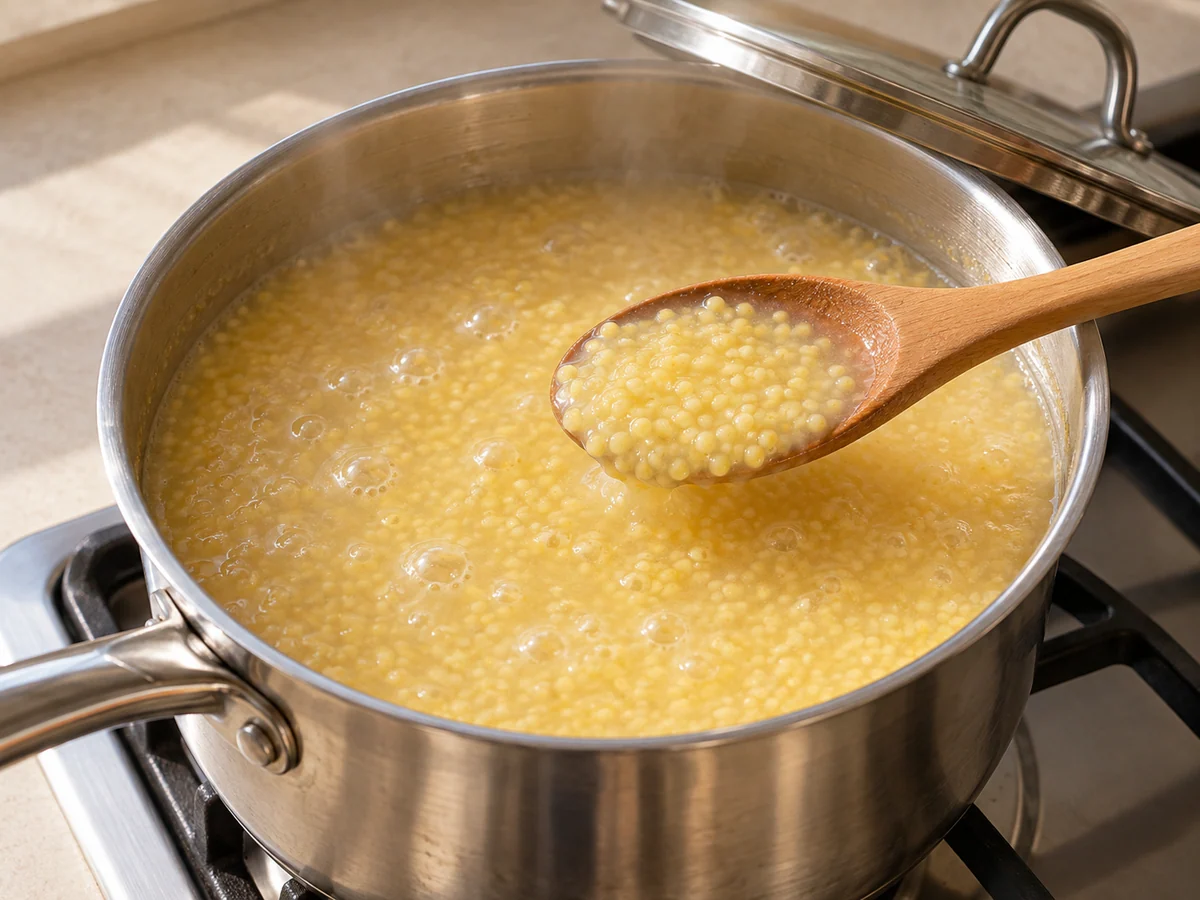
Millet congeeSimmer until soft
Reduce to a gentle simmer with the lid ajar. Stir occasionally and check that the grains are tender and the porridge has the desired consistency; continue if needed. Start a 15 min check-in when you reduce the heat to a gentle simmer.
Look forThe grains are tender with no hard centers and the liquid has thickened slightly.
See the full recipe ↗ 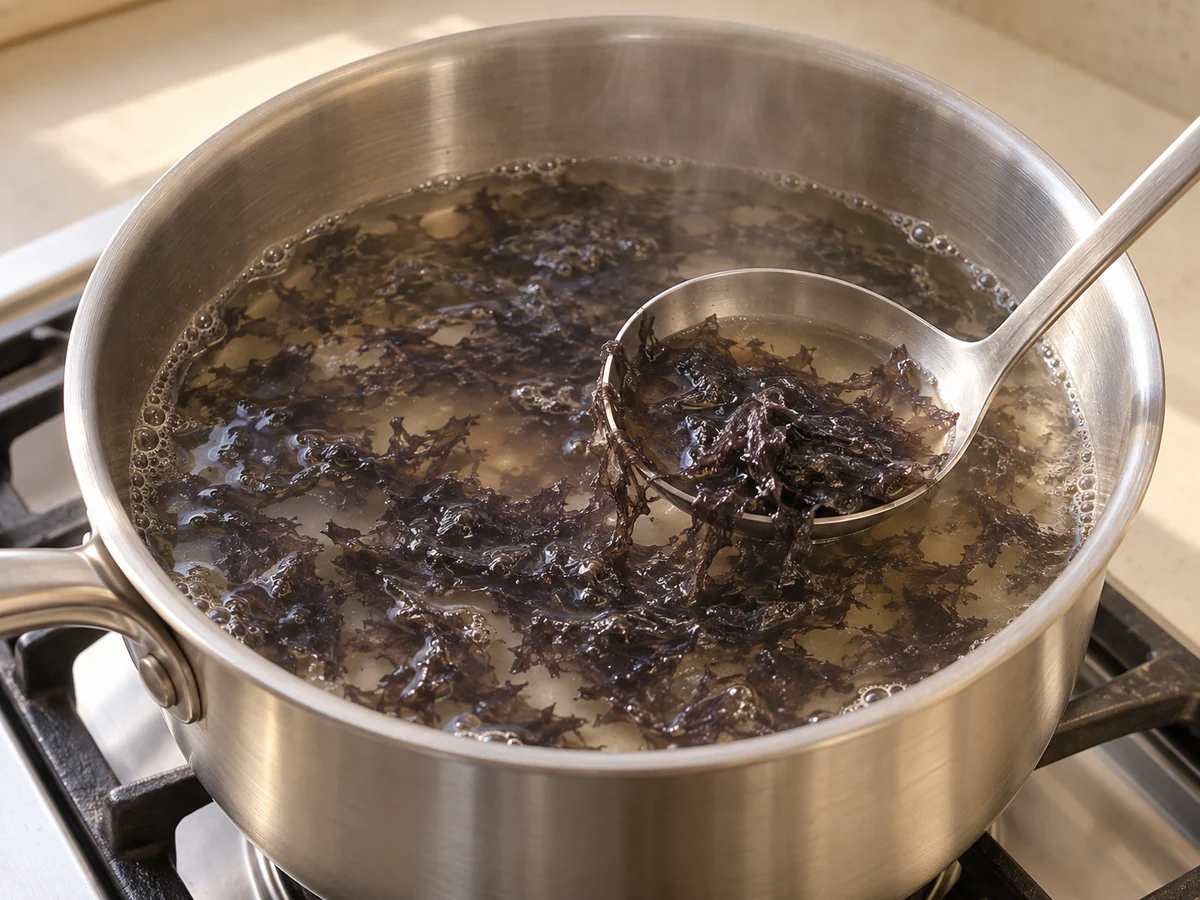
Seaweed egg drop soupSimmer the seaweed
Maintain gentle bubbling and stir occasionally so the seaweed heats evenly. Start a 3 min check-in when the soup returns to a simmer after adding the seaweed.
Look forThe seaweed is soft and the broth has returned to a simmer.
See the full recipe ↗ 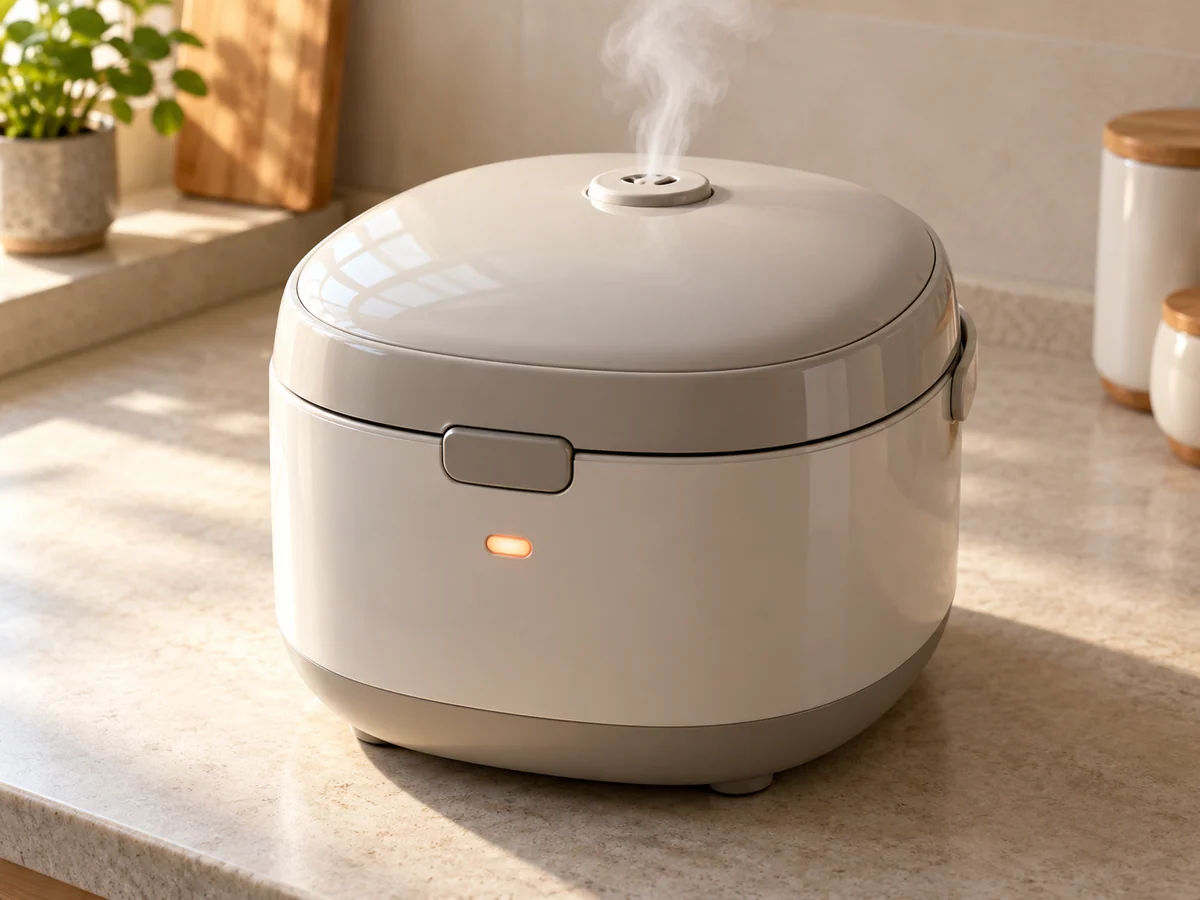
Longan and red date congeeRun the porridge program
Use the porridge program specified in the cooker manual and keep the steam vent clear. Do not substitute a rice program that boils dry or cover the steam vent with a towel.
Look forA suitable porridge program is running with an unobstructed steam vent.
See the full recipe ↗ 
Longan and red date congeeCheck the grains and consistency
Set a 1 hr reminder from program start, while following the appliance instructions. When it is safe to open, keep clear of steam and check for soft grains with no hard centers. Continue an appropriate porridge cycle if needed.
Look forThe grains have no hard centers, the fruit is tender and the porridge still flows.
See the full recipe ↗ 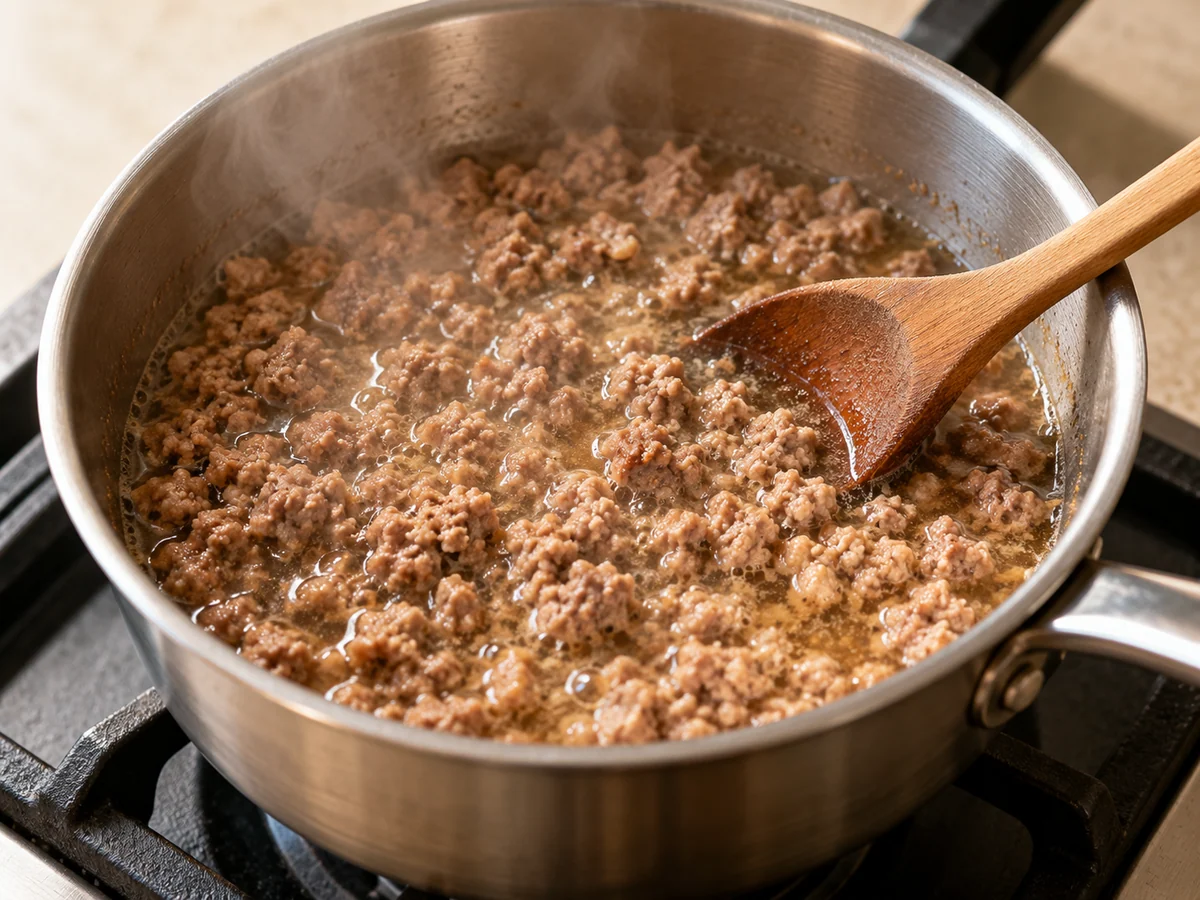
Wuhan hot dry noodlesHeat pork and broth through
Heat the cooked minced pork with the broth in a small pan, stirring until hot throughout. Reheated chilled cooked food should reach 74°C in the center. Keep hot while finishing the noodles.
Look forThe minced pork and broth are hot through with no cold clumps.
See the full recipe ↗ 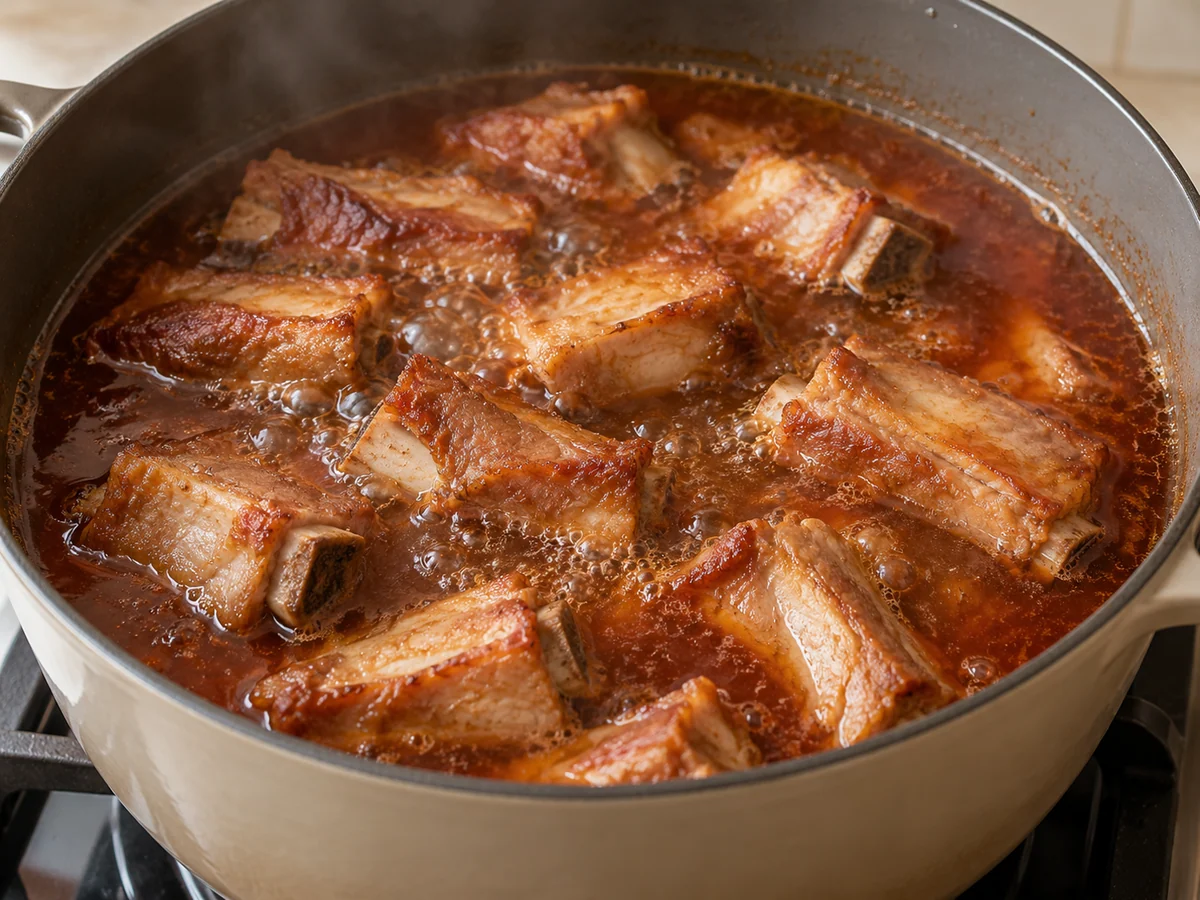
Sweet and sour spare ribsSeason and cook through
Add the fried ribs, vinegar, both soy sauces, oyster sauce, bouillon, ketchup and five-spice. Toss and add hot water to just cover. Bring to a boil, reduce to a simmer and set a 5 min first check. Continue until cooked through and as tender as desired; do not reduce dry just because the alarm rings.
Look forThe ribs remain surrounded by liquid and are cooked through; larger pieces may need longer.
See the full recipe ↗ 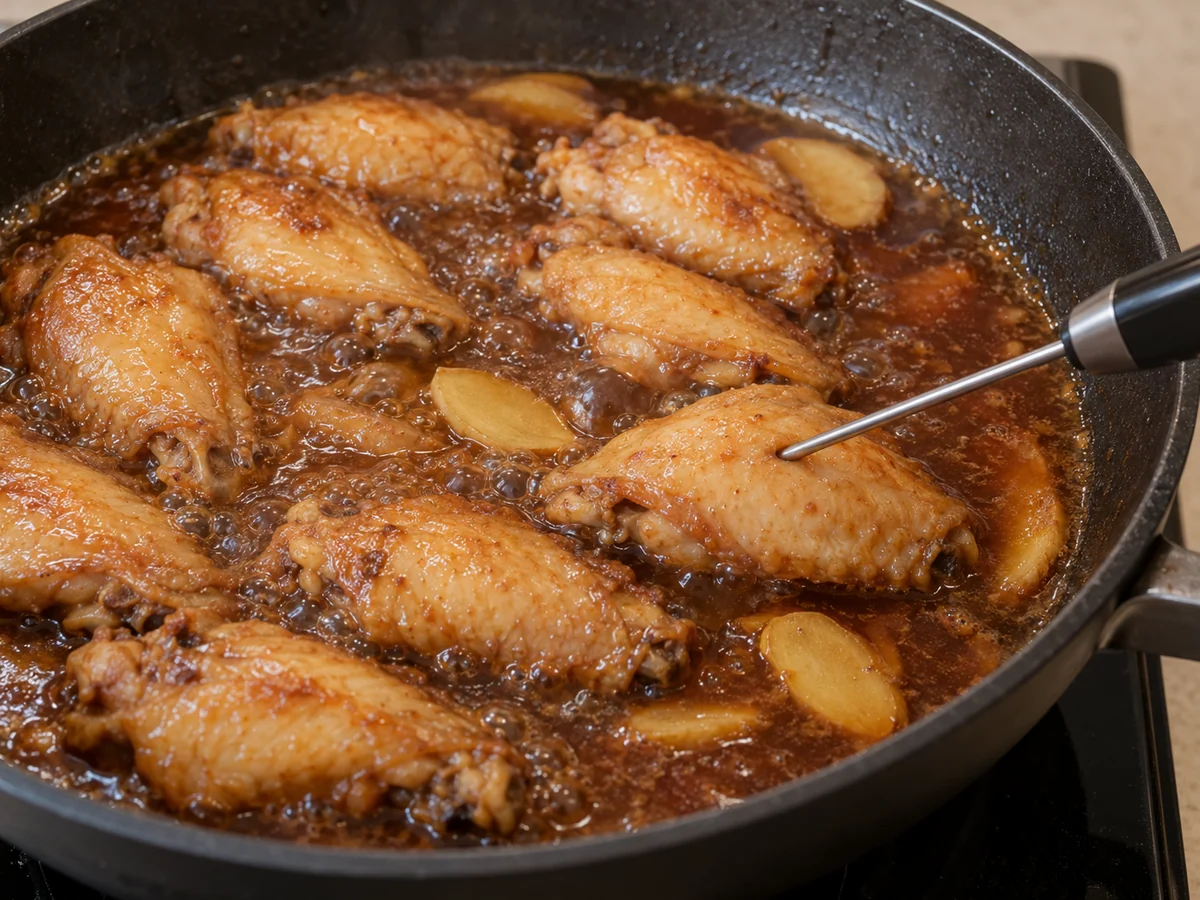
Cola chicken wingsSimmer until safely cooked
Maintain gentle bubbling over medium-low heat and turn the wings occasionally. Check the thickest meat with a thermometer away from bone and continue until it reaches 74°C. If liquid runs low before the meat cooks, add a little hot water and continue.
Look forThe thickest meat reaches 74°C and is cooked through.
See the full recipe ↗ 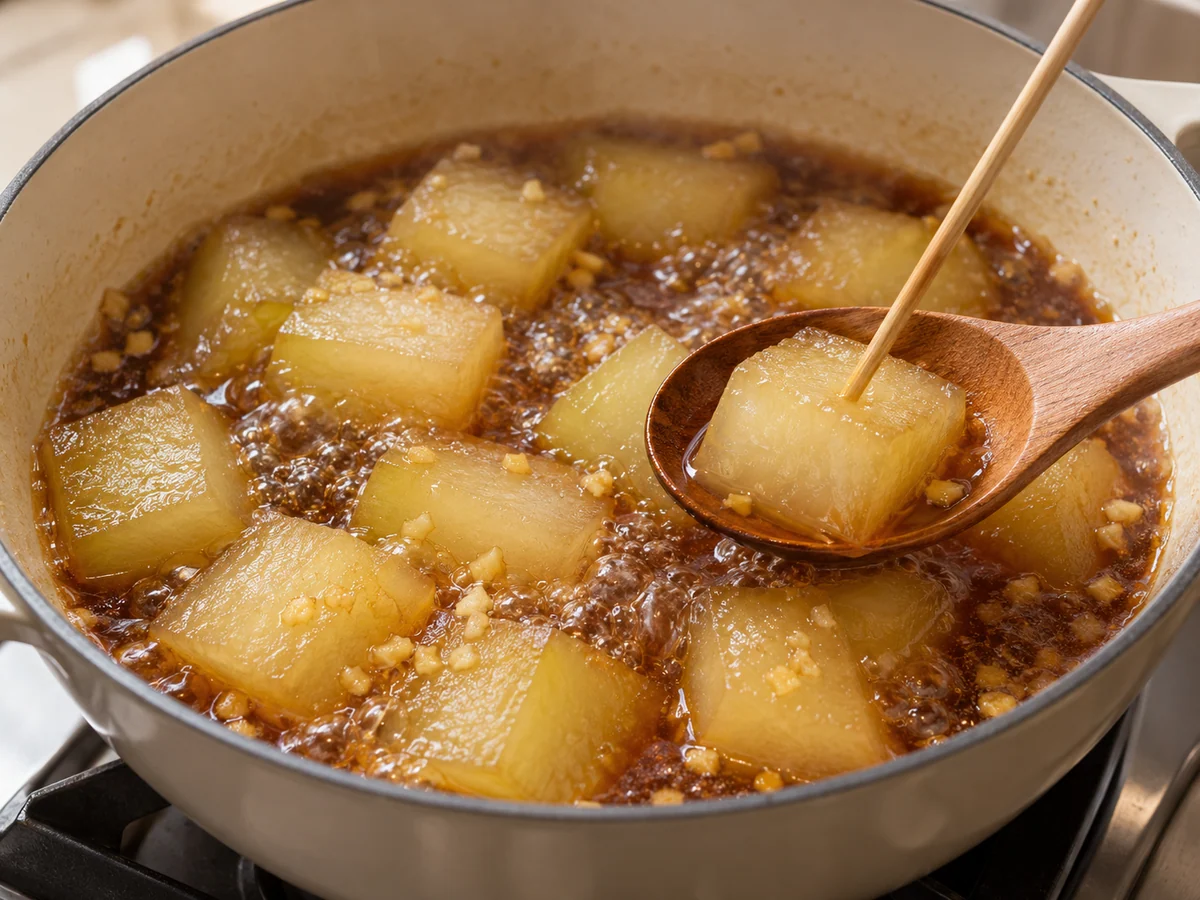
Soy-braised winter melonCook until tender
Bring to a steady bubble and start a 10 min first check. Add dark soy and continue until a skewer easily passes through the center; add a little hot water if needed. The timer cannot replace the tenderness check.
Look forMelon centers are tender and some sauce remains.
See the full recipe ↗ 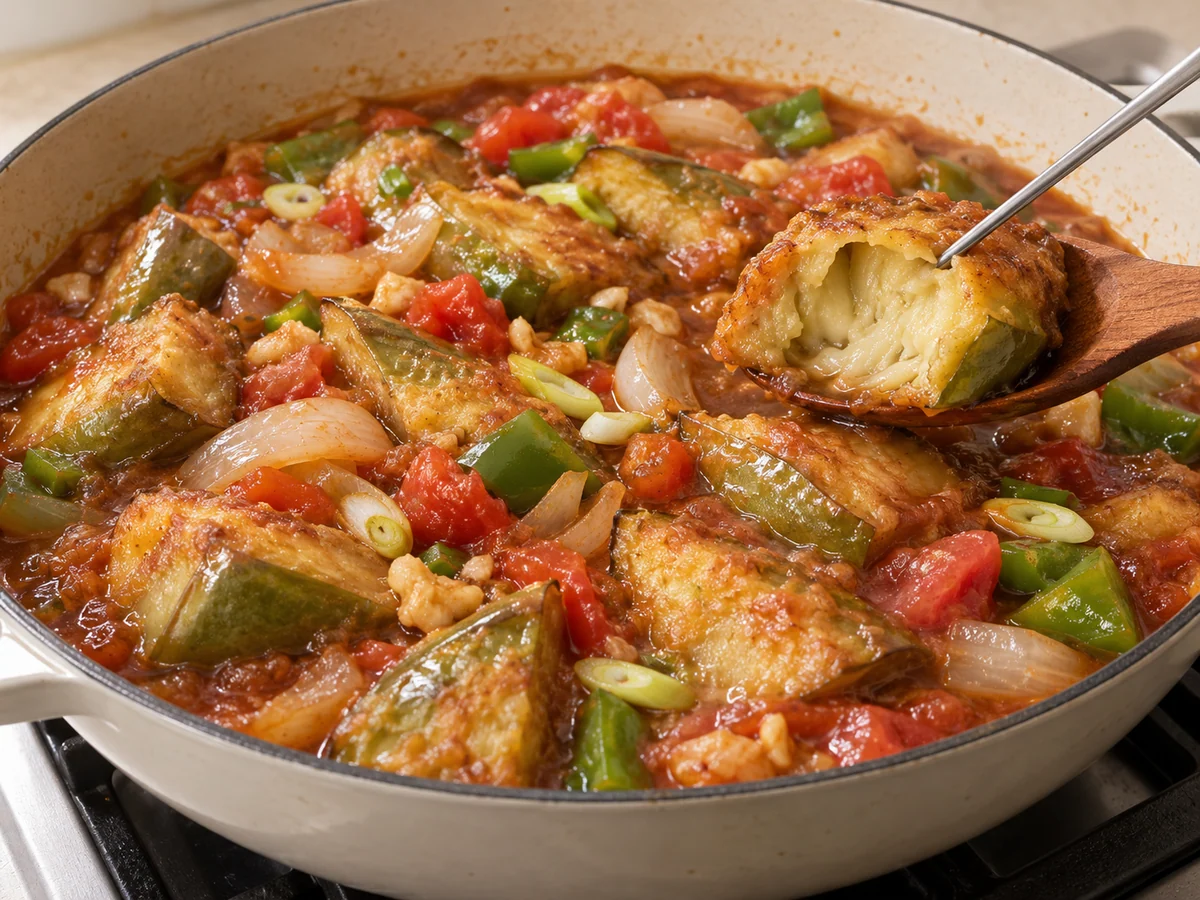
Soy-braised eggplantBraise until tender
Add fried eggplant, soy sauce and braising salt, then carefully pour in braising water around the pan edge. Bring to a boil and simmer, turning gently to prevent sticking, until centers are tender, batter has no raw dough and the egg-containing dish reaches 71°C in the center. Reduce as needed until the sauce coats.
Look forEggplant centers are tender with no raw batter, center reaches 71°C, and sauce is thick but flowing.
See the full recipe ↗ 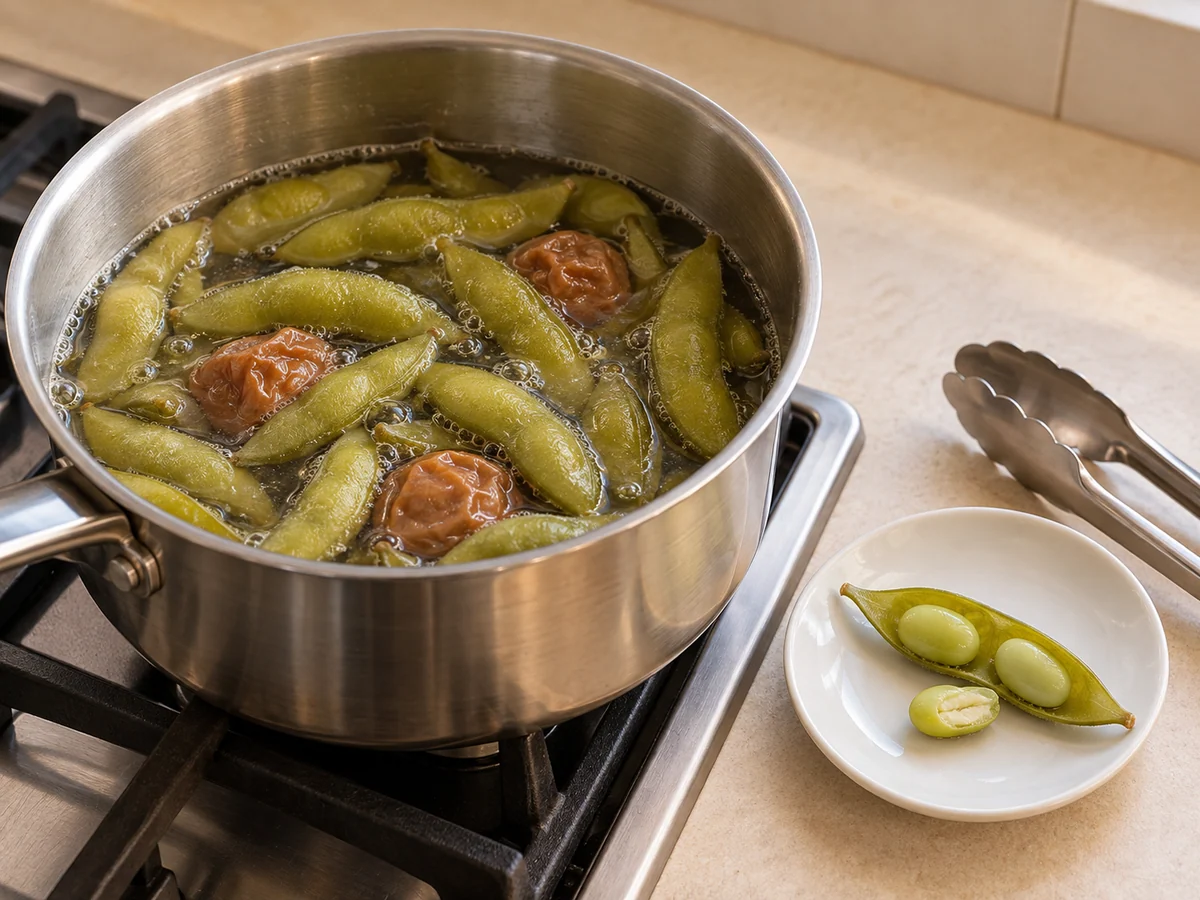
Edamame with preserved plumsCook until beans are tender
When boiling resumes, reduce to a steady simmer and start a 20 min first check. Lift out a pod with tongs, cool briefly and open it to check that beans are tender without a hard center. Continue if needed, keeping water in the pot.
Look forBeans are tender without hard centers and the pot has not boiled dry.
See the full recipe ↗ 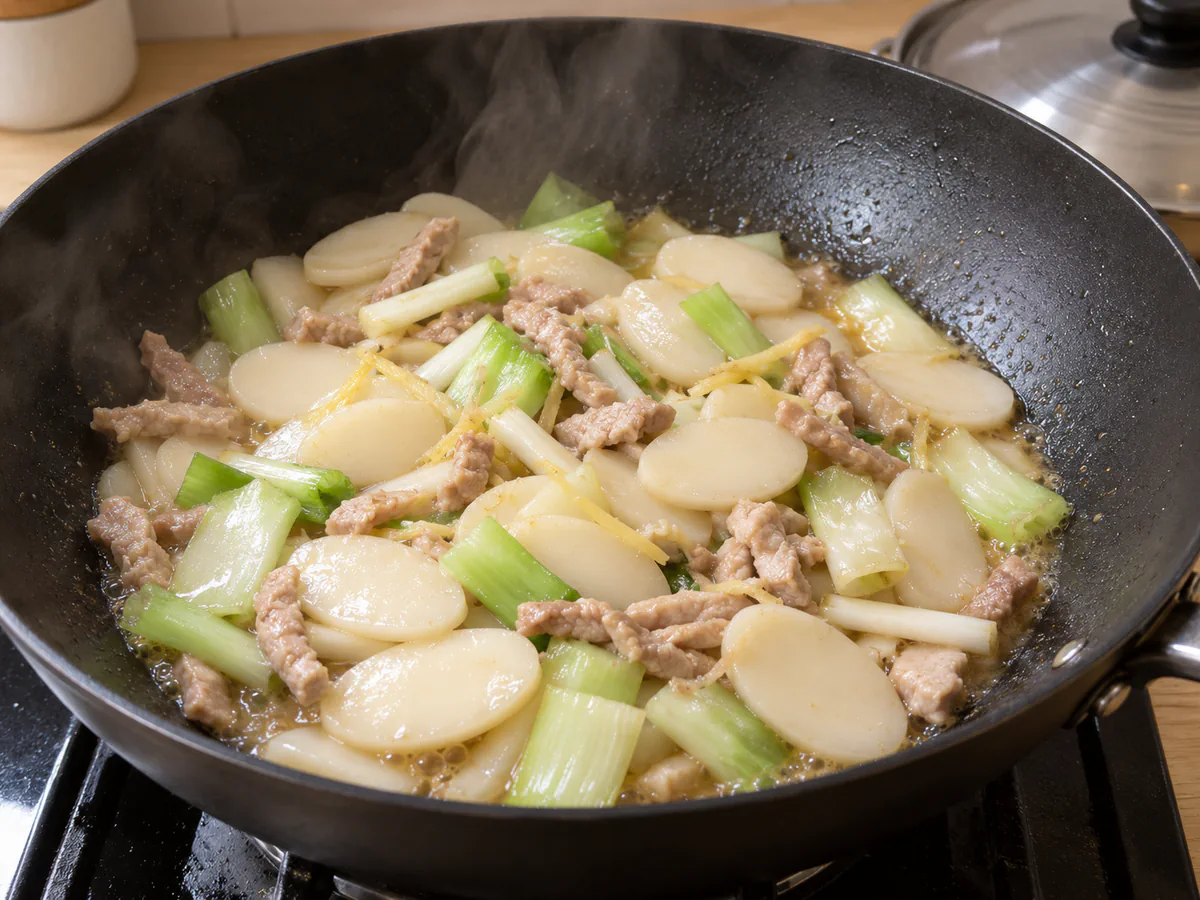
Stir-fried rice cakes with pork and bok choySoften rice cakes with a little water
Add rice cakes, pork, remaining soy sauce and the measured water. Fold gently. Once bubbling, cover over medium heat and set a 2 min check. Uncover, turn and check the centers; add a small splash of hot water and continue if firm. Do not scrape a dry pan. Follow longer package cooking requirements.
Look forRice cakes are hot and flexible with no firm core; a thin layer of liquid remains.
See the full recipe ↗ 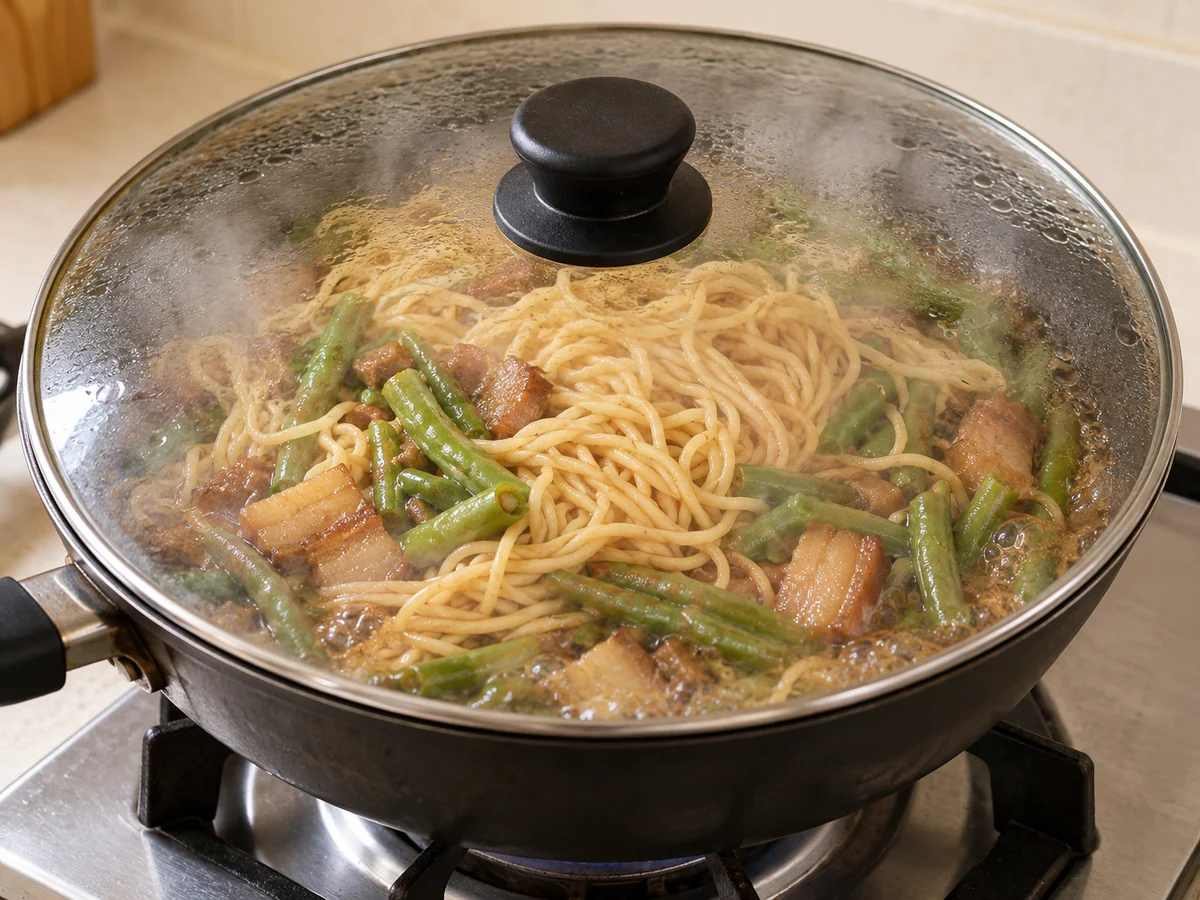
Green bean braised noodlesCover for the first braise
Cover and keep the sauce bubbling steadily with a 5 min check. If it smells scorched or nears dryness, lower the heat and add a little hot water immediately rather than waiting for the alarm.
Look forSteam softens the noodles without scorching the base.
See the full recipe ↗ 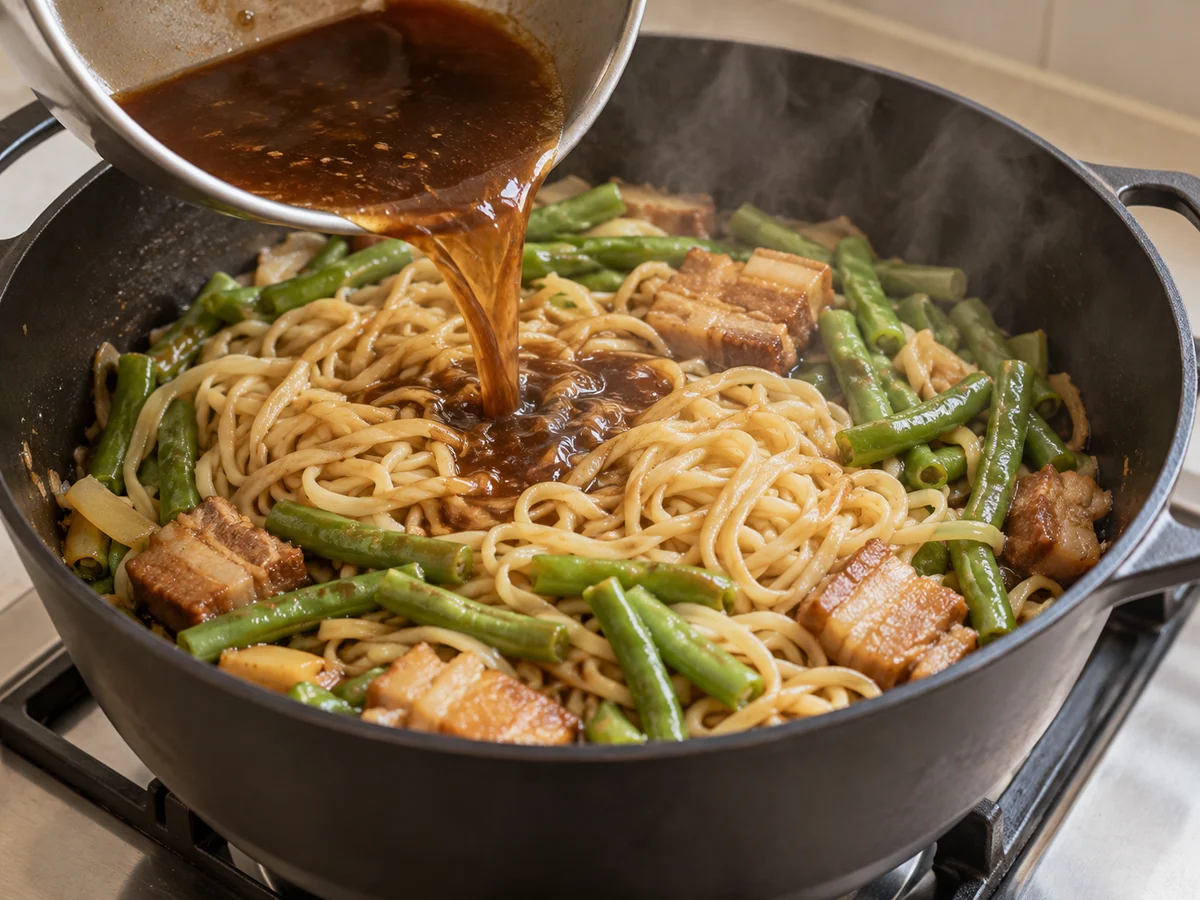
Green bean braised noodlesReturn sauce and finish braising
Pour the reserved sauce evenly over the noodles, cover and set a 3 min check. Continue until noodles have no hard centers and the thickest pork reaches 63°C. Add a little hot water and continue if noodles remain firm; the beans must be fully cooked.
Look forThe noodles are cooked, pork reaches 63°C and beans are fully cooked.
See the full recipe ↗ 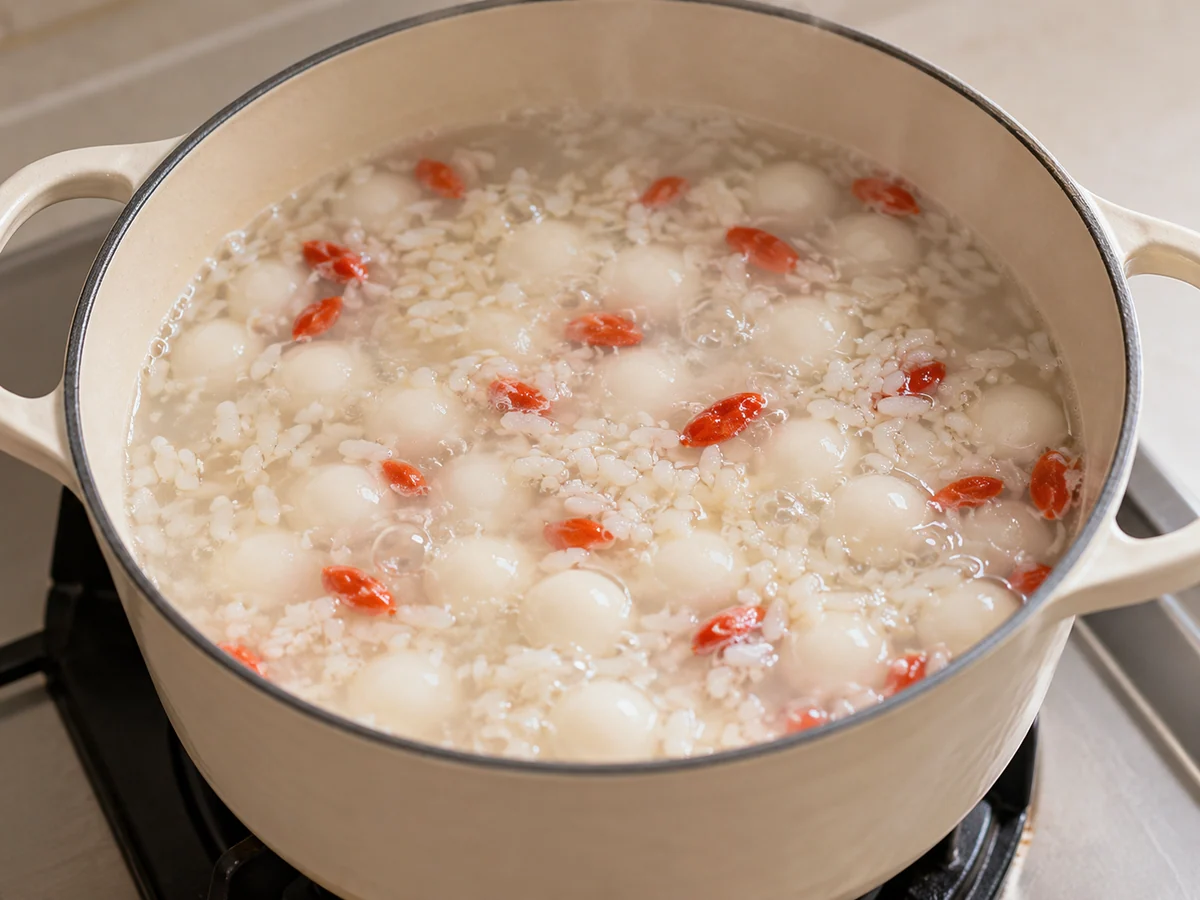
Small rice balls in sweet rice wineAdd fermented rice and goji berries
Fold in fermented rice and optional goji berries. When gentle bubbling returns, set a 2 min check and heat through. Add a little hot water if too thick without breaking the balls.
Look forThe fermented rice is dispersed and the soup is hot throughout.
See the full recipe ↗ 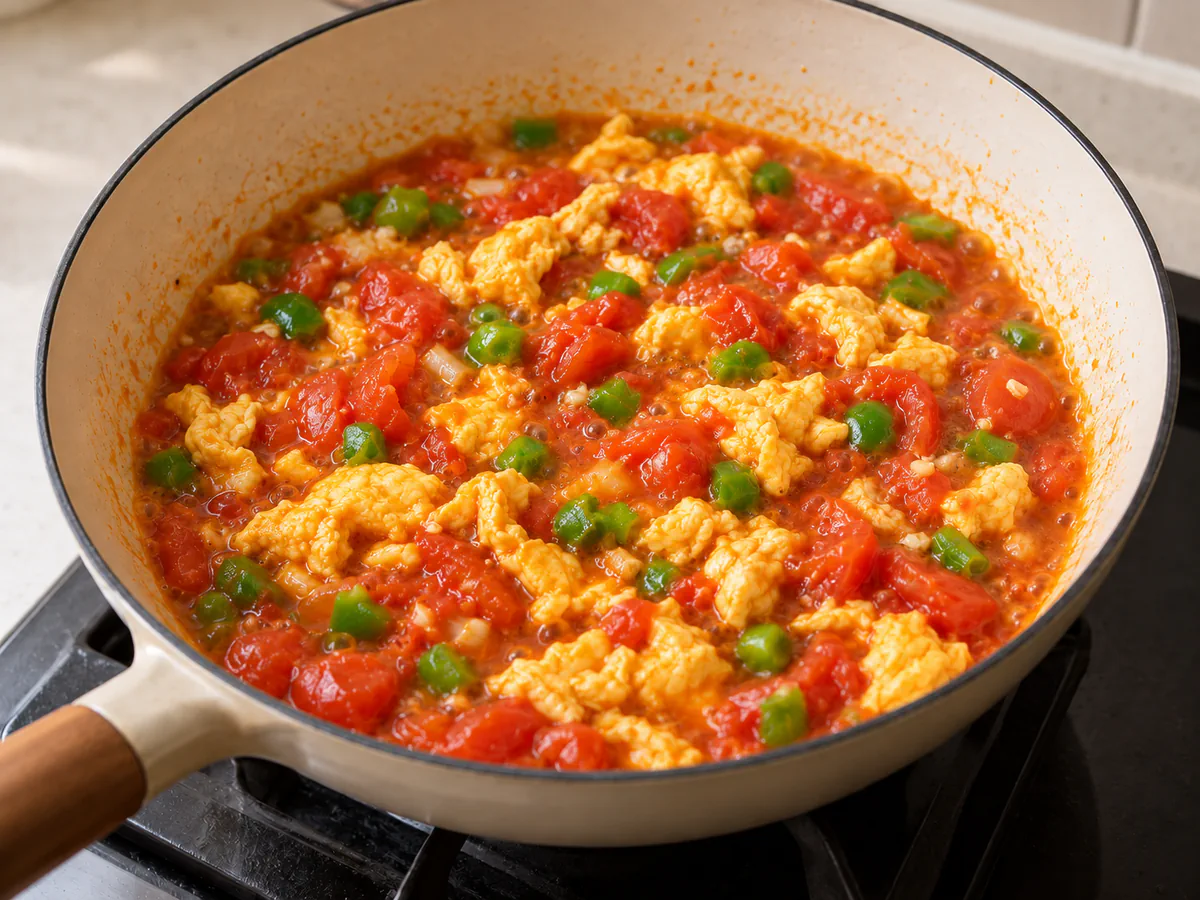
Tomato and egg noodlesSimmer tomato and egg sauce
Use medium-low heat to scent the remaining oil with scallion whites and minced garlic without browning them. Add tomato and pepper, cook until tomato releases juice, then mix in soy and optional sugar. Add water just to cover the tomato; bring to a boil, add cooked egg and oyster sauce, and simmer until tomato is soft, pepper loses its raw crunch and the sauce thickens slightly. Taste before optional salt.
Look forTomato is juicy and soft, pepper cooked and softened, egg curds intact and sauce slightly thickened.
See the full recipe ↗ 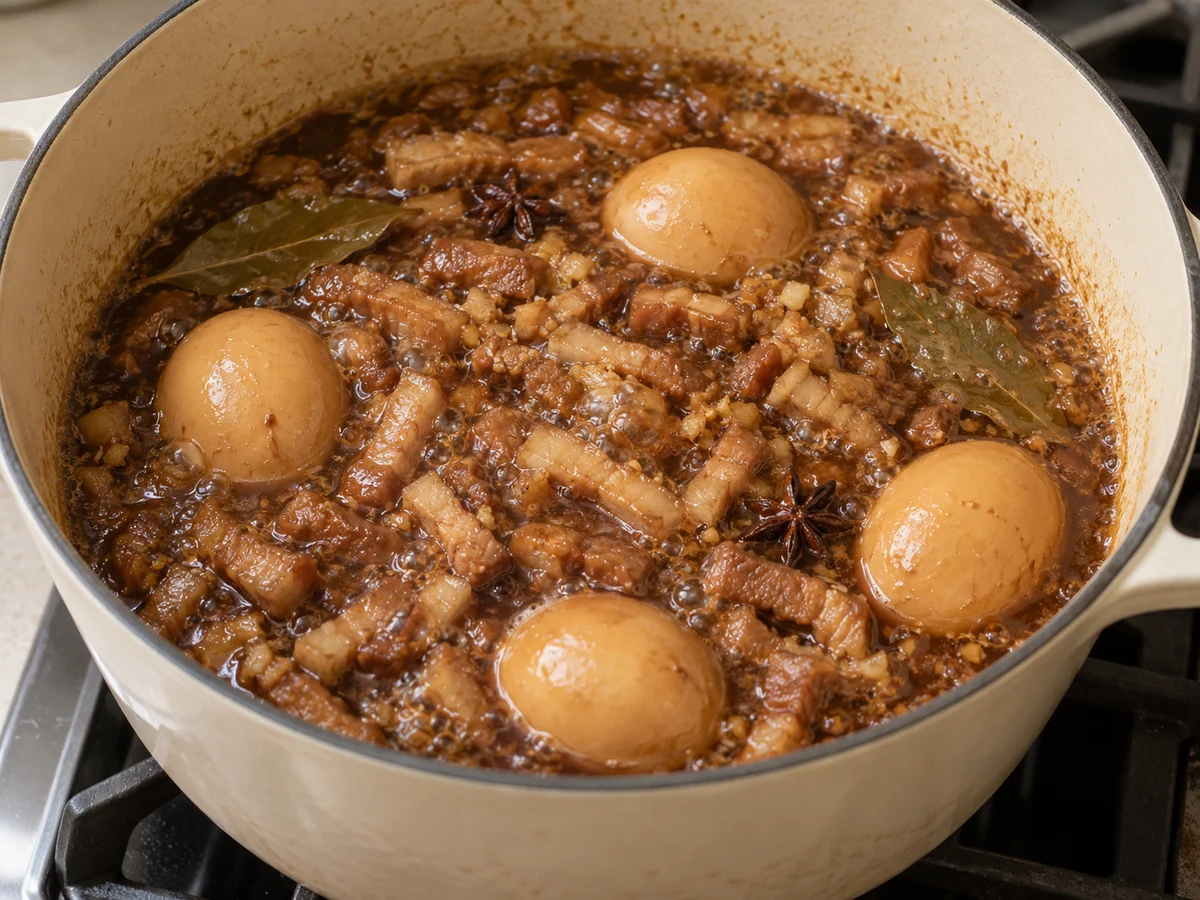
Taiwanese braised pork riceBraise until tender
Maintain gentle bubbling and set a 1 hr check. Stir across the base regularly and watch the liquid, adding a little hot water if it runs low. Check for tender skin and meat when the alarm sounds and continue if needed; do not leave the stove unattended for long periods.
Look forThe skin is soft, meat tender and enough braising liquid remains.
See the full recipe ↗ 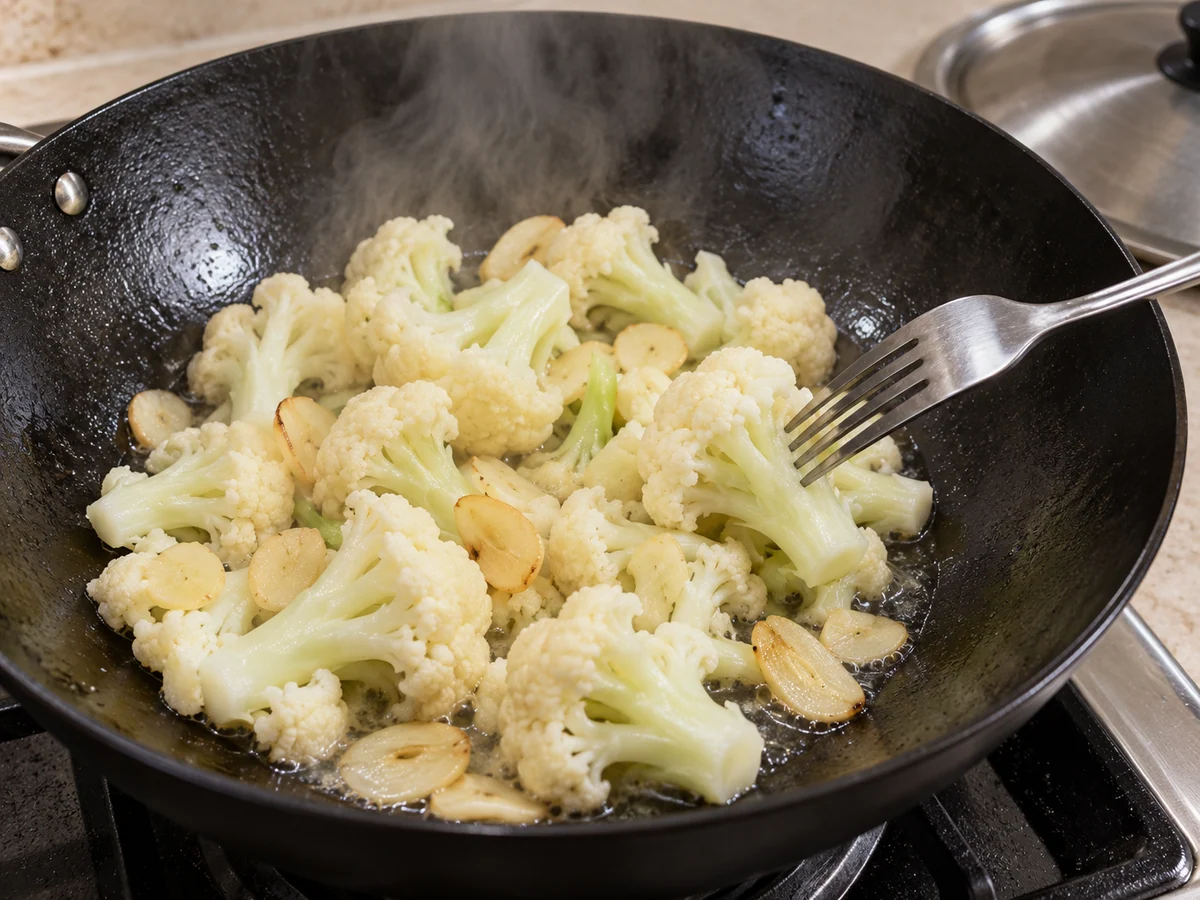
Cauliflower stir-fryAdd water and steam briefly
Toss with salt, carefully add the measured pan water along the side and cover. Once steady steam appears, set a 1 min check. Continue if stems are too firm, keeping a little liquid at the base.
Look forA fork enters the stems readily while the florets stay intact.
See the full recipe ↗ 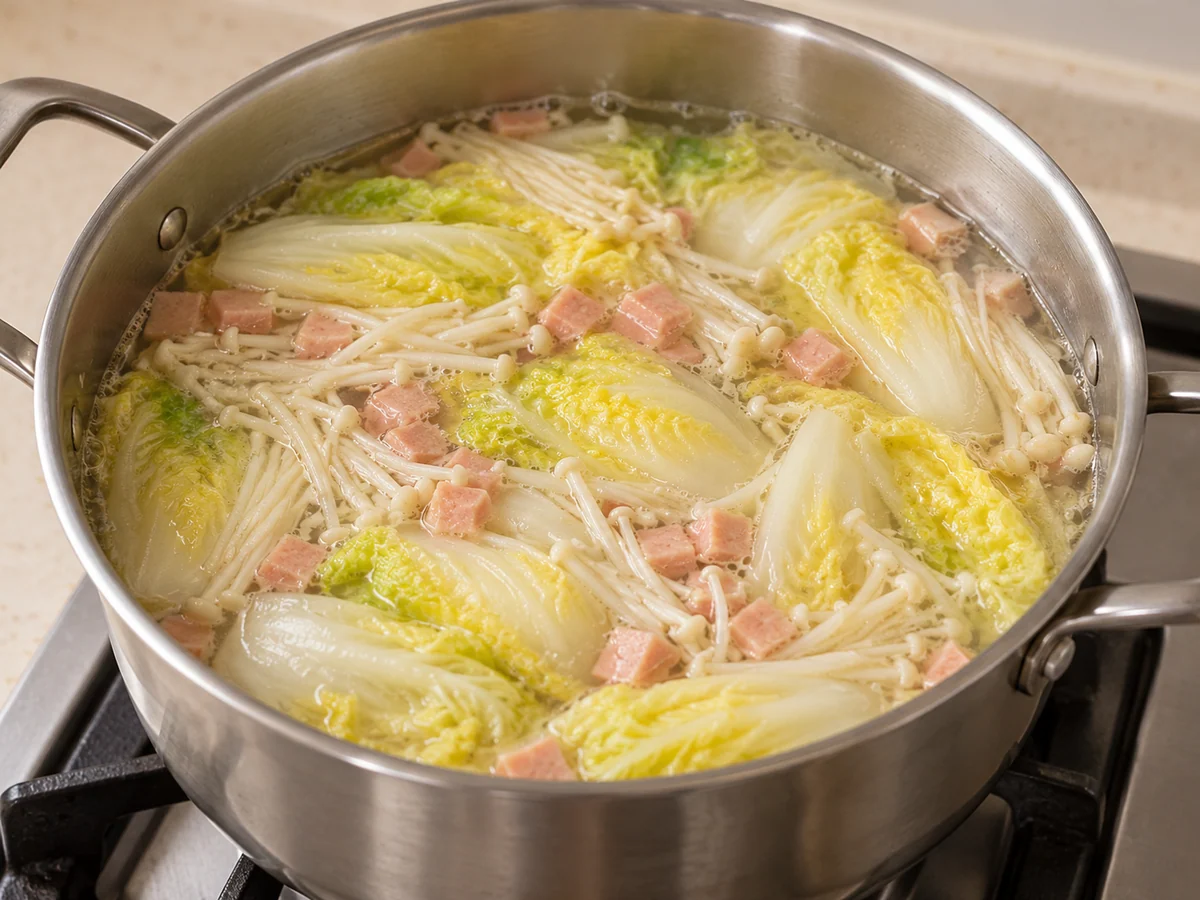
Baby napa cabbage in brothSimmer the cabbage
Add cabbage, luncheon meat and optional enoki, adjusting water to just cover the gently packed leaves. Add a little oyster sauce, sugar and MSG. Once boiling, set a 3 min first check; continue until stems are tender and any enoki is thoroughly cooked and steaming hot throughout.
Look forCabbage stems are translucent, leaves are wilted and any mushroom clusters are loosened.
See the full recipe ↗ 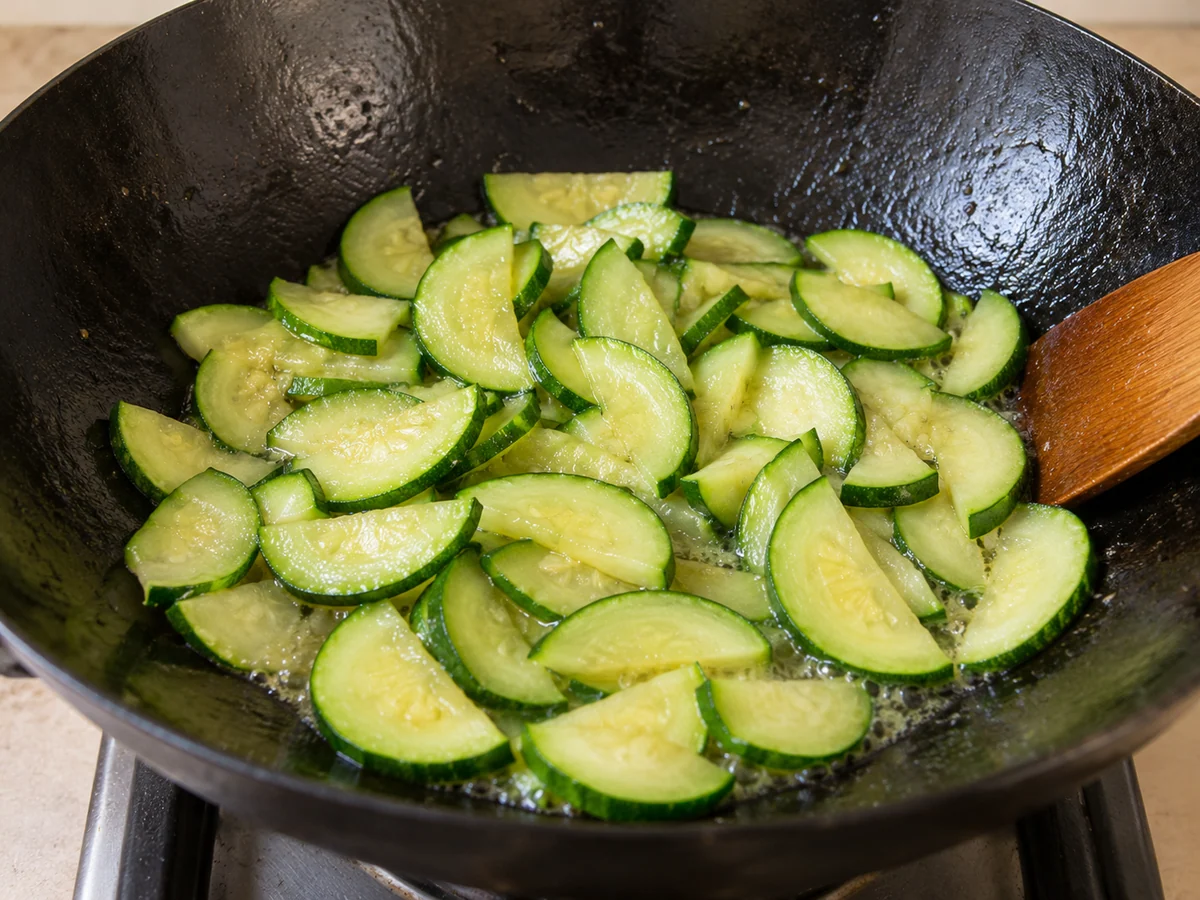
Zucchini and eggsSoften the vegetables
Add the remaining oil. If using tomato, soften it first, then add zucchini and salt. Toss, reduce heat and set a 4 min check, stirring occasionally and continuing if slices remain firm.
Look forZucchini edges are translucent and the slices are soft with a little released juice.
See the full recipe ↗ 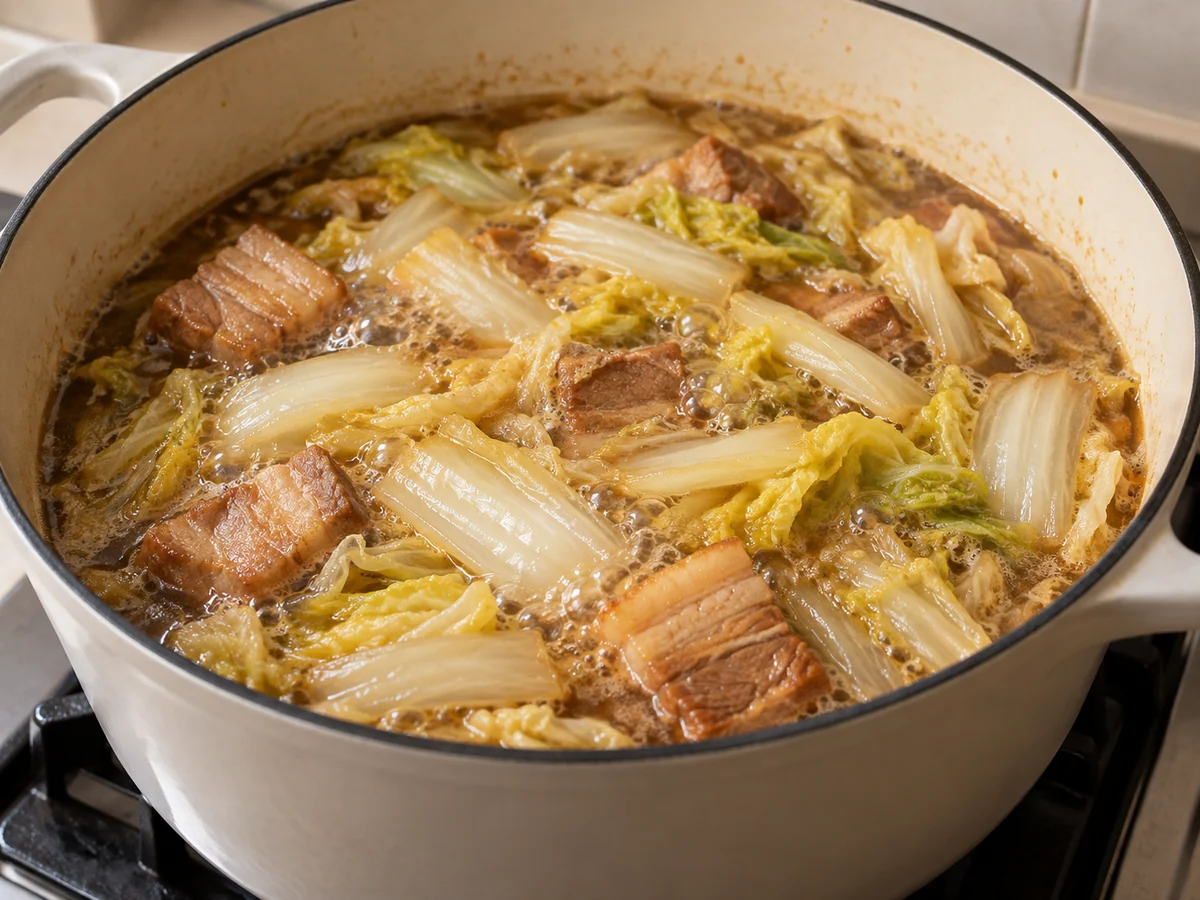
Pork, cabbage and vermicelli stewSimmer with water
Add water to just cover pork and stems, then stir in bouillon and spice powder. Bring to a boil, reduce to a gentle simmer and set a 20 min check, topping up with a little hot water if needed.
Look forPork and cabbage stems gently bubble in broth as stems become translucent.
See the full recipe ↗ 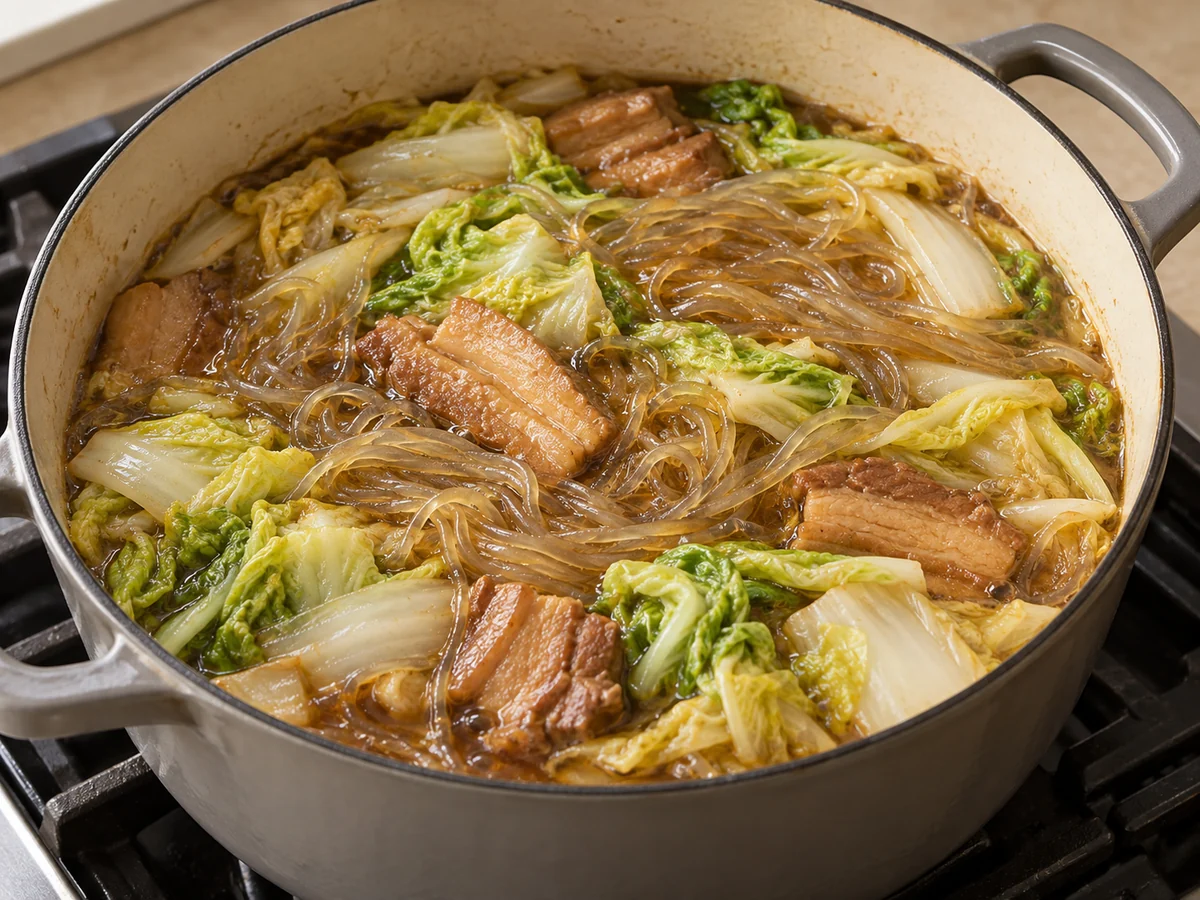
Pork, cabbage and vermicelli stewAdd leaves and noodles
Drain and shorten noodles with kitchen shears. Mix cabbage leaves into the pot, add noodles and press into the broth. Cover and set a 5 min check. Continue until noodles have no hard centers, stems are tender and the thickest pork slice reaches 63°C.
Look forNoodles are translucent and supple, leaves wilted and the broth still fluid.
See the full recipe ↗ 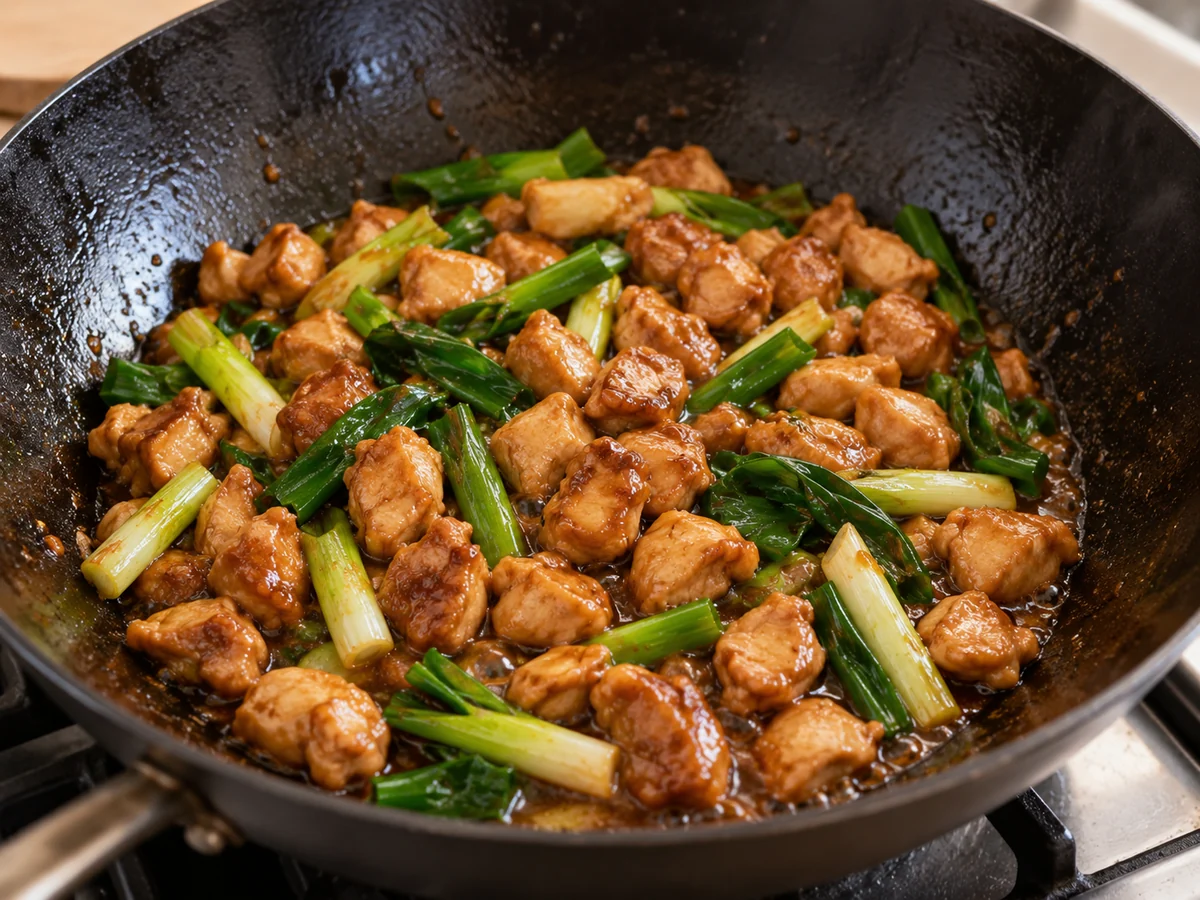
Scallion-braised chicken legsAdd leek and sauce
Toss in Chinese leek until the edges soften, add the sauce and mix. Cover and set a 2 min check. If the base nears dryness before chicken is cooked, lower heat and add a little hot water.
Look forLeek begins to soften and chicken is coated in sauce with a little liquid at the base.
See the full recipe ↗ 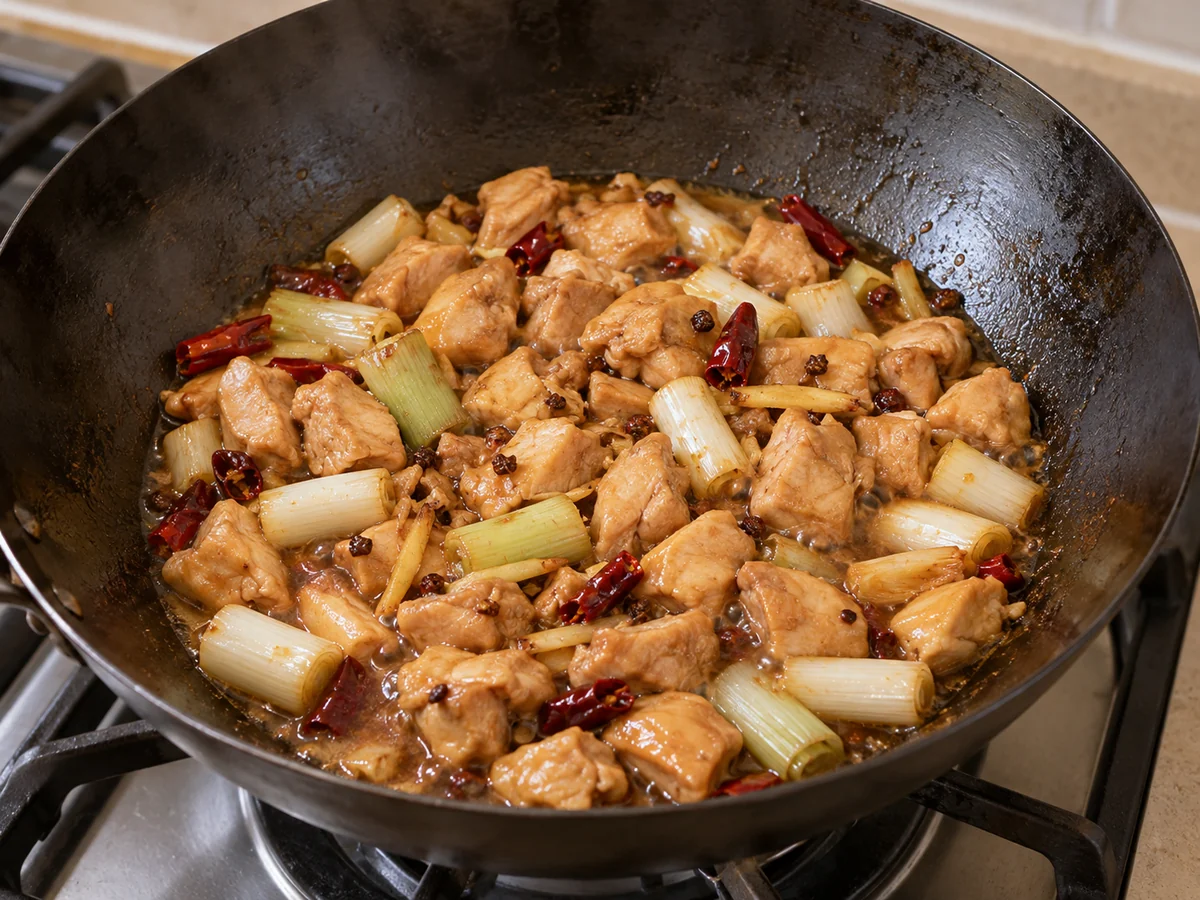
Kung pao chickenBraise briefly and check temperature
Toss in leek whites, then add remaining infusion and enough extra water for a shallow layer. Cover over medium-low and set a 2 min check. Continue until the thickest chicken cube reaches 74°C, adding a little water if needed.
Look forLeek whites are slightly softened and chicken coated in a little fluid sauce.
See the full recipe ↗ 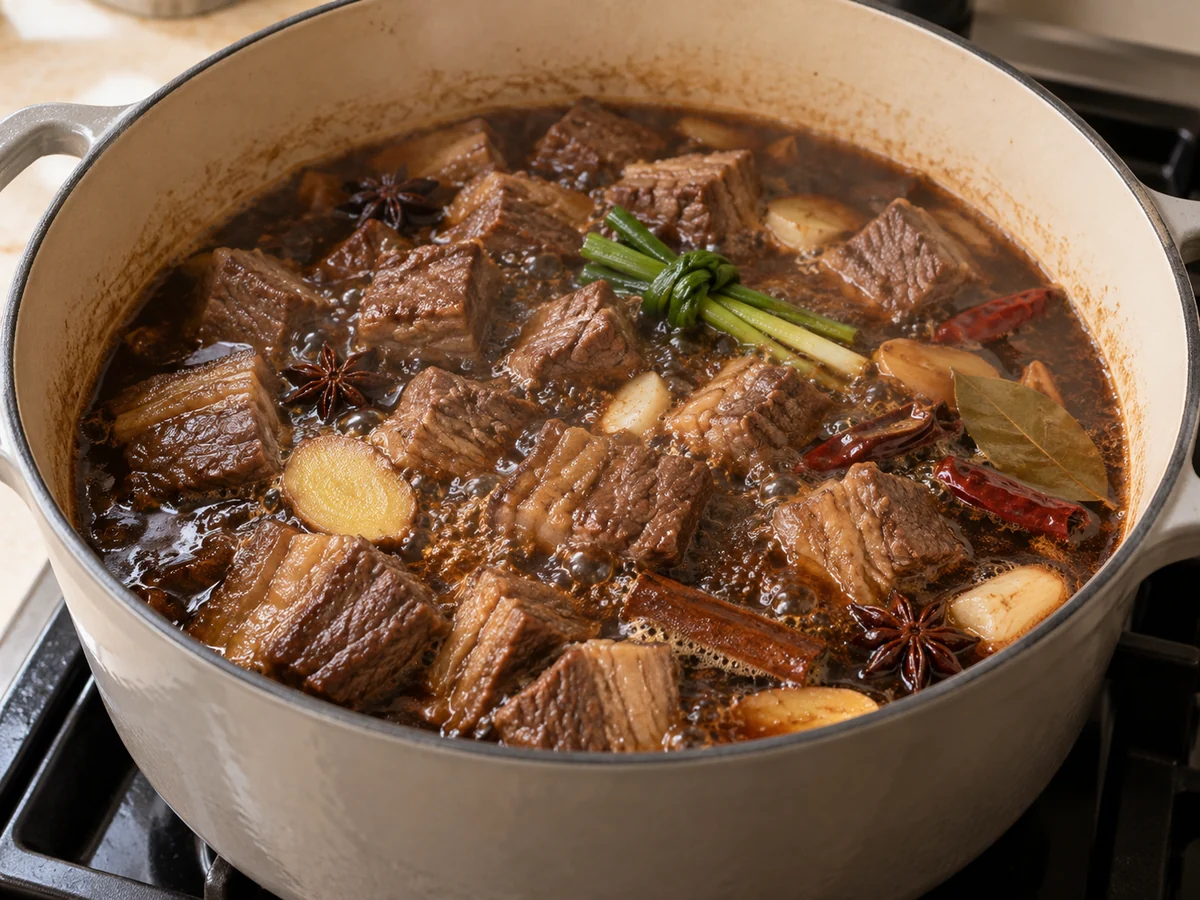
Cantonese beef brisket and radishBraise the beef gently
Add the whole spices, bring to a boil, cover and maintain a gentle simmer with a 2 hr check. Watch the liquid level. Add radish only when the beef begins to soften; continue braising first if still very tough.
Look forBeef gently bubbles in dark broth and begins to soften.
See the full recipe ↗ 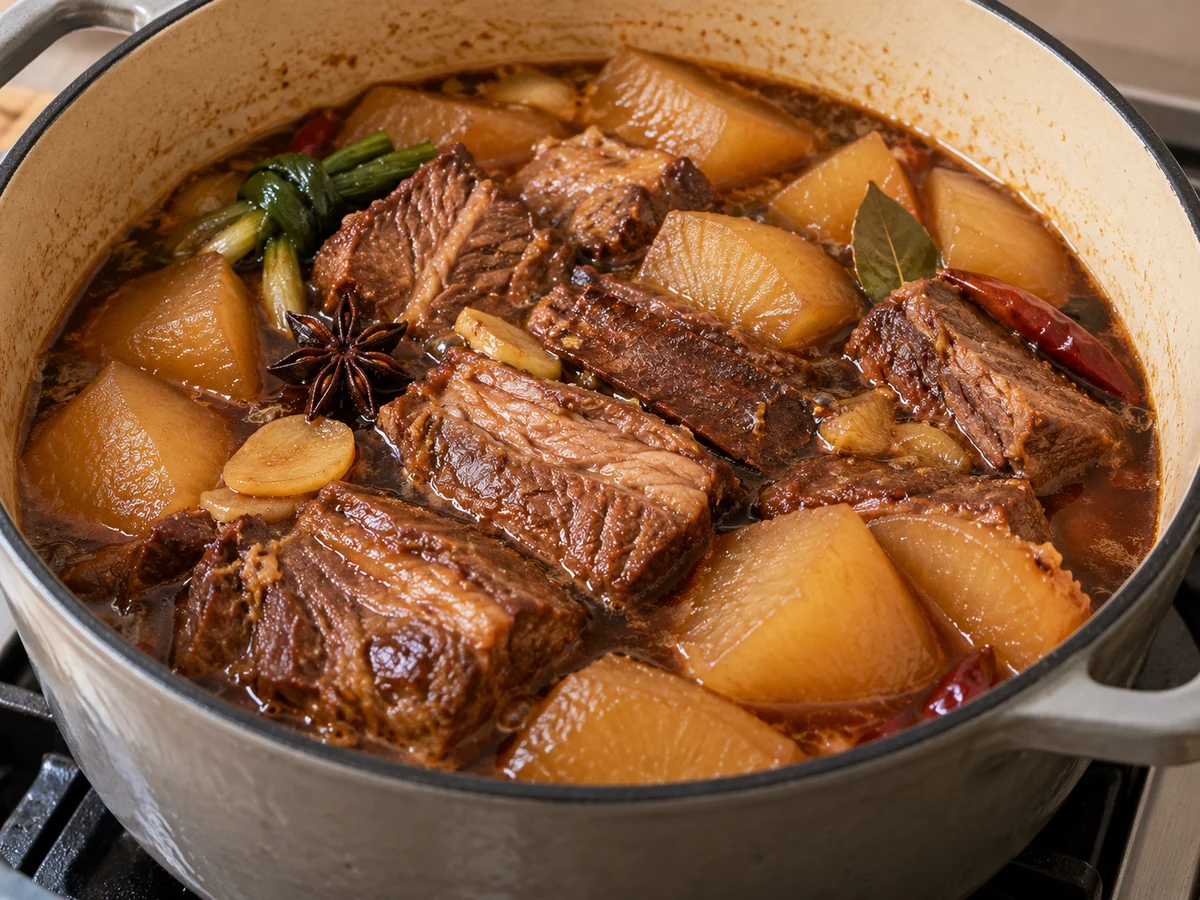
Cantonese beef brisket and radishAdd radish and finish braising
Add radish and a little hot water if needed. When simmering resumes, set a 30 min check. Finish when radish yields easily, beef is tender and the thickest meat reaches at least 63°C. Remove whole spices with tongs.
Look forRadish edges are translucent and sauce-colored, and beef is tender without falling apart.
See the full recipe ↗ 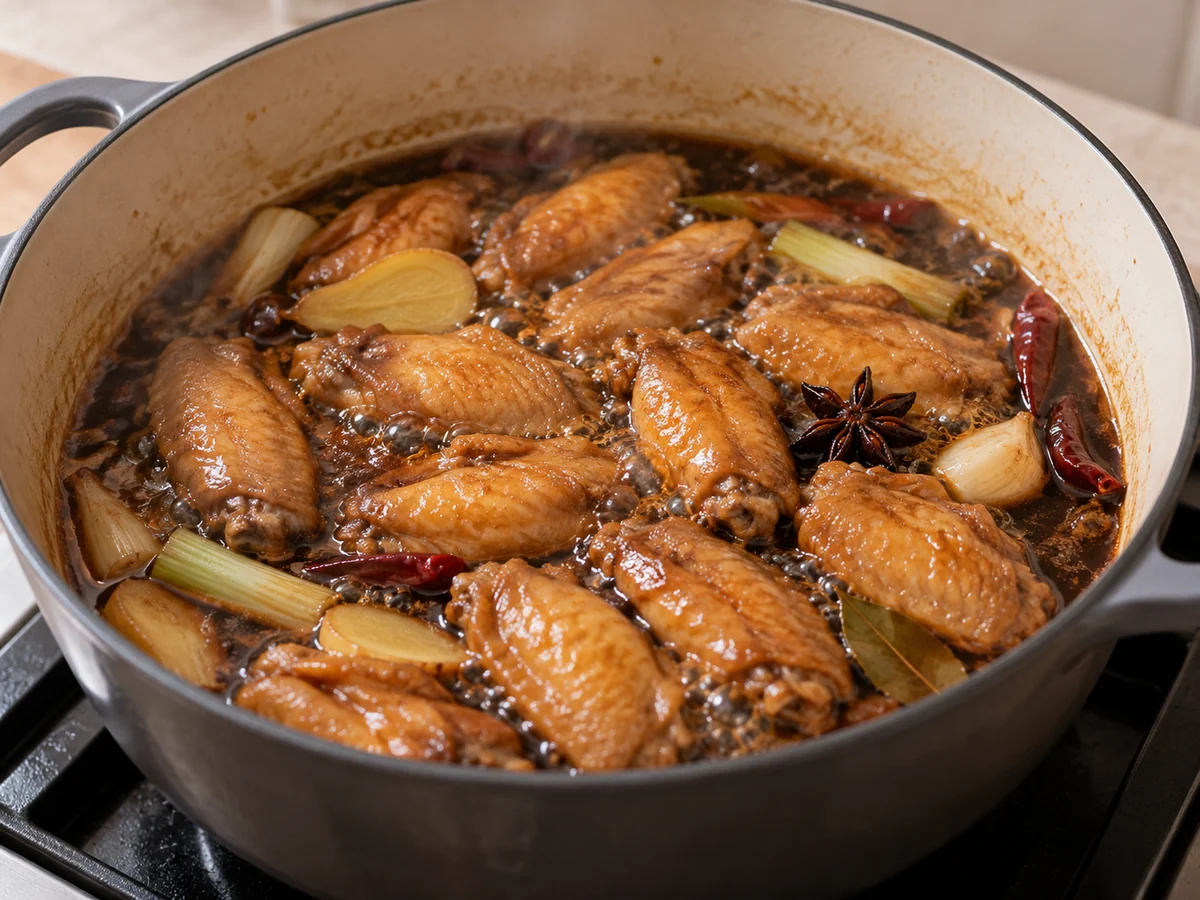
Soy-braised chicken wingsBraise and check the center
Bring to a boil, cover and maintain a gentle medium-low simmer with a 8 min first check. Probe the thickest wing meat away from bone to 74°C. Continue braising if needed, adding a little hot water when necessary.
Look forWing meat is plump and evenly colored with braising liquid remaining.
See the full recipe ↗ 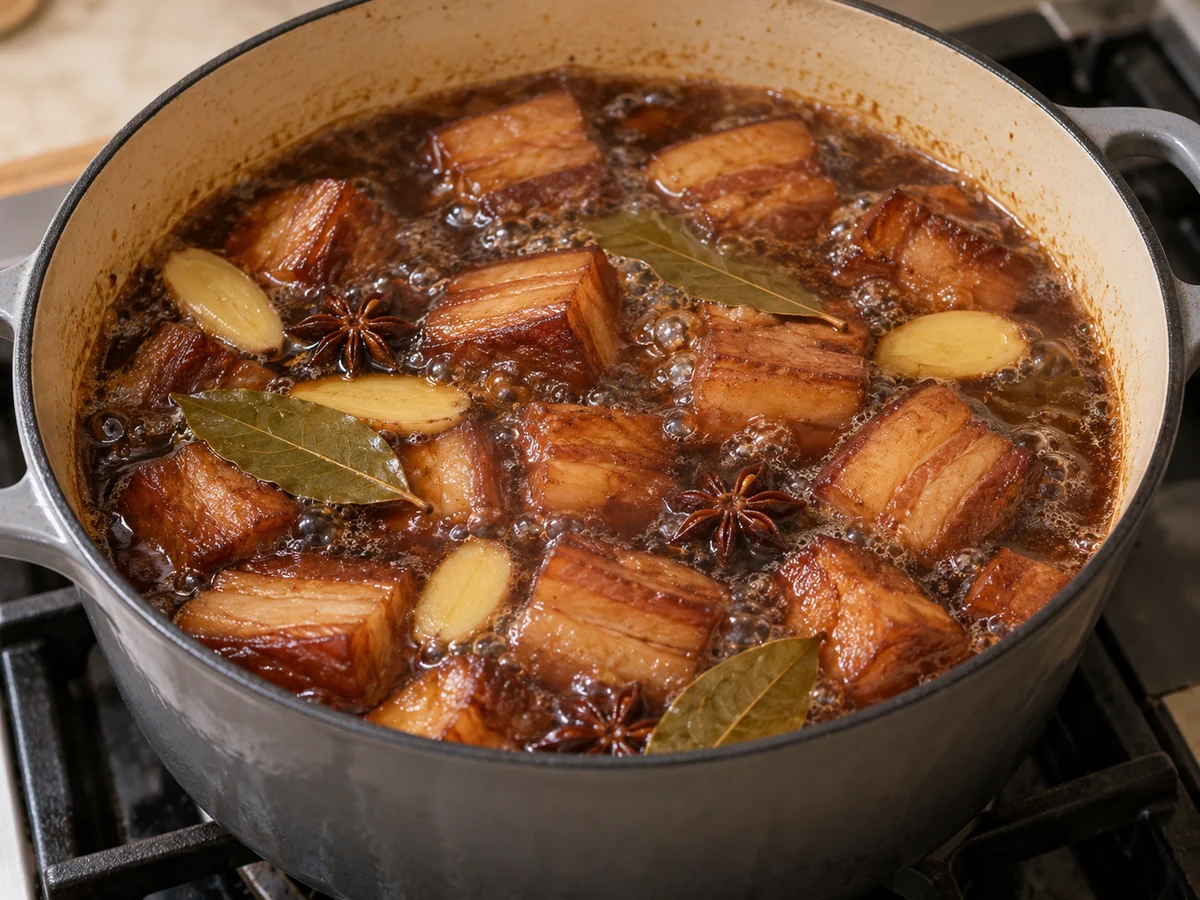
Red-braised pork bellyStart the braise
Coat with light soy, dark soy and remaining wine, then carefully add boiling water to just cover. Add remaining ginger, bay and star anise, bring to a boil, cover and simmer gently with a 40 min check, watching the liquid level.
Look forPork gently bubbles in reddish-brown liquid with evenly colored surfaces.
See the full recipe ↗ 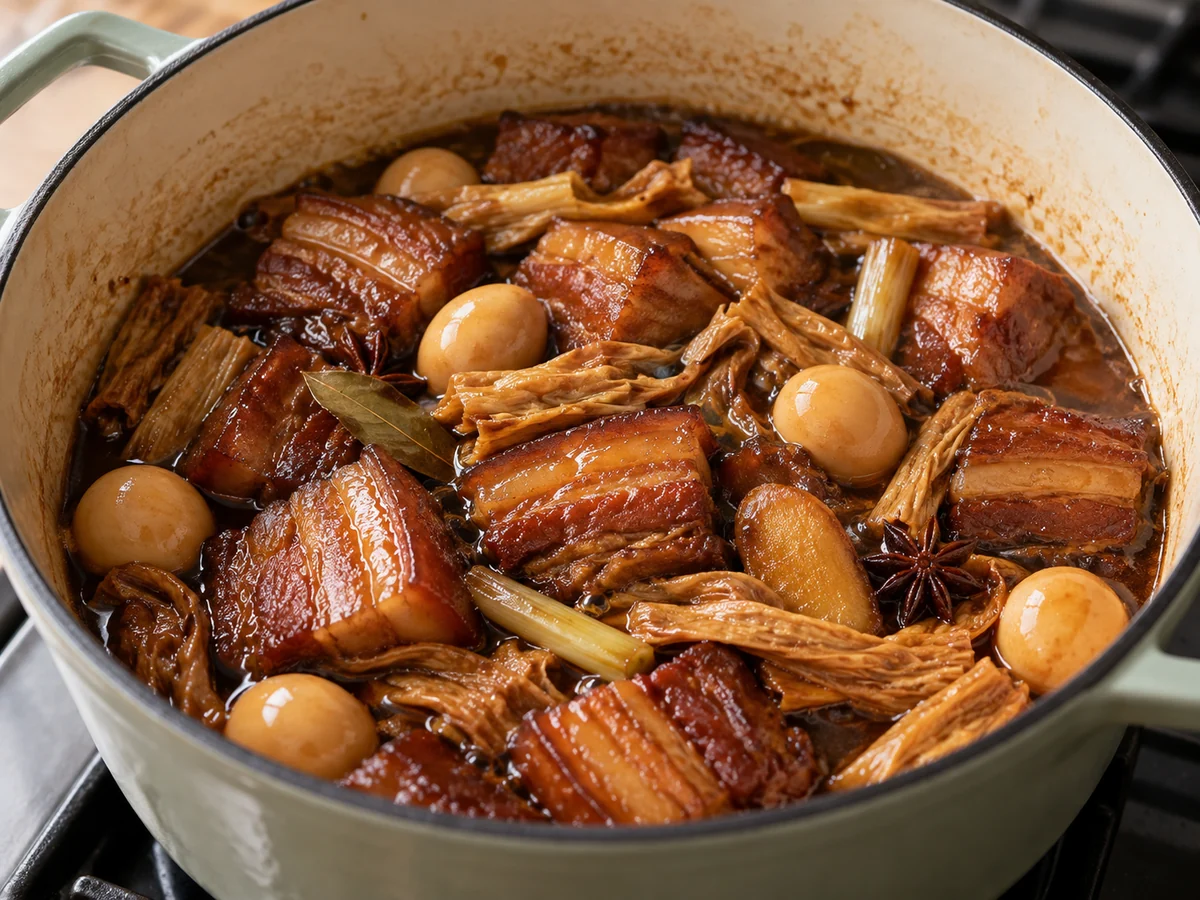
Red-braised pork bellyContinue until tender
Add optional cooked quail eggs and tofu skin and turn gently. Whether using them or not, continue covered simmering with a 40 min check. Keep cooking until the meat yields easily, topping up with hot water if needed.
Look forPork is tender but holds its shape, with optional eggs and tofu skin colored by the sauce.
See the full recipe ↗ 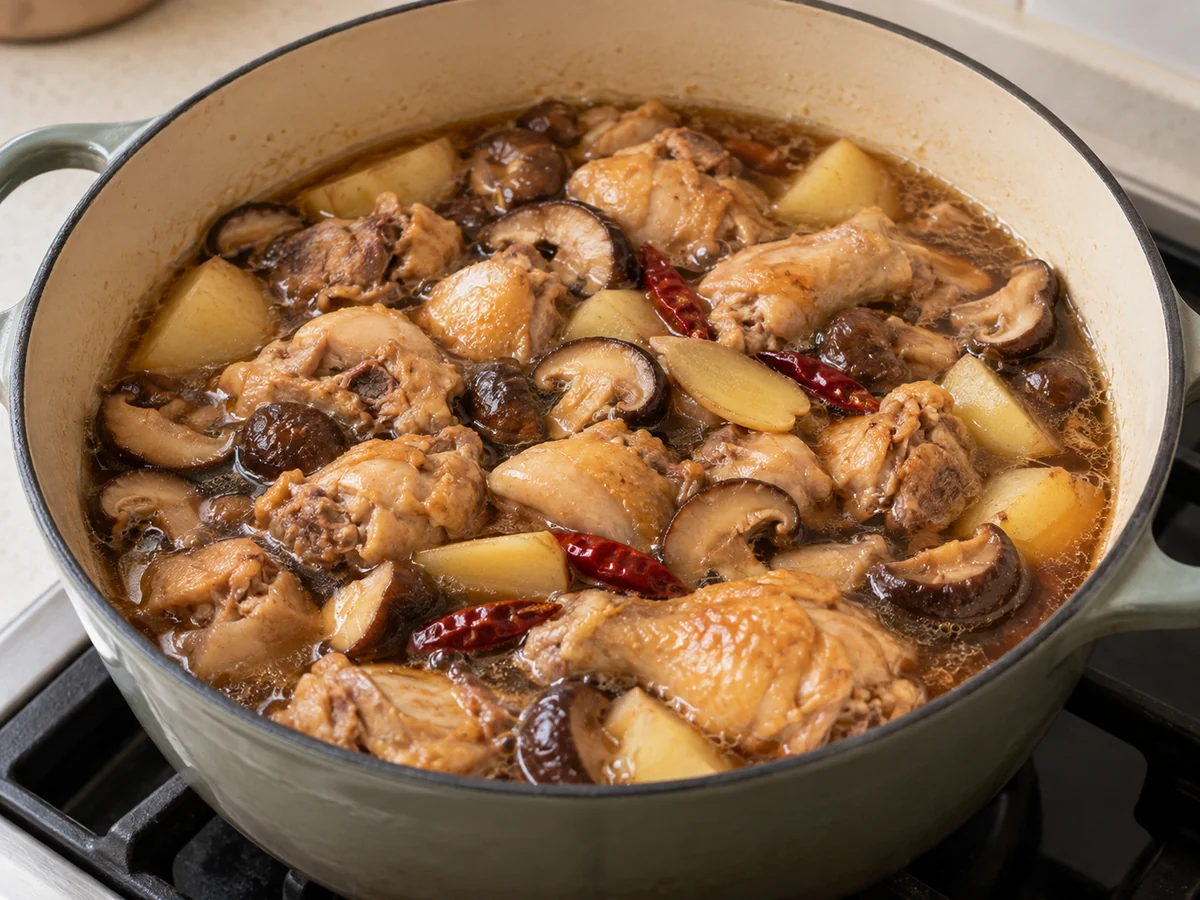
Braised chicken with mushroomsBraise with mushrooms and water
Add water to just cover chicken, then mushrooms, white pepper, optional potato and a little salt. Bring to a boil, cover over medium-low and set a 20 min check. Continue until thickest chicken reaches 74°C and any potato is tender, topping up with a little water if needed.
Look forChicken and mushrooms sit in a concentrated broth and any potato edges are softened.
See the full recipe ↗ 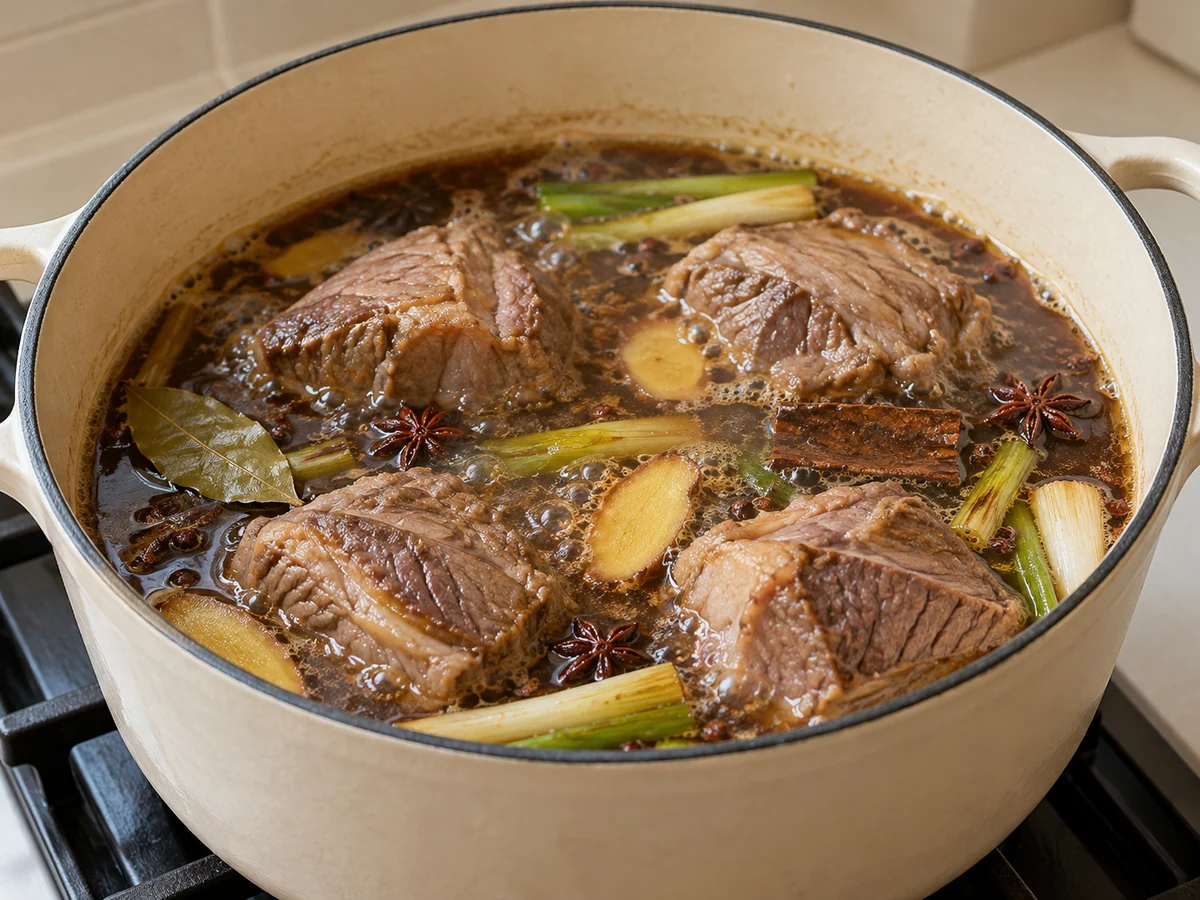
Spiced braised beefFirst braising stage
Transfer beef to a braising pot, cover with fresh water and add remaining unused seasonings except salt. Bring to a boil, reduce to a simmer and start a 1 hr 30 min check. Inspect water about every 30 minutes and carefully top up with hot water before meat is exposed.
Look forA gentle simmer continues with enough liquid around the beef.
See the full recipe ↗ 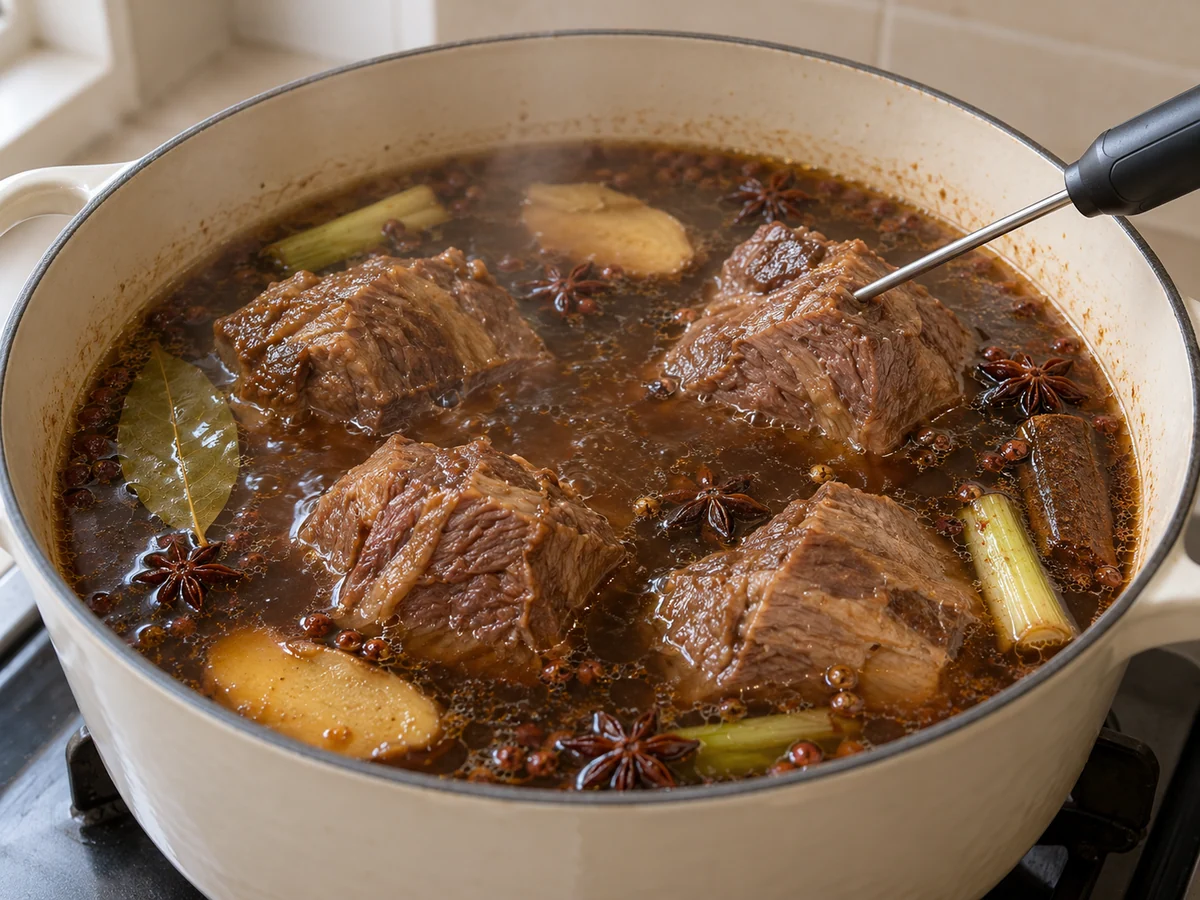
Spiced braised beefAdd salt and continue
Add salt and continue simmering with a 1 hr 30 min check, inspecting liquid regularly. Beef should be easily pierced; verify at least 63°C in its center. Continue cooking if not tender.
Look forBeef is tender but intact and its center reaches at least 63°C.
See the full recipe ↗ 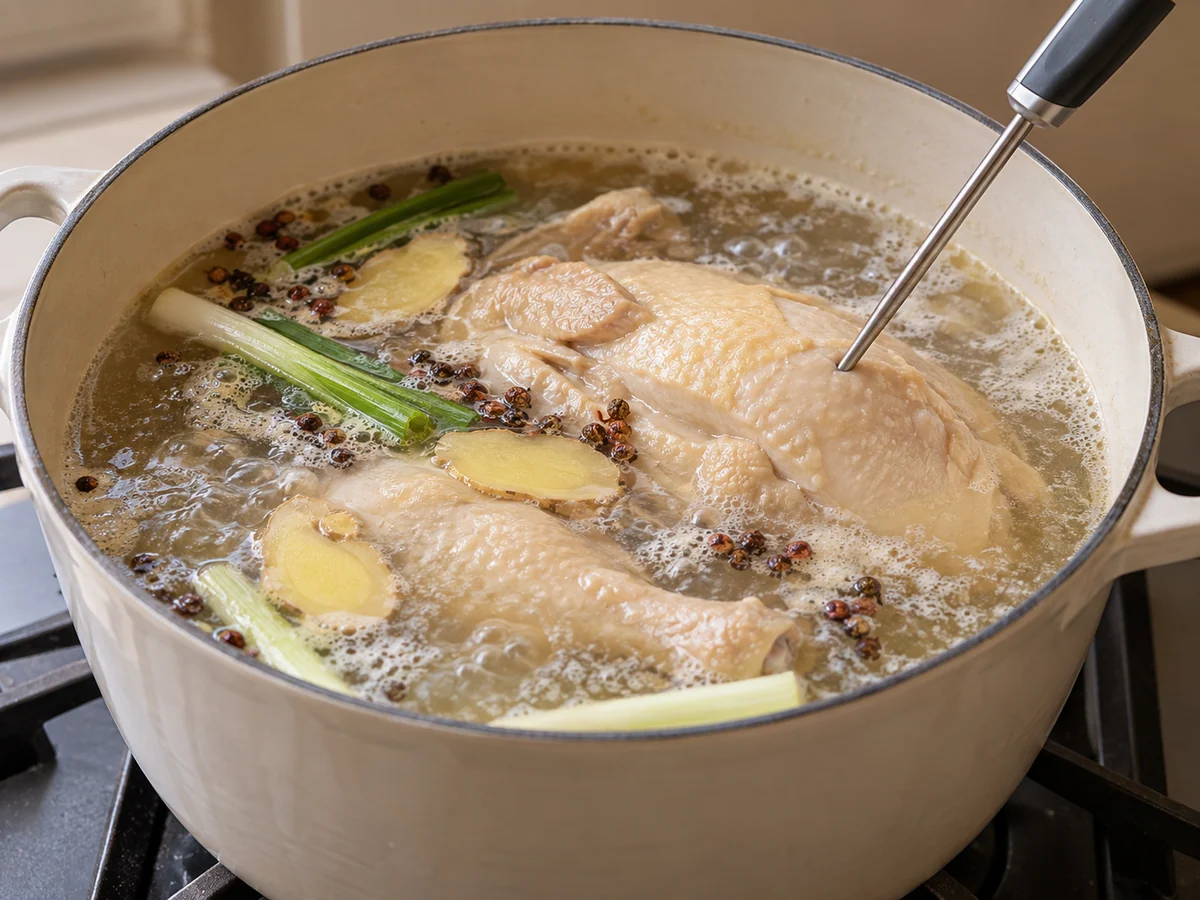
Sichuan mouthwatering chickenPrepare and poach chicken
Slice ginger and divide scallions and whole peppercorns equally. Without rinsing raw poultry, put chicken in a pot with ginger and half the scallions and peppercorns; cover with water. Boil, skim and simmer with a 20 min check. Remove only when thickest meat away from bone reaches 74°C.
Look forChicken center reaches 74°C before removal; time alone is insufficient.
See the full recipe ↗ 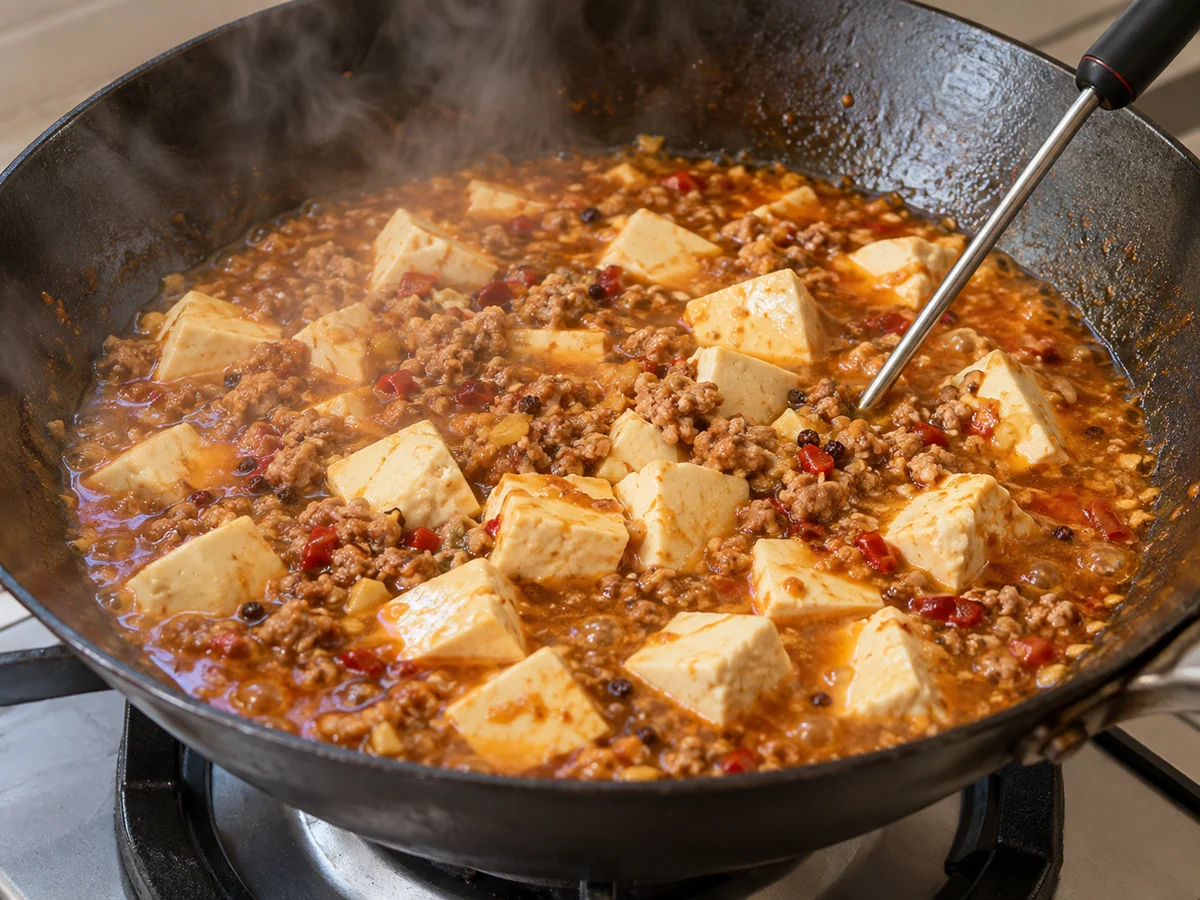
Mapo tofuSimmer tofu
Gently add tofu, remaining salt and soy, and hot water around the edge to cover. Boil, then gently simmer over medium heat with a 10 min check, nudging to prevent sticking. Verify 71°C in the minced-meat dish and hot tofu centers before reducing to a little flowing sauce.
Look forTofu is hot through and intact, minced-meat dish reaches 71°C, and some flowing sauce remains.
See the full recipe ↗ 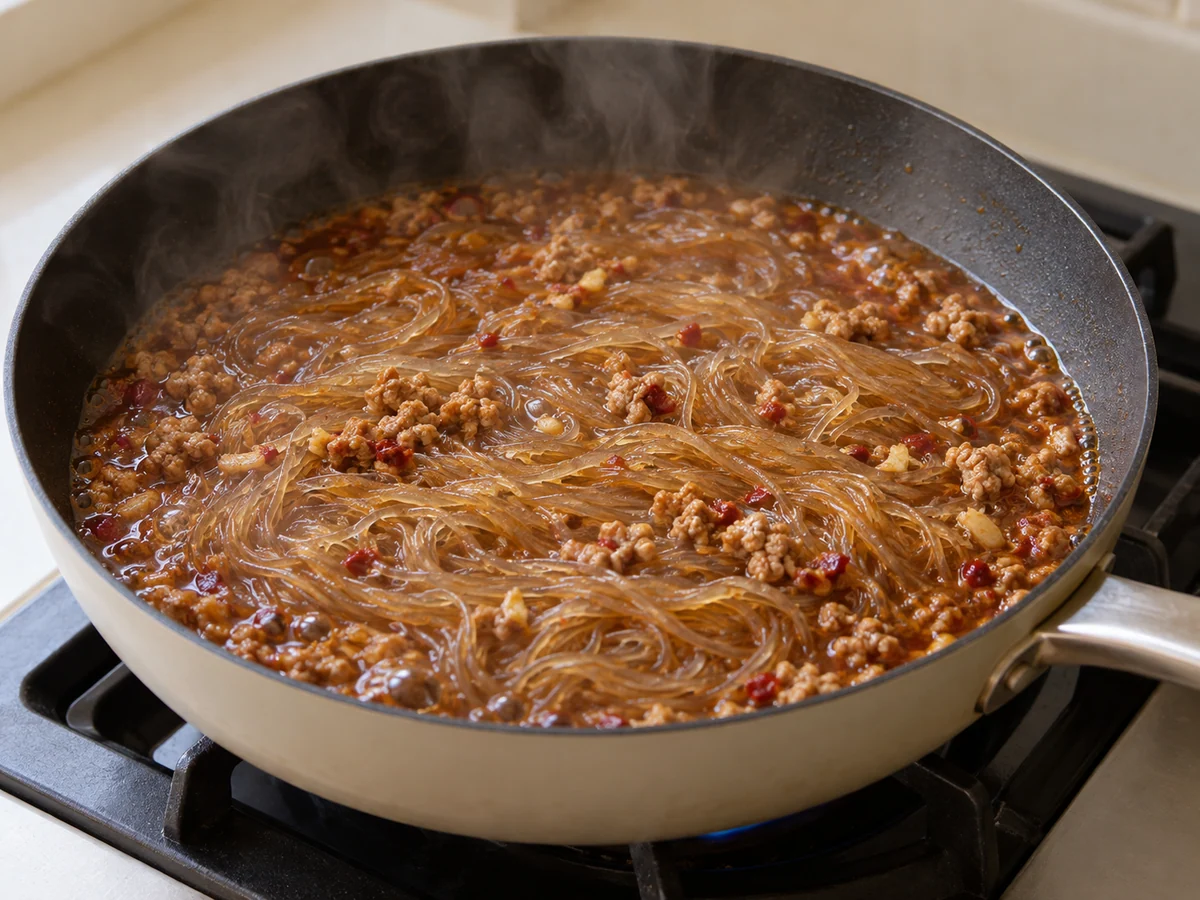
Minced pork and glass noodlesSimmer the noodles
Add both soy sauces and the listed cooking water. Bring to a boil, add softened vermicelli and gently separate. Reduce to medium-low and start a 5 min check, adding a little hot water if needed.
Look forNoodles are separated in sauce without sticking.
See the full recipe ↗ 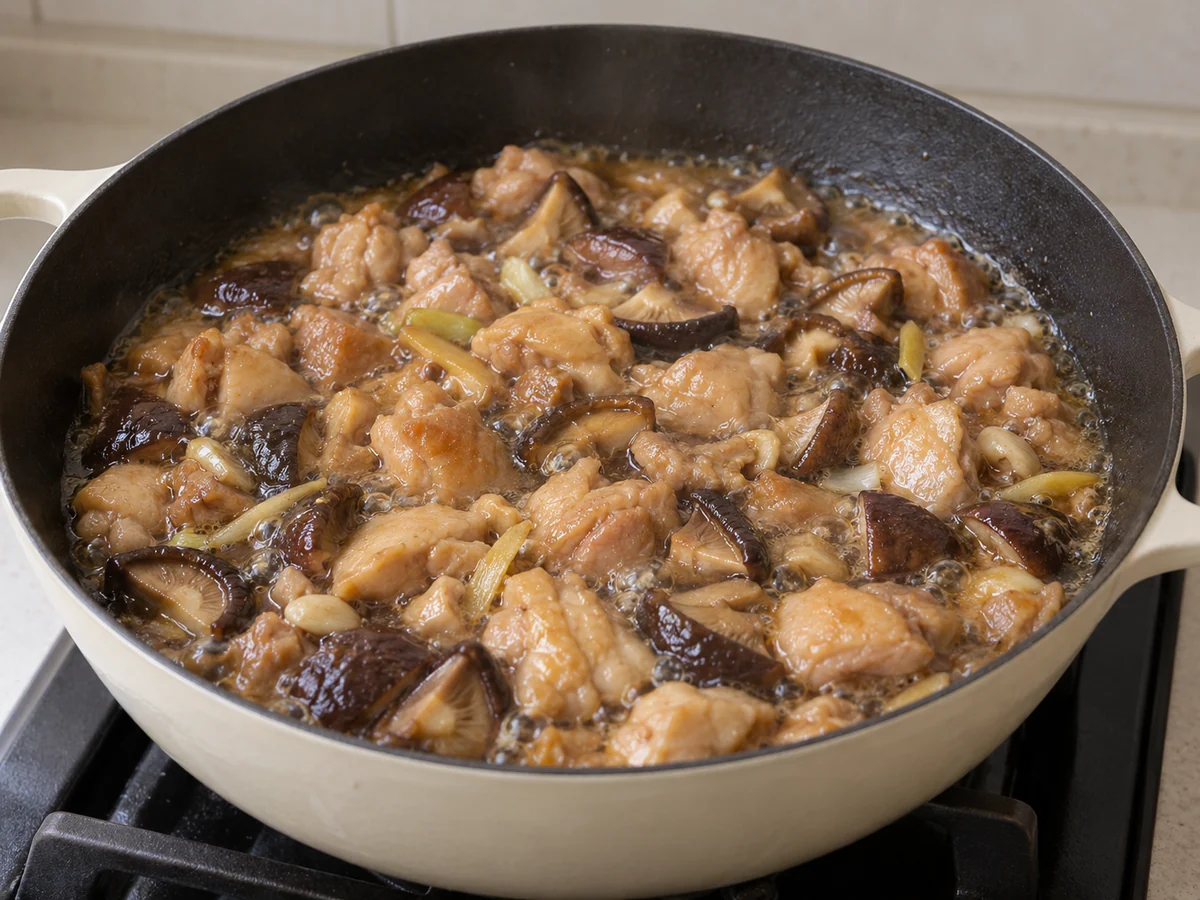
Chicken with shiitake mushroomsCook mushrooms and simmer chicken
Leave a thin oil coating, cook scallion whites, ginger and garlic until fragrant, then stir-fry mushrooms. Return chicken and add strained soaking water, sugar and remaining two-thirds of the light soy. Bring to a boil, reduce to medium and start a 2 min first check; add a little hot water if liquid runs low.
Look forChicken and mushrooms sit in gently bubbling sauce without boiling dry.
See the full recipe ↗ 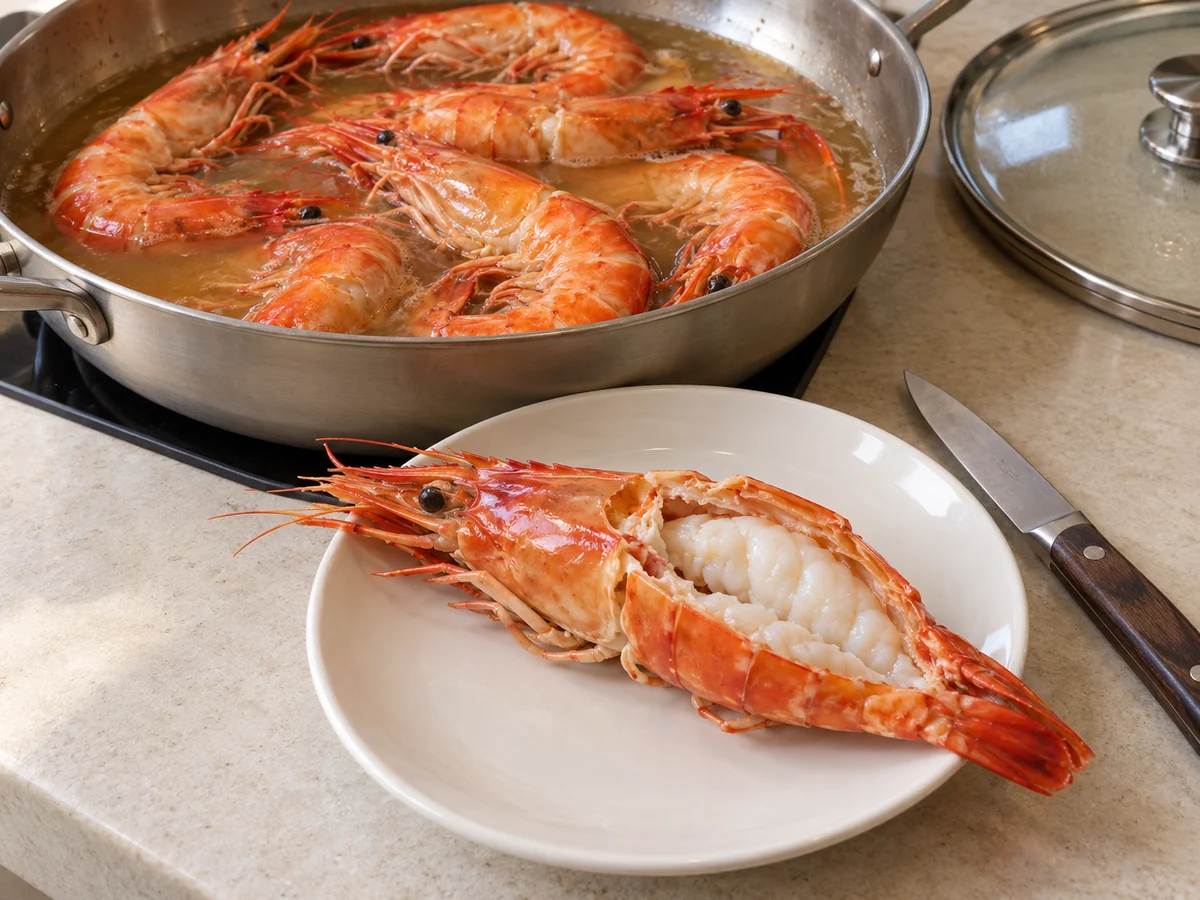
Oil-braised prawnsSimmer until flesh is opaque
Bring to a boil, reduce heat and cover, opening as needed to check. Inspect the thickest prawn inside and remove only when flesh is pearly white and opaque. If liquid runs low first, add a little hot water rather than obeying a no-opening/no-top-up rule.
Look forThickest prawn flesh is pearly white and opaque.
See the full recipe ↗ 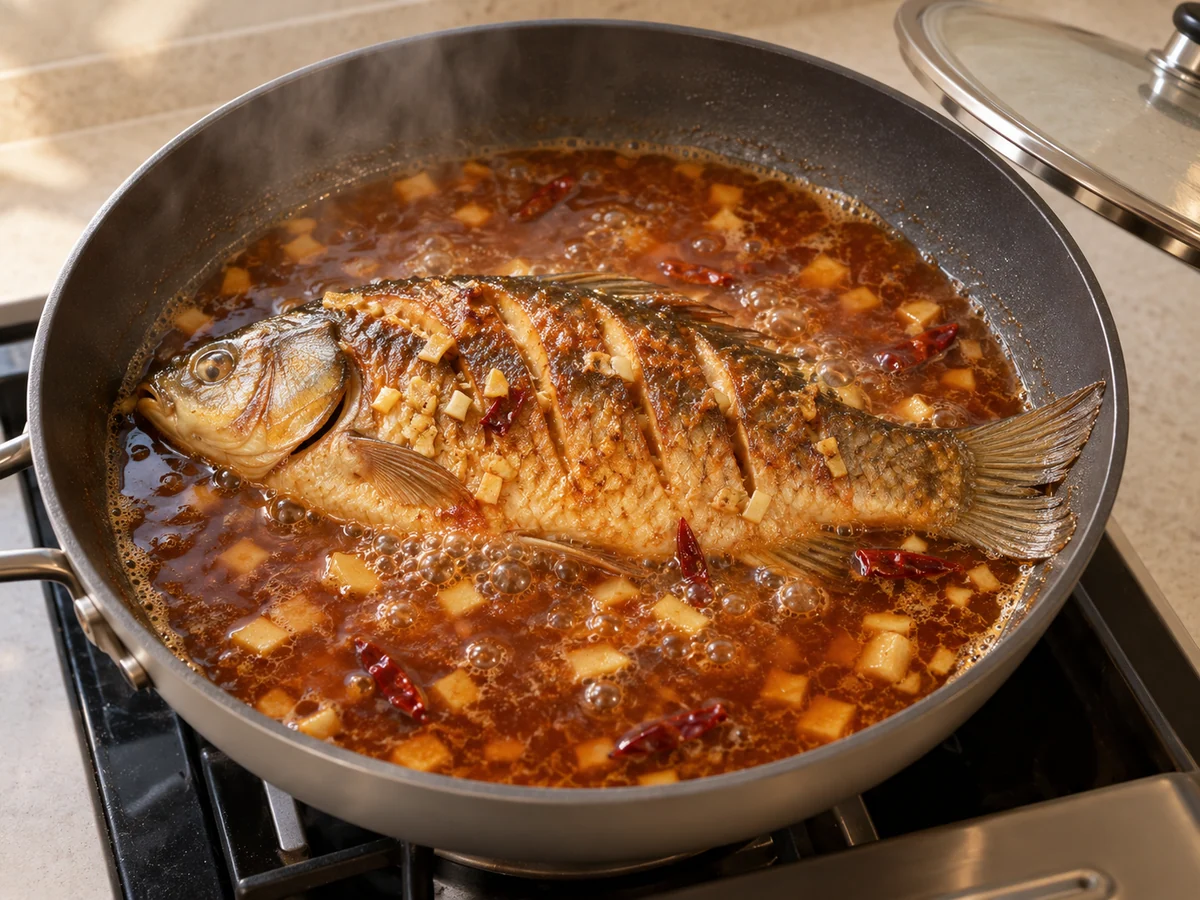
Red-braised fishAdd sauce and simmer
Briefly take the pan off heat and carefully add a little wine, then vinegar, sugar, dark soy and water to just cover the fish. Bring to a boil, reduce to medium-low, cover and start a 1 min first turning check; turn carefully and continue simmering.
Look forFish simmers gently and stays intact when turned.
See the full recipe ↗ 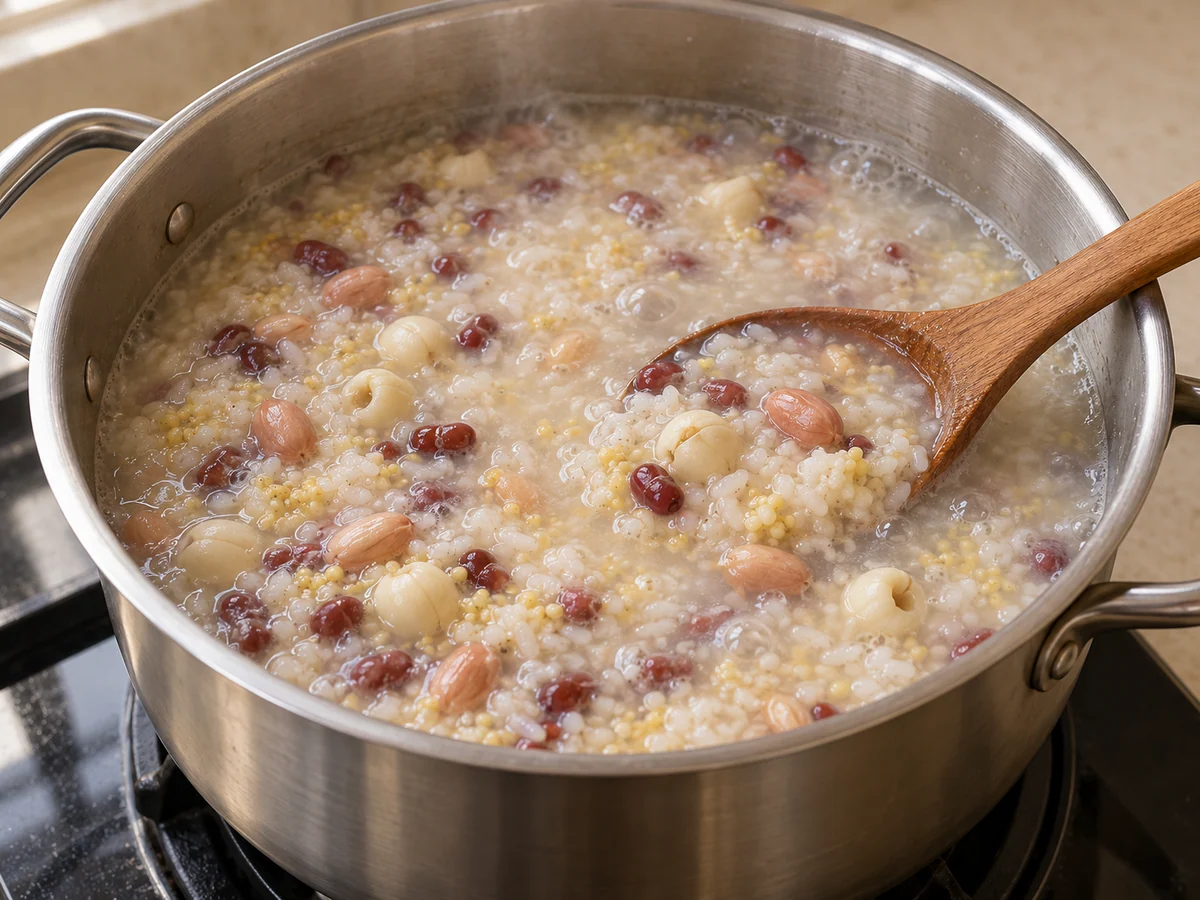
Laba mixed-grain congeeAdd grains and lotus
Add drained grains and lotus and stir. Start a 1 hr check when gentle bubbling resumes. Simmer, stirring the bottom occasionally and adding a little hot water if needed.
Look forGrains begin to open, lotus softens and porridge still flows.
See the full recipe ↗ 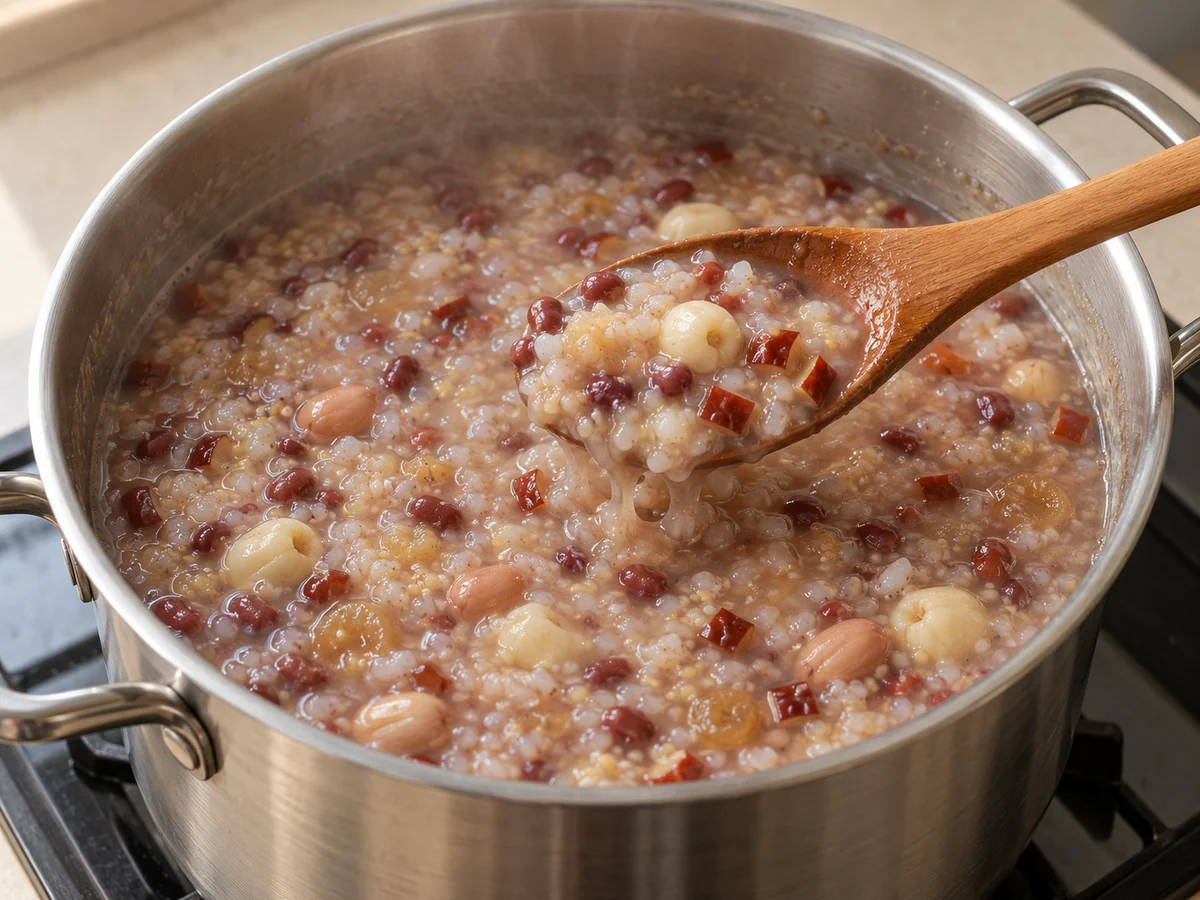
Laba mixed-grain congeeAdd fruit and finish cooking
Check dates and longan are shelled and pitted, rinse and cut smaller, then add with sugar. Simmer with a 1 hr check until beans, lotus and grains have no hard centers, continuing with more water if needed.
Look forAll grains and beans are fully tender; porridge is thick but flowing.
See the full recipe ↗ 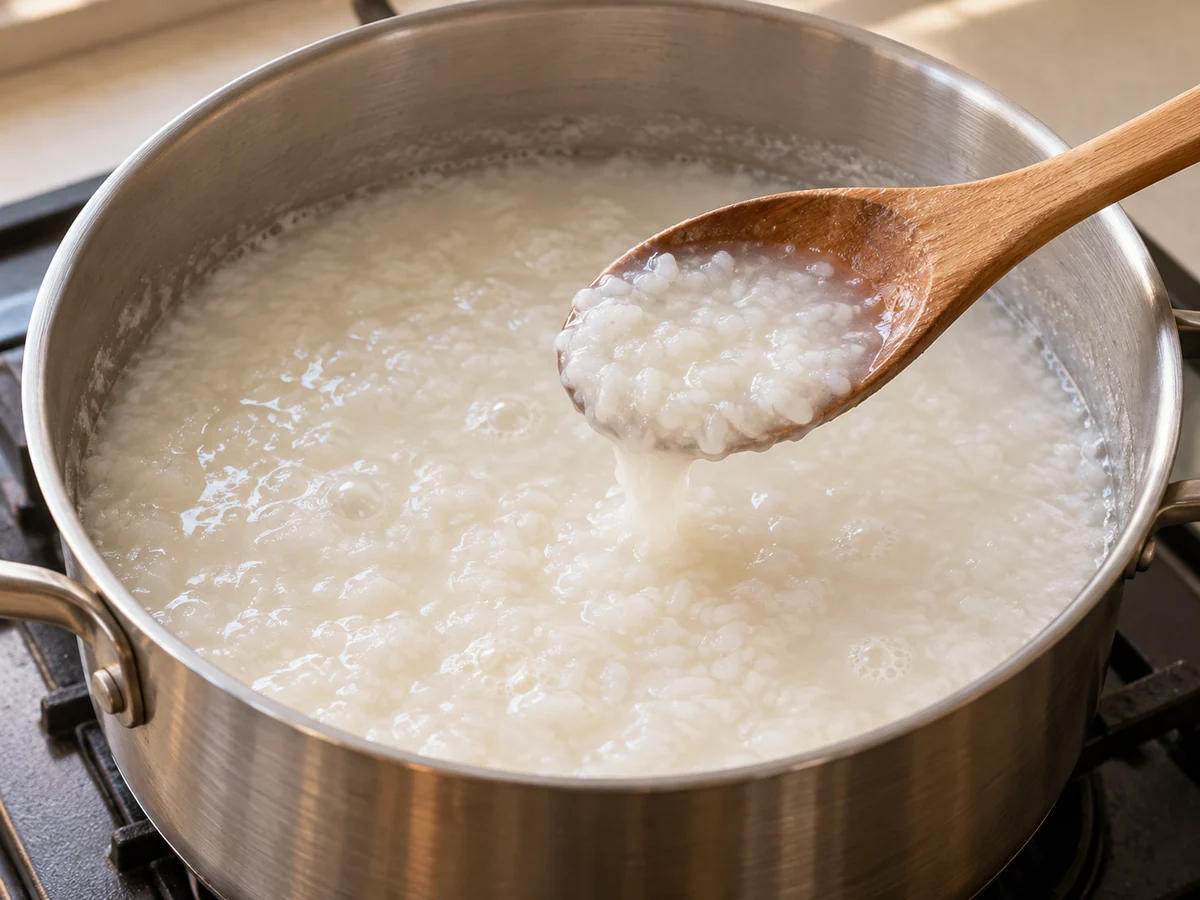
Plain rice congeeSimmer until soft
Simmer, stirring the bottom occasionally, until grains are very soft with no hard centers. Add a little hot water if liquid runs low before the rice softens; do not automatically stop according to a water-volume time formula.
Look forGrains are very soft and porridge has a flowing consistency.
See the full recipe ↗ 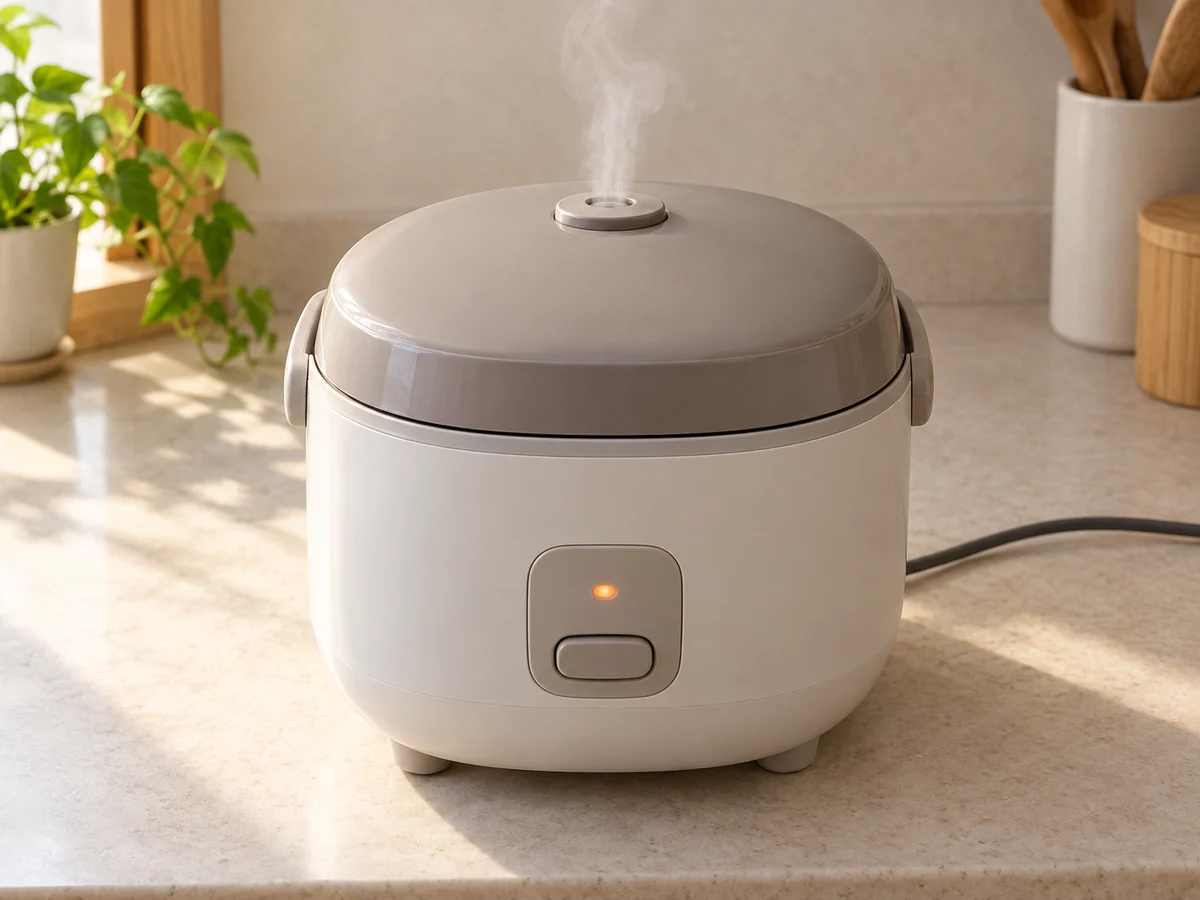
Pork and century egg congeeUse the porridge program
Confirm ingredients stay below the porridge fill line and use a manufacturer-supported porridge program suitable for raw meat additions. Never leave raw pork overnight on a delayed start or treat keep-warm as cooking.
Look forA suitable porridge program runs with the steam vent clear.
See the full recipe ↗ 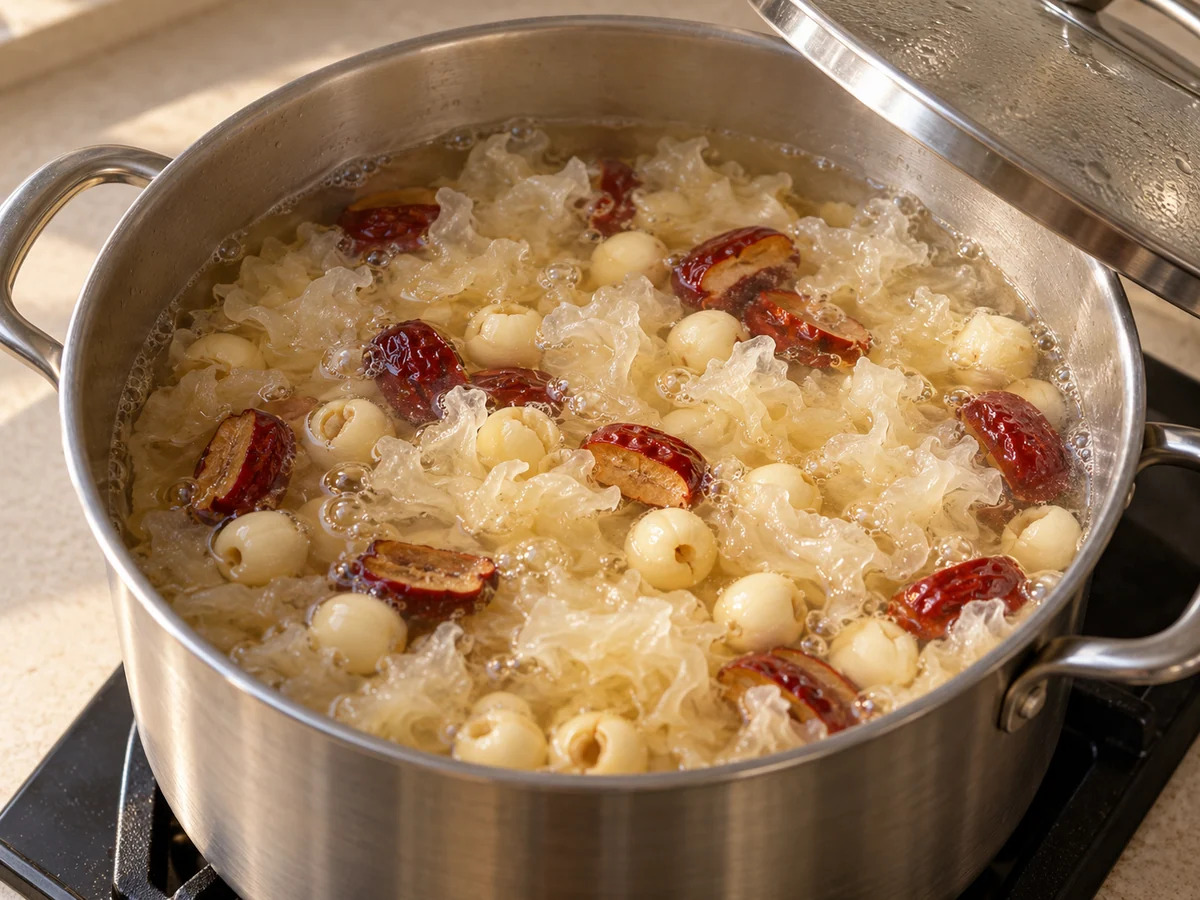
Snow fungus and lotus seed sweet soupSimmer fungus and lotus
Tear fungus smaller and put it in a pot with lotus, dates and listed cooking water. Boil, reduce to low, leave the lid ajar and start a 1 hr check, stirring the bottom and topping up hot water as needed.
Look forFungus softens and lotus centers begin tenderizing without boiling dry.
See the full recipe ↗ 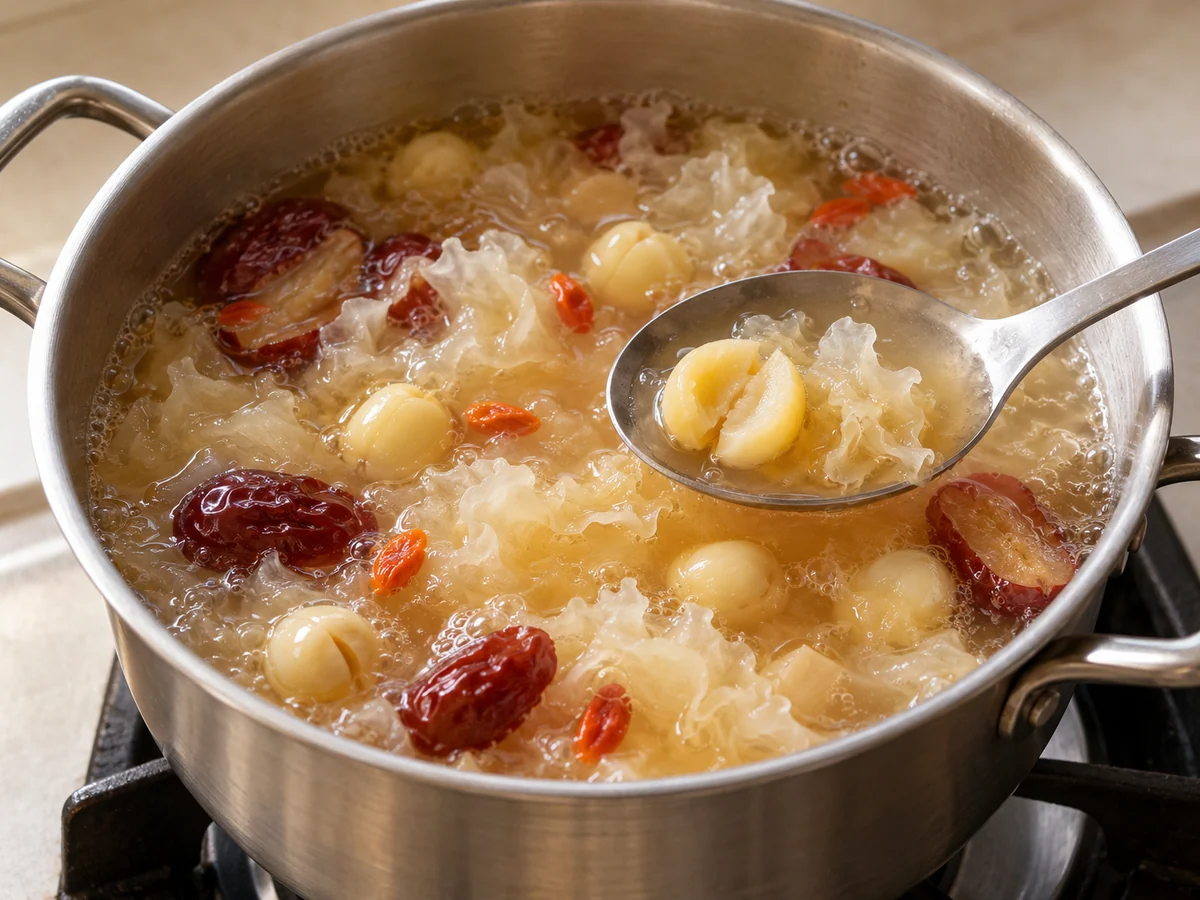
Snow fungus and lotus seed sweet soupAdd the first sugar portion
Add half the rock sugar and any rinsed goji berries. Continue over low heat with a 30 min check, moving on only when fungus is soft and lotus has no hard center. Cook longer if needed.
Look forFungus is soft and slippery and lotus has no hard center.
See the full recipe ↗ 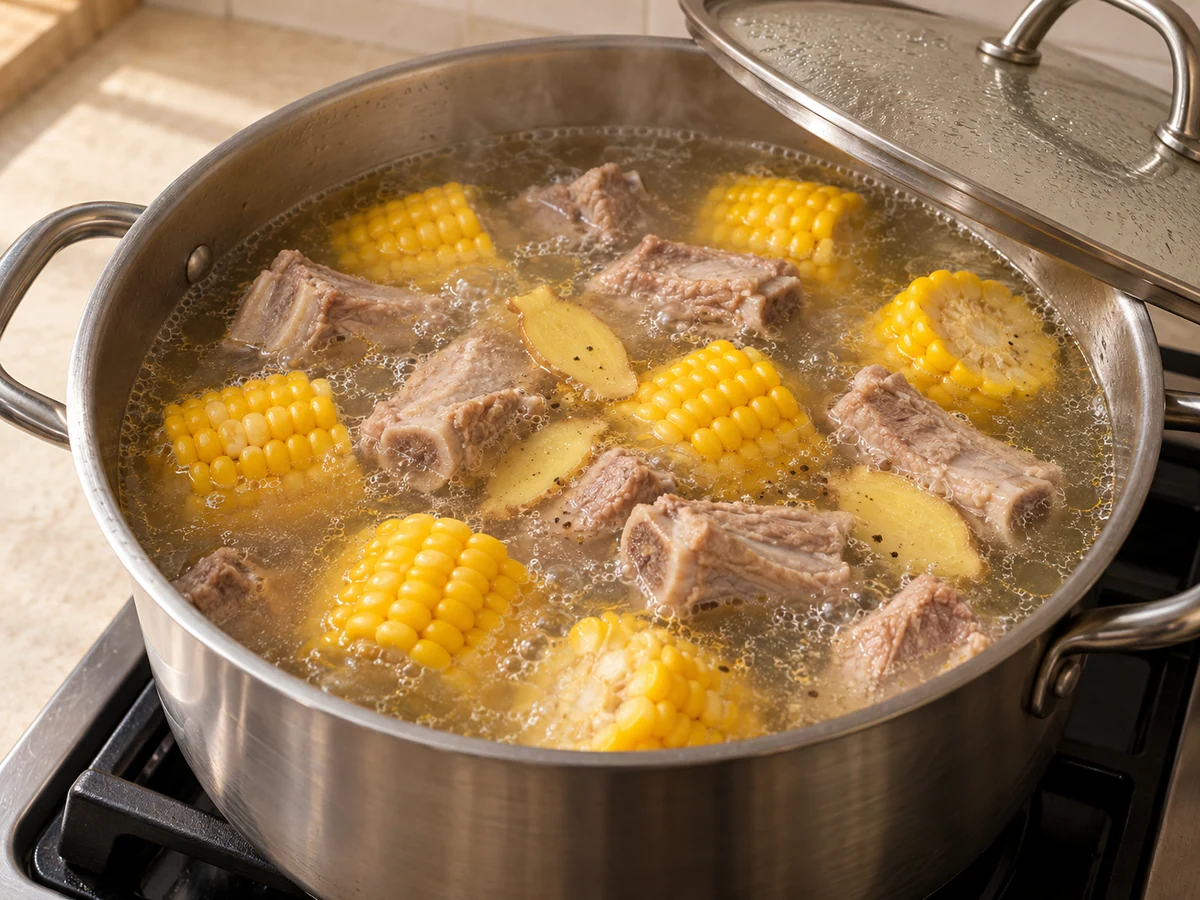
Corn and pork rib soupSimmer with corn
Add corn and black pepper, reduce to low, cover loosely and start a 20 min check. Inspect liquid and top up with hot water if low rather than boiling dry.
Look forCorn cooks in gently bubbling broth with enough liquid.
See the full recipe ↗ 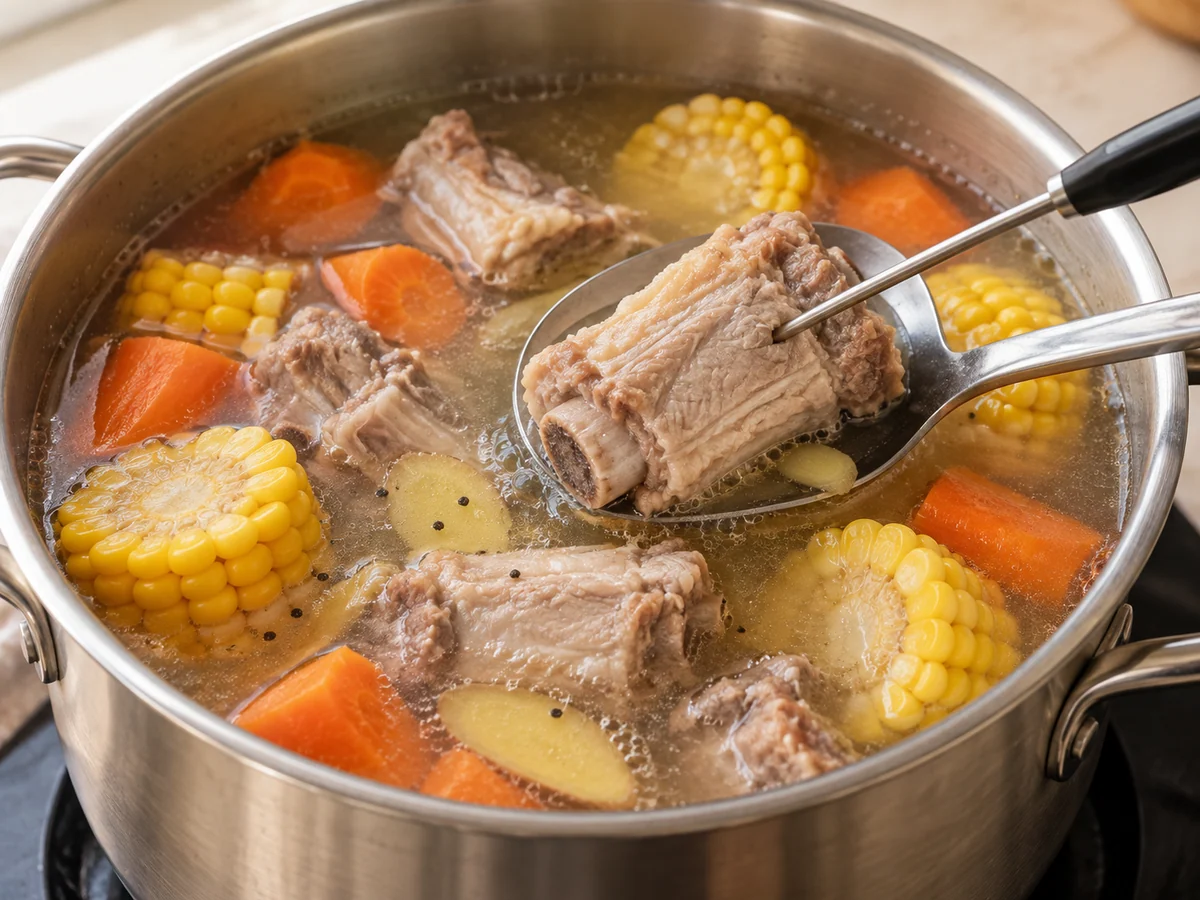
Corn and pork rib soupAdd carrot and tenderize
Add carrot and start a 40 min check when gentle simmering resumes. Continue until rib meat and carrot are easily pierced, verifying at least 63°C in thickest meat away from bone; simmer longer if not tender.
Look forRibs and carrot are tender and meat center meets its temperature target.
See the full recipe ↗ 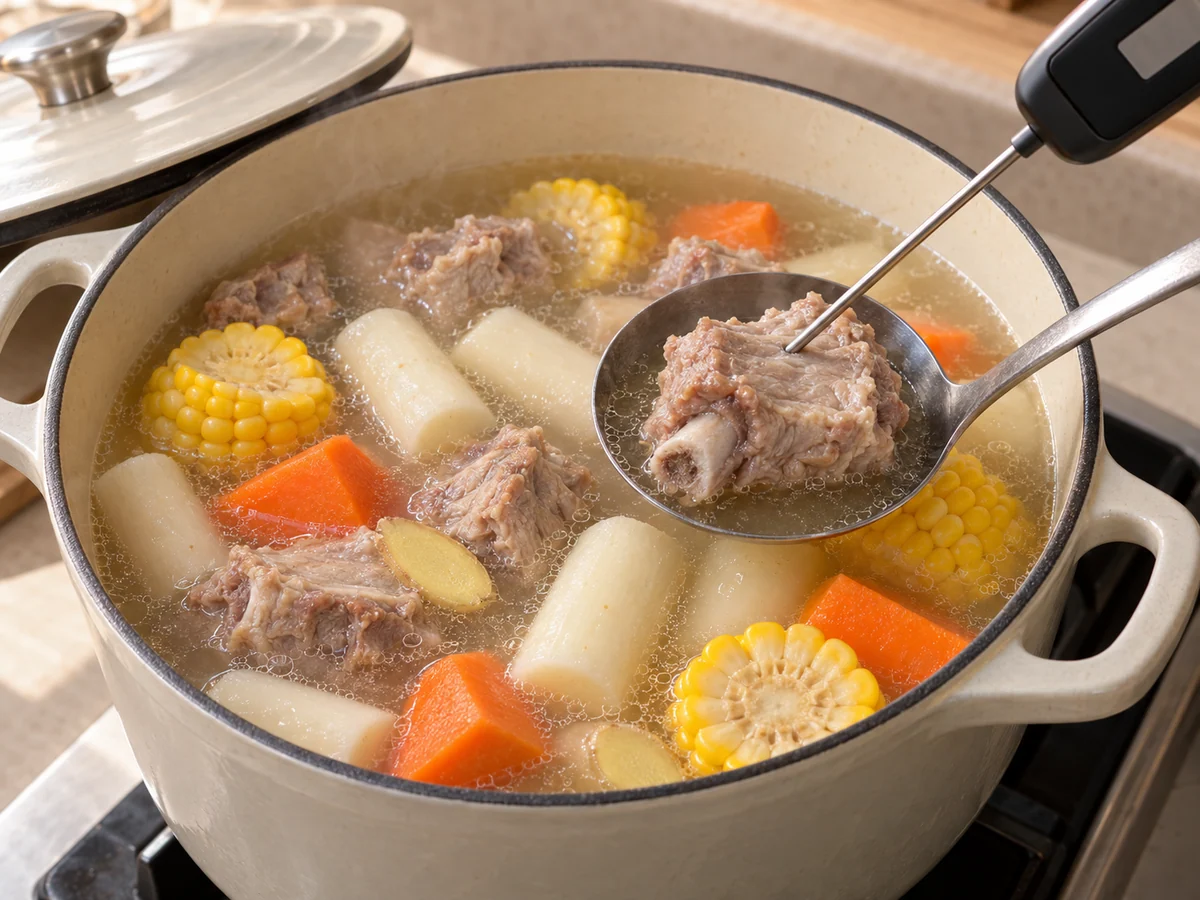
Pork rib, yam and corn soupSimmer with vegetables
Add listed soup water and all vegetables. Boil, reduce to low, cover loosely and start a 40 min check, topping up hot water as needed. Probe thickest rib meat away from bone for at least 63°C and check yam and carrot are easily pierced; continue if needed.
Look forMeat center meets its target, vegetables are tender and broth remains.
See the full recipe ↗ 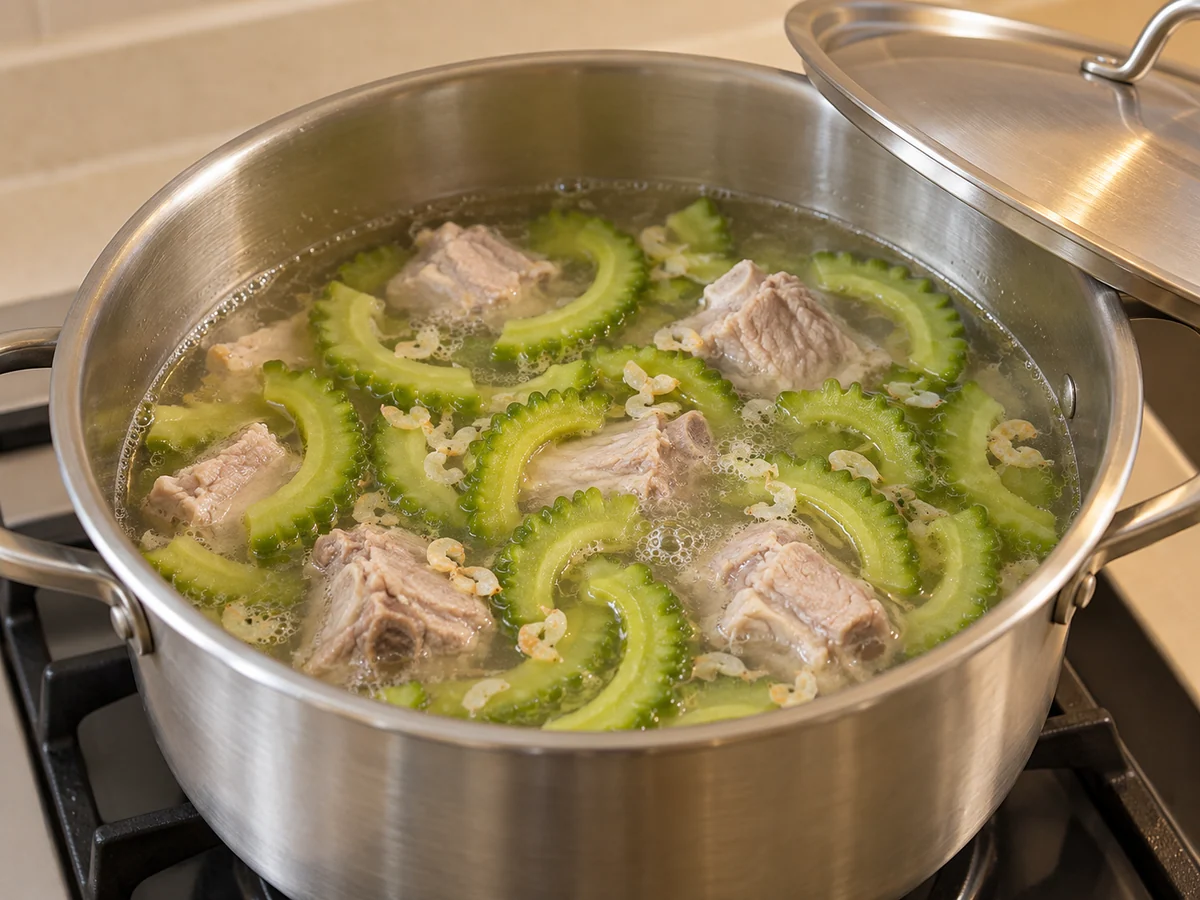
Bitter melon and pork rib soupStart the soup
Bring the listed soup water and ribs to a boil, add bitter melon and dried shrimp, then maintain gentle bubbling with the lid ajar to prevent overflow.
Look forThe soup bubbles gently with dispersed bitter melon and shrimp.
See the full recipe ↗ 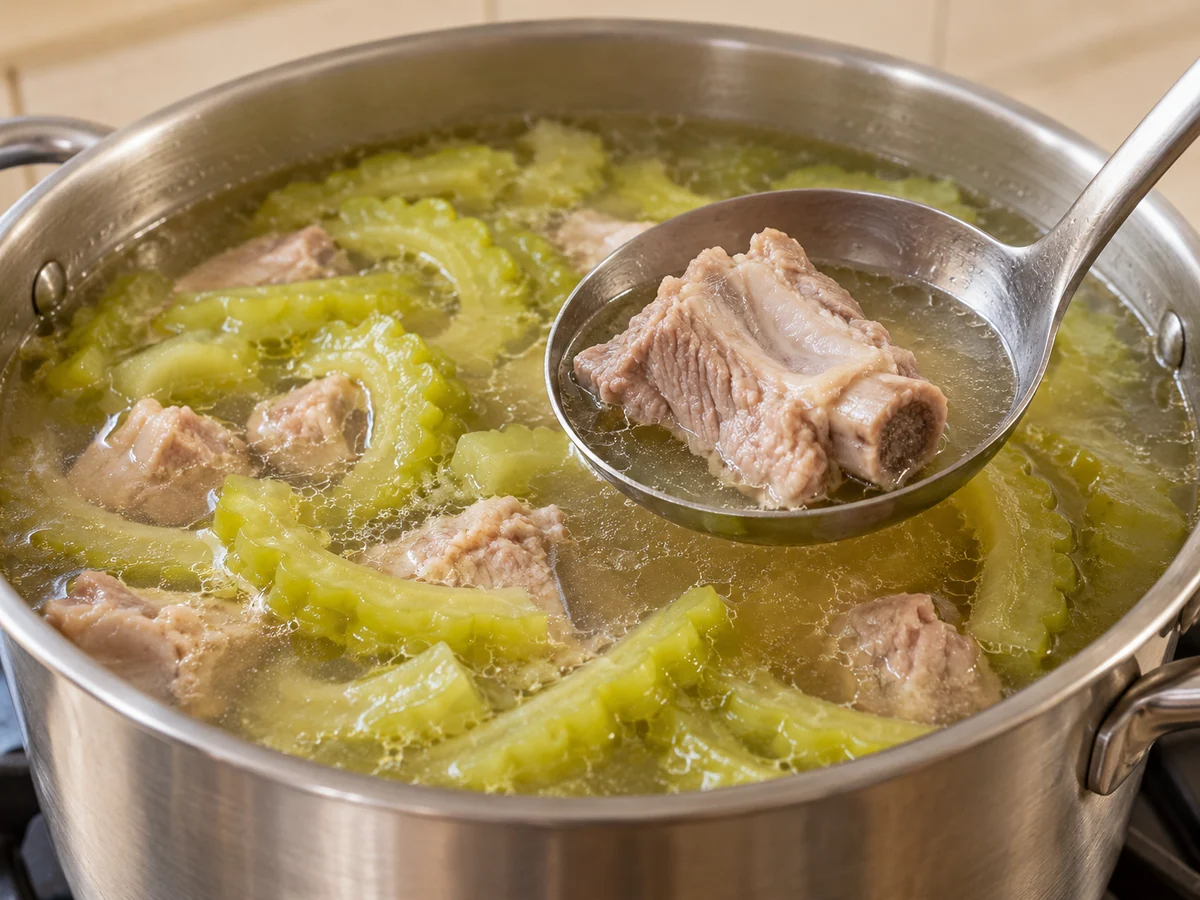
Bitter melon and pork rib soupSimmer until the ribs are tender
Set a 2 hr first check when heat is lowered. Inspect the liquid regularly and add hot water to prevent drying. The meat should separate easily from bone and reach at least 63°C in its thickest part; continue if not yet tender.
Look forThe ribs are cooked and tender with sufficient broth remaining.
See the full recipe ↗ 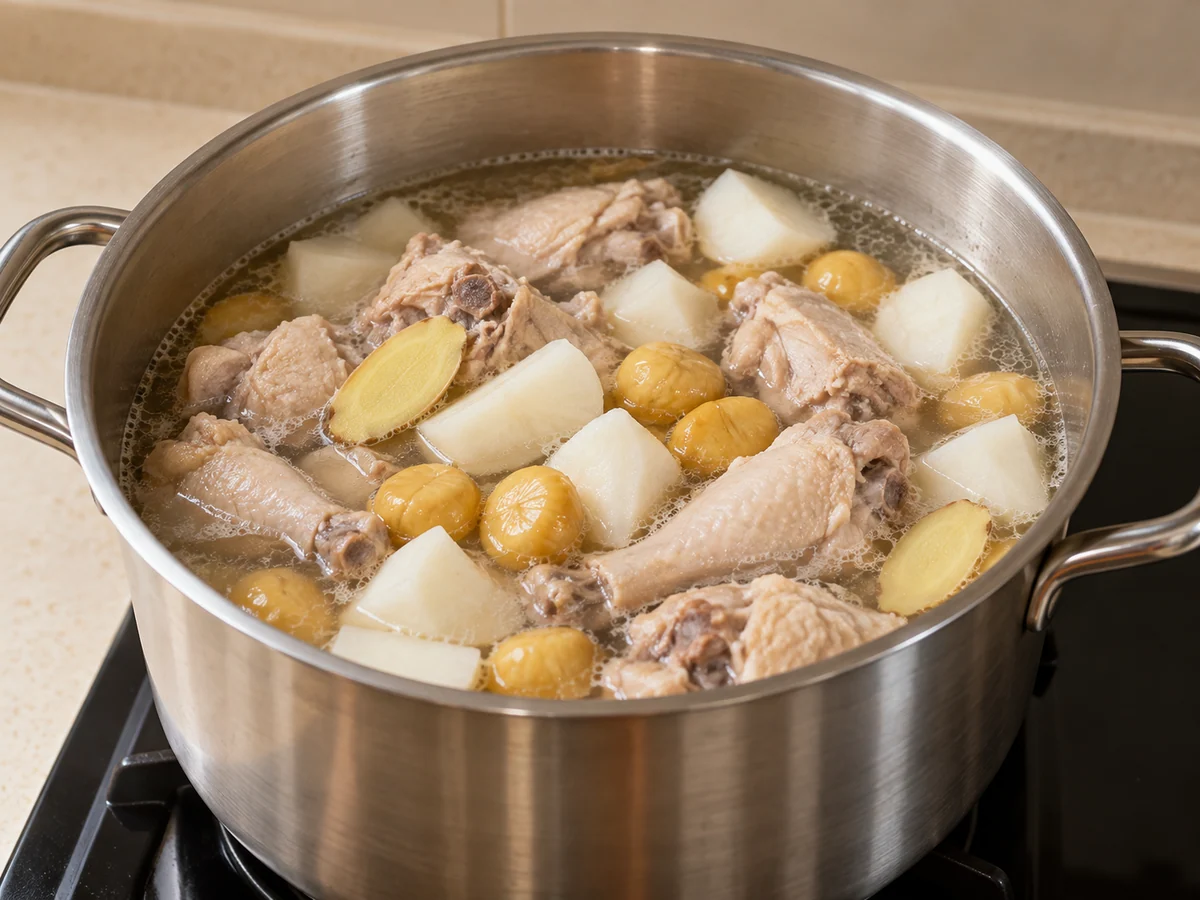
Yam and pumpkin chicken soupSimmer chicken, yam and chestnuts
Put chicken, ginger, yam and chestnuts in a clean pot, just cover with water, bring to a boil and reduce to gentle bubbling. Set a 30 min first check and watch the liquid. The thickest chicken must ultimately reach 74°C.
Look forChicken is cooking, yam and chestnuts softening and broth remains.
See the full recipe ↗ 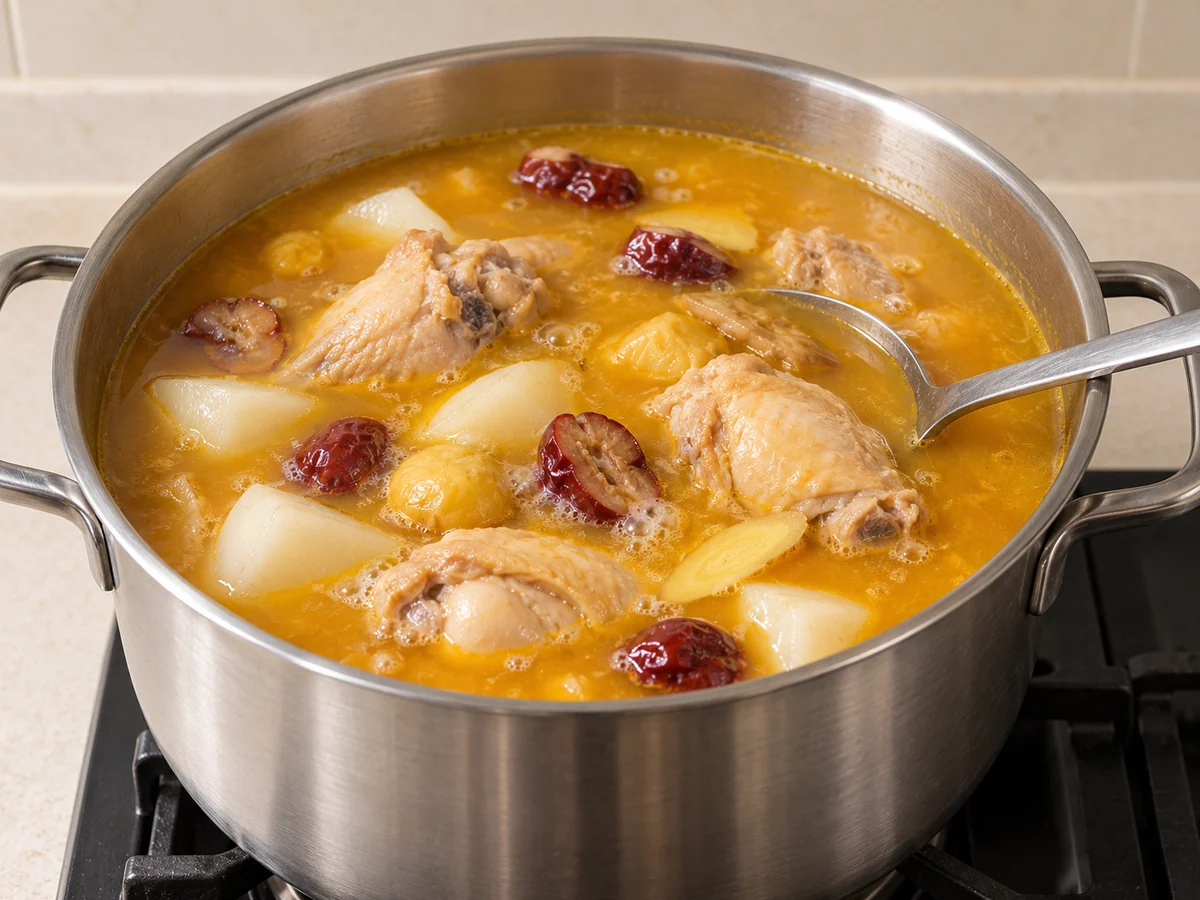
Yam and pumpkin chicken soupAdd pumpkin puree and dates
Stir pumpkin puree into the broth and add pitted dates. Set a 10 min check once gentle bubbling resumes and stir occasionally to prevent sticking. Confirm chicken reaches 74°C and yam and chestnut centers are tender, then season with salt.
Look forChicken reaches 74°C, yam and chestnuts are tender and pumpkin is evenly mixed into the broth.
See the full recipe ↗ 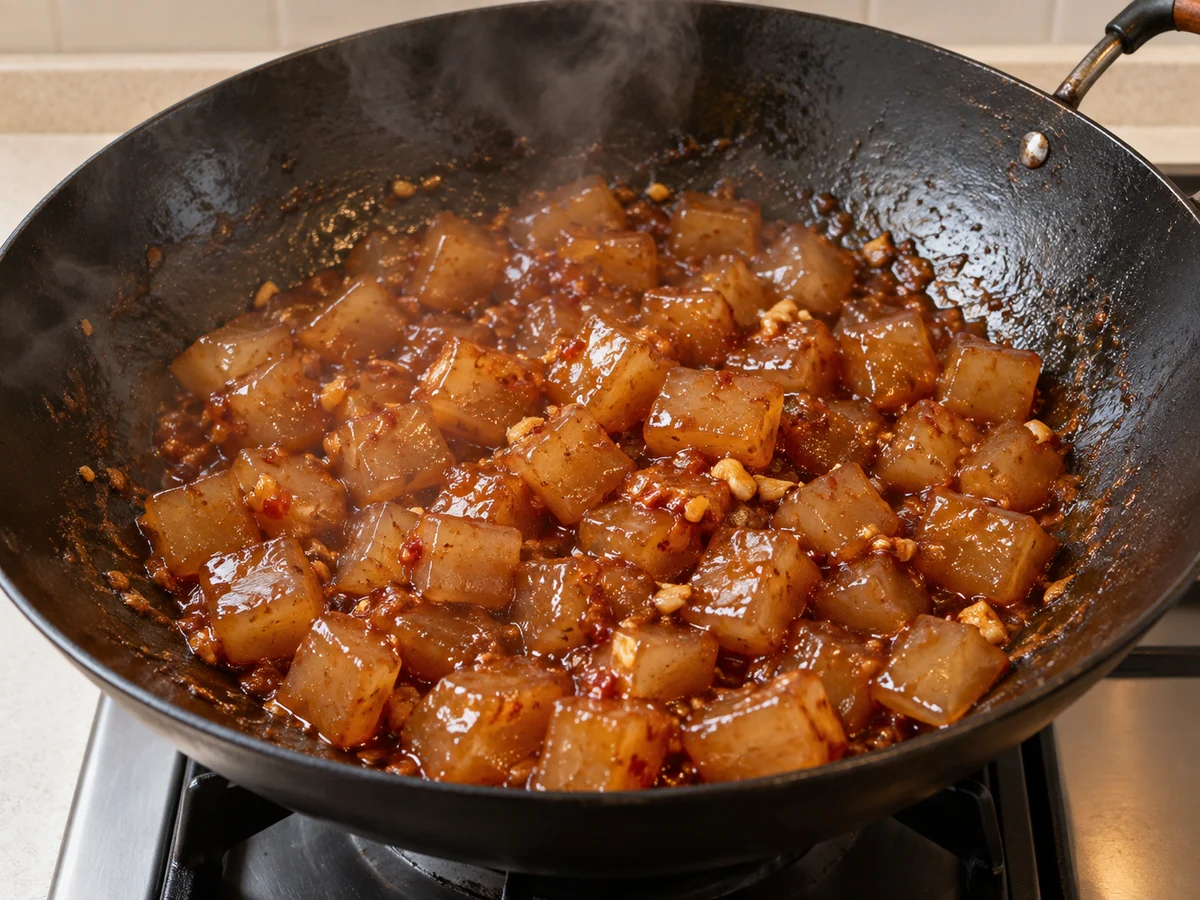
Stir-fried starch jellyHeat through and lightly reduce
Gently heat over low heat, adding a little hot water if the pan dries. Refrigerated cooked jelly should reach 74°C throughout; a brief toss alone is insufficient. Once a thin sauce coats the cubes, taste and add optional salt only if needed.
Look forThe jelly reaches 74°C through the center with a thin coating of sauce.
See the full recipe ↗ FROM INSPIRATION TO DINNERYour next step is in the kitchen.
Bring a little guidance along. Open EagerCook for the cooking experience.