THE COOKPATH KITCHENDeep-frying
Deep-frying: Read each frying step for oil, texture and doneness cues. Examples include Sweet and sour spare ribs, Eggplant, potato and pepper stir-fry, Soy-braised eggplant. Open a full recipe for ingredients and the complete method.
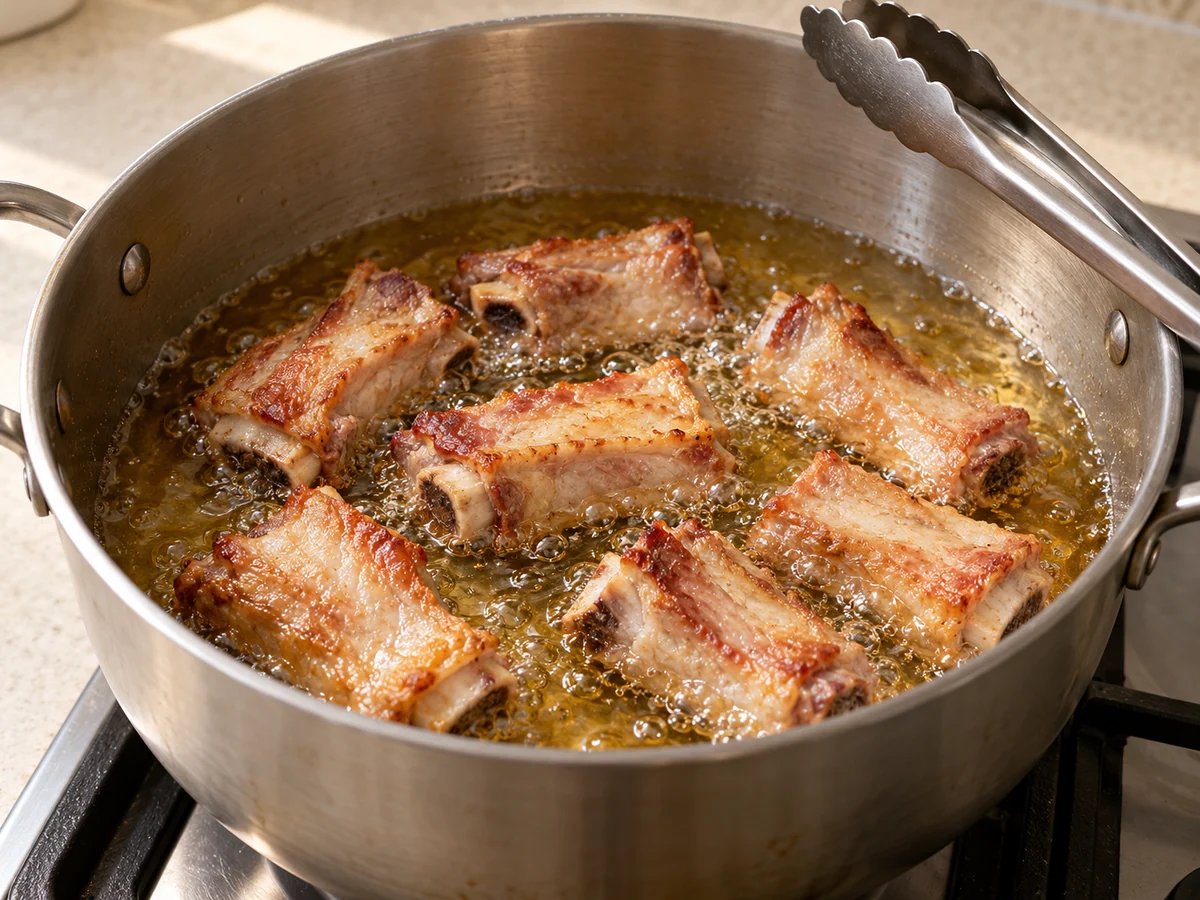
Sweet and sour spare ribsFry in batches until golden
Use a deep stable pan with oil reaching about two thirds up the ribs but below its safe fill limit. Choose a suitable smaller pan or work in batches. At about 170°C, lower the dried ribs with tongs and set a 3 min check. Remove when golden; never add water to the hot oil.
Look forThe ribs are pale golden outside and the oil remains controlled without scorching.
See the full recipe ↗ 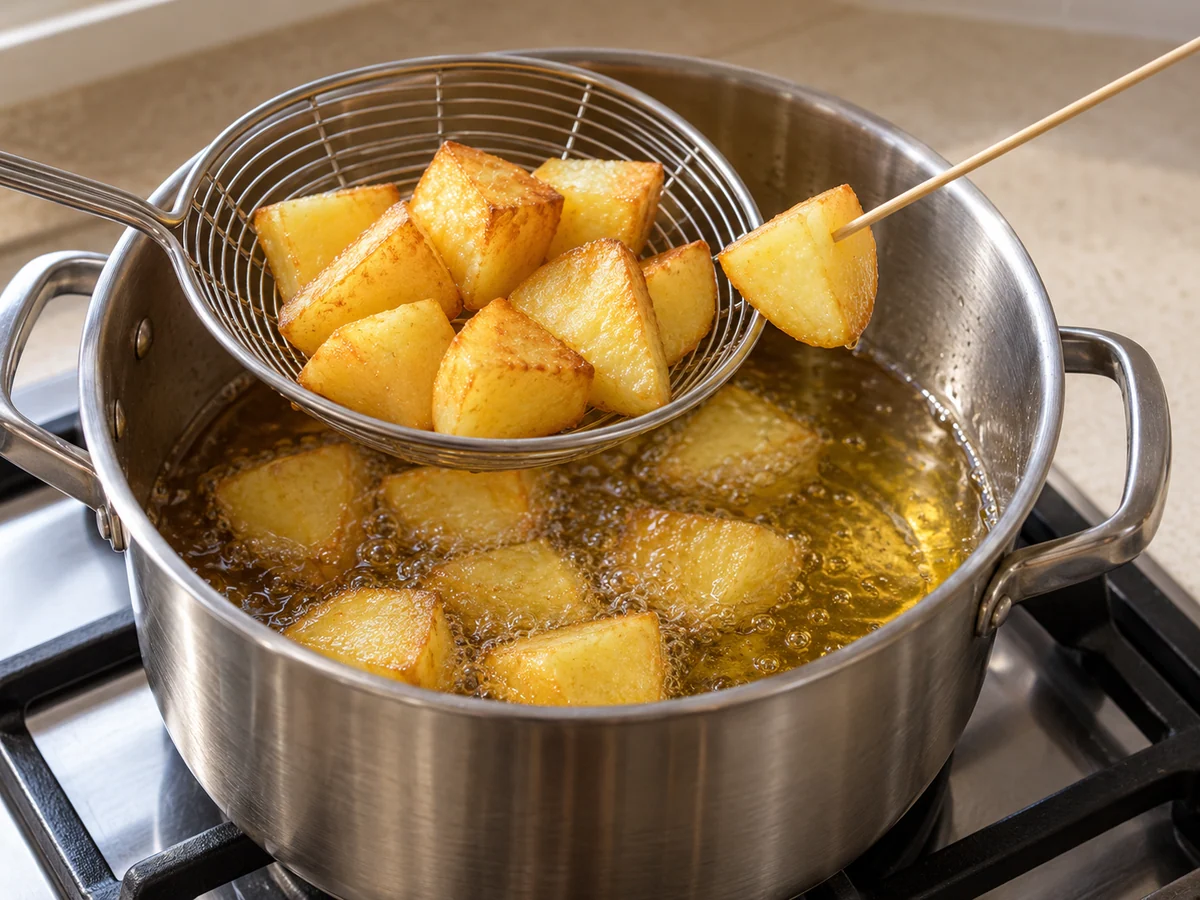
Eggplant, potato and pepper stir-fryFry the potato
Use a deep stable pot within its safe oil fill limit. At about 160°C on a frying thermometer, add potato in batches and start a 3 min check. Remove only when golden and a skewer passes through the center. Leave headroom; turn off heat if oil smokes.
Look forPotato is golden and the center is easily pierced.
See the full recipe ↗ 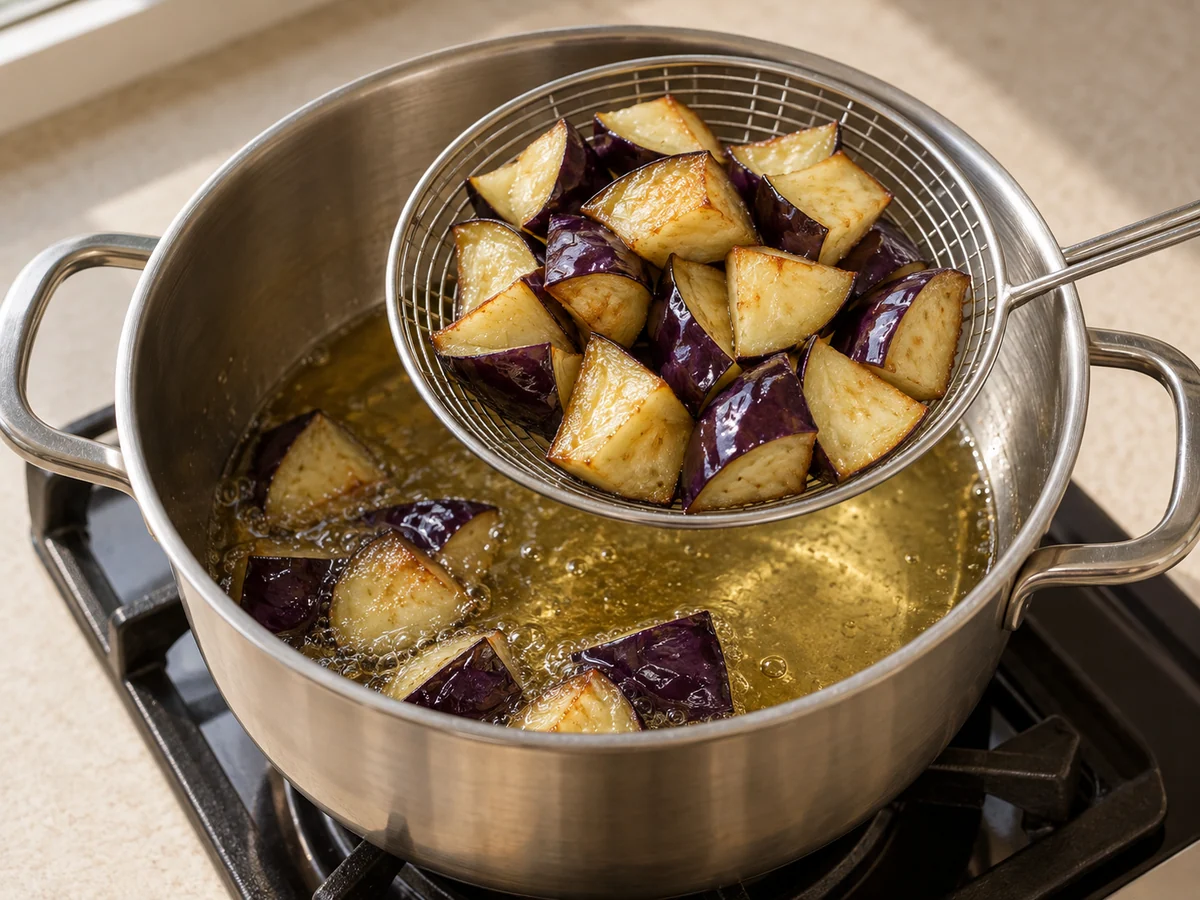
Eggplant, potato and pepper stir-fryFry the eggplant
Adjust oil to about 180°C, add eggplant in batches and start a 2 min check. Remove when soft with lightly browned edges. If no free oil remains, use a little of the optional top-up without exceeding safe fill.
Look forEggplant is softened with lightly browned edges.
See the full recipe ↗ 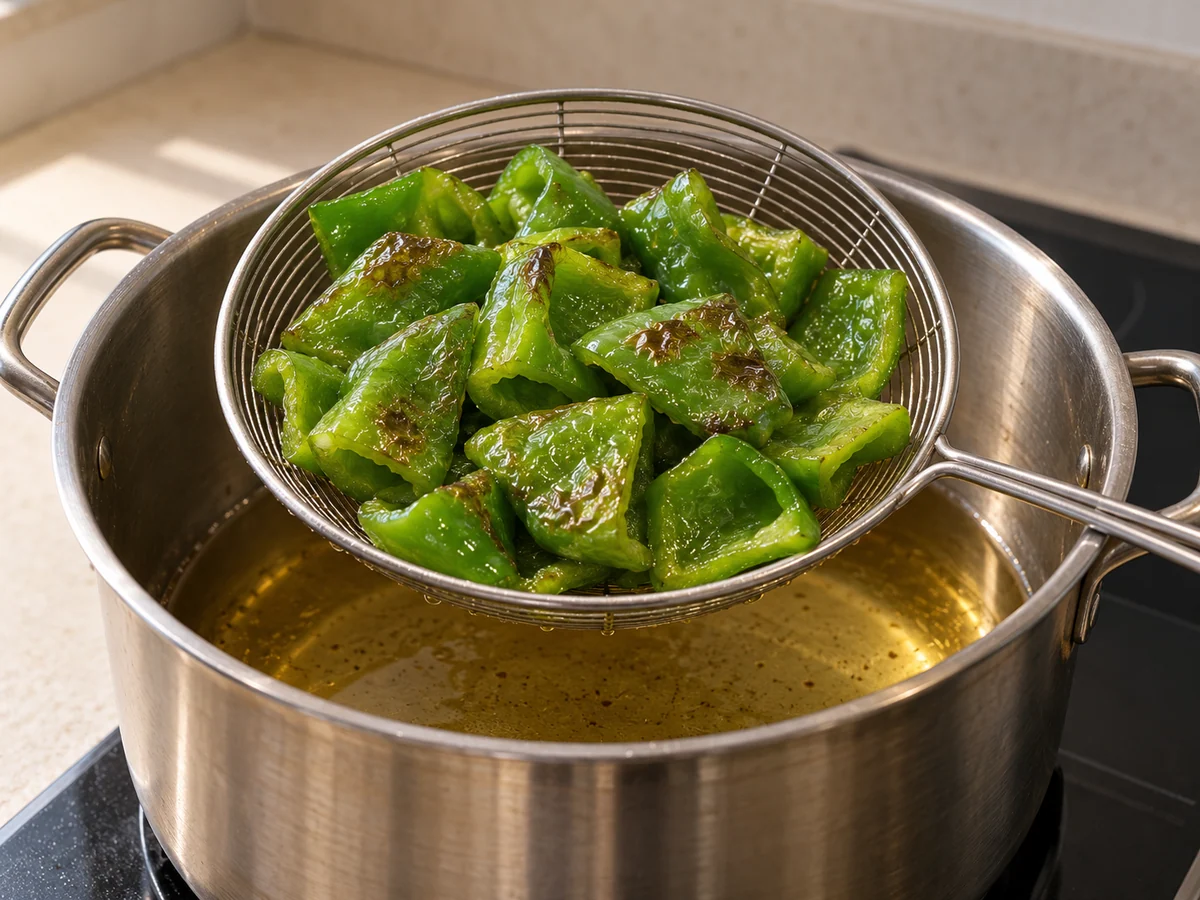
Eggplant, potato and pepper stir-fryFry the peppers
Carefully add the surface-dry peppers and start a 15 sec check timer; remove when the edges blister. Turn off the heat and let the oil cool before handling it; do not carry or pour a pan of hot oil.
Look forPepper edges blister; hot oil stays in stable cookware to cool.
See the full recipe ↗ 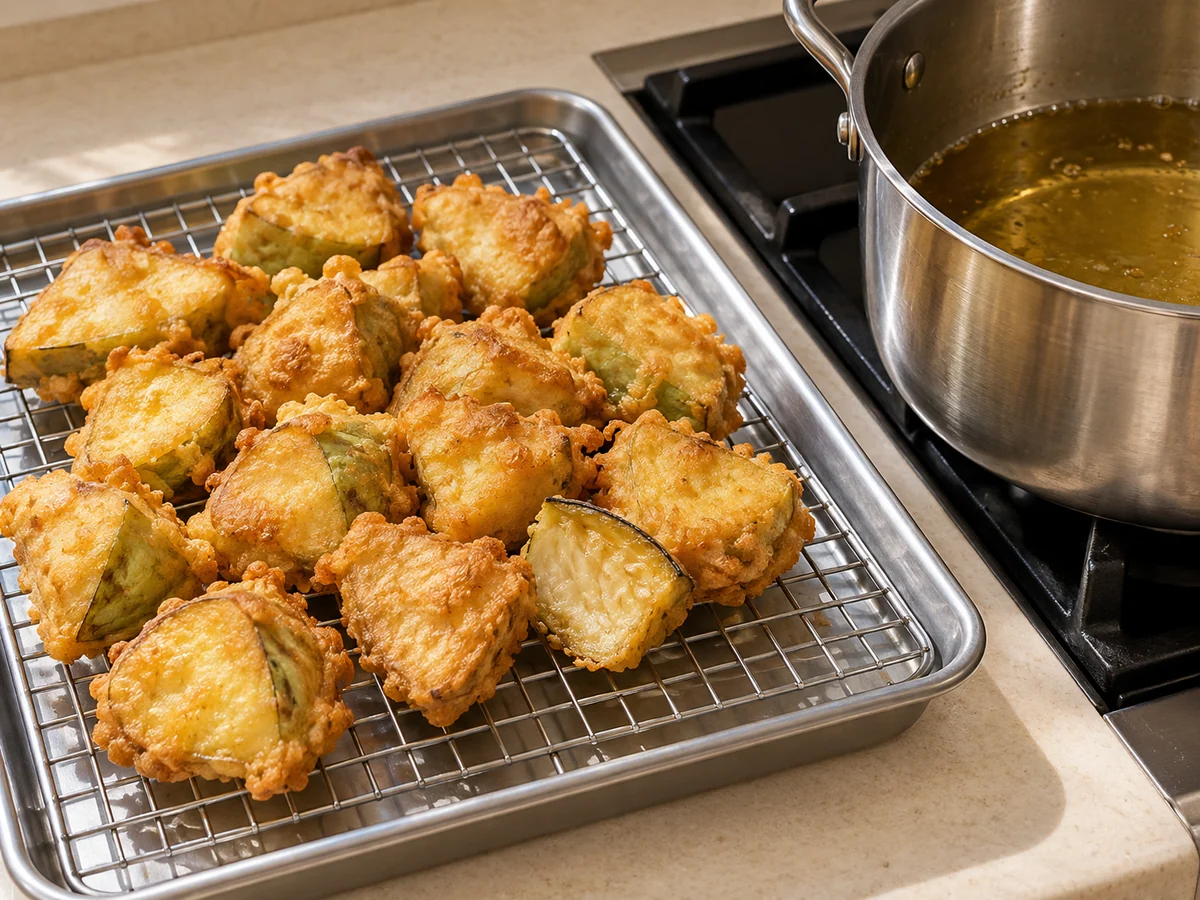
Soy-braised eggplantFry in temperature-controlled batches
Use a deep stable pot with expansion room below its safe fill line. At about 180°C on a frying thermometer, carefully lower pieces one at a time and fry in batches, turning until golden. If oil smokes, turn off the heat and cool it. Drain on a rack; smoke is never the readiness cue.
Look forBatter is golden and set, with oil temperature controlled.
See the full recipe ↗ 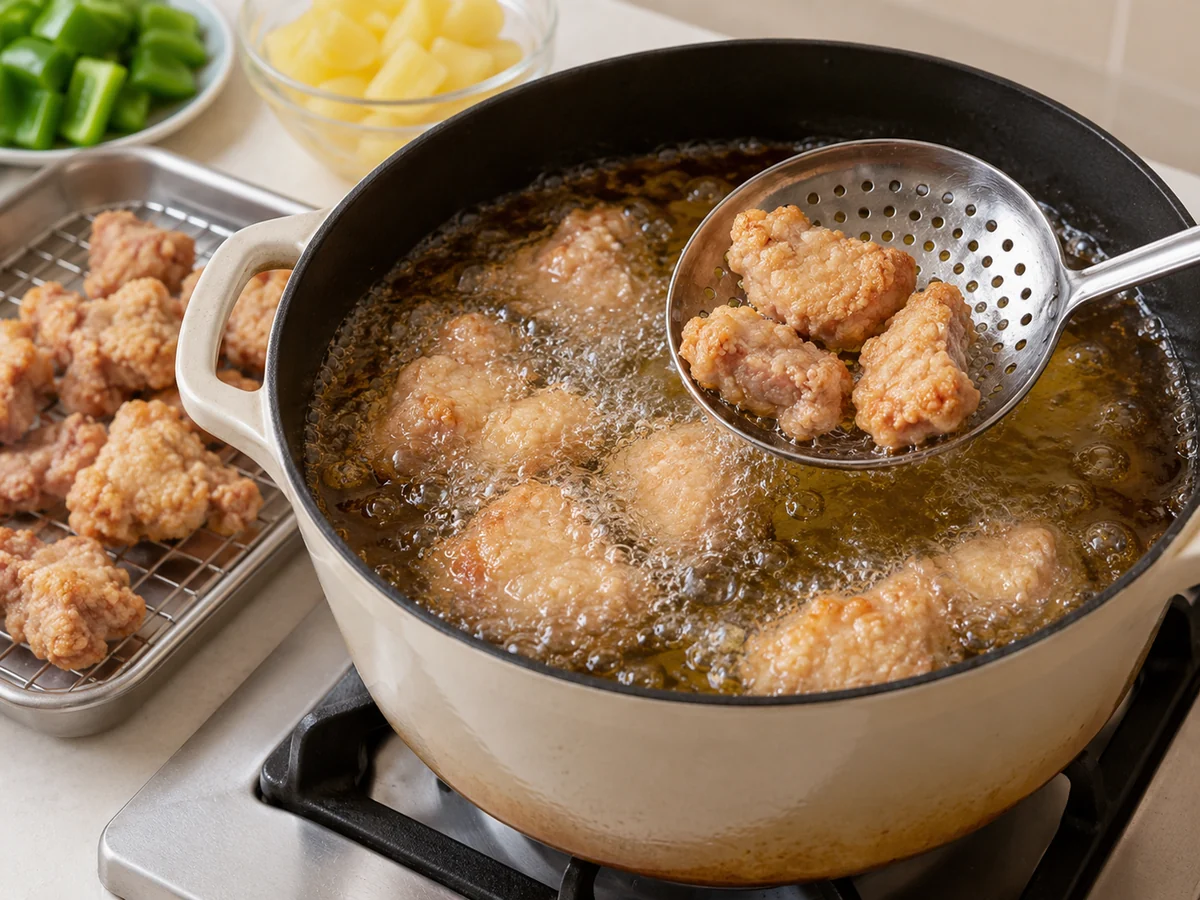
Sweet and sour porkFry pork in small batches
Lower pork carefully with a metal slotted spoon without crowding, maintain about 175°C and set a 5 min first check. Lift out the largest piece and check its center is at least 63°C; return to cook if needed. Never measure meat temperature while submerged in oil.
Look forThe pork coating is set and pale golden without wet white starch.
See the full recipe ↗ 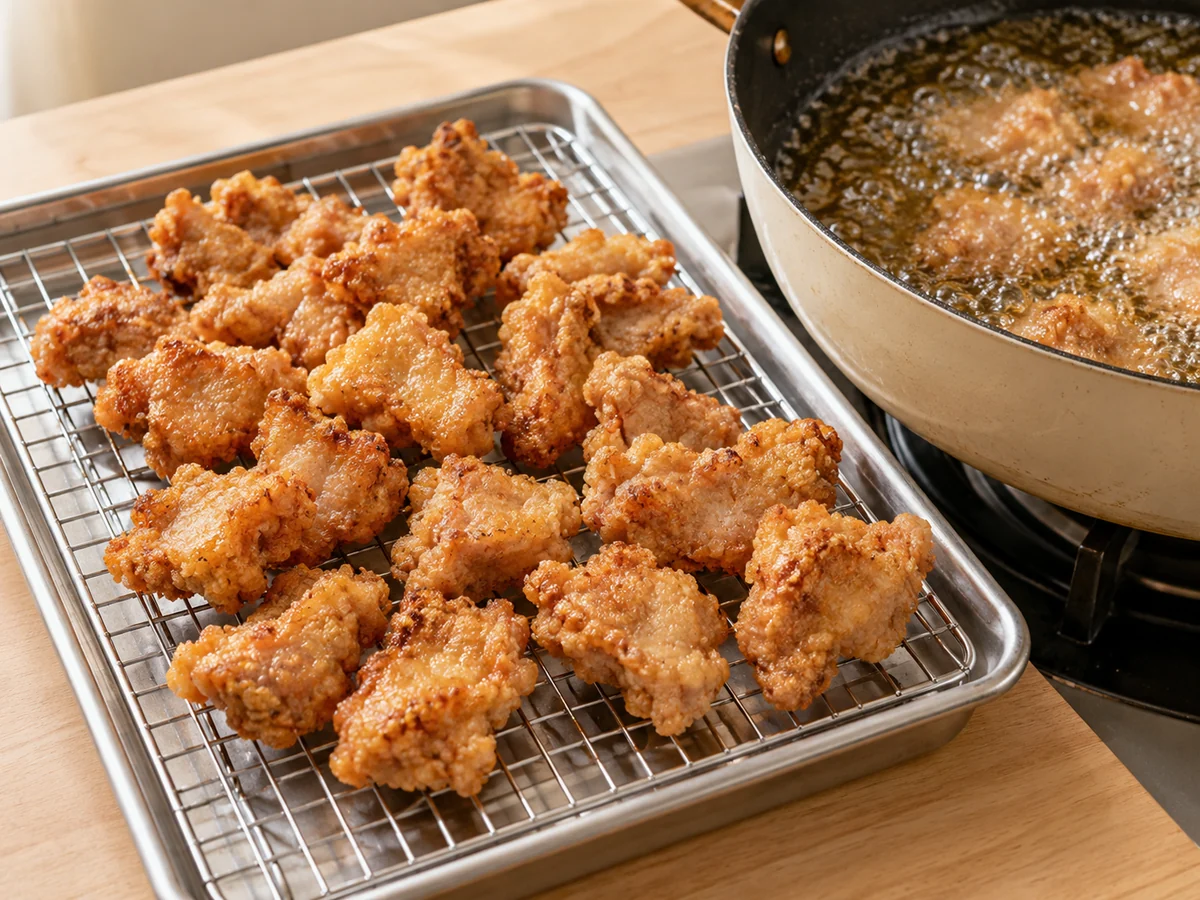
Sweet and sour porkRe-fry briefly for crispness
Once oil returns to about 175°C, return cooked pork in batches and set a 1 min check. Remove to a rack when golden and crisp. Do not overheat for a darker color. Turn off the frying heat and leave oil to cool safely.
Look forThe pork coating is golden and pieces remain separate on the draining rack.
See the full recipe ↗ 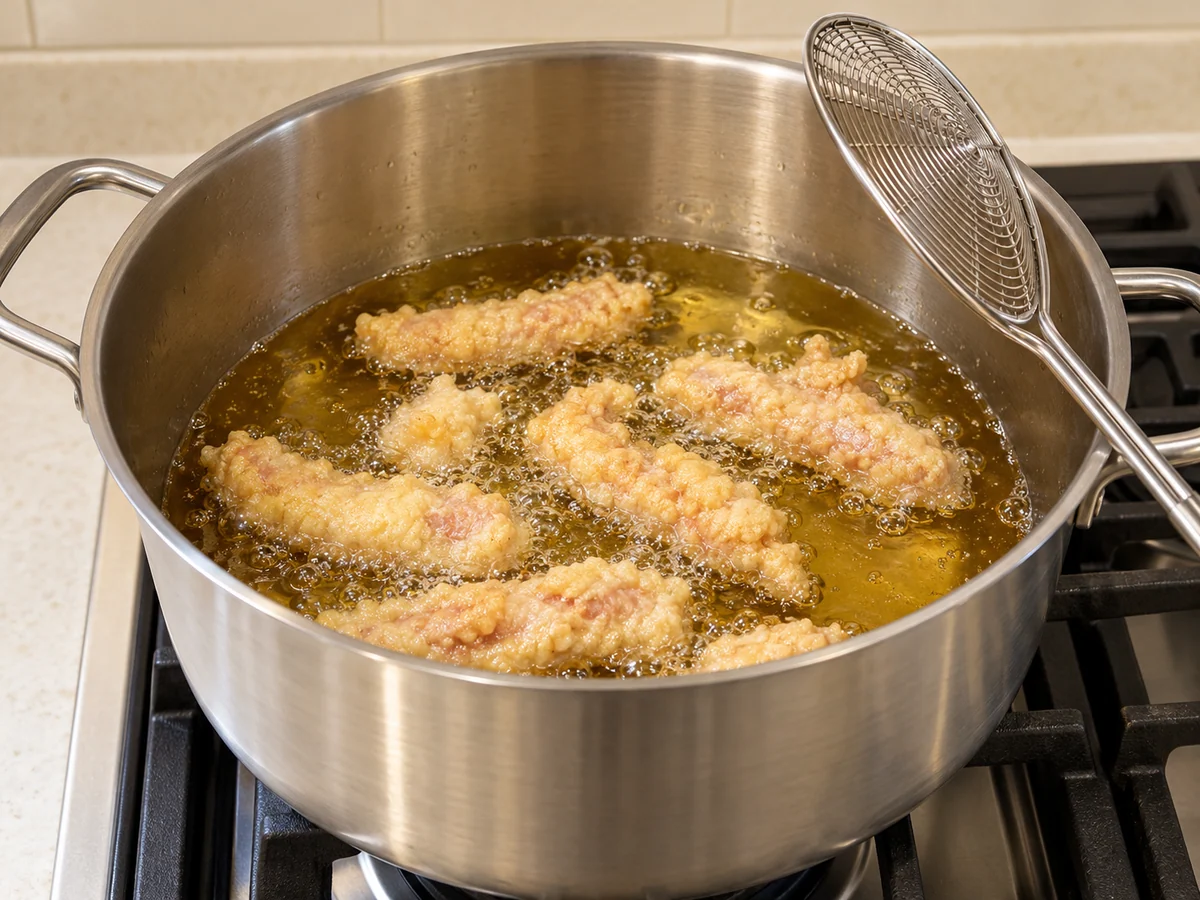
Crispy pork stripsFirst fry at 150°C
Heat oil in a deep stable pan below its safe oil-fill line to 150°C on a frying thermometer. Add strips one at a time in batches and set a 3 min first check. Maintain temperature until the coating sets pale gold and the center is cooked; thickness changes timing.
Look forThe pale-golden coating is set and strips are separated, with center doneness to be measured.
See the full recipe ↗ 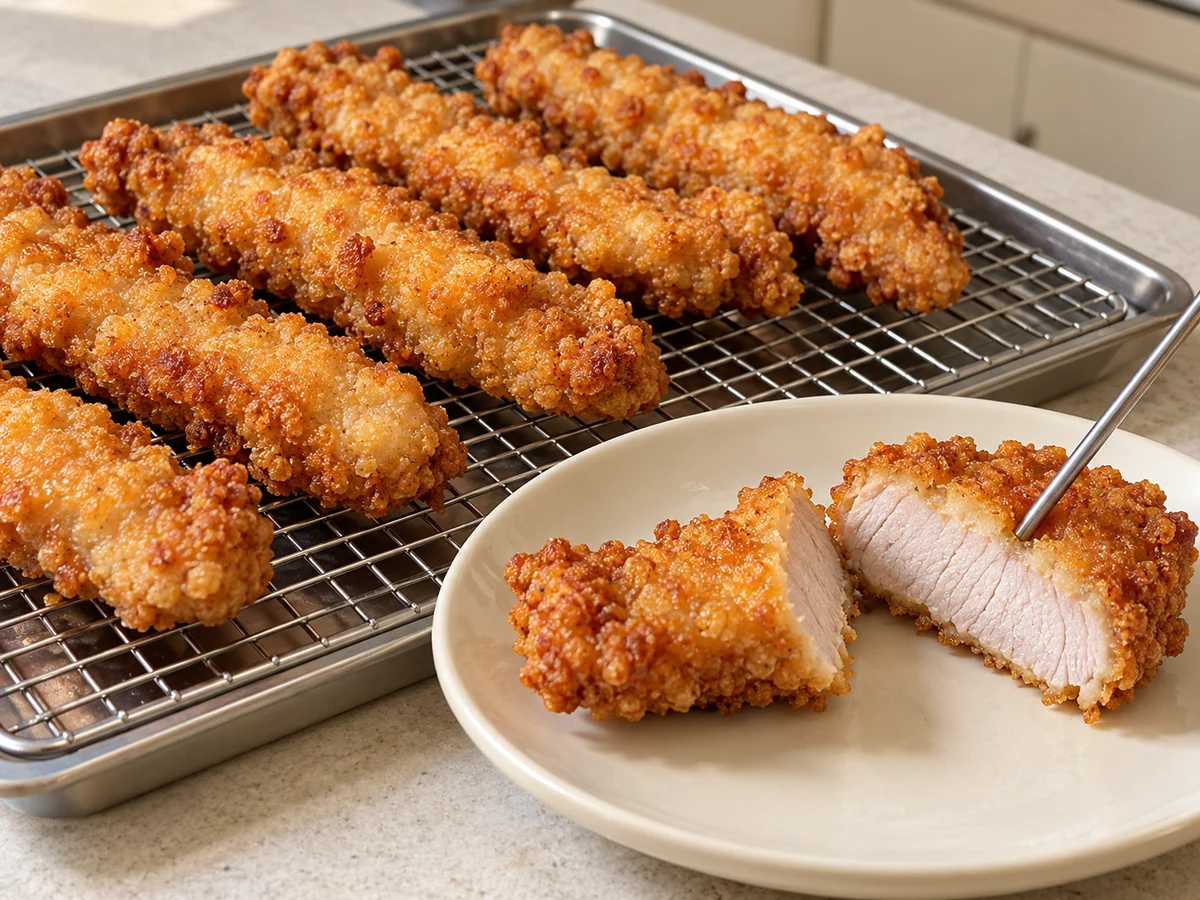
Crispy pork stripsCheck the center and refry
Lift the largest strip onto a heatproof plate and measure away from the hot oil. The egg-coated strip should reach at least 71°C at its center; continue the first fry if not. Once cooked, raise oil to 180°C and refry in batches just until golden and crisp, watching continuously.
Look forThe center reaches 71°C and the crust is golden and crisp without burning.
See the full recipe ↗ 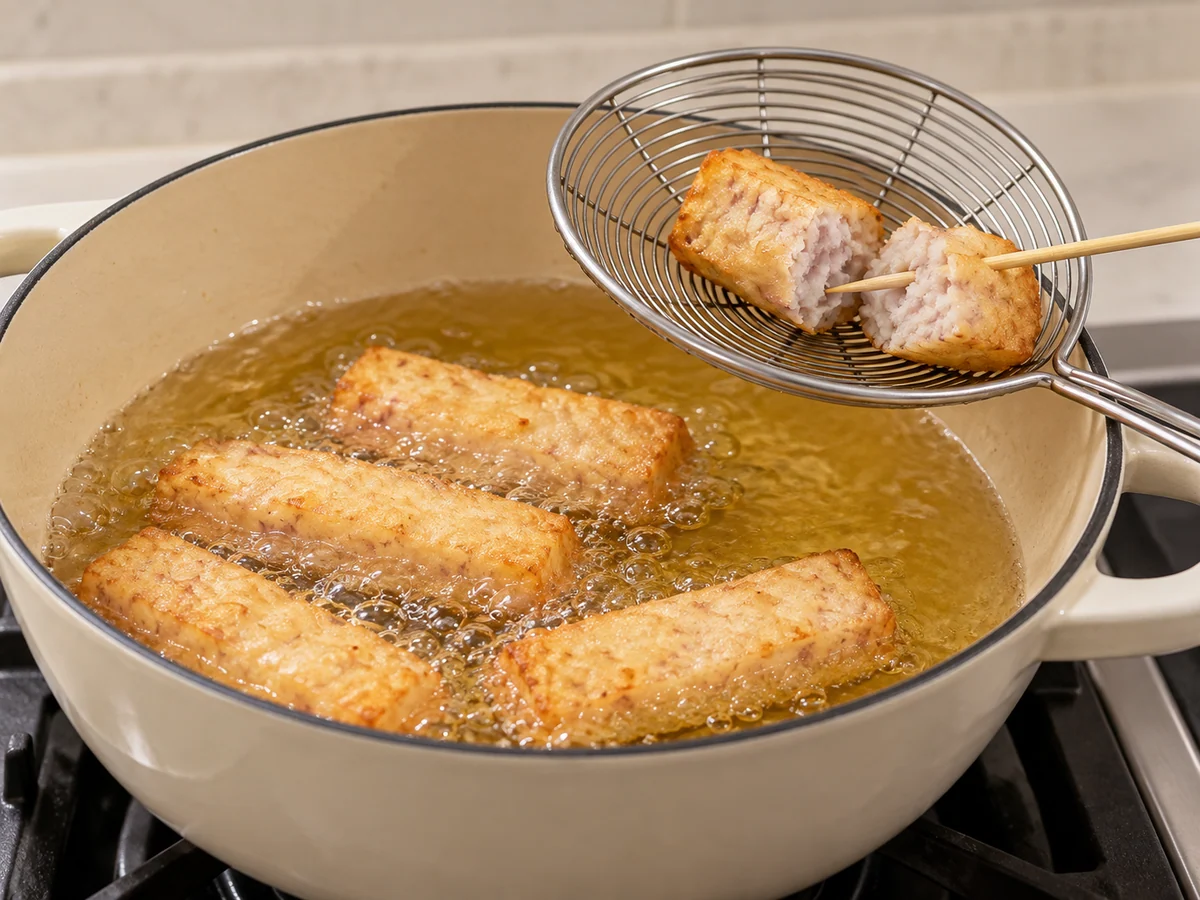
Sugar-crusted taroFry at a controlled temperature
Heat oil in a deep pot below its safe fill line to about 175°C on a thermometer. Lower taro in batches, maintain heat and turn as needed until pale golden and a skewer passes easily through the center. Lower heat if the outside colors too fast; the center must cook tender.
Look forThe taro is tender inside without a hard center and pale golden outside.
See the full recipe ↗ FROM INSPIRATION TO DINNERYour next step is in the kitchen.
Bring a little guidance along. Open EagerCook for the cooking experience.