Home/Stir-frying & sautéing THE COOKPATH KITCHENStir-frying & sautéing
Stir-frying & sautéing: Follow the order of ingredients and watch their changes in the pan. Examples include Chive scrambled eggs, Stir-fried rice noodles, Spinach and eggs. Open a full recipe for ingredients and the complete method.
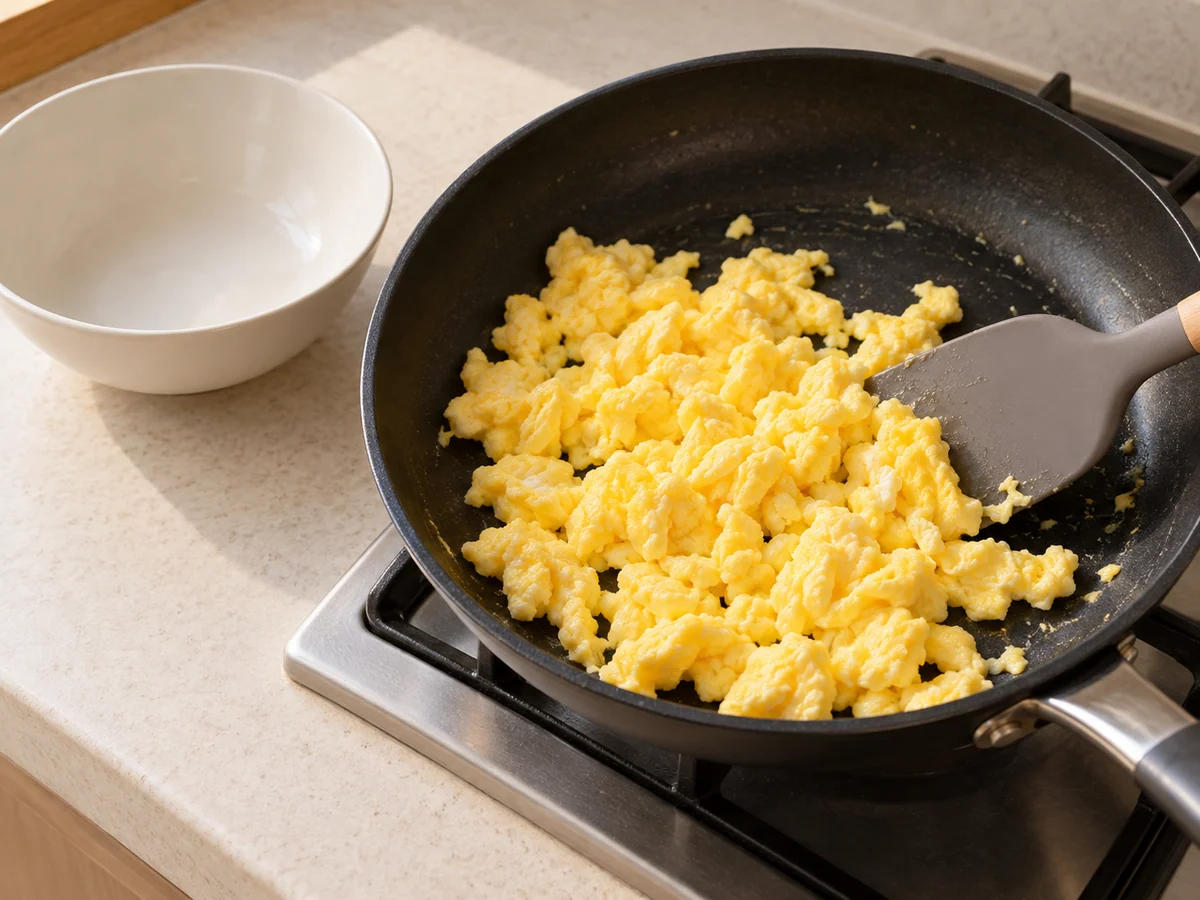
Chive scrambled eggsCook the eggs first
Warm the pan over medium heat and add two-thirds of the oil. Add the egg; gently push with a spatula as the edges set. Transfer to a clean bowl when no raw liquid egg remains.
Look forThe eggs form soft, fully set curds.
See the full recipe ↗ 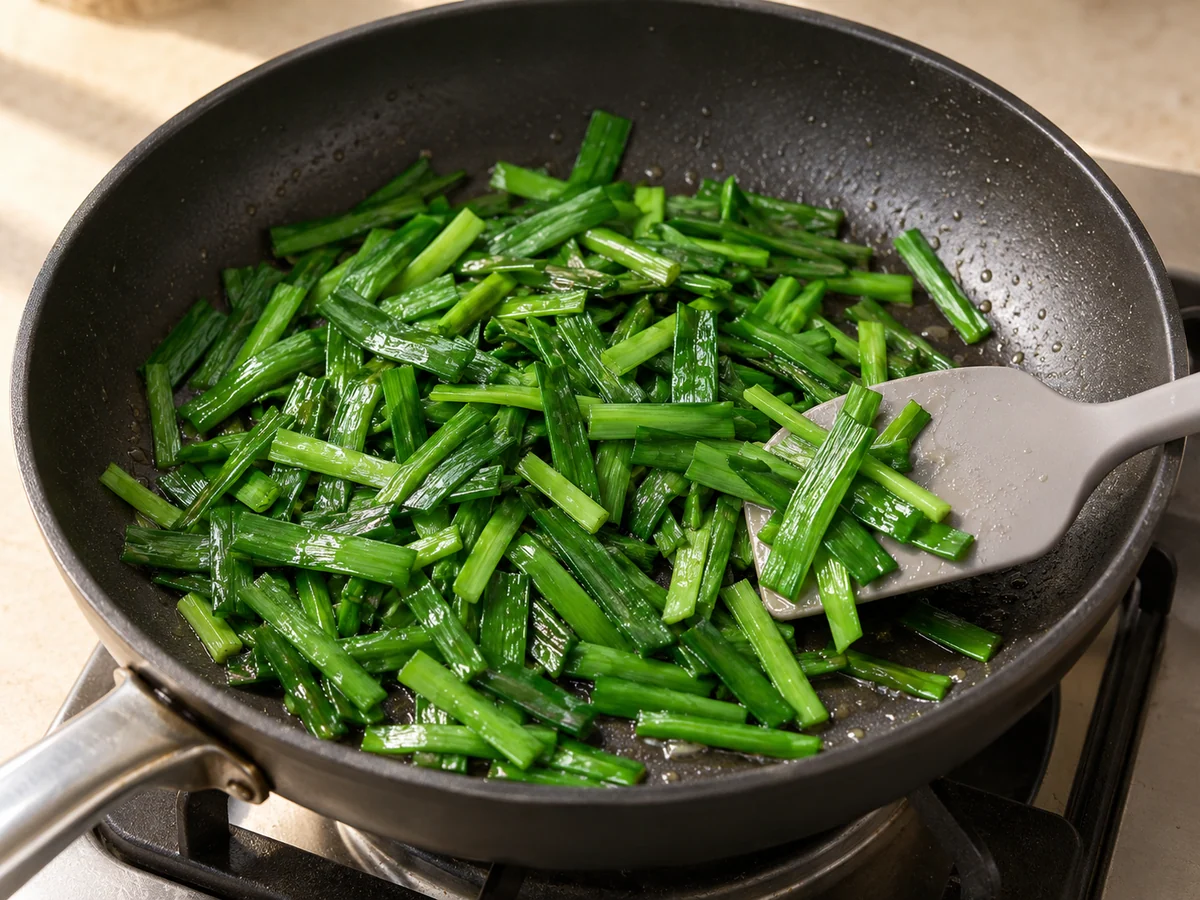
Chive scrambled eggsBriefly stir-fry the chives
Add the remaining third of the oil and stir-fry the chives. At the check point, see whether they have just softened; continue if needed. Start a 30 sec check-in when the chives enter the pan and you begin stirring.
Look forThe chives have just softened and remain green.
See the full recipe ↗ 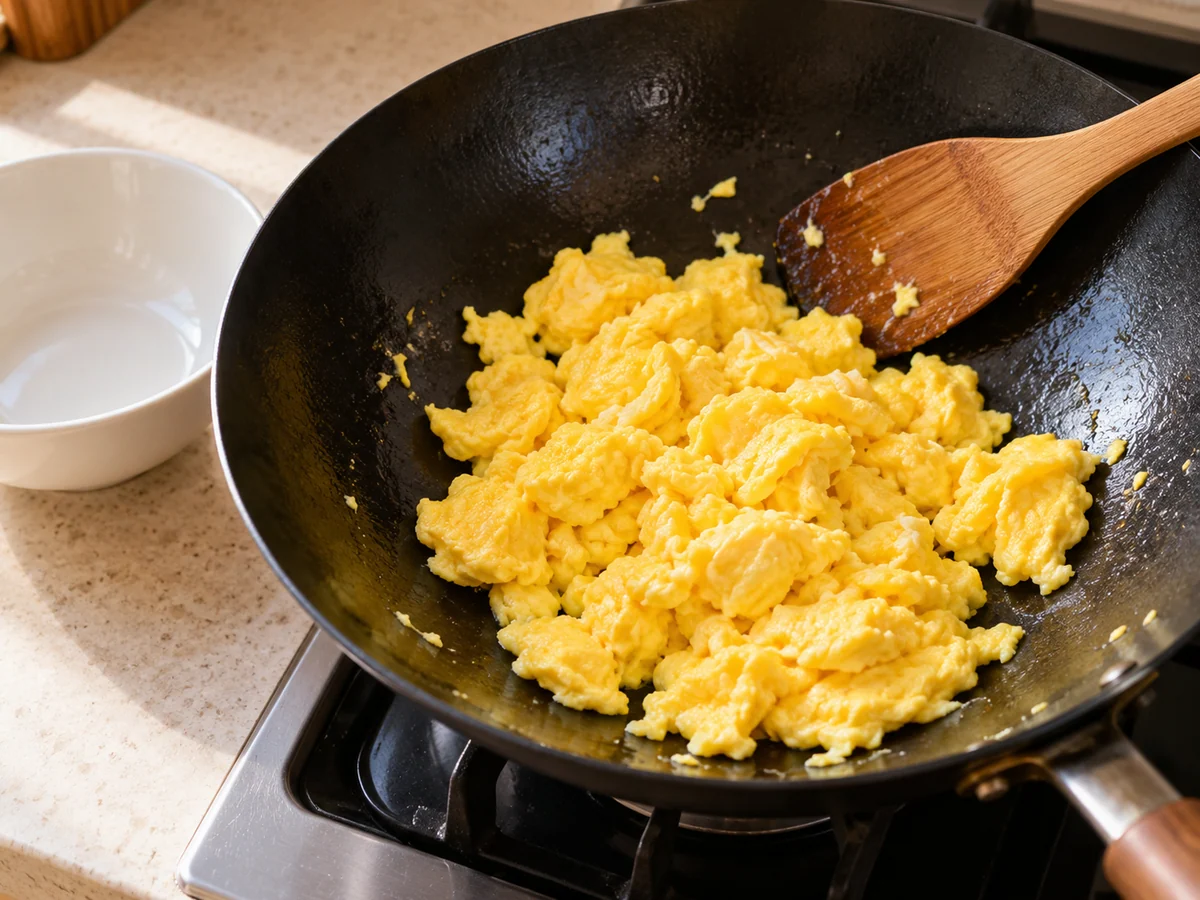
Stir-fried rice noodlesCook the egg first
Warm about one third of the oil over medium heat. Add the egg and gently push into fully set curds, then transfer to a clean bowl. Wash raw-egg utensils before using them with cooked food.
Look forThe egg forms soft cooked curds with no liquid raw egg.
See the full recipe ↗ 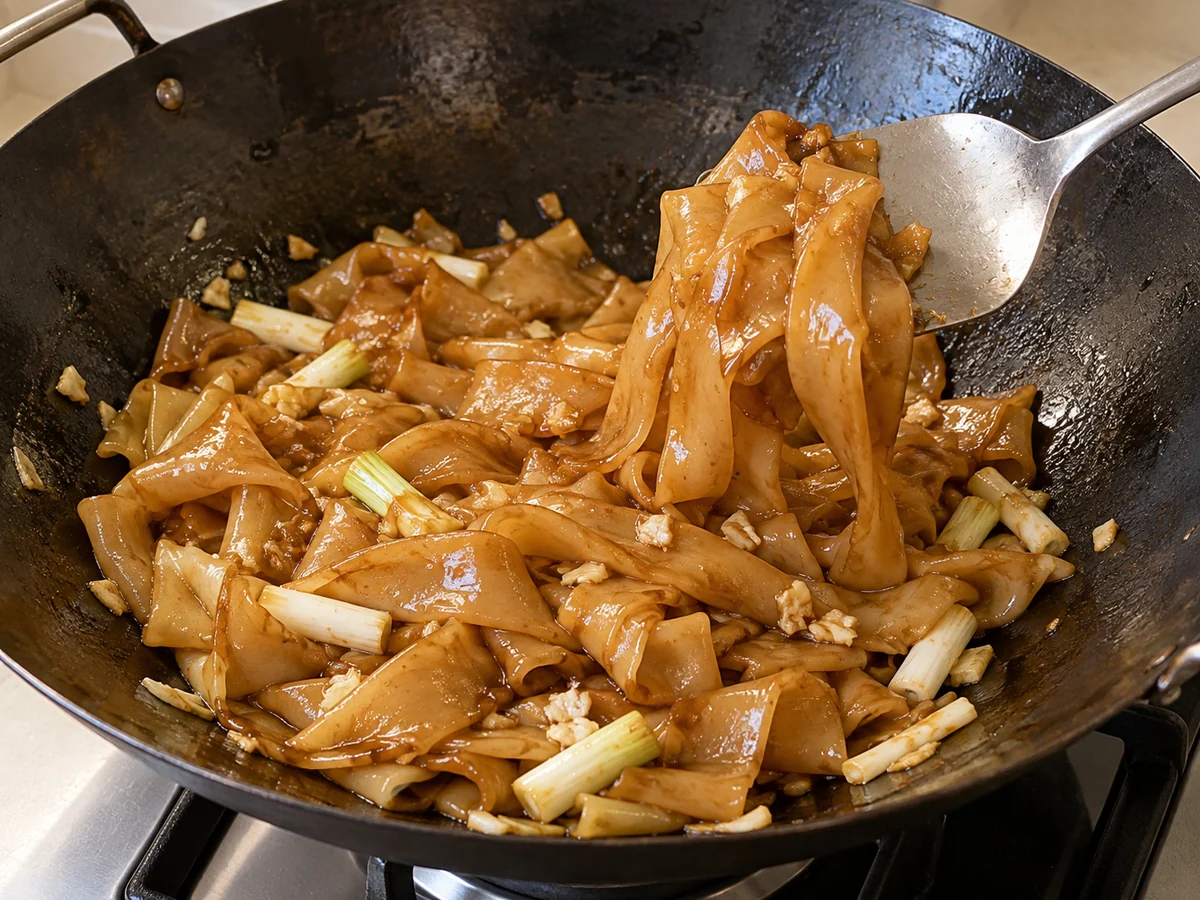
Stir-fried rice noodlesFry aromatics and noodles
Add the remaining oil and fry scallion whites and garlic until fragrant. Add the noodles and dark soy sauce, lifting and turning gently. Work in batches if crowded instead of breaking the noodles with force.
Look forThe noodles are separated and evenly colored and the garlic is not burnt.
See the full recipe ↗ 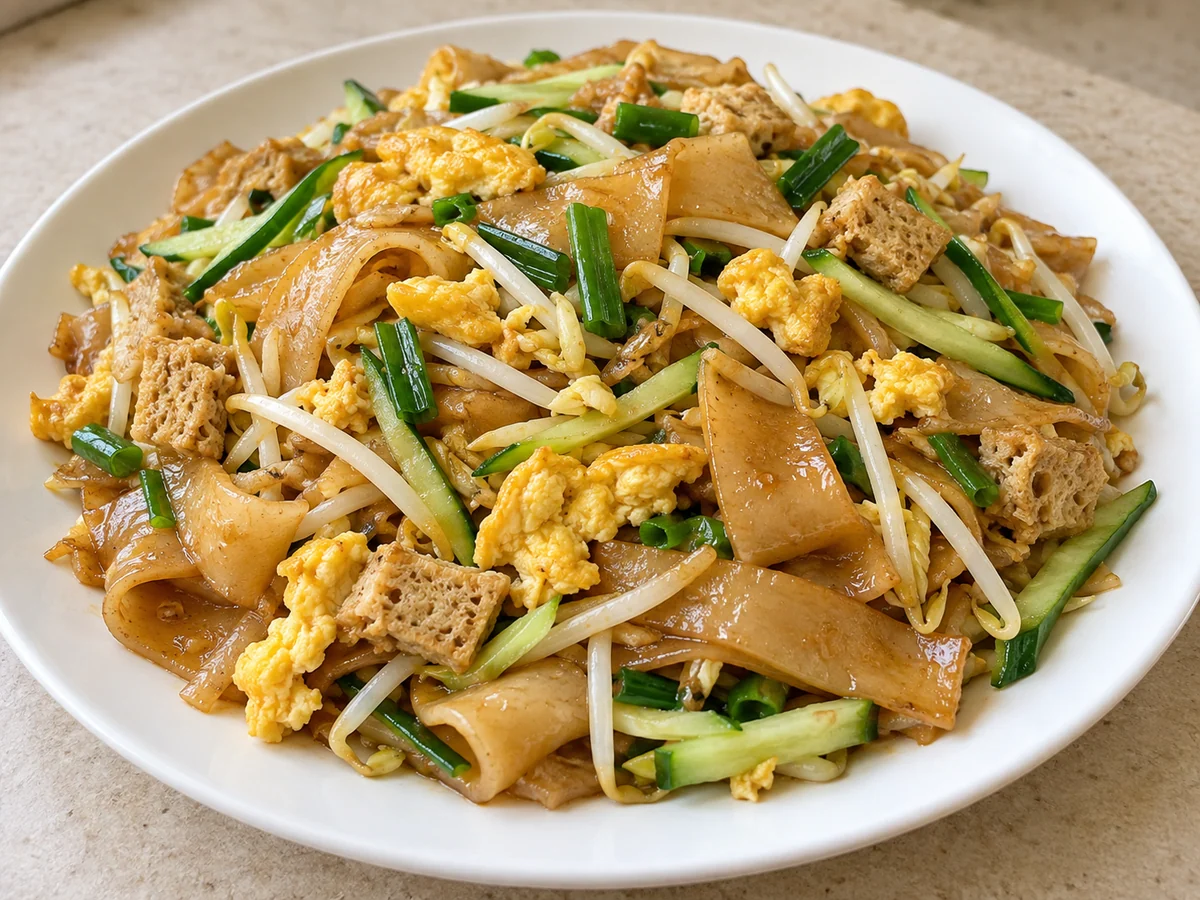
Stir-fried rice noodlesCombine, heat through and plate
Add the cooked gluten, light soy sauce, sprouts, cucumber and cooked egg. Toss until everything is hot through and the noodles are tender without hard centers. Add scallion greens, toss and serve; noodle color alone does not establish doneness.
Look forThe noodles are tender and intact, with evenly mixed vegetables and egg, all hot through.
See the full recipe ↗ 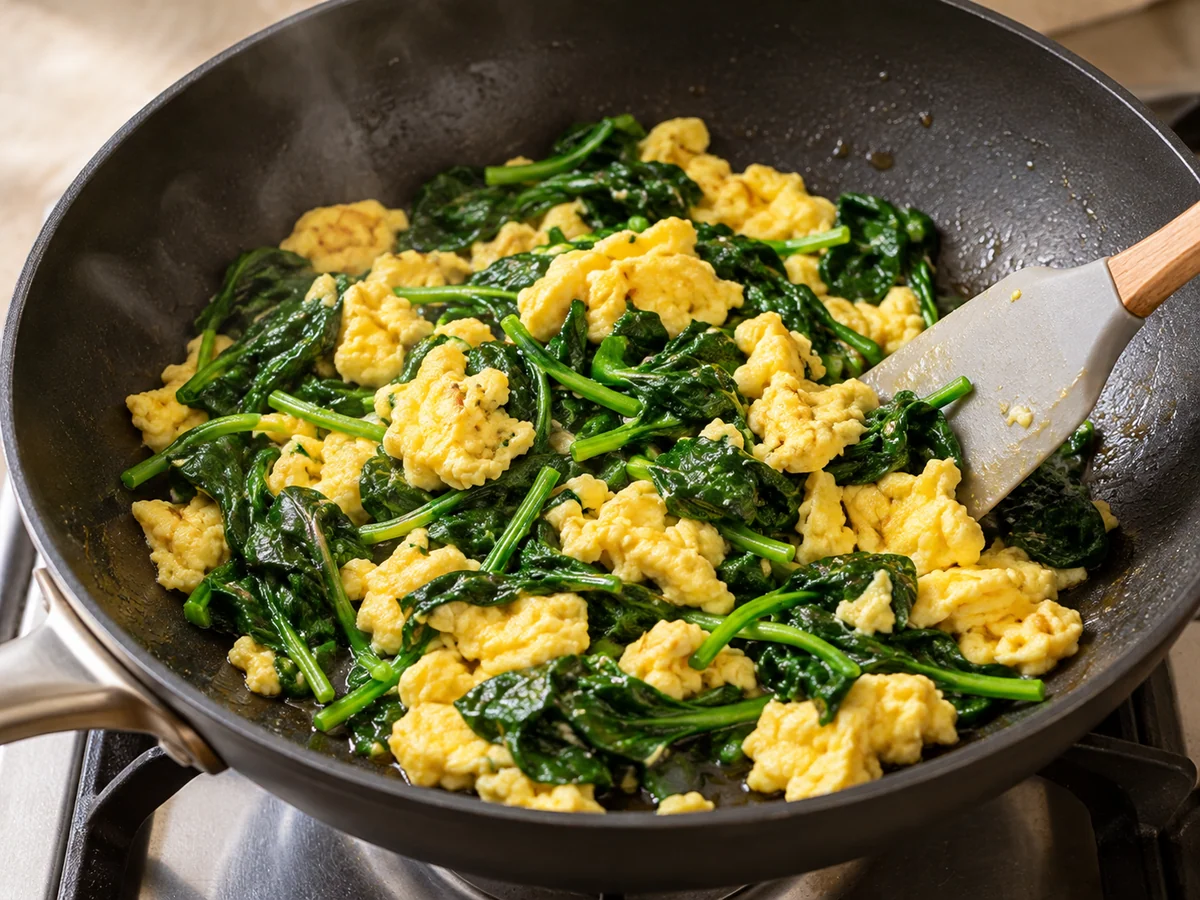
Spinach and eggsStir-fry the spinach
Add the remaining third of the oil, then stir-fry the drained spinach and start a 15 sec check timer. Return the cooked eggs after the spinach is hot again.
Look forSpinach is hot again and egg curds are mixed through.
See the full recipe ↗ 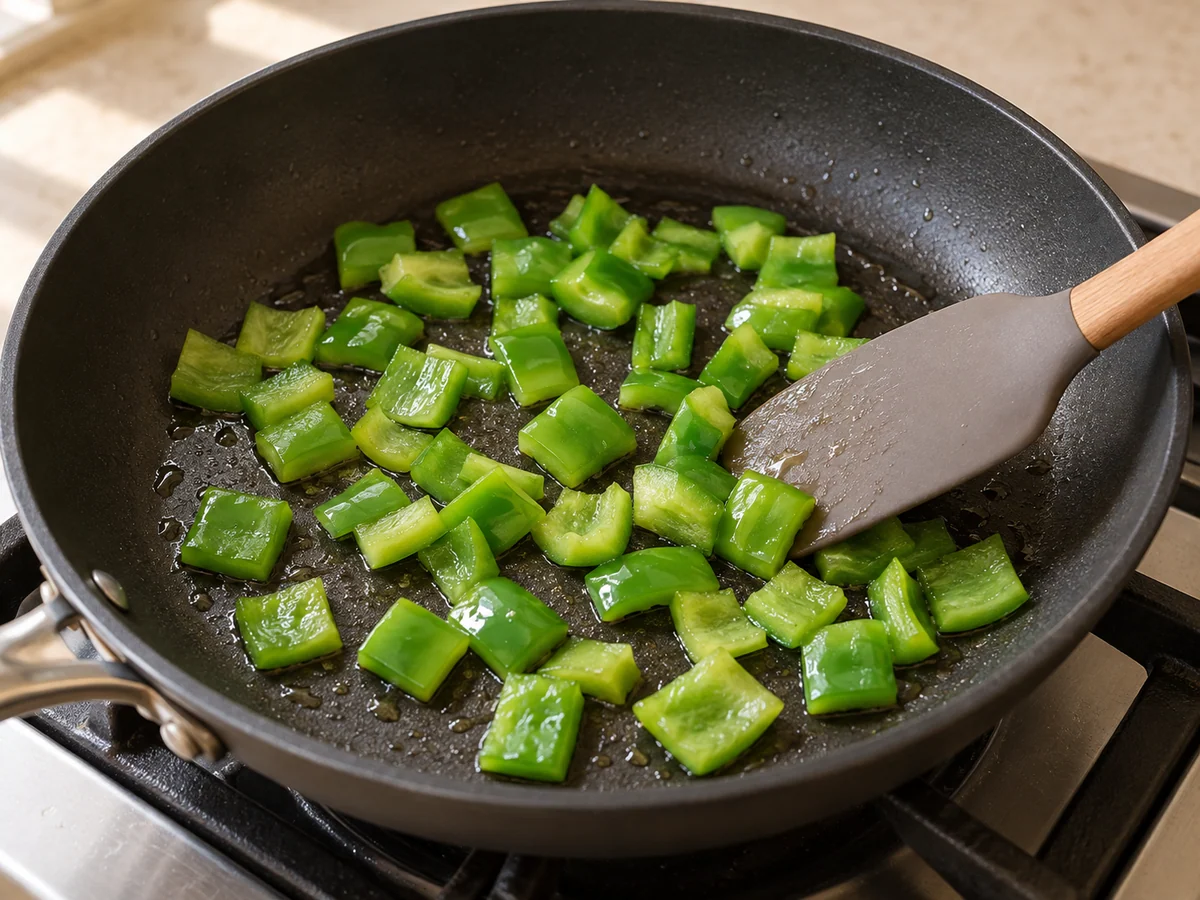
Scallion pan-fried tofuCook the pepper
If needed, add enough oil to thinly coat the pan bottom. Add the pepper, stir and gently press with a 3 min check timer until slightly softened.
Look forPepper is slightly softened without scorching.
See the full recipe ↗ 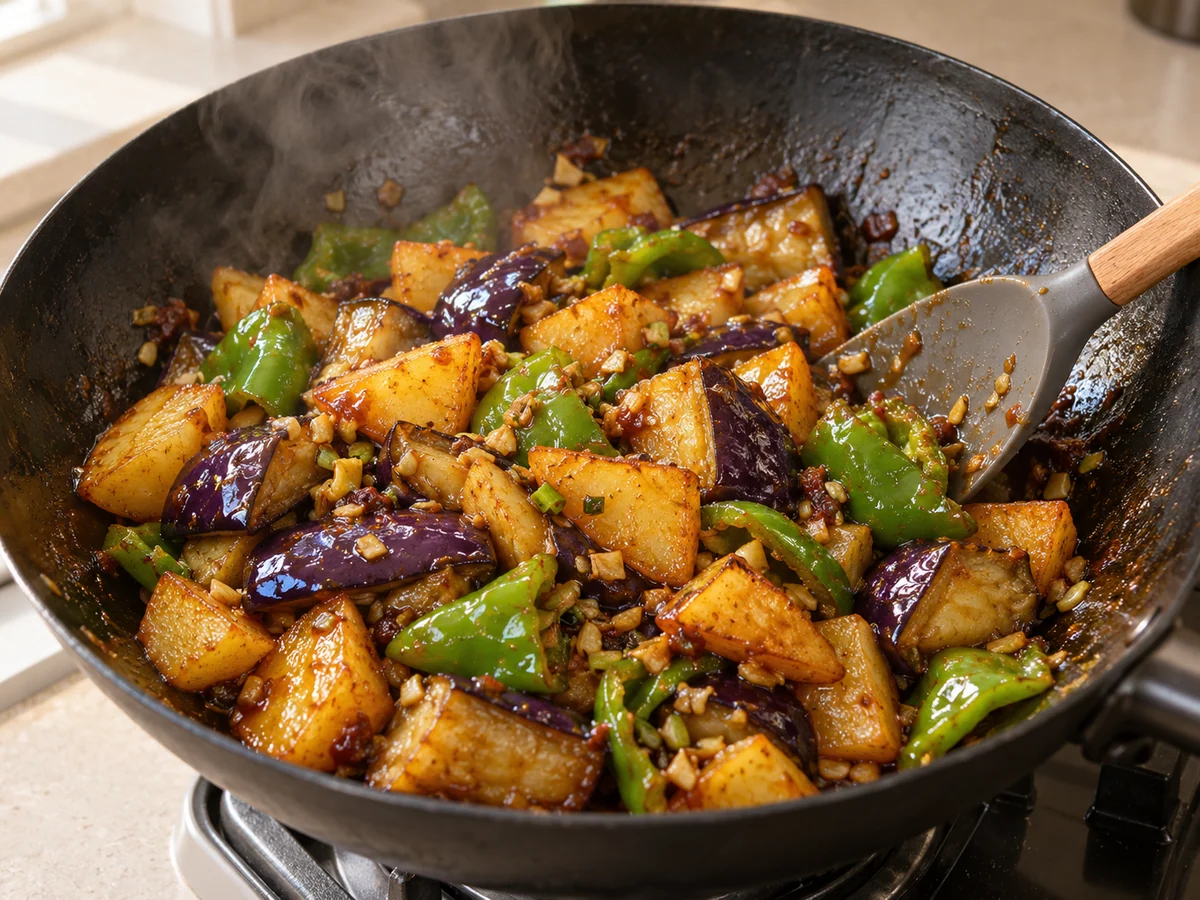
Eggplant, potato and pepper stir-fryCoat the vegetables
Add the fried vegetables and toss with a 20 sec check timer; continue until hot through, eggplant centers are soft, and the coating is even.
Look forVegetables are hot through, eggplant centers soft, and sauce coats evenly.
See the full recipe ↗ 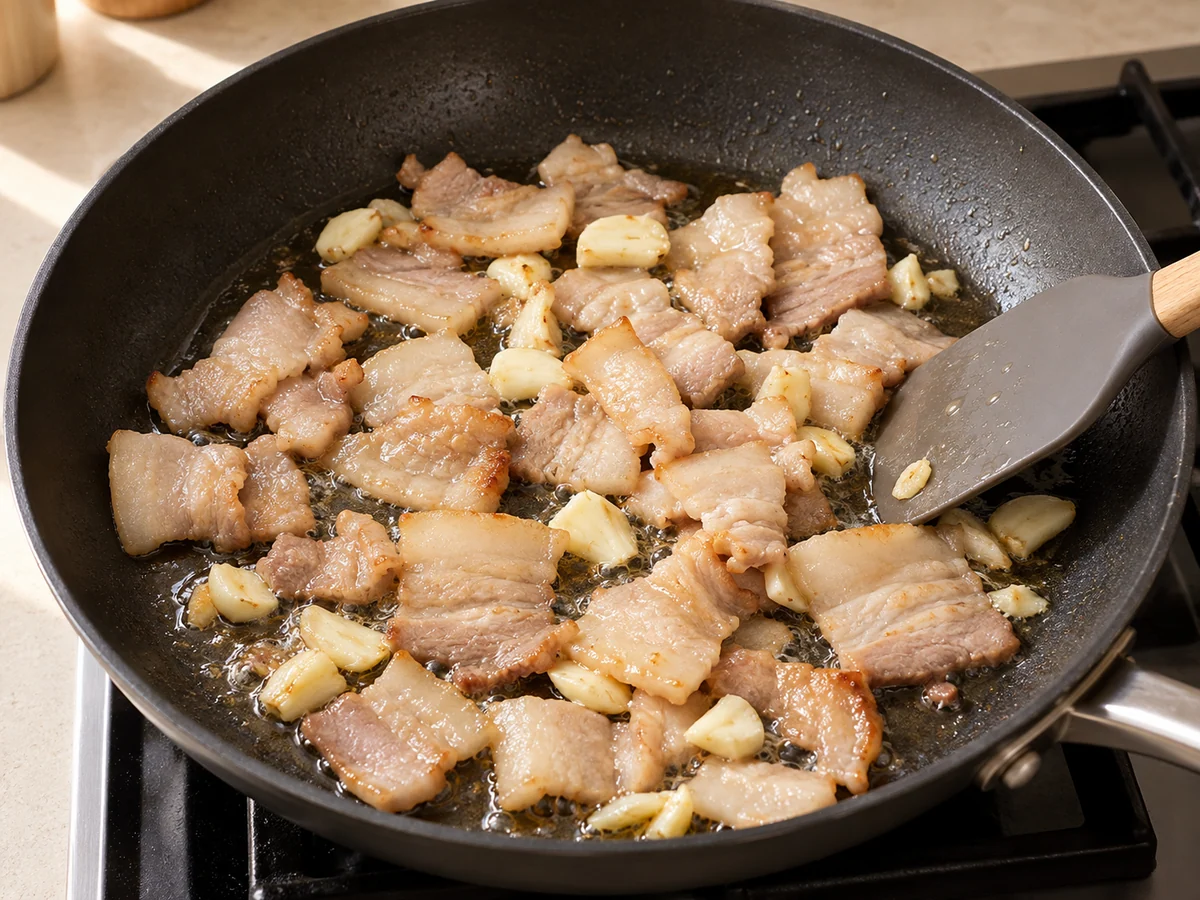
Dry-pot cauliflowerRender the pork
Warm the oil over medium-low heat, briefly cook the garlic, then add pork and stir until its surface changes color and fat renders. Color alone does not establish doneness; the center still needs checking.
Look forGarlic is fragrant and pork renders some fat without burning.
See the full recipe ↗ 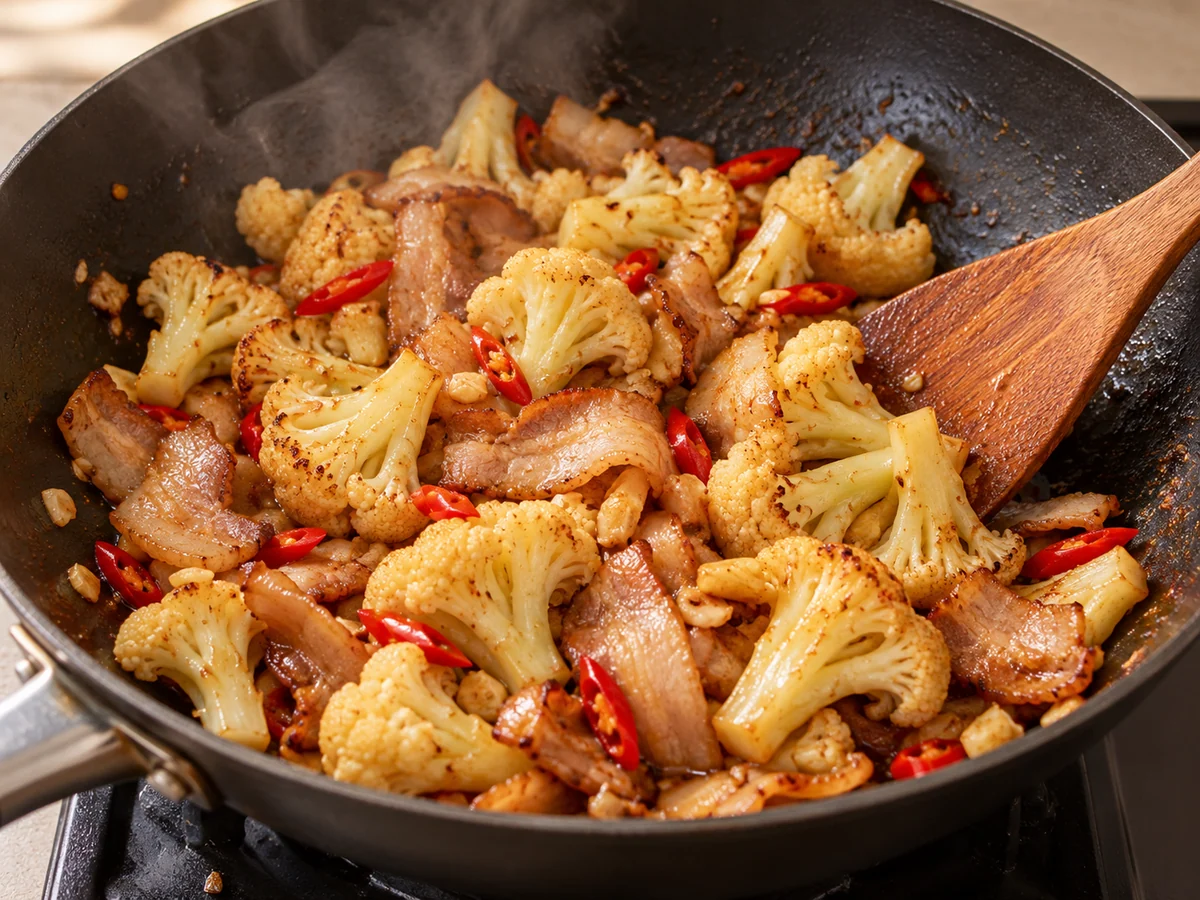
Dry-pot cauliflowerStir-fry and season
Add chili and cauliflower, then soy sauce and sugar. Increase the heat and start a 1 min check, stirring continuously to prevent scorching.
Look forCauliflower is coated, with no pool of water at the bottom.
See the full recipe ↗ 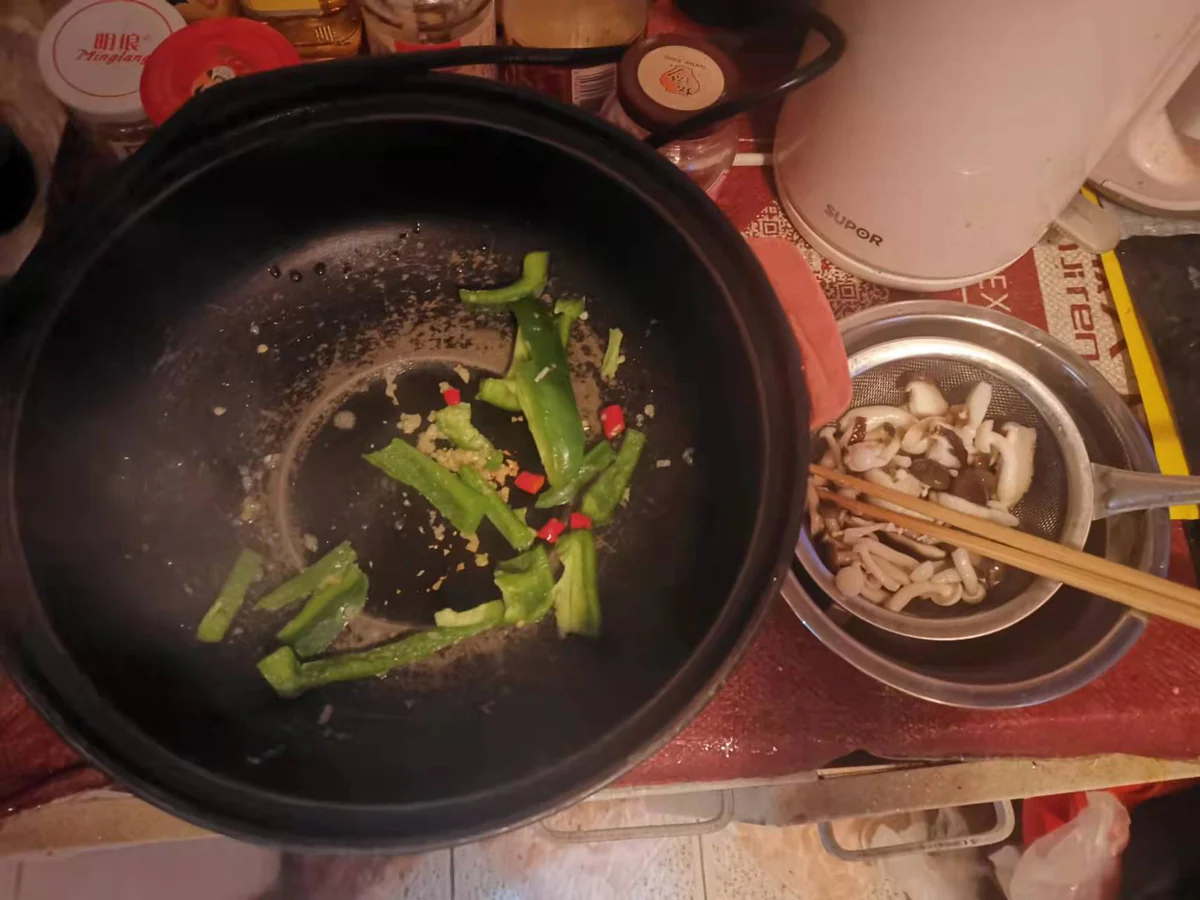
Mixed mushrooms in oyster sauceCook aromatics
Warm oil over medium-low heat, add ginger, chili and bell pepper, and start a 30 sec check while stirring until fragrant and the pepper slightly softens; do not wait for smoke.
Look forAromatics are fragrant without scorching.
See the full recipe ↗ 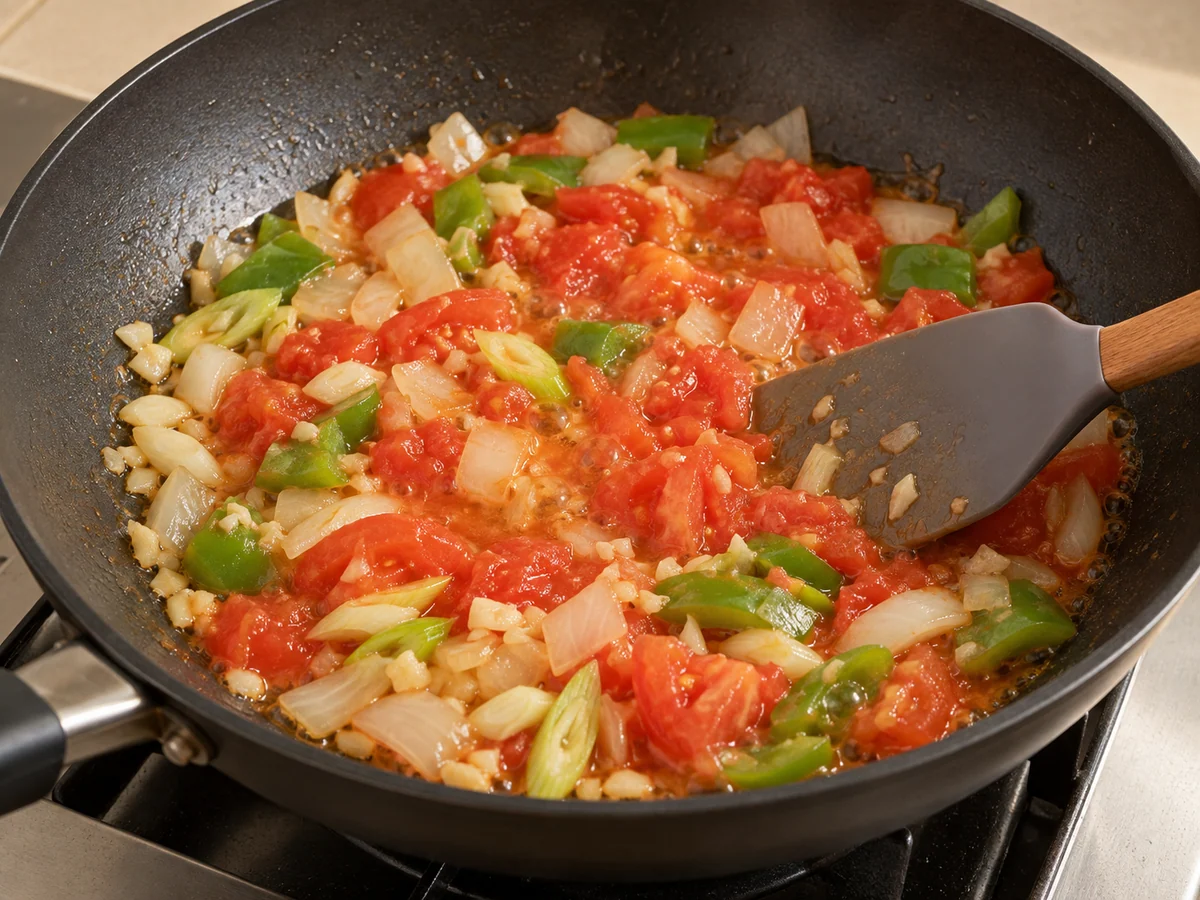
Soy-braised eggplantCook vegetables in a second pan
Leave the frying oil in its pot to cool. In a second pan, warm the finishing oil over medium-low heat and cook scallion and garlic until fragrant. Add onion and pepper until slightly softened, then tomato until juicy.
Look forAromatics are fragrant and tomato juicy without scorching.
See the full recipe ↗ 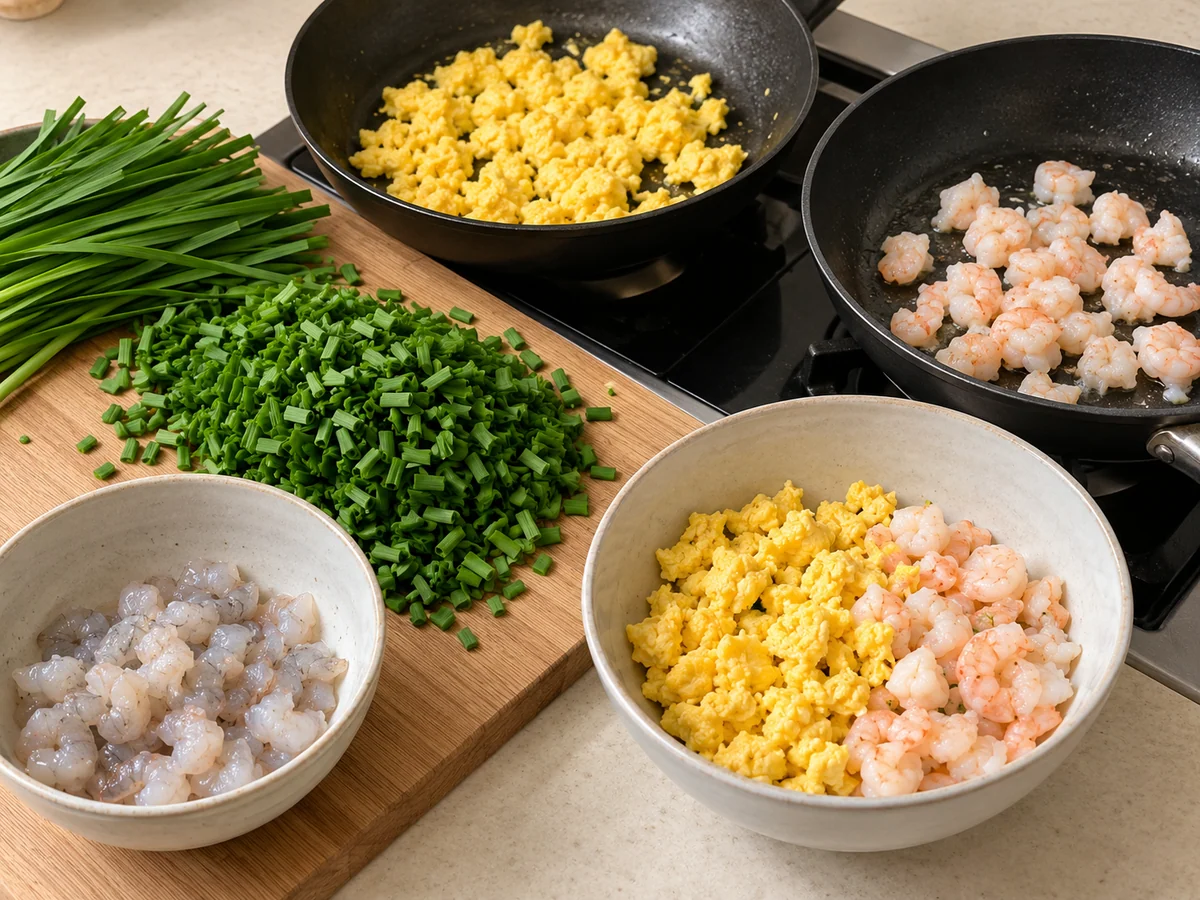
Chive and egg pocketsChop chives and cook egg and shrimp
Wash, dry and finely chop the chives. Devein and chop the shrimp. Lightly oil the pan, scramble the eggs until fully set and break into small pieces, then cook shrimp until pearly and opaque. Transfer to a clean bowl and cool briefly, keeping raw and cooked utensils separate.
Look forThe egg and shrimp are cooked and the chives are well drained.
See the full recipe ↗ 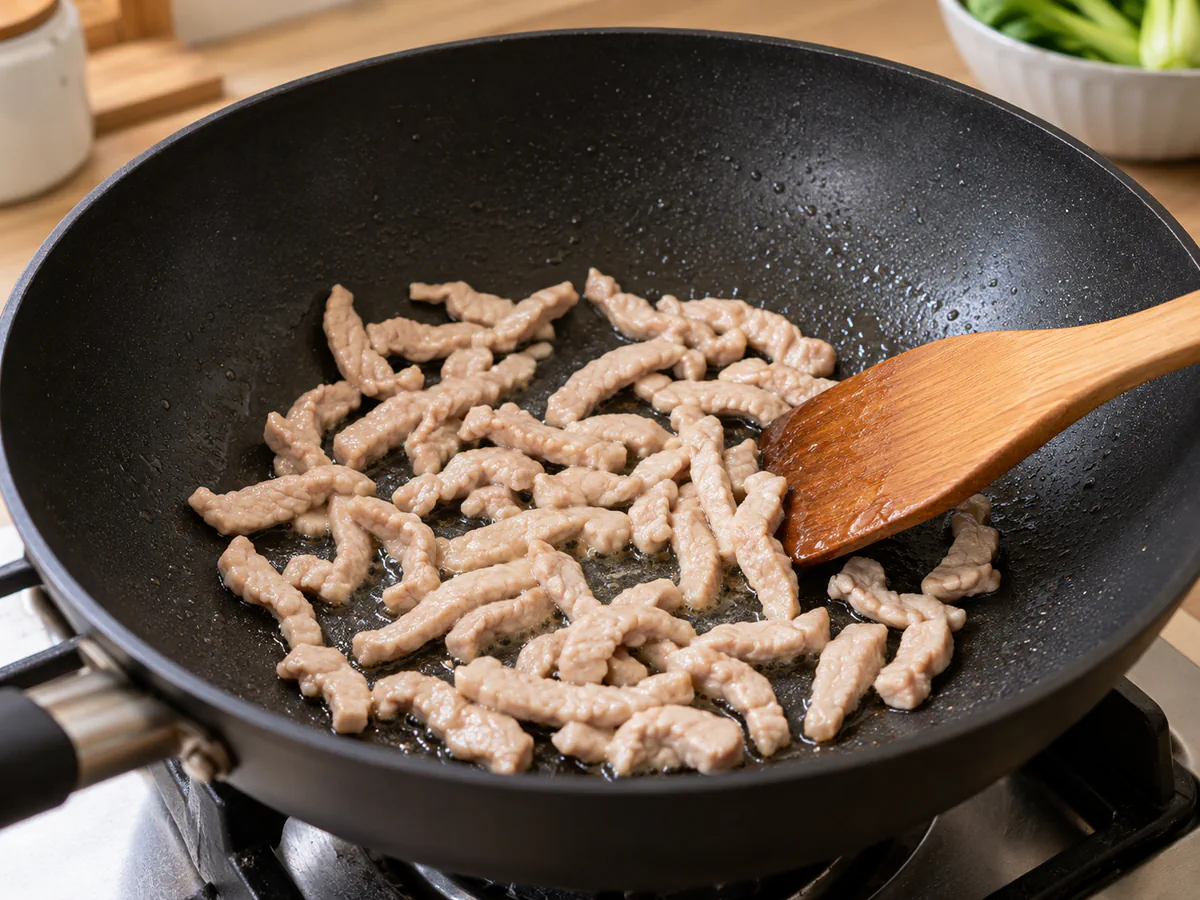
Stir-fried rice cakes with pork and bok choyCook the pork
Warm the pan over medium-high heat. Add half the oil and, before it smokes, spread and stir the pork until cooked. Transfer to a clean plate. Do not eat pork based on surface color alone; it will also simmer again later. Cook larger quantities in batches.
Look forSeparated pork strips with no wet coating or burnt starch.
See the full recipe ↗ 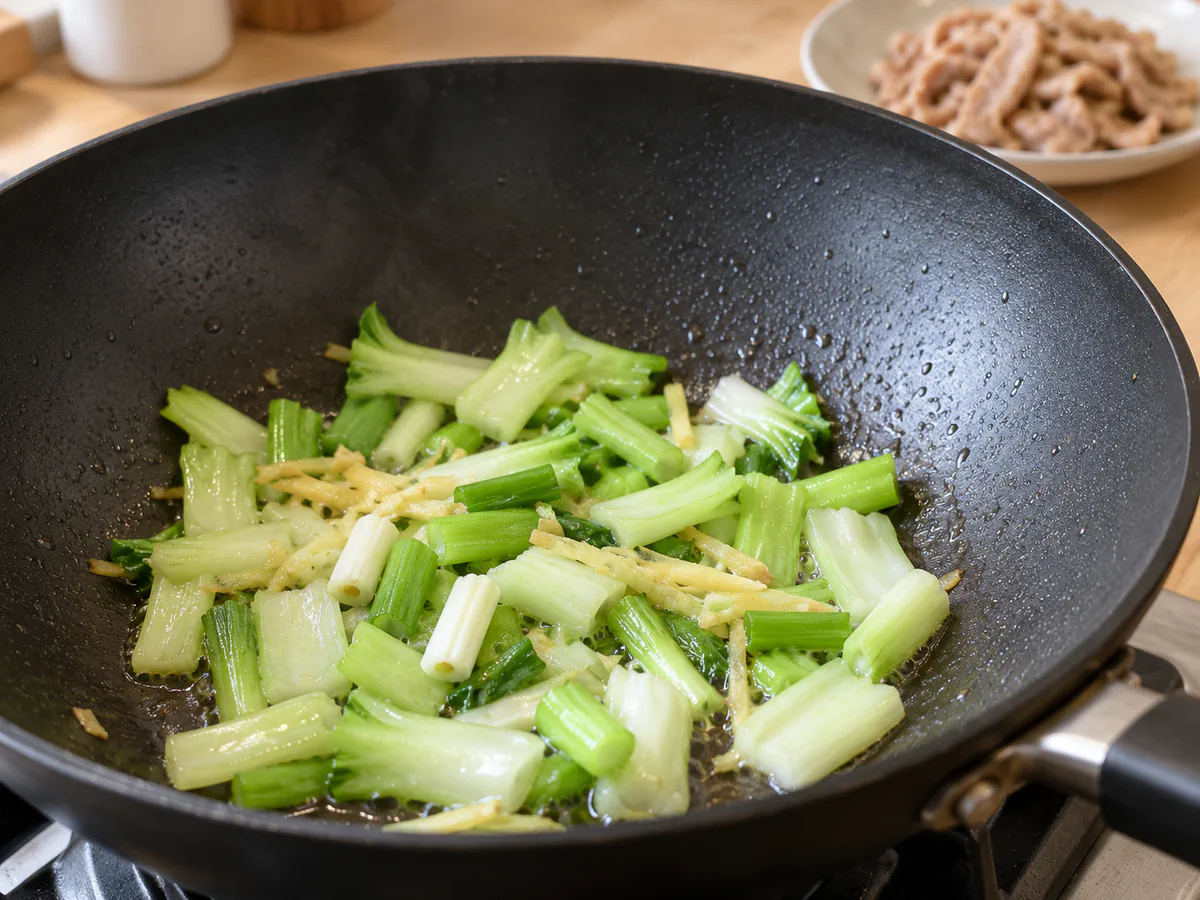
Stir-fried rice cakes with pork and bok choySauté aromatics and stems
Add the remaining oil. Briefly sauté ginger and scallion whites until fragrant, then stir-fry the bok-choy stems until just tender. Do not blacken the aromatics. Reserve leaves and scallion greens.
Look forFragrant aromatics and slightly translucent stems that retain bite.
See the full recipe ↗ 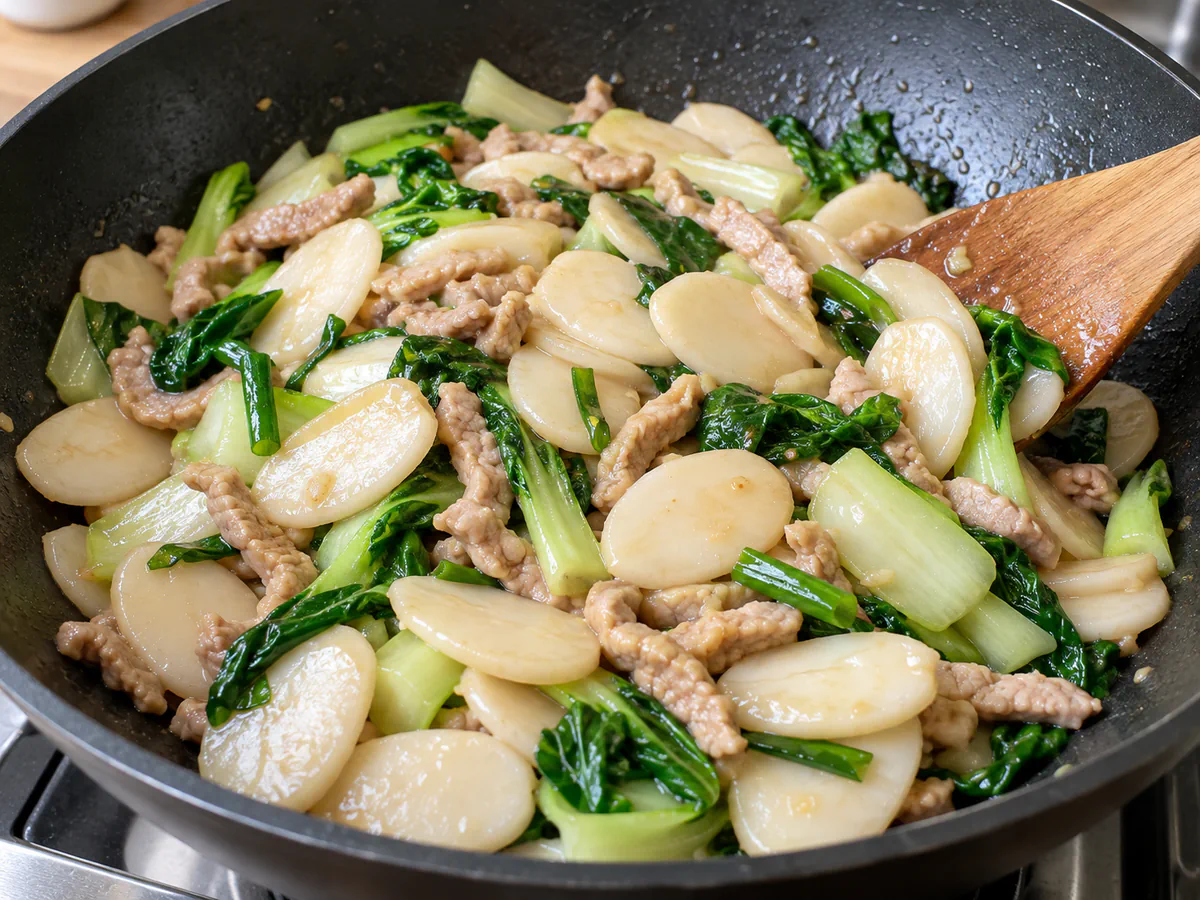
Stir-fried rice cakes with pork and bok choyFinish with the leaves
Fold in bok-choy leaves and scallion greens over medium-high heat until the leaves soften and pork is piping hot throughout. Reduce excess liquid uncovered or add a small splash if dry. Aim for a moist coating, not soup or dried-out rice cakes. Before serving, use a clean thin probe to check that the thickest pork strip reaches 75°C for at least 30 seconds; surface color and elapsed time are not substitutes.
Look forCooked green leaves, thoroughly cooked pork and lightly coated rice cakes.
See the full recipe ↗ 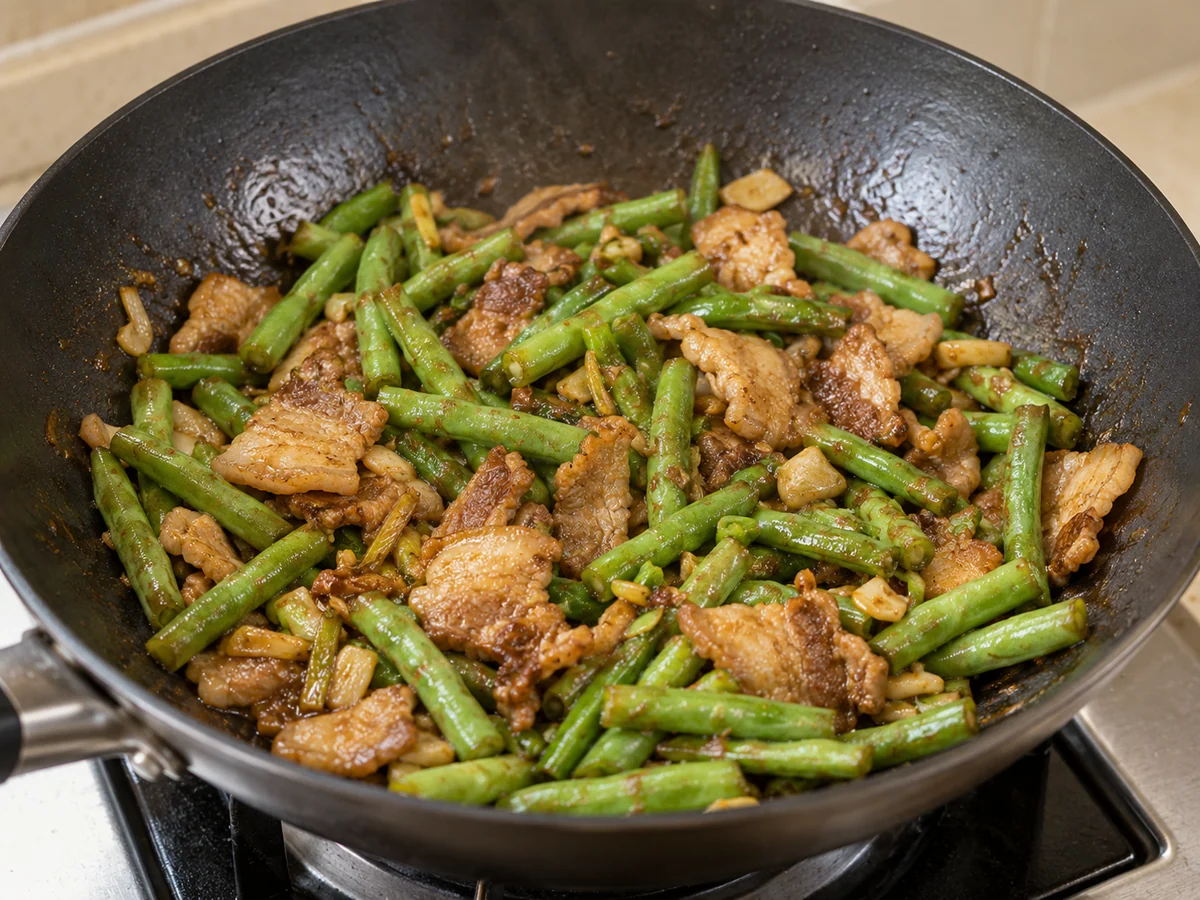
Green bean braised noodlesStir-fry pork and seasonings
Warm oil over medium heat and fry scallion and ginger. Add and separate pork slices. When the surfaces change color, mix in both soy sauces, oyster sauce, salt, bouillon and spice, then the cooked beans. Color is only a progress cue; cooking continues next.
Look forThe pork is separated and seasoning coats the meat and beans.
See the full recipe ↗ 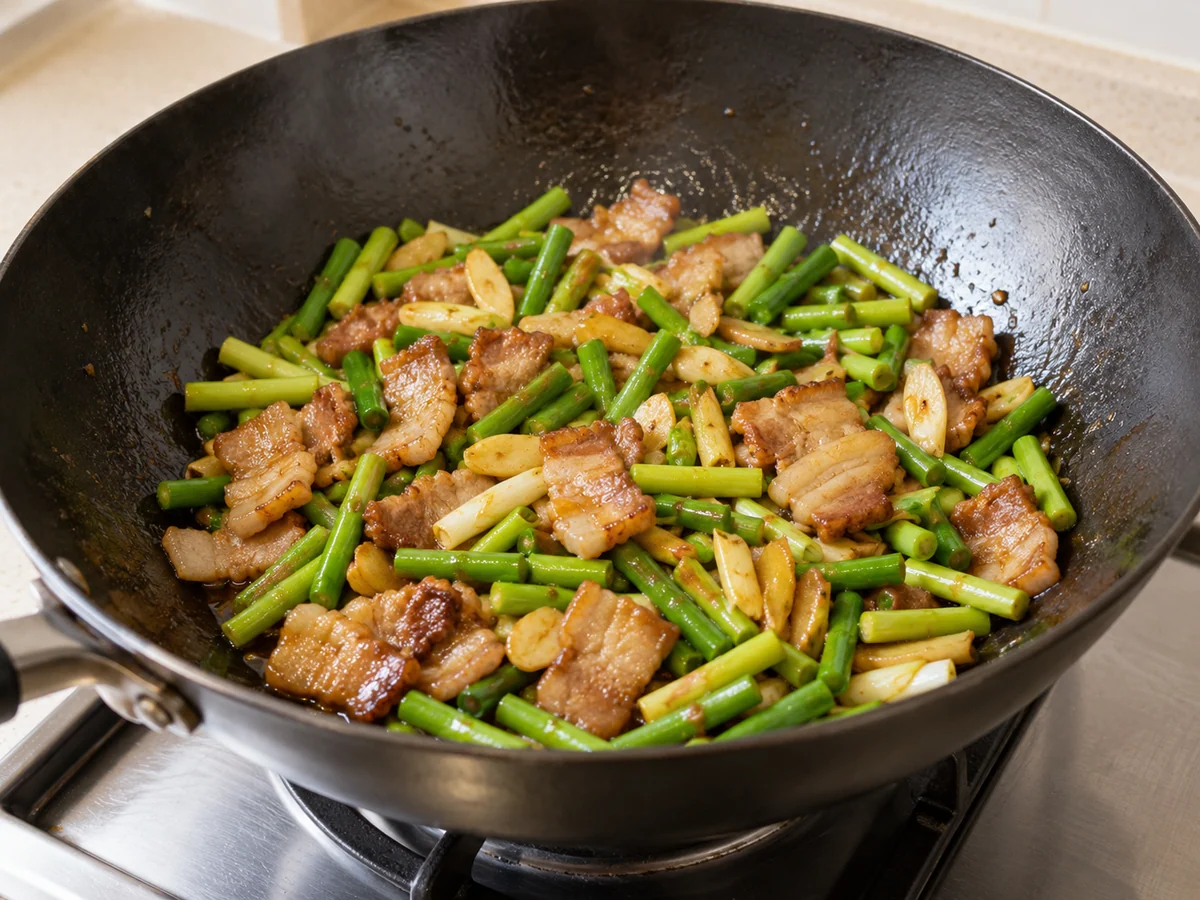
Henan steamed noodlesFry pork and vegetables
Warm the remaining cooking oil over medium heat and separate the pork slices. Add scallion, ginger, garlic and wine, then toss with scapes, both soy sauces, oyster sauce, salt, bouillon and spice.
Look forPork and vegetables are evenly seasoned without scorching.
See the full recipe ↗ 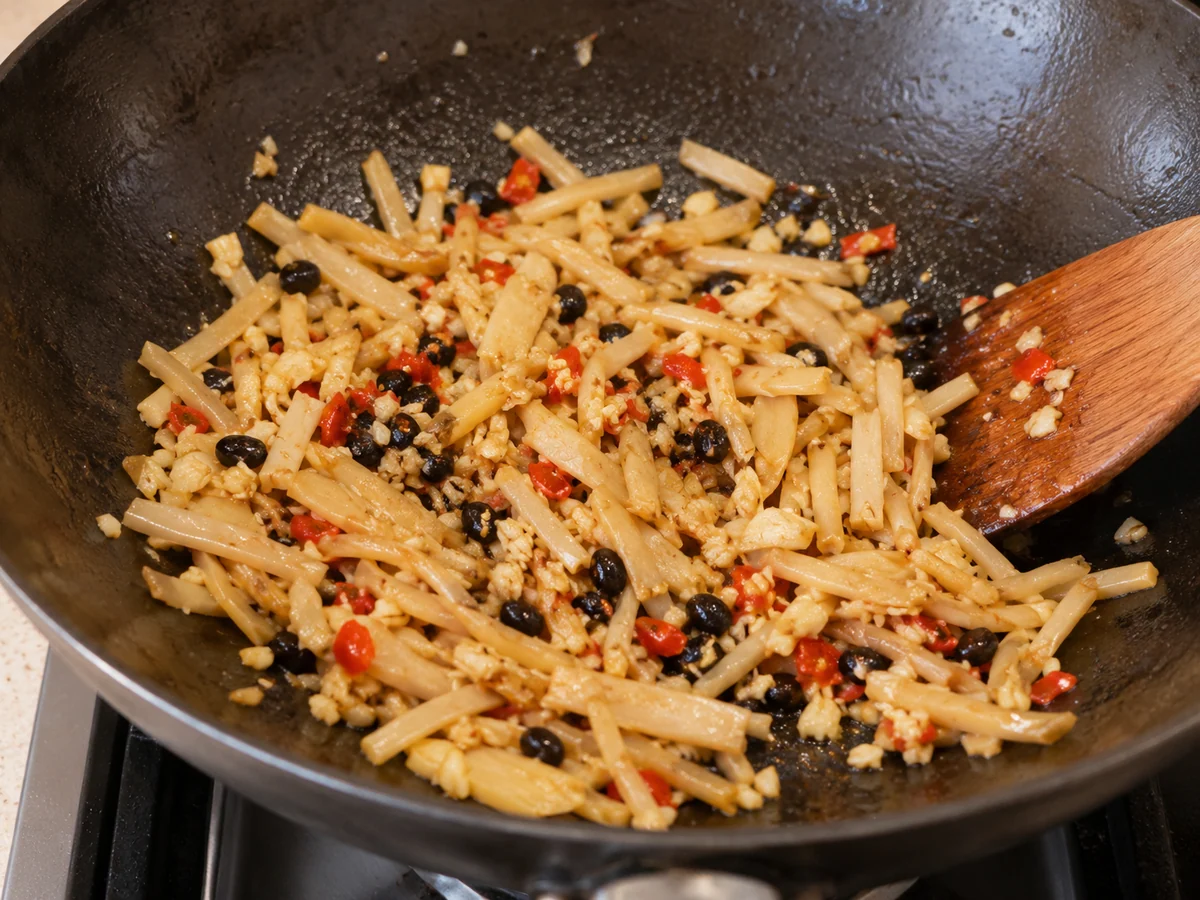
Laoyou pork rice noodle soupDry-fry shoots and aromatics
Drain the shoots and chop the garlic. Dry-fry the shoots over medium heat to remove surface moisture, then add oil, garlic, fermented beans and optional chili. Stir until fragrant without burning the garlic.
Look forThe shoots no longer release surface water and the aromatics are fragrant.
See the full recipe ↗ 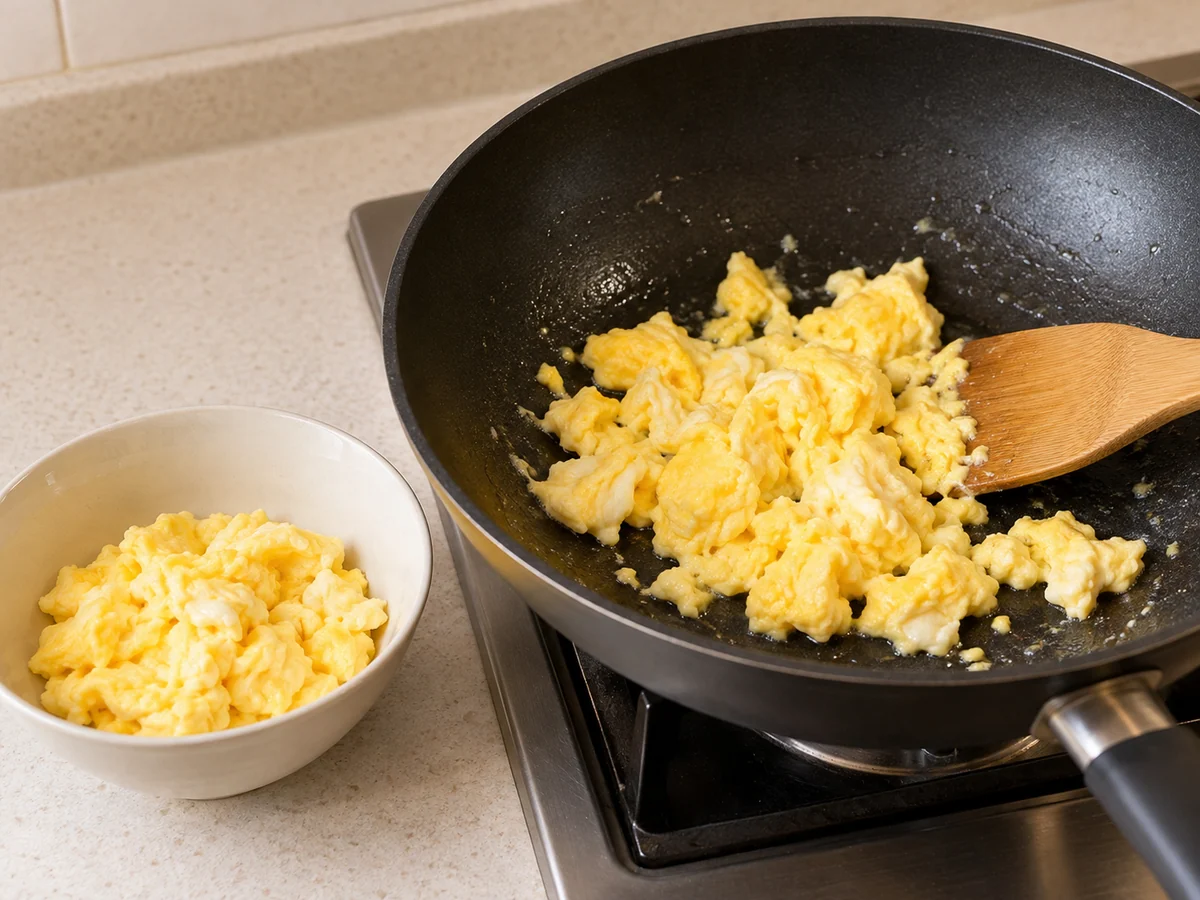
Tomato and egg noodlesCook the egg
Warm about three quarters of the oil over medium heat, add the egg and gently form curds. Transfer to a clean bowl when fully set; do not test the hot pan with a hand above it.
Look forThe egg is fully set but still soft.
See the full recipe ↗ 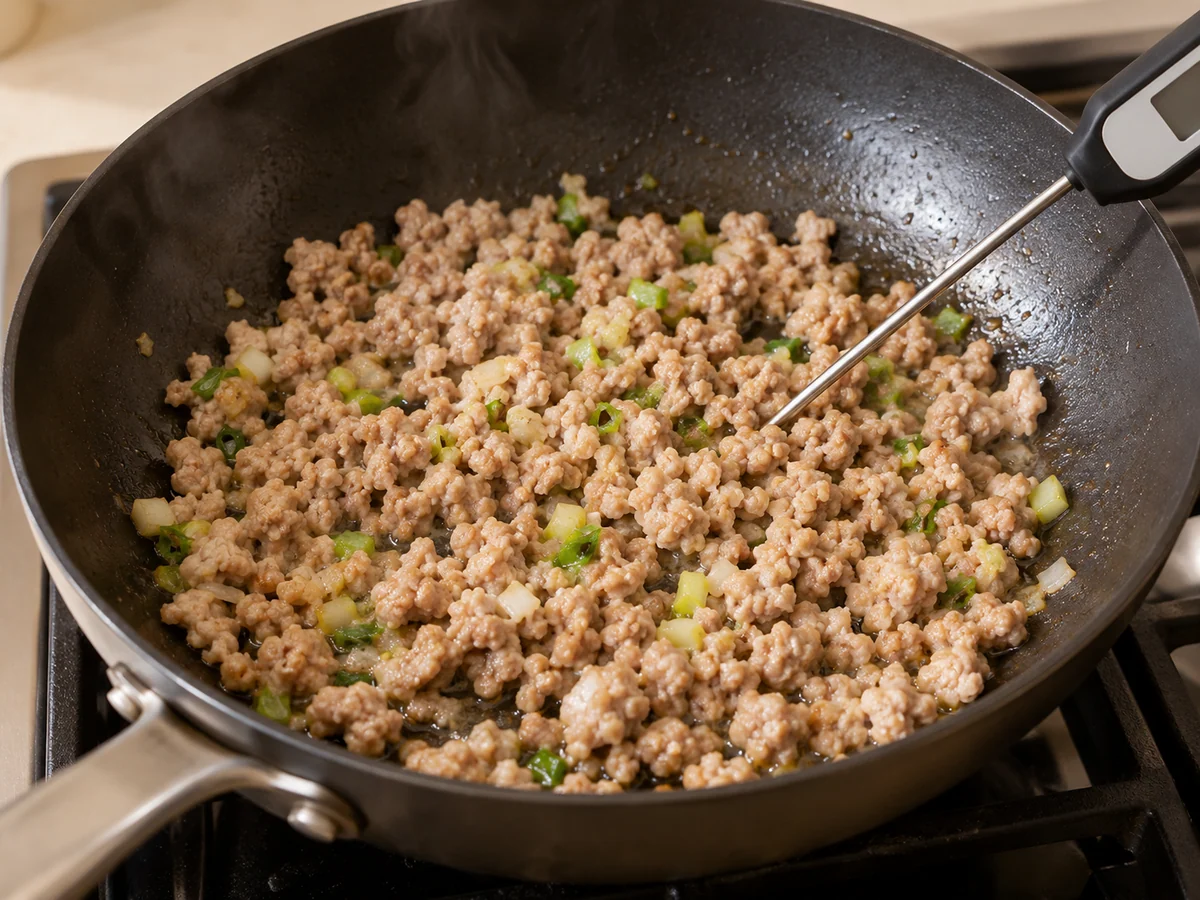
Zhajiang noodlesCook the pork and check doneness
Warm the oil over medium heat, fry scallion briefly and break up the pork. Cook until a food thermometer reads at least 71°C; absence of red color is insufficient.
Look forThe pork is separated and reaches 71°C with no large raw clumps.
See the full recipe ↗ 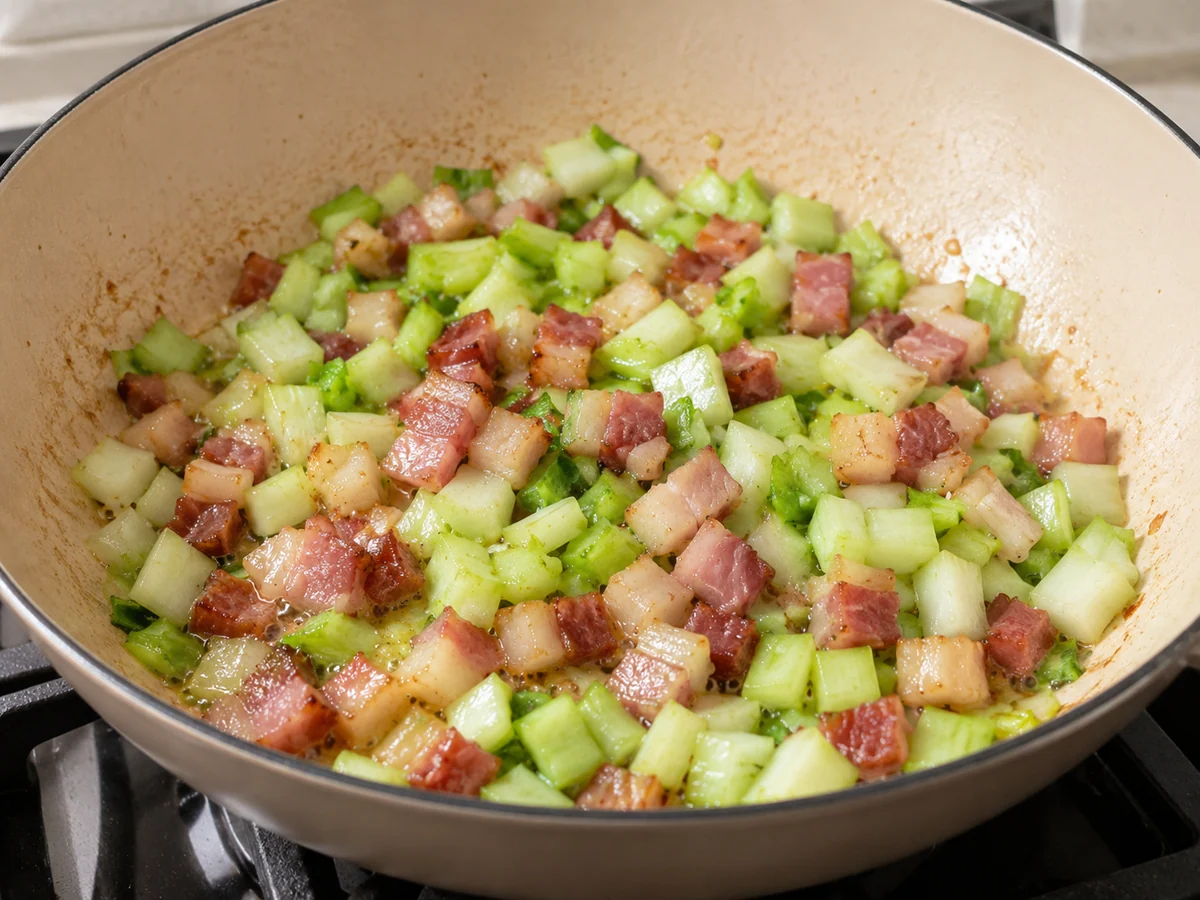
Salted pork and greens riceFry pork and stems
Fry pork over medium-low heat in about two thirds of the lard, add optional wine and sugar, then the stems. Follow the pork’s cooking requirements and use a thermometer; further heating follows in the rice cooker, and translucency alone is not proof.
Look forThe pork and stems are evenly coated and fragrant.
See the full recipe ↗ 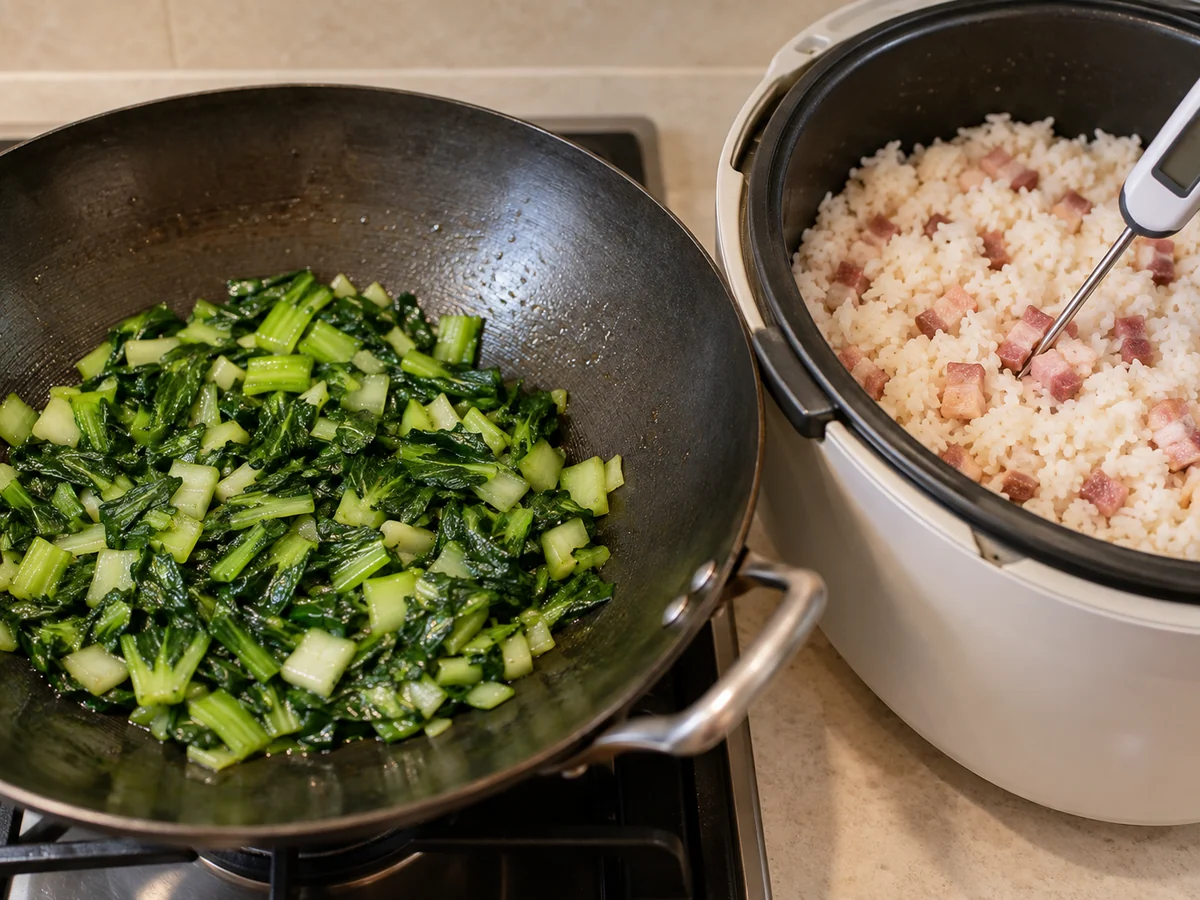
Salted pork and greens riceCook the leaves separately
Cook the leaves in the remaining lard until fully wilted and hot. When rice finishes, check for no hard grains and measure the thickest cured-pork center for at least 63°C; follow a higher package requirement if given. Continue a proper cooking cycle if needed rather than using keep-warm to cook raw rice or meat.
Look forThe leaves are cooked, rice has no hard centers and pork doneness is checked.
See the full recipe ↗ 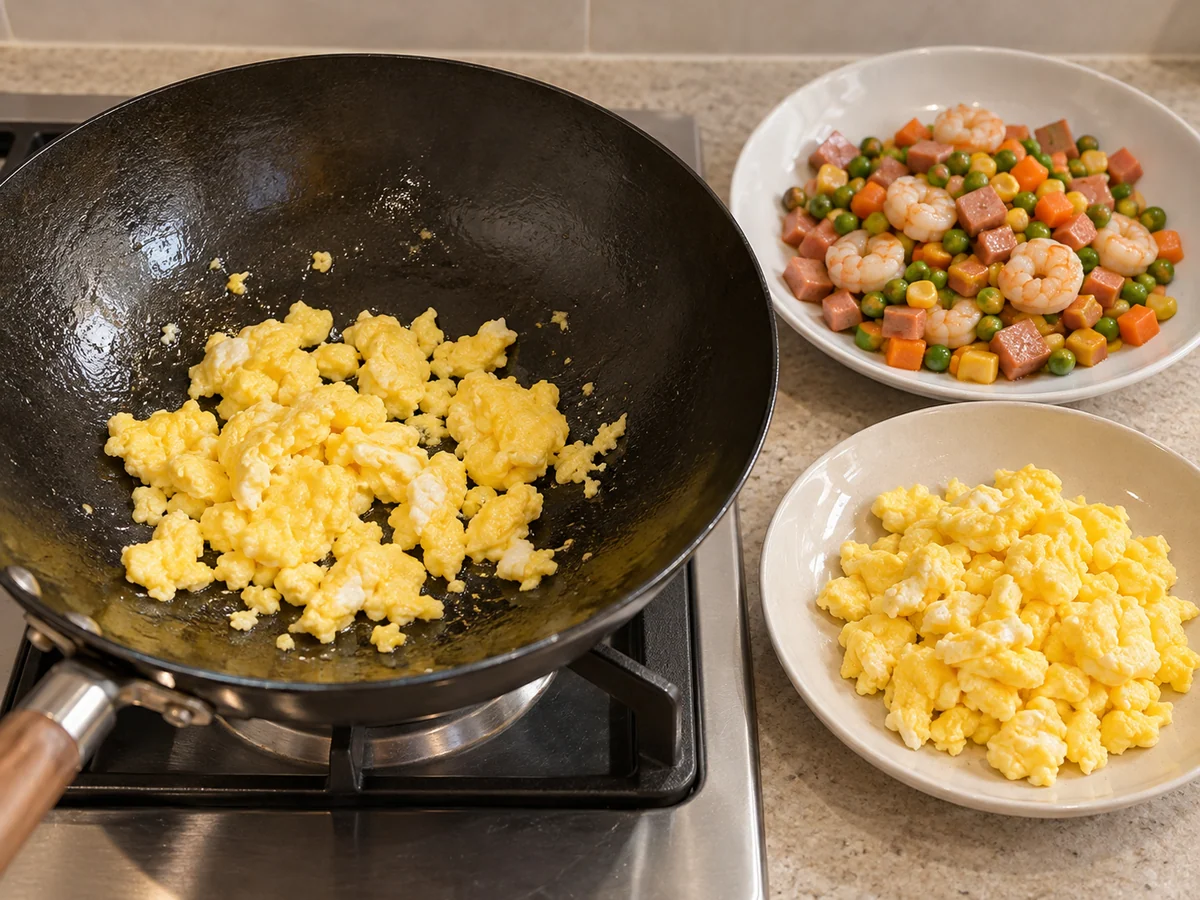
Yangzhou fried riceCook egg and warm toppings
Use about two thirds of the oil to scramble eggs until fully set, then remove. In the remaining pan oil, heat luncheon meat, cooked vegetables and shrimp and transfer to a clean plate. Do not rinse a hot oily pan with water.
Look forThe egg is set and hot toppings are in a clean container.
See the full recipe ↗ 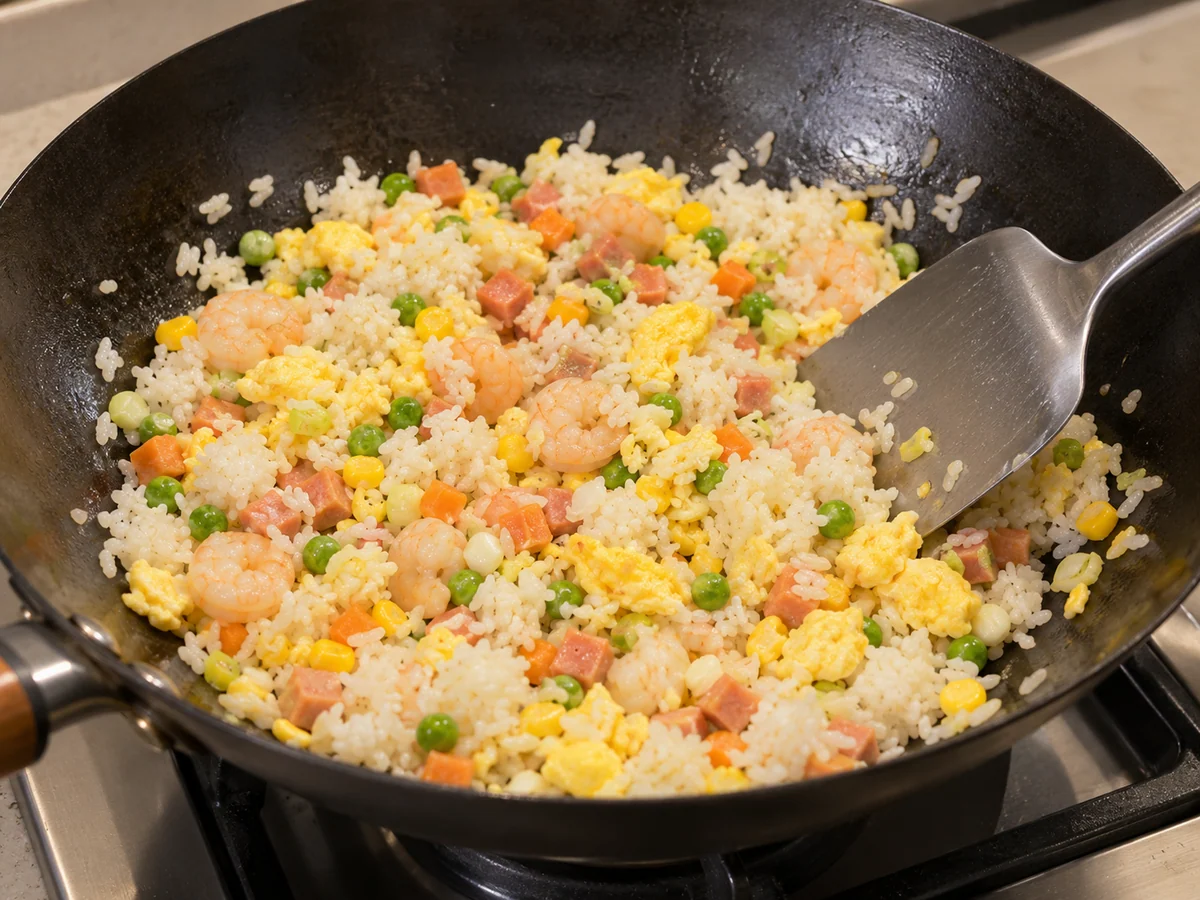
Yangzhou fried riceBreak up rice and combine
Fry scallion whites in the remaining oil. Add rice and gently press apart with a spatula instead of pounding. Toss in egg and toppings, working in batches if crowded, and set a 1 min first check.
Look forThe rice grains separate and egg and toppings mix evenly.
See the full recipe ↗ 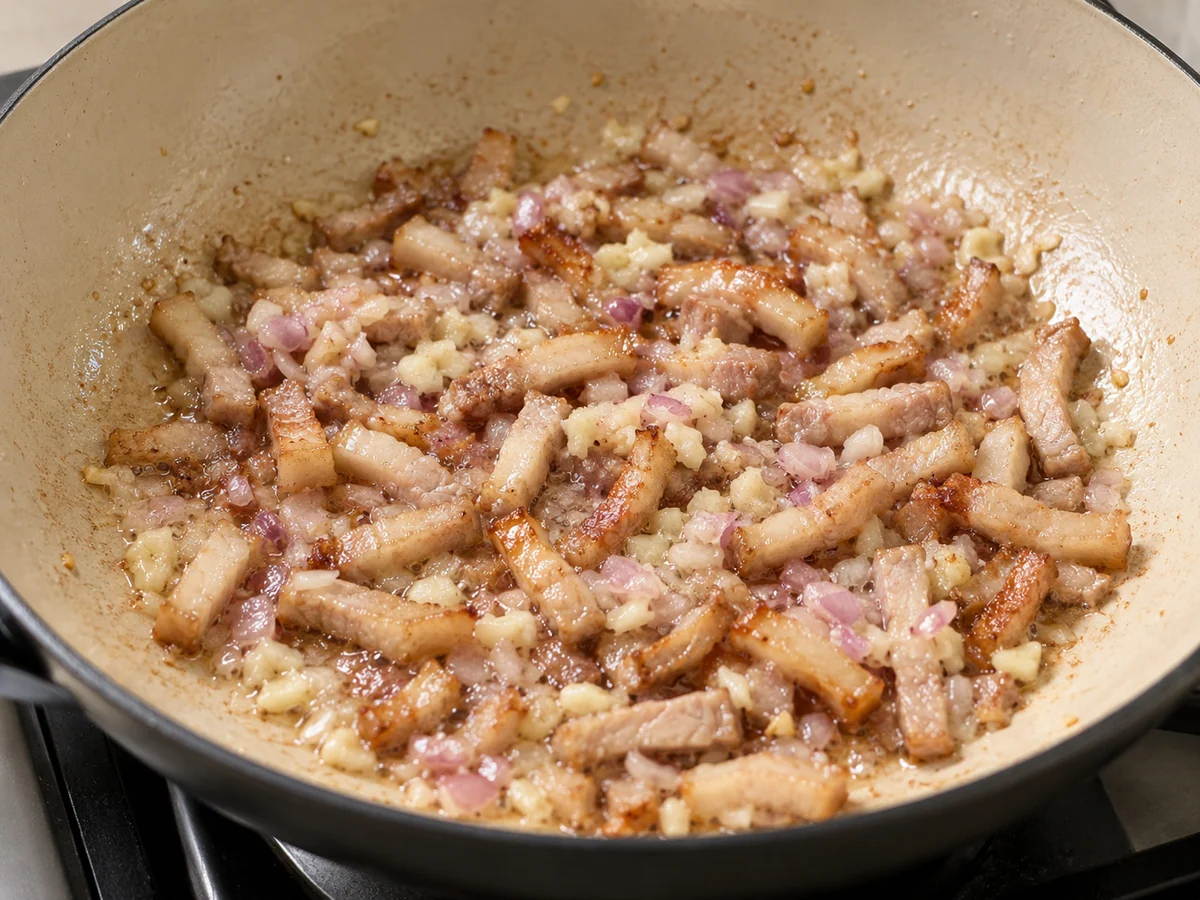
Taiwanese braised pork riceRender pork and fry aromatics
Warm the oil over medium heat and stir-fry pork until it changes color and starts rendering fat. Add about two sevenths of the rice wine, then shallots and garlic and fry until fragrant without blackening.
Look forThe pork is colored outside and the shallots and garlic are fragrant.
See the full recipe ↗ 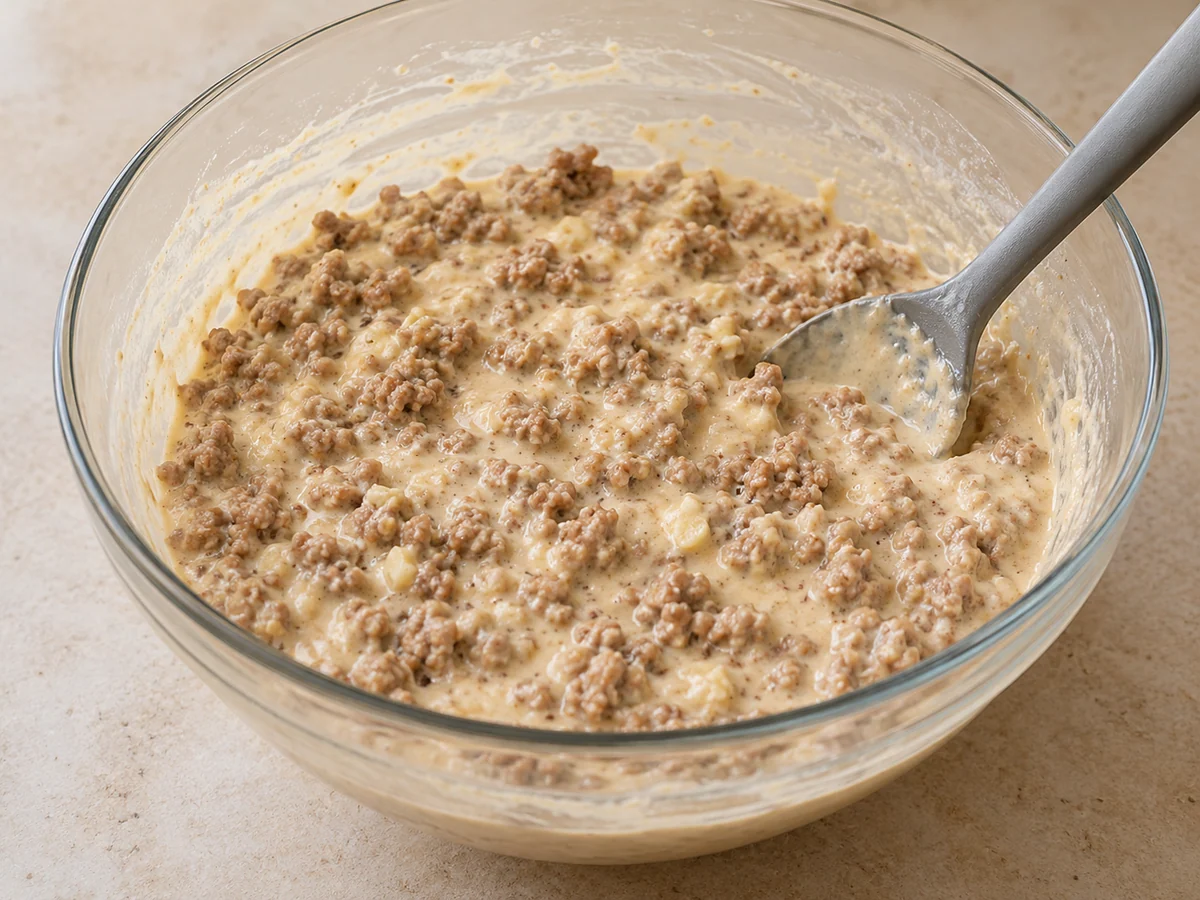
Chinese savory pork pancakesCook pork before adding to batter
Lightly oil the pan, fry garlic briefly and break up the pork. Cook to at least 71°C, transfer to a clean bowl, cool briefly and fold into the batter rather than adding raw meat to a short-cooking pancake.
Look forThe pork is fully cooked and evenly dispersed in the batter.
See the full recipe ↗ 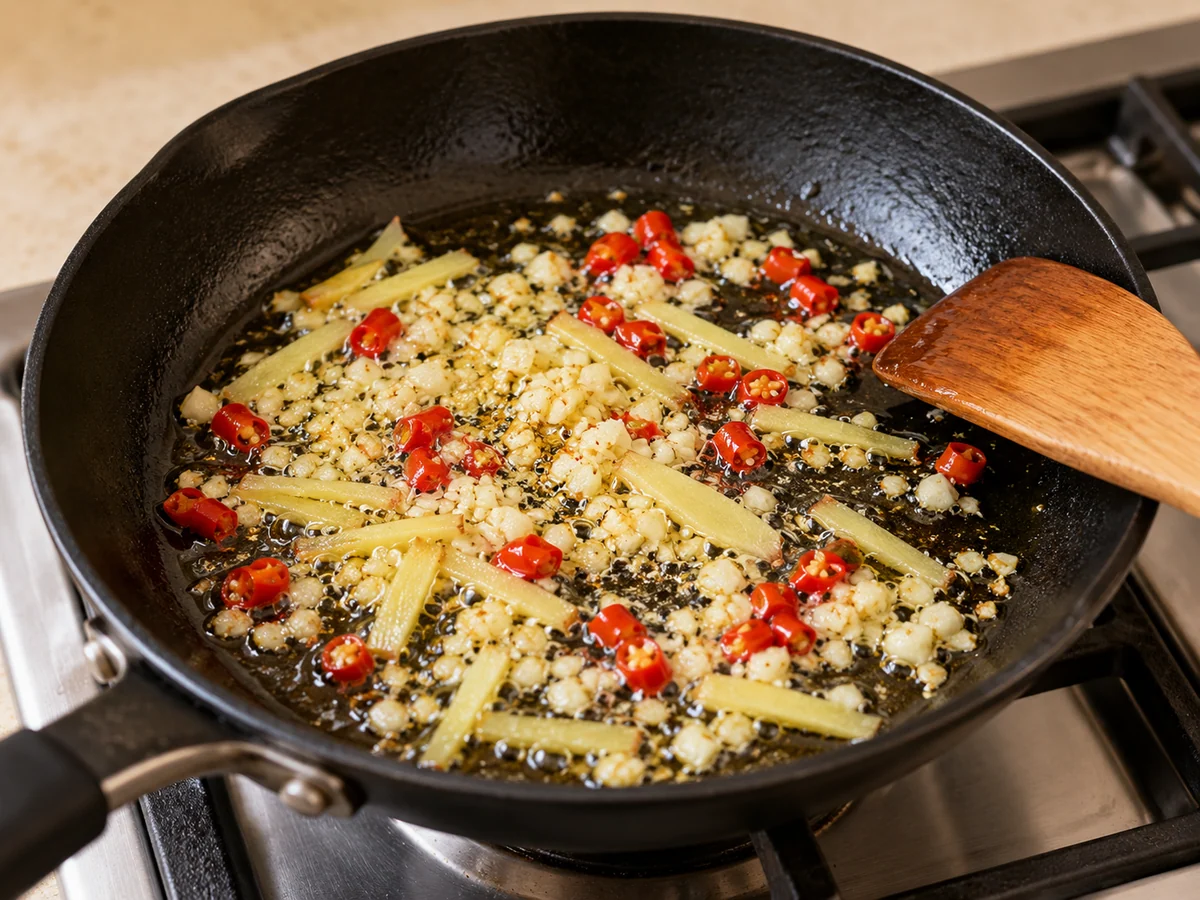
Celtuce saladGently fry the aromatics
Heat oil in another pan over medium-low heat, add ginger, garlic and chili and set a 30 sec check. Stir and remove from heat once fragrant with no blackened garlic; do not let the oil smoke.
Look forGarlic is pale golden and ginger and chili are distributed in the oil.
See the full recipe ↗ 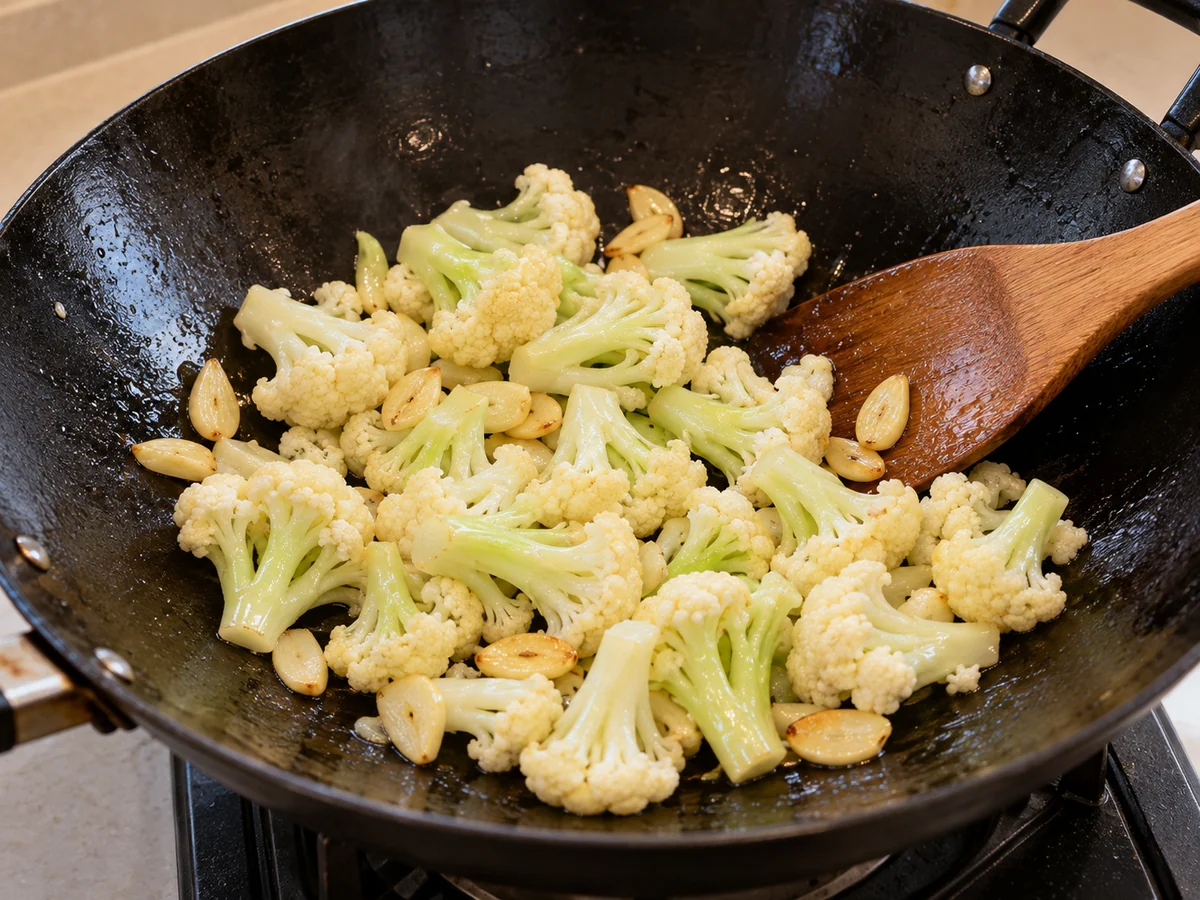
Cauliflower stir-frySauté garlic and cauliflower
Heat oil over medium and sauté garlic until fragrant without blackening. Add drained cauliflower, raise to medium-high and set a 2 min check, tossing to prevent scorched spots.
Look forCauliflower is evenly coated with oil and garlic is pale golden, not burnt.
See the full recipe ↗ 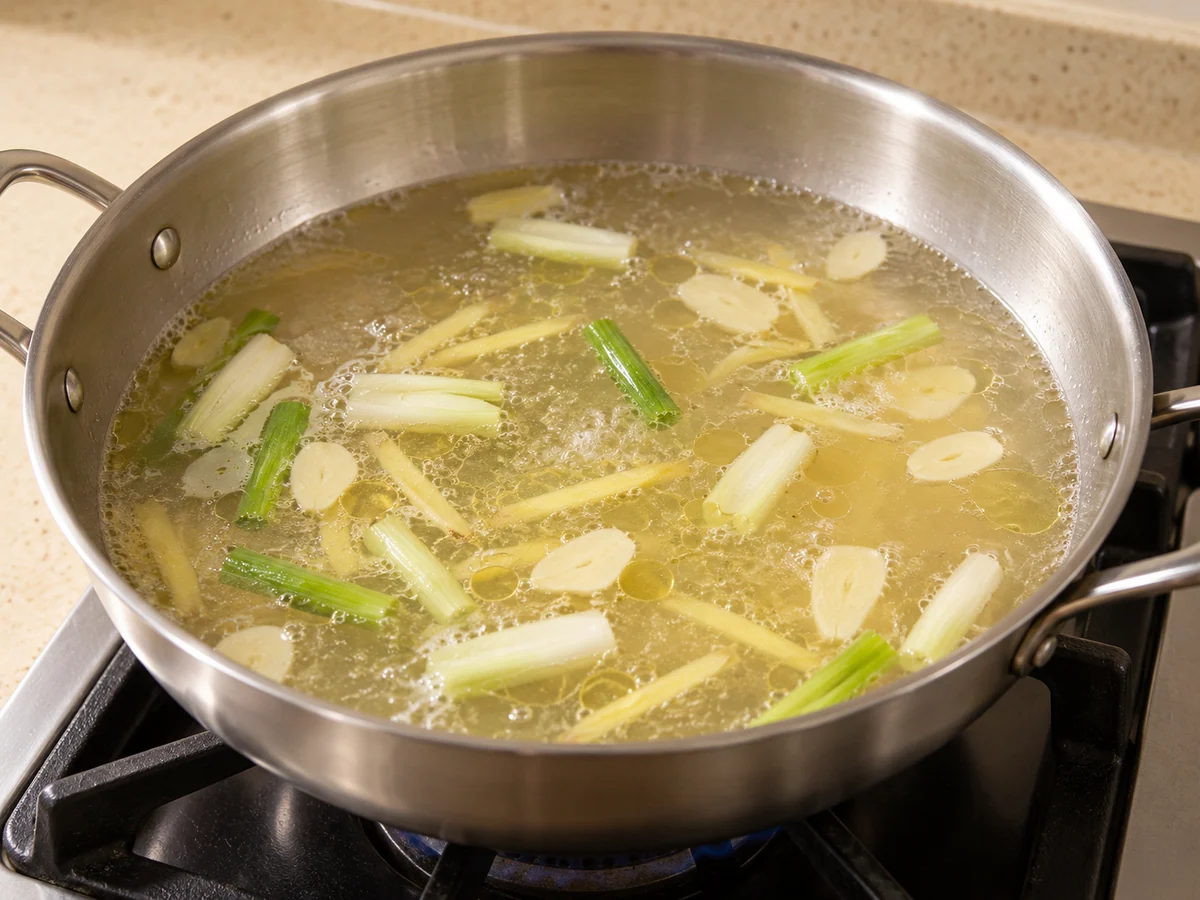
Baby napa cabbage in brothSauté the aromatics
Lightly oil the pan and gently sauté scallion, ginger and garlic until fragrant, then add the broth water carefully. There is no need to pour out and replace hot oil.
Look forThe aromatics are fragrant without blackening in a light broth base.
See the full recipe ↗ 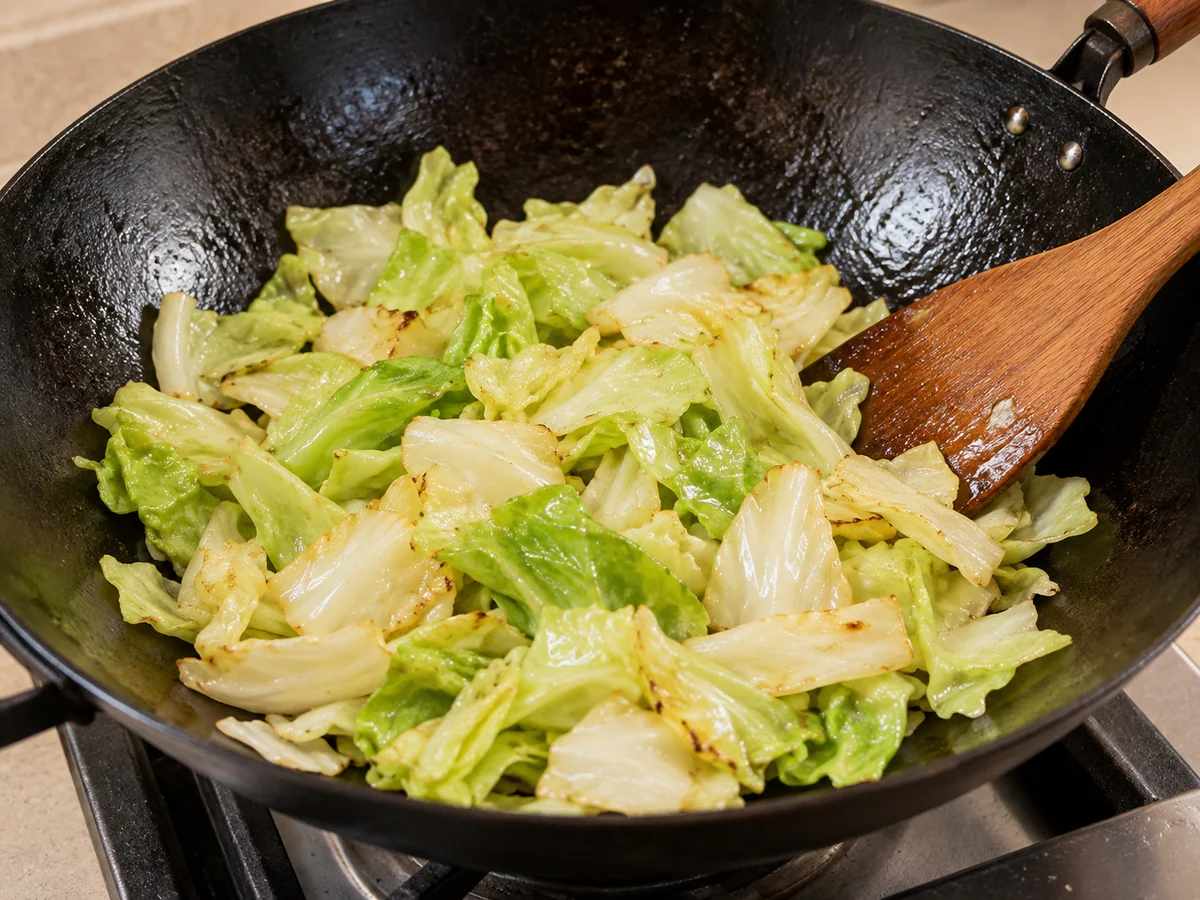
Hand-torn cabbage stir-fryStir-fry the cabbage first
Heat half the oil over medium-high and stir-fry cabbage in batches with the cooking salt, setting a 3 min check. Transfer to a clean bowl when just wilted with a few browned edges.
Look forCabbage leaves are wilted while the ribs retain some firmness.
See the full recipe ↗ 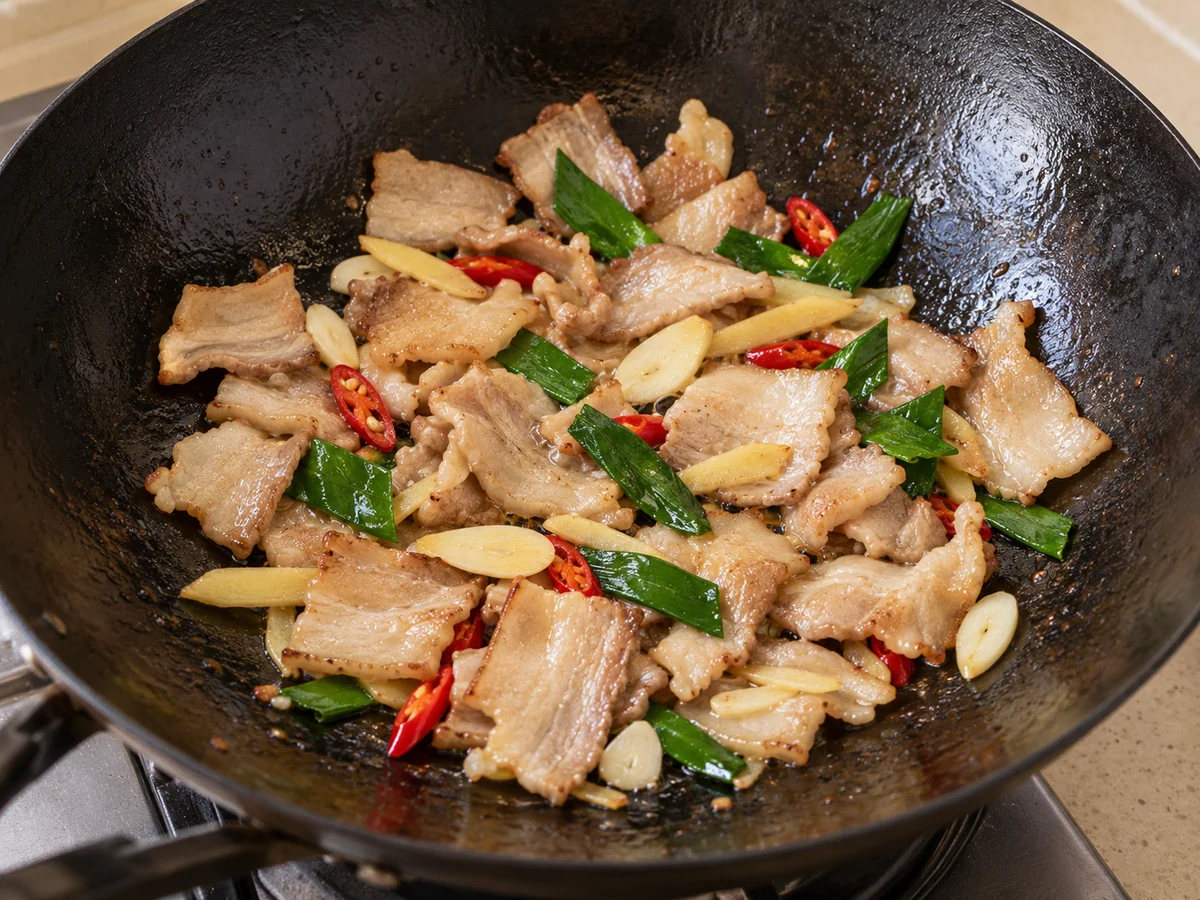
Hand-torn cabbage stir-fryCook pork and aromatics
Add the remaining oil and pork, separating slices until the surfaces change color. Add ginger, garlic, chili and green garlic and cook until fragrant. Insert a thermometer sideways into the thickest slice; continue cooking until its center reaches 63°C.
Look forPork slices are separated with lightly curled edges and unburnt aromatics.
See the full recipe ↗ 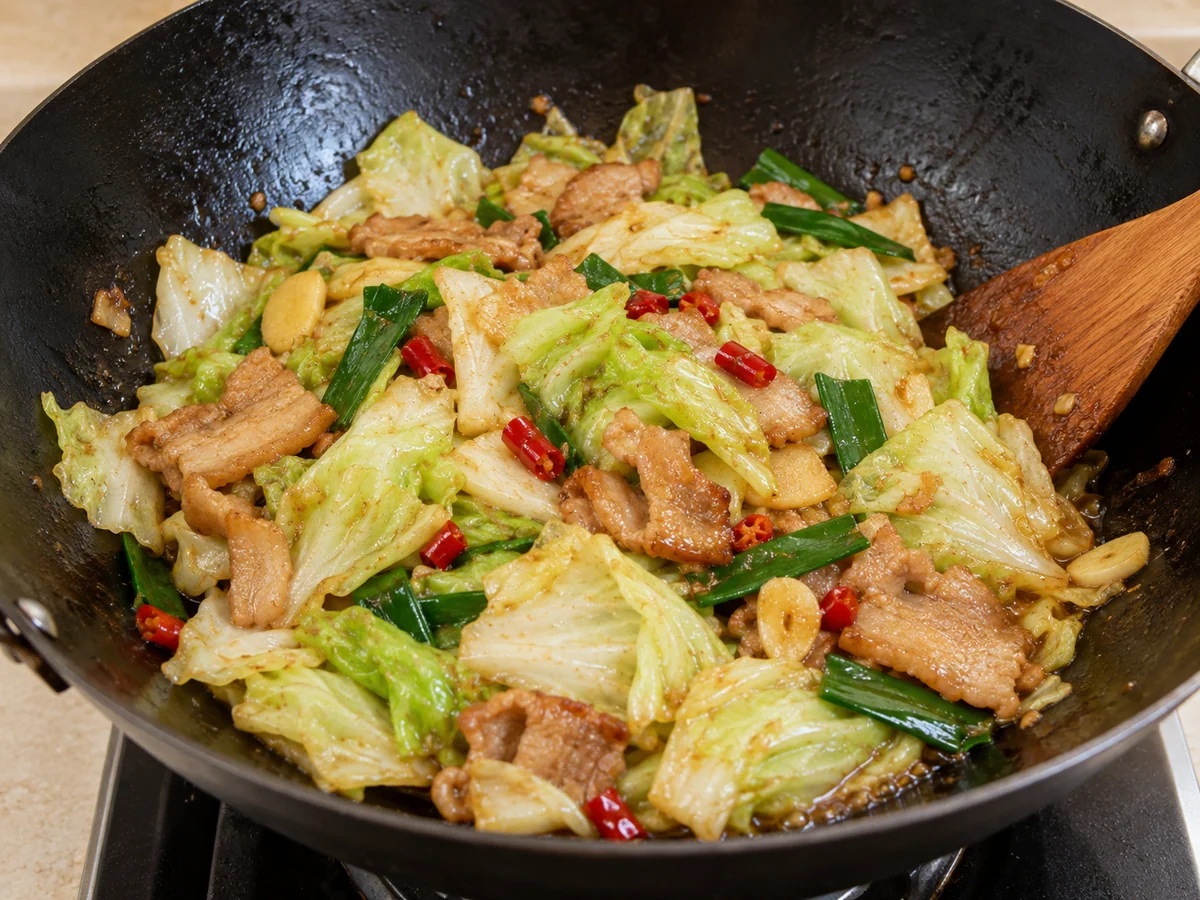
Hand-torn cabbage stir-fryCombine and season
Return the cabbage and add soy sauce, vinegar, cooking wine and bouillon. Toss and set a 2 min check. Finish when evenly hot without making the leaves release excessive liquid.
Look forCabbage and pork are evenly mixed with little liquid at the base.
See the full recipe ↗ 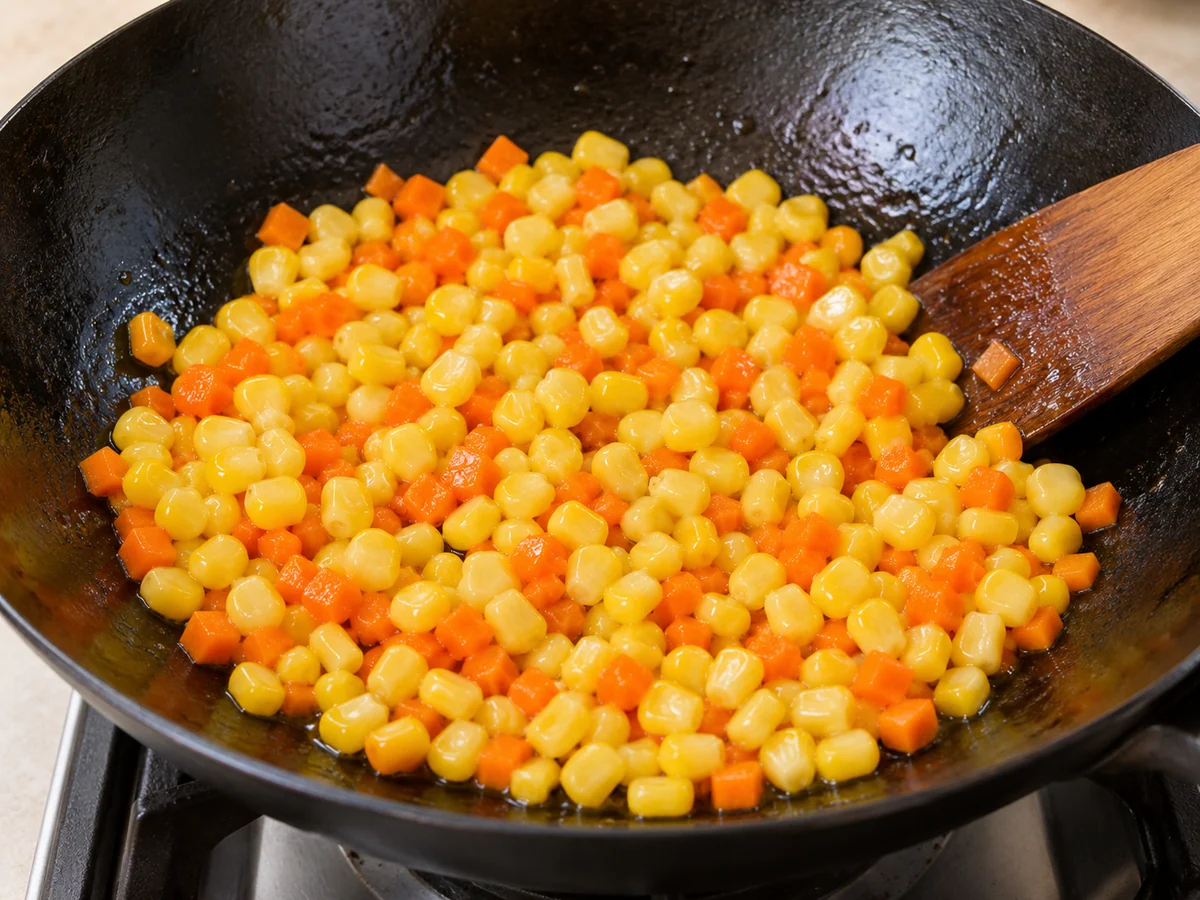
Pine nut and corn stir-fryStir-fry and season
Heat oil over medium, add drained vegetables and toss with sugar and salt until evenly glossy, without a pool of water.
Look forThe corn kernels remain separate and evenly glossy.
See the full recipe ↗ 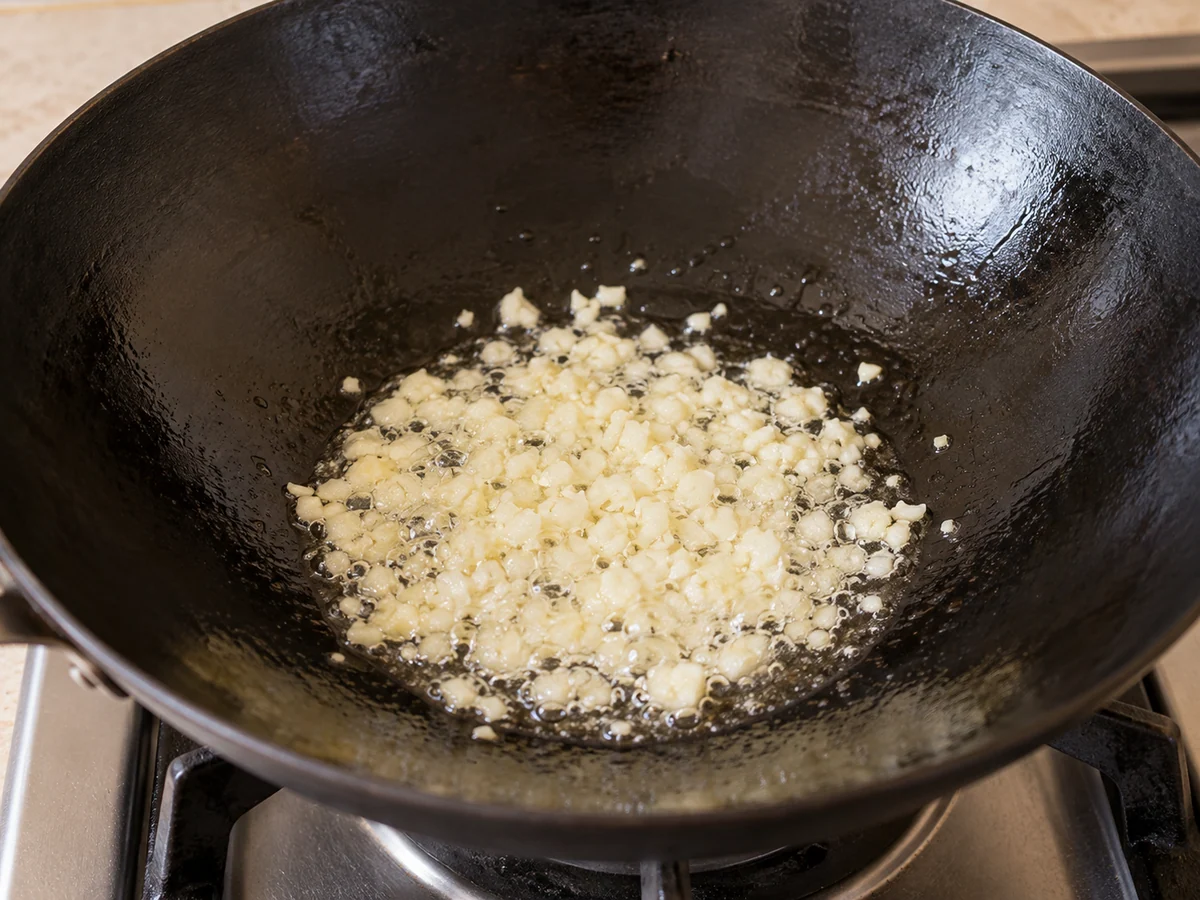
Garlic water spinachGently sauté the garlic
Add oil to the pan and warm gently over low heat. Add garlic and set a 15 sec check. Proceed when fragrant but still pale; the oil must not smoke.
Look forThe garlic gently bubbles in the oil and remains pale, not burnt.
See the full recipe ↗ 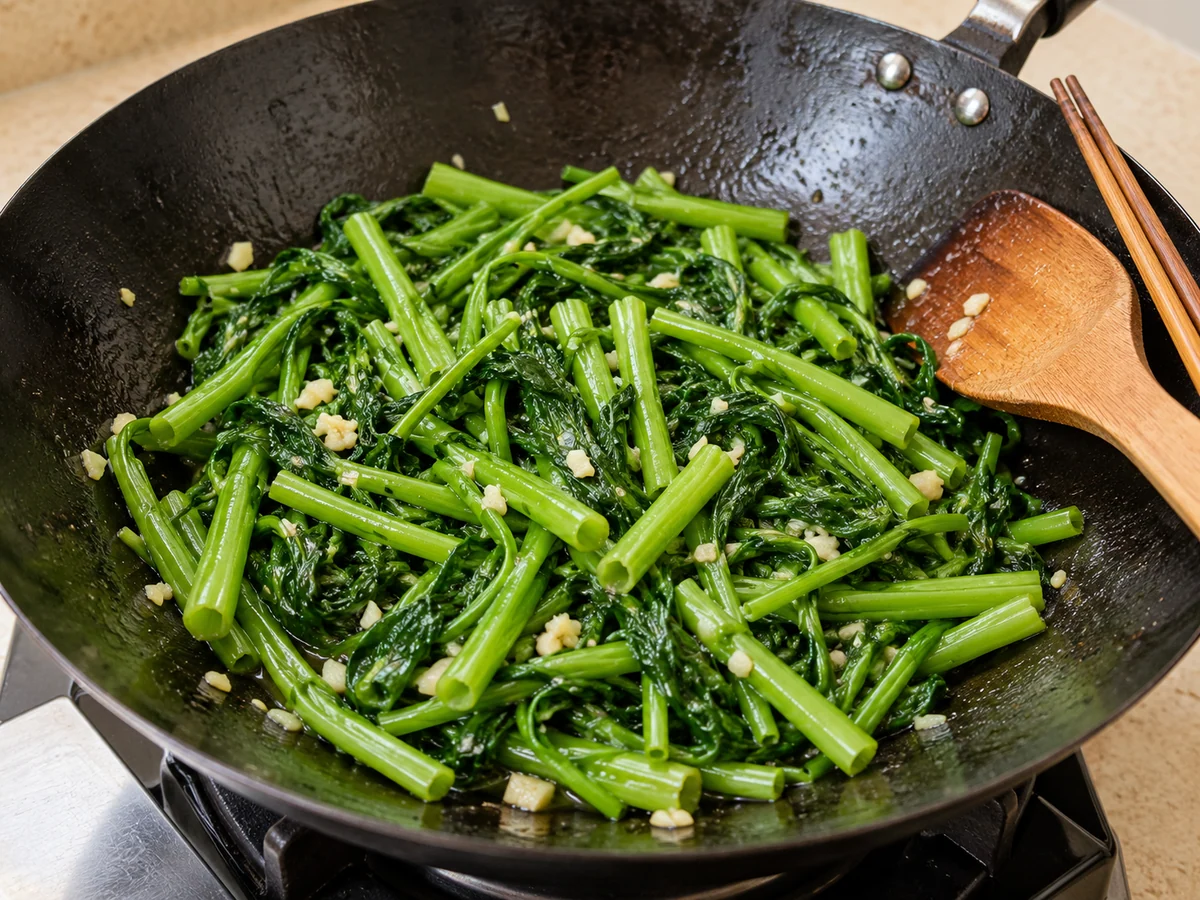
Garlic water spinachStir-fry stems, then leaves
Toss thicker stems first, then add leaves and raise to medium-high. Use a spatula and long chopsticks to turn the greens evenly. Work in batches if crowded, until leaves wilt and tender stems bite through easily.
Look forThe leaves are wilted and green while tender stems retain their shape.
See the full recipe ↗ 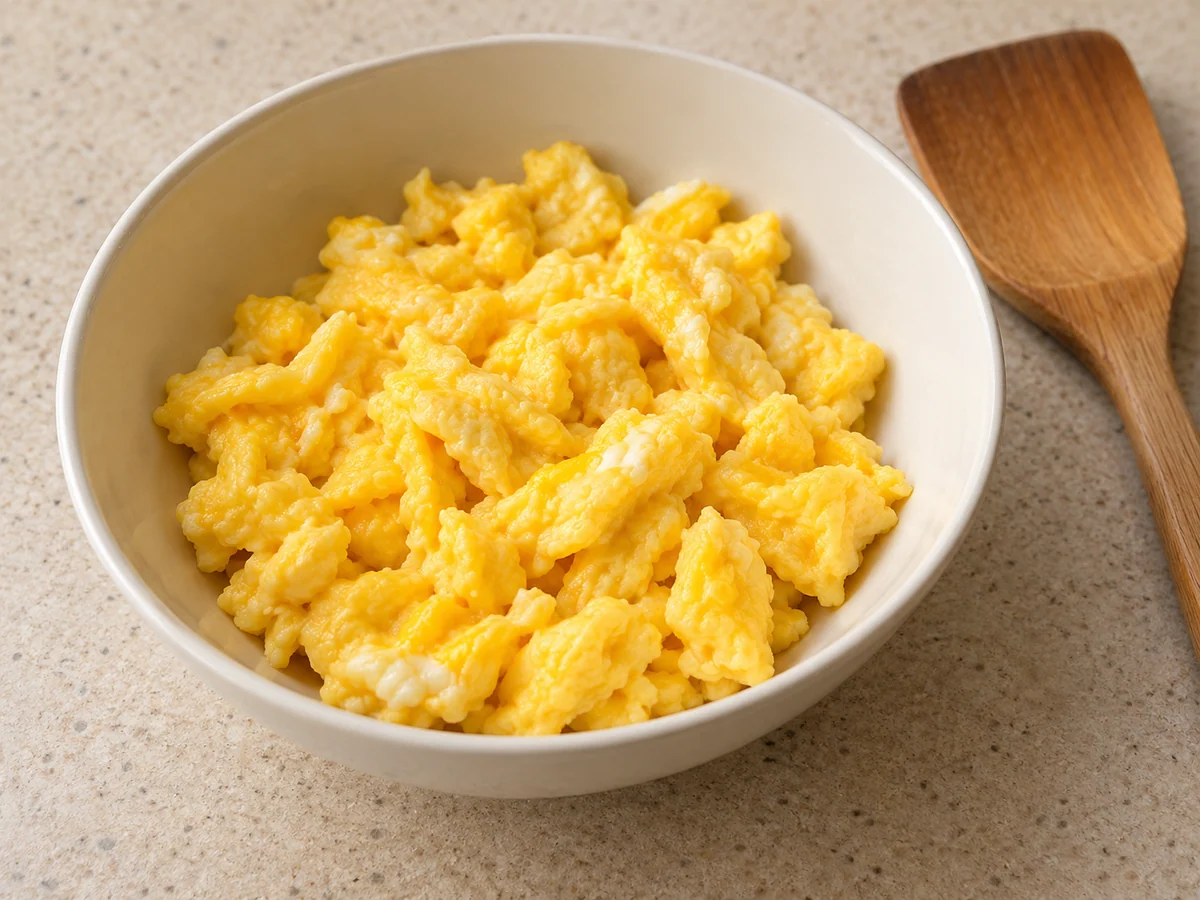
Zucchini and eggsScramble the eggs and set aside
Heat half the oil over medium, add the eggs and push into curds with a spatula. Cook until fully set with no liquid egg and transfer to a clean bowl.
Look forThe egg forms soft curds without liquid raw egg.
See the full recipe ↗ 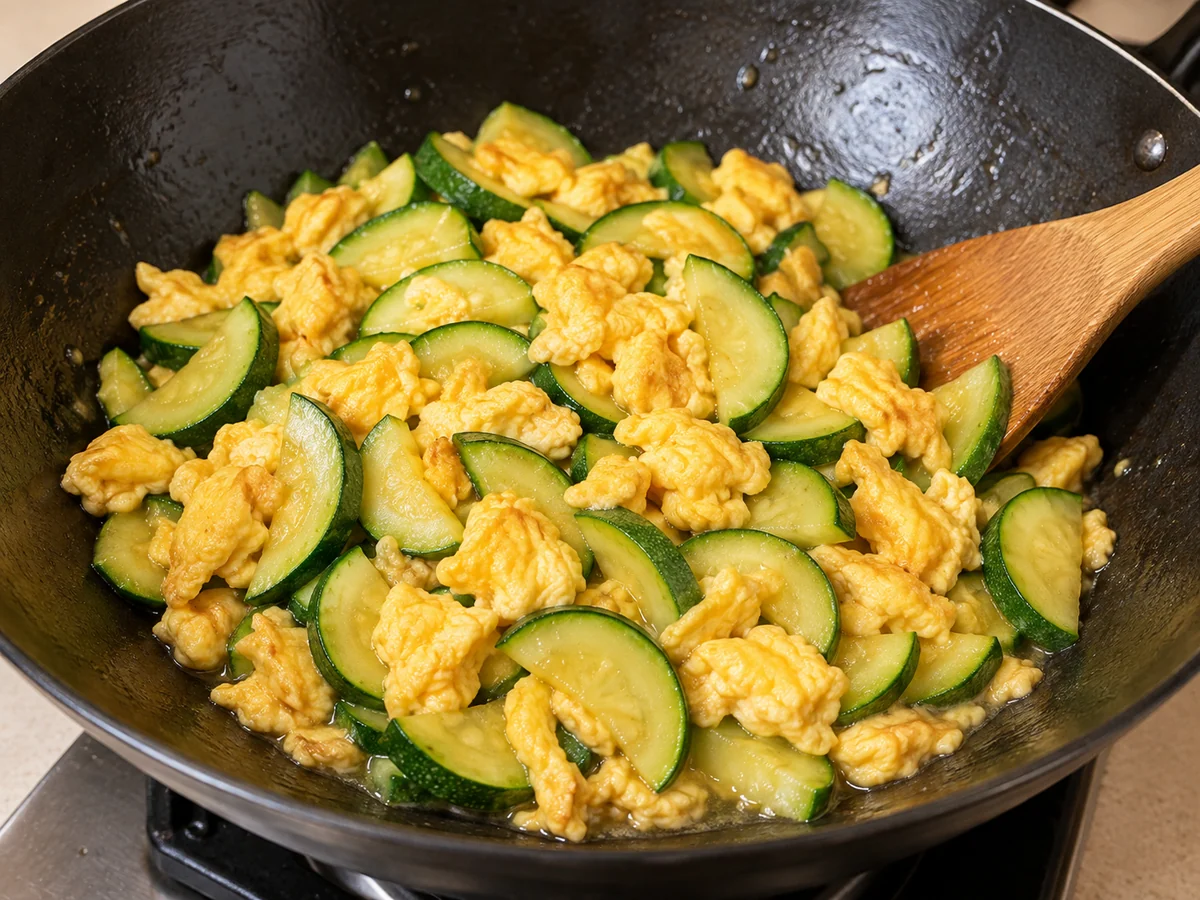
Zucchini and eggsCombine and heat through
Return the eggs and gently toss over medium until evenly hot. The center of the egg-and-vegetable mixture should reach 71°C; a very brief finishing toss is not a doneness test.
Look forGolden egg curds and softened zucchini are evenly combined and retain their shapes.
See the full recipe ↗ 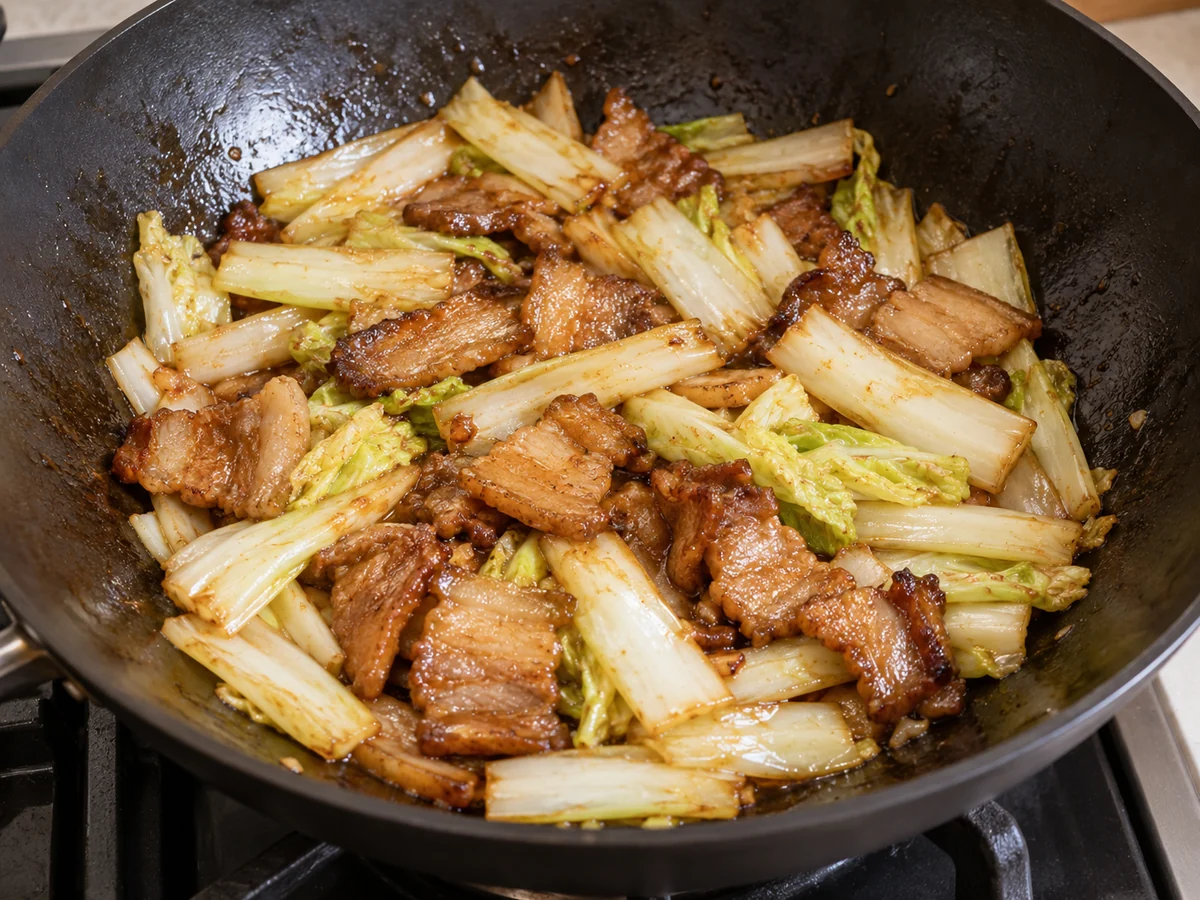
Pork, cabbage and vermicelli stewBrown pork and add stems
Heat oil over medium and separate the pork slices until surfaces change color, then coat with dark soy. Add cabbage stems, light soy and a little salt. If sticking, add a little braising water; reserve the remaining salt for tasting after cooking.
Look forPork slices are evenly colored and cabbage stems coated in sauce.
See the full recipe ↗ 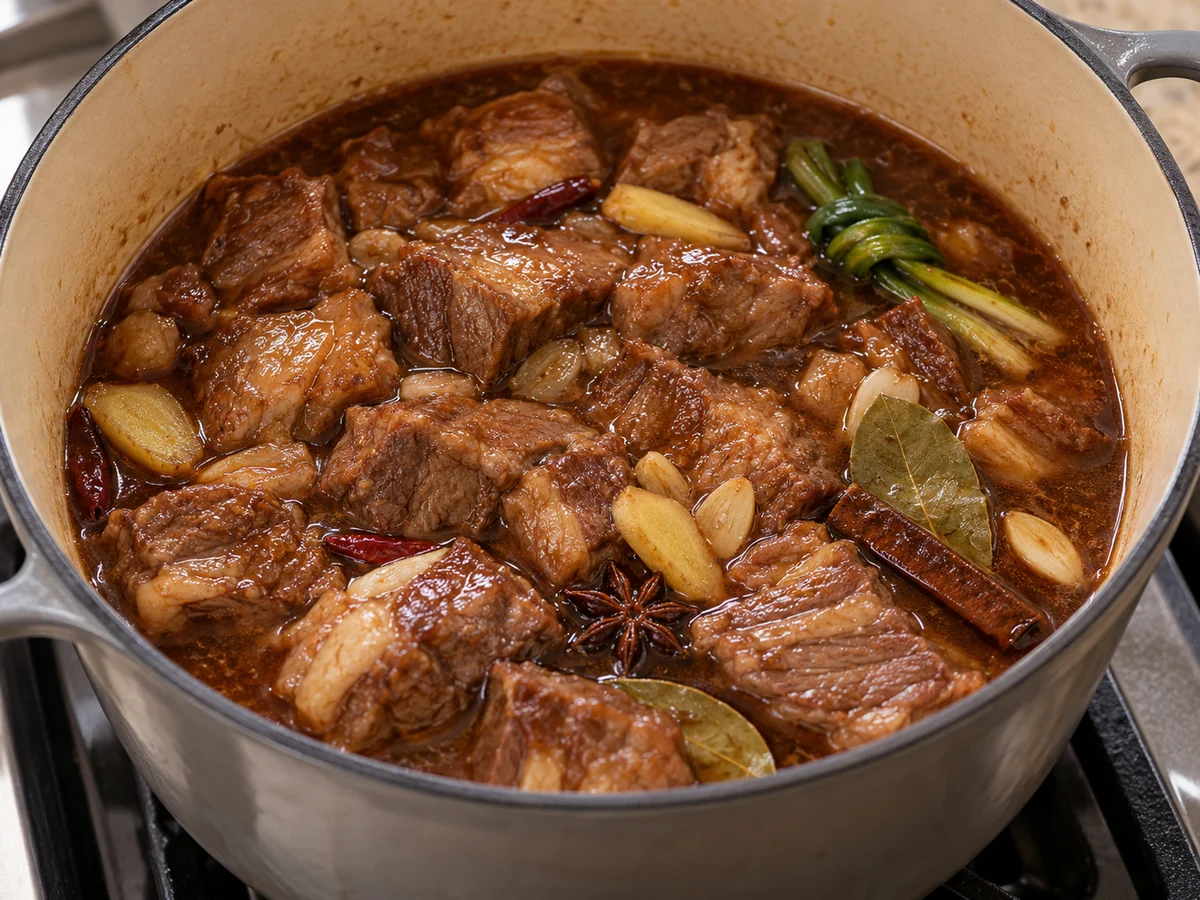
Cantonese beef brisket and radishSauté beef and sauce
Lightly oil a deep pot, sauté remaining ginger and garlic over medium, then add beef and toss until the surface is drier. Coat with the mixed sauce, add optional dark soy for color and carefully add hot water to just cover.
Look forBeef is evenly coated in sauce and just covered by braising liquid.
See the full recipe ↗ 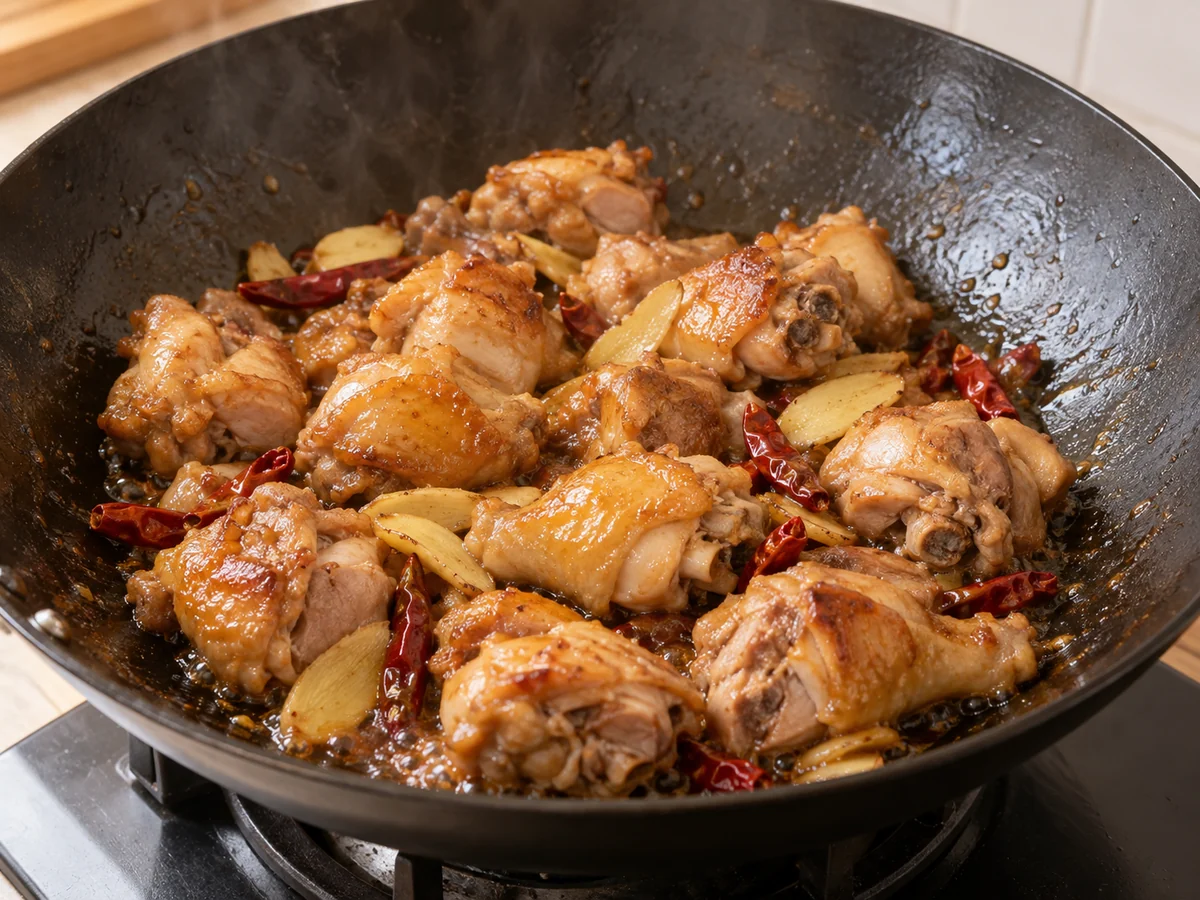
Braised chicken with mushroomsCoat and sauté the chicken
Carefully add chicken and turn to coat, raising to medium until surfaces change color. Add cooking wine, ginger, dried chilies and soy and stir without allowing the sugar coating to blacken on the base.
Look forChicken has a thin golden-brown coating with aromatics dispersed through it.
See the full recipe ↗ 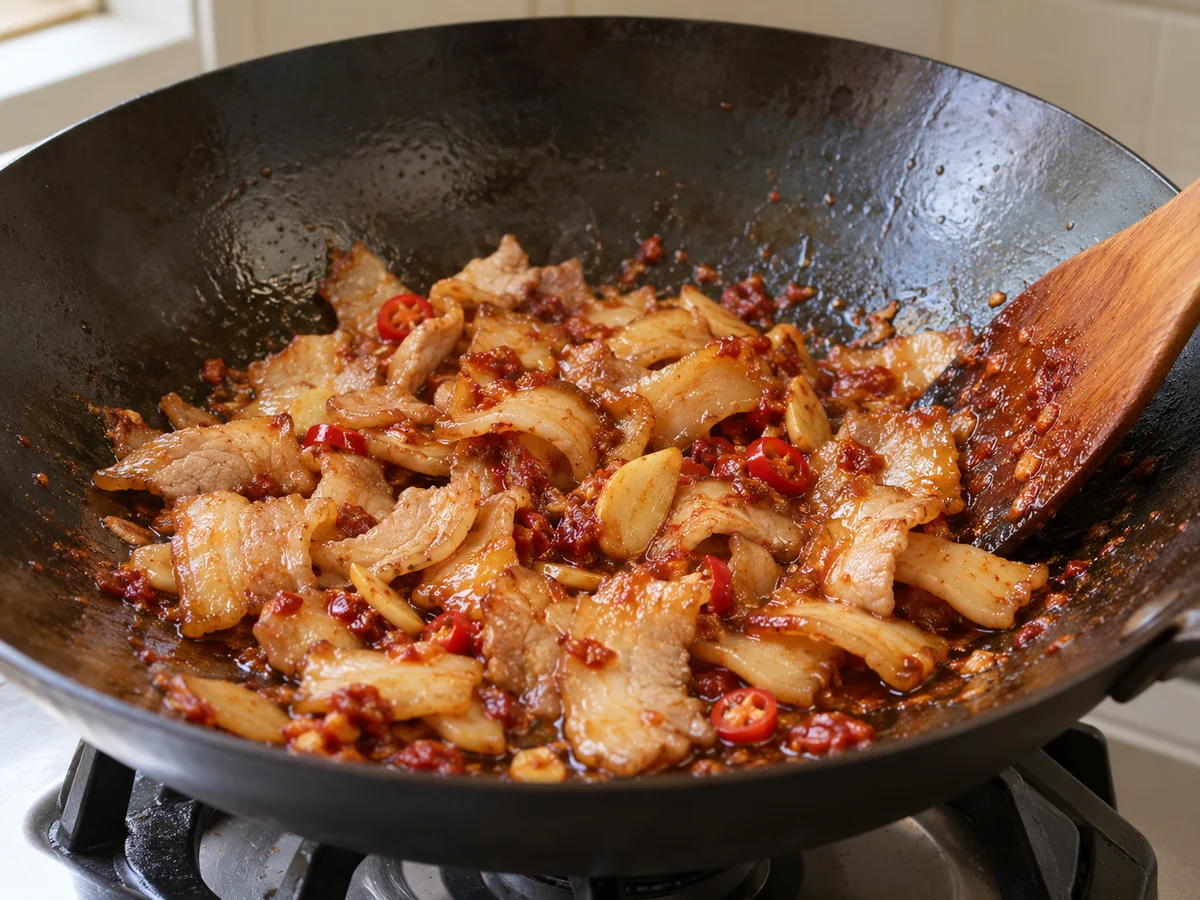
Twice-cooked porkRender pork and add sauce
Lightly oil the pan and render pork over medium heat until edges curl and fat turns translucent. Add mixed sauce, MSG, optional peppers, remaining ginger and bean paste; stir briskly without scorching.
Look forPork curls slightly and is coated without burnt sauce.
See the full recipe ↗ 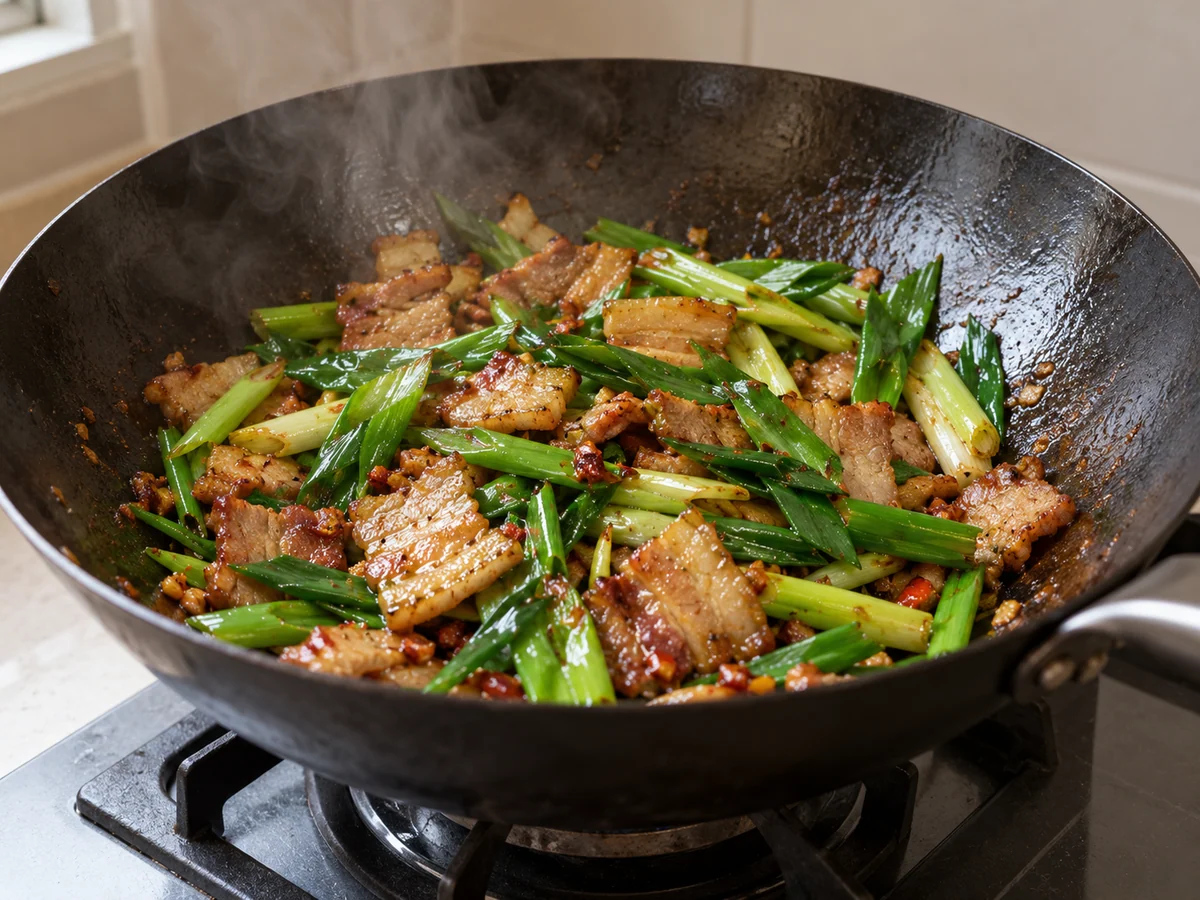
Twice-cooked porkAdd green garlic
Add green garlic and start a 1 min check, stirring until just softened and everything is hot through, then turn off the heat.
Look forGreen garlic is just soft and pork hot through.
See the full recipe ↗ 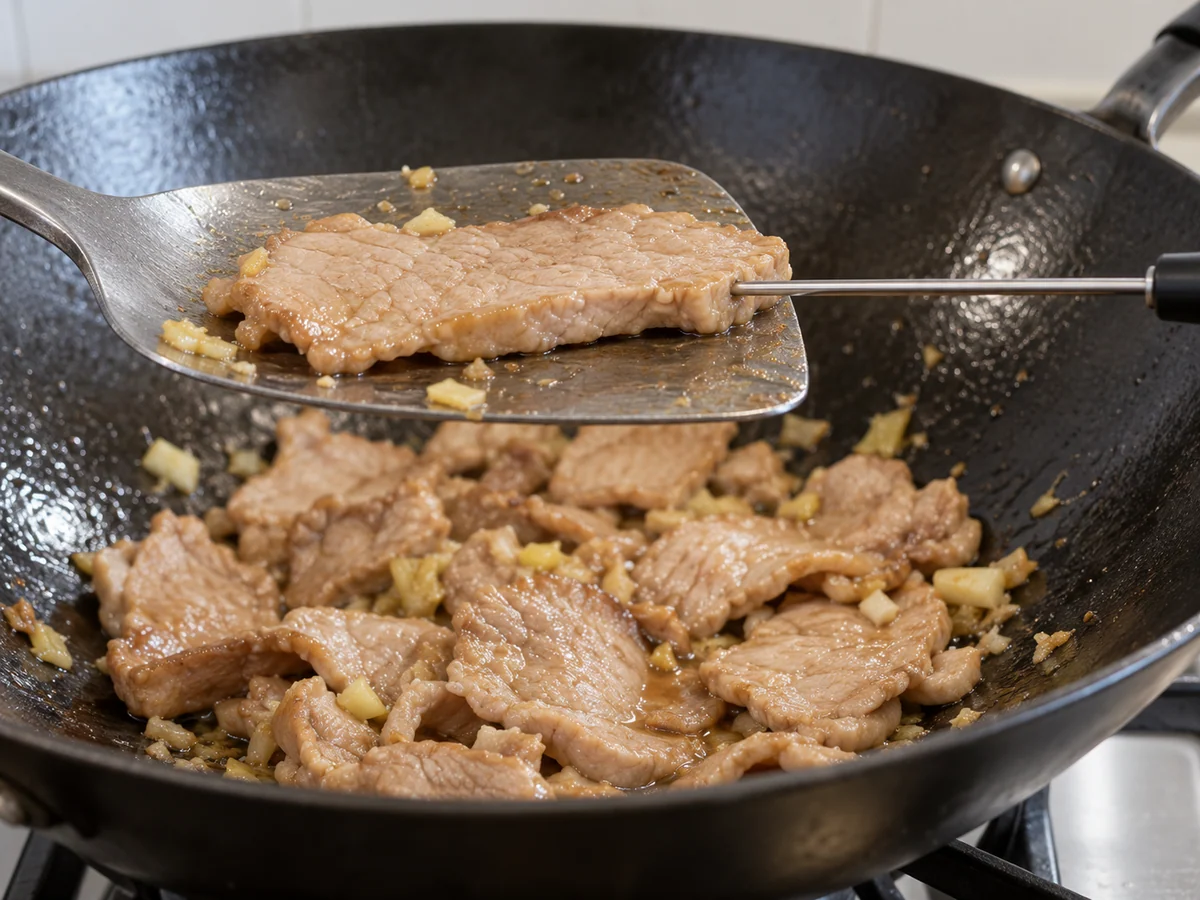
Pepper and pork stir-fryStir-fry and check pork
Warm oil over medium heat, cook ginger and garlic until fragrant, then separate pork slices in the pan with a 2 min first check. Continue and use a thin-food thermometer to check at least 63°C in the thickest center; pale color alone is not enough.
Look forPork slices are separated and hot through with a verified center temperature.
See the full recipe ↗ 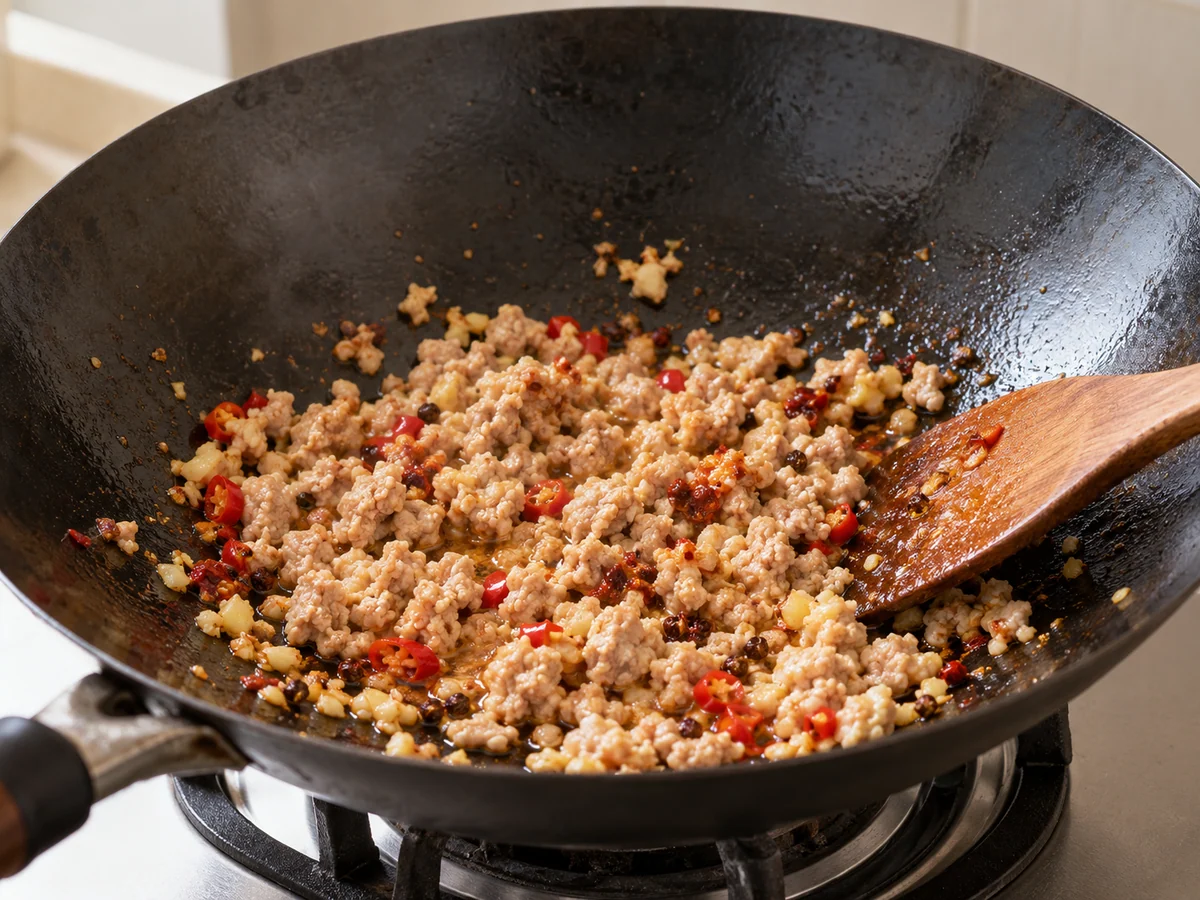
Mapo tofuCook aromatics and pork
Warm oil over low heat and cook ginger, garlic, optional chili, peppercorns, egg white and chili sauce until fragrant. Add pork over medium heat, separate it and start a 1 min first check. Pale color is only an intermediate cue; it still needs cooking through with the tofu.
Look forPork is separated and aromatics unburnt.
See the full recipe ↗ 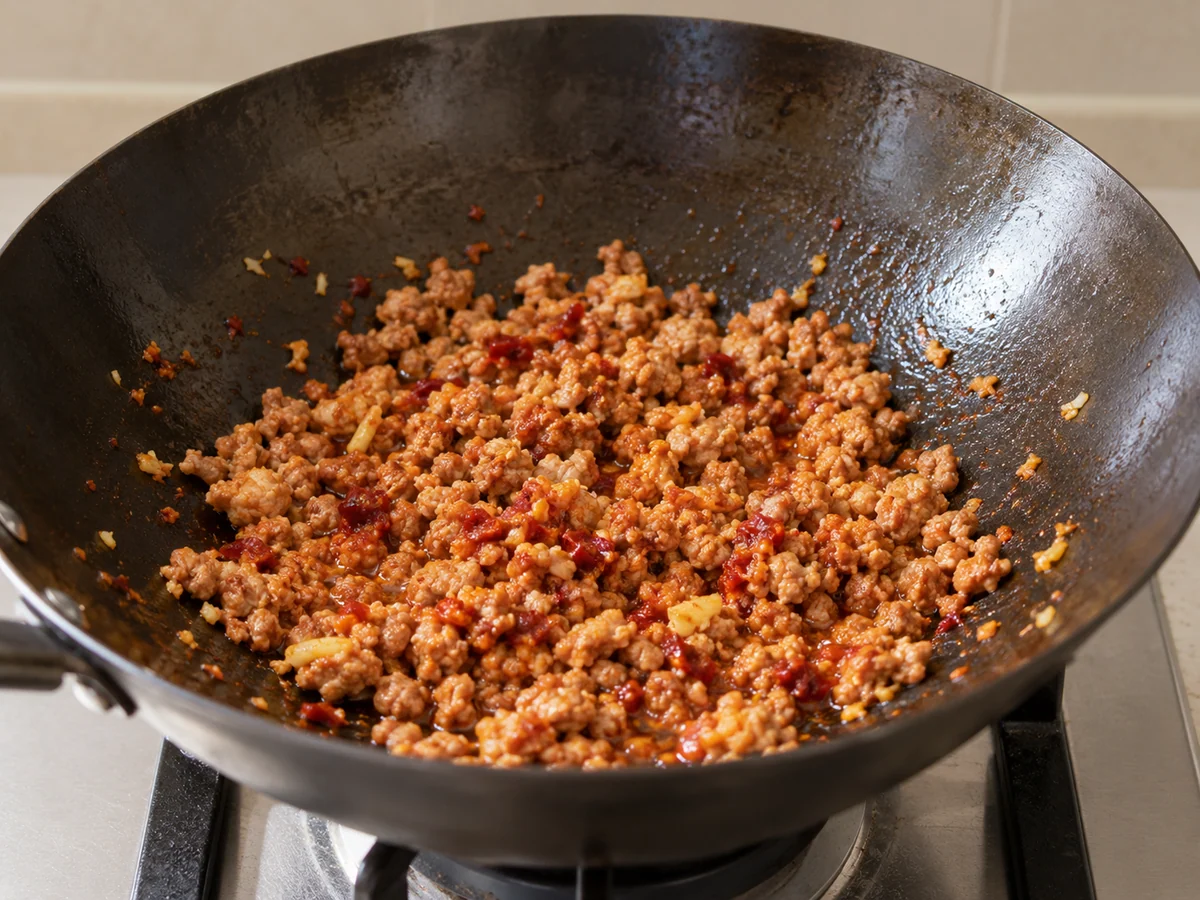
Minced pork and glass noodlesCook minced pork
Warm oil over medium heat, cook ginger and garlic until fragrant, and break up the pork in the pan. Once its color changes evenly, add bean paste and cook until fragrant; final doneness still needs checking.
Look forPork is separated and bean paste fragrant without burning.
See the full recipe ↗ 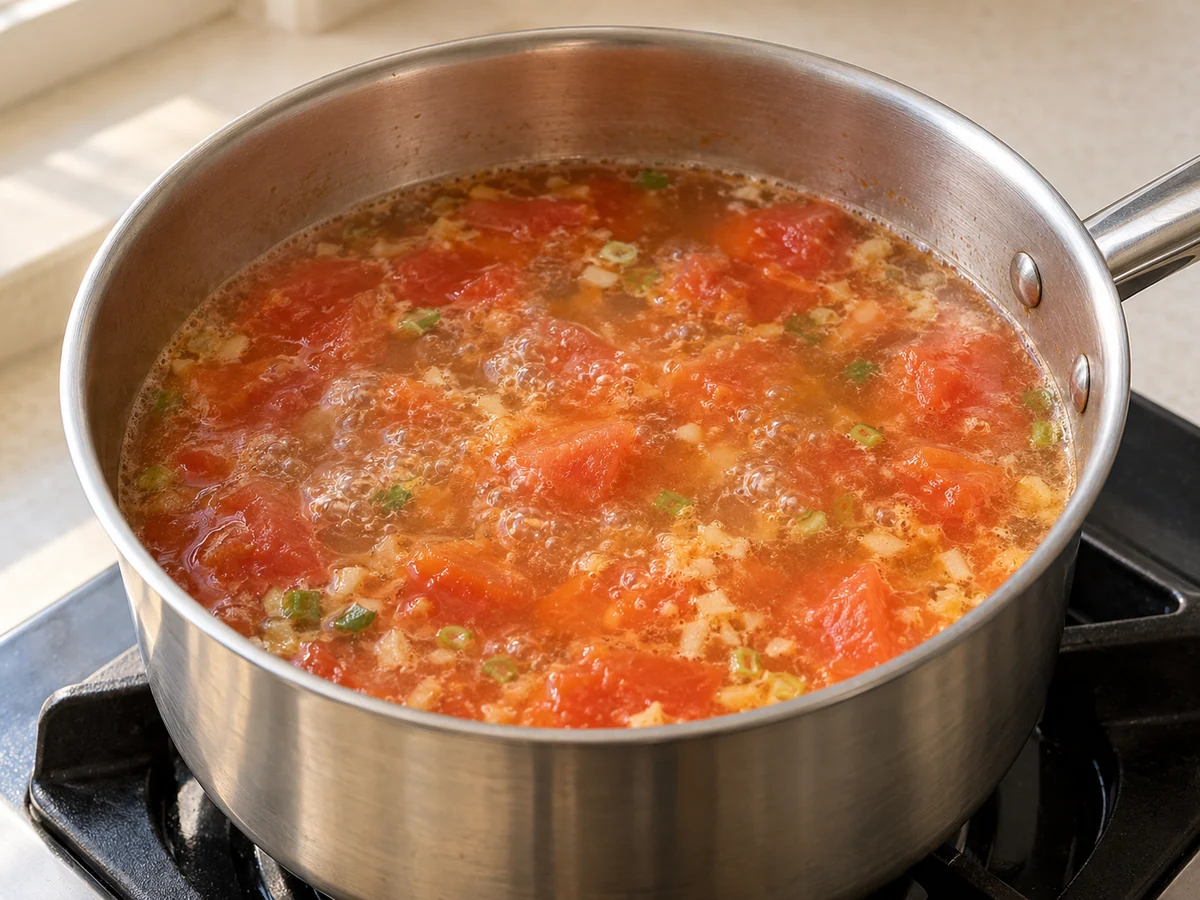
Tomato and egg soupSoften tomato and add water
Stir-fry tomato with a 1 min check. Once soft and juicy, carefully add water around the edge until a little above the tomato with boiling headroom, then bring to a boil.
Look forTomato releases juice and soup reaches a boil.
See the full recipe ↗ 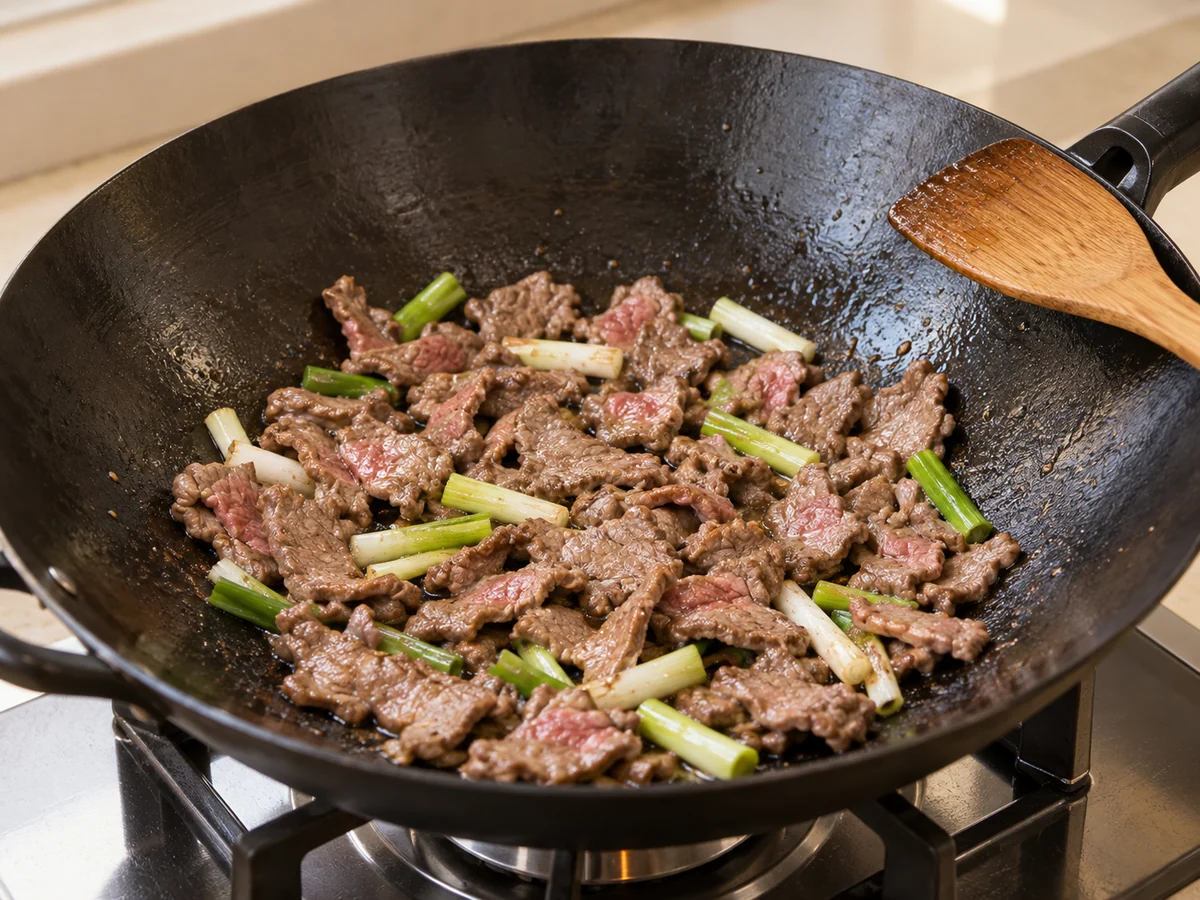
Cumin beefSeparate beef in the pan
Lightly oil the pan, fry scallion over medium heat and add beef, separating slices. Work in batches if crowded to avoid stewing. Surface color change is only a cooking-progress cue.
Look forThe beef is separated and colored outside but still needs a center check.
See the full recipe ↗ 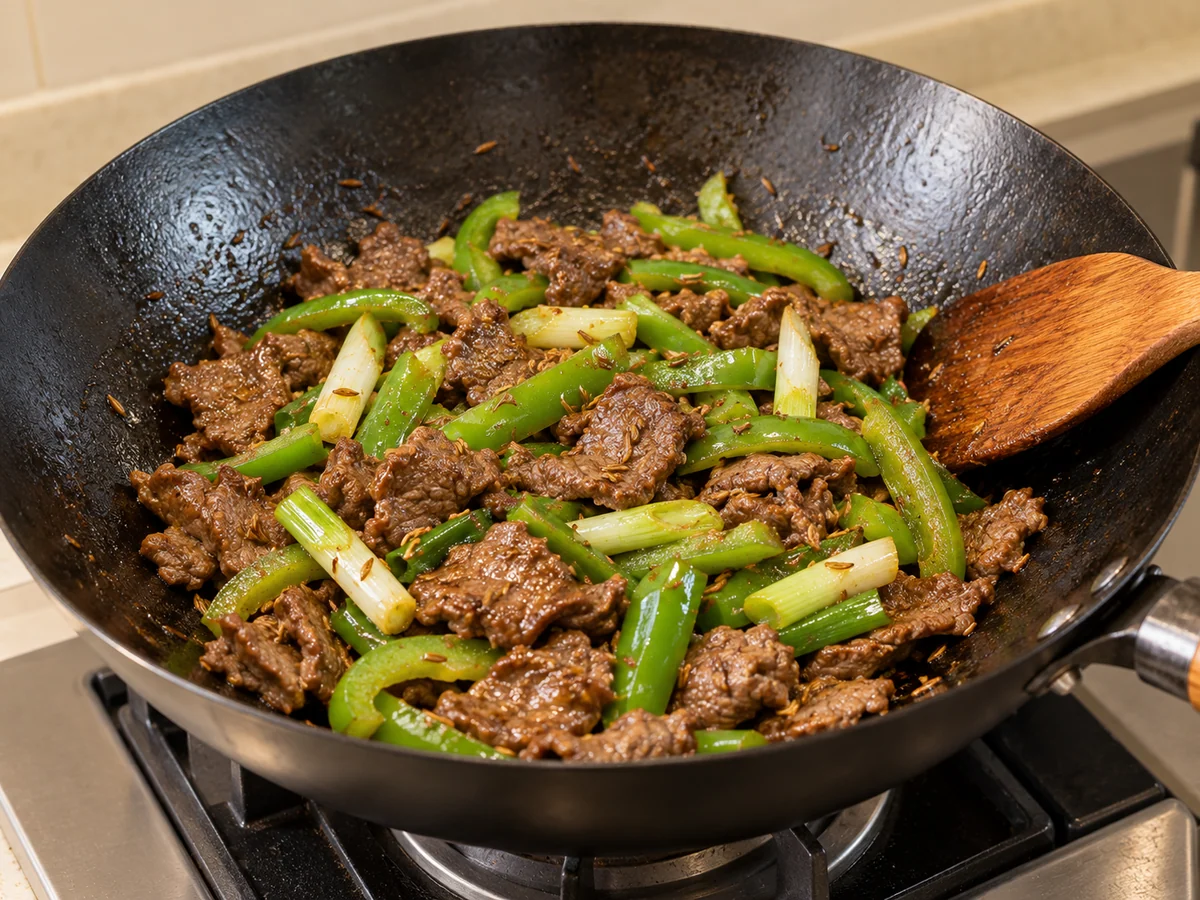
Cumin beefAdd cumin and peppers and finish
Add cumin and optional chili, then green pepper and salt. Set a 1 min first check and keep tossing until peppers soften slightly and the thickest beef reaches 63°C. Use a thin-food thermometer and continue if needed.
Look forPeppers soften slightly, beef reaches 63°C and cumin coats the meat evenly.
See the full recipe ↗ 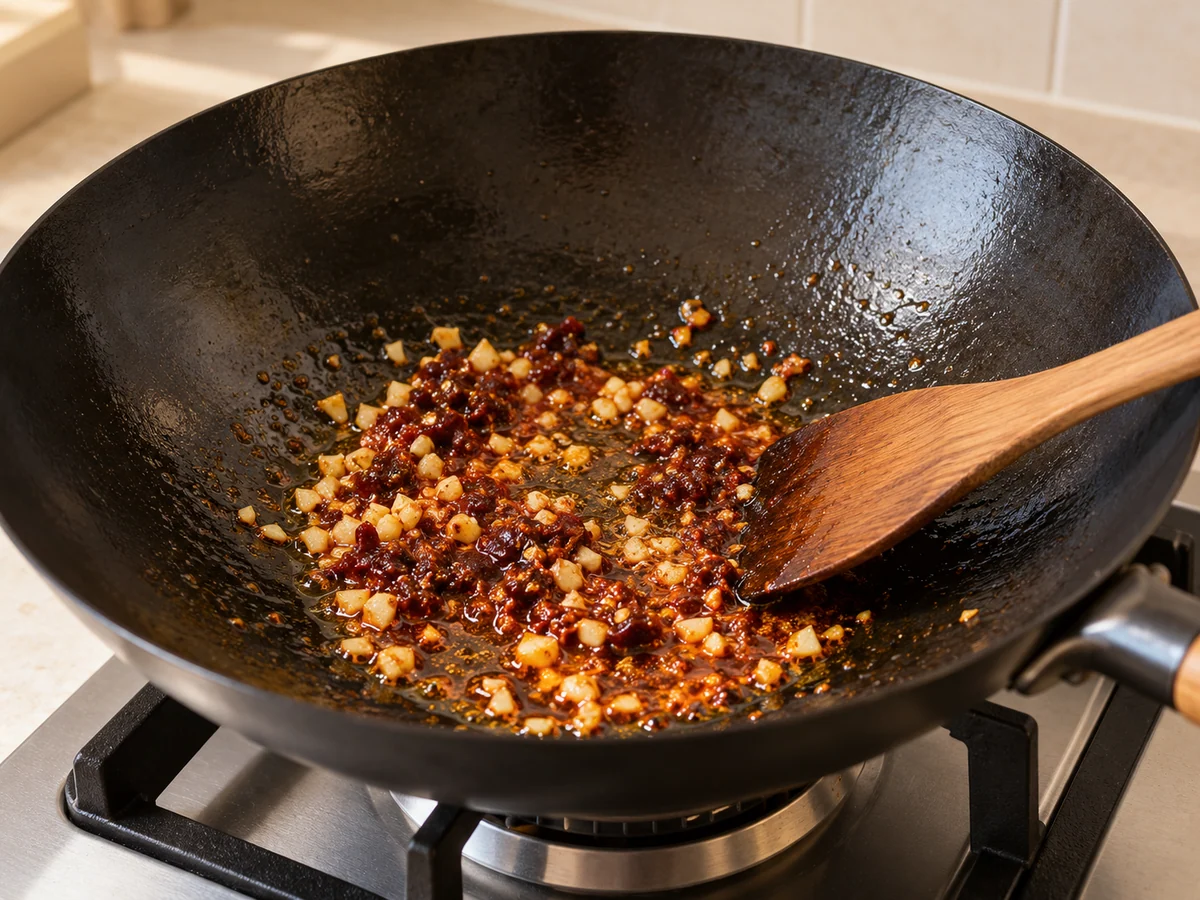
Stir-fried starch jellyFry garlic and bean paste gently
Warm oil over low heat, fry garlic briefly and add bean paste until fragrant. Keep both from blackening; remove the pan from heat if it becomes too hot.
Look forThe bean-paste oil is fragrant and garlic unburnt.
See the full recipe ↗ FROM INSPIRATION TO DINNERYour next step is in the kitchen.
Bring a little guidance along. Open EagerCook for the cooking experience.