THE COOKPATH KITCHENBoiling
Boiling: Follow the liquid and doneness cues in these boiling steps. Examples include Tea eggs, Boiled corn, Millet congee. Open a full recipe for ingredients and the complete method.
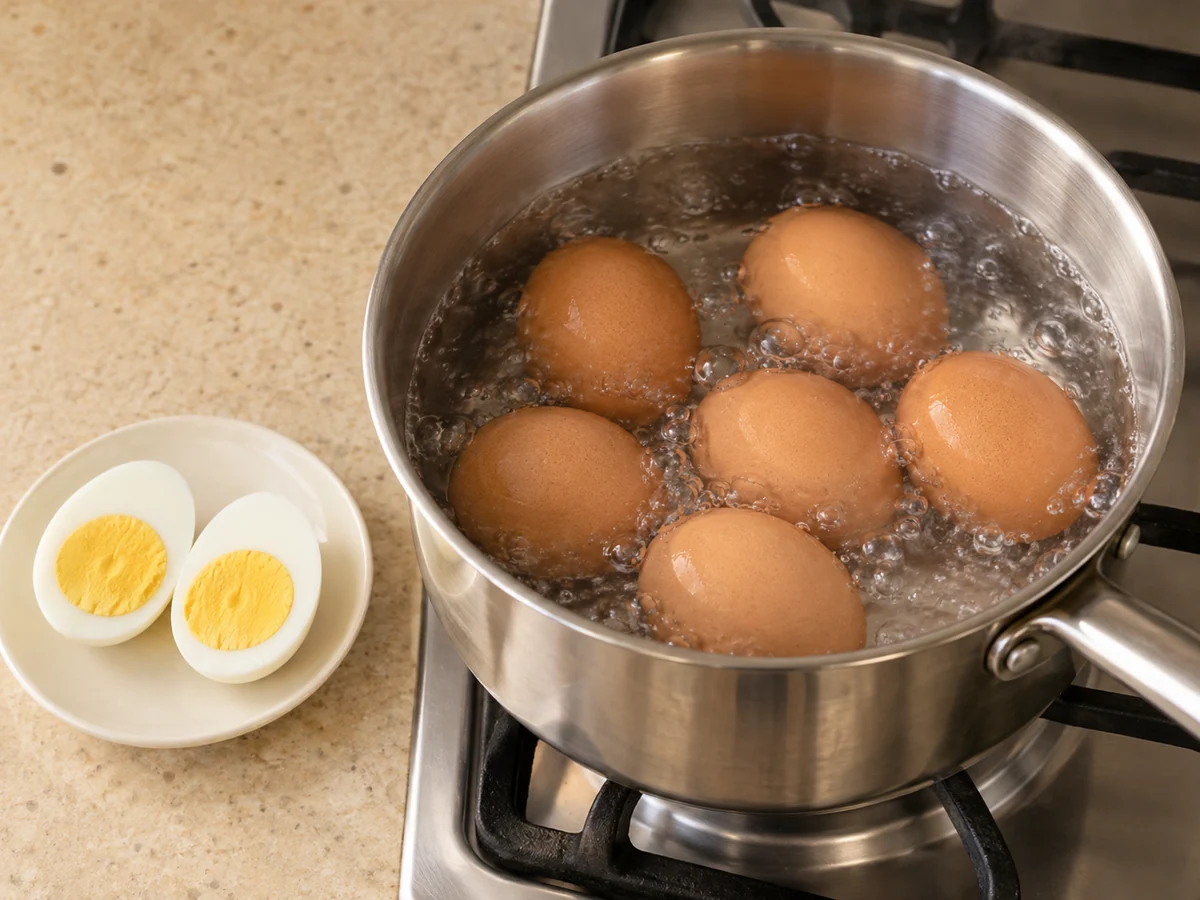
Tea eggsBoil the eggs
Place the eggs in a saucepan and cover with cold water. Bring to a boil, then maintain a steady gentle boil. At the check point, test one egg for firm white and yolk; continue cooking if needed. Start a 8 min check-in when the water boils and you adjust it to a steady boil.
Look forBoth white and yolk are firm; elapsed time alone does not establish doneness.
See the full recipe ↗ 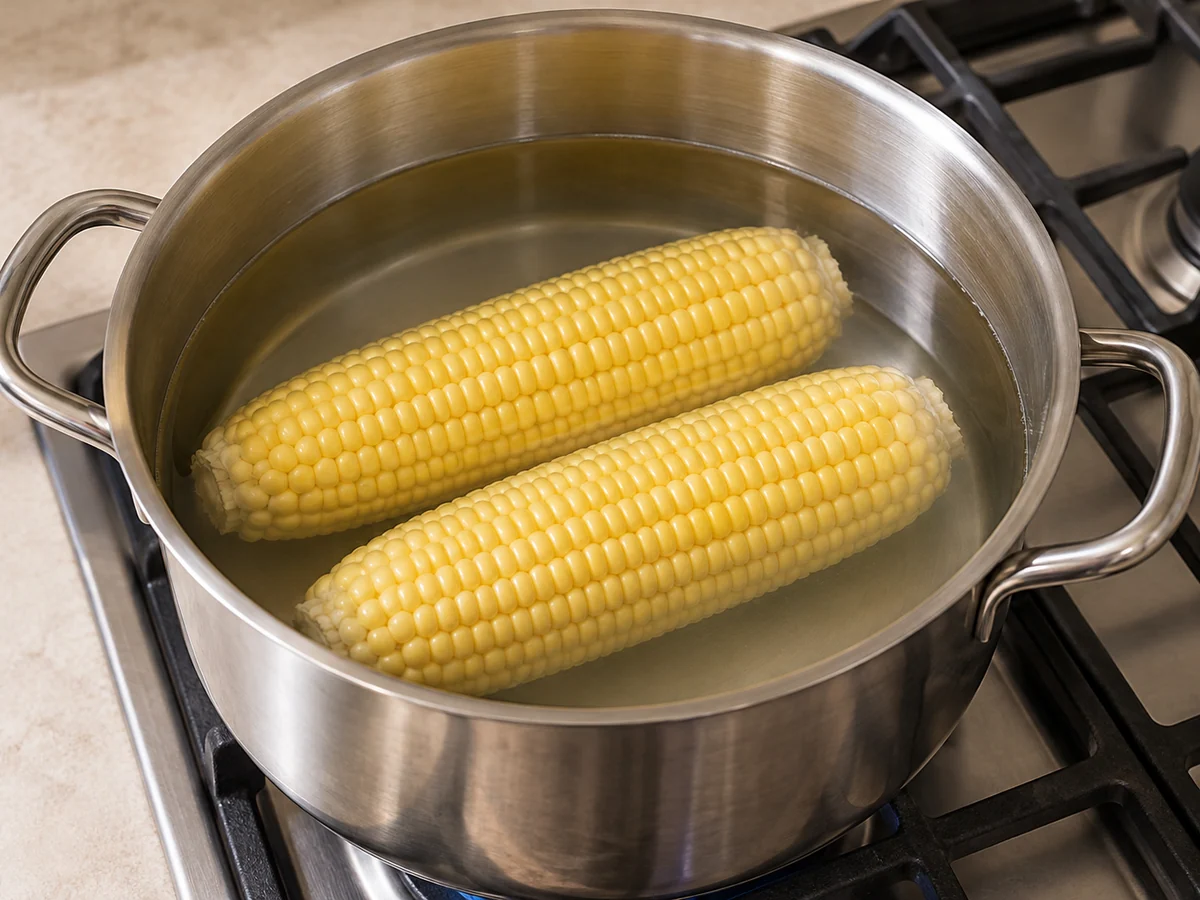
Boiled cornCover and bring to a boil
Place the corn in a pot large enough to hold it. Add drinking water to just cover and bring to a boil.
Look forThe water just covers the corn and the pot has room to prevent overflow.
See the full recipe ↗ 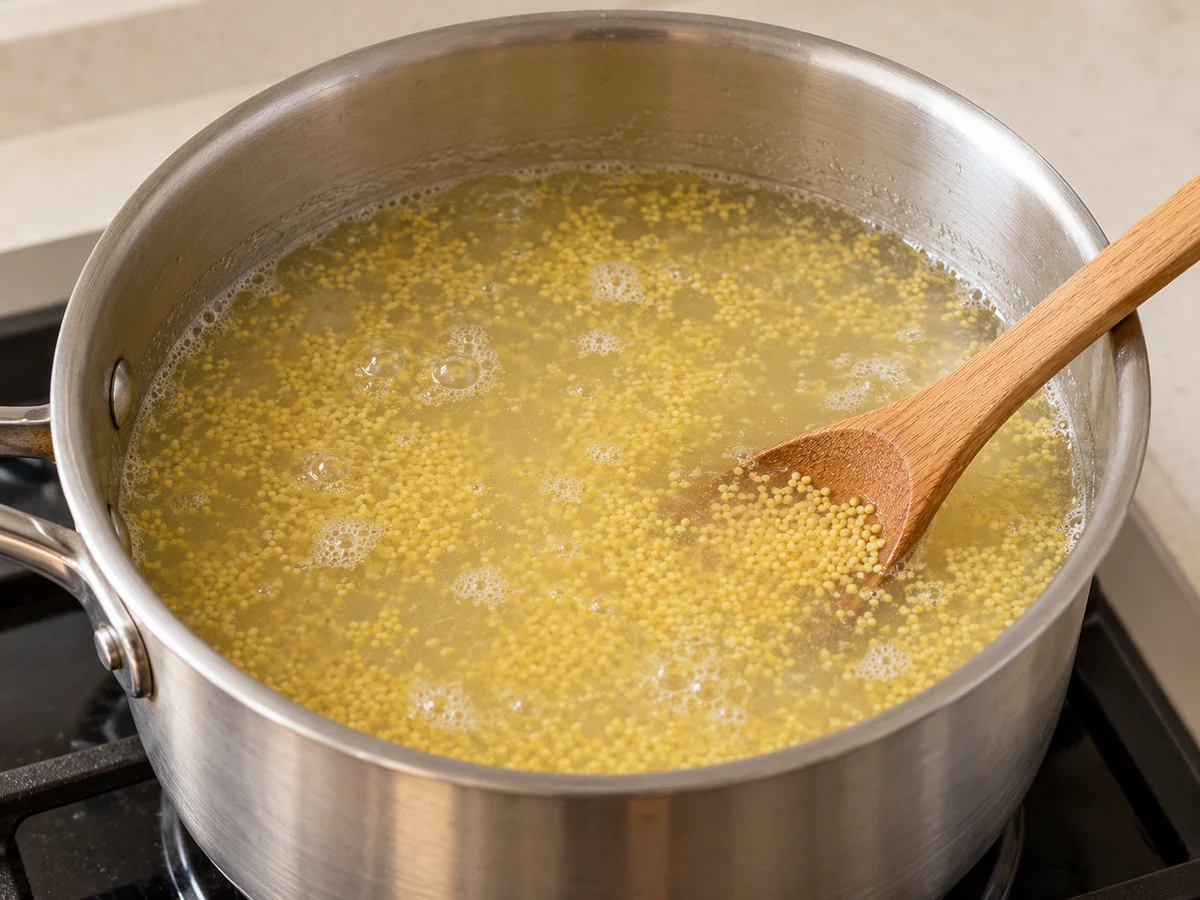
Millet congeeAdd to boiling water
Bring the drinking water to a boil in a roomy pot. Gradually add the millet while stirring to prevent clumps and sticking.
Look forThe grains are dispersed with no clumps stuck to the base.
See the full recipe ↗ 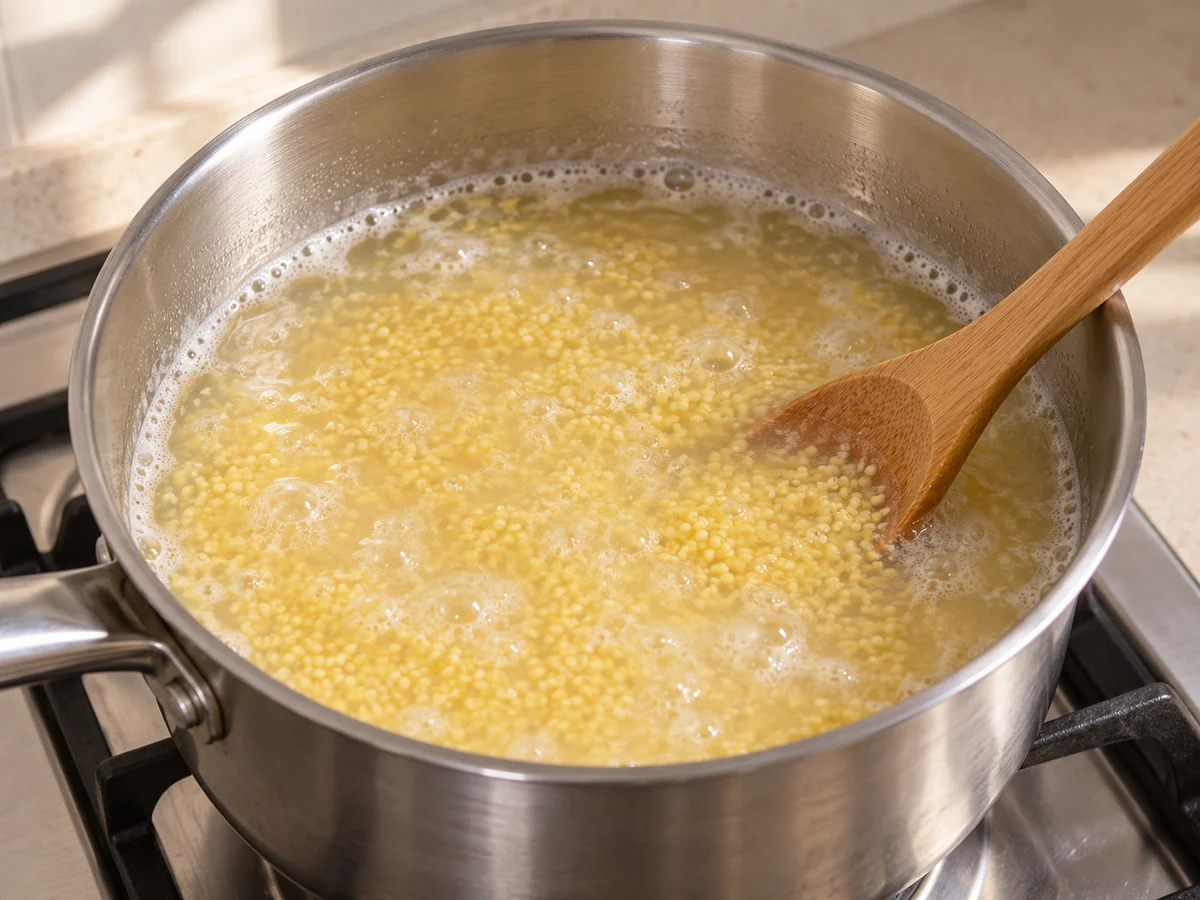
Millet congeeBoil and watch closely
Maintain a controlled boil and stay by the stove. Stir across the base occasionally. Lower the heat promptly if foam rises to prevent overflow. Start a 6 min check-in when the water returns to a boil after adding the millet.
Look forThe water boils without overflowing or scorching at the bottom.
See the full recipe ↗ 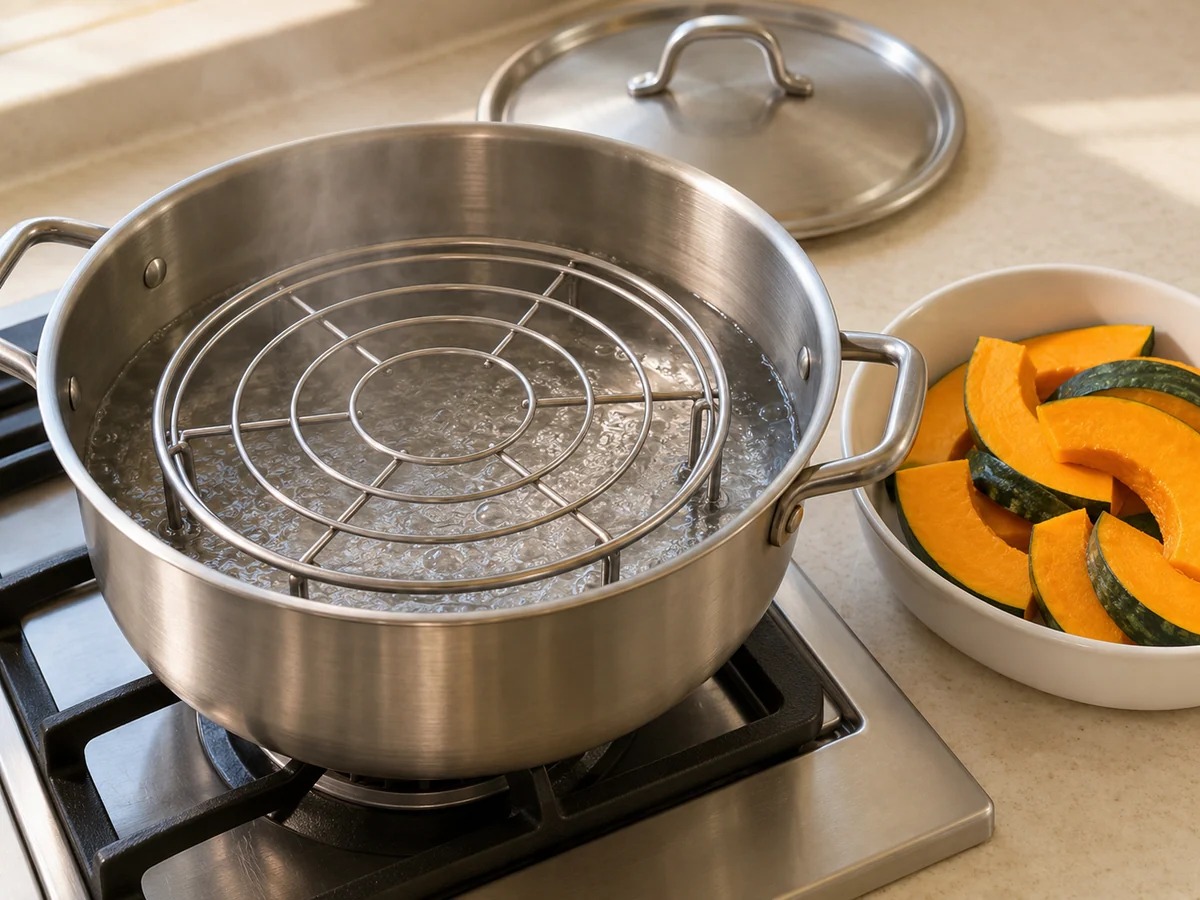
Steamed pumpkinPrepare boiling water
Add enough water according to the steamer instructions and fit the rack securely. Keep the water below the food and bring it to a boil.
Look forThe water is boiling and the rack is stable.
See the full recipe ↗ 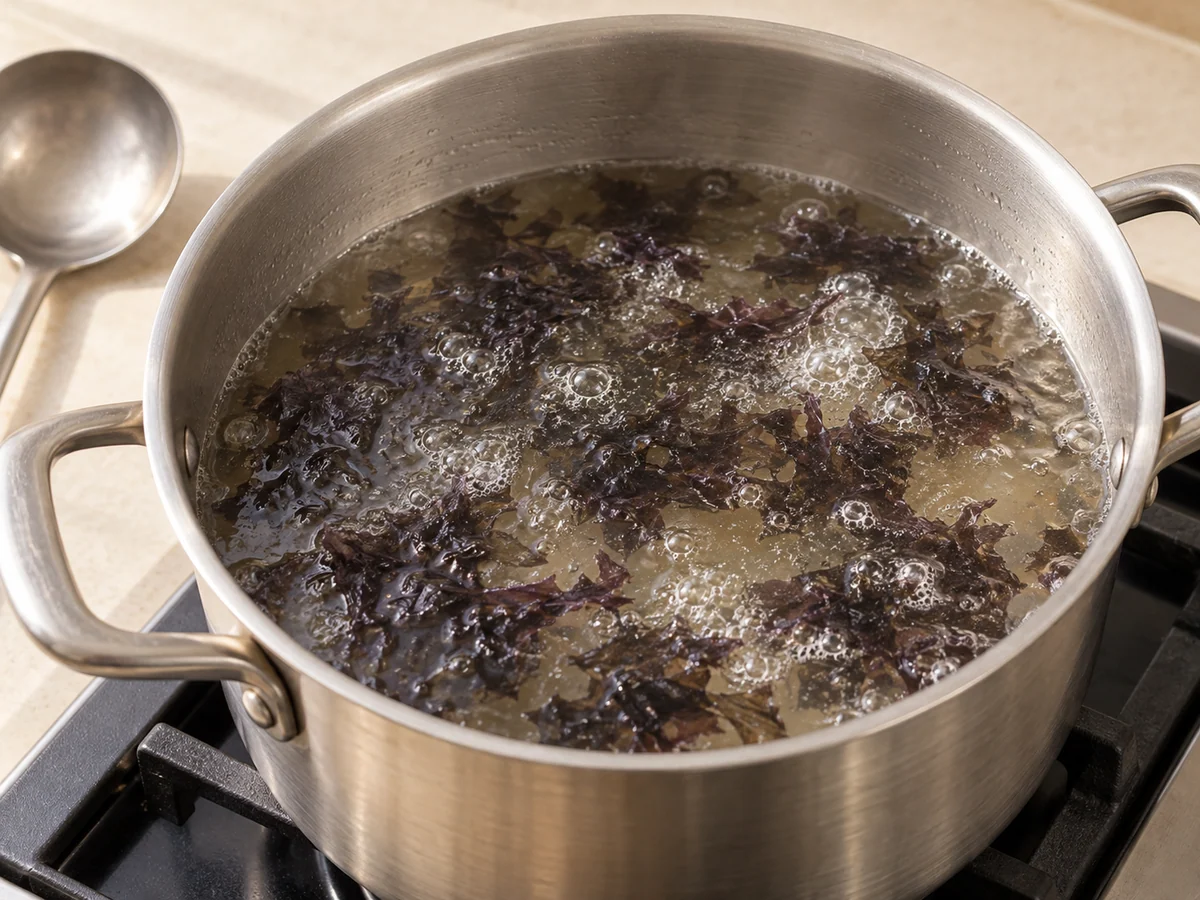
Seaweed egg drop soupBring the base to a boil
Add the water, oil and salt to a saucepan. Bring to a boil and add the seaweed.
Look forThe seaweed is dispersed in the boiling broth.
See the full recipe ↗ 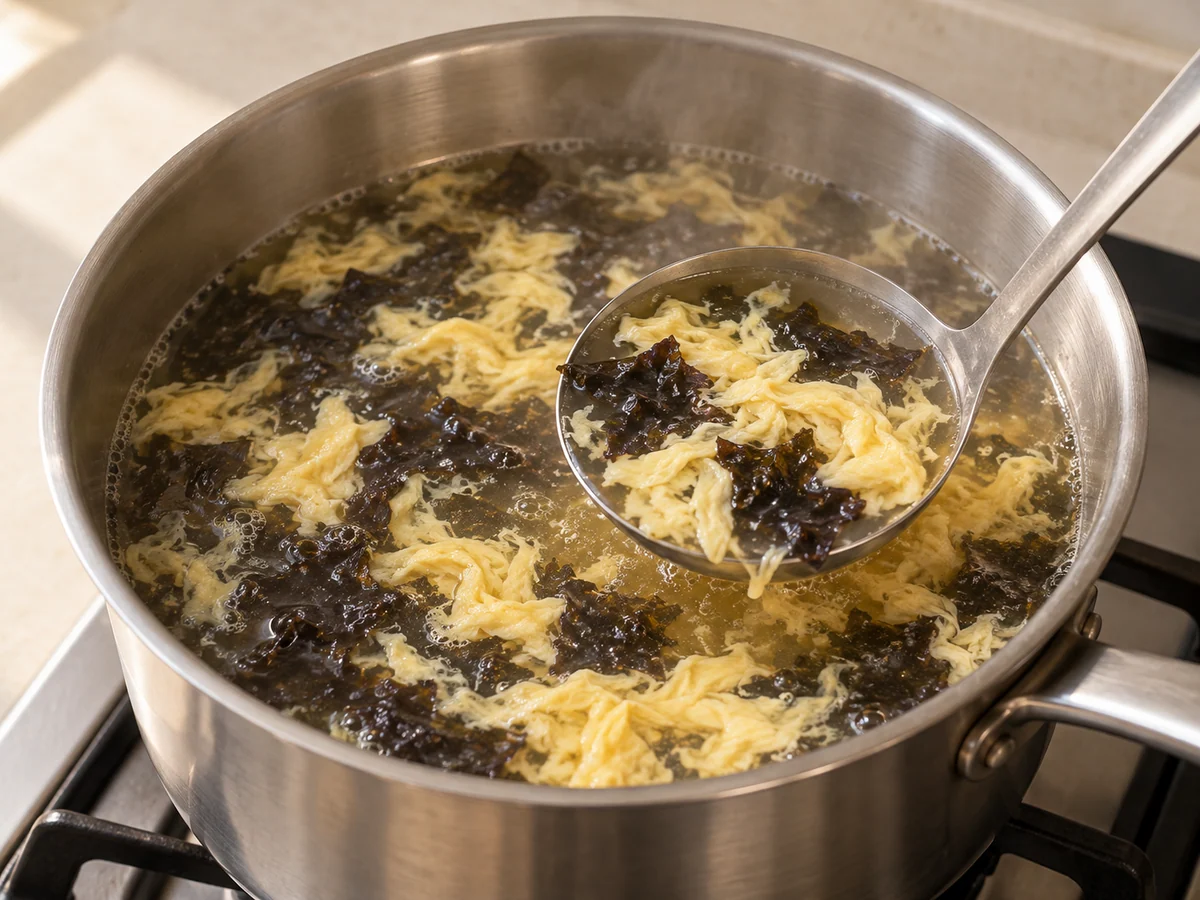
Seaweed egg drop soupPour in the egg
Keep the soup gently bubbling and pour in the egg in a thin stream. Once ribbons form, stir gently and continue until no liquid raw egg remains. The timer is only the first check. Start a 30 sec check-in after all the egg has been poured into the soup.
Look forThe egg ribbons are fully set and the soup is hot throughout.
See the full recipe ↗ 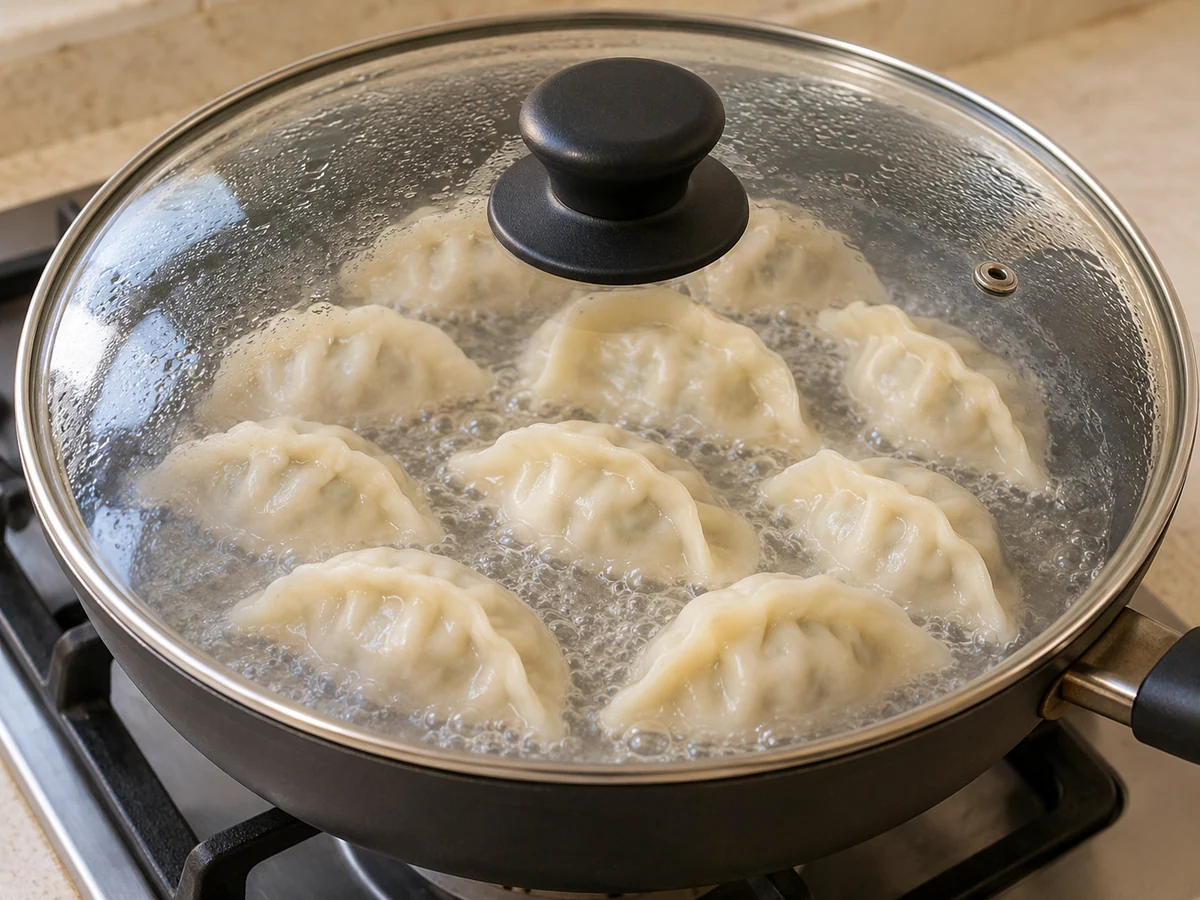
Pan-fried dumplingsAdd water and cover
Before the pan gets hot, pour drinking water around the edge to about halfway up the dumplings. Cover, bring to a boil, then regulate the heat for steady bubbling without overflowing.
Look forThe water bubbles steadily under the lid.
See the full recipe ↗ 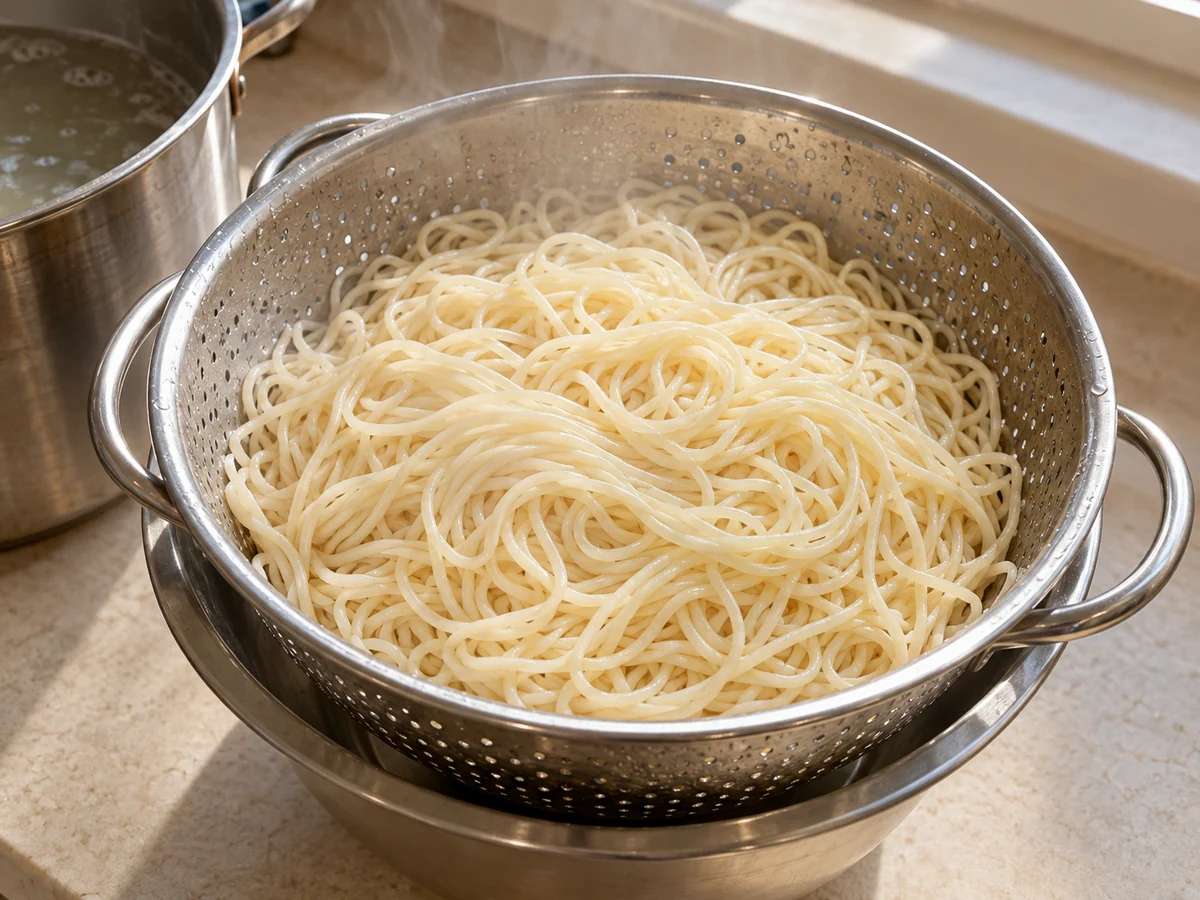
Scallion oil noodlesCook noodles as labeled
Bring enough drinking water to a boil in a separate pot. Add and loosen the noodles, cook as the package directs until no hard center remains, then drain well. Different noodles do not share one reliable countdown.
Look forThe noodles are cooked, separated and well drained.
See the full recipe ↗ 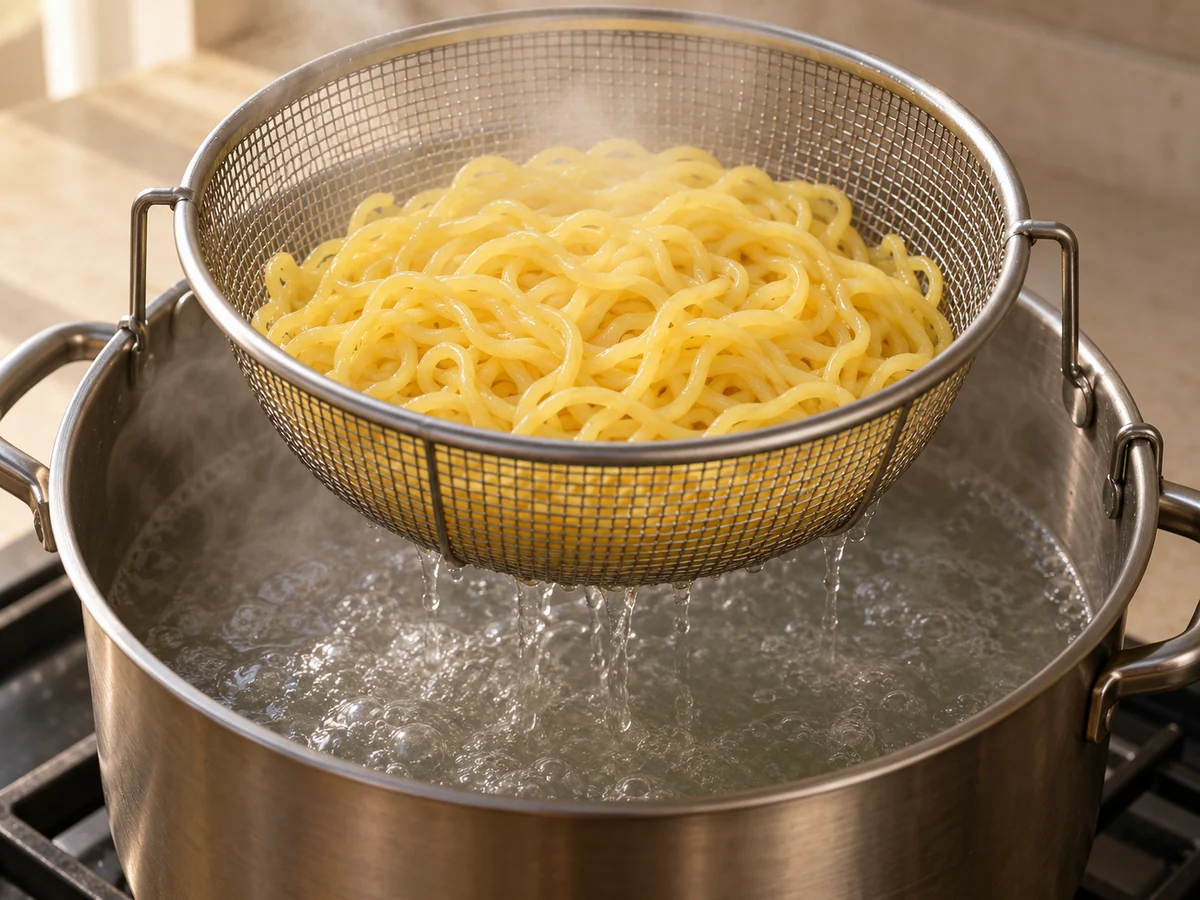
Wuhan hot dry noodlesReheat the cooked noodles
Boil water in another pot, add and loosen the cooked noodles, and reheat as labeled until hot throughout. Drain thoroughly. Brief reheating does not cook raw noodles, and products differ in thickness and storage condition.
Look forThe cooked noodles are hot throughout, separated and well drained.
See the full recipe ↗ 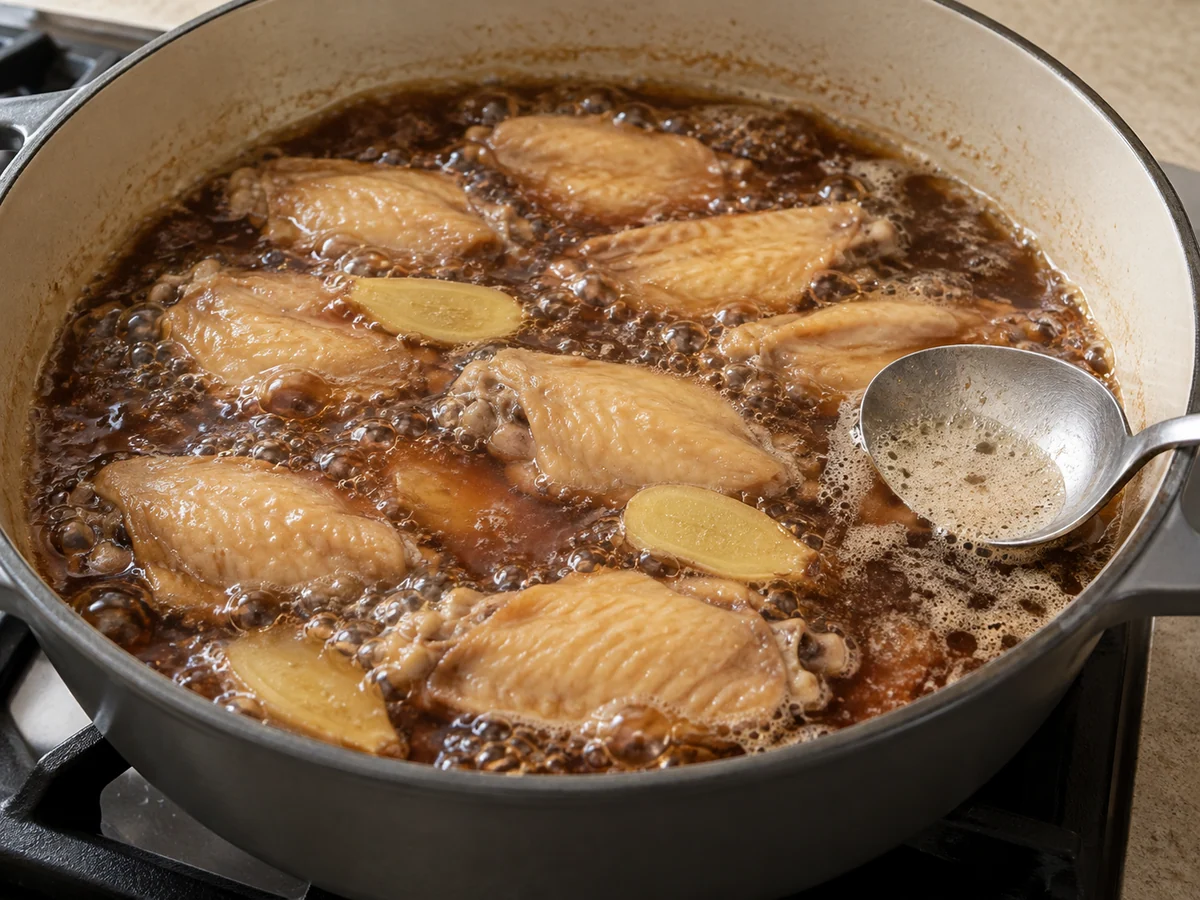
Cola chicken wingsAdd cola and seasonings
Off the heat, carefully add the cola, cooking wine, sugar, salt, remaining light soy and optional dark soy. Use a pan that lets the liquid mostly cover the wings, dividing into batches if necessary. Bring to a boil and skim foam.
Look forThe wings are mostly covered and the sauce has come to a boil.
See the full recipe ↗ 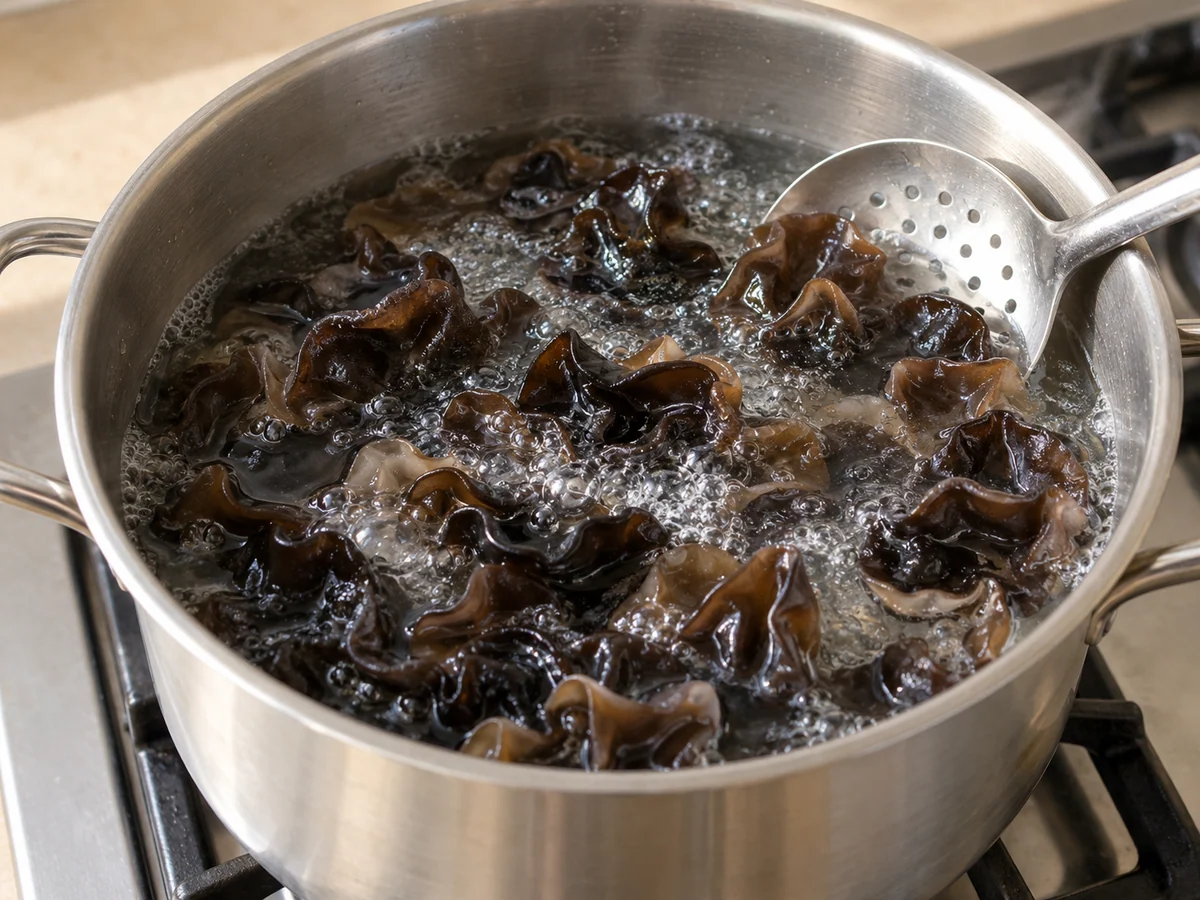
Wood ear mushroom saladBoil until cooked
Boil fresh drinking water in another pot and add the mushrooms. When the water returns to a boil, set a 2 min check. Keep boiling until heated through and cook longer if the package requires it.
Look forThe mushrooms are cooked through and still pleasantly resilient.
See the full recipe ↗ 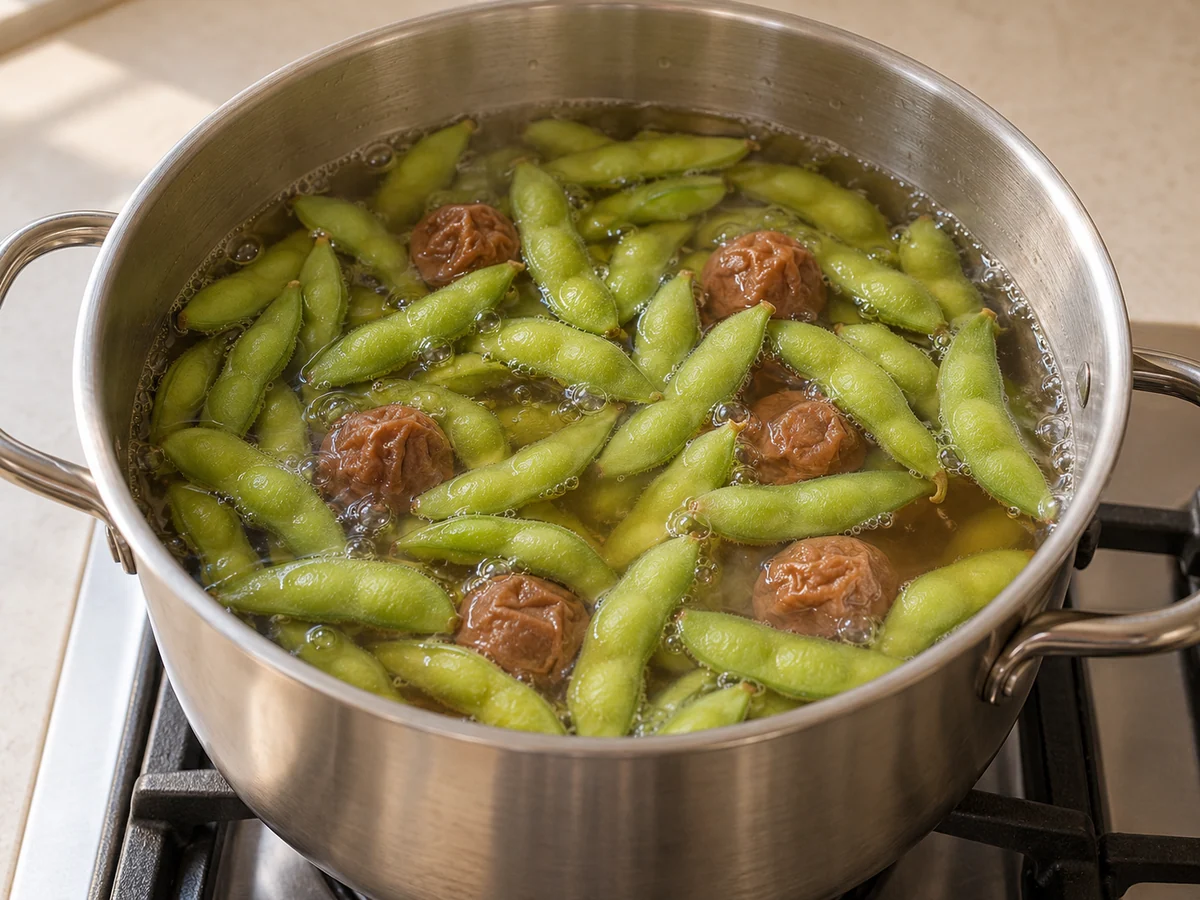
Edamame with preserved plumsSet up the cooking pot
Bring fresh cooking water to a boil in a separate pot, then add edamame and preserved plums. Use enough to cover within the pot safe fill level.
Look forPods and plums are immersed, with room for bubbling.
See the full recipe ↗ 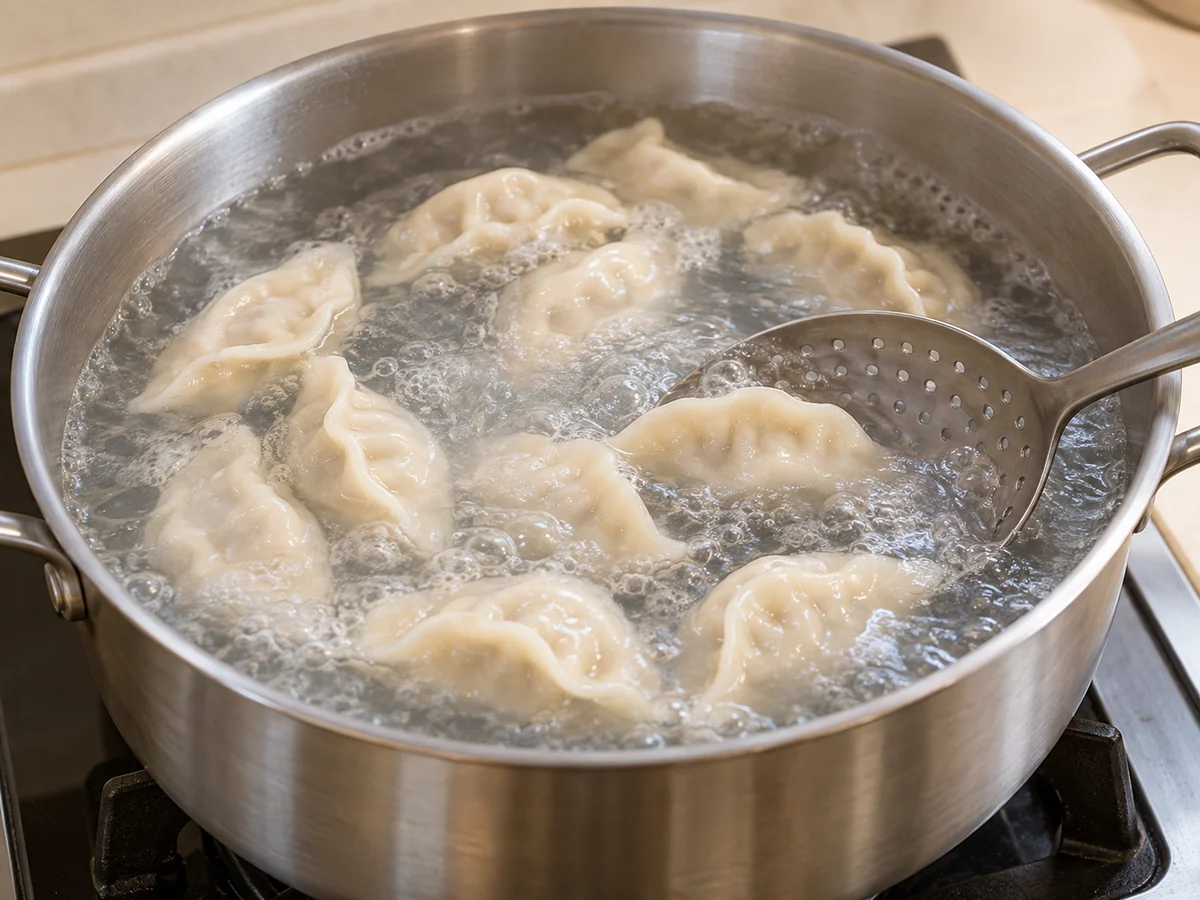
Handmade boiled dumplingsAdd to boiling water and cook gently
Boil ample drinking water in a roomy pot with headspace. Add dumplings in batches, gently nudging them to prevent sticking. When it returns to a boil, adjust to steady gentle bubbling rather than violent boiling that tears wrappers.
Look forThe dumplings are separated in gently boiling water and the wrappers stay intact.
See the full recipe ↗ 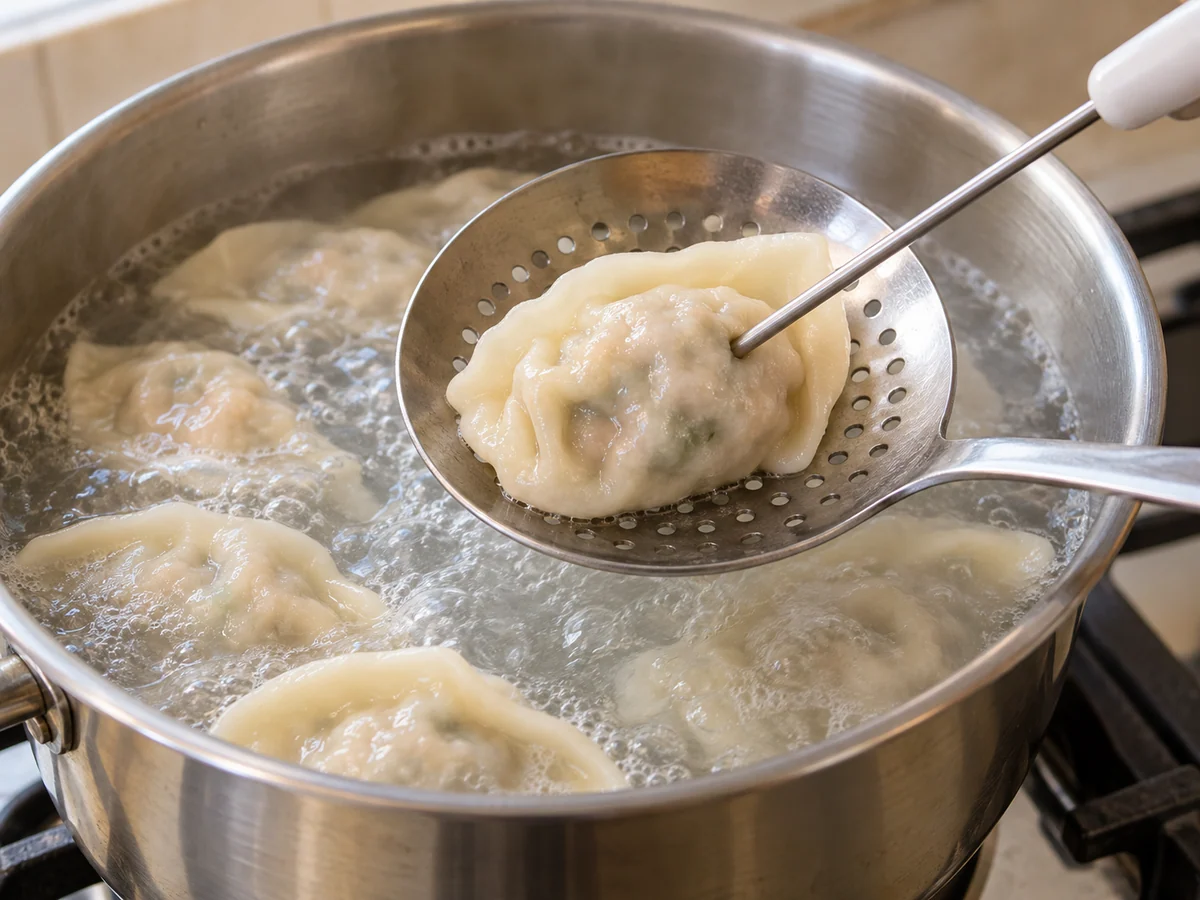
Handmade boiled dumplingsCheck the filling center
Floating and puffing are only cues. Lift one dumpling and measure the thickest filling center for at least 71°C. Keep cooking if needed and check other larger dumplings in the batch. Neither floating nor a fixed number of water additions proves doneness.
Look forThe filling center reaches 71°C and the wrapper is cooked and intact.
See the full recipe ↗ 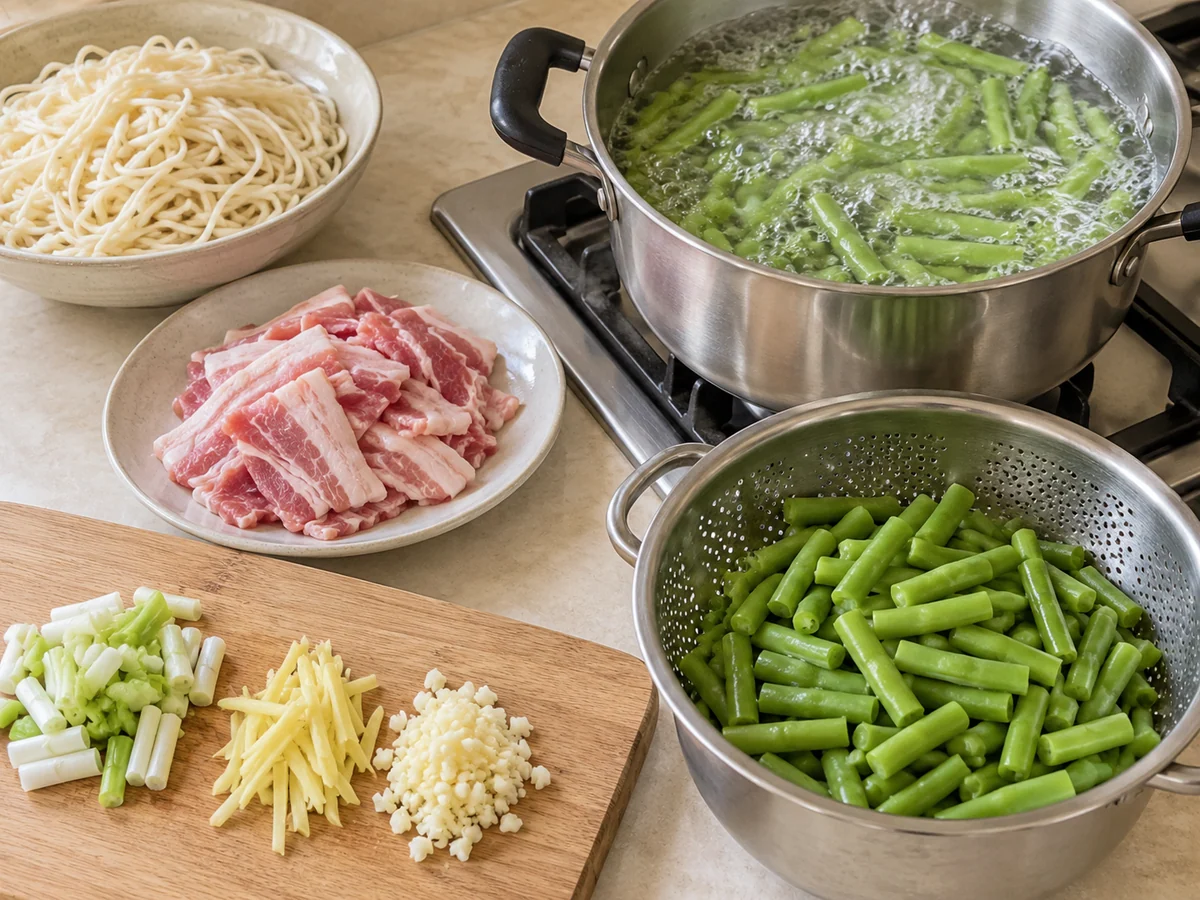
Green bean braised noodlesPrepare and preboil the beans
Trim, wash and cut beans; slice scallion, shred ginger, mince garlic and thinly slice pork on separate equipment. Boil beans in fresh water and set a 10 min check once boiling resumes. Boil thoroughly before draining, not merely until green.
Look forThe beans have been thoroughly boiled and raw pork stays separate from cooked vegetables.
See the full recipe ↗ 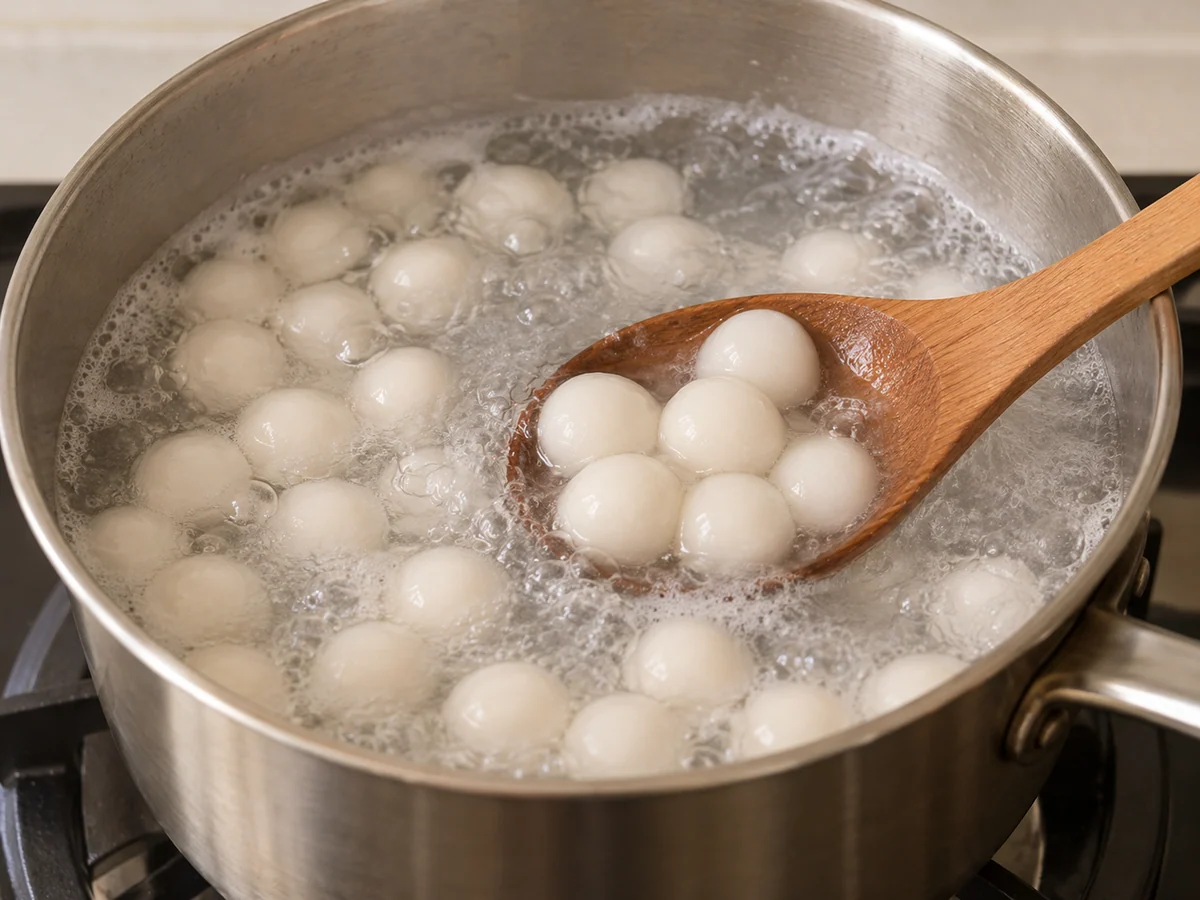
Small rice balls in sweet rice wineBoil and check the rice balls
Bring the water to a boil, add the balls and nudge gently. Once boiling resumes, set an 8 min reference check while following the complete package directions. Floating is not enough: check for a soft center without a hard core and continue if needed.
Look forThe rice balls are soft in the center with intact skins.
See the full recipe ↗ 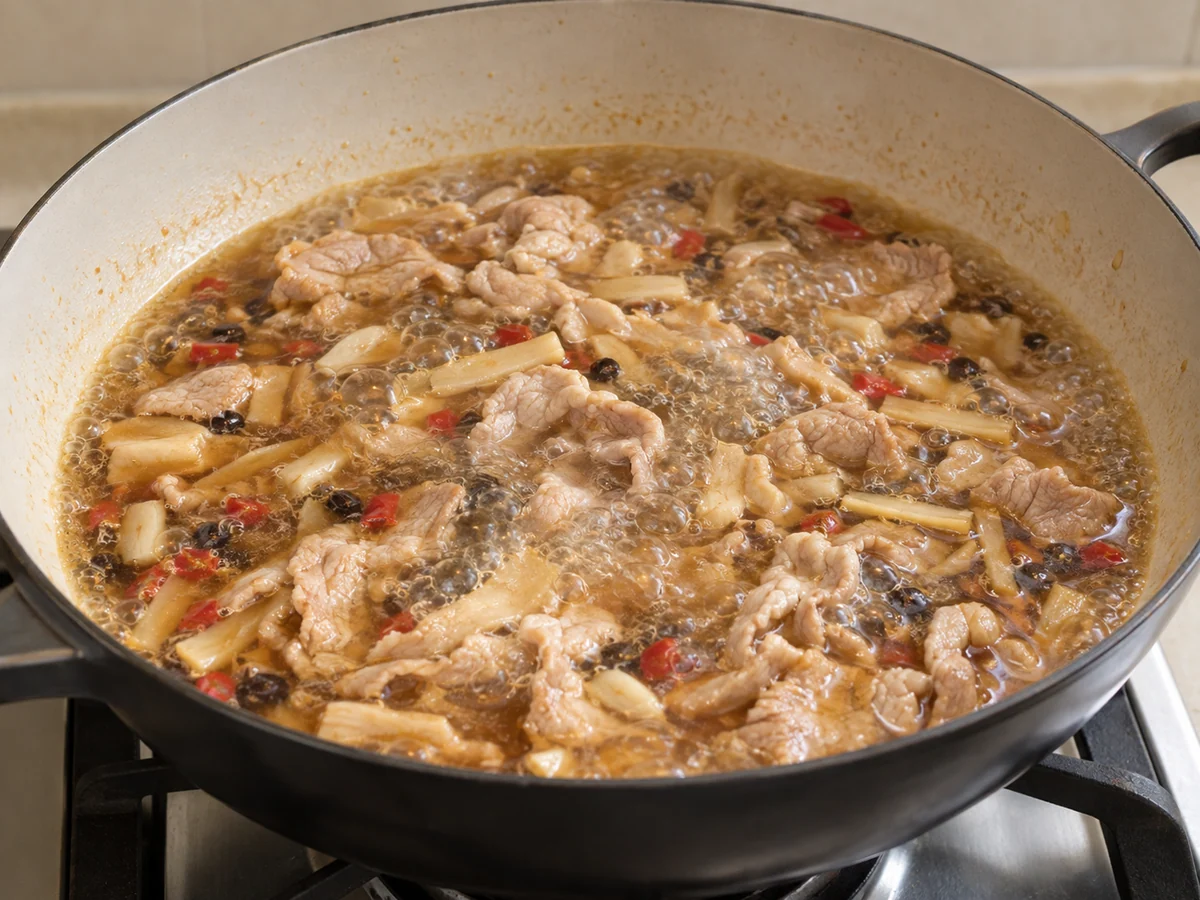
Laoyou pork rice noodle soupAdd pork and broth
Separate the pork in the pan with about one third of the soy sauce. Add the broth water, vinegar, remaining soy and optional sugar, then bring to a boil. Color change alone does not establish doneness; continue cooking in the broth.
Look forThe pork slices are separated and the broth is boiling.
See the full recipe ↗ 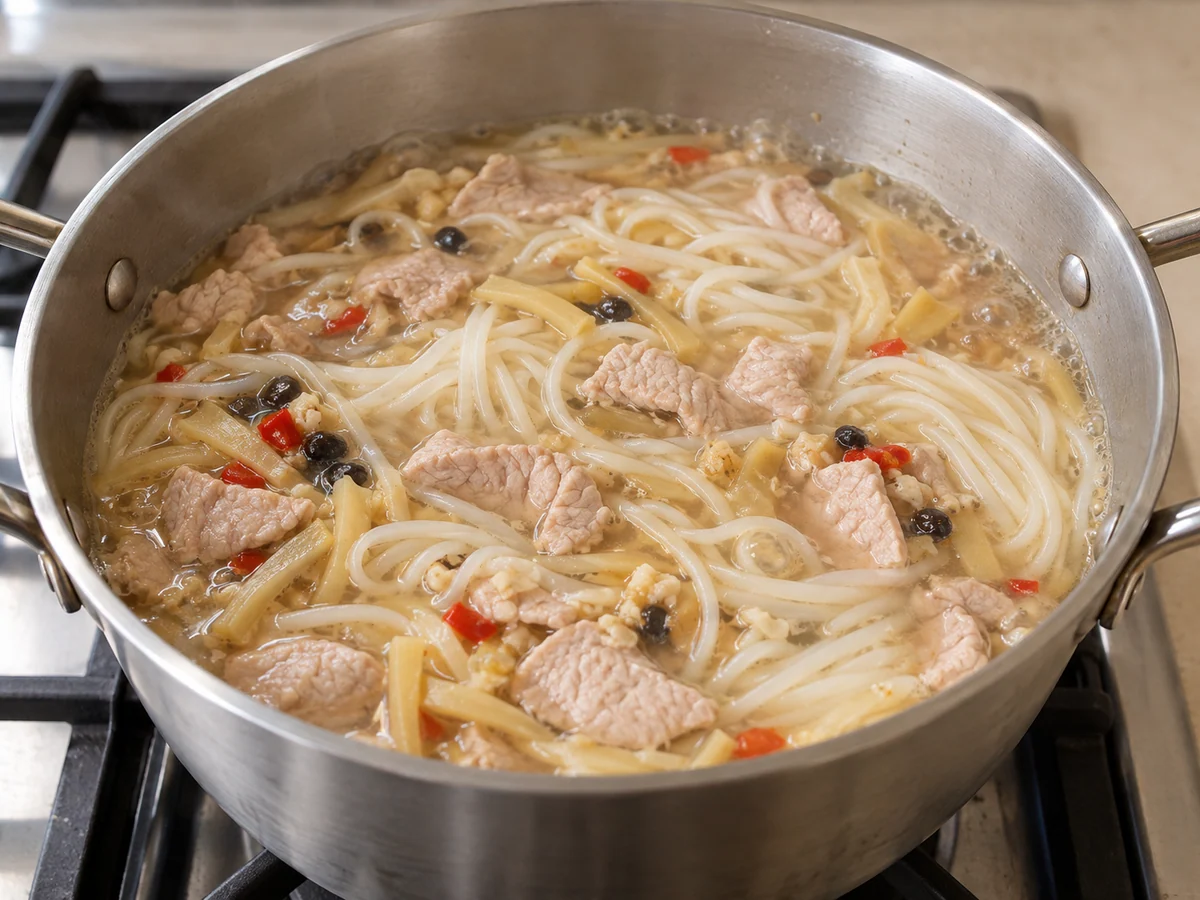
Laoyou pork rice noodle soupCook noodles and pork through
Add the noodles prepared as labeled. Once boiling resumes, set a 3 min first check and follow any remaining package cooking time; precooked noodles need reheating, while uncooked noodles must lose their hard core. The thickest pork must reach at least 63°C. The ingredient-list broth water is a starting amount (450 ml for the baseline two portions); if noodles absorb it or protrude above the broth, add hot drinking water in stages until they can simmer immersed. Taste before adding optional salt.
Look forThe noodles are cooked, pork reaches 63°C and enough broth remains.
See the full recipe ↗ 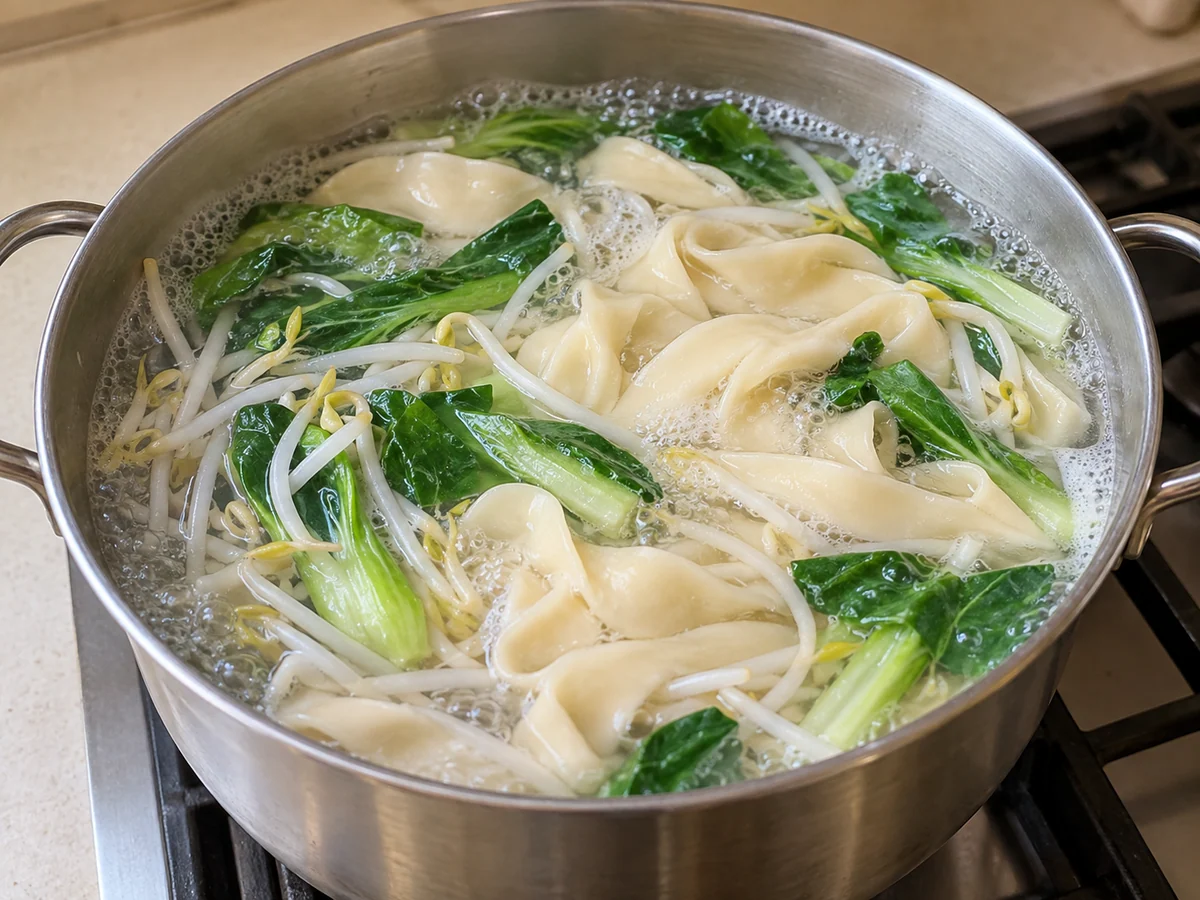
Shaanxi hot oil noodlesCook noodles and vegetables
Boil ample water, add and loosen noodles and cook according to the package until no hard center remains. Cook greens and sprouts through together or separately; floating alone is not proof of doneness. Use a little optional salt in the boiling water if desired.
Look forThe noodles have no hard center and the greens and sprouts are cooked.
See the full recipe ↗ 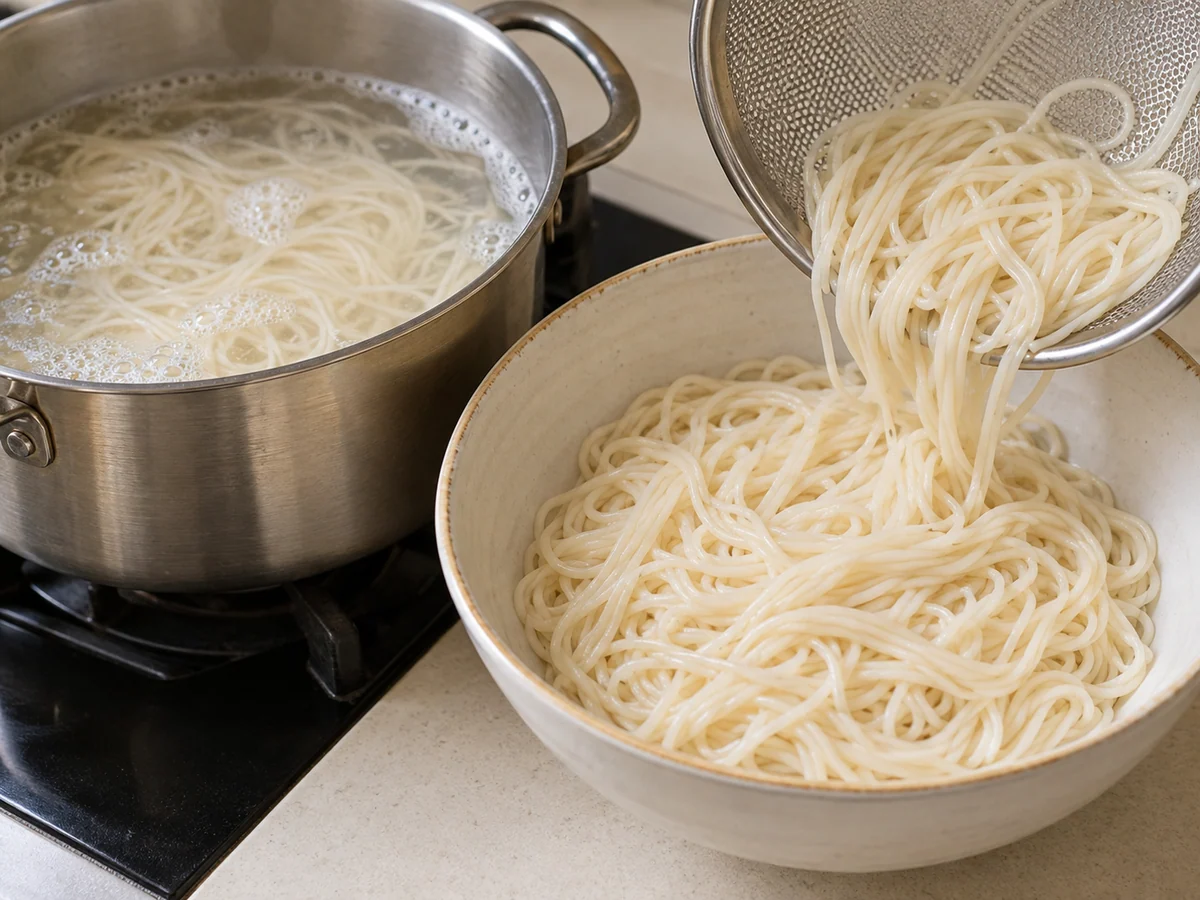
Tomato and egg noodlesCook noodles as labeled
Boil ample drinking water in another pot, add and loosen noodles and cook according to the package until no hard core remains. Drain into a bowl rather than relying only on floating or translucent edges.
Look forThe noodles are cooked through without clumping.
See the full recipe ↗ 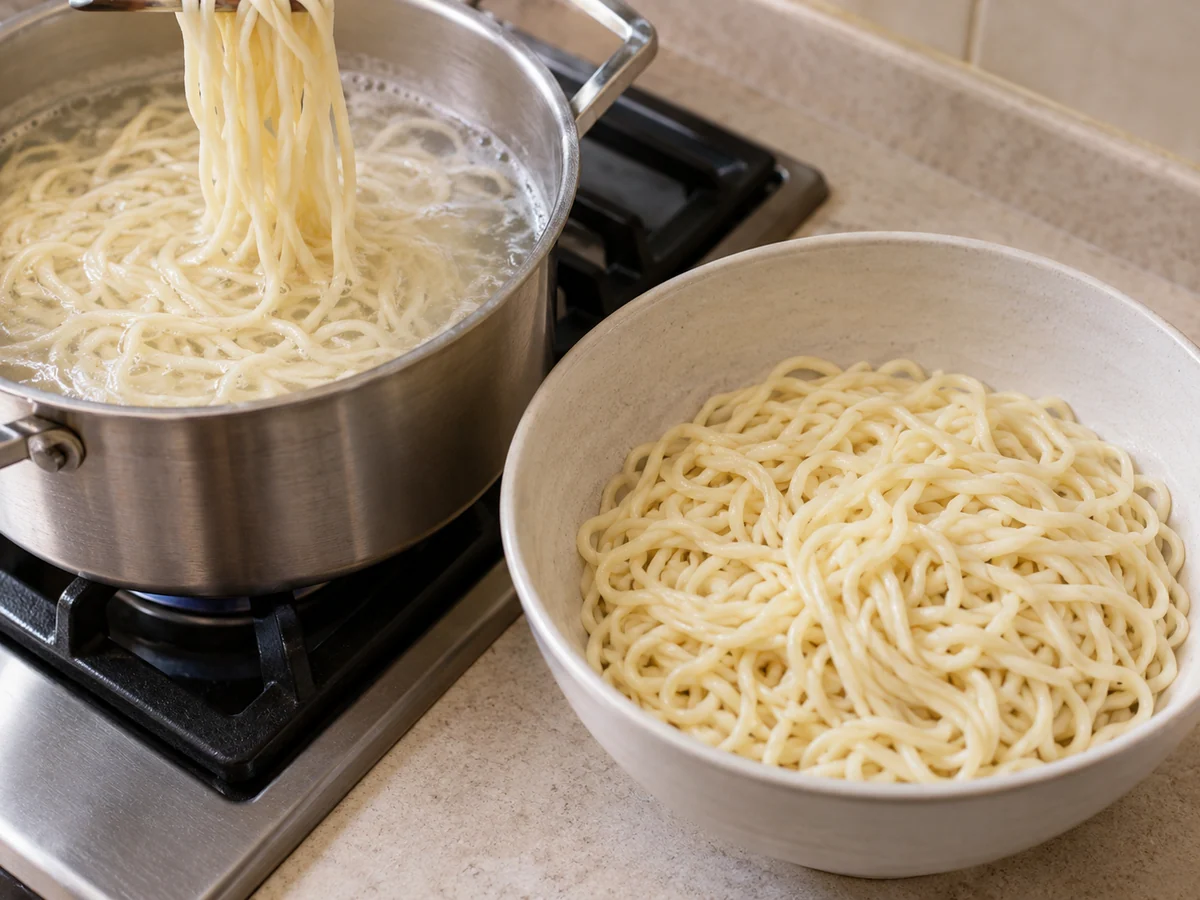
Zhajiang noodlesBoil and drain the noodles
Add noodles to boiling water, loosen and cook as labeled until no hard center remains. Drain well into a clean bowl. This version dresses hot noodles without an unverified cold-water rinse.
Look forThe noodles are cooked, separated and well drained.
See the full recipe ↗ 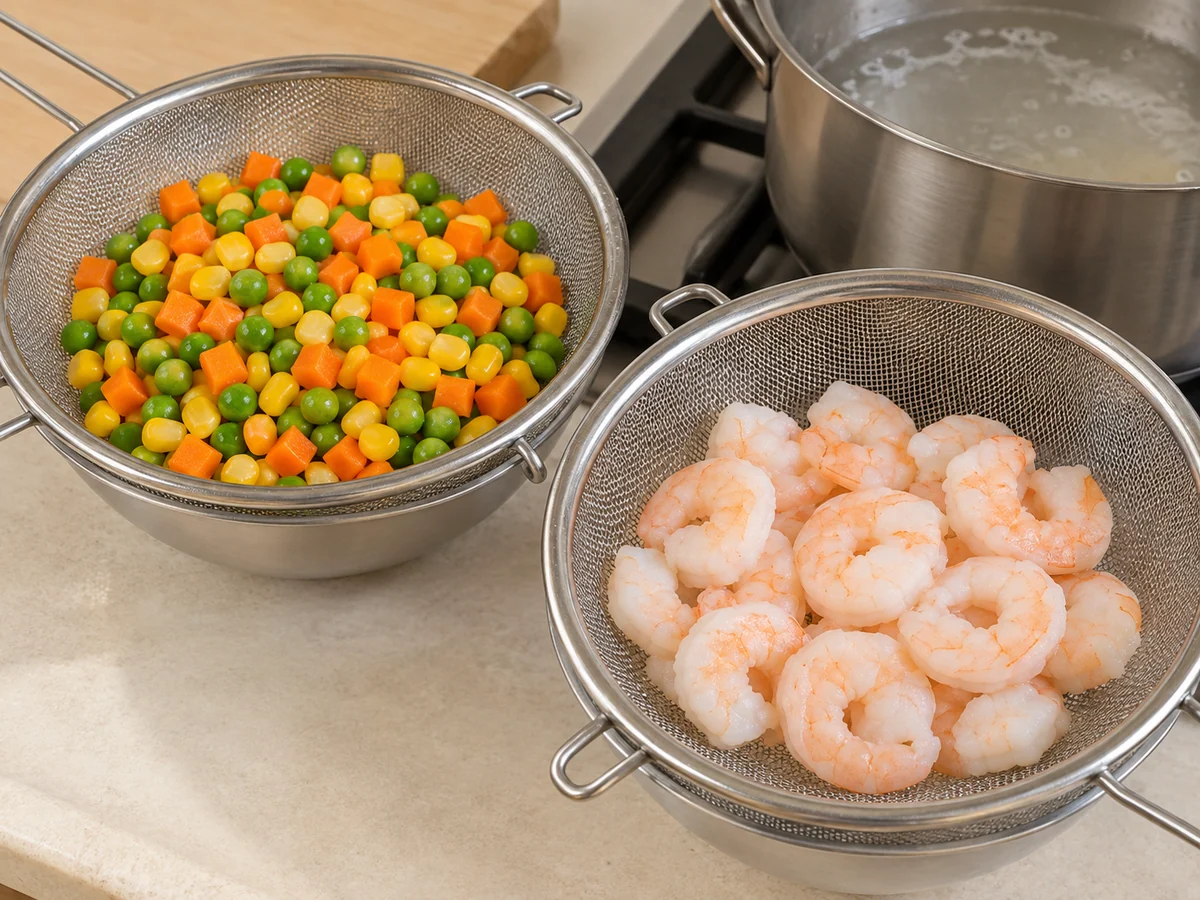
Yangzhou fried riceCook vegetables and shrimp
Boil carrot, peas and optional corn until cooked, then drain. Separately boil shrimp until pearly, opaque and hot through, then drain. Keep raw-shrimp utensils away from cooked ingredients.
Look forThe vegetables are cooked and shrimp is pearly and opaque, all well drained.
See the full recipe ↗ 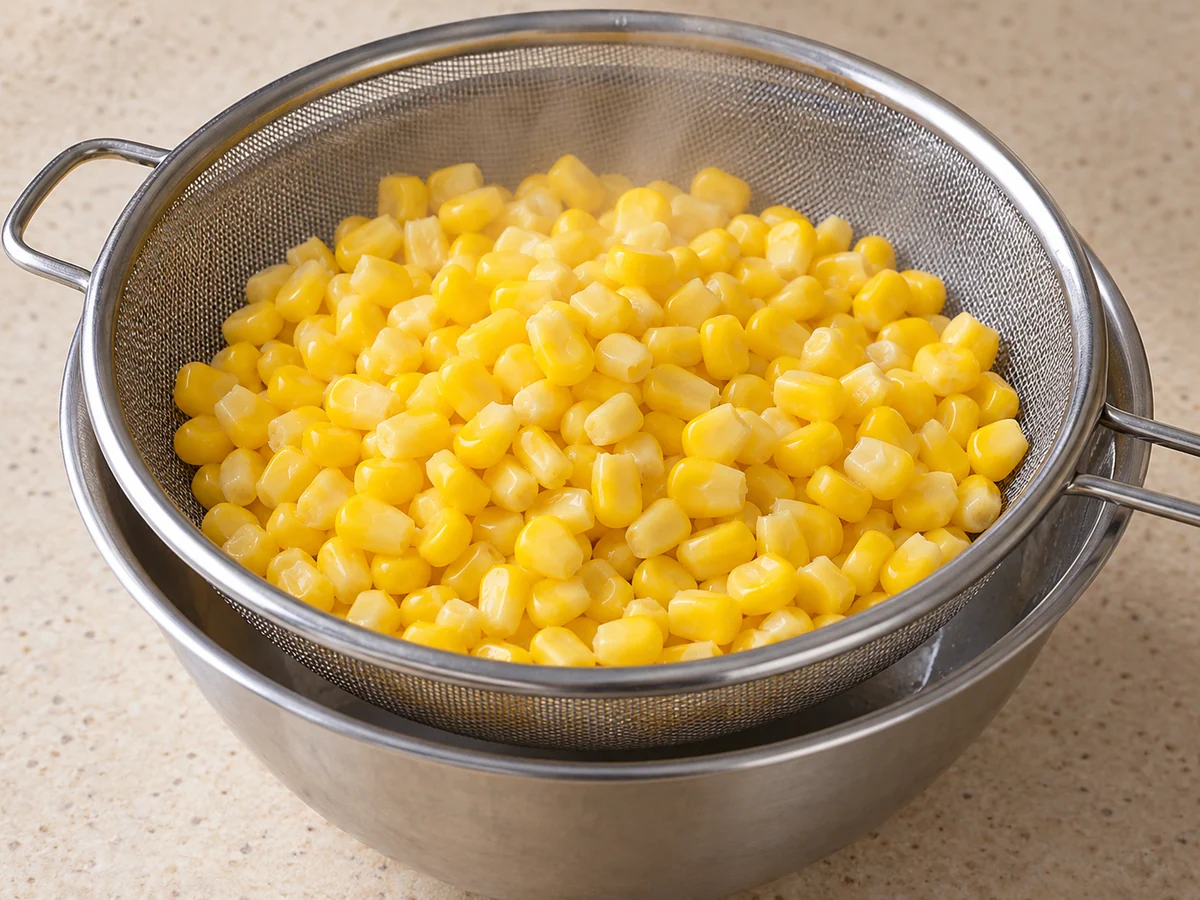
Pepper-salt cornBoil and drain the corn
Remove the packaging and add kernels to boiling water. Once boiling resumes, set a 5 min check and also follow the package cooking directions. Drain; never boil ordinary packaging with the corn.
Look forThe kernels are separate, steaming hot and drained.
See the full recipe ↗ 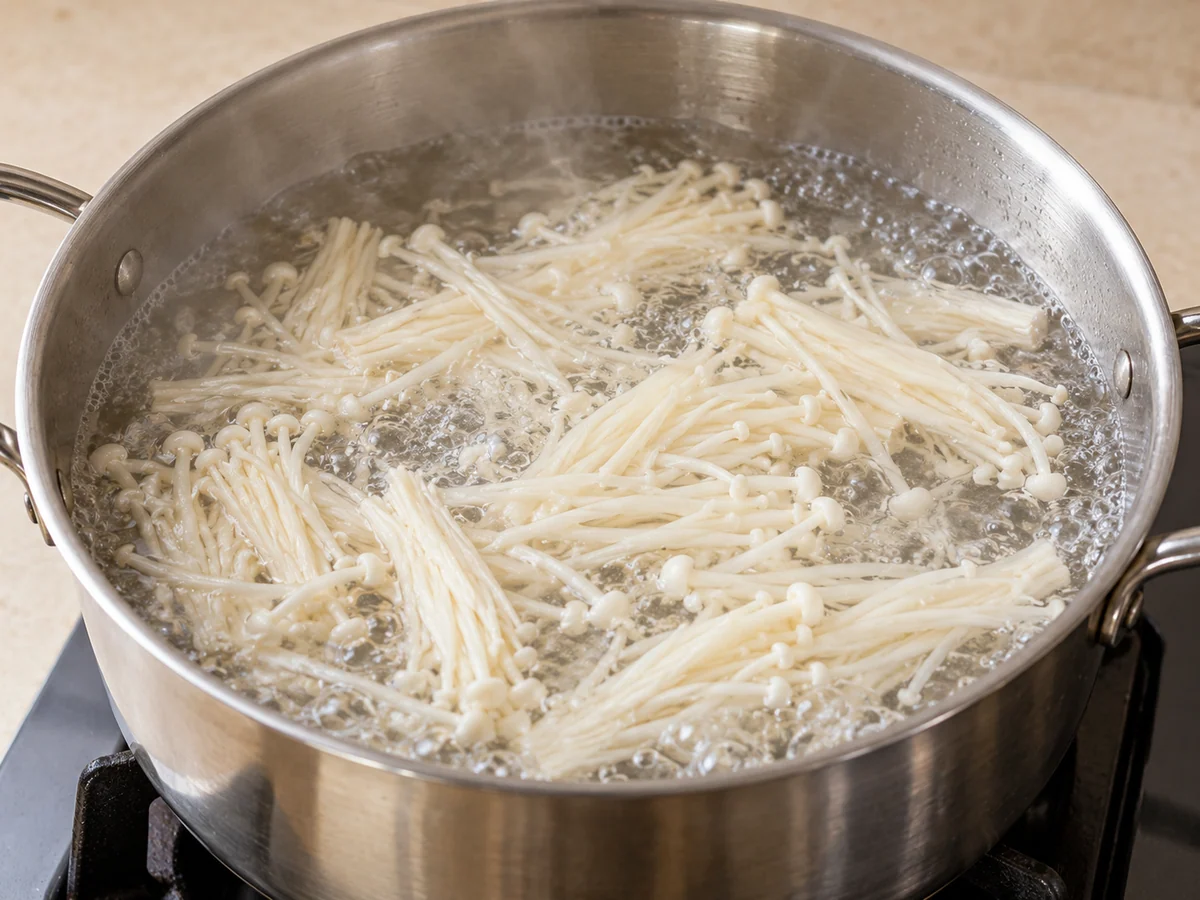
Enoki mushroom saladCook enoki thoroughly
Bring water to a boil, add enoki and separate the clusters. After boiling resumes, set a 2 min check. Continue until every cluster is thoroughly cooked and steaming hot throughout, following package directions; softness alone is insufficient.
Look forClusters are fully separated and evenly softened in actively boiling water.
See the full recipe ↗ 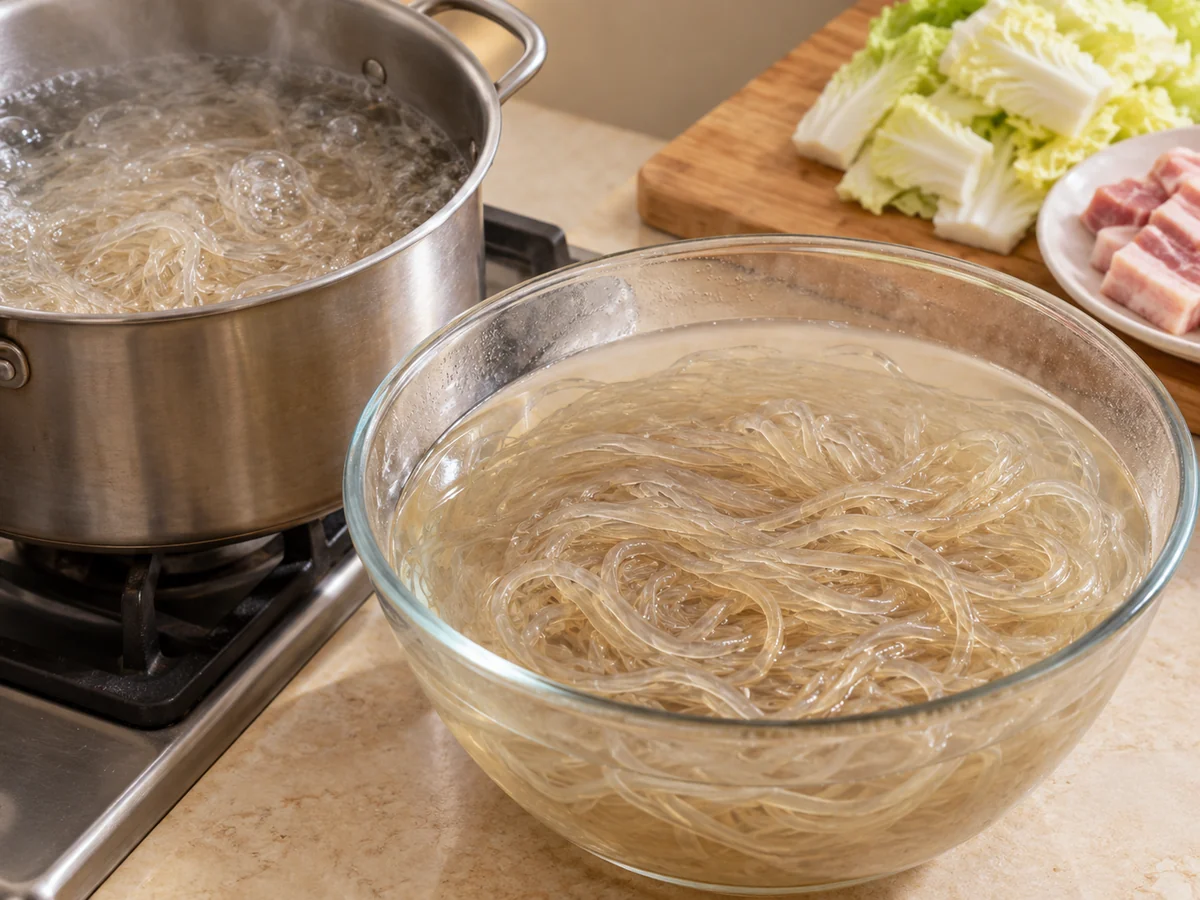
Pork, cabbage and vermicelli stewStart the noodles
Add noodles to boiling water and set a 5 min check once boiling resumes. Transfer with the hot water to a heatproof container, cover and soak until pliable according to the package; thick noodles may need longer.
Look forThe noodles have loosened and become pliable in the hot soaking water.
See the full recipe ↗ 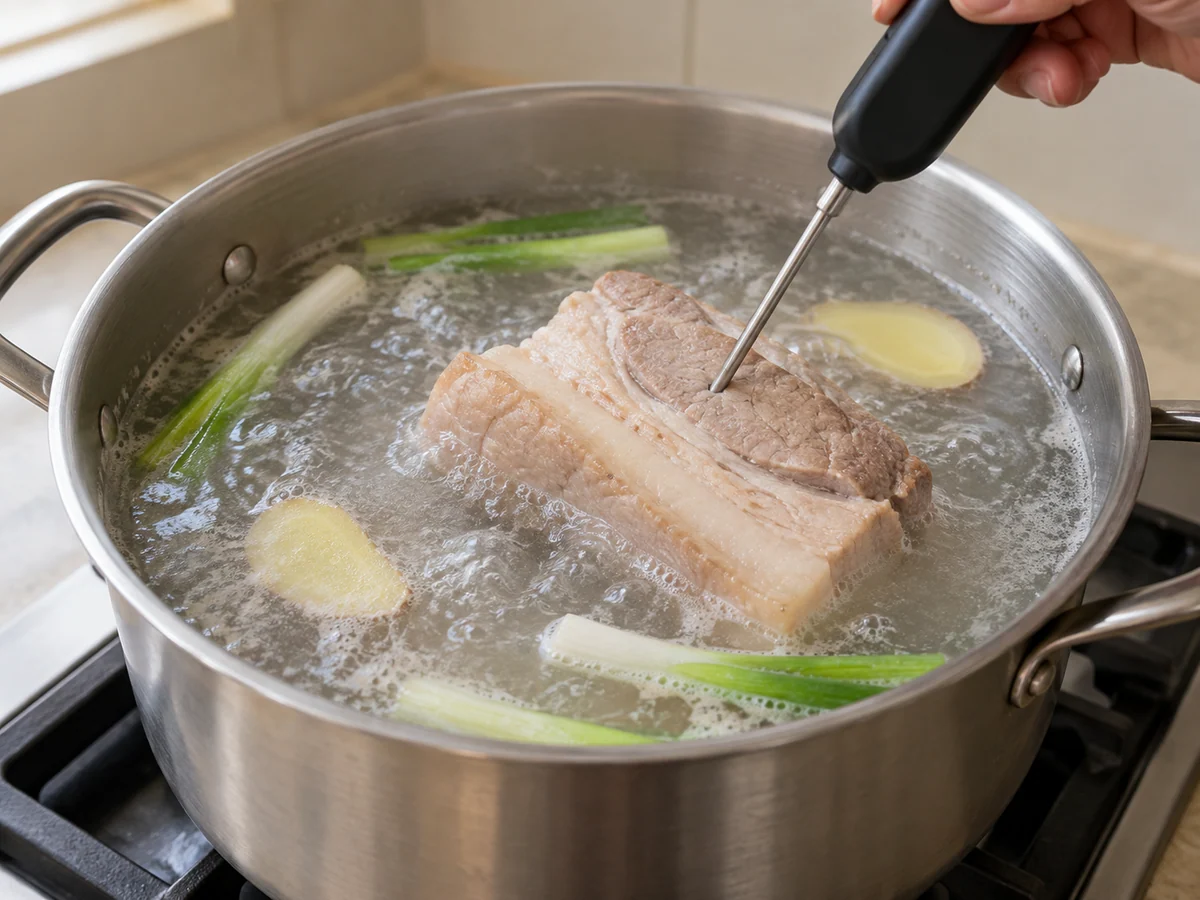
Twice-cooked porkBoil and check pork
Put pork, its ginger portion, scallions and wine in a pot and cover with cold water. Bring to a boil, skim, simmer and start a 15 min first check. Even when easily pierced, verify at least 63°C in the center.
Look forPork is pierceable and its center reaches at least 63°C.
See the full recipe ↗ 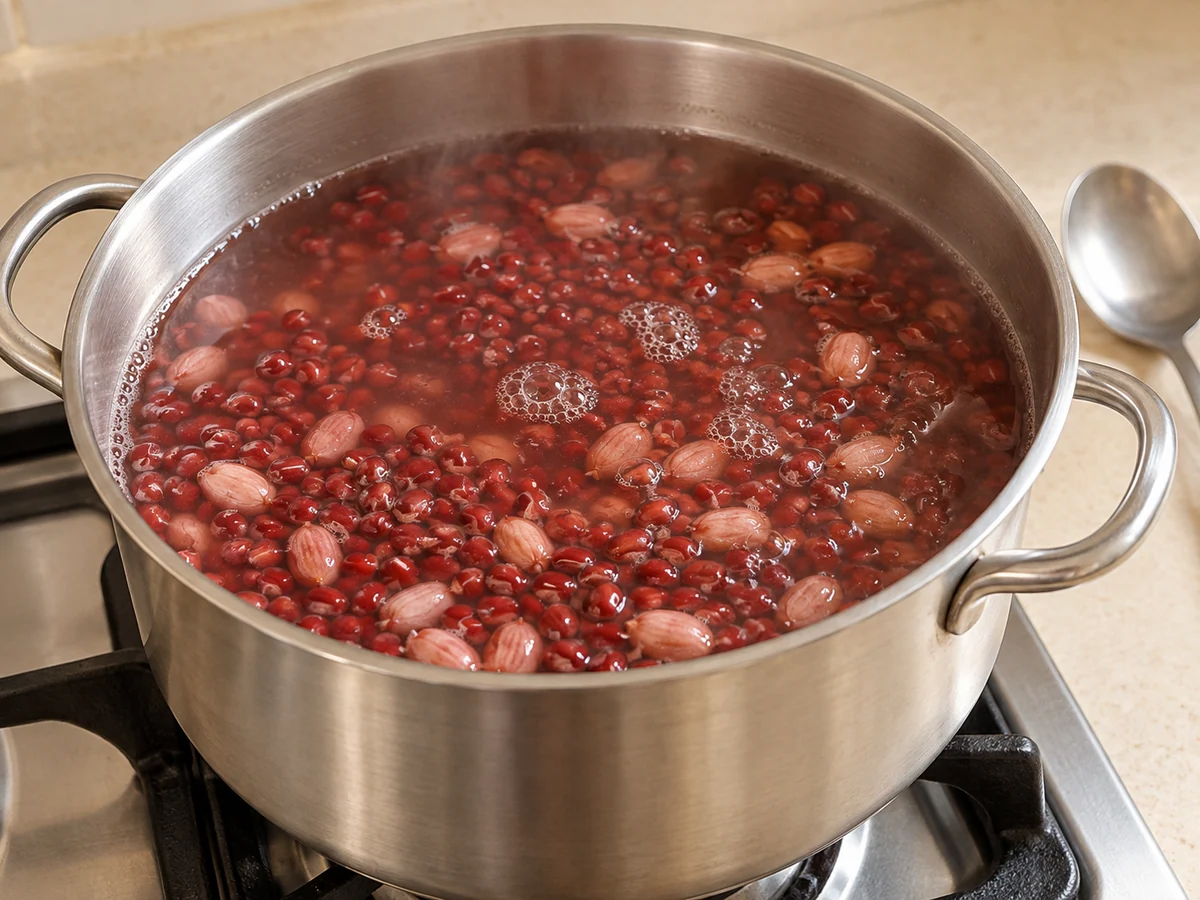
Laba mixed-grain congeeCook beans and peanuts first
Discard soaking waters. Put adzuki beans and peanuts in a roomy porridge pot with the listed cooking water. Bring to a boil, then maintain a gentle bubbling with a 30 min check, inspecting liquid and stirring to avoid overflow or sticking.
Look forBeans and peanuts cook in gently bubbling water with room in the pot.
See the full recipe ↗ 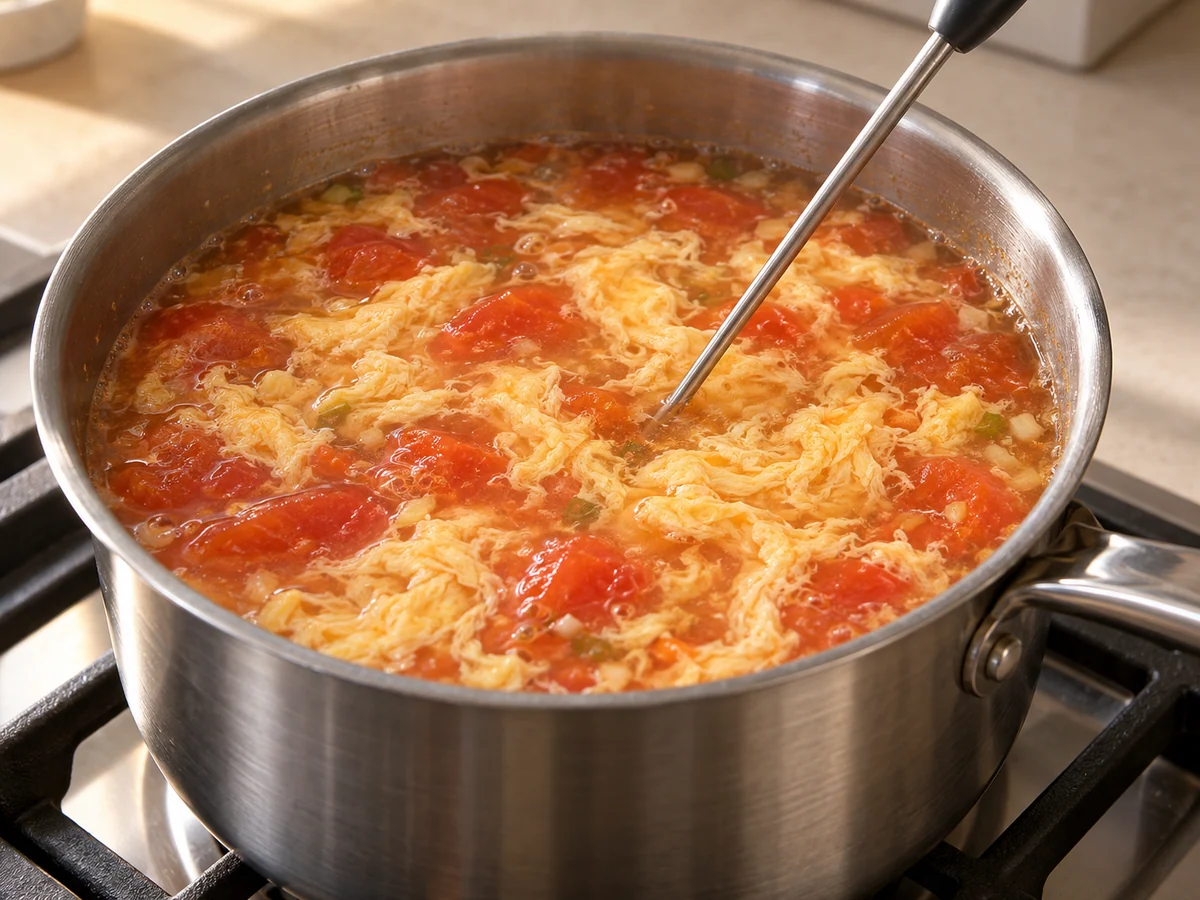
Tomato and egg soupDrizzle in and cook egg
At a gentle boil, drizzle in beaten egg and start a 30 sec check after all is added, gently separating ribbons. Continue until fully set and the egg soup reaches at least 71°C in the center; do not stop solely at the alarm.
Look forEgg ribbons are fully set and soup reaches 71°C in the center.
See the full recipe ↗ 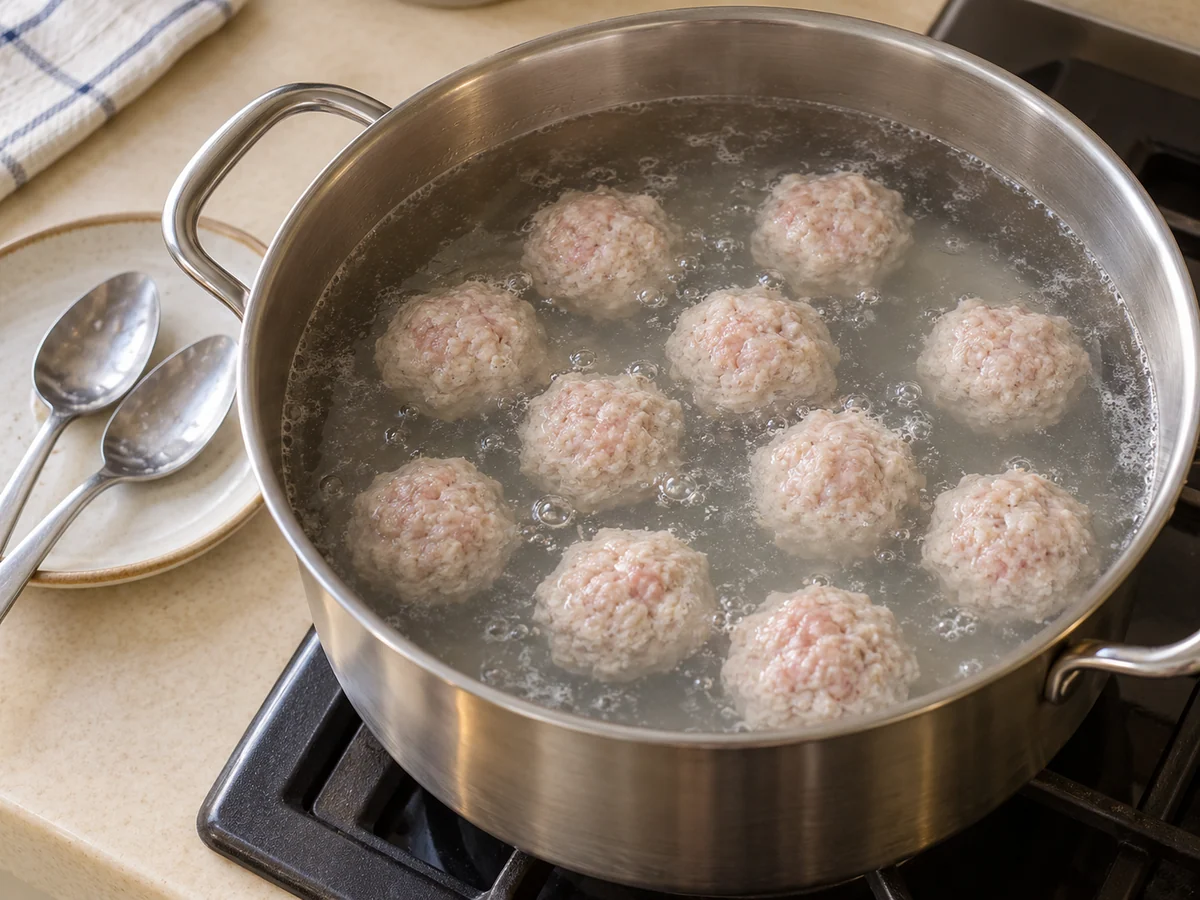
Poached pork meatball soupGently poach meatballs
Bring enough water to a boil, then reduce to gentle bubbling. Use two spoons to form similar-size meatballs and lower them gently without crowding, checking each batch separately.
Look forMeatballs hold their shape in gently bubbling water.
See the full recipe ↗ 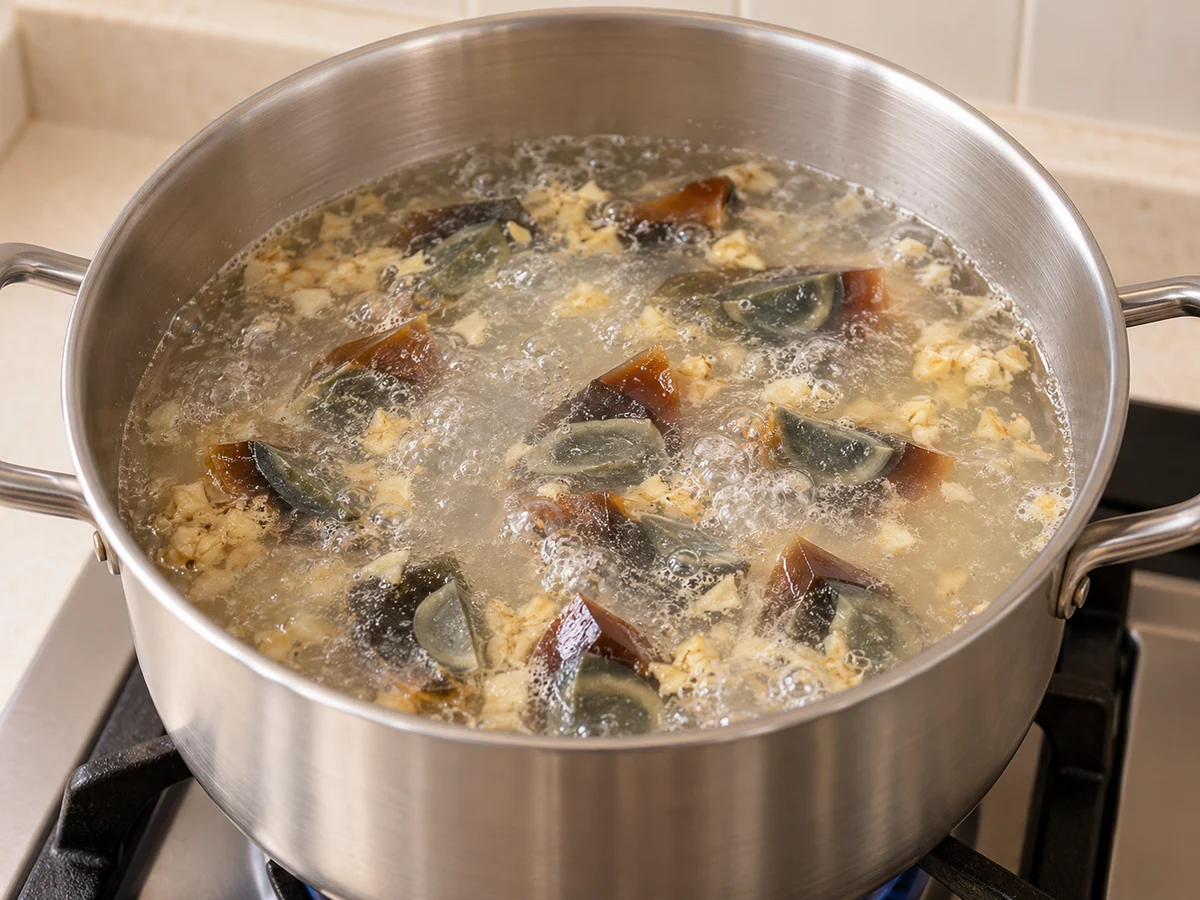
Cucumber and century egg soupAdd water and boil
Remove briefly from heat to cool slightly, carefully add water around the edge while avoiding splashes, then return to heat and bring to a boil.
Look forThe soup is boiling with egg and garlic dispersed.
See the full recipe ↗ 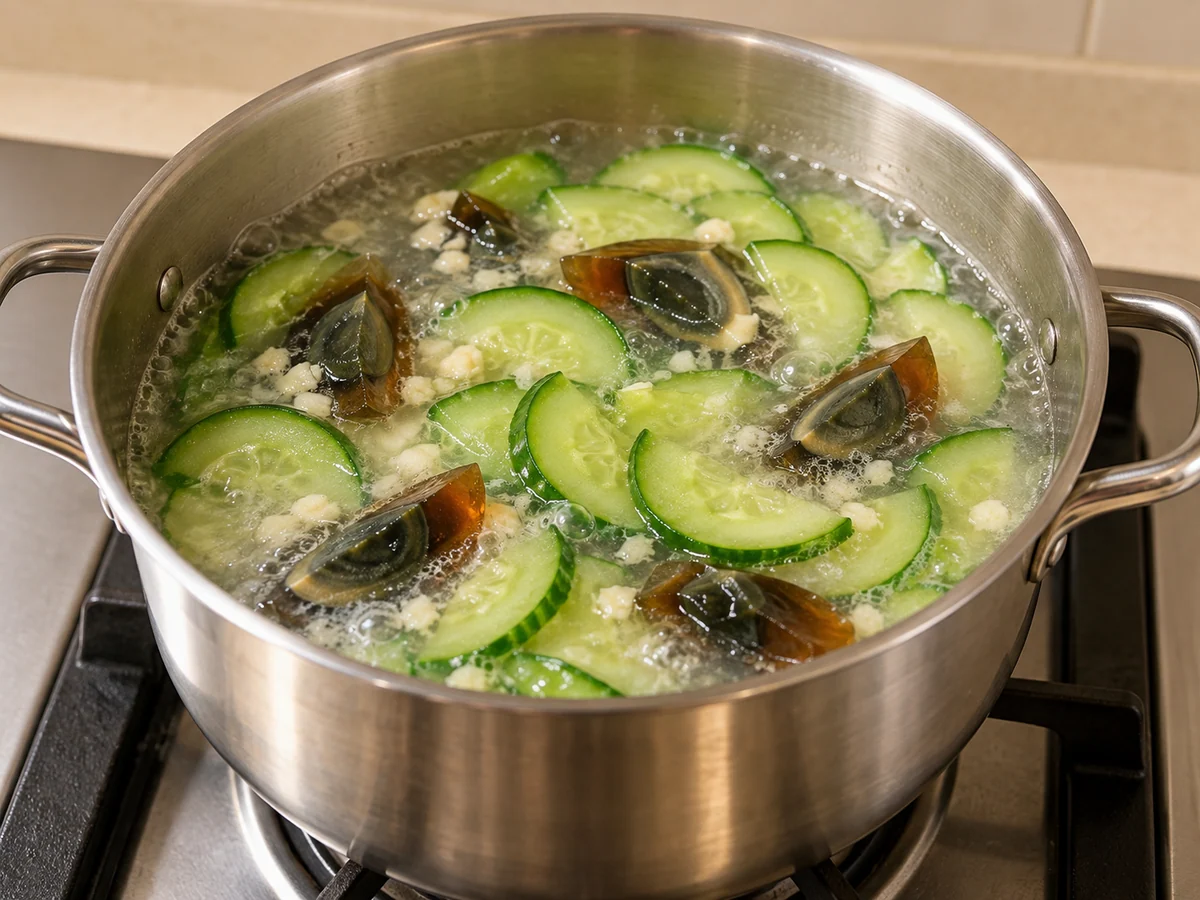
Cucumber and century egg soupCook cucumber and season
Add cucumber slices and let boiling return. Check they are hot through and slightly softened, then mix in salt and optional bouillon rather than turning off while the soup is still cooling from the added cucumber.
Look forThe cucumber is hot through and the whole soup has returned to a boil.
See the full recipe ↗ 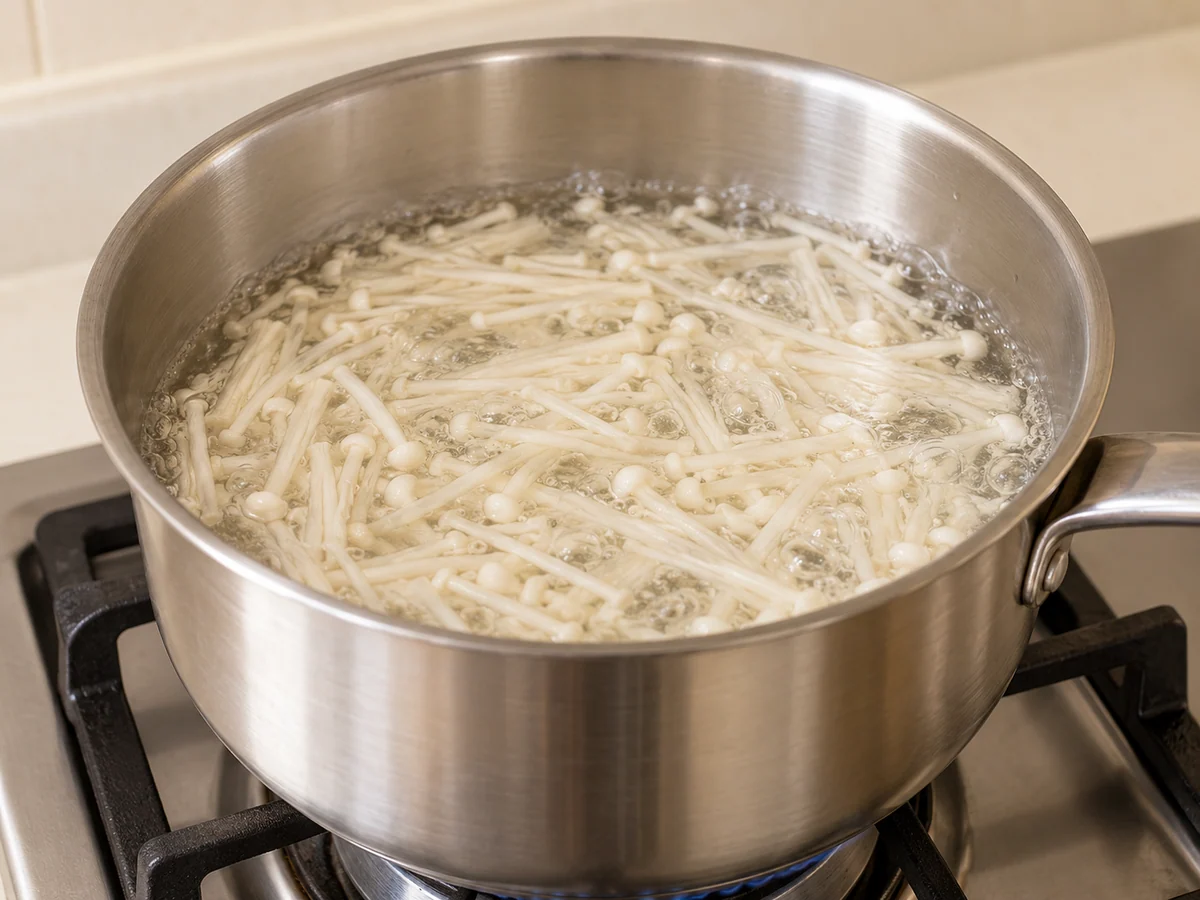
Enoki mushroom soupCover with water and boil
Cover the enoki with drinking water in a pot with headspace. Bring the whole pot to a boil and stir gently to immerse all mushrooms.
Look forThe whole pot is boiling and mushrooms heat evenly without clumping.
See the full recipe ↗ 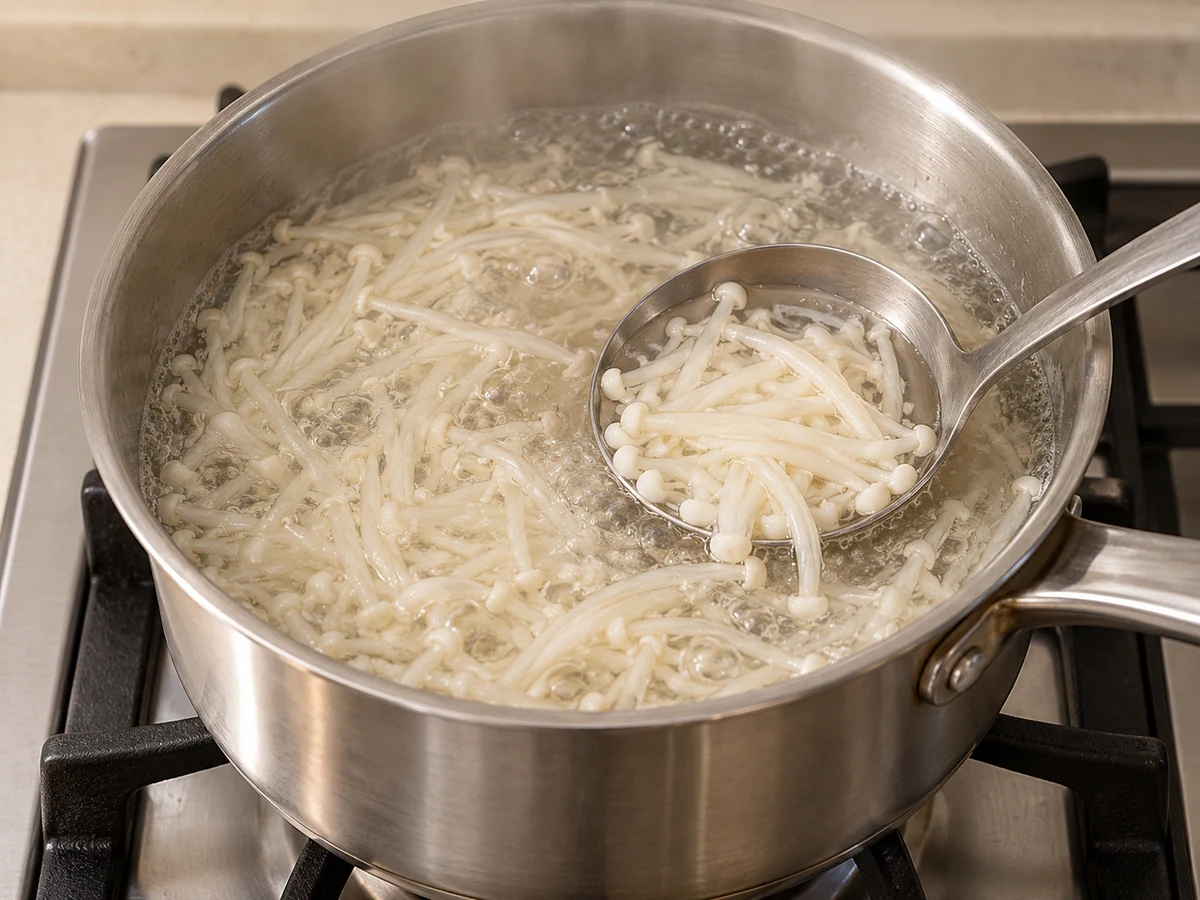
Enoki mushroom soupContinue until thoroughly cooked
Set a 3 min first check when the whole pot boils. Keep boiling, stir occasionally and cook thoroughly according to the package. Never serve enoki raw or add it raw as a final garnish; continue cooking if needed.
Look forThe enoki is thoroughly cooked as labeled and hot throughout.
See the full recipe ↗ 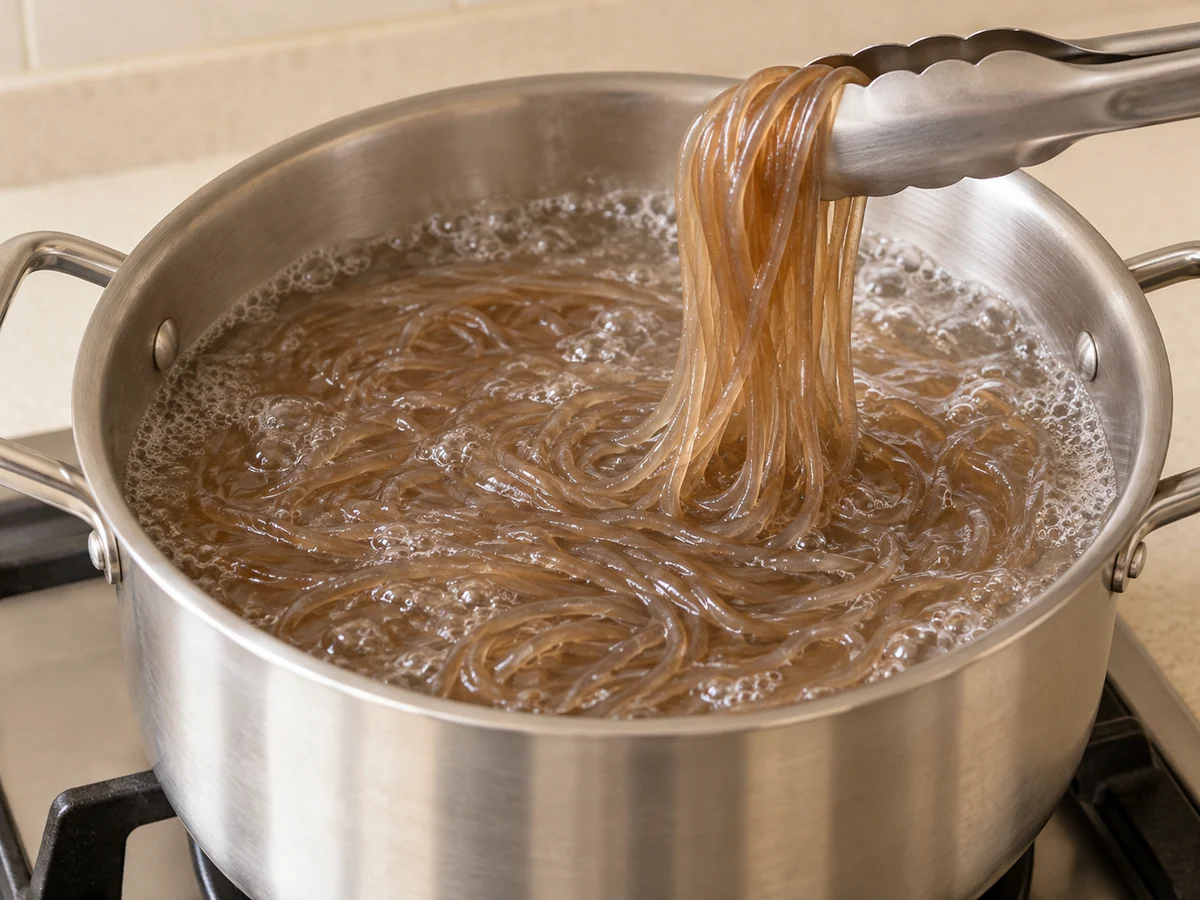
Sour and spicy fern starch noodlesCook noodles as labeled
Add noodles to ample boiling water and loosen gently. Once boiling resumes, set an 8 min reference check. Complete package directions govern whether shorter or longer; the noodles need no hard center, not merely a color change.
Look forThe noodles are pliable with no hard center.
See the full recipe ↗ FROM INSPIRATION TO DINNERYour next step is in the kitchen.
Bring a little guidance along. Open EagerCook for the cooking experience.