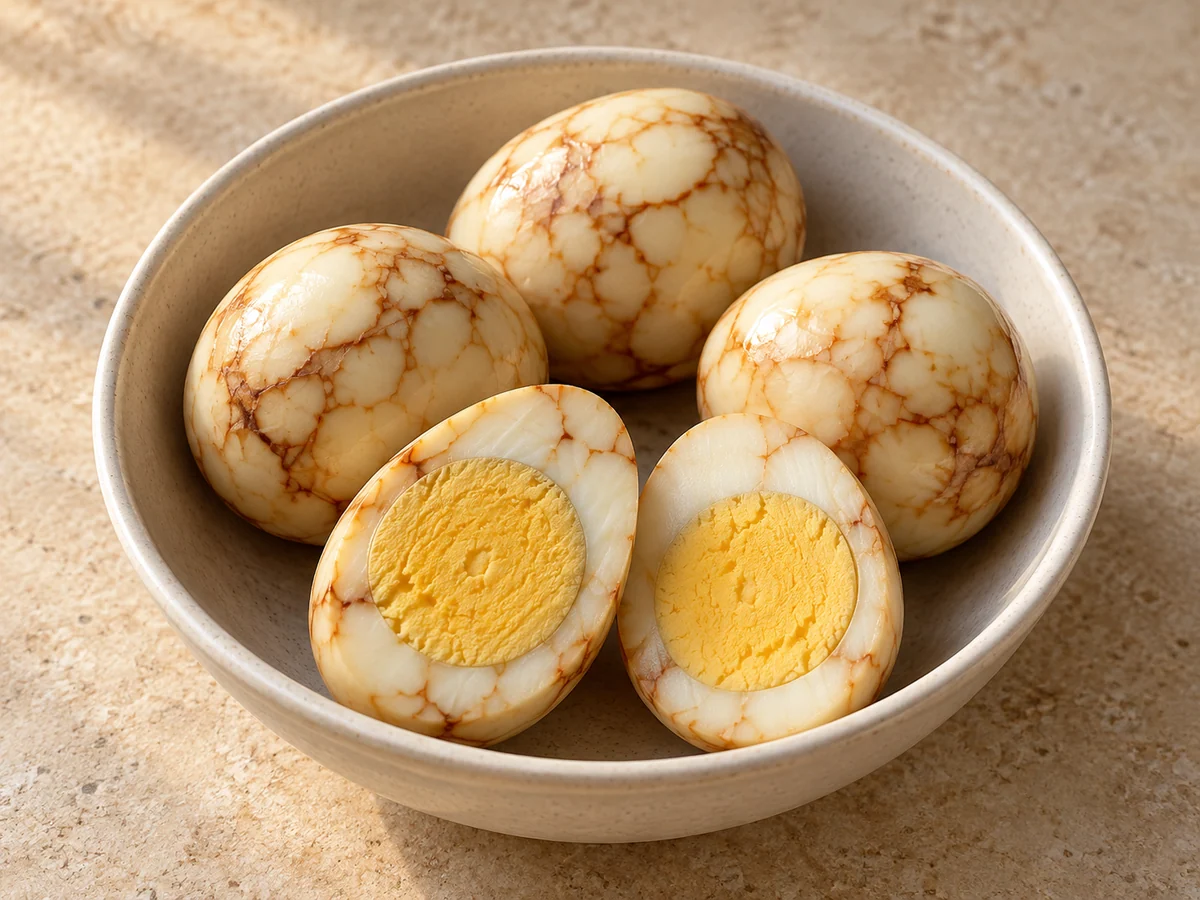
Tea eggs
Cook the eggs first, then crack the shells and simmer them in spiced tea.
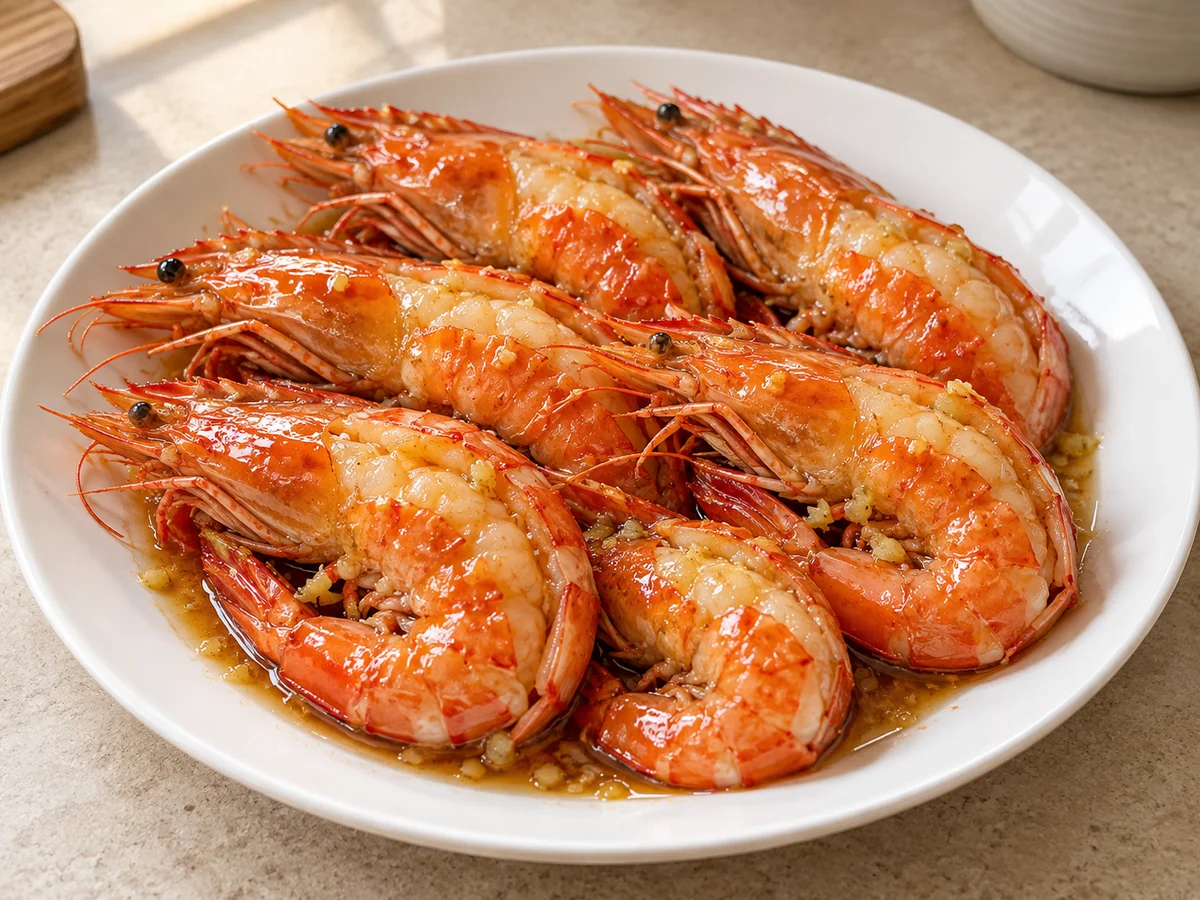
Sear then simmer whole prawns and finish with a light sweet-salty glaze, checking flesh rather than shell color.
Use prawns with sharp points trimmed, backs opened and veins removed. Drain and pat dry. Slice scallions; divide ginger in half, slicing one half and mincing the other.
Prawns are surface-dry and aromatics ready.
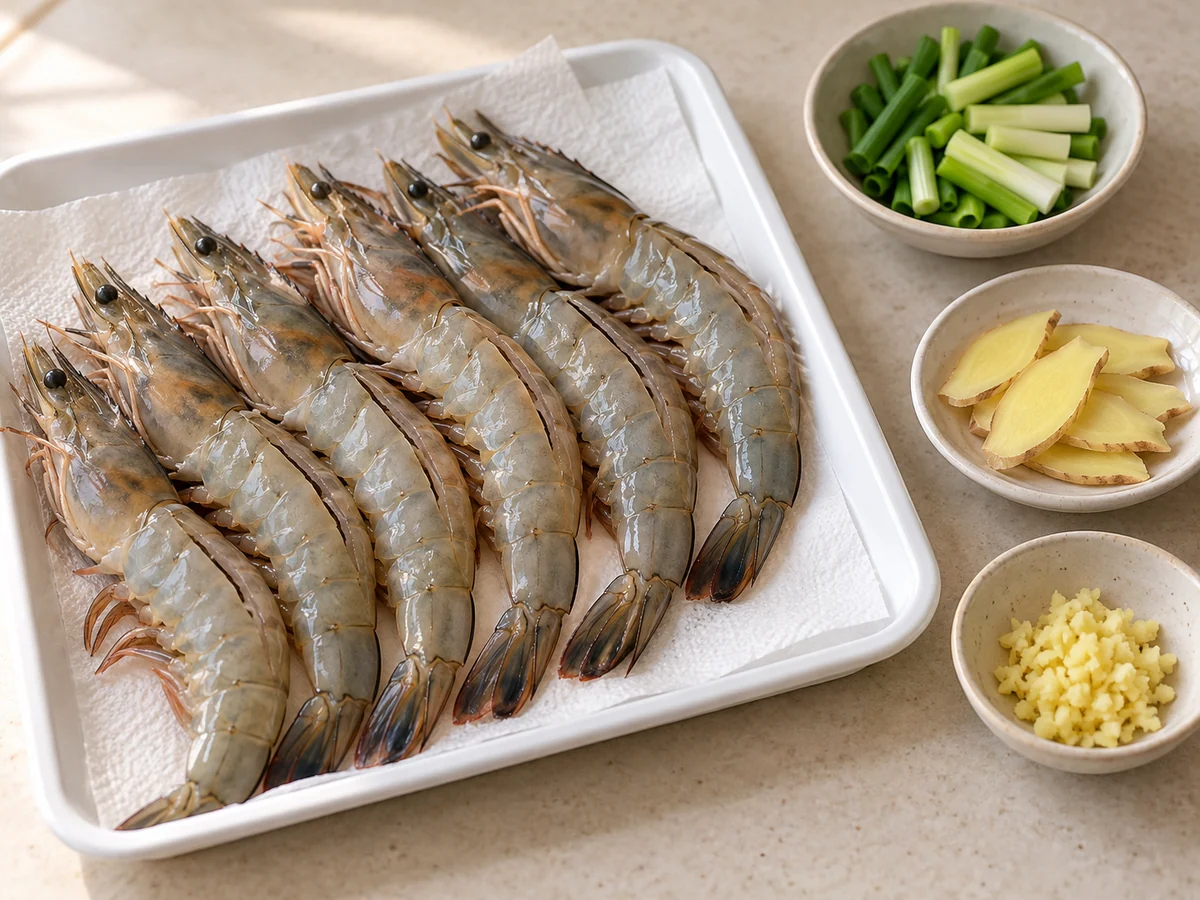 Preparation ↗
Lightly coat the pan with oil and gently cook peppercorns, scallions and ginger slices over low heat. When scallions are just pale golden, turn off heat and remove aromatics with a slotted spoon, leaving oil; do not let it smoke.
Oil is aromatic without blackened ingredients.
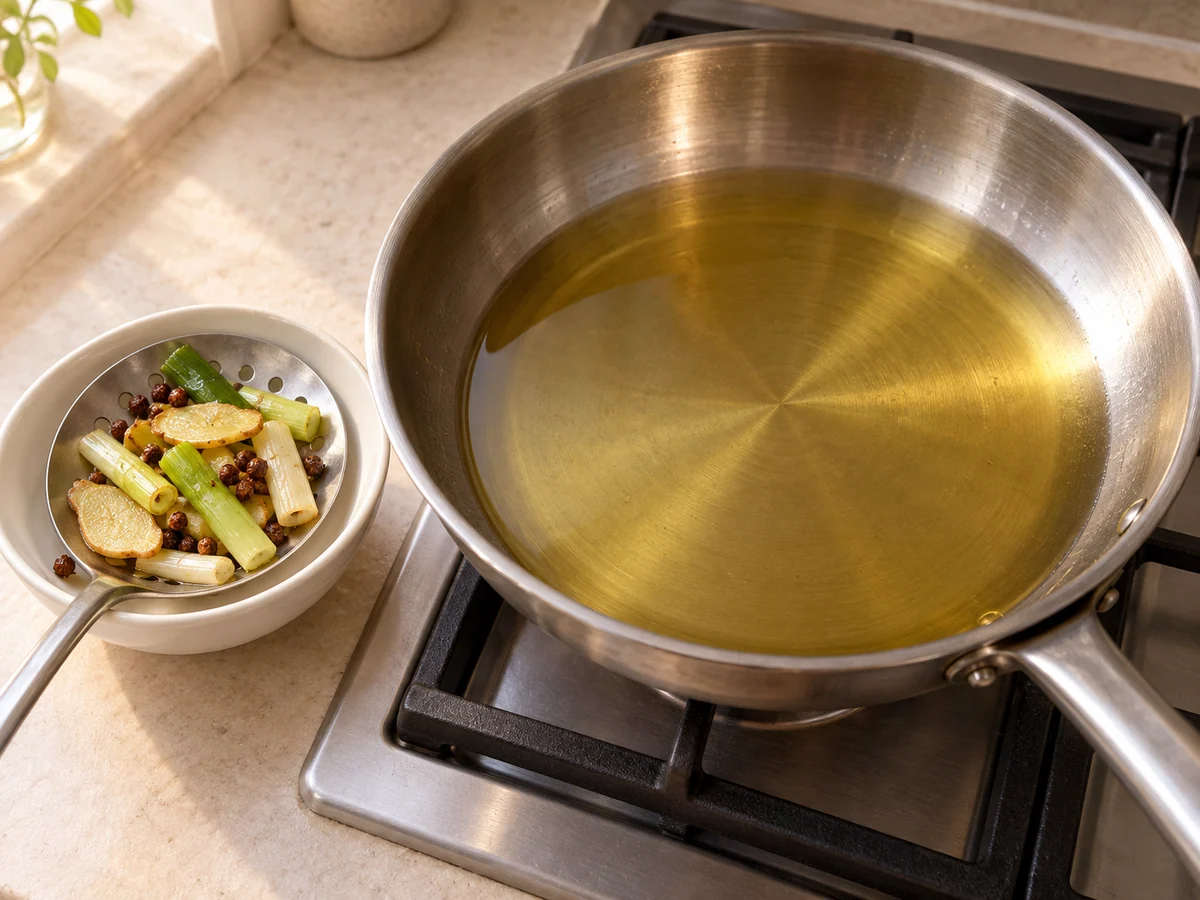 Heat control ↗
Arrange prawns in one layer over medium heat. Once shells change color on both sides, add minced ginger. Briefly remove from heat, slowly add wine, then water to mostly immerse the prawns, salt and sugar, leaving headroom for bubbling.
Prawns sit in sweet-salty liquid without crowding.
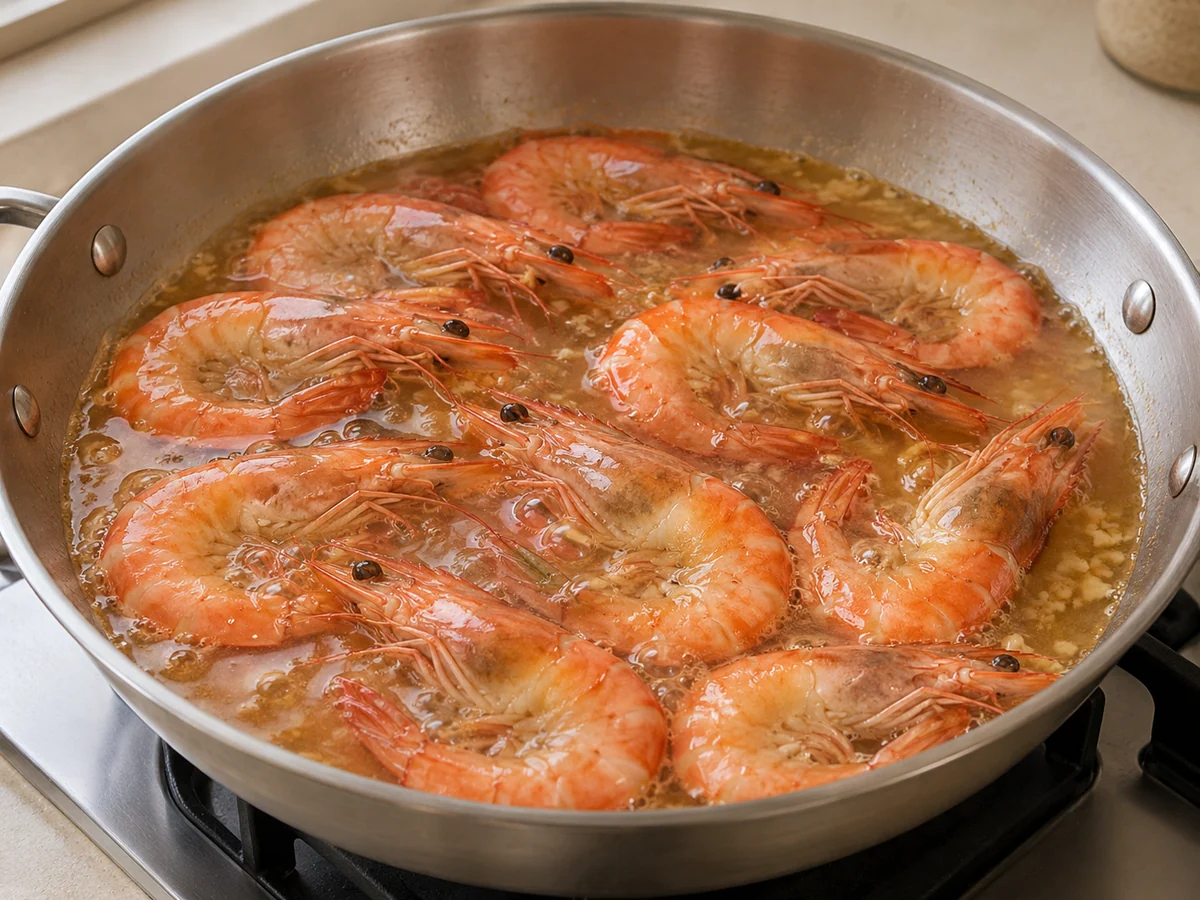 Pan-frying ↗
Bring to a boil, reduce heat and cover, opening as needed to check. Inspect the thickest prawn inside and remove only when flesh is pearly white and opaque. If liquid runs low first, add a little hot water rather than obeying a no-opening/no-top-up rule.
Thickest prawn flesh is pearly white and opaque.
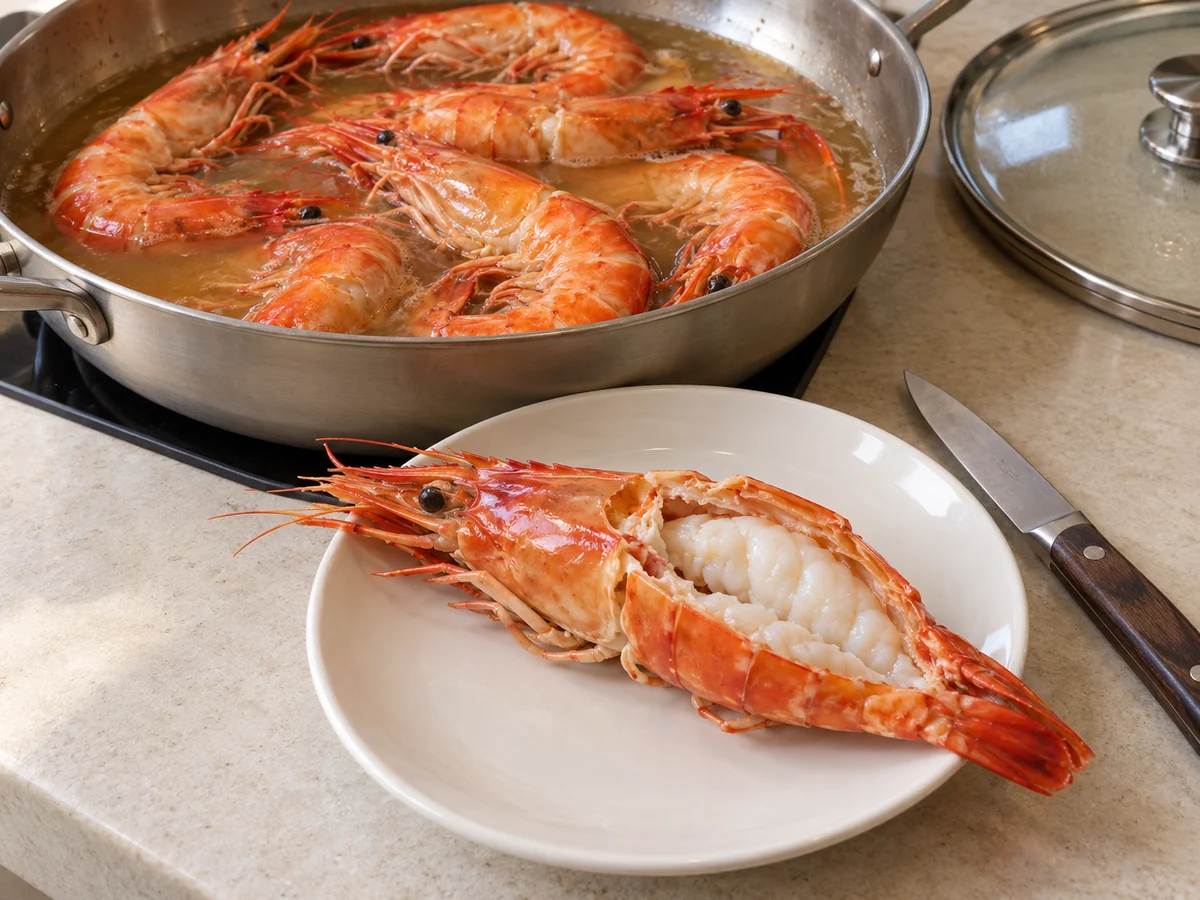 Simmering ↗
Plate cooked prawns and reduce their sauce over medium-low heat until it lightly coats a spoon, stirring and stopping before it becomes hard caramel. Spoon it evenly over the prawns.
Red-shelled prawns with opaque flesh and an even thin sweet-salty glaze.
Reduction ↗Adapted from HowToCook / 油焖大虾 · HowToCook contributors / Anduin2017/HowToCook · Unlicense
Bilingual editorial adaptation. Independently content-reviewed; not kitchen-tested. Project-generated images illustrate this recipe and its steps, rather than a user’s cooking result. Timing is an estimate; check actual ingredients, labels and doneness.
Bring a little guidance along. Open EagerCook for the cooking experience.