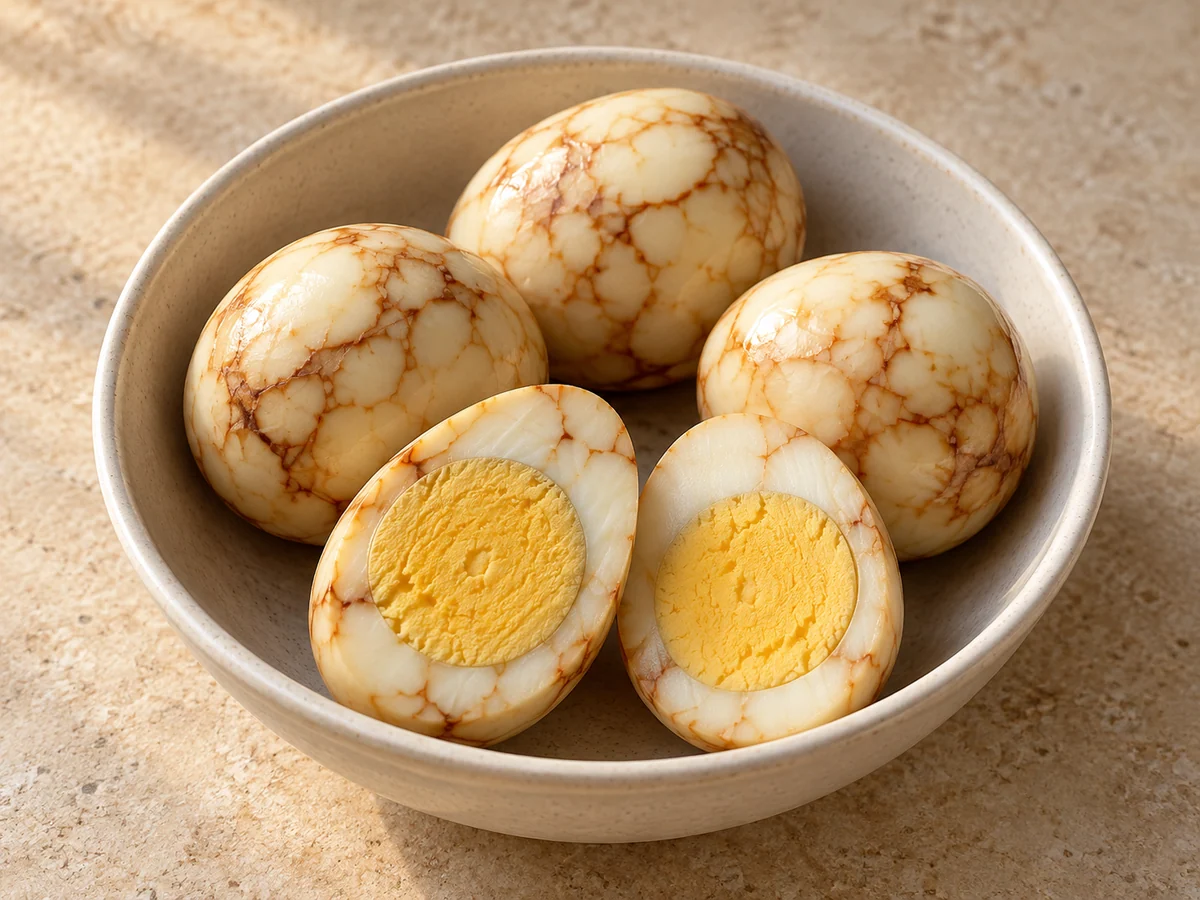
Tea eggs
Cook the eggs first, then crack the shells and simmer them in spiced tea.
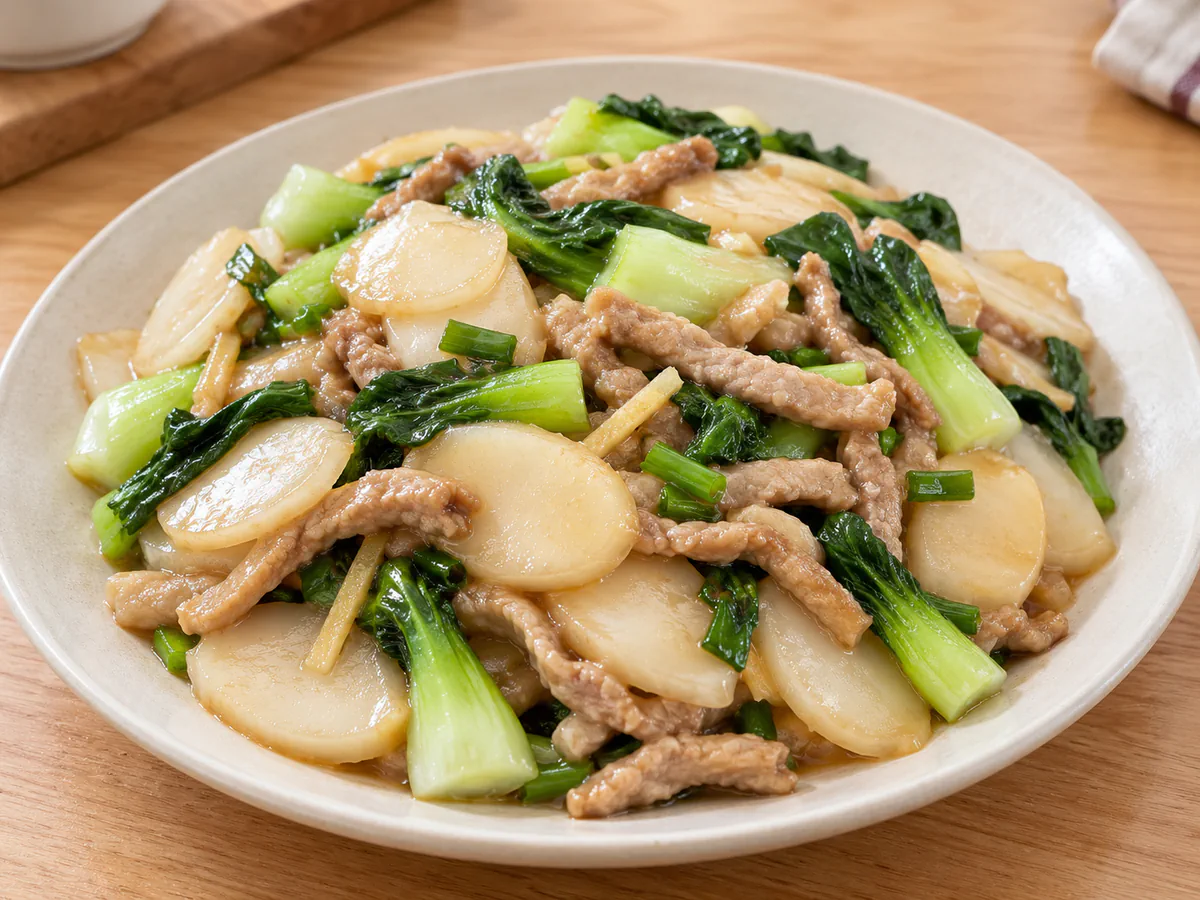
Pork, bok choy and aromatics flavor tender rice cakes finished with a light coating of sauce.
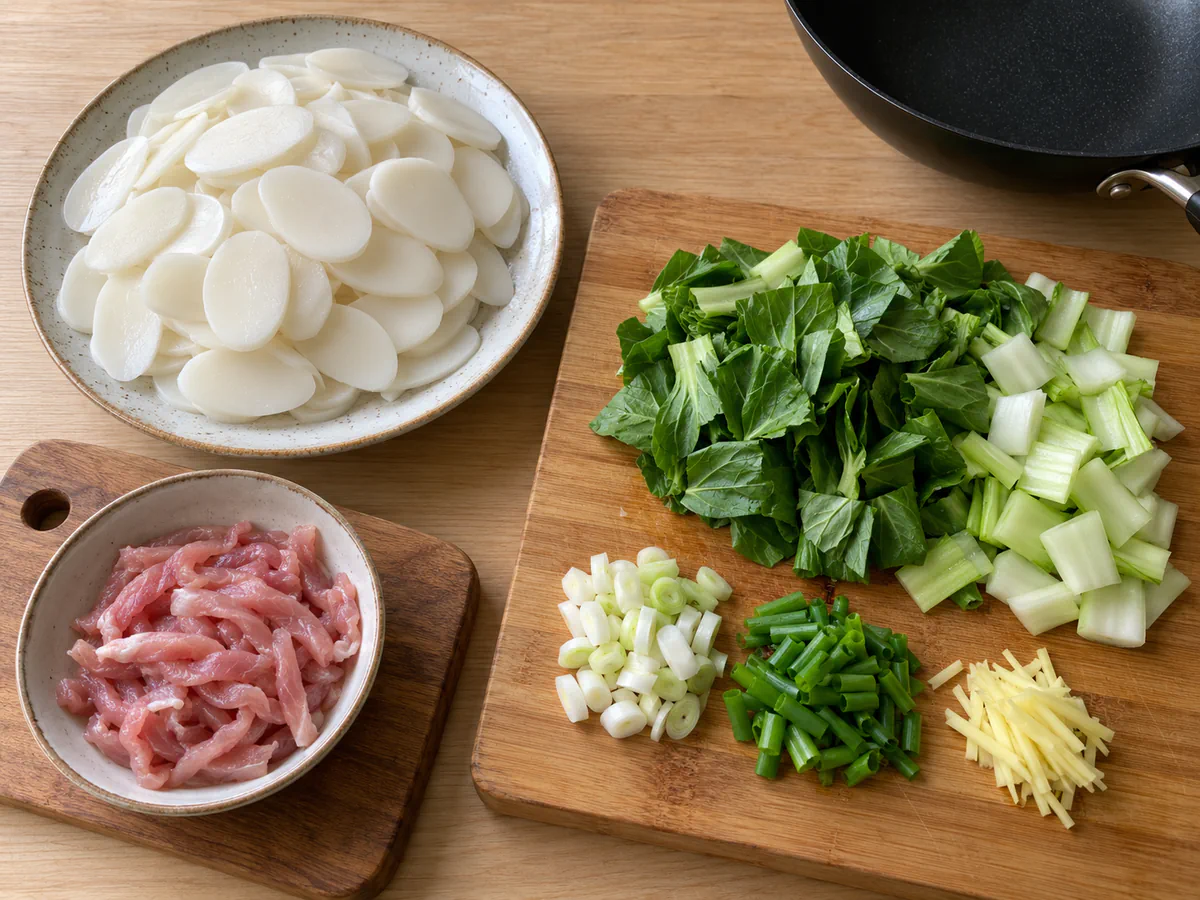
Wash and drain bok choy; separate stems from leaves. Cut scallion and ginger. On a separate board, slice pork across the grain into roughly 3 mm strips; clean hands and equipment afterward. Separate refrigerated rice-cake slices. Frozen or dried products need package-directed preparation first; never force a knife through frozen blocks.
Even pork strips, separated stems and leaves, and loose rice-cake slices.
 Knife work ↗
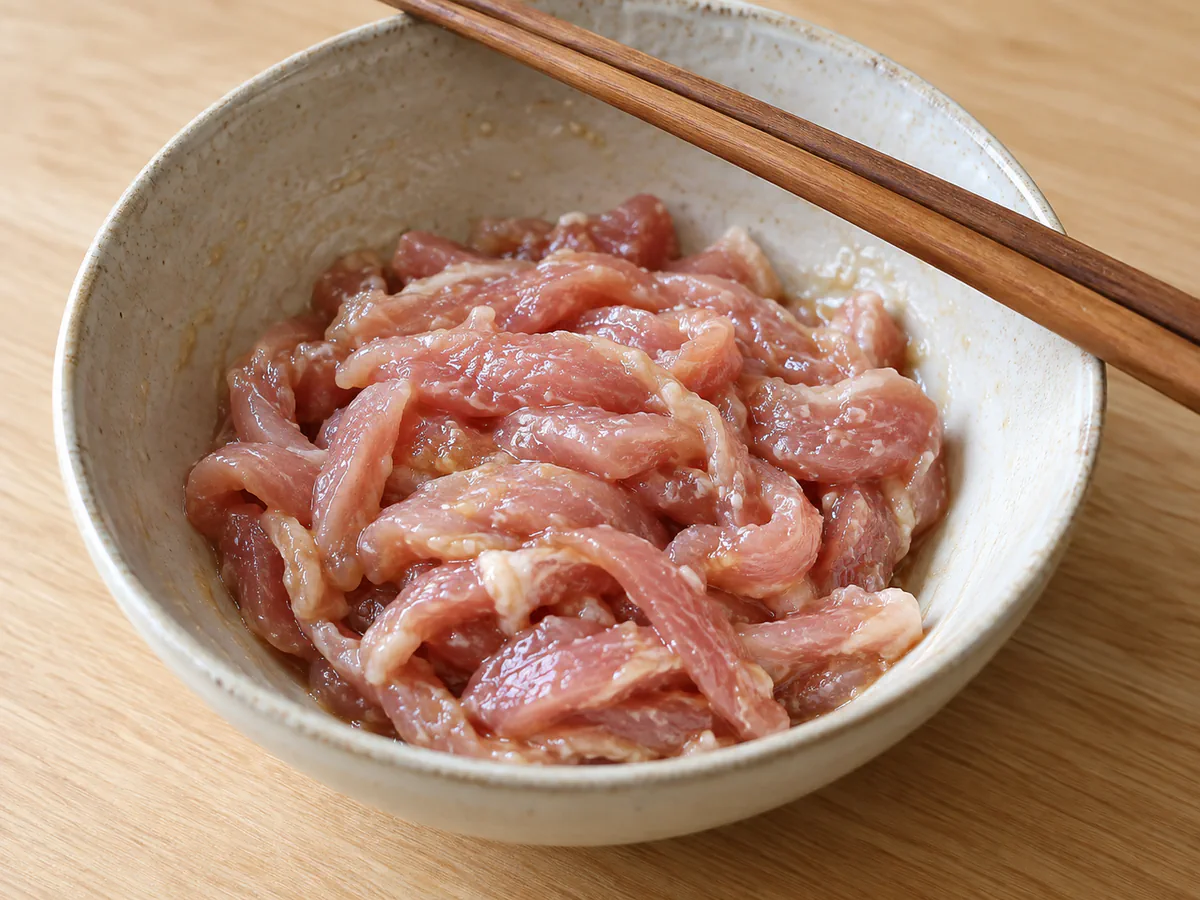
Coat pork with one third of the soy sauce and all the cornstarch while you ready the pan. Reserve the remaining soy sauce.
The pork has a thin coating without dry starch lumps.
 Marinating ↗
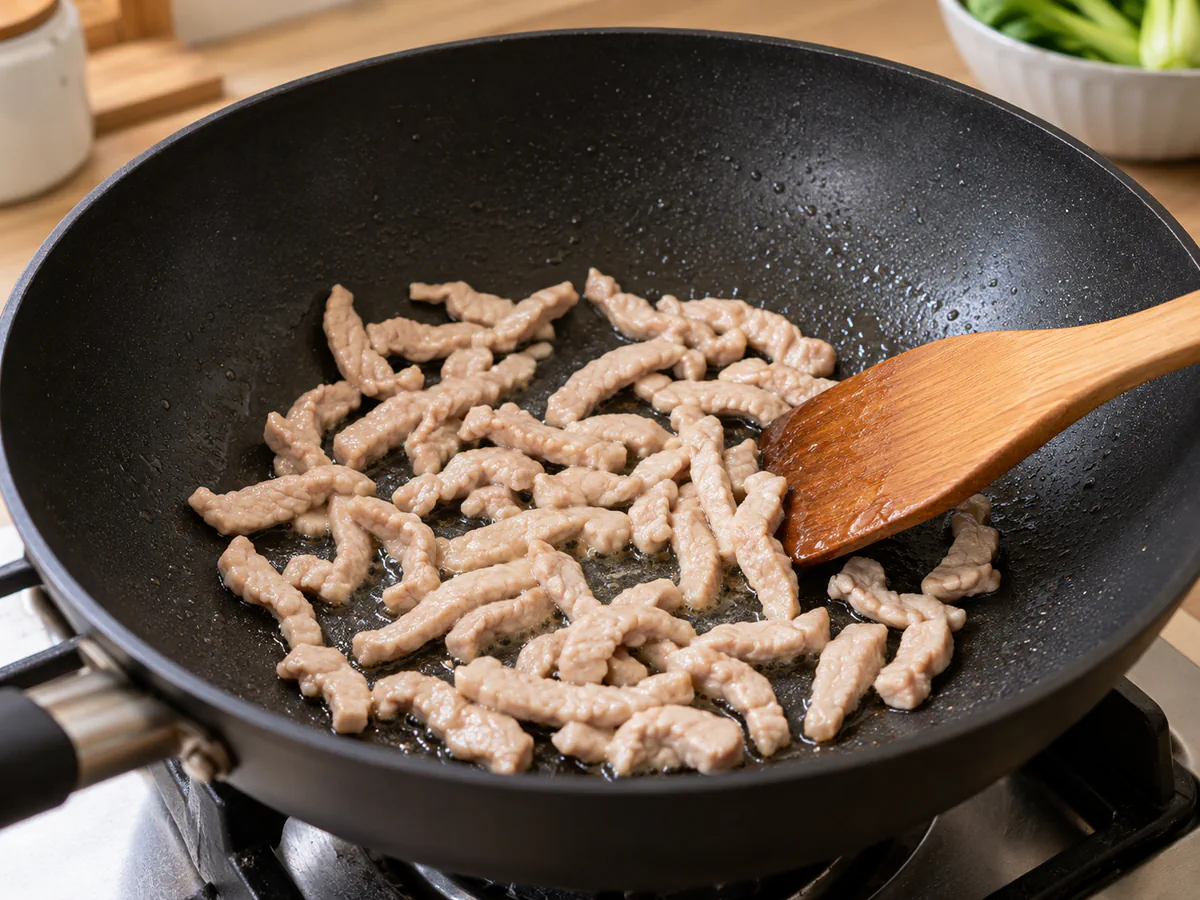
Warm the pan over medium-high heat. Add half the oil and, before it smokes, spread and stir the pork until cooked. Transfer to a clean plate. Do not eat pork based on surface color alone; it will also simmer again later. Cook larger quantities in batches.
Separated pork strips with no wet coating or burnt starch.
 Stir-frying & sautéing ↗
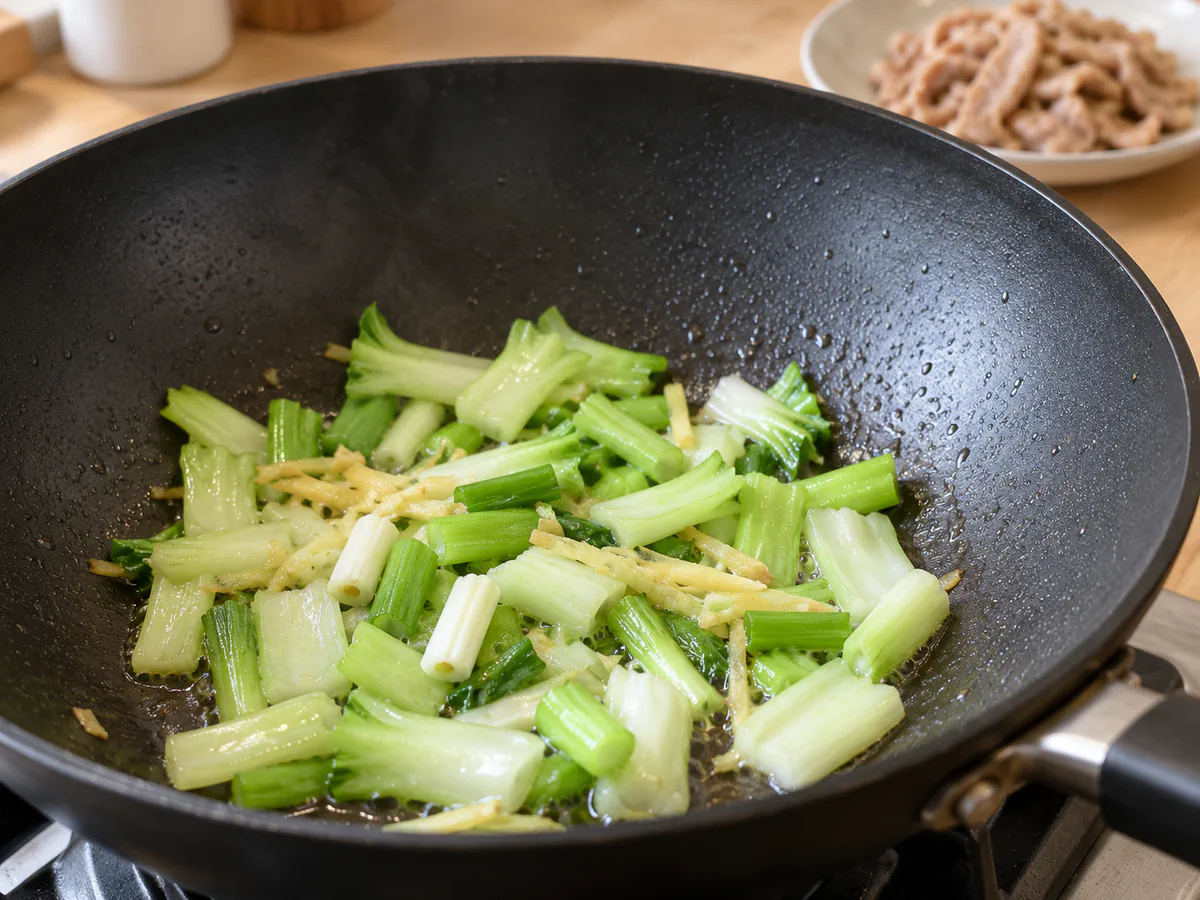
Add the remaining oil. Briefly sauté ginger and scallion whites until fragrant, then stir-fry the bok-choy stems until just tender. Do not blacken the aromatics. Reserve leaves and scallion greens.
Fragrant aromatics and slightly translucent stems that retain bite.
 Stir-frying & sautéing ↗
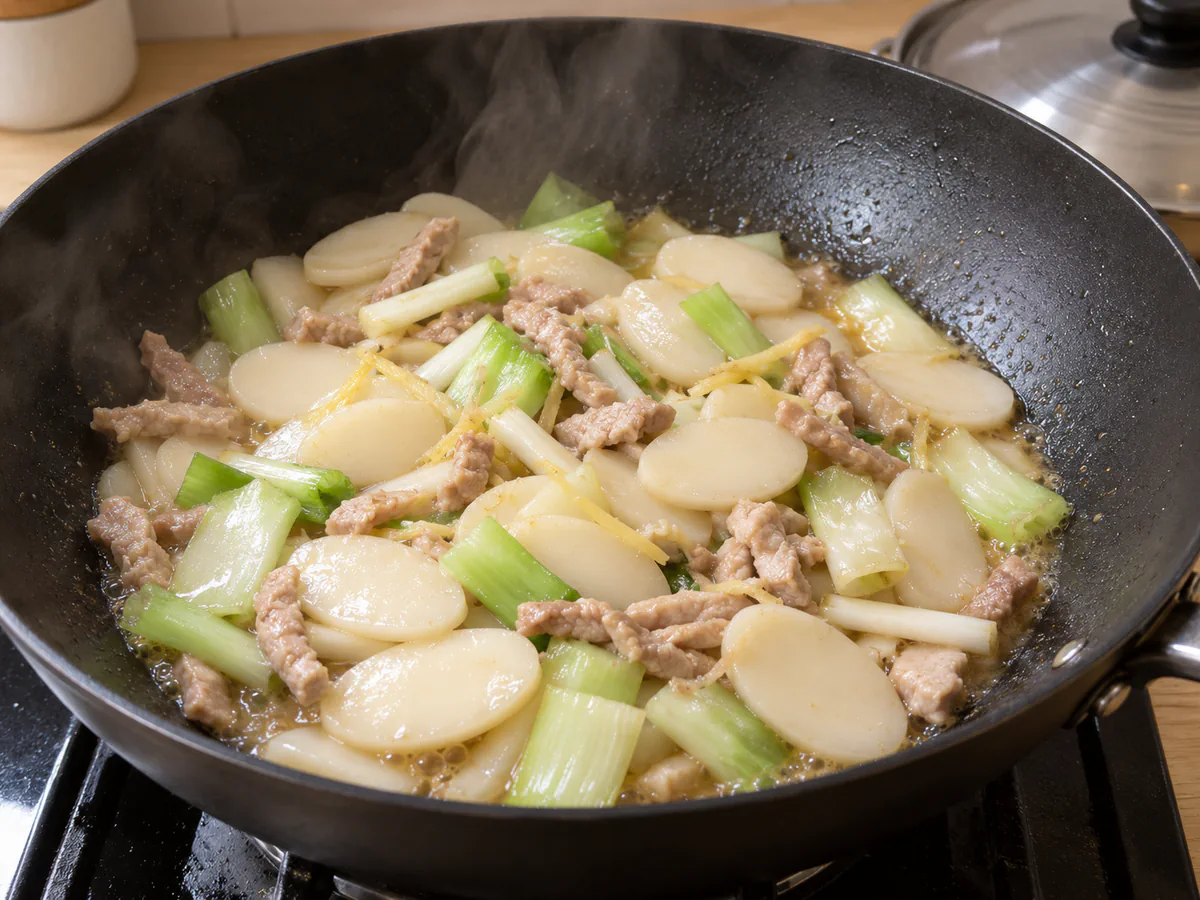
Add rice cakes, pork, remaining soy sauce and the measured water. Fold gently. Once bubbling, cover over medium heat and set a 2 min check. Uncover, turn and check the centers; add a small splash of hot water and continue if firm. Do not scrape a dry pan. Follow longer package cooking requirements.
Rice cakes are hot and flexible with no firm core; a thin layer of liquid remains.
 Simmering ↗
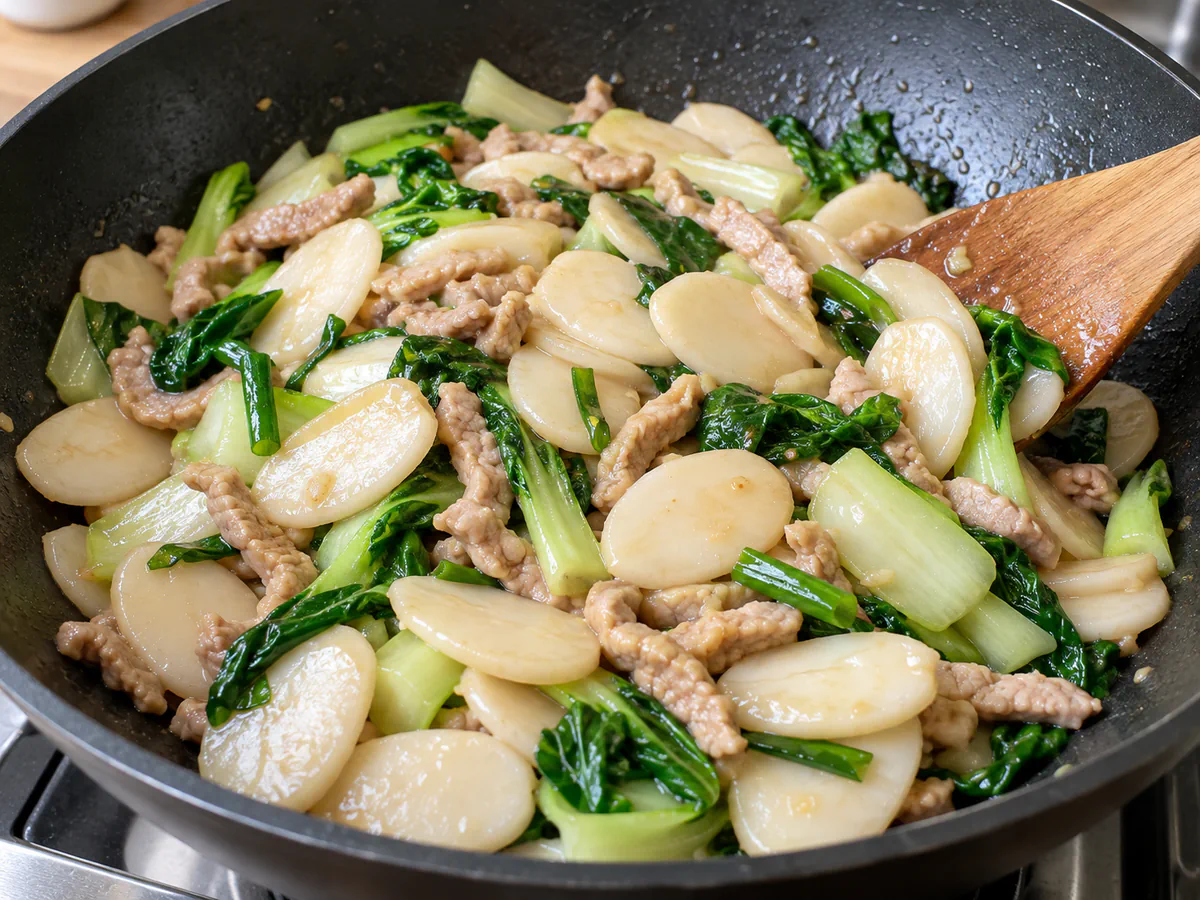
Fold in bok-choy leaves and scallion greens over medium-high heat until the leaves soften and pork is piping hot throughout. Reduce excess liquid uncovered or add a small splash if dry. Aim for a moist coating, not soup or dried-out rice cakes. Before serving, use a clean thin probe to check that the thickest pork strip reaches 75°C for at least 30 seconds; surface color and elapsed time are not substitutes.
Cooked green leaves, thoroughly cooked pork and lightly coated rice cakes.
 Stir-frying & sautéing ↗
Once the pork is fully cooked and rice cakes have no firm core, taste and serve hot. This makes one substantial main-course portion. For more servings, use batches rather than multiplying cooking timers.
Rice cakes, pork and bok choy are moist without a pool of broth.
Seasoning ↗Adapted from HowToCook / 炒年糕 · HowToCook contributors / Anduin2017/HowToCook · Unlicense
Bilingual editorial adaptation. Independently content-reviewed; not kitchen-tested. Project-generated images illustrate this recipe and its steps, rather than a user’s cooking result. Timing is an estimate; check actual ingredients, labels and doneness.
Bring a little guidance along. Open EagerCook for the cooking experience.