
Tea eggs
Cook the eggs first, then crack the shells and simmer them in spiced tea.
Steam thin dried noodles, toss with pork and garlic-scape sauce, then steam again.
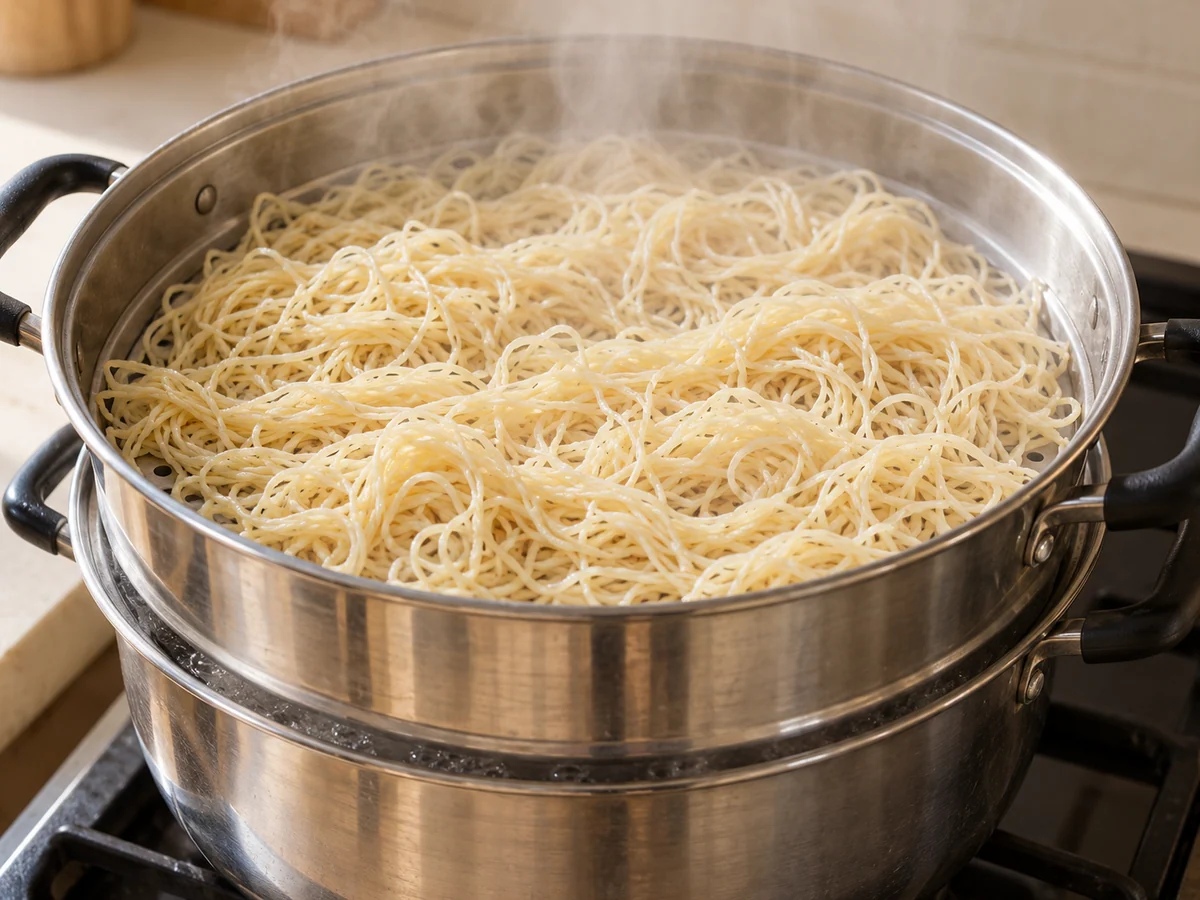
Bring steamer water to a boil below the basket. Arrange thin noodles loosely and coat with about five eighths of the cooking oil. Once steady steam returns, set a 15 min check and keep steam paths open.
Steam has warmed and softened the noodles somewhat without forming a thick clump.
 Steaming ↗
Thinly slice the pork, wash and cut garlic scapes into short lengths, and chop scallion, ginger and garlic. Keep raw-meat equipment separate and clean it afterward.
The pork slices are even and vegetables are prepared separately.
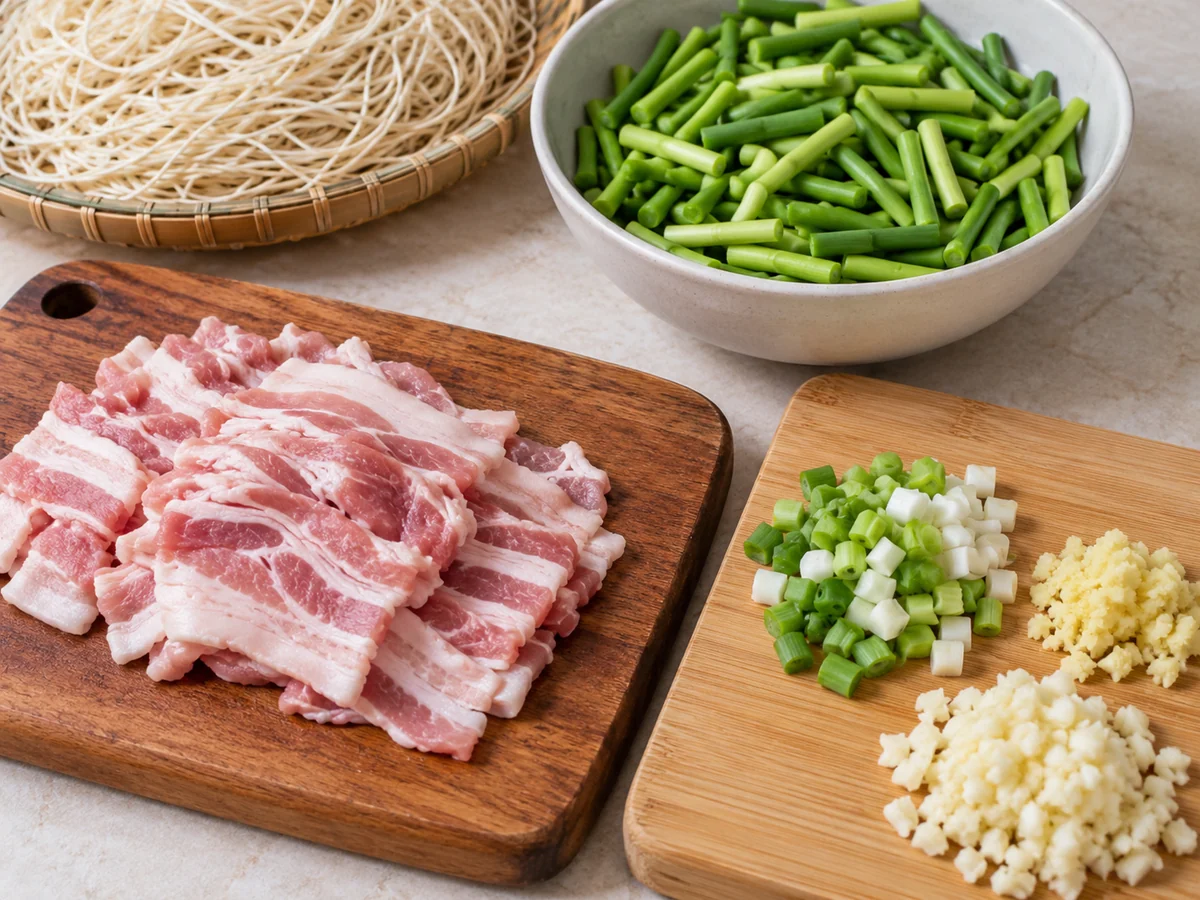 Knife work ↗
Warm the remaining cooking oil over medium heat and separate the pork slices. Add scallion, ginger, garlic and wine, then toss with scapes, both soy sauces, oyster sauce, salt, bouillon and spice.
Pork and vegetables are evenly seasoned without scorching.
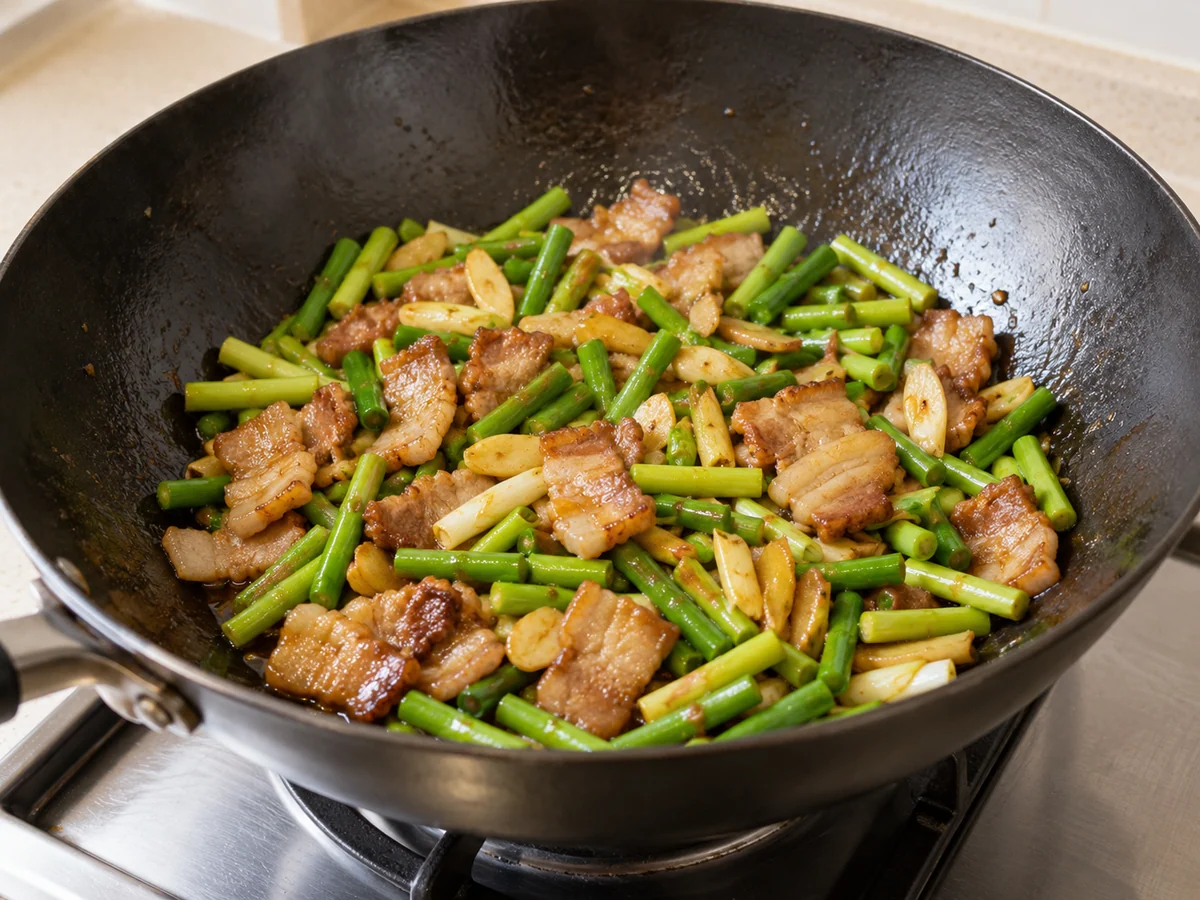 Stir-frying & sautéing ↗
Add the sauce water and bring to a boil. Fold in the first-steamed noodles gently and set a 3 min check. Transfer to a heatproof bowl once evenly coated and absorbing sauce; do not fry the pan dry.
The noodles are evenly colored and sauce is distributed between them.
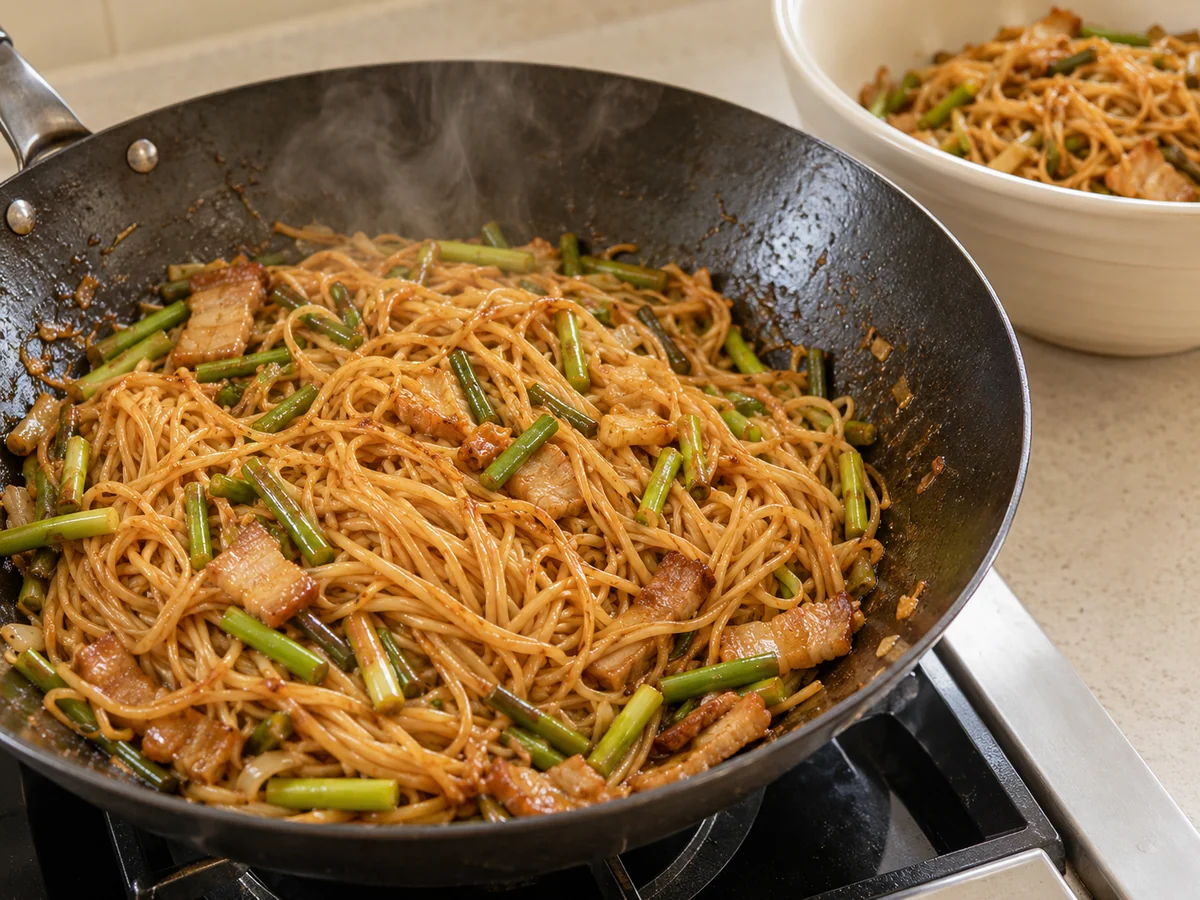 Mixing & beating ↗
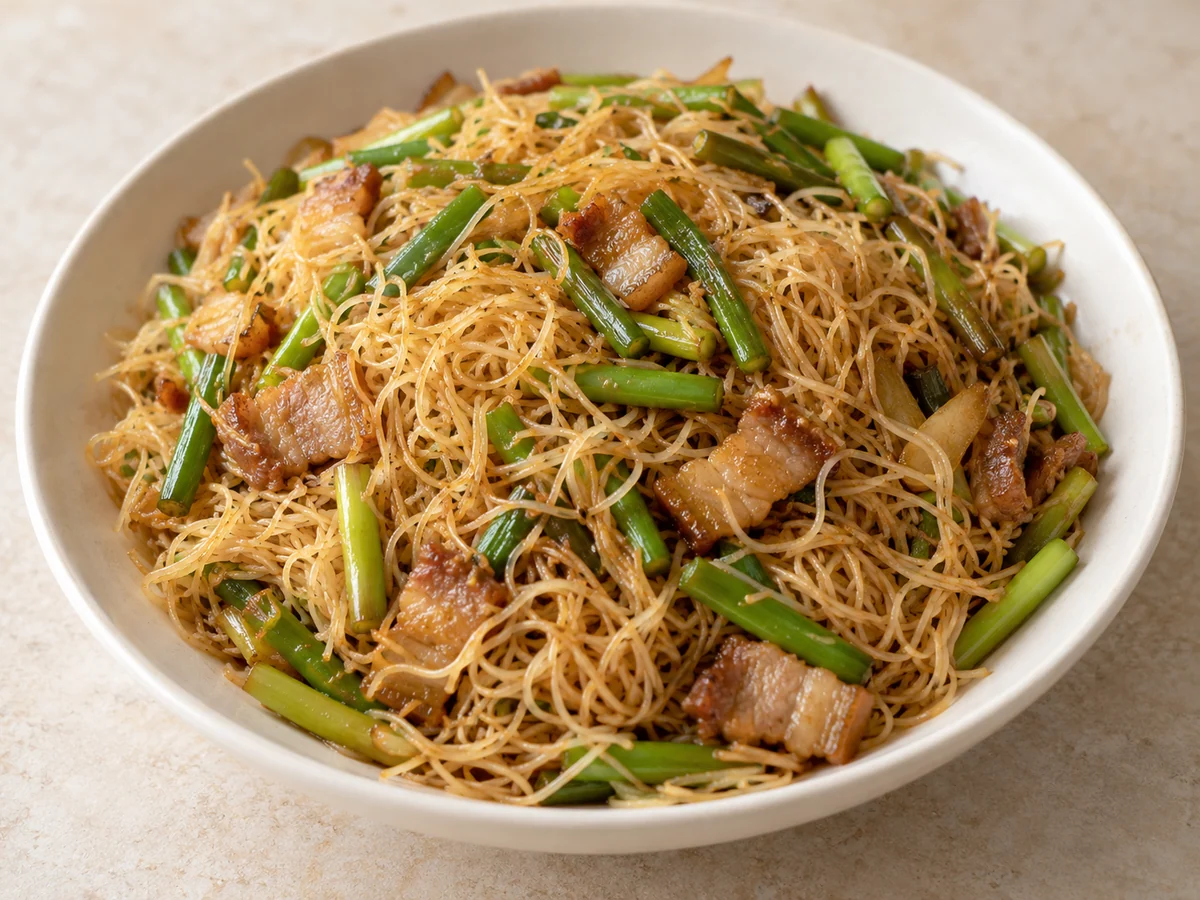
Refill the steamer safely, arrange noodles and vegetables loosely and set a 15 min check once steam returns. Noodles must have no hard centers and the thickest pork must reach 63°C. Continue if needed without letting the pot dry.
The noodles have absorbed the sauce without hard centers and the pork reaches 63°C.
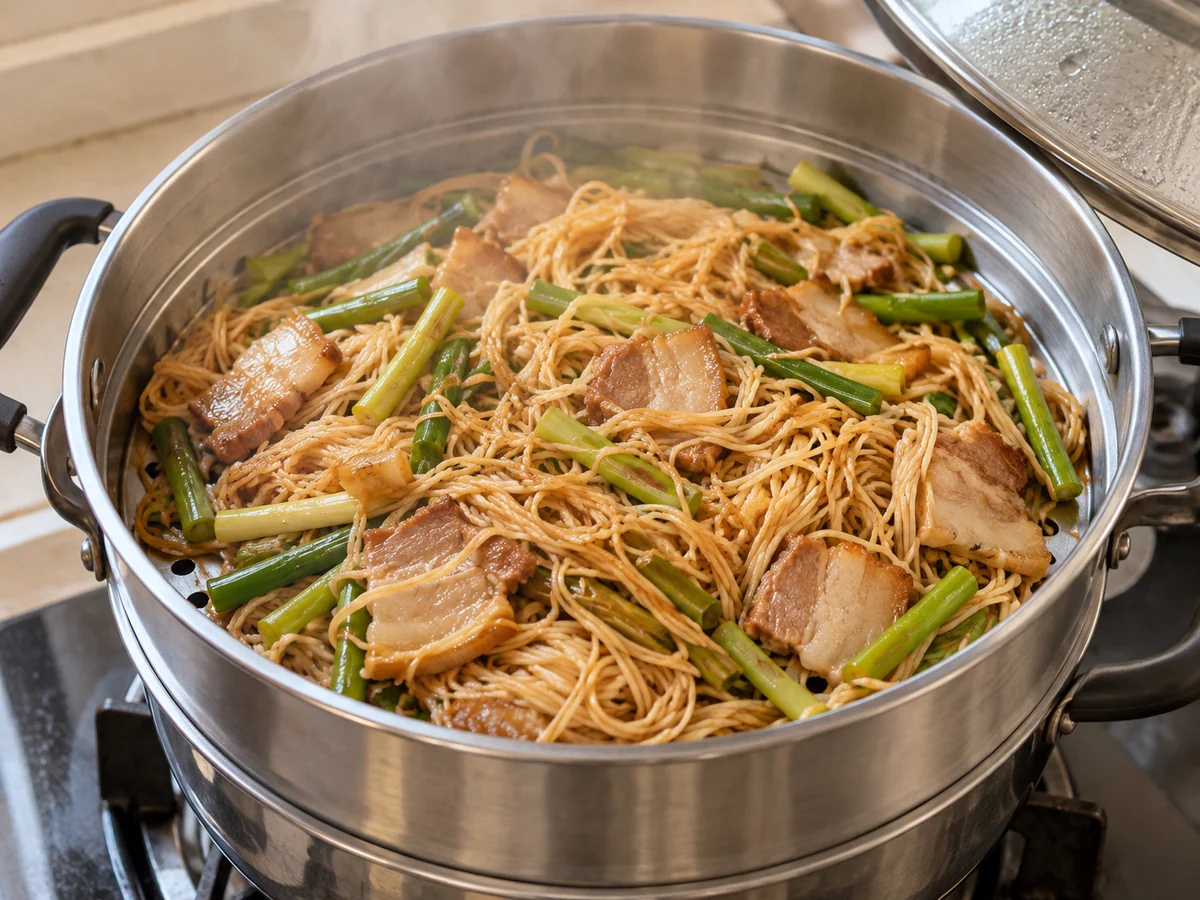 Steaming ↗
Turn off the heat and remove safely away from steam. Toss with sesame oil and set a 3 min rest reminder before serving to complete the pork’s safety rest.
The noodles are separated and glossy and the pork is cooked and rested.
Seasoning ↗Adapted from HowToCook / 河南蒸面条 · HowToCook contributors / Anduin2017/HowToCook · Unlicense
Bilingual editorial adaptation. Independently content-reviewed; not kitchen-tested. Project-generated images illustrate this recipe and its steps, rather than a user’s cooking result. Timing is an estimate; check actual ingredients, labels and doneness.
Bring a little guidance along. Open EagerCook for the cooking experience.