
Tea eggs
Cook the eggs first, then crack the shells and simmer them in spiced tea.
Simmer pork belly with napa stems, then add the leaves and softened potato-starch noodles.
2 servings · 6 steps
Add noodles to boiling water and set a 5 min check once boiling resumes. Transfer with the hot water to a heatproof container, cover and soak until pliable according to the package; thick noodles may need longer.
The noodles have loosened and become pliable in the hot soaking water.
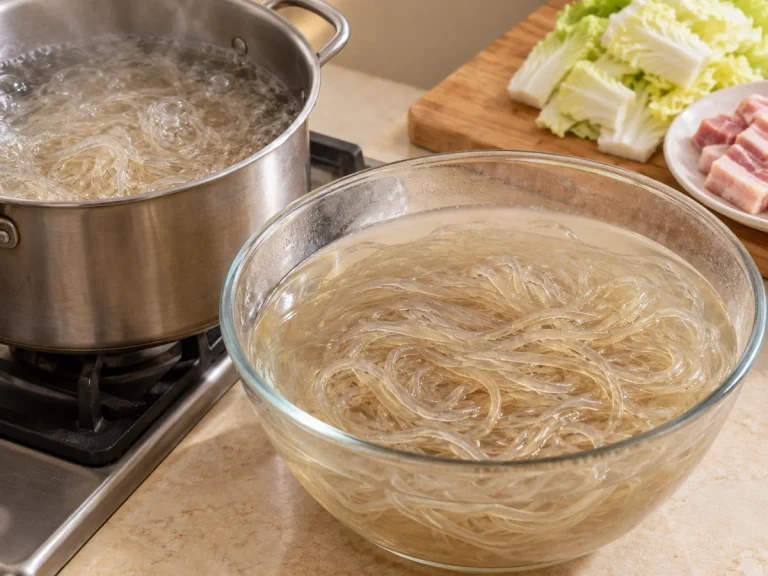 Boiling
Wash napa and cut stems and tender leaves separately. On a separate board, slice pork belly about 3 mm thick without rinsing raw meat. Wash hands and clean utensils afterward.
Cabbage stems and leaves are separate and pork slices are evenly thin.
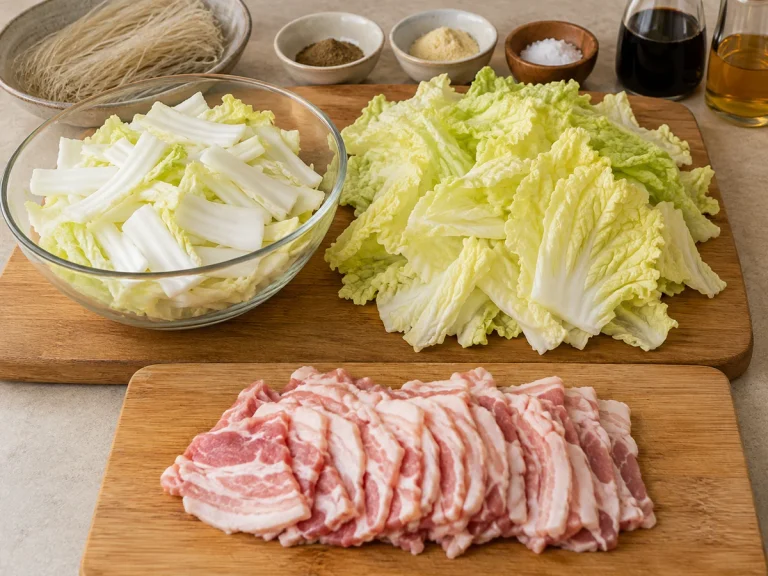 Knife work
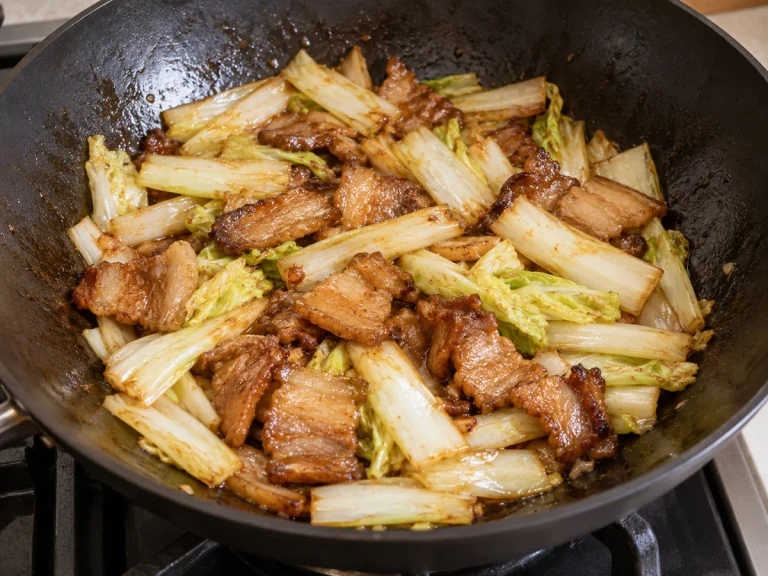
Heat oil over medium and separate the pork slices until surfaces change color, then coat with dark soy. Add cabbage stems, light soy and a little salt. If sticking, add a little braising water; reserve the remaining salt for tasting after cooking.
Pork slices are evenly colored and cabbage stems coated in sauce.
 Stir-frying & sautéing
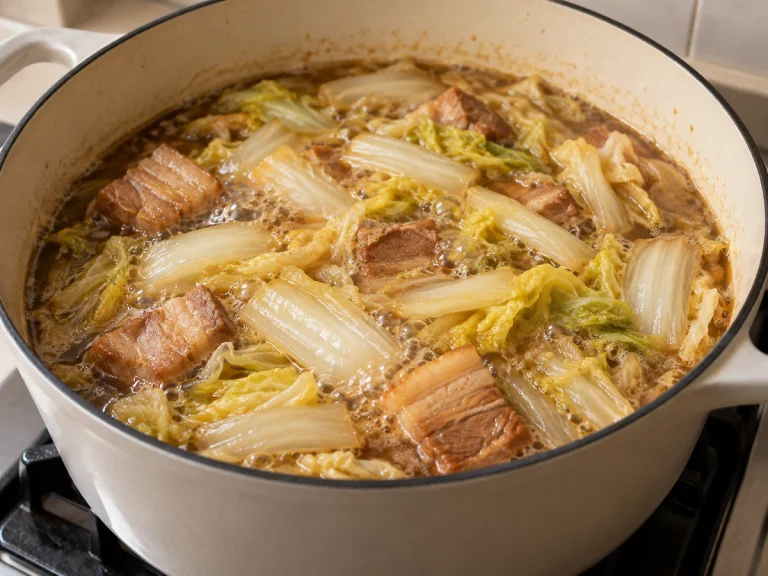
Add water to just cover pork and stems, then stir in bouillon and spice powder. Bring to a boil, reduce to a gentle simmer and set a 20 min check, topping up with a little hot water if needed.
Pork and cabbage stems gently bubble in broth as stems become translucent.
 Simmering
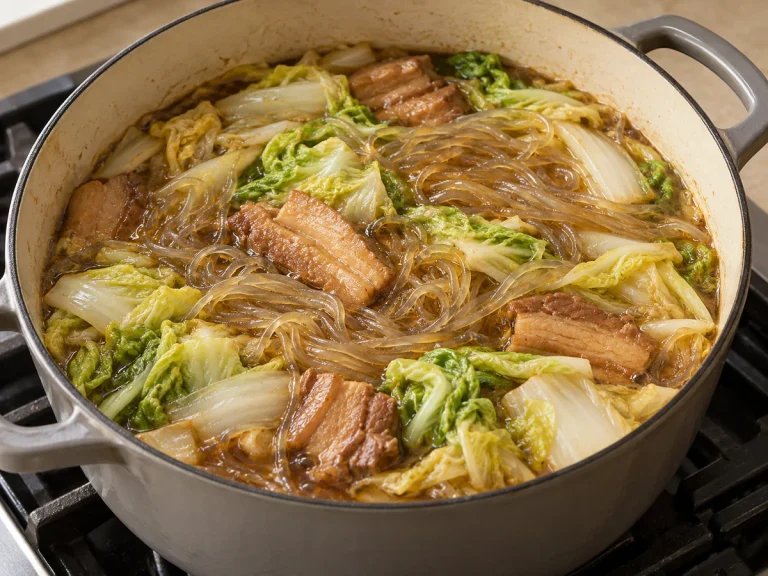
Drain and shorten noodles with kitchen shears. Mix cabbage leaves into the pot, add noodles and press into the broth. Cover and set a 5 min check. Continue until noodles have no hard centers, stems are tender and the thickest pork slice reaches 63°C.
Noodles are translucent and supple, leaves wilted and the broth still fluid.
 Simmering
Taste the cooked broth before deciding whether more salt is needed; do not force in the remainder. Turn off heat and set a 3 min rest reminder before eating. Keep some broth so the noodles do not dry into a solid clump.
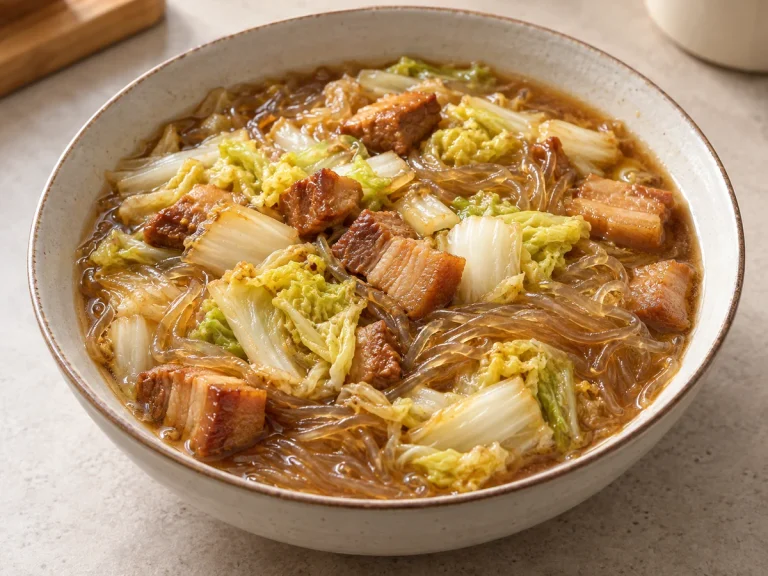
Cabbage, pork and noodles are evenly distributed in a flavorful broth.
Seasoning