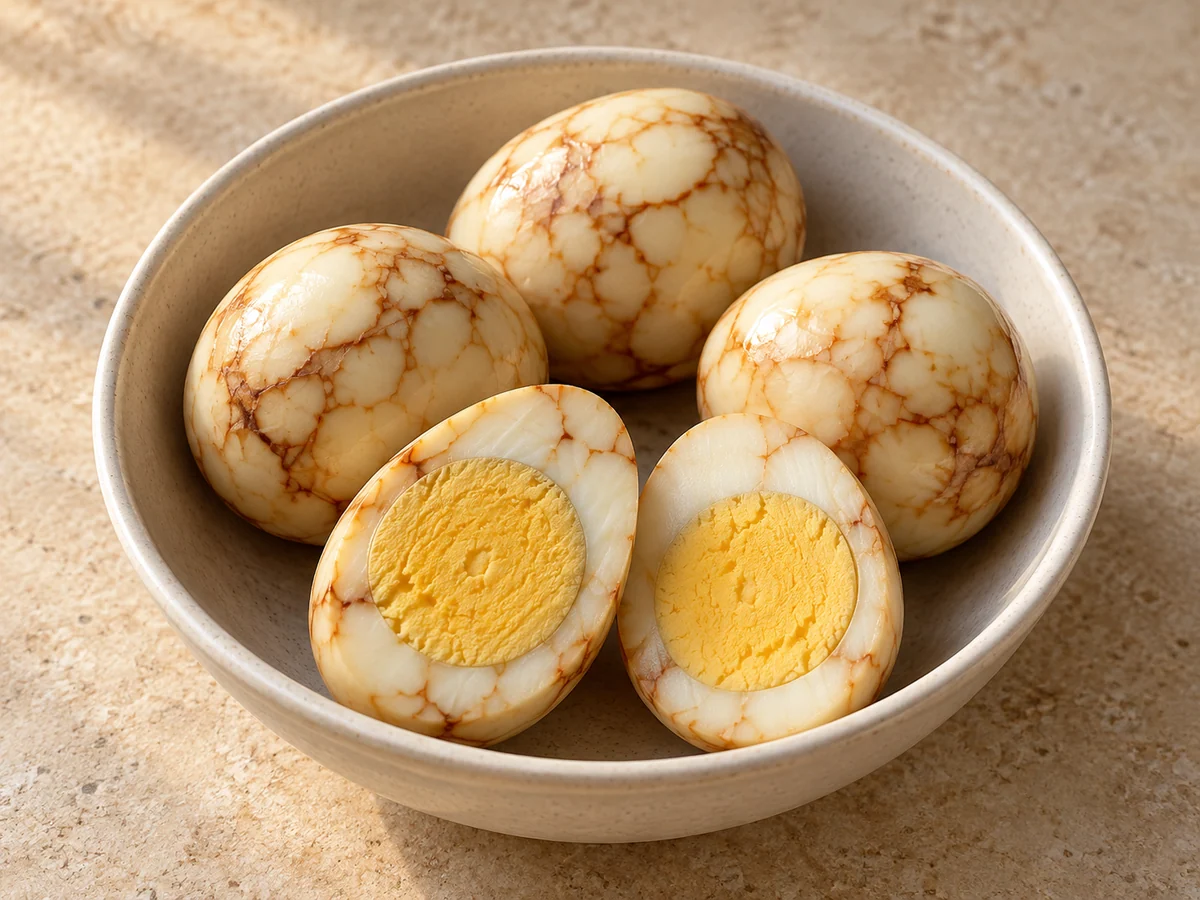
Tea eggs
Cook the eggs first, then crack the shells and simmer them in spiced tea.
This version uses 190 g uncooked fresh wide noodles per portion, drained before hot oil blooms scallion, garlic and chili; strand count is not a measure.
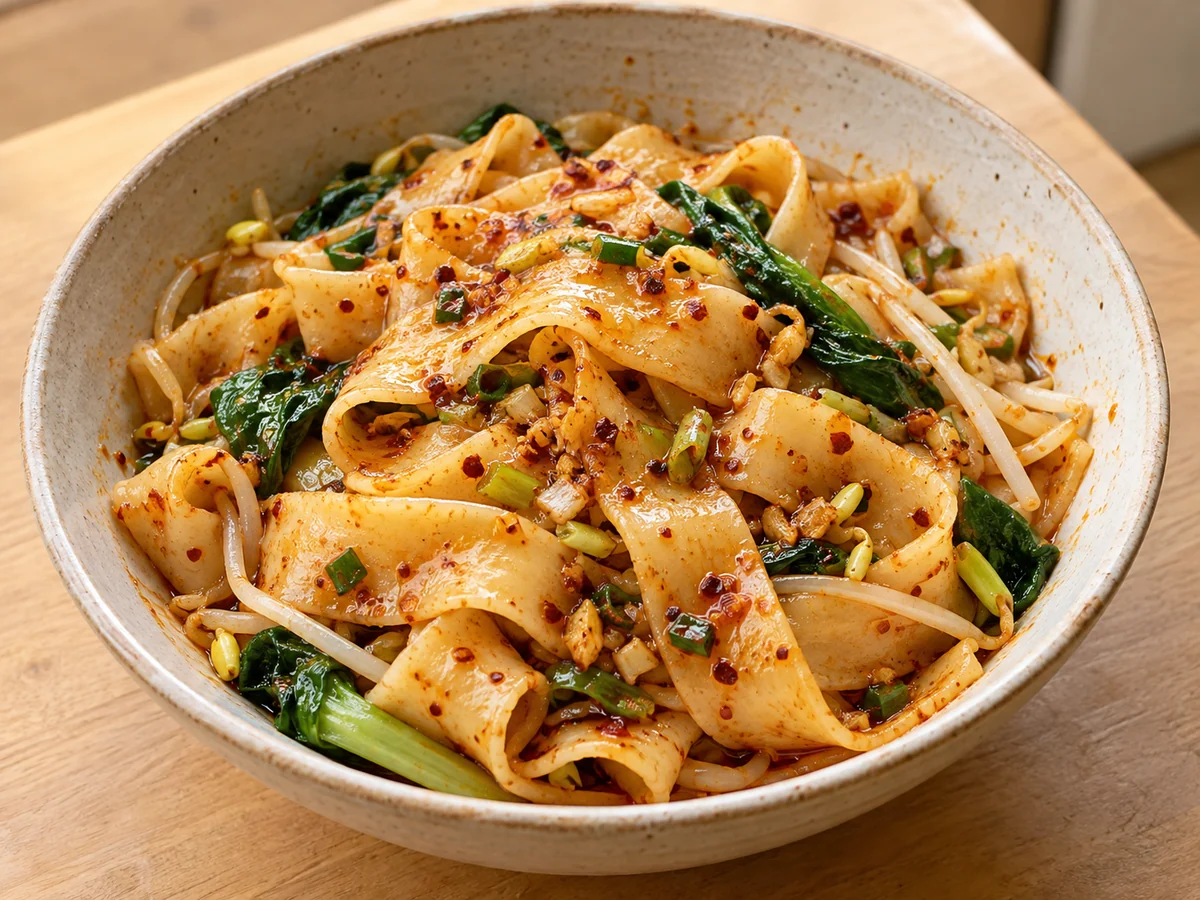
Weigh the fresh wide noodles before cooking: this version uses 190 g per portion, not four variable-size strands or 190 g dried noodles. Chop scallion and mince garlic; rinse greens and optional sprouts. Prepare a deep heatproof bowl that tolerates hot oil and dry its rim. Follow the noodle package and do not stretch already-formed noodles.
The aromatics are ready, the bowl is heatproof and stable and vegetables are clean.
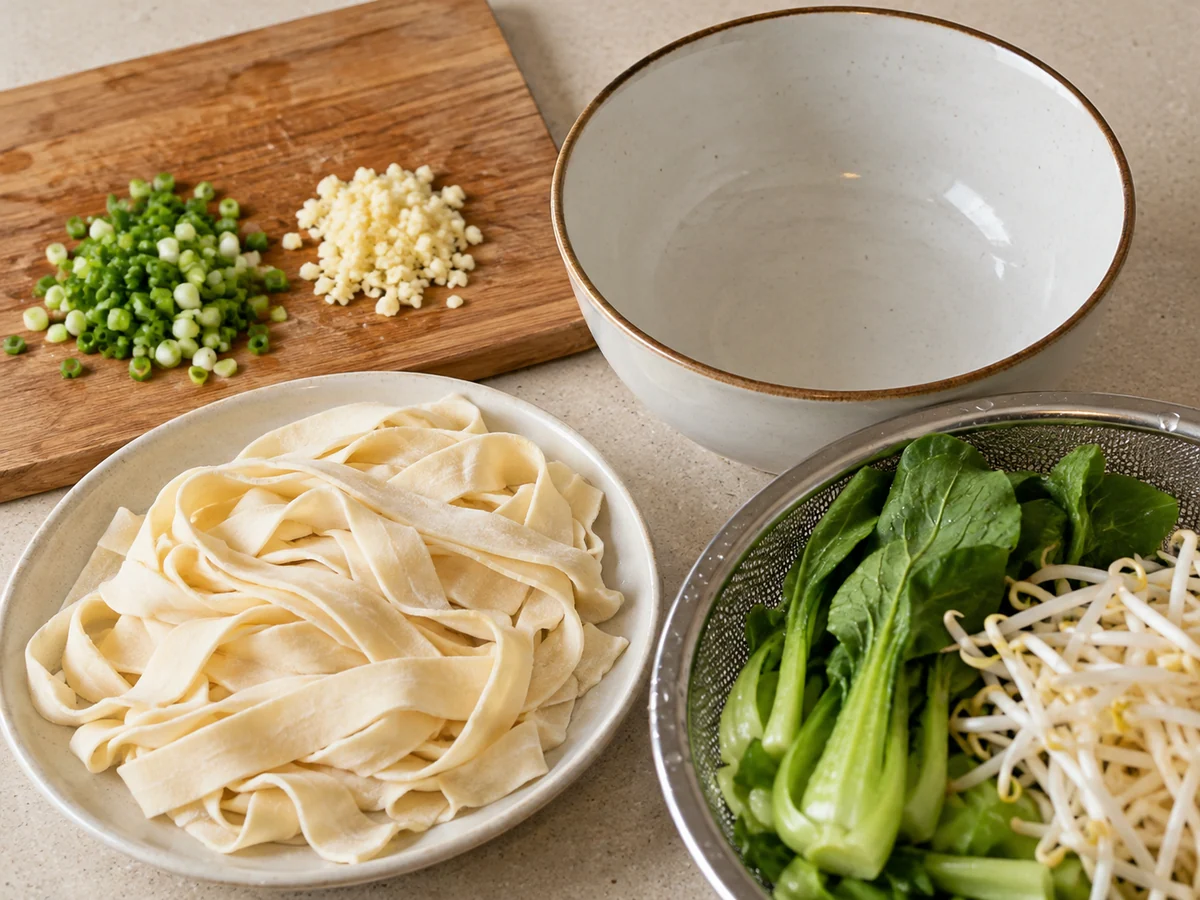 Knife work ↗
Boil ample water, add and loosen noodles and cook according to the package until no hard center remains. Cook greens and sprouts through together or separately; floating alone is not proof of doneness. Use a little optional salt in the boiling water if desired.
The noodles have no hard center and the greens and sprouts are cooked.
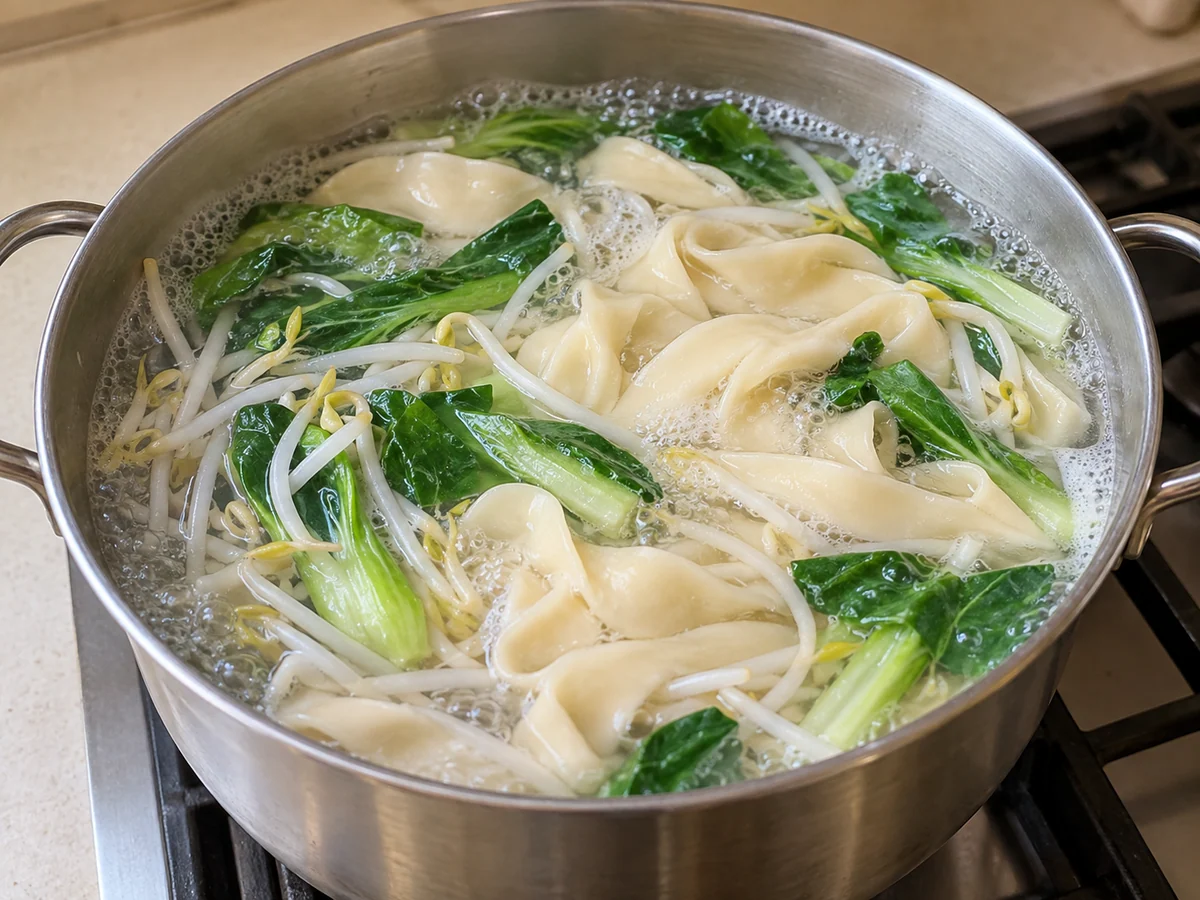 Boiling ↗
Drain noodles and vegetables thoroughly into the heatproof bowl and mix with soy and vinegar. Pile scallion, garlic and chili on top, avoiding pooled water that can splatter when oil is added.
The aromatics sit on the noodles with no visible pool of water.
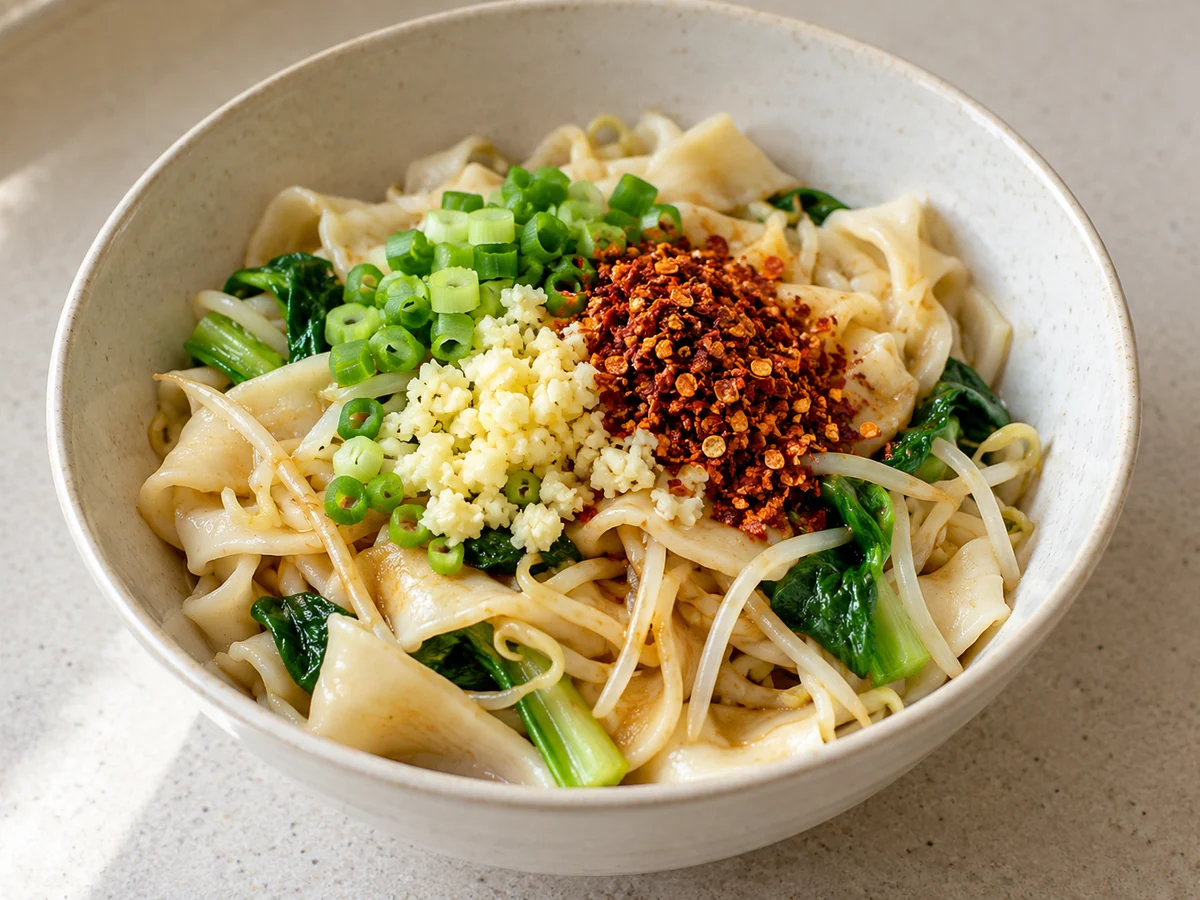 Preparation ↗
Heat the oil in a small pan until clearly shimmering but not smoking. Turn off the heat and test a little on the chili: it should sizzle gently without instantly blackening. Slowly pour the rest once suitable, keeping hands and face clear; cool smoking oil off the heat first.
The aromatics smell fragrant and the chili stays red without burning.
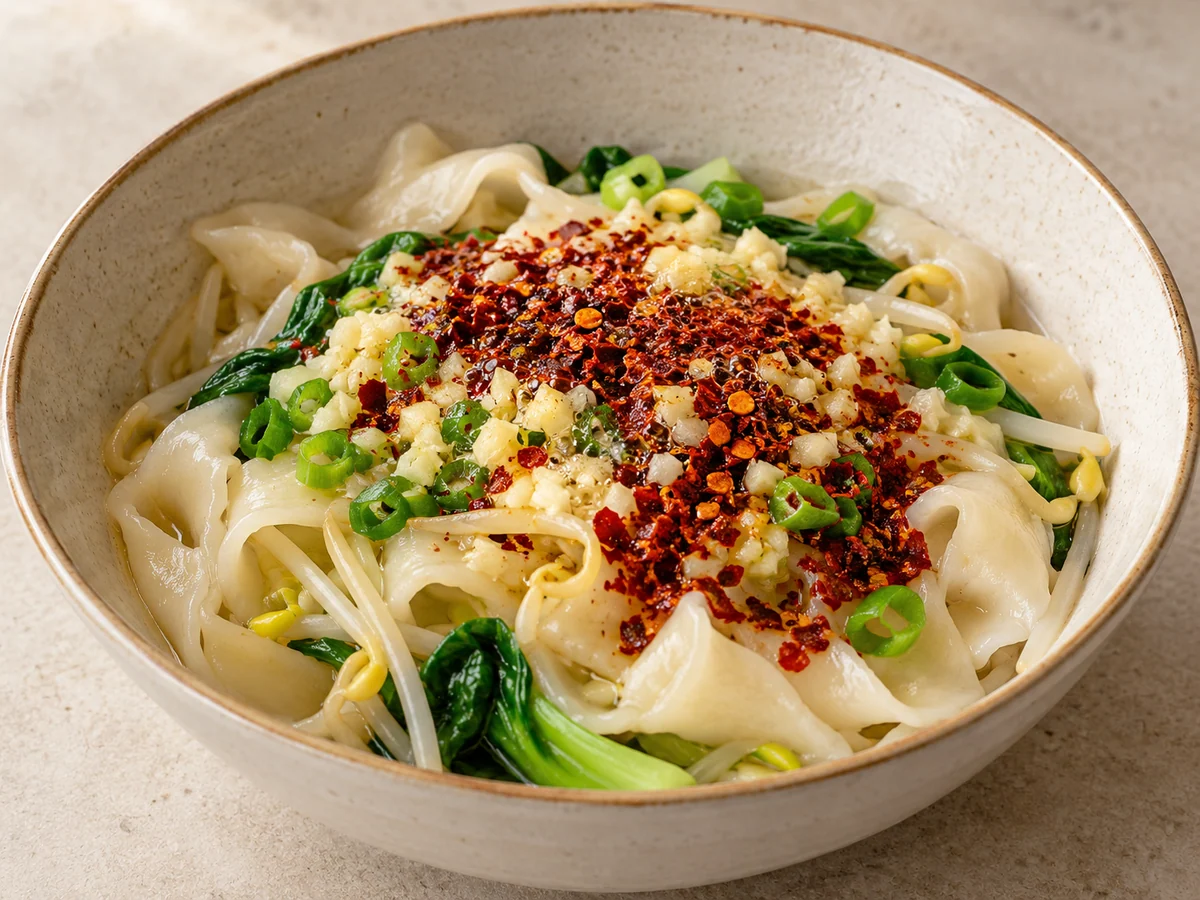 Heat control ↗
Toss thoroughly with chopsticks and cool slightly before eating.
The wide noodles are evenly coated with the fragrant chili dressing.
Mixing & beating ↗Adapted from HowToCook / 陕西油泼面 · HowToCook contributors / Anduin2017/HowToCook · Unlicense
Bilingual editorial adaptation. Independently content-reviewed; not kitchen-tested. Project-generated images illustrate this recipe and its steps, rather than a user’s cooking result. Timing is an estimate; check actual ingredients, labels and doneness.
Bring a little guidance along. Open EagerCook for the cooking experience.