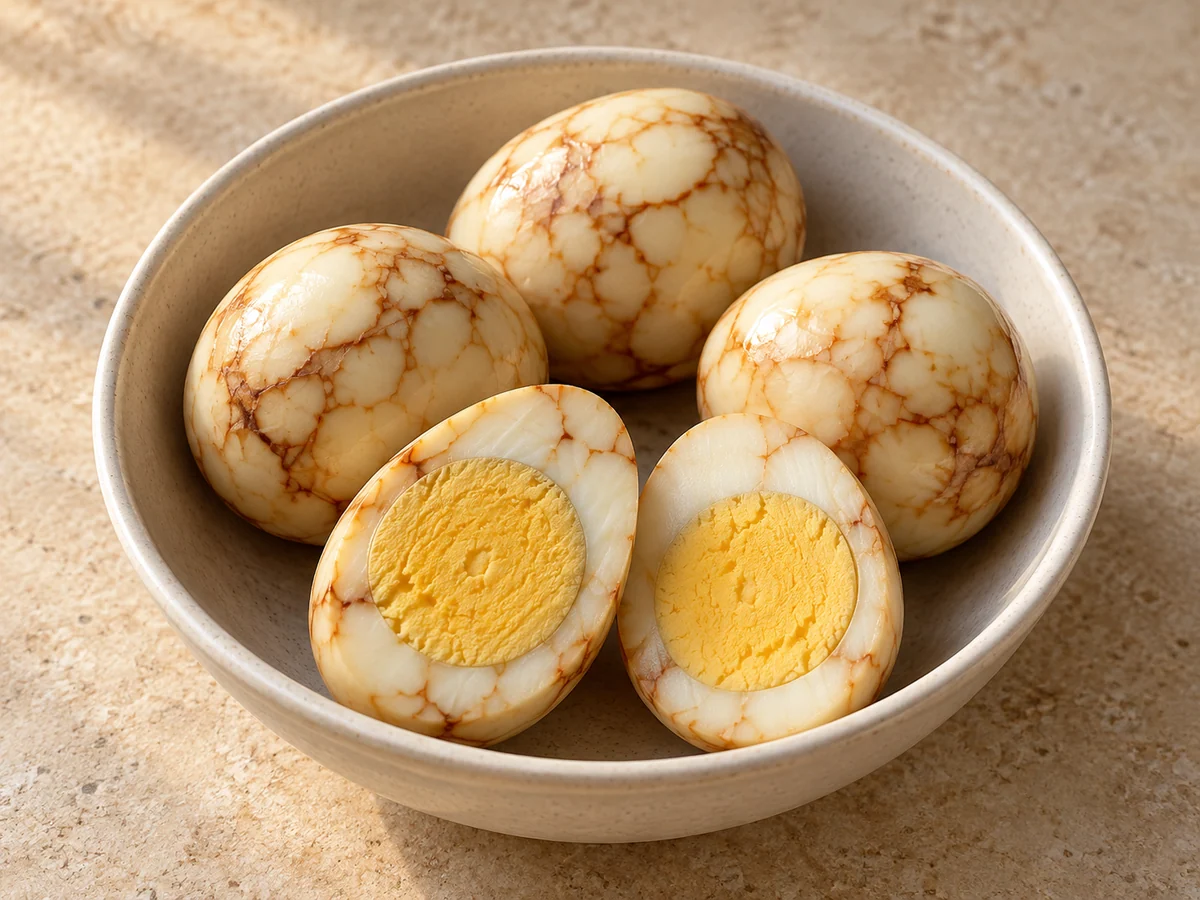
Tea eggs
Cook the eggs first, then crack the shells and simmer them in spiced tea.
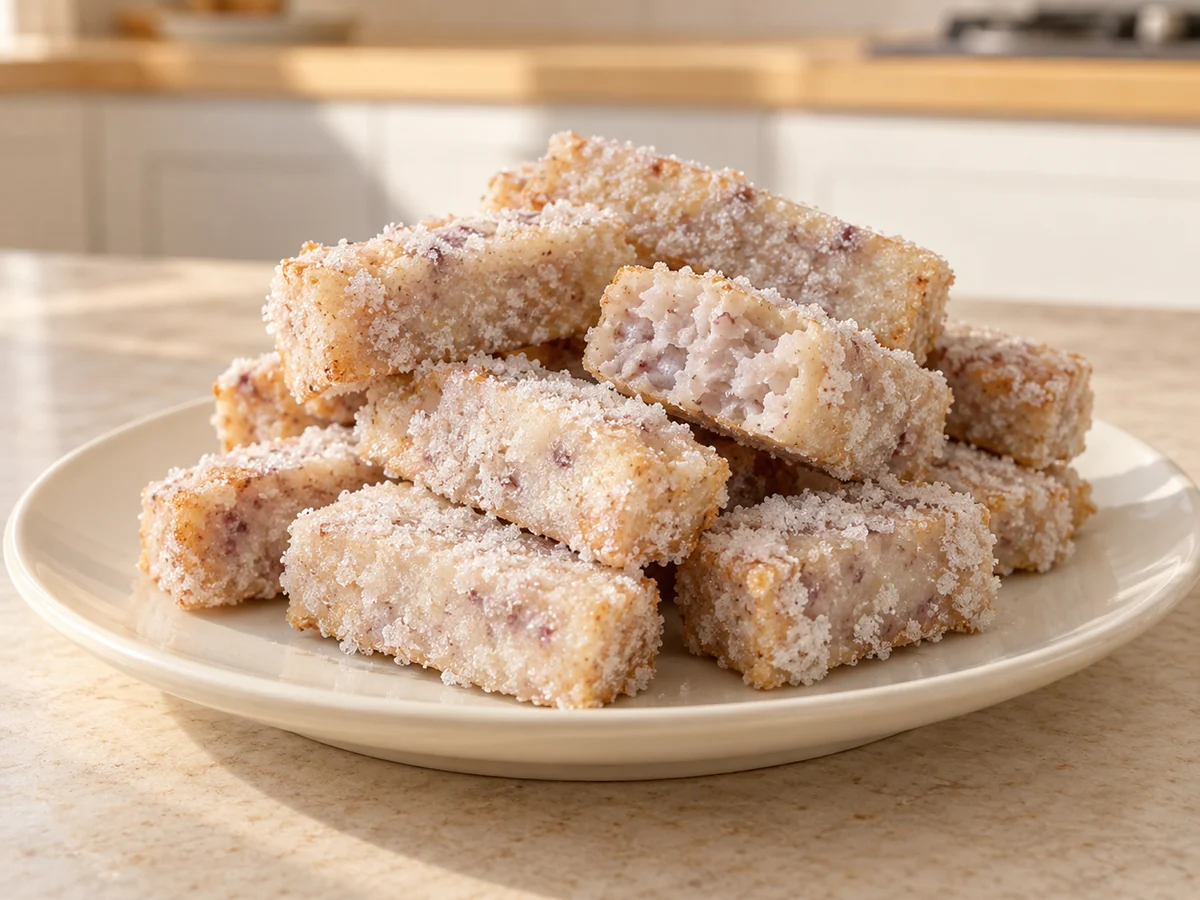
Fry taro until tender inside, then toss off heat in syrup until a fine white sugar crust forms.
Wear food-safe gloves to handle taro, cut into evenly sized thick batons and dry thoroughly. Do not eat raw taro; dry optional washed scallion well too.
The taro batons are even and have no surface water droplets.
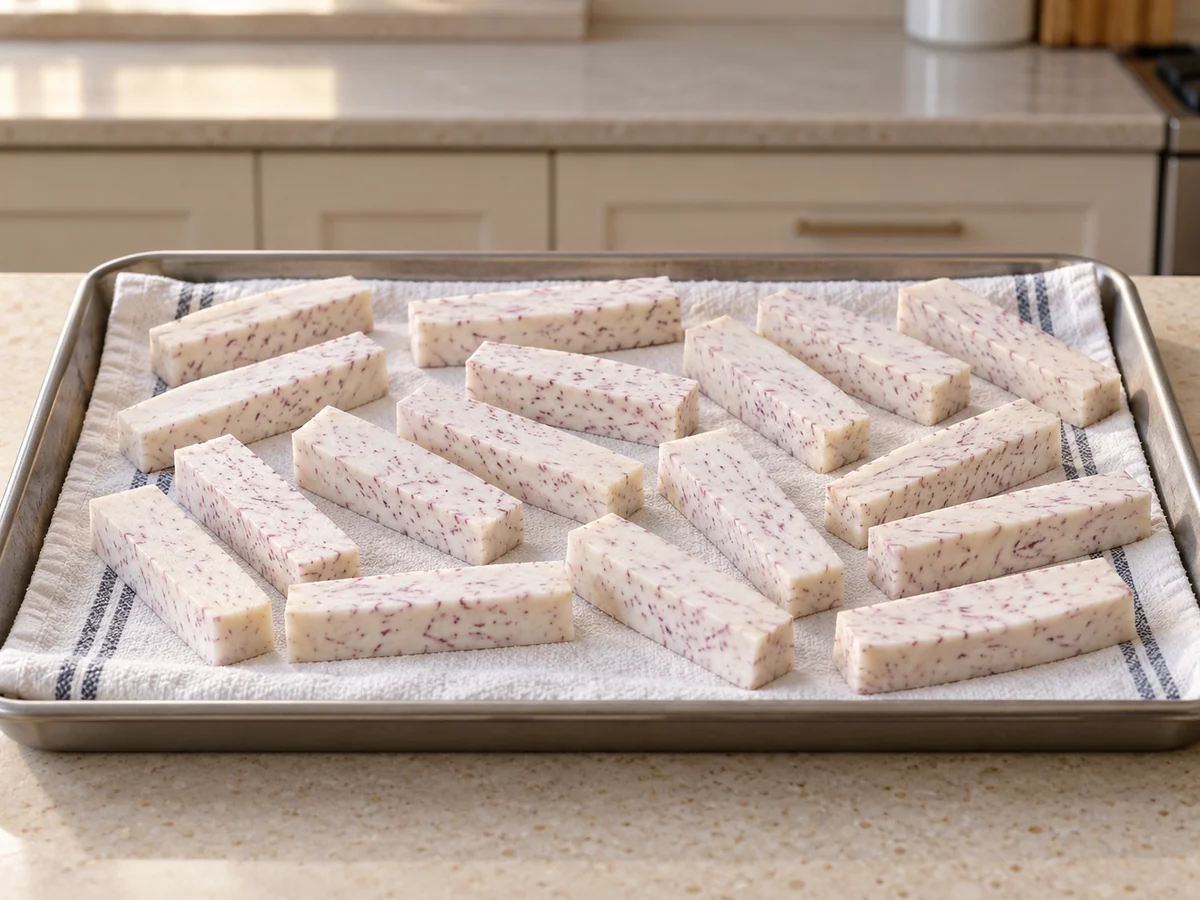 Knife work ↗
Heat oil in a deep pot below its safe fill line to about 175°C on a thermometer. Lower taro in batches, maintain heat and turn as needed until pale golden and a skewer passes easily through the center. Lower heat if the outside colors too fast; the center must cook tender.
The taro is tender inside without a hard center and pale golden outside.
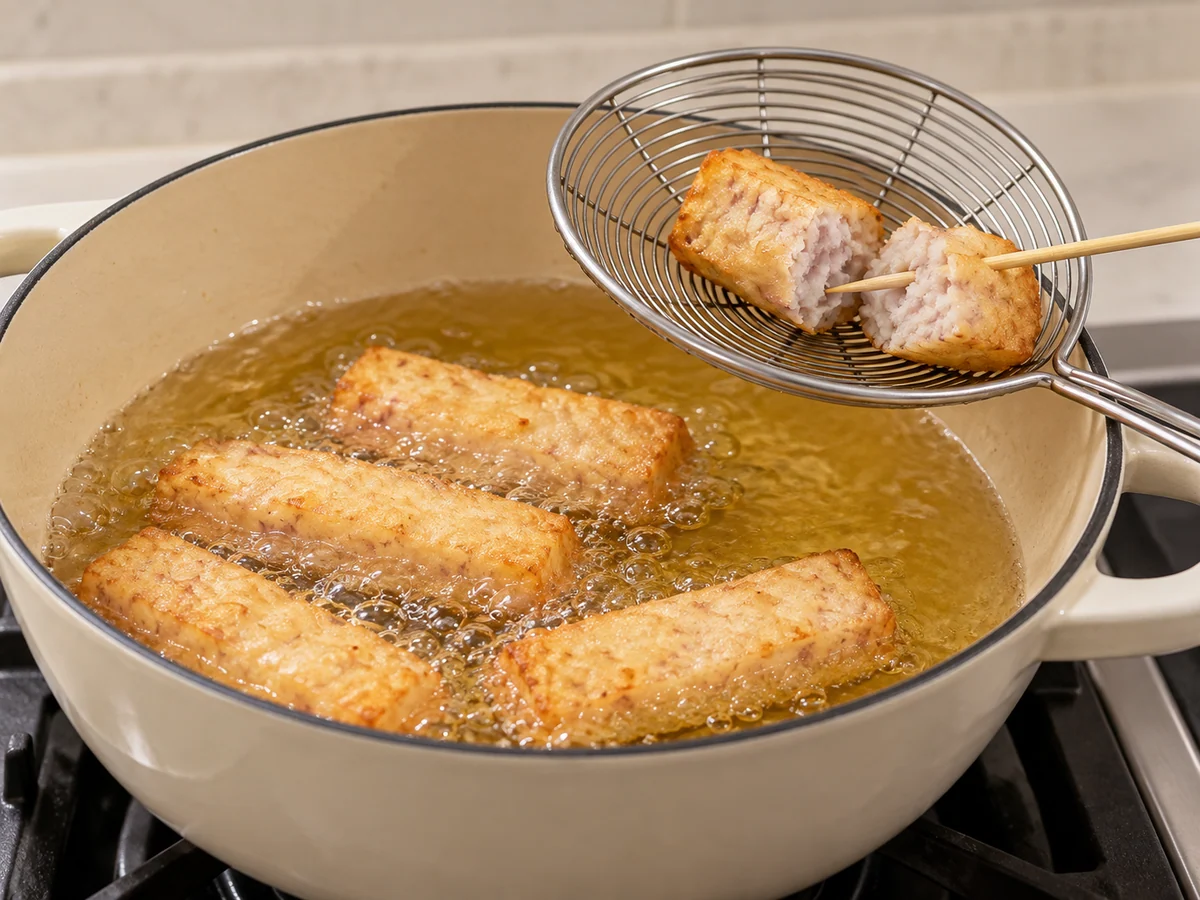 Deep-frying ↗
Drain taro on a rack and leave frying oil in its pot to cool. In a separate clean pan, dissolve sugar in the syrup water over low heat and cook to fine bubbles without browning. Never put the syrup water into the frying-oil pot.
The syrup is clear with fine even bubbles and no caramel color.
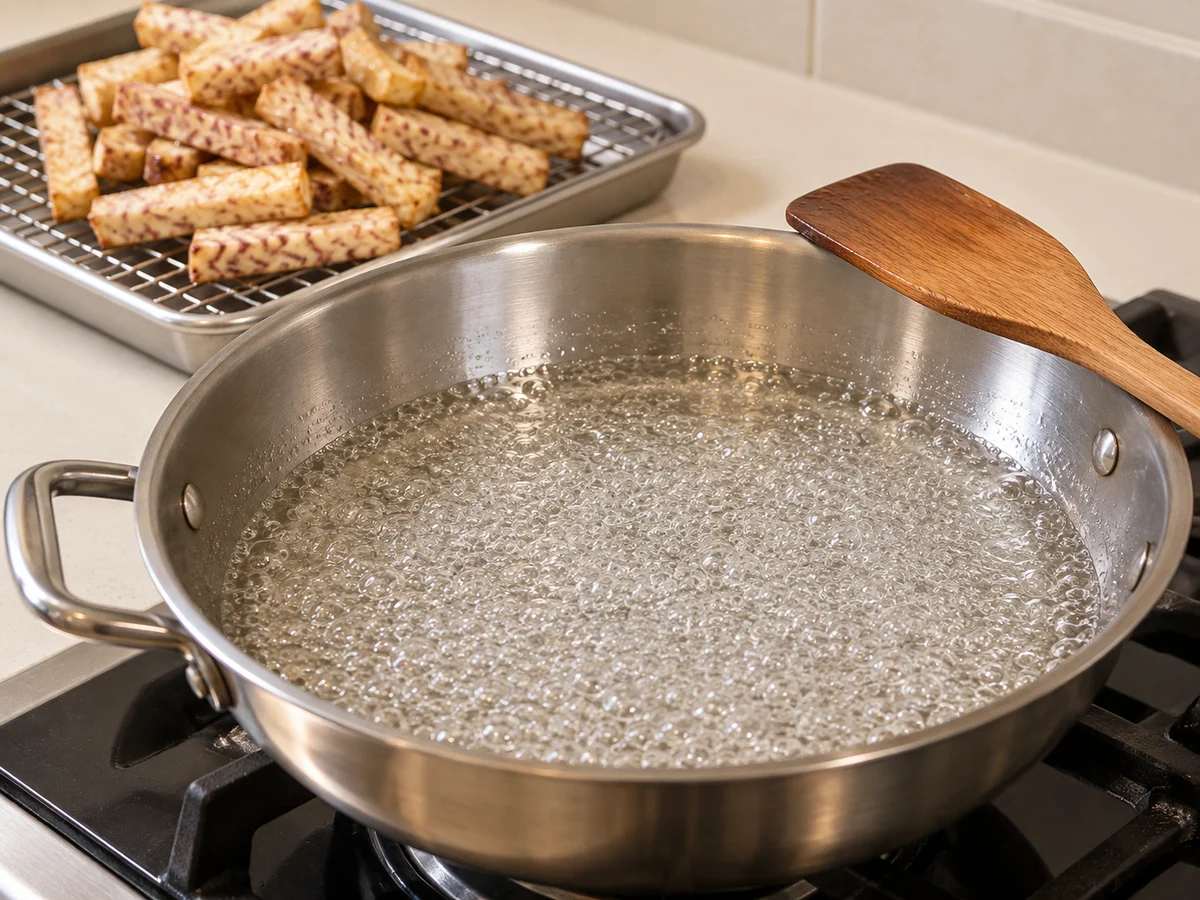 Heat control ↗
Add taro and optional dry scallion, turn off the heat immediately and keep tossing gently. As it cools, the clear syrup turns into fine white crystals coating the taro; do not blast it with high heat again.
The intact taro batons carry an even fine white sugar coating.
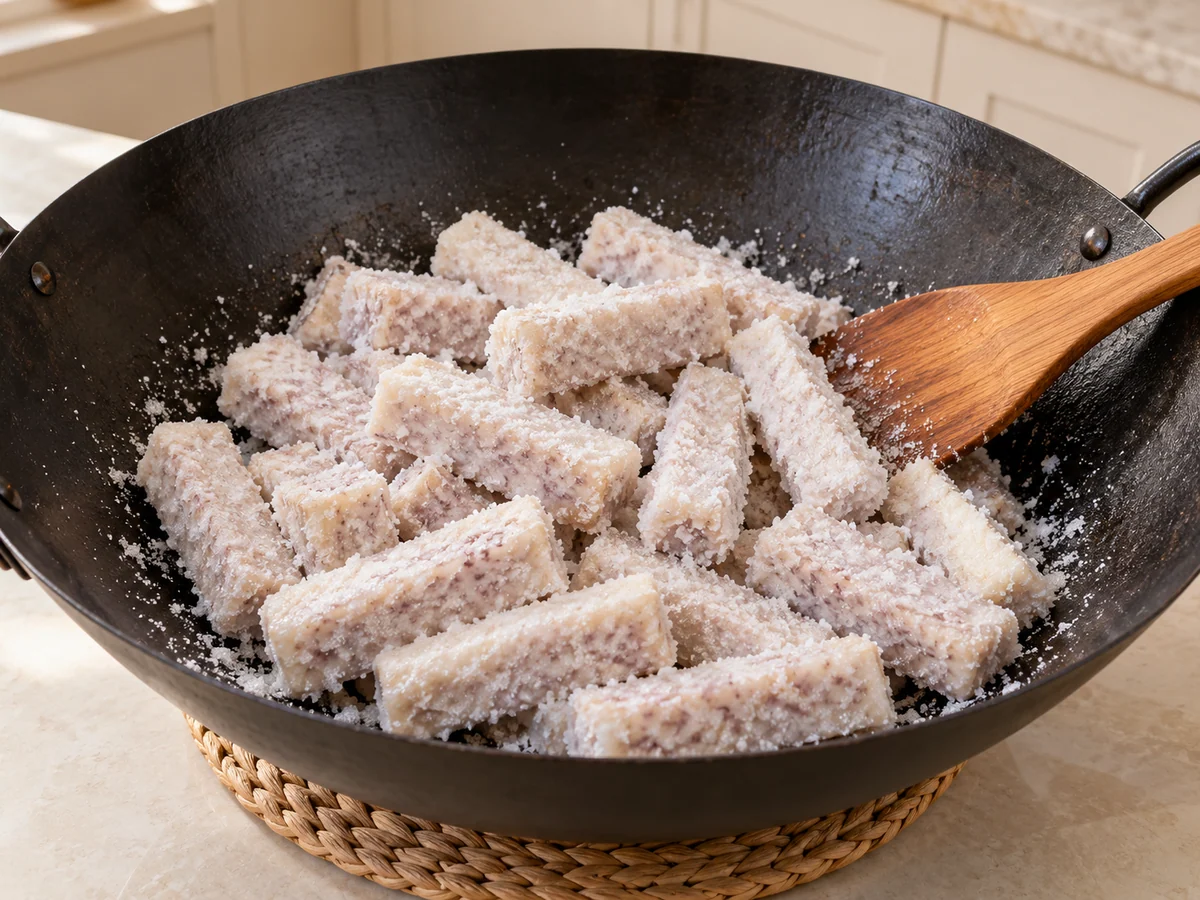 Mixing & beating ↗
Spread on a clean plate and let both sugar coating and taro centers cool to a comfortable eating temperature.
The white sugar crust is dry and the taro inside tender.
Preparation ↗Adapted from HowToCook / 反沙芋头 · HowToCook contributors / Anduin2017/HowToCook · Unlicense
Bilingual editorial adaptation. Independently content-reviewed; not kitchen-tested. Project-generated images illustrate this recipe and its steps, rather than a user’s cooking result. Timing is an estimate; check actual ingredients, labels and doneness.
Bring a little guidance along. Open EagerCook for the cooking experience.